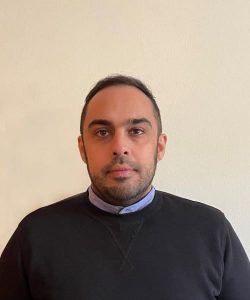
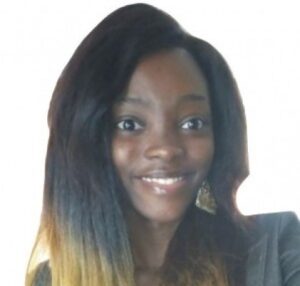
Constantinos Christodoulou is an Assistant Professor at the Department of Mechanical Engineering and Materials Science and Engineering, Cyprus University of Technology. He previously served at the Higher Technical Institute (Mechanical Engineering Department) and holds a PhD from Brunel University (UK). His expertise spans vibration analysis, materials processing (OPVs), and automation technologies. Education: PhD in Mechanical Engineering, Brunel University (UK) Engineering Council Part 2 diploma (UK) Higher National Diploma, Higher Technical Institute Research focuses on fault diagnosis in mechanical systems, sensor integration, and advanced materials testing. He has provided over 200 consultancy services to industry/government for material testing and instrument calibration. Active in teaching Engineering Measurements, CAD (AUTOCAD), and oversees final-year projects. Member of the Optoelectronics Group and Outdoor PV Group at CUT.
Professor Alexander Chefranov is a distinguished faculty member in the Department of Computer Engineering at Eastern Mediterranean University's Faculty of Engineering in Famagusta, North Cyprus. He has been serving at EMU since 2002, initially as a Visiting Associate Professor until 2009, then as Associate Professor until 2021, and has held the position of Professor since 2021. Originally from Russia/USSR, he earned his Engineer-Mathematician diploma from Taganrog Radio-Engineering Institute in 1978, followed by his PhD (Candidate of Engineering Sciences) in Computer Engineering in 1984, and later his Doctor of Engineering Sciences in 1998. Professor Chefranov's research spans multiple interdisciplinary fields with remarkable breadth. His primary research interests include fluid dynamics and hydrodynamics (particularly vortex dynamics, flow instability, and Navier-Stokes equations), cryptography and information security (with numerous publications on Hill cipher modifications and NTRU-like cryptosystems), image processing and steganography, and machine learning applications in scene recognition and medical imaging. His work demonstrates exceptional versatility across both theoretical mathematics and practical computer science applications. His recent publications through 2025 reveal a continued active research trajectory across all his interest areas, with particular emphasis on hydrodynamic instability theories, advanced cryptographic techniques, and deep learning applications. His work bridges fundamental mathematical physics with cutting-edge computer science applications, demonstrating unusual interdisciplinary range. Professor Chefranov is actively supervising graduate students, currently overseeing two PhD candidates (OLALEKAN EBENEZER IHINKALU and BEHNAM BOJNORDI ARBAB) and one Master's student (AMIRALI HATAMI), whose work focuses on steganalysis using deep learning approaches.
Dr. Andria Nicolaou is an Associate Lecturer at the University of Central Lancashire Cyprus (UCLan Cyprus), specializing in Data Analytics. She holds a PhD in Computer Science (University of Cyprus, 2024), an MSc in Molecular and Applied Physiology (National and Kapodistrian University of Athens, 2019), and a BSc in Computer Engineering with a Biomedical minor (University of Cyprus, 2017). She is also a Research Associate at CYENS Centre of Excellence and has previous roles as a Teaching Assistant at the University of Cyprus and a Research Assistant at the Biomedical Research Foundation of the Academy of Athens. Her research focuses on Biomedical Engineering, particularly in Biomedical Imaging and Biosignal Processing Systems, alongside Explainable Artificial Intelligence (XAI) in healthcare applications. She has published extensively on topics such as MRI analysis in multiple sclerosis (MS) and XAI models for sepsis prediction. Notable awards include the Best Paper Award at the 2023 IEEE EMBS International Conference on Biomedical and Health Informatics and recognition as a finalist in the 2024 She STEMs Symposium for Early-Stage Greek Woman Scientists. Dr. Nicolaou teaches the Exploratory Data Analysis module in the MSc Data Analytics program at UCLan Cyprus. Her work bridges clinical data with advanced AI techniques, emphasizing ethical and interpretable solutions for healthcare challenges. She is a member of the IEEE and the IEEE Engineering in Medicine and Biology Society (EMBS).
Prof. Dr. Hasan Demirel is a faculty member in the Department of Electrical and Electronic Engineering at Eastern Mediterranean University (EMU). He holds a PhD in Electrical and Electronic Engineering from Imperial College London (2003), an MS in Computer Science from EMU (1993), and a BS in Electrical and Electronic Engineering from EMU (1992). His research focuses on image and video processing, facial expression recognition, pattern recognition, and biomedical applications. He has authored/co-authored over 100 peer-reviewed publications and supervised numerous PhD and MS students in areas such as Alzheimer's disease detection using MRI, SAR target recognition, and deep learning for emotion synthesis. Prof. Demirel's awards include multiple EMU Publication Citation Awards (2017–2021). He has led projects on multimodal emotion recognition and developed systems for real-time face recognition using robotics platforms like NAO humanoid robots. His work integrates machine learning techniques with medical imaging, remote sensing, and computer vision. He currently serves as a faculty member at EMU, contributing to academic programs and advising students in electrical engineering and biomedical engineering. His research labs focus on advancing AI-driven solutions for healthcare diagnostics and visual surveillance systems.
Elena Kyriakidou is a Lecturer in Oral Surgery at the Department of Dentistry, European University Cyprus. She holds multiple advanced qualifications including an MClinDent in Oral Surgery from the University of Edinburgh (2013) and an MOralSurg from the Royal College of Surgeons of England (2016). Her professional roles include Consultant in Oral Surgery at Sheffield Teaching Hospitals NHS Foundation Trust (2017-2020) and Academic Clinical Fellow in Oral Surgery (2013-2017). She also serves as a dental examiner and curriculum developer for undergraduate programs. Dr. Kyriakidou’s research focuses on stem cell differentiation into neurogenic lineages, postoperative complications in oral surgery, and bisphosphonate-related osteonecrosis. Her work has been published in journals like the British Journal of Oral and Maxillofacial Surgery and Head and Neck Pathology. Notable awards include recognition for case series on dermoid cysts and keratocystic odontogenic tumors from the British Association of Oral Surgery. Education: BDS (2009, University of Newcastle), MClinRes (2018, University of Sheffield) Awards: 2016 Yorkshire Deanery Specialist Certificate, 2006 Nutrition Project Award Professional Activities: UCAS reviewer, ITI Congress delegate (2018), and presenter at international oral surgery conferences Her presentations address topics like nerve repair techniques, postoperative nausea management, and orbital trauma. Current research emphasizes translating dental stem cell research into clinical applications for neuroregeneration.
Pouya Bolourchi is an Associate Professor in the Faculty of Engineering at Final University. He holds a Doctoral Degree in Electrical and Electronic Engineering from Eastern Mediterranean University (2018), a Master's Degree from the same institution (2012), and a Bachelor's Degree from Girne American University (2009). His research focuses on machine learning applications in biomedical engineering, optimization algorithms, medical imaging, and signal processing. Key research interests include Alzheimer's disease diagnosis through statistical methods, SAR (Synthetic Aperture Radar) image recognition using moment-based techniques, and industrial optimization problems leveraging swarm intelligence (e.g., particle swarm optimization). His work bridges computational methods with real-world applications in healthcare and engineering systems. Recent publications emphasize advancements in feature selection strategies, ensemble learning, and genetic algorithm implementations for medical diagnostics and industrial system reliability. Notable contributions include improving gene expression analysis via entropy-fisher score and developing novel approaches for Parkinson’s disease detection using biogeography-based optimization. His academic contributions span over 20 peer-reviewed articles, with a focus on interdisciplinary applications of machine learning in healthcare, remote sensing, and industrial engineering. Collaborations highlight the practical deployment of optimization algorithms in electrostatic precipitator systems and baghouse design.
Yrd. Doç. Dr. Ghazaal Sheikhi is an Assistant Professor in the Department of Artificial Intelligence Engineering at Final University, within the Faculty of Engineering. Her research focuses on machine learning applications in healthcare, biomedical engineering, and natural language processing. She holds a Ph.D. in Computer Engineering from Eastern Mediterranean University (2020), an M.Sc. in Biomedical Engineering from Amirkabir University of Technology (2007), and a B.Sc. in Biomedical Engineering from the University of Isfahan (2003). Education: Doctoral Degree in Computer Engineering, Eastern Mediterranean University, North Cyprus (2020) Master's Degree in Biomedical Engineering, Amirkabir University of Technology, Tehran, Iran (2007) Bachelor's Degree in Biomedical Engineering, University of Isfahan, Isfahan, Iran (2003) Her research interests span Machine Learning, Biomedical Engineering, and Natural Language Processing. She specializes in applying deep learning techniques to medical image analysis, developing explainable AI models for healthcare diagnostics, and enhancing fact-checking systems using NLP. Her work in biomedical data analysis focuses on feature selection methods and predictive modeling for diseases like diabetes. Additionally, she explores speech processing techniques for language-specific challenges, such as Farsi syllable segmentation using signal processing and fuzzy logic approaches. Recent contributions include breast tumor segmentation (2025), NLP-based claim detection (2023), and novel feature selection methods (2021). Earlier work addressed speech signal analysis (2011–2013) and diabetes cost analysis (2016). Scientific Awards: No awards explicitly mentioned in the provided text. Advising & Grants: Information on students or grants is not provided in the text. Administrative tasks are listed but no details are given. Labs/Teams: No specific lab affiliations or teams mentioned.
Prof. Erhan İnce is a faculty member in the Department of Electrical and Electronic Engineering at Eastern Mediterranean University (EMU), where he has served since 1998. He holds a PhD in Communications from the University of Bradford (1997) and MS/BS degrees in Electrical and Electronic Engineering from the University of Bucknell (1992, 1990). His research focuses on mobile communications, channel coding, OFDM/OFDMA, statistical signal processing, and facial recognition. He has supervised numerous PhD and MS students, including Ramin Bakhshi, Syed Amjad Ali, and Waseem Qassab Bash. Key projects include 'Monitoring KKTCELL's Base Stations' (2018-2019) and 'Background Subtraction and Lane Occupancy Analysis' (2011). He received an award at the 1998 Symposium on Communication Systems & Digital Signal Processing. His work spans peer-reviewed journals (IEEE Access, Digital Signal Processing) and books on video surveillance. He actively contributes to IEEE and other academic communities.
Prof. Dr. Erhan A. İnce is a Professor at the Department of Electrical & Electronic Engineering, Eastern Mediterranean University (EMU). He holds a Ph.D. in Communications from Bradford University (1997) and has been at EMU since 1998, progressing through academic ranks from Assistant Professor (1998–2006) to Full Professor (2016–present). His research focuses on mobile communications, channel coding, OFDM techniques, and video/signal processing. He has supervised over 25 master's and doctoral students, including notable works on turbo codes, interference alignment, and image processing. Education: Bachelor's in Electrical Engineering, Bucknell University (1990) M.S. in Electrical Engineering, Bucknell University (1992) Ph.D. in Communications, Bradford University (1997) Research Interests: His work spans communications theory, signal processing, and multimedia applications. Key areas include turbo codes over fading channels, OFDM-based systems, facial recognition, and traffic surveillance using video analytics. Publications: Over 30 journal and conference papers in IEEE Transactions, Elsevier journals, and international conferences like CSDSP and EUSIPCO. Recent topics include blind interference alignment in cellular networks and tensor-based signal processing. Awards: Best Poster Award at CSDSP 1998. Service: Served as a reviewer for IEEE journals and conferences, and held administrative roles in EMU’s Faculty of Engineering, including Professor Representative (2018–present).
Prof. Dr. Önsen Toygar is a full Professor of Computer Engineering at the Faculty of Engineering, Eastern Mediterranean University. He holds a PhD in Computer Engineering from the same institution (2004). His primary research interests include Biometrics, Computer Vision, Image Processing, and Digital Forensics. He has over 18 years of academic experience, including roles as Vice Chair of the Computer Engineering Department and committee memberships in various university bodies. Education PhD in Computer Engineering, Eastern Mediterranean University (2004) MSc in Computer Engineering, Eastern Mediterranean University (1999) BSc in Computer Engineering, Eastern Mediterranean University (1997) Research Interests His work focuses on advanced biometric systems (e.g., face, ear, palm vein recognition), deep learning applications in medical imaging (e.g., Alzheimer’s/Parkinson’s disease classification), and robust feature extraction methods under occlusions/spoof attacks. Notable contributions include multimodal fusion techniques and anti-spoofing mechanisms for biometric security. Recent Publications Trends Recent work emphasizes deep learning in medical diagnostics (e.g., Alzheimer’s classification via 3D CNNs), multimodal biometric fusion (hand/finger vein recognition), and spoof detection in ear/facial systems. Cross-disciplinary efforts include plant disease detection and underwater image enhancement. Awards Publons Top Peer Reviewer (2019) EMU Research Incentive Awards (2017–2022) EMU Citation Awards (2017–2022) Best Paper Award (SIP2009) Grants & Supervision Directed over 30 graduate theses (PhD/MS) including projects on vein recognition systems, anti-spoofing methods, and disease classification. Active in research grants such as Deep Learning for Neurological Disease Diagnosis (2022–2023). Labs & Teams Leads the Biometrics Research Group focusing on multimodal systems, and collaborates with the Underwater Research and Imaging Center on image enhancement techniques.
Prof. Dr. MUSTAFA KEMAL UYGUROĞLU is a Professor of Electrical and Electronic Engineering at Eastern Mediterranean University (EMU), affiliated with the Faculty of Engineering. He has held academic positions since 1987, progressing from Lecturer to Professor by 2015. His research focuses on robotics, mechatronics, mathematical modeling, computer vision, and kinematic analysis of mechanical systems. Education: B.S. in Electrical Engineering, EMU (1981–1985) M.S. in Robotics, EMU (1989–1991) Ph.D. in Robotics, EMU (1992–1998) Research Interests: Prof. Uyguroğlu’s work spans robotics, including mobile robotics, autonomous systems, and trajectory optimization. He has pioneered research in kinematic analysis of geared and tendon-driven mechanisms, fire detection in video sequences, and face-tracking algorithms. His recent projects involve anomaly detection using deep learning and conformal prediction, as well as integration of multi-platform robotics simulations. Publications & Impact: His publications reflect expertise in robotics systems, video surveillance, and control engineering. Notable contributions include studies on omnidirectional mobile robots, fire detection algorithms, and graph-theoretic approaches to mechanism analysis. His work bridges theoretical modeling and practical applications like emergency monitoring systems. Service & Leadership: Vice Rector (2009–2014) Senate Member (2017–present) Founded EMU’s Robotics Lab Developed curricula for Electrical Engineering, Information Engineering, and Mechatronics programs Advising & Mentorship: Supervised 8 graduate theses (4 Ph.D., 4 M.S.) and actively participates in thesis committees. His students have specialized in topics like six-legged robot kinematics and equivalent robotic manipulators. Labs & Infrastructure: Leads the Robotics Lab at EMU, focusing on hardware-software integration for autonomous systems and simulation tools (CoppeliaSim, MATLAB).
Asst. Prof. Dr. Shahla Azizi Alikamar is an Assistant Professor in the Department of Electrical and Electronic Engineering at Eastern Mediterranean University (EMU). She is affiliated with the Faculty of Engineering and holds an office in EE 215. Her contact information includes the email shahla.alikamar@emu.edu.tr and telephone number +90 392 630 1440. Dr. Alikamar's academic journey includes a PhD in Medical Physics and Biomedical Engineering (2021), an MS in Biomedical Engineering - Bioelectricity (2012), and a BS in Biomedical Engineering - Bioelectricity (2008), all from unnamed universities. Her research interests focus on biomedical signal processing, neural engineering, and applying machine learning to healthcare diagnostics, particularly in EEG analysis and neuroimaging. She has supervised three graduate theses: an ongoing PhD on a topic unspecified, a 2023 MS thesis titled *Diagnosis of Depression Disease Using Neuroimaging and Deep Learning Tools*, and a 2022 MS thesis on *EEG Sleep Stage Classification and Prediction Using Entropy Feature Extraction*. No scientific awards are listed in the provided materials. Her advising and mentoring activities reflect a focus on interdisciplinary projects at the intersection of electrical engineering and biomedical applications.
Christos Photiou is a Researcher at the University of Cyprus, affiliated with the KIOS Center of Excellence. He earned his B.Sc. in Physics from the University of Patras (2009), M.Sc. in Environmental Health from the Cyprus University of Technology in collaboration with the Harvard School of Public Health (2011), and Ph.D. in the Department of Electrical and Computer Engineering at the University of Cyprus (2020). Education B.Sc. in Physics, University of Patras, 2009 M.Sc. in Environmental Health, Cyprus University of Technology & Harvard School of Public Health, 2011 Ph.D., Electrical and Computer Engineering, University of Cyprus, 2020 Research Interests His research focuses on biomedical image processing , machine learning , and optical diagnostics , with significant contributions to developing novel methods for OCT (Optical Coherence Tomography) feature extraction that have attracted notable attention. These areas align with interdisciplinary applications of engineering and computational techniques in biomedical diagnostics.
Oluwaseun Priscilla Olawale is a Lecturer in Software Engineering at Near East University (Nicosia, Cyprus), where she is concurrently pursuing her master's degree in Software Engineering. She previously served as a teaching assistant at the same institution. Her academic background includes a Bachelor's degree in Computer Science from Bowen University, Nigeria, complemented by professional experience as an IT Specialist at the Standards Organisation of Nigeria and Software Developer at Royal Niger Company. Research Focus: Her work centers on developing reliable software solutions with emphasis on artificial intelligence applications. Primary domains include healthcare technology (medical imaging, remote healthcare, IoHT security), industrial systems (Industry 4.0 automation), cybersecurity (blockchain integration, anomaly detection), and educational technology (post-pandemic learning environments). She demonstrates consistent interest in interdisciplinary AI implementations bridging theoretical models and practical challenges. Publication Trends: Recent articles (2020-2025) reflect a progression from foundational surveys in data mining and blockchain verification toward applied AI solutions. Emerging themes include disaster prediction systems, audio-visual signal processing, and security-enhanced healthcare networks. Her technical approach frequently employs deep learning architectures (CNNs, VGG-16), blockchain frameworks, and signal processing techniques to address real-world problems across diverse sectors.
Petr Hájek is a Professor at the University of Pardubice in the Institute of System Engineering and Informatics, Czech Republic. With 236 publications, 71,463 reads, and 5,595 citations, he has established himself as a prominent researcher in computational intelligence and machine learning applications. His research interests span multiple domains of computational intelligence, with particular focus on: Machine learning applications in financial forecasting and risk management Neural networks and fuzzy logic systems for time series prediction Sentiment analysis for financial markets and social media Fraud detection and fake news identification systems Cryptocurrency price forecasting and market analysis ESG analytics and sustainable finance applications Analysis of his recent publications (2023-2025) reveals an expanding research scope that increasingly integrates sustainability considerations with financial technology. His work demonstrates sophisticated methodological approaches, frequently employing hybrid neural network architectures, ensemble learning techniques, and advanced text mining methods. Professor Hájek's research shows strong international collaboration patterns with scholars across Europe, Asia, and North America. His scholarly contributions have focused on developing practical AI solutions for complex financial problems, with particular attention to handling class imbalance issues in financial datasets and creating interpretable models for financial decision-making. Professor Hájek maintains an active research program with consistent publication output across top venues in computational intelligence and financial technology. His work bridges theoretical advances in machine learning with practical applications in finance, demonstrating both academic rigor and real-world relevance.