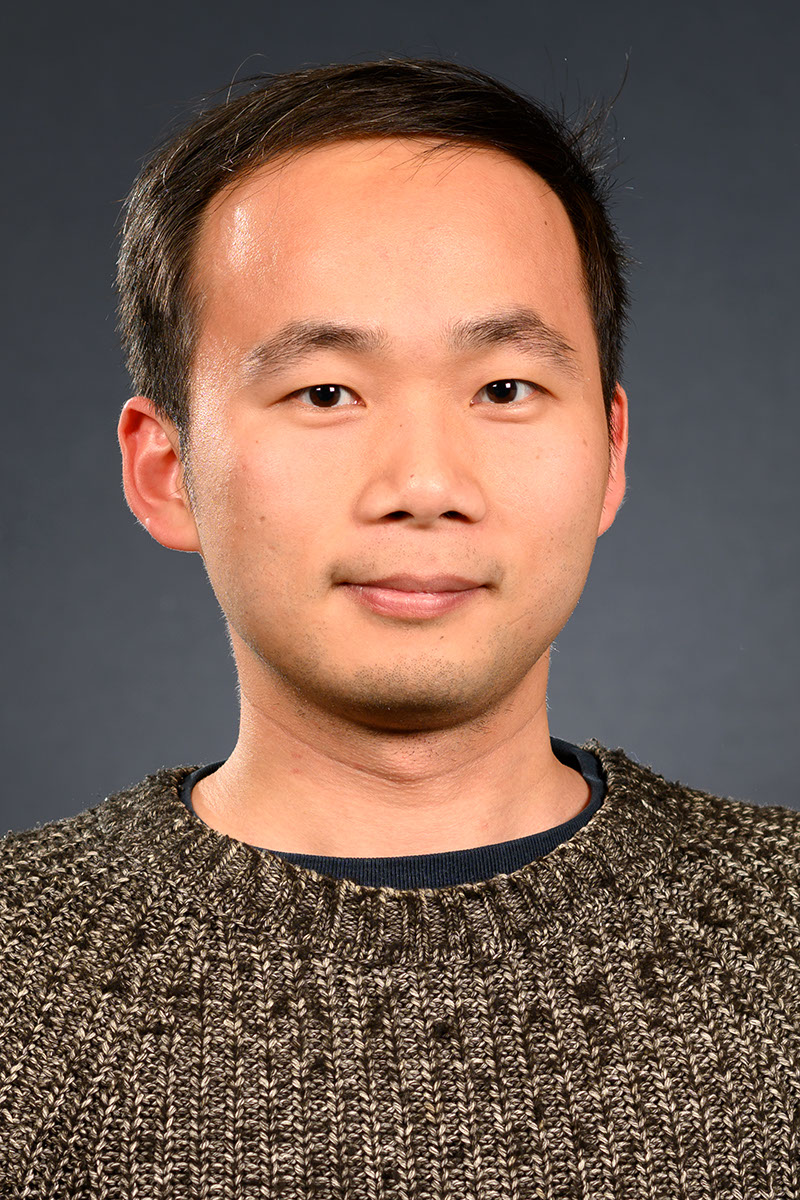
Turgay Celik is a full Professor at the Department of Information and Communication Technology , University of Agder (Norway). His research focuses on machine learning applications in remote sensing, explainable AI, and data analysis . He leads projects related to radiometric normalization, sentiment analysis for low-resource languages, and biomedical prediction models. Research Interests : Machine learning for geospatial data, explainable NLP, adaptive learning systems, and domain adaptation frameworks Recent Publications : 15+ articles on topics spanning remote sensing image processing, multilingual NLP, and counterfactual credit scoring explanations Collaborations : Active in international research with co-authors from institutions in Norway, Iran, South Africa, and China His methodological work includes Trust-Region Reflective algorithms, Laplacian Pyramid Fusion, and SAM transfer learning for water segmentation tasks. He contributes to open-source frameworks evaluation and systematic reviews in computer vision and financial AI.
Fangfang Liu is an active researcher with an extensive publication record spanning from 2005 to 2025, demonstrating significant contributions across multiple domains in computer science and engineering. Their work shows consistent collaboration with researchers including Weimin Li, Caili Guo, Zhimin Zeng, and Chunyan Feng, suggesting strong institutional ties within their research community. Fangfang Liu's research spans several key areas including wireless communications, knowledge graph completion, semantic communications, and fake news detection. Their work demonstrates expertise in applying machine learning techniques to solve complex problems in network security, IoT systems, and multimedia analysis. The research portfolio shows a progression from foundational work in wireless communications and polarization techniques toward more recent applications in AI-driven security and knowledge representation. The publication trends reveal a strategic expansion from traditional communications engineering into cutting-edge AI applications. Early work focused on polarization techniques and wireless channel modeling, while recent publications emphasize knowledge graphs, multimodal fake news detection, and semantic communications. This evolution demonstrates adaptability to emerging research frontiers while maintaining technical depth in signal processing and network analysis. Fangfang Liu has made substantial contributions through numerous publications in prestigious venues including IEEE Transactions, Expert Systems with Applications, and Knowledge-Based Systems. Their collaborative approach is evident through extensive co-author networks across academia and research institutions. While specific advising information isn't detailed in the publication record, Fangfang Liu appears to lead research groups working on precision assembly, knowledge graph applications, and IoT security. The research program demonstrates strong connections between theoretical foundations and practical implementations in communication systems and AI applications.
Prof. Sławomir Zator holds the position of University Professor at the Department of Safety Engineering and Technical Systems under the Faculty of Production Engineering and Logistics at Opole University of Technology. His research focuses on advanced diagnostics techniques using laser Doppler anemometry, thermography, and vision-based methods for infrastructure and energy systems. He also explores energy management strategies in buildings, emphasizing smart home integration with renewable energy sources like photovoltaics and heat pumps. His work bridges theoretical advancements with practical applications in power line safety, industrial equipment monitoring, and sustainable energy solutions. Research interests include: Laser-based flow measurement innovations Non-destructive evaluation of boiler tubes and power line components Machine vision applications for structural diagnostics Optimization of building energy systems Recent publications highlight trends in smart grid energy scheduling, icing risk mitigation for power infrastructure, and hybrid energy storage integration. His work often features cross-disciplinary approaches combining thermal imaging, computational modeling, and automation technologies. Prof. Zator maintains an active research profile through collaborations with international institutions and contributes to technical education via course development in safety engineering and metrology.
Prof. Alexandros Kalousis holds the position of Ordinarius HES Professor at the Geneva School of Economics and Management (HES-SO). His primary affiliation is within the Department of Management Information Systems under the School of Economics and Services. His research focuses on machine learning, data mining, and their applications in biomedical systems, cybersecurity, and generative modeling. Key projects include SimGait (SNSF-funded), which develops neuromechanical models for pathological gait analysis using machine learning, and RAWFIE (EU-funded), creating a mixed network testbed for autonomous vehicle experimentation. He has also led projects on time series forecasting, olfactory modeling for perfume creation, and metric/kernel learning optimization. Notable contributions span graph generative models like DGAE and GLAD, cybersecurity implications of LLMs, and reproducible indoor positioning systems. His work integrates theory-driven models with deep learning, emphasizing interpretability and extrapolation capabilities. Research collaborations include EPFL's Biorobotics Lab, Geneva University Hospitals, and industry partners like Firmenich. Total funding exceeds CHF 3M across projects like SimGait (CHF 2.1M) and RAWFIE (CHF 623K).
Ao.Univ.Prof. Margrit Gelautz is an Associate Professor at TU Wien's Computer Vision research department (E193-01), affiliated with the Institute for Software Technology and Interactive Systems (E188). Her work focuses on computer vision applications in autonomous driving, robotics, and 3D reconstruction. She leads projects on driver monitoring systems, vulnerable road user detection, and human-robot interaction. Recent research includes 3D bounding box prediction, synthetic data-driven pose estimation, and real-time sensor systems. She advises over 20 graduate students and collaborates on automotive platforms integrating vision-based safety systems. Her contributions span sensor fusion, stereo matching algorithms, and interactive video tools. Key projects include multimodal sensor-lighting systems for traffic safety, 3D scene completion, and intelligent workflow design for low-cost 3D film production. Her work emphasizes practical applications like in-cabin monitoring systems and adaptive lighting control. She develops semi-automatic annotation tools for traffic datasets and explores nonverbal communication in human-robot interaction using platforms like Pepper humanoid robots.
Dr. Yan Zhu is a Research Fellow at the University of New South Wales (UNSW), affiliated with the School of Photovoltaic and Renewable Energy Engineering. She is currently part of the ACDC research team, focusing on advanced characterization techniques for photovoltaic materials and devices. Dr. Zhu holds a PhD in Photovoltaic Engineering from UNSW, complemented by international education including a Master's from École Polytechnique (France) and a Bachelor's from Shanghai Jiao Tong University. Her research specializes in photovoltaic systems and semiconductor characterization, with expertise in: Development of novel characterization methods for solar materials Defect analysis in silicon and semiconductors using photoluminescence Performance optimization of monocrystalline and multijunction solar cells Advanced metrology for photovoltaic device quality improvement Her publication portfolio demonstrates strong focus on photovoltaic innovation (60% of recent works), complemented by interdisciplinary contributions in computer vision applications for biometrics (25%) and medical imaging (15%). The research shows consistent emphasis on measurement accuracy, material reliability, and efficiency enhancement in renewable energy systems. Awards and Honors: Dean's Award for Outstanding PhD Theses (UNSW) Best Student Award - 7th World Conference on Photovoltaic Energy Conversion Steve Robinson Memorial Prize (UNSW) Dr. Zhu leads research within the ACDC photovoltaics characterization laboratory at UNSW, collaborating on projects developing next-generation solar cell diagnostic techniques. Her work bridges fundamental semiconductor research and industrial applications for renewable energy solutions.
Dr. Viktoriia Sharmanska is an Assistant Professor in Artificial Intelligence at the University of Sussex, UK, and an honorary lecturer at Imperial College London. She leads research in computer vision and machine learning, focusing on algorithmic fairness, human behavior analysis, and generative models. Her work bridges theoretical advancements with practical applications in healthcare, urban development, and ethical AI. Education: PhD in Computer Vision and Machine Learning, Institute of Science and Technology Austria (2015) MSc in Applied Mathematics (summa cum laude), Taras Shevchenko National University of Kyiv, Ukraine (2009) Research Interests: Her interdisciplinary research spans algorithmic fairness, 3D vision, and multi-modal toxicity moderation. She develops methods to address bias in AI systems and innovate in facial behavior analysis and video synthesis. Notable contributions include frameworks for fair representation learning and the DAD-3DHeads dataset for 3D head alignment. Articles Overview: Her recent work emphasizes generalization techniques (e.g., Okapi), statistical matching for fairness, and generative models like Free-HeadGAN. These contributions highlight advancements in both technical rigor and societal impact. Awards & Grants: Imperial College Research Fellowship (2017–2020) CVPR2019 Outstanding Reviewer Award Lead researcher on EPSRC-funded 'Generative Video Models for Visual Speech Synthesis' (2018–2021) Advising & Collaboration: Collaborates with UCU/Pinata Farm and CTU Prague on 3D facial modeling. Organizes initiatives like Women in Computer Vision (WiCV2018) and serves as Area Chair for ICLR2019–2023 and CVPR2021. Labs & Teams: Member of the Predictive Analytics Lab (PAL) at Sussex and part of the ELLIS network for European AI research. Active in cross-disciplinary projects with medical and environmental scientists.
Prof. Dr. Önsen Toygar is a full Professor of Computer Engineering at the Faculty of Engineering, Eastern Mediterranean University. He holds a PhD in Computer Engineering from the same institution (2004). His primary research interests include Biometrics, Computer Vision, Image Processing, and Digital Forensics. He has over 18 years of academic experience, including roles as Vice Chair of the Computer Engineering Department and committee memberships in various university bodies. Education PhD in Computer Engineering, Eastern Mediterranean University (2004) MSc in Computer Engineering, Eastern Mediterranean University (1999) BSc in Computer Engineering, Eastern Mediterranean University (1997) Research Interests His work focuses on advanced biometric systems (e.g., face, ear, palm vein recognition), deep learning applications in medical imaging (e.g., Alzheimer’s/Parkinson’s disease classification), and robust feature extraction methods under occlusions/spoof attacks. Notable contributions include multimodal fusion techniques and anti-spoofing mechanisms for biometric security. Recent Publications Trends Recent work emphasizes deep learning in medical diagnostics (e.g., Alzheimer’s classification via 3D CNNs), multimodal biometric fusion (hand/finger vein recognition), and spoof detection in ear/facial systems. Cross-disciplinary efforts include plant disease detection and underwater image enhancement. Awards Publons Top Peer Reviewer (2019) EMU Research Incentive Awards (2017–2022) EMU Citation Awards (2017–2022) Best Paper Award (SIP2009) Grants & Supervision Directed over 30 graduate theses (PhD/MS) including projects on vein recognition systems, anti-spoofing methods, and disease classification. Active in research grants such as Deep Learning for Neurological Disease Diagnosis (2022–2023). Labs & Teams Leads the Biometrics Research Group focusing on multimodal systems, and collaborates with the Underwater Research and Imaging Center on image enhancement techniques.
Jinchi Lv is the Department Chair and Professor in the Data Sciences and Operations Department at the Marshall School of Business , University of Southern California , with a joint appointment in the Department of Mathematics at USC. He earned his Ph.D. in Mathematics from Princeton University in 2007. Specializes in Statistics , Data Science , and Artificial Intelligence . Focuses on Large Language Models (LLMs) , High-Dimensional Statistics , and Blockchain applications. His research spans interdisciplinary domains, including Computer Science , Economics , and Bioinformatics . Recent work emphasizes Network Analysis , Statistical Inference , and Machine Learning in diverging dimensions. Dr. Lv has received prestigious honors such as Fellow of the Asia-Pacific Artificial Intelligence Association (2024) , NSF Grants (2023, 2020, 2008), and the Royal Statistical Society Guy Medal in Bronze (2015) . He has advised over 20 Ph.D. students and Postdoctoral Scholars, many of whom have secured academic or industry leadership roles. Currently, he leads the USC Marshall Stats Group and contributes to editorial boards of top journals like Operations Research and JASA . His teaching includes courses on Deep Learning and High-Dimensional Statistics .
Roger Zimmermann is a Full Professor at the School of Computing, National University of Singapore (NUS), where he is also a Co-PI at the Grab-NUS AI Lab and leads the Location AI project. He previously served as Deputy Director of the NUS Smart Systems Institute (SSI) and Co-Director of the Centre of Social Media Innovations for Communities (COSMIC), both funded by Singapore’s National Research Foundation (NRF). Before joining NUS, he was a Research Area Director and Research Assistant Professor at the University of Southern California (USC). Ph.D. in Computer Science, University of Southern California (1998) M.S. in Computer Science, University of Southern California (1994) His research focuses on multimedia systems , spatio-temporal data management , streaming media architectures (especially DASH), machine learning applications , AR/VR , and location-based services . He leads the Media Management Research Lab (MMRL) at NUS, which conducts cutting-edge work in distributed multimedia and intelligent systems. His work combines theoretical depth with real-world applications in urban computing, smart mobility, and immersive media. The recent publications reflect a strong trend toward multimodal learning , spatio-temporal AI , adaptive streaming , and urban intelligence . His team explores zero-shot learning, 3D scene understanding, traffic forecasting, and open-vocabulary audio-visual segmentation, often leveraging foundational models and deep neural architectures. There is a clear emphasis on real-time, scalable systems for smart cities and immersive experiences. Dr. Zimmermann has received numerous accolades, including: DASH-IF Excellence in DASH Award (multiple years) Best Paper Awards at ACM SIGSPATIAL, IEEE ICME, and ACM MMSys Silver Award at ACM MMSys 2020 Grand Challenge IEEE Communications Society Best Editor Award (2017) ACM Distinguished Member (2017) Top 1% Publons Reviewer in Computer Science (2018) He has advised numerous students and led major research initiatives funded by MOE, NRF, A*STAR, NSF, and industry partners like Seagate, Intel, and HP. He has served as General Chair for IEEE MIPR 2023, ACM Multimedia 2020, and IEEE ISM 2015, and as TPC Co-Chair for several top-tier conferences. His editorial roles include Associate Editor for IEEE Transactions on Multimedia (TMM), ACM TOMM, and IEEE OJ-COMS. He leads the Media Management Research Lab (MMRL) , which focuses on intelligent multimedia systems, spatiotemporal data mining, and immersive media technologies. The lab develops scalable solutions for real-world challenges in urban computing, smart transportation, and interactive media.
Dr. Victoria J Hodge is a Research Fellow in the Department of Computer Science at the University of York, affiliated with the Centre for Assuring Autonomy (CfAA). She holds a PhD in Computer Science from the University of York and has industry experience in software architecture for medical diagnostics and industrial anomaly detection systems. Her research focuses on artificial intelligence (AI), anomaly detection, machine learning, and safety assurance for autonomous systems, particularly in robotics. Her work emphasizes through-life safety assurance of AI-driven autonomous systems, including robotics platforms operating in uncertain environments. She has authored over 70 publications across disciplines like AI, machine learning, robotics, and safety engineering. Notable projects include SCALOFT (drone safety analysis) and ASUMI (UAV safety assurance in mining). Her research trends show a strong emphasis on interdisciplinary applications of AI, with recent focus on autonomous systems in high-risk environments (e.g., mining, healthcare) and real-time decision support systems. Collaboration with industry ensures practical impact in domains like medical diagnostics and industrial automation.
Charles A Blatti III serves as a Teaching Assistant Professor within the Biomedical and Translational Sciences program at the Carle Illinois College of Medicine, University of Illinois Urbana-Champaign. His academic role includes instructing advanced coursework such as BSE 686 - Data Science Project (Longitudinal), reflecting his integration of computational methodologies into biomedical education. Affiliated with the National Center for Supercomputing Applications (NCSA), he contributes to projects advancing cancer evolution research toolboxes. Dr. Blatti's research spans computational biology and bioinformatics with emphases on genomic analysis, machine learning applications in biomedicine, and systems-level understanding of disease mechanisms. His work bridges gene regulatory network modeling, cancer genomics (particularly prostate cancer), viral immunology (influenza and SARS-CoV-2), and neurogenomic responses to social behavior. He develops explainable AI frameworks for genomic data interpretation and investigates transcriptional disruptions across diverse biological contexts. Analysis of his publication record reveals consistent innovation in computational approaches for biomedical data, with recent work focusing on machine learning-driven identification of disease mechanisms, cross-species genomic comparisons, and tools for interpretable genomic analysis. His research demonstrates strong translational potential in cancer therapeutics, infectious disease response, and precision medicine applications. No scientific awards were documented in the provided information. While specific advising details and grant funding were not disclosed, Dr. Blatti's involvement in NCSA-affiliated cancer evolution projects indicates collaborative research efforts. His longitudinal data science course suggests active mentorship in computational biomedical training. Dr. Blatti participates in NCSA initiatives advancing cancer evolution research toolboxes, indicating engagement with high-performance computing resources for genomic analysis. His work connects clinical medicine with computational innovation through the Carle Illinois College of Medicine's translational framework.
Leonidas Guibas is the Paul Pigott Professor of Engineering and Professor (by courtesy) of Electrical Engineering at Stanford University's Department of Computer Science. He leads the Geometric Computation group and is affiliated with the Computer Graphics and Artificial Intelligence Laboratories. His research focuses on algorithms for sensing, modeling, and reasoning about the physical world, with expertise in computational geometry, robotics, sensor networks, and topological data analysis. Current work includes geometric modeling with point clouds, 3D reconstruction, and mobility data analysis. He holds prestigious awards including ACM Fellow (1999), Allen Newell Award (2008), and membership in the National Academy of Sciences (2022). Education: PhD, Stanford University (1976) MS & BS, California Institute of Technology (1971) Research Interests: Geometric and topological data analysis 3D reconstruction and 3D shape analysis Sensor networks and robotics Biological structure modeling Machine learning for geometric problems Recent Articles Focus: Recent work emphasizes neural radiance fields (NeRF), dynamic Gaussian splatting, and physically plausible 3D shape generation. Publications span advancements in symmetry detection, articulated object manipulation, and multi-view video generation. Awards & Honors: Fellow, ACM (1999) Allen Newell Award (2008) Fellow, IEEE (2011) Member, National Academy of Engineering (2017) Member, National Academy of Sciences (2022) Advising & Teams: Advises doctoral and master's students on topics like geometric computing and robotics. Leads interdisciplinary teams at Stanford's ICME, HAI, and Woods Institute. Current advisees include Ian Huang, Boxiao Pan, and Colton Stearns. Labs & Collaborations: Active in the Geometric Computation group and collaborates with the Stanford AI Lab. Works on projects funded by grants in robotics, computer vision, and computational biology.
George Wolberg is a Professor of Computer Science at the City College of New York (CCNY), affiliated with the Computer Engineering program. His research focuses on computer graphics, image processing, 3D modeling, and multimedia surveillance, with contributions to digital image warping, feature extraction, and algorithmic art. He holds an office at North Academic Center 8/202G and can be reached at wolberg@ccny.cuny.edu. Over his career, Wolberg has explored interdisciplinary applications such as medical imaging for hypertension analysis and robotic page-turning mechanisms for musicians. His work bridges theoretical foundations with practical implementations, including contributions to 3D urban modeling and sensor fusion systems. Notable trends in his publications include advancements in 3D reconstruction techniques (e.g., RGB-D camera calibration), interactive media systems (e.g., smart picture frames), and medical imaging applications. His research also extends to educational resources like Introduction to Image Processing . No scientific awards or major grants were explicitly listed in the provided materials. While no formal advisees are documented here, his extensive publication record reflects collaborative research efforts in computer vision and graphics.
Mehmet Tahir Sandıkkaya is an Assistant Professor in the Department of Computer Engineering at Istanbul Technical University (ITU), Faculty of Computer and Informatics. He holds a Ph.D. in Computer Sciences from ITU and has been actively contributing to academia since 2002, progressing from Research Assistant to his current faculty position. He also served as a Doctoral Teaching Staff member at Institut National Polytechnique de Grenoble (Drakkar Lab) from 2018 to 2019. His educational background includes: B.Sc. in Electrical Engineering, Istanbul Technical University (1998–2002) M.Sc. in Computer Sciences (Thesis), Istanbul Technical University (2002–2006) Ph.D. in Computer Sciences, Istanbul Technical University (2006–2016) Dr. Sandıkkaya's research is centered on cybersecurity , cloud computing , information security , and cryptography . His work extends into Internet of Things (IoT) security , malicious behavior detection , and privacy-preserving systems . He employs machine learning techniques for intrusion detection, particularly in web sessions and avionic platforms. His research also addresses security challenges in e-commerce, SMEs, and national critical infrastructures. The analysis of his recent publications reveals a strong focus on practical security solutions, including lightweight authentication for IoT, DDoS detection using network features, and secure cloud architectures. His work increasingly integrates AI and cyber-physical systems for environmental monitoring and sustainable resource management. His scientific recognition includes: IEEE Member since 2001 Principal Investigator on multiple TTO and TÜBİTAK-funded research projects h-index of 8 with over 215 citations (Scopus) Dr. Sandıkkaya actively supervises students and leads significant research initiatives. He has served as Program Chair at ITU in 2018 and is the Principal Investigator (PI) on nine research projects, including "National Critical Infrastructure Cyber Attack System (SİNERJİ SALDIRI)" and "AI-Based Sustainable Basin Management via IoT" . His grants span cybersecurity, cloud design, and embedded systems, reflecting a robust research portfolio with real-world applications. He is affiliated with the Drakkar Research Lab at Institut National Polytechnique de Grenoble and leads cybersecurity research teams at ITU focusing on cloud security, IoT authentication, and avionic system protection. His lab integrates machine learning, formal methods, and system-level security engineering.