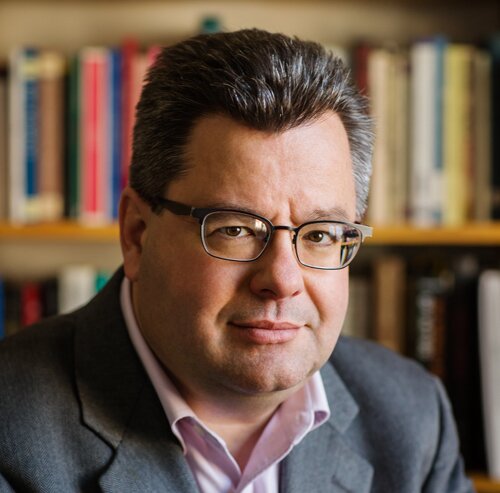
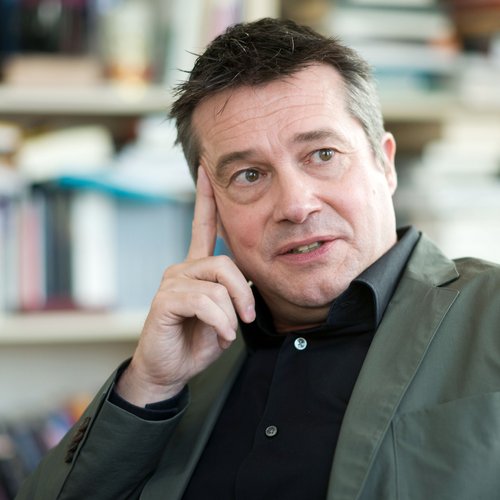
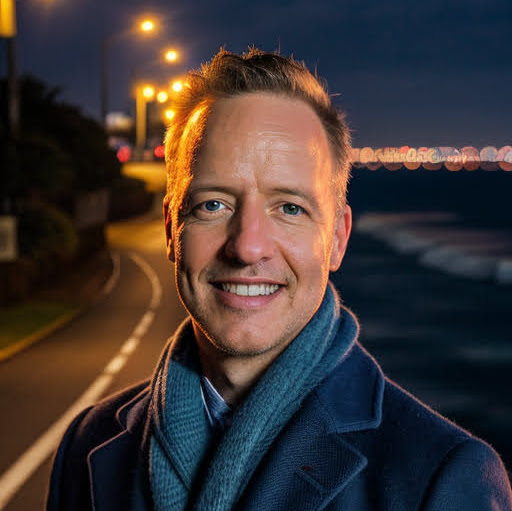
Christopher Thomas Sege, PhD is an Assistant Professor in the Department of Psychiatry and Behavioral Sciences at the Medical University of South Carolina (MUSC) College of Medicine. His research focuses on the neurophysiological mechanisms underlying anxiety disorders, particularly examining escape, avoidance, and approach behaviors in the anxiety disorder spectrum. Dr. Sege's primary research interests include: Anxiety Disorders and Emotional Processing Defensive Behaviors and Coping Mechanisms Neurophysiological Correlates of Emotional Anticipation Startle Response and Autonomic Nervous System Functioning Transcranial Magnetic Stimulation (rTMS) Applications His work bridges clinical psychology with neuroscience to understand how individuals with anxiety disorders process and respond to emotional stimuli. Dr. Sege leads the research study "Modeling and Modulating Mechanisms of Escape, Avoidance, and Approach in the Anxiety Disorder Spectrum" which investigates whether repetitive transcranial magnetic stimulation (rTMS) can alter how people with anxiety cope with emotional situations. This study involves measuring brain activation while participants view emotional pictures and undergo rTMS procedures. His publication record demonstrates expertise across multiple domains: Neurophysiological mechanisms of defensive behaviors Emotional anticipation and perception Startle modulation in anxiety disorders Borderline personality disorder research Development of experimental paradigms for emotional processing studies His research employs multiple methodologies including psychophysiology, event-related potentials, and neurostimulation techniques. Dr. Sege collaborates with researchers including Lisa McTeague, Bernadette Cortese, Carla Danielson, Thomas Uhde, and Aicko Schumann. His work appears in journals such as Biological Psychiatry: Cognitive Neuroscience and Neuroimaging, Biological Psychology, and Psychophysiology.
Jason Brownlee is a Professor in the College of Liberal Arts at the University of Texas at Austin. His research focuses on comparative politics, democracy, and authoritarianism, with a regional emphasis on the Middle East and Southeast Asia. Ph.D., Princeton University Contact: brownlee@austin.utexas.edu Research Interests : Brownlee investigates the persistence of authoritarian regimes, the political economy of repression, and the impact of foreign intervention on domestic politics. His work often analyzes Egypt, Iran, Malaysia, and the Philippines. Key Publications : Authoritarianism in an Age of Democratization (Cambridge, 2007) Democracy Prevention: The Politics of the U.S.-Egyptian Alliance (Cambridge, 2012) The Arab Spring: Pathways of Repression and Reform (Oxford, 2012, co-authored with Tarek Masoud and Andrew Reynolds) Teaching : Brownlee offers courses such as "War/Freedom in South Asia/Middle East" and "Issues & Policies in American Government," delivered both in-person and online.
Helmholtz Association of German Research CentersGermany
Dr. Sabine Krabbe is a Group Leader at the German Center for Neurodegenerative Diseases (DZNE) in Bonn, Germany, where she leads research on neural circuit mechanisms underlying adaptive learning and state-dependent decision-making. Her work integrates neuroscience, molecular biology, and behavioral approaches to understand how internal states influence behavior and how these processes are disrupted in neurological disorders. Dr. Krabbe's research focuses on the interactions between midbrain circuits of the substantia nigra and ventral tegmental area with their output structures such as the striatum and amygdala. She investigates how these networks integrate internal states with environmental cues to produce appropriate behavioral responses. Her laboratory employs state-of-the-art techniques including deep-brain calcium imaging at single-cell resolution in mice, opto- and pharmacogenetic manipulations, anatomical tracings, and molecular approaches to characterize neural circuit elements in detail. Her recent publications reveal significant insights into amygdala interneuron plasticity during fear learning, brain-wide representational drift in memory consolidation, and the molecular mechanisms underlying Parkinson's disease progression. Her work demonstrates how activity patterns within specific neural circuits change in early stages of neurodegenerative diseases and how this dysfunction contributes to cognitive deficits and emotional disturbances. Dr. Krabbe is actively involved in the neuroscience community, organizing the BonnBrain Conference 2026 and sharing research through social media platforms. She has established herself as an emerging leader in the field of systems neuroscience with a particular focus on the neural basis of emotional states and decision-making processes.
University of Illinois Urbana-ChampaignUnited States
Craig M. Koslofsky is a Professor of History at the University of Illinois at Urbana-Champaign, with additional affiliations in Germanic Languages and Literatures, the European Union Center, and the Program in Medieval Studies. His research focuses on early modern Europe, particularly the history of everyday life and human skin in the early modern era (1400–1800). He explores topics such as medical practices, slavery’s impact on indigenous populations, and supernatural beliefs in colonial contexts. His research interests span the Atlantic World, British Empire, and medieval Europe, reflecting interdisciplinary approaches to historical analysis. Recent publications address the intersection of skin studies and colonialism, the cultural history of ghosts in Enlightenment America, and the Reformation’s local manifestations. He has edited works on transatlantic slave trade surgeons and early modern religious debates. Koslofsky holds a Ph.D. and is based in Gregory Hall. His work bridges global and local histories, emphasizing the material and cultural dimensions of early modern life. He collaborates across disciplines, engaging with medical history, literary studies, and colonial studies.
Qimin Liu is an Assistant Professor at Boston University, serving as Lab Director of the Quantitative Psychopathology Laboratory. He holds a PhD in Psychological Sciences from Vanderbilt University with specializations in Clinical Science and Quantitative Methods. His research focuses on emotional disturbances across development, statistical methodology development, and health equity with an emphasis on intersectional marginalization. He has expertise in analyzing intensive longitudinal data and has published extensively on topics like irritability, suicidality, and mental health disparities among sexual and gender minority populations. Dr. Liu’s work frequently integrates advanced statistical techniques such as latent variable modeling, network analysis, and machine learning. His recent studies explore the temporal dynamics of affect, the impact of stigma on mental health, and the role of childhood adversity in psychiatric outcomes. Notable contributions include developing methods for analyzing zero-inflated longitudinal data and creating algorithms for digital phenotyping of mood disorders through mobile device usage patterns. His scholarship emphasizes bridging clinical phenomena with rigorous quantitative approaches, addressing gaps in understanding how social determinants and individual differences shape mental health trajectories. He has collaborated on large-scale datasets like the Collaborative Psychiatric Epidemiological Surveys and contributed to interdisciplinary research on public health outcomes among aging sexual minority men. Dr. Liu’s methodological innovations include the DACF framework for ceiling/floor effect data and the lamme package for log-analytic multiplicative effects modeling. He actively publishes in high-impact journals such as Psychological Methods and Journal of Abnormal Psychology , focusing on both empirical findings and statistical best practices.
University of California, Los AngelesUnited States
Hakwan Lau is a tenured Professor of Psychology at the University of California, Los Angeles (UCLA), where he is also a member of the Brain Research Institute. Additionally, he serves as Co-Director of the IBS Center for Neuroscience Imaging Research in South Korea, leading the Systems and Intervention Neuroscience (SIN) group. His work spans consciousness, metacognition, and perceptual reality monitoring, employing advanced neuroimaging and computational techniques. Education: Born and raised in Hong Kong, Hakwan Lau pursued graduate studies in England. He was previously an Associate Professor at Columbia University in New York before moving to UCLA, where he is now tenured. From 2017-2020, he was primarily based at the University of Hong Kong. Research Interests: Lau's lab investigates why we have subjective experiences , focusing on visual awareness, spatial attention, and metacognition. They use fMRI, decoded neurofeedback (DecNef), psychophysics, and computational modeling to explore how conscious perception arises and its clinical applications, such as treating phobias and PTSD. Research Trends: His recent work emphasizes decoded neurofeedback interventions for clinical conditions like phobias and PTSD, metacognitive mechanisms underlying confidence judgments, and neural correlates of subjective experience . The research bridges theoretical neuroscience with practical therapeutic applications, often using innovative techniques like closed-loop fMRI. Scientific Awards: While specific awards are not listed in the provided text, Lau has mentored 15 former trainees who are now independent PIs , reflecting his significant impact on the field. Advising and Grants: Lau actively advises numerous PhD students and postdocs across UCLA, the University of Hong Kong, and collaborative institutions. His lab supports projects ranging from AI-driven fMRI analysis to clinical neurofeedback trials . Labs and Teams: Lau leads the Metacognition and Consciousness Lab at UCLA, now relocated to the RIKEN Center for Brain Science near Tokyo. His team includes researchers from diverse backgrounds, focusing on interdisciplinary approaches to consciousness and metacognition.
Prof. Jan Theeuwes is a Full Professor of Cognitive Psychology at the Vrije Universiteit Amsterdam's Faculty of Behavioural and Movement Sciences, leading the ERC-funded research group on statistical learning and attention. He holds additional roles as Distinguished Visiting Research Professor at the William James Center for Research (Lisbon) and Visiting Professor at Zhejiang University (China). With over 474 publications and two ERC Advanced Grants (2013 & 2019), his work spans visual attention, statistical learning, and applied human factors in road design. He pioneered the 'Self-Explaining Roads' concept, revolutionizing global road safety design, and co-developed Open Sesame, a widely used open-source experiment builder. His research integrates EEG, fMRI, and computational modeling, addressing topics like distractor suppression, emotion, and leadership influence. Over 25 PhD students have graduated under his mentorship, many securing academic roles across Europe. Education: Cum laude degrees in Experimental Psychology (Tilburg University) and a PhD (VU Amsterdam, 1992). Key awards include the Bertelson Award (2001) and KNAW membership (2010). He advises the Dutch Department of Transportation and founded the Institute for Brain and Behavior Amsterdam (IBBA) in 2016. Ancillary roles include leadership in European psychological societies and consultancy for Attention Architects, applying eye-tracking research in corporate settings.
Professor Gavan McNally is a distinguished behavioral neuroscientist at the University of New South Wales, where he serves as a Professor in the School of Psychology. He is actively engaged in research on the fundamental behavioral and brain mechanisms for learning and motivation, with applications to clinical conditions such as addictions, anxiety disorders, and mood disorders. McNally holds several prestigious editorial positions, including Editor-in-Chief of Neurobiology of Learning & Memory and Senior Editor of The Journal of Neuroscience. He also serves as President-Elect of the European Behavioral Pharmacology Society and is a Member of the Australian Research Council College of Experts. McNally's research interests span behavioral neuroscience, focusing on how fundamental brain mechanisms apply to clinical conditions. He employs a systems neuroscience approach, combining well-controlled behavioral approaches with optogenetics, chemogenetics, in vivo calcium imaging, and whole brain circuit mapping in both normal and transgenic animals. His work bridges basic science with clinical applications through collaborations with colleagues at University of Sydney, Sydney Local Health District, Monash University, and Turning Point. McNally's research particularly examines the cellular, circuit, and systems level mechanisms underlying learning, motivation, and their dysregulation in disorders like addiction. His laboratory investigates how these mechanisms translate to human conditions, with a strong emphasis on developing new treatments for psychological disorders. His extensive publication record demonstrates a clear trajectory in understanding punishment learning, addiction mechanisms, and the neural circuits underlying motivated behavior. Recent work has increasingly focused on the cognitive pathways to punishment insensitivity, the role of specific neural circuits in addiction, and translational approaches to understanding maladaptive behaviors. McNally's research bridges animal models with human studies, creating a comprehensive understanding of the neural mechanisms that govern learning and motivation, with particular attention to how these processes go awry in addiction and other psychological disorders. 2008 QEII Fellow, Australian Research Council 2009 Association for Psychological Science, International Rising Star 2010 Fellow, Association for Psychological Science 2010 UNSW Faculty of Science Staff Excellence Award for Research and Training 2011 Pavlovian Research Award, The Pavlovian Society 2012 Future Fellow (Level 3), Australian Research Council 2016 D.G. Marquis Behavioral Neuroscience Award, American Psychological Association 2017 Fellow, American Psychological Association 2019 Fellow of the Academy of Social Sciences in Australia 2021 D.G. Marquis Behavioral Neuroscience Award, American Psychological Association 2022 Ross Day Plenary Lecturer, Australasian Brain and Psychological Sciences 2023 European Behavioural Pharmacology Society Plenary Lecturer 2024 Elspeth McLachlan Plenary Lecturer, Australasian Neuroscience Society 2024 D.G. Marquis Behavioral Neuroscience Award, American Psychological Association Professor McNally actively supervises several students including Bixuan Lin, Si Yin Lui, Hannah Machet, Bart Cooley, Kelly Zhuang, and Alexandra Gregory. His current research is supported by significant funding including an Australian Research Council Discovery Project (2024-2026) on "Risky choices: From cells and circuits to computations and behaviour," another Discovery Project (2025-2028) on "Multimodal mapping of punishment learning," and NHMRC grants including a Synergy Grant on "Linking clinical and basic science discovery to find new treatments for alcohol-use disorder" and an Ideas Grant on "Novel pathways to abstinence from alcohol seeking." These projects reflect his commitment to both fundamental neuroscience and translational applications for treating psychological conditions. His teaching responsibilities include PSYC2081 Learning & Physiological Psychology and PSYC3051 Physiological Psychology. McNally's laboratory employs advanced techniques including optogenetics, chemogenetics, in vivo calcium imaging, and whole brain circuit mapping to investigate the neural mechanisms underlying learning, motivation, and their dysregulation in disorders. His team works at the intersection of basic neuroscience and clinical applications, with strong collaborations across multiple institutions to translate fundamental findings into potential treatments for addiction and other psychological disorders. The lab has made significant contributions to understanding the role of brain regions like the ventral pallidum, paraventricular thalamus, and nucleus accumbens in addiction, fear learning, and punishment sensitivity.
Bertram Müller-Myhsok is a Research Professor and Research Group Leader at the Max Planck Institute of Psychiatry in Munich, Germany. His research focuses on statistical genetics and transcriptomic data analysis in psychiatric disorders, particularly major depression, PTSD, schizophrenia, and their treatment responses. He integrates machine learning with genetic and clinical data to develop predictive models and stratified treatment approaches. Professional activities include leadership roles in the International Max Planck Research School for Translational Psychiatry and collaborations with institutions like the Institut du Cerveau (Paris) and Bernhard Nocht Institute (Hamburg). His work spans genetic epidemiology, psychiatric genomics, and precision medicine, with over 400 publications in high-impact journals. Key research areas include identifying genetic risk factors for mental disorders, developing polygenic scores, and leveraging omics data to uncover disease mechanisms. He leads projects like Psych-STRATA, a Horizon Europe-funded initiative advancing personalized psychiatry through pharmacogenomics.
Rainer Forst is Professor of Political Theory and Philosophy at Goethe University Frankfurt, where he holds positions in both the Institute of Political Science and the Institute of Philosophy. He serves as Director of the Research Center for Normative Orders, Co-speaker of the cluster initiative "ConTrust – Trust in Conflict," Spokesperson of the Leibniz Prize Research Group "Transnational Justice," and Deputy Spokesperson of the Coordinating Institute Frankfurt at the Research Institute for Social Cohesion. Additionally, he is a Permanent Fellow at the Research College for Human Sciences Bad Homburg, Director of the Justitia Center for Advanced Studies, and Head of the Master's program in Political Theory. Since 2017, he has also been a Research Professor of Political Theory at the Social Science Research Center (WZB) in Berlin. Forst received his education studying philosophy, political science, and American studies in Frankfurt/Main, New York, and at Harvard University. His academic journey includes: Ph.D. under Jürgen Habermas with thesis "Contexts of Justice: Political Philosophy Beyond Liberalism and Communitarianism" (1993) Habilitation in 2003 with "Tolerance in Conflict: History, Content, and Present of a Controversial Concept" Professor Forst's research focuses on foundational questions of political philosophy and critical theory. His work centers on justice theory, democracy, toleration, normative orders, and social cohesion. He has developed a distinctive approach he terms "critical constructivism," which builds on Kantian philosophy while engaging with the Frankfurt School tradition of critical theory. His research examines how justification processes form the basis of legitimate political orders and how concepts like solidarity and tolerance function within democratic societies. Forst's work is notable for its systematic integration of historical analysis with normative theory, creating frameworks for understanding contemporary political challenges through the lens of philosophical tradition. His recent publications reveal a growing focus on democratic regression, trust in conflictual societies, and the philosophical foundations of social cohesion. Forst has increasingly addressed the dual crises of democracy - both the political-normative justification crisis and the global structural crisis. His work connects Kantian philosophy with contemporary democratic theory, exploring concepts like the "noumenal republic" as frameworks for understanding justice and legitimacy in complex societies. A consistent thread throughout his scholarship is the examination of how power relations intersect with normative claims in political justification processes. Professor Forst has received significant recognition for his contributions to political philosophy: Gottfried Wilhelm Leibniz Prize (2012), Germany's highest research honor Member of the Berlin-Brandenburg Academy of Sciences and Humanities Corresponding Fellow of the British Academy Permanent Fellow at the Research College for Human Sciences Bad Homburg As an educator and mentor, Forst has directed numerous research initiatives and supervised many doctoral students who have gone on to prominent academic positions. He leads the international MA program in Political Theory funded by the German Academic Exchange Service and has established several significant research centers including the Research Center for Normative Orders, the Leibniz Prize Research Group "Transnational Justice," and the Center for Advanced Studies "Justitia Amplificata." His editorial work includes serving as Associate Editor of Ethics and member of editorial boards for numerous prestigious journals including Political Theory and Constellations. Forst's research infrastructure includes the Research Center for Normative Orders, which he directs, and the cluster initiative "ConTrust – Trust in Conflict," which examines political coexistence under conditions of uncertainty. His Leibniz Prize Research Group "Transnational Justice" investigates justice beyond national borders, while the Justitia Center for Advanced Studies serves as a hub for interdisciplinary research on justice-related topics. These institutions form an integrated network supporting collaborative research across philosophy, political science, and law.
Istvan Albert is a Research Professor of Bioinformatics at Pennsylvania State University , affiliated with the Department of Biochemistry and Molecular Biology . He leads the Bioinformatics Consulting Center and teaches BMMB 852: Applied Bioinformatics . Research Interests: Specializing in bioinformatics, large-scale biological data analysis, microarray and sequence analysis, scientific programming, algorithm development, and database-driven web development. His work spans gene ontology visualization , RNA-Seq analysis , and coronavirus research . Software Development: Created GeneScape for gene function visualization and bio for bioinformatics workflows. Maintains the Biostar Handbook series and the Biostars Q&A Forum , a leading bioinformatics resource.
Elizabeth Phelps is the Pershing Square Professor of Human Neuroscience in the Department of Psychology at Harvard University's Faculty of Arts and Sciences. She directs the Phelps Lab, which investigates how emotions influence learning, memory, and decision-making using multidisciplinary approaches including behavioral studies, neuroimaging (fMRI), physiological measurements, and computational modeling. The lab collaborates widely across psychology, neuroscience, economics, and clinical disciplines. Her research examines: Human neuroscience of affect and cognition interactions Emotional modulation of learning and memory systems Neural mechanisms of decision-making under uncertainty Impact of emotion on social cognition and behavior Translational applications for psychological disorders Contact information: Email: phelps@fas.harvard.edu Lab email: phelpslab@fas.harvard.edu Address: Northwest Lab Building, 52 Oxford Street, Cambridge, MA 02138 The lab welcomes study participants and research assistant applicants, emphasizing diversity and inclusion in research.
Dr. Angelina Vernetti is a Research Scientist at Yale University's Child Study Center, affiliated with the Social and Affective Neuroscience of Autism (SANA) Program. She holds a PhD in Developmental Neuropsychology from Birkbeck, University of London, and completed postdoctoral training at Yale. Her research focuses on social attention, reinforcement learning, and emotional regulation in children with autism, using advanced methodologies like eye-tracking and physiological recordings. Education: PhD in Developmental Neuropsychology, Birkbeck, University of London (2018) MSc in Neurosciences and Neuropsychology, University of Toulouse (2010) BSc in Cell Biology, University of Angers (2008) Research Interests : Dr. Vernetti investigates the neural and behavioral foundations of social difficulties in autism, including social attention mechanisms, emotional regulation abnormalities, and language processing deficits. Her work integrates experimental paradigms with neuroimaging and physiological measures to identify biomarkers for early intervention. Collaborations: She collaborates with prominent researchers like Katarzyna Chawarska and Suzanne Macari, focusing on neurodevelopmental mechanisms and translational research. Her team explores innovative approaches to autism assessment, including live eye-tracking and puppet-based interventions. Labs & Affiliations: Member of the Chawarska Lab and the Center for Brain & Mind Health. Active in training undergraduate, postgraduate, and doctoral students in autism research methodologies.
Pietro Ortoleva is a Professor of Economics and Public Affairs at Princeton University , affiliated with the Department of Economics and the School of Public and International Affairs. His research spans Decision Theory , Behavioral Economics , Experimental Economics , and Political Economy , with a focus on understanding deviations from traditional economic models. Education: PhD in Economics, New York University (2009); BA in Economics, Università degli Studi di Torino (2004). Professional Roles: Coeditor of the American Economic Review (since 2021), former Editor of the Journal of Economic Theory (2018–2020), and editorial board member for multiple journals. His work investigates stochastic choice , ambiguity aversion , and reference-dependent preferences , often through incentivized experiments. Recent studies include the role of social norms in vaccine uptake , cautious utility models , and non-Bayesian belief updating . He has secured multiple National Science Foundation grants for projects on behavioral economics and decision-making under uncertainty. His 15 most recent publications reveal trends in behavioral decision theory , with emphasis on randomization preferences , time lotteries , cognitive biases , and political behavior . These studies frequently bridge economics, psychology, and public policy.
Karestan C. Koenen is Professor of Psychiatric Epidemiology at the Harvard T.H. Chan School of Public Health and an Associate Member at the Broad Institute of MIT and Harvard . She also serves as Affiliated Faculty at the Harvard University Center for the Environment , advising students in Epidemiology and Social Behavioral Sciences. BA in Economics, Wellesley College MA in Developmental Psychology, Columbia University PhD in Clinical Psychology, Boston University Post-doctoral Fellowship in Psychiatric Epidemiology, Columbia University Dr. Koenen's research focuses on three areas: (1) understanding PTSD resilience, (2) trauma's long-term physical health impacts, and (3) expanding access to evidence-based mental health treatments. Her work bridges genetics, global mental health, and trauma epidemiology, with recent studies on epigenetic aging, cognitive outcomes after trauma, and substance use comorbidities. Her 2025 publications span psychiatric genetics, trauma neurobiology, and women's health, emphasizing machine learning, neuroimaging, and population-level interventions. Current projects include the Broad Trauma Initiative and NIMH-funded training programs. 2025 Junior Faculty Mentoring Award 2021 Pamela Sklar Innovation Award 2017 Distinguished Alumnae Award 2015 Robert S. Laufer Memorial Award Dr. Koenen actively trains graduate students through the Trauma Epidemiology and Population Mental Health Research Group . She integrates advocacy into her work, having testified before Congress and consulted on documentaries about trauma, while publishing in outlets like the Boston Globe and Psychology Today . Her lab collaborates on mental health policy and global trauma research.