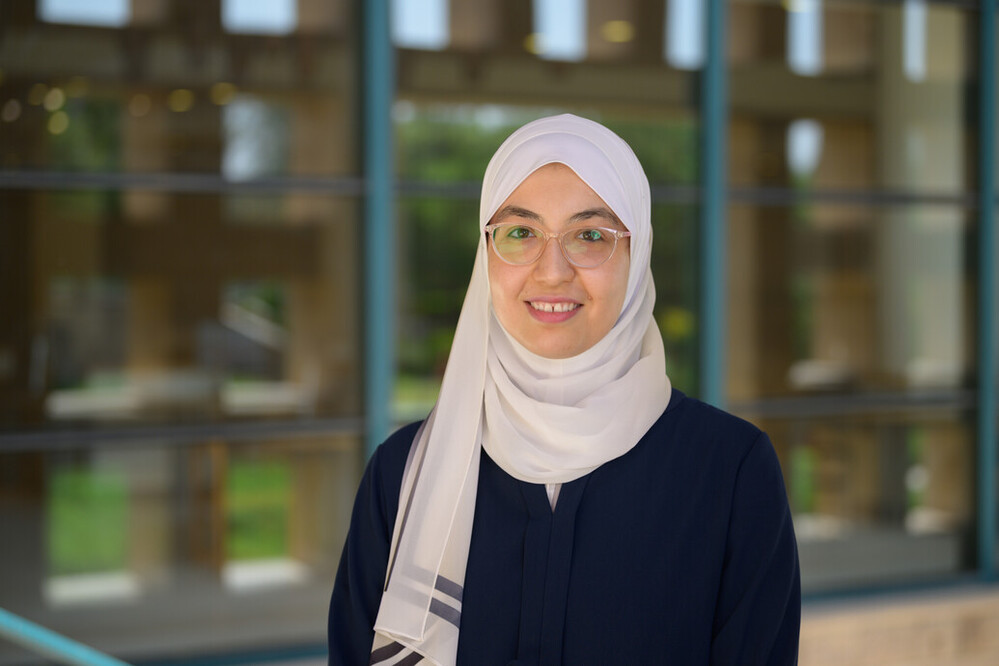
Charles Reiss is an Assistant Professor in the Computer Science Department at the University of Virginia, focusing on teaching and research in computer systems and education. He holds a PhD from UC Berkeley (2016) and has a strong background in computer architecture and distributed systems. His research interests include computer science education methodologies, cloud computing, and systems optimization. Education: B.S. Computer Science (Georgia Tech, 2008), M.S. Computer Science (UC Berkeley, 2011), Ph.D. Computer Science (UC Berkeley, 2016). Teaching: Reiss has taught courses such as CS 3130 (Computer Systems and Organization), CS 3330 (Computer Architecture), and CS 4630 (Defense Against the Dark Arts). His courses emphasize hands-on learning with tools like HCLRS, an educational hardware description language. Awards: Winner of the SoCC 2021 Test of Time Award for work on Google cloud trace analysis. Contributions: Developed educational software like HCLRS and CPU cache exercises. Active in curriculum design for computer systems and security education.
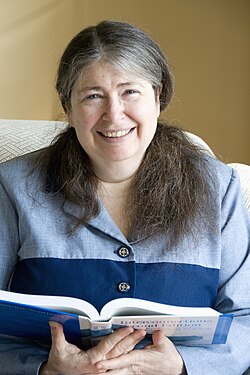
Radia Joy Perlman is a pioneering computer scientist, network engineer, and author renowned for her foundational contributions to network protocols and security. She is best known for inventing the Spanning Tree Protocol (STP) , which revolutionized network bridging, and the TRILL protocol , which improves Ethernet efficiency. Her work spans network design , security algorithms , and self-organizing systems . Perlman earned her Ph.D. in Computer Science from the Massachusetts Institute of Technology (MIT) in 1988. Her doctoral thesis on Byzantine-robust routing protocols laid the groundwork for resilient network design. She has taught courses at institutions including the University of Washington, Harvard University, MIT, and Texas A&M. Her research focuses on network scalability , security , and self-organizing systems . Recent publications include the third edition of her seminal book on network security (2022) and the RFC 6325 specifying TRILL. Her work addresses challenges in distributed algorithms , link-state routing , and PKI trust models . Perlman has received numerous accolades, including: National Inventors Hall of Fame (2016) Internet Hall of Fame (2014) SIGCOMM Award (2010) USENIX Lifetime Achievement Award (2006) ACM Fellow (2016) IEEE Fellow (2008)
Giulia Fanti is an academic researcher affiliated with Carnegie Mellon University in the Computer Science Department . Her research focuses on privacy-preserving technologies, blockchain systems, and machine learning mechanisms, with significant contributions to federated learning, differential privacy, and cryptocurrency network design. Key Research Areas : Privacy in blockchain, Generative Adversarial Networks (GANs), Federated Learning, Game Theory applications to decentralized systems. Recent Publications : Her work explores liquidity provisioning in decentralized finance, truncated consistency models for image generation, and private data valuation frameworks. She has contributed to venues like NeurIPS, ICLR, and SIGMETRICS, often addressing privacy-utility tradeoffs.
Zhenjie Zhang is a Professor in the Department of Computer Science at East China Normal University's School of Computer Science and Software Engineering, with a distinguished research career spanning nearly two decades. His work bridges theoretical computer science with practical industrial applications, maintaining strong international collaborations with researchers from TU Wien, National University of Singapore, and industry partners including ByteDance. Dr. Zhang's research focuses on the intersection of database systems, machine learning, and industrial applications. His early work centered on database privacy and query processing, evolving toward causal inference, fault diagnosis systems, and industrial AI applications. His recent publications demonstrate a strategic shift toward solving real-world engineering problems using advanced machine learning techniques, particularly in manufacturing, transportation, and cloud systems. The consistent publication trajectory across top venues like IEEE TKDE, VLDB, and ACM Transactions shows sustained research excellence and adaptability to emerging technical challenges. His publication record reveals significant contributions to causal inference methods, evidenced by multiple papers on causal discovery and transfer learning. The research demonstrates practical impact through industrial collaborations, particularly in fault diagnosis systems for mechanical equipment and adaptive control for unmanned vehicles. The recent work shows increasing focus on deploying AI models efficiently in resource-constrained environments, reflecting awareness of practical implementation challenges. Dr. Zhang has mentored numerous junior researchers who have become active contributors in the field, including Ruichu Cai and Zining Zhang. His collaborative network spans multiple continents, indicating strong research leadership and international recognition. The consistent flow of publications in top venues suggests successful grant funding and research group management, though specific grant details aren't provided in the source material.
Dina G. Mahmoud is an Assistant Professor at the Department of Computer Science and Engineering at The American University in Cairo (AUC). She earned her Ph.D. in Computer and Communication Sciences from EPFL, Lausanne, Switzerland (2019-2024), where she was a CYD Fellow and collaborated with Dr. Mirjana Stojilović and Dr. Vincent Lenders. Her academic activities include teaching Digital Design, Computer Organization, and Applied Data Structures at AUC. Ph.D. (2019-2024): School of Computer and Communication Sciences, EPFL B.Sc. (2014-2019): Electronics and Communications Engineering with minor in Mathematics, AUC Her research focuses on heterogeneous computing systems , emphasizing security and reliability at the hardware and electrical levels . She investigates fault injection attacks in FPGA systems, particularly in multitenant cloud environments, and has demonstrated the first FPGA-to-CPU fault-injection exploit. Recent publications highlight trends in FPGA security , including power-wasting attacks, hardware Trojans, undervolting exploits, and fault tolerance mechanisms. Her work bridges hardware-software co-design , cloud security , and reconfigurable computing . CYD Fellow (first doctoral recipient) Google Generation Scholarship (2022, EMEA) IC Doctoral Fellowship at EPFL She has served as Head/Teaching Assistant at EPFL for courses like Computer Architecture and Information, Calcul, Communication, and as Head Undergraduate Teaching Assistant at AUC for Digital Logic Design. She contributes to the technical program committee of IEEE Industrial Electronics Society’s ETFA conference.
Mark Bailey is the Robert and Pamela (Craig) Delaney Professor of Computer Science at Hamilton College, where he has served as Chair of the Department of Computer Science since 2011. He teaches foundational courses including Introduction to Computer Science, Data Structures, and Computer Organization, and pioneered the innovative course Secrets, Lies, and Digital Threats that pairs Hamilton students with high school classes for cybersecurity education. His educational background includes: Ph.D. in Computer Science from the University of Virginia M.C.S. from the University of Virginia B.S. from the University of Massachusetts Dr. Bailey's research bridges theoretical computer science and practical applications, with primary focus areas in computer security , embedded systems optimization , and compiler design . His work on mobile encryption architectures and fault-tolerant distributed systems demonstrates interdisciplinary innovation, while his educational initiatives like the high school cybersecurity outreach program reflect commitment to real-world impact. Recent publications show increasing emphasis on mobile security and interactive optimization tools for embedded environments. His publication trends reveal consistent exploration of security vulnerabilities across computing layers—from low-power mobile encryption to server protection models—with growing attention to educational applications of security research since 2008. The interdisciplinary nature of his work connects hardware architecture, software engineering, and pedagogical innovation. Key recognitions include: Three competitive National Science Foundation grants Two Microsoft Research grants National Research Council/Air Force Research Laboratory Faculty Fellowship Hamilton College's Richardson Award for Faculty Innovation Dr. Bailey has secured over $1.2M in external funding through NSF and Microsoft Research grants, and provided consultancy for the Air Force Research Laboratory and Assured Information Security. His academic service includes editorial leadership as Editor-in-Chief of ACM Inroads and membership on the Barry Goldwater Scholarship review committee. Campus leadership roles span the Information Security Review Board, High Performance Computing Advisory Committee, and multiple college governance bodies since 1997. He actively shapes academic infrastructure through committee work including the Committee on Information Technology (chaired 2003–2005) and Science Facilities Faculty Committee, while maintaining strong industry connections through conference organization for SIGPLAN and NYCWiC.
Ruslan Nikolaev is an Assistant Professor in the Department of Computer Science and Engineering, specializing in nonblocking algorithms, memory reclamation, and concurrent data structures. His research spans operating systems, virtualization, and lock-free programming paradigms. Academic Rank: Assistant Professor Department: Computer Science and Engineering Research Interests focus on: Nonblocking and wait-free algorithms Memory-efficient reclamation techniques Lock-free data structures Operating system virtualization Device driver security Recent work includes 2025 advancements in SCOT and RRR-SMR frameworks for nonblocking structures, 2024 contributions to wait-free reclamation, and 2022 innovations in address space randomization (Adelie), critical service domains (Kite), and wait-free queues (Wcq). Earlier projects (2013-2020) explored OS virtualization (VirtuOS) and reclamation mechanisms (LibrettOS). Trends in his publications highlight: Optimization of concurrent algorithms Security enhancements in Linux drivers Virtualization techniques for critical services Efficient memory management strategies Robust fault tolerance in distributed systems
Dr. Paolo Palmieri is a Senior Lecturer in Cyber Security at the University College Cork (UCC) , affiliated with the School of Computer Science & IT . He serves as a Funded Investigator in Insight and CONNECT research centers, Supervisor in ADVANCE and AI Centres for Research Training, and co-Investigator in DTIF-Holistics and SFI-Spoke on Blended Autonomous Vehicles . PhD in Cryptography (2013), Université catholique de Louvain Prior positions: Lecturer at Cranfield University and Bournemouth University (UK), Post-Doctoral Researcher at Delft University of Technology (Netherlands) Research spans cryptography, privacy, and security , with focus on: Secure multi-party computation Homomorphic encryption Location privacy mechanisms Spatial Bloom filters Smart city security Blockchain applications in IoT Recent publications highlight advancements in blockchain-based healthcare authentication , privacy-preserving vehicular networks , and homomorphic encryption for sentiment analysis . He chairs Malicious Software and Hardware in Internet of Things (Mal-IoT) and Location Privacy Workshop (LPW) . Active in PhD supervision , he currently advises students in cryptographic protocols for location-based services. Collaborates with Smart City Lab at the University of Bologna and participates in international research networks .
Marco Pontin is a Postdoctoral Researcher at the Soft Robotics Lab (SRL) within the Oxford Robotics Institute (ORI) at the University of Oxford. His research focuses on soft robotics, robotic resilience, and embodied intelligence. University of Oxford Soft Robotics Lab, Oxford Robotics Institute Prior to joining ORI in 2023, he earned his PhD at the Biomedical Robotics Lab, University of Sheffield, where he developed a multimodal soft valve for autonomous fault detection in soft pneumatic actuators. His work spans sensor design, fault tolerance, and adaptive robotics. Recent publications highlight advances in optical fiber bending sensors, bead jamming actuators, and textile tactile systems, demonstrating his expertise in resilient and self-regulating robotic mechanisms. Key subfields include programmable logic control, tissue growth simulation, and industrial exoskeletons.
Seiichiro Tani is a Professor at Waseda University's Faculty of Education and Integrated Arts and Sciences since April 2024. He previously held prominent roles at NTT Communication Science Laboratories (2003-2024), including Leader of the Computing Theory Research Group and Project Manager of the Research Center for Theoretical Quantum Information. He has also served as a Visiting Professor at Tokyo Institute of Technology (2022-2024) and a researcher at JST's ERATO projects (2004-2009). His academic journey includes a Ph.D. in Computer Science from the University of Tokyo (2006), preceded by M.E. and B.E. degrees from the University of Tokyo and Kyoto University, respectively.
Dr. Lixin Tao is a tenured Professor and Chairperson of the Computer Science Department at Pace University's Seidenberg School of CSIS. He earned his PhD in Computer Science from the University of Pennsylvania in 1988 and has conducted research and teaching at Concordia University (1988-2001) before joining Pace University. Research Interests: Dr. Tao's work spans Internet Computing , Server Scalability , Component Technologies , Parallel Computing , Functional Simulation , and Combinatorial Optimization , with recent focus on Knowledge Graphs , Semantic Web , and Secure Mobile Cloud Systems . He has pioneered cloud computing research since the 1990s and developed industry standards like OWL extensions. Over 300 peer-reviewed publications Director of Pace University's PhD Computer Science Program (2013-2017) Developed MS in Enterprise Analytics (2015) and BS in Computer Engineering (2017) Scientific Awards: Recognized as IEEE Senior Member (2020), ABET Evaluator (2001-2012), and recipient of multiple research grants including a $12M NSERC Strategic Technology Program and NSF awards for server infrastructure. He received Pace University's Presidential Research Grant and collaborated with institutions like Stanford University on knowledge engineering projects. Professional Contributions: Directed ABET accreditation for Pace's BS-CS program (2010-2012), served as Editor-in-Chief for the Journal of Computer Science Research (2018-present), and supervised dozens of PhD/DPS students in areas ranging from Mobile Payment Protocols to Drug Side Effect Knowledge Graphs . His lab focuses on Knowledge-Empowered AI and Secure Software Development .
Kay Römer is Professor and Director of the Institute for Technical Informatics at Graz University of Technology, Austria. He previously held a professorship at the University of Lübeck, Germany, and was a senior researcher at ETH Zurich, where he obtained his doctorate in computer science in 2005. His research focuses on networked embedded systems, particularly in the domains of Wireless Sensor Networks, Internet of Things (IoT), and Cyber-Physical Systems. Key areas include wireless networking, operating systems, programming models, dependability, and deployment methodologies for large-scale embedded networks. The most recent publications reflect a consistent trend in dependable and scalable IoT systems, with emphasis on wireless protocols, fault tolerance, real-time operation, and system robustness. His work bridges theoretical innovation with practical deployment, often involving cross-layer design and energy efficiency. Associate Editor, IEEE Transactions on Mobile Computing Associate Editor, IEEE Transactions on Computers Program Co-Chair, ACM SenSys 2011 Program Co-Chair, ACM/IEEE IPSN 2013 Coordinator, EU FP7 FIRE Project RELYonIT Coordinator, TU Graz Excellence Project "Dependable Internet of Things" Kay Römer has advised multiple research teams and coordinated major international projects funded by the Swiss National Science Foundation, European Commission, German Science Foundation, German Federal Ministry of Education and Research, and the Austrian Federal Ministry of Science, Research, and Economy. He has delivered invited keynote talks and co-directed five international summer schools, demonstrating strong leadership in research dissemination and mentoring. He leads research activities within the Institute for Technical Informatics at TU Graz, focusing on dependable and secure IoT systems, with active collaborations across Europe and industry partners.
Sergio Rajsbaum is a Professor (Investigador Titular "C") at the Institute of Mathematics of the Universidad Nacional Autonoma de Mexico (UNAM) in Mexico City. He has been a member of SNI (Sistema Nacional de Investigadores) nivel III. His academic career includes a visiting scientist position at MIT's Laboratory for Computer Science (1993-1995) and a Research Staff member position at Cambridge Research Laboratory of HP (1999-2002). Rajsbaum received his Computer Engineering degree from UNAM in 1985 and his PhD in Computer Science from the Technion (Israeli Institute of Technology) in 1991 under the supervision of Shimon Even. His academic genealogy traces back to Paul Erdős (Erdős number 2). Rajsbaum's research focuses on the theory of distributed computing, particularly issues related to coordination, complexity, and computability. He has made significant contributions to combinatorial topology applications in distributed systems, consensus problems, and graph theory. His work often bridges theoretical computer science with practical distributed system design. He has pioneered the use of topological methods to study distributed computing from complexity and computability perspectives. Analyzing his publication record reveals a consistent focus on fundamental problems in distributed computing, particularly consensus and set agreement. His work demonstrates a progression from basic algorithm design to more abstract topological approaches. The publications show strong collaboration patterns, especially with researchers like Achour Mostefaoui, Michel Raynal, Maurice Herlihy, and Eli Gafni. His research spans theoretical foundations, algorithm design, and practical implementations. Best Student Paper Award at ACM PODC 2008 for "New Combinatorial Topology Upper and Lower Bounds for Renaming" Long-standing editorial role as editor of the ACM SIGACT News Distributed Computing Column (2000-2007) Rajsbaum has been actively involved in the distributed computing research community, serving as program committee chair for major conferences including LATIN02, PODC03, and ENC06. He has been a steering committee member for DISC, LADC, LATIN, and PODC. His teaching includes graduate and undergraduate courses on Principles of Distributed Computing, Algorithms, Theory of Computation, and JAVA Distributed Computing at UNAM. He has mentored numerous students and contributed significantly to the academic community through conference organization and editorial work.
Shay Golan is a Senior Lecturer in the Computer Science department at Ariel University, where he teaches core algorithms and data structures courses. Previously, he held postdoctoral positions at Reichman University, Haifa University (hosted by Shay Mozes and Oren Weimann), and was a Fulbright Postdoctoral Fellow at UC Berkeley's EECS department (hosted by Jelani Nelson). He earned his Ph.D. in Computer Science from Bar-Ilan University under the supervision of Ely Porat and Tsvi Kopelowitz. Dr. Golan's primary research focuses on string algorithms with emphasis on streaming, small space, and dynamic settings. His work spans multiple subfields including data structures, graph algorithms, and discrete algorithms. He has made significant contributions to pattern matching, edit distance problems, and string compression techniques, with applications extending to bioinformatics for DNA sequence analysis. His recent publication trajectory (2022-2026) reveals a strong focus on string algorithmic challenges across multiple dimensions: theoretical complexity analysis (LZ77 compression, string covers), specialized string problems (2D string matching, hairpin structures), graph algorithm applications (planar graph distance oracles), and bioinformatics implementations (DNA minimizers). His work consistently appears in top theoretical computer science venues including STOC, SODA, and CPM, demonstrating both theoretical depth and practical relevance. Fulbright Postdoctoral Fellow at UC Berkeley As an educator, Dr. Golan has consistently taught foundational computer science courses including Algorithms 1, Algorithms 2, Data Structures, and Computability since 2016. His research is supported through collaborations with leading institutions including Reichman University, Haifa University, and UC Berkeley. He maintains active research partnerships with prominent computer scientists including Itai Boneh, Ely Porat, and Tsvi Kopelowitz. Dr. Golan participates in the broader theoretical computer science community through conference presentations and workshop participation, with recorded talks available for several of his publications. His work bridges theoretical computer science with practical applications, particularly in computational biology and genomic sequence analysis.
Professor Kenneth Brown is affiliated with the Department of Computer Science at University College Cork (UCC) , Ireland. He holds the academic rank of Professor and is a Principal Investigator at the Insight Centre for Data Analytics and the CTVR (Telecommunications Research Centre) . BSc (Hons) Mathematics, University of Glasgow, 1986 MSc Mathematical Logic and the Foundations of Computation, University of Manchester, 1987 PhD Artificial Intelligence in Engineering, University of Bristol, 1991 His research focuses on Artificial Intelligence, constraint programming, optimisation, and distributed reasoning , with applications in wireless networking, sensor networks, and dynamic resource management . He also works on smart energy systems, data analytics, and human-centric applications. His recent work includes projects under the SFI-funded Insight Centre and Horizon Europe initiatives like GLACIATION and SEISMEC. His publications span topics from wireless sensor network optimization and cognitive radio to constraint-based decision support and AI in emergency management. He has led and contributed to over 15 recent publications in top-tier journals and conferences, showing a strong trend in AI-driven solutions for networked and intelligent systems. IEEE SECON 2015 Best Demonstration 2014 TAOS Best Paper Award in Access Networks and Systems Best paper, SMARTGREENS 2013 Enterprise Ireland Lifescience and Food Commercialisation Award Best Application Paper, AI2008 Best Application Paper, AI2006 Best paper nomination, ECAI 2004 Best Paper, Intl Conf AI in Design Professor Brown has supervised numerous PhD and MSc students in areas including constraint programming, sensor networks, evacuation modeling, and smart buildings. He has secured significant research funding from SFI, Enterprise Ireland, and IRCSET. He is actively involved in research leadership, serving as Deputy Director of Insight@UCC and PI in multiple national and international projects. He is a member of research groups involved in GLACIATION (green, responsible data operations), SEISMEC (human-centric industry), and SMARTeBuses . His lab supports a team of doctoral students and research staff working on AI, networking, and data analytics for real-world applications.