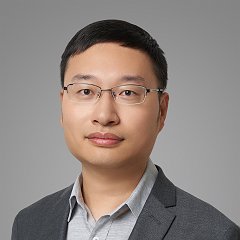
Prof. Dr.-Ing. Horst Schulte is a Professor at the Department of Engineering I, HTW Berlin - University of Applied Sciences. His expertise lies in Control Systems Engineering, Electrical Engineering, and Renewable Energy Systems, with a focus on modeling, fault-tolerant control, and computational intelligence applications. Department of Engineering I, HTW Berlin Chair in Control Systems Group ResearchGate profile with 214 publications Research Interests include: Model-based and data-driven control systems Wind and photovoltaic power plants Takagi-Sugeno fuzzy systems Robust and fault-tolerant control Dynamic virtual power plants (DVPP) Computational intelligence in energy systems Scientific Awards : 10th Annual ISGAN Award (2024) HTW Berlin Research Award (2018/19) Best Paper in Control Theory (2013) Best BMBF Project of the Month (2012) Key Contributions involve power tracking control for renewables, fault reconstruction in wind turbines, and innovative converter control schemes. His work bridges theoretical control methods with practical energy system implementations.
Brooke A. Gazdag is Associate Professor of Management and Academic Director of Executive Education at Kühne Logistics University (KLU) in Hamburg, Germany. An organizational behavior scholar with a global footprint, she previously held faculty positions at the Technical University of Munich, Ludwig-Maximilians-University Munich, the University of Amsterdam, and visiting appointments in Australia and Israel. Education PhD in Management (Organizational Behavior & Management), State University of New York at Buffalo, 2012 BA Double-Major in Psychology & Spanish, State University of New York at Buffalo, 2008 Study Abroad, University of Seville, Spain, 2006 Research Focus Gazdag’s research integrates leadership, negotiation, diversity & inclusion, resilience, and intercultural communication . She examines how networking behaviors influence leadership emergence, how individuals and teams build negotiation resilience after setbacks, and how organizations can foster inclusive climates that strengthen relationships across demographic fault-lines. Recent projects analyze women’s representation in editorial roles across top management journals, the causal impact of gender-diverse strategic leadership on firm performance, and relational resilience in high-pressure humanitarian operations. Publication Landscape Across 2023-2025 she has produced influential pieces in The Leadership Quarterly, Production and Operations Management, Journal of Management and Harvard Business Review . Collectively, these works advance evidence-based conversations on gender in leadership, methodological rigor in diversity research, and resilient organizing under extreme conditions. Editorial & Scientific Service Editorial Board Member, Journal of Leadership and Organizational Studies Teaching & Executive Development At KLU she designs and delivers graduate and executive courses on Leadership & Organizational Behavior, Cross-Cultural Negotiation, Sustainability-focused Leadership, and Strategic Decision-Making , using blended learning and digital formats to co-create dynamic, values-based learning experiences.
Yasutaka Kamei is a Full Professor at Kyushu University's Graduate School and Faculty of Information Science and Electrical Engineering, where he leads the POSL Lab (Process-Oriented Software Laboratory). He was promoted from Associate Professor to Full Professor in January 2024 after serving as Associate Professor from March 2015 to December 2023. He is also an InaRIS Fellow (2023-2033), receiving 10 million yen annually for his research on 'New paradigm for software development styles based on machine-human interaction.' Dr. Kamei's research focuses on Empirical Software Engineering (ESE) and Open Source Software Engineering (OSSE), with particular expertise in software reliability, testing, defect prediction, code review analysis, and mining software repositories. His work bridges empirical methods with practical software engineering challenges, emphasizing how data-driven approaches can improve software quality assurance processes. His recent publications demonstrate a strong trend toward understanding human factors in software development processes, analyzing modern code review practices, investigating technical debt, and exploring the application of large language models in software engineering tasks. His research spans both traditional software engineering challenges and emerging AI-driven approaches to software development. IPSJ/ACM Award for Early Career Contribution to Global Research (2019) Best industry paper award at ESEM 2018 Distinguished Paper Award at MSR 2014 InaRIS Fellow (2023-2033) Dr. Kamei actively serves the software engineering community as Tutorials Chair for ASE 2025 and has been a program committee member for numerous top-tier conferences including ICSE, FSE, ASE, ESEC/FSE, SANER, and MSR. He has secured multiple competitive grants from MEXT (Ministry of Education, Culture, Sports, Science and Technology) to support his research on test case generation, automated software testing for deep learning systems, technical debt engineering, and mining software repositories. His POSL Lab at Kyushu University serves as a hub for empirical software engineering research, focusing on data-driven approaches to improve software development processes and outcomes through rigorous analysis of software repositories and developer activities.
Myra Cohen is a Professor and the Lanh and Oanh Nguyen Chair in Software Engineering in the Department of Computer Science at Iowa State University. Previously, she held the position of Susan J. Rosowski Professor at the University of Nebraska-Lincoln where she was a member of the ESQuaReD software engineering research group. She serves on the ASE Steering Committee and has held leadership roles including general chair of ASE 2015 and program co-chair for ICST 2019 and ESEC/FSE 2020. Dr. Cohen earned her Ph.D. from the University of Auckland, New Zealand, her M.S. from the University of Vermont, and her B.S. from the School of Agriculture and Life Sciences at Cornell University. Her academic journey includes lecturing positions at both the University of Auckland and University of Vermont during her graduate studies. Her research spans several interconnected domains focused on software quality and assurance. A significant portion of her work addresses software testing challenges in highly-configurable systems, where she applies search-based techniques and combinatorial designs to create efficient test suites. More recently, her research has expanded into innovative areas including software testing for biological systems, quantum computing applications, and security testing through genetic improvement techniques. Her work demonstrates a consistent theme of addressing complex verification challenges through creative application of formal methods and automated techniques. Analysis of her recent publications reveals a growing focus on emerging domains including quantum software testing, molecular/biological computing systems, and assurance cases for safety-critical systems. She has increasingly incorporated AI techniques, particularly large language models, into traditional software engineering problems while maintaining her foundational work in configurable systems and metamorphic testing. NSF CAREER award recipient AFOSR Young Investigator Award recipient ACM Distinguished Scientist Recipient of 4 ACM Distinguished Paper awards Dr. Cohen has served as chair and committee member for numerous conferences including ASE, ICSE, ISSTA, ESEC/FSE, and ICST. She has mentored numerous students through the doctoral symposiums and student research competitions at major software engineering conferences. Her research has been supported by significant grants including those from NSF and AFOSR. She leads the LaVA-OPs (Laboratory for Variability-Aware Assurance and Testing of Organic Programs) research group at Iowa State University, which focuses on testing challenges in biological and organic computing systems.
Coen De Roover is a Professor at the Vrije Universiteit Brussel (VUB) since October 2015, affiliated with the Software Languages Lab (SOFT) where he leads the Code Analysis and ManiPulation (CAMP) subgroup. He serves as programme director for the bachelor's program in Computer Science since the 2019-2020 academic year. His research focuses on the design of program analyses and their application to software quality problems , with particular expertise in static and dynamic analysis techniques. Key research areas include: Soft verification of contracts and incremental abstract interpretation Fine-grained change analysis of individual commits Mining for change patterns across multiple commits Vulnerability detection in infrastructure code (particularly Ansible) Concolic testing and resilience analysis Recent publication trends show increasing focus on infrastructure as code security, WebAssembly analysis, and modular abstract interpretation frameworks. His work bridges theoretical program analysis with practical software engineering applications, often validated through empirical studies on open-source projects. As an active contributor to the software engineering community, he has served on program committees for major conferences including ASE, ECOOP, ICSE, and SPLASH. His leadership roles include steering committee positions for GPCE and SANER, and program co-chair roles for International Conference on Program Comprehension. De Roover directs the CAMP research subgroup which has published over 120 peer-reviewed articles. The group develops practical analysis tools while advancing theoretical foundations of program analysis, with recent work focusing on infrastructure code security and WebAssembly analysis.
Zhen Dong is an Associate Professor at Fudan University, China, specializing in software engineering with a focus on software reliability and security, particularly in mobile computing. Previously, he was a PostDoc and Senior Research Fellow at the National University of Singapore under the guidance of Abhik Roychoudhury. His educational background includes: PhD in Computer Science from Heidelberg University (2017), advised by Prof. Artur Andrzejak Dr. Dong's research centers on developing techniques and tools for improving software reliability and security. His work spans mobile application testing, Android security, flaky test detection, and vulnerability localization. He has made significant contributions to the field of software testing and analysis, with a particular emphasis on practical applications for mobile systems. His research bridges theoretical foundations with real-world software engineering challenges. Analysis of Dr. Dong's recent publications reveals a strong focus on leveraging AI/ML techniques for software engineering tasks, particularly using LLMs for test automation and program analysis. His work consistently addresses critical challenges in mobile computing, especially Android application reliability and security. There's a clear trajectory toward more sophisticated analysis techniques, from traditional testing methods to AI-driven approaches. His notable scientific achievements include: ACM Distinguished Paper Award at ICSE'20 Best Paper Award at AsiaCCS'21 (1/370 submissions) ASE'22 Distinguished Reviewer Award Dr. Dong serves on the Board of Distinguished Reviewers for ACM Transactions on Software Engineering and Methodology and has been an active member of numerous program committees for top software engineering conferences including ICSE, ASE, and ISSTA. His service to the academic community extends to reviewing for prestigious journals such as IEEE Transactions on Software Engineering and Methodology and ACM Transactions on Software Engineering and Methodology. His research has been supported through various academic channels, enabling him to maintain an active lab focused on software testing and analysis, particularly for mobile platforms. The lab has produced numerous tools and techniques that have influenced both academic research and industrial practice in software reliability.
Bernd Fischer is a Professor and the current Head of Division in the Division of Computer Science at Stellenbosch University, South Africa. Previously, he held positions at TU Braunschweig, NASA Ames Research Center, and University of Southampton, establishing a strong international academic background in software engineering and formal methods. Professor Fischer's research focuses on automated software engineering, particularly logic-based techniques. His work spans specification-based component reuse, program synthesis, and program verification, with current emphasis on annotation inference, software model checking, and human-oriented presentation of verification results. His research bridges theoretical foundations with practical applications, particularly in concurrent program verification, grammar-based testing, and fault localization techniques. His work has significant implications for improving software reliability and developer productivity. Analysis of his recent publications reveals a strong focus on concurrent program verification through lazy sequentialization techniques, with substantial contributions to tools like CSeq and ESBMC. His research demonstrates consistent innovation in software verification, particularly in addressing the challenges of concurrency, bounded model checking, and fault localization. The interdisciplinary nature of his work connects theoretical computer science with practical software engineering challenges. ASE 2012 Most Influential Paper Award ACM Distinguished Paper Award Best Presentation Award Professor Fischer has successfully advised PhD students including Gillian Greene, who defended her thesis on "Concept-Based Exploration of Rich Semi-Structured Data Collections," and Geoff Birch, who completed work on "Fast, Fully-Automated, Model-Based Fault Localisation and Repair with Test Suites as Specification." His mentoring approach integrates theoretical rigor with practical tool development. His research has been supported through various academic grants enabling the development of multiple software verification tools. Professor Fischer leads development of several important software engineering tools including AutoBayes for statistical program synthesis, ConceptCloud for interactive visualization of software repositories, CSeq for concurrent program verification, and ESBMC for software model checking. These tools represent significant contributions to the software engineering research community and have been recognized in international verification competitions.
Dr. Salam Traboulsi is a Researcher at Stuttgart University of Applied Sciences (HFT Stuttgart), affiliated with the Competence Center for Digitalization in Research, Teaching & Economics since 2019. She holds a PhD in Computer Science from the University of Toulouse, France (2008). Her work bridges technology and urban innovation, with a focus on developing scalable solutions for modern cities. Research Focus: Dr. Traboulsi specializes in: Smart City ecosystems integrating IoT and 5G Precision technologies for urban positioning and navigation Data management frameworks for large-scale sensor networks Open-source IoT platforms for building efficiency and environmental monitoring Cloud and grid computing infrastructures Key Projects: She leads/contributes to: iCity 2: UDigiT4iCity – Developing urban digital twins using IoT building data and 5G sensor networks iCity 1 – Foundational research on intelligent urban infrastructure systems Publication Trends: Her recent work (2020-2024) emphasizes 5G-enabled urban solutions, including fleet management optimization, indoor positioning systems, and IoT analytics for smart buildings. Earlier research (2005-2013) focused on distributed computing, storage virtualization, and information retrieval systems, demonstrating consistent expertise in large-scale data infrastructure. Academic Engagement: She serves as a scientific reviewer for journals and conferences and teaches in the surveying study area at HFT Stuttgart.
Michael Pradel is a full professor in the Computer Science Department at the University of Stuttgart and faculty member at CISPA Helmholtz Center for Information Security (effective September 2025), where he leads the Software Lab. He is also affiliated with the International Max Planck Research School for Intelligent Systems and the Stuttgart ELLIS Unit, reflecting his interdisciplinary research approach. His research interests focus on software engineering, particularly program analysis, bug detection, and the application of machine learning to developer tools. Pradel's recent work increasingly explores LLM-based approaches for program repair, code analysis, and automated software development, as evidenced by projects like RepairAgent and ExecutionAgent. Pradel's publication record shows a clear trend toward integrating AI techniques with traditional software engineering methods, with recent papers focusing on LLM applications for program repair, change validation, and quantum software analysis. His work bridges theoretical foundations with practical tool development, as seen in frameworks like DyLin for Python analysis and LintQ for quantum programs. Ernst-Denert Software Engineering Award Emmy Noether grant (1.3 million Euro) by the DFG ERC Starting Grant (1.5 million Euro) Multiple ACM SIGSOFT Distinguished Paper Awards ACM Distinguished Member recognition Pradel actively mentors PhD students, with recent graduates including Matteo (specializing in quantum software) and Luca (focusing on software evolution). His group has received significant funding and maintains strong industry connections, including past sabbaticals at Facebook. He serves in leadership roles for major conferences, including PC co-chair for FSE 2027, demonstrating his standing in the software engineering community. The Software Lab maintains active collaborations with institutions worldwide, including CMU, Google, KAIST, and several European universities.
Prof. Dr.-Ing. Robert Bach is a Professor at South Westphalia University of Applied Sciences in Soest, Germany, where he has served since 2012. He heads the Department of Electrical Power Engineering and leads the High-Voltage Engineering Laboratory. Previously, he was a Scientific Employee at Technical University of Berlin (1989–1993) and held leadership roles in energy and cable industries. His affiliations include joint research initiatives with European institutions and ongoing consultancy work. His research spans: High-voltage cable testing and partial discharge detection Superconducting power systems for grid enhancement Renewable energy integration and energy policy Insulation materials and electrical fault analysis Recent publications emphasize superconducting cable deployment (e.g., SuperLink), UHF-based discharge localization, and comparative studies of voltage-testing methods. Professor Bach advises graduate students in the High-Voltage Laboratory, focusing on experimental projects. The lab team includes Rouven Berkemeier, Michael Hoischen, and Julian Ramme. While no awards are noted, his industry-academia collaborations and prolific publication record demonstrate significant impact.
Xin Zhang serves as an Assistant Professor in the Department of Computer Science and Technology within the School of Electronics Engineering and Computer Science at Peking University. His academic profile demonstrates deep engagement with programming languages and software engineering research communities through active participation in major conferences including ASE, SPLASH/OOPSLA, PLDI, and ICSE. Dr. Zhang's research focuses on the synergistic relationship between program analysis and machine learning. He investigates how ML/AI techniques can enhance traditional program analysis methods while simultaneously developing program analysis approaches to improve the interpretability, fairness, robustness, and safety of AI systems. His work spans probabilistic program analysis, abstraction refinement techniques, Bayesian modeling for program semantics, and applications of graph neural networks to static analysis problems. His publication record shows consistent contributions to top venues from 2016 through 2025, with recent work emphasizing Bayesian program analysis, abstraction refinement methods, and the intersection of formal methods with machine learning. The trajectory of his research demonstrates increasing sophistication in combining traditional program analysis techniques with modern AI approaches. Dr. Zhang actively contributes to the academic community as a program committee member for major conferences including ASE, SAS, PLDI, and SPLASH. His service includes reviewing, session chairing, and committee participation across multiple venues, reflecting his standing in the programming languages and software engineering communities.
Ali Mesbah is a Professor in the Department of Electrical and Computer Engineering at the University of British Columbia (UBC), where he leads the SALT lab. His research focuses on software engineering with emphasis on AI-driven software analysis, software testing, and software evolution. Previously, he was a Visiting Research Scientist at Google during 2017-2018. Dr. Mesbah received his BSc/MSc (2003) and PhD (2009) degree cum laude in Computer Science from the Delft University of Technology (TUDelft). After completing a postdoctoral fellowship with the Software Engineering Research Group at TUDelft and a Visiting Researcher position at Fujitsu Laboratories of America, he joined UBC in 2011. His research interests span software engineering with particular focus on AI-driven software analysis, software testing, software evolution, program comprehension, fault localization and repair. His work has significant applications in web application testing, JavaScript analysis, and automated program repair. He has pioneered techniques for testing modern web applications, analyzing JavaScript code, and leveraging AI for software maintenance tasks. His recent publications demonstrate a clear evolution toward integrating large language models with traditional program analysis techniques, focusing on test generation, bug repair, and understanding multi-hunk patches. His work bridges theoretical software engineering concepts with practical applications, particularly in web technologies and AI-assisted development. Amazon Research Award (2023) Killam Accelerator Research Fellowship (KARF) (2020) Killam Faculty Research Prize (2019) NSERC Discovery Accelerator (DAS) award (2016) ACM Distinguished Paper Awards at ICSE (2009, 2014) IEEE Distinguished Paper Award at ICST (2018) Best Paper Award at ESEM (2015) Best Paper Award at ICWE (2013) Dr. Mesbah has advised numerous PhD and MASc students, many of whom have gone on to positions at leading technology companies including Google, Amazon, Apple, Microsoft, and SAP. His research has been supported by various grants including the Amazon Research Award and NSERC funding. He leads the SALT lab at UBC, which focuses on software analysis, testing, and learning, with current research directions including AI-driven software engineering, web application testing, and program repair. The lab maintains active collaborations with industry partners and academic institutions worldwide.
Yintong Huo is an Assistant Professor at the School of Computing & Information Systems, Singapore Management University (SMU), where he leads research in intelligent software engineering. He received his PhD from The Chinese University of Hong Kong (CUHK) in 2024 under Prof. Michael R. Lyu and holds a Bachelor's degree from the University of Electronic Science and Technology of China. His research focuses on empowering AI models (particularly LLMs) for software development, testing, and operations, with two flagship projects: LogPAI (open-source AI platform for automated log analysis) and WebPAI (multimodal intelligence for automatic webpage development). His work spans log analysis, code intelligence, UI generation from prototypes, and configuration diagnostics. Huo's publication record shows strong trends in leveraging multimodal LLMs for practical software engineering challenges, with recent work on interactive webpage generation (Interaction2Code), configuration logging (ConfLogger), and log parsing (LILAC). His research bridges theoretical AI advancements with real-world system reliability needs. ICSE Distinguished Reviewer Award (2025) ISSRE Distinguished Reviewer Award (2024) IEEE Open Software Services Award (2022) ACM SIGSOFT CAPS Travel Grants National Scholarship (2019) Huo actively supervises PhD students (including Shi Ying Chang and Dan Huang) and research engineers. His lab has secured funding for multiple projects including WebPAI and LogPAI. He serves on program committees for major conferences (ASE, ICSE, FSE) and reviews for top journals. Current projects include dynamic webpage generation and configuration diagnostics, with ongoing work on small language models for logging systems. Huo leads the LogPAI and WebPAI research groups, developing open-source tools for automated log analysis and multimodal UI code generation. The LogPAI project has garnered over 3,000 GitHub stars and 70,000 downloads. His team collaborates with industry partners on AIOps challenges and is expanding into configuration diagnostics through the ConfLogger project.
Shangwen Wang is an Assistant Professor in the School of Computer Science at National University of Defense Technology (NUDT) in Changsha, China. He earned his Bachelor's degree in June 2017, Master's degree in December 2019, and Ph.D. in December 2023, all from NUDT. During his graduate studies, he was supervised by Professor Xiaoguang Mao. From May 2022 to July 2023, he was a visiting student at Southern University of Science and Technology under Professor Yepang Liu. His educational background includes: Ph.D. in Software Engineering, NUDT (2020.3-2023.12), supervised by Prof. Xiaoguang Mao Visiting Scholar, SUSTech (2022.5-2023.7), supervised by Prof. Yepang Liu M.A. in Software Engineering, NUDT (2017.9-2019.12), supervised by Prof. Xiaoguang Mao B.A. in Software Engineering, NUDT (2013.9-2017.6) Wang's research focuses on program repair, program comprehension, mining software repositories, software maintenance and evolution, software testing, and AI for Software Engineering. His work bridges traditional software engineering techniques with modern AI approaches, particularly leveraging large language models for various software engineering tasks. He has made significant contributions to automated program repair, fault localization, vulnerability detection, and code generation. His research demonstrates a strong emphasis on empirical validation and practical applicability to real-world software development challenges. His recent publications show a clear trend toward integrating large language models with traditional software engineering tasks. The 15 most recent articles reveal a focus on applying LLMs to program repair, fault localization, vulnerability detection, and code generation, while maintaining strong empirical foundations. His work spans both theoretical advancements and practical tool development, with applications in software security, testing, and maintenance. His notable achievements include: CCF Outstanding Doctoral Dissertation (CCF优博) 2024 Outstanding Doctoral Graduates, NUDT, 2023 Multiple distinguished paper awards including ACM SIGSOFT Distinguished Paper Award (ISSTA'24) and IEEE TCSE Distinguished Paper Awards (ICSME'22, SANER'22) Prestigious scholarships from NUDT throughout his academic career As an active member of the software engineering community, Wang serves on numerous program committees for top conferences including ICSE, ASE, ESEC/FSE, and ISSTA. He has also contributed to teaching as a teaching assistant for courses such as Compiler, Python Programming, Discrete Mathematics, and C++ Programming. His research group appears to be actively mentoring students, as evidenced by his role as corresponding author on multiple student-led publications. Wang maintains an active research presence with collaborations across multiple institutions in China. His work demonstrates a clear trajectory from traditional program analysis techniques toward integrating cutting-edge AI approaches, particularly large language models, into software engineering practices.
Minxue Pan is a Professor and PhD supervisor at the Software Institute, State Key Laboratory for Novel Software Technology, Nanjing University, China. His research focuses on the dependability of complex software systems, with expertise spanning software modeling and verification, software analysis and testing, cyber-physical systems, mobile computing, and intelligent software engineering. Ph.D. in Computer Science and Technology from Nanjing University (2014), supervised by Prof. Xuandong Li B.Sc. from Nanjing University Studied at UC Berkeley's Department of Electrical Engineering and Computer Sciences (2009-2010) under Prof. Edward A. Lee Professor Pan's research interests center on improving software dependability through innovative approaches to modeling, analysis, and testing. His work spans traditional software systems, mobile applications (particularly Android), cyber-physical systems, and the application of AI techniques to software engineering problems. He has made significant contributions to GUI testing, vulnerability detection, and deep learning applications in software engineering. His recent publications (2024-2025) demonstrate a strong focus on applying advanced machine learning techniques to software testing and security challenges. Key trends include leveraging large language models for test migration, enhancing fault localization with graph learning and contrastive learning, developing specialized frameworks for Android security analysis, and improving test efficacy through GUI and functional equivalence. His work consistently targets real-world industrial settings and addresses practical challenges in mobile and complex software systems. ISSTA 2020 Distinguished Paper Award ICSE 2025 Best Artifact Award Professor Pan actively advises graduate students and has developed several notable tools including Q-testing (reinforcement-learning based Android testing), ISDChecker (model checking for interrupt-driven systems), PREFEST (preference-wise testing for Android), Sketchoid (GUI code search), and PI-REC (hand-drawn draft conversion). His research is supported by extensive publication records in top-tier software engineering venues including ASE, ICSE, FSE, ISSTA, and TOSEM. He teaches undergraduate courses in Advanced Programming with C++, Software System Design, and Software Construction, as well as graduate courses in Advanced Software Design. His laboratory work focuses on developing practical solutions for real-world software dependability challenges through the State Key Laboratory for Novel Software Technology.