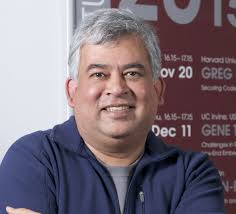
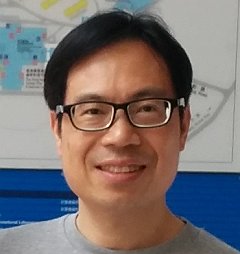
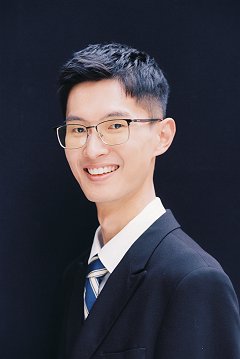
Professor Neeraj Suri is the Distinguished Professor & Chair in Cybersecurity at Lancaster University (UK and Germany) and an Adjunct Professor at the Department of Computer Science, University of Massachusetts Amherst . He co-directed Lancaster's university-wide Security Institute (2019-2024) and previously held the Chair in Dependable Systems & Software at TU Darmstadt . PhD from University of Massachusetts Amherst Positions at AlliedSignal/Honeywell Research, Boston University, Saab Endowed Chair, Microsoft Research (multiple sabbaticals), and visiting roles at University of Texas Austin, Academia Sinica, PolyU Hong Kong, and Technion Research Areas: Trustworthy cloud systems, data-centric cybersecurity, and security quantification. His work focuses on security-by-design principles, adversarial machine learning, and resilient autonomous systems. Selected Research Grants: EPSRC Programme Grant SCULI, H2020 CONCORDIA, EPSRC National Hub on Edge AI, and funding from NSF, DARPA, Microsoft, Google, and other leading institutions. Scientific Awards: NSF CAREER Award Microsoft Faculty Award IBM Faculty Award Professional Leadership: Associate EIC for IEEE Transactions on Dependable & Secure Computing, PC-Chair for DSN, ICDCS, SRDS, HASE conferences, and member of IFIP WG 10.4 on Fault Tolerance.
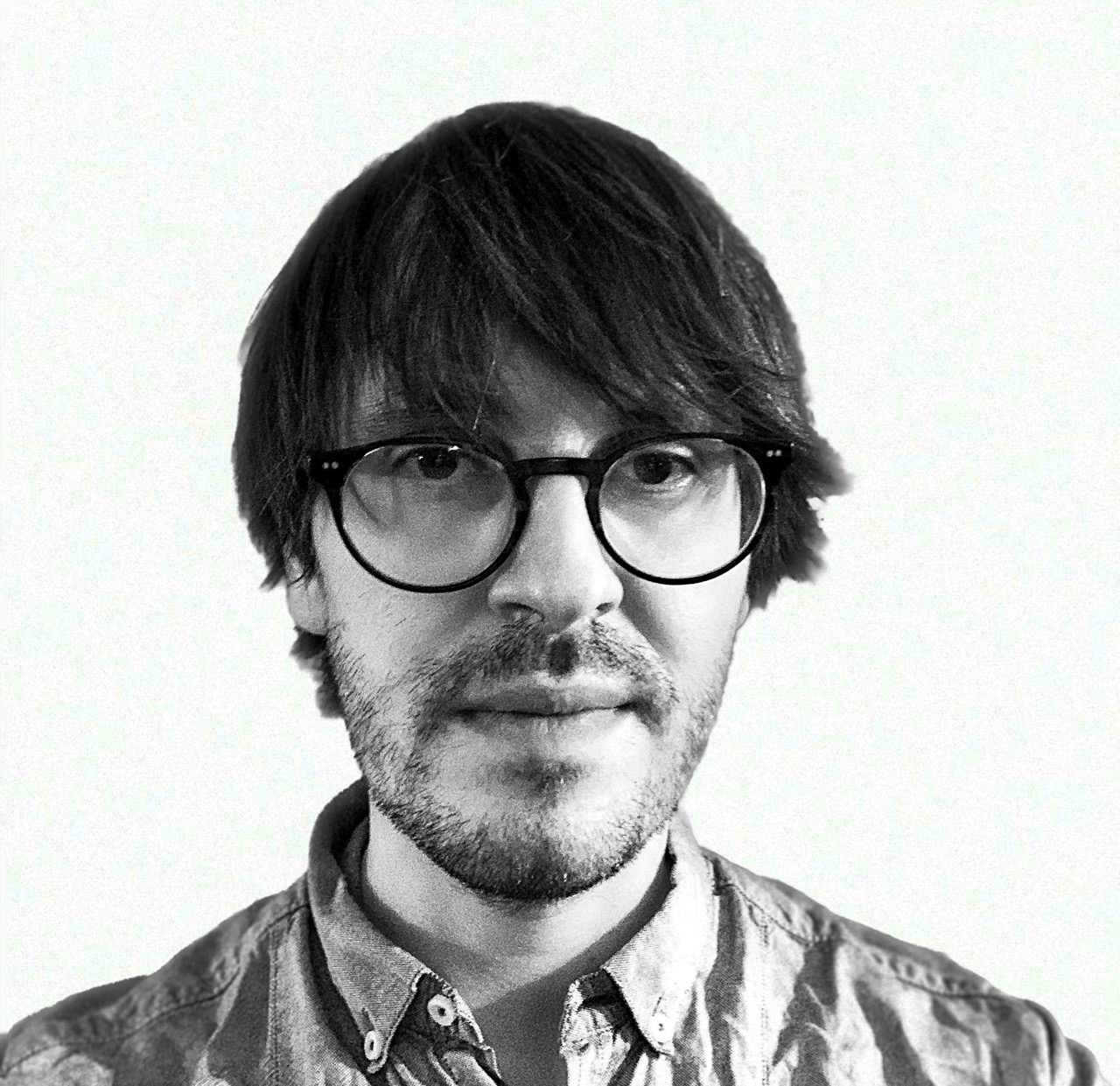
Ileana Buhan is an Assistant Professor at Radboud University Nijmegen's Digital Security Group and a member of the CESCA Lab. Her research focuses on hardware security, particularly advancing tools for secure hardware design and mitigating side-channel vulnerabilities. She previously held roles at Riscure (2011–2020) as a security evaluation manager and product manager, and at Philips Research (2008–2010) as a senior scientist. She earned her Ph.D. in Cryptography with Noisy Data from the University of Twente in 2008, recognized with the 2008 EBF European Biometrics Research Industry Award. Her work emphasizes practical security evaluation methods, automated leakage modeling (e.g., ABBY tool), and hardware-software co-design for resistance against side-channel attacks. She actively contributes to conferences like CHES, FDTC, and CARDIS, often in program committee roles. Recent invited talks include topics such as AI-driven vulnerability prediction, architecture-level simulators for root cause analysis, and automated tools for cryptographic implementation security. Her research spans RISC-V processors, microarchitecture analysis, and the intersection of machine learning with hardware security. Notable contributions include frameworks for leakage detection, fault simulation, and explainable side-channel analysis. She balances academic rigor with industry relevance, aiming to bridge gaps between theoretical security and real-world implementation challenges.
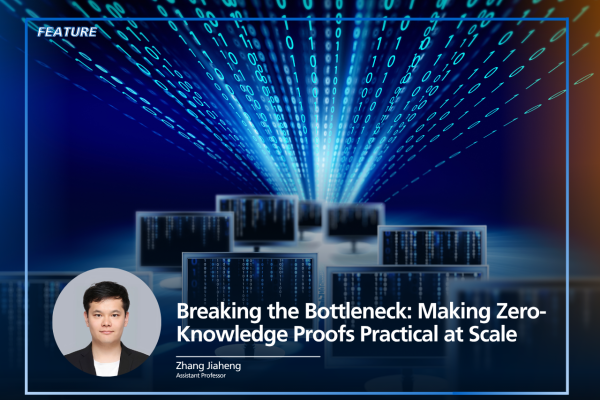
ZHANG Jiaheng is an Assistant Professor in the Department of Computer Science at the National University of Singapore (NUS), School of Computing. His work bridges cryptography, artificial intelligence, and system security, with a focus on scalable and privacy-preserving technologies. He teaches CS3235 – Computer Security and leads research in zero-knowledge proofs, LLM safety, and trustworthy AI. Research Interests: His research spans Cryptography , Security , Machine Learning & AI , Privacy , and Algorithms & Theory . He specializes in making zero-knowledge proofs practical at scale and securing large language models against jailbreaking, backdoors, and privacy leaks. His recent projects include zkGPT, BatchZK, and Guardreasoner, highlighting his dual focus on theoretical foundations and real-world applications. The recent publications show a strong trend toward scalable zero-knowledge systems and AI security , particularly in verifying and protecting LLMs. These works integrate cryptographic rigor with modern AI challenges, reflecting a cohesive research vision at the frontier of trustworthy computing. Scientific Contributions: Developed scalable collaborative zk-SNARKs for efficient proof generation. Pioneered techniques for secure LLM inference and jailbreak detection. Advanced GPU-accelerated and distributed zero-knowledge proof systems. Advising & Grants: While specific students and grants are not listed, his active publication record in top-tier venues suggests ongoing research supervision and external funding in cybersecurity and AI. He is likely involved in advising PhD and Master’s students in cryptography and AI security. Labs & Teams: He is part of the NUS School of Computing research ecosystem, potentially affiliated with cybersecurity or AI labs, contributing to Singapore’s leadership in privacy-preserving technologies.
Riccardo Focardi is a Full Professor at Ca' Foscari University of Venice in the Department of Environmental Sciences, Computer Science and Statistics. He has held this position since September 2017, following roles as Associate Professor (2013–2017) and Researcher (1996–2002). He is also co-founder and Chief Scientist of Cryptosense and 10Sec, startups focused on cybersecurity and IoT security solutions. Education: PhD in Computer Science from the University of Bologna (1999), Laurea cum laude in Computer Science (1993). Research focuses on cybersecurity, cryptography, formal methods for security protocol analysis, and secure hardware/software systems. Notable projects include the Cryptosense Analyzer tool for cryptographic device analysis and contributions to IoT security via 10Sec's fingerprinting technologies. His work on PKCS#11 vulnerabilities and padding oracle attacks has significantly impacted practical cryptographic security. Publications emphasize applied cryptography, API security, and IoT systems. Recent work explores GAN-based authentication (EUAS-GAN) and zero-shot malware detection (Z-MDZS). Over 110 publications span top venues like CRYPTO, CCS, and IEEE S&P. Leadership roles include coordinating national cybersecurity projects (e.g., POR FESR 2017–2020), chairing conferences (ITASEC 2017, CSF 2007), and directing Ca' Foscari's Computer Science PhD program (2012–2019). Active in public engagement, including media appearances on cybersecurity trends. Labs/Teams: Cryptosense (founded 2013), 10Sec (2020), and the DAIS department's security research group. Supervised over 10 PhD students, contributing to academic-industry collaborations in secure systems.
Lucas Vincenzo Davi is a Professor of Computer Science at the University of Duisburg-Essen and Director of the paluno - the Ruhr Institute for Software Technology . He leads the SYSSEC research group and is a Principal Investigator (PI) in the SFB CROSSING and CASA excellence cluster. His work focuses on practical software and systems security, including memory corruption vulnerabilities, exploit mitigation, and blockchain smart contract security. Davi holds an ERC Starting Grant for Smart Contract Security research. Education: PhD in IT Security, TU Darmstadt (2011–2015), Dissertation: "Code-Reuse Attacks and Defenses" Master of Science in IT Security, Ruhr-Universität Bochum (2007–2009) Diplom (FH) in Business Informatics, FOM Neuss (2003–2007) Research: Davi's work emphasizes real-world security challenges like runtime attacks, trusted execution environments (TEE), and secure embedded systems. His contributions include Wemby (WebAssembly security analysis), HCC (smart contract hardening), and rowhammer mitigations like CATT. His research has influenced industry practices, e.g., Microsoft EMET v5.1 improvements. Awards: Best Teacher Award (2025) Finalist German IT Security Prize (2022, 2020) ACM SIGSAC Dissertation Award (2016) CAST Förderpreis (2010) Grants & Leadership: ERC Starting Grant (Smart Contracts), SFB CROSSING PI, CASA Cluster PI, and leadership in interdisciplinary initiatives like Nano Security (DFG Priority Program). Labs/Teams: Director of paluno, SYSSEC group leader, and collaborator in projects like HERA (hotpatching for embedded systems) and DMA’n’Play (DMA-based attestation).
Dr. Marten van Dijk is a Full Professor in the Computer Security department at Vrije Universiteit Amsterdam (VU) since 2022 and a Group Leader for Computer Security at CWI since 2020. He also holds a Gratis Full Research Professor position at the University of Connecticut's ECE Department since 2020. Previously, he served as Associate and Full Professor at the University of Connecticut and held research roles at MIT CSAIL, RSA Laboratories, and Philips Research. PhD in Mathematics (1997, Eindhoven University of Technology) M.S. in Mathematics (Cum Laude, 1993) M.S. in Computer Science (Cum Laude, 1991) His research focuses on foundational computer security problems using cryptographic principles, including secure processor design, oblivious computation, and privacy-preserving machine learning. Notable contributions span Physical Unclonable Functions (PUFs), Aegis secure processor architecture, and oblivious RAM protocols. 15+ publications in 2023-2025 address topics like PUF cryptanalysis, differential privacy in federated learning, and Byzantine fault tolerance Key journals: IEEE Transactions on Computers, Journal of Cryptology, ACM CCS Conference Award highlights include: IEEE Fellow (2022) for secure processor design and encrypted computation IEEE Technical Achievement Award (2023) Intel Test of Time Award (2022) ACM CCS Best Paper (2013) A. Richard Newton Technical Impact Award (2015) His technical leadership spans hardware security (blu-ray error correction codes), cryptographic protocol design, and machine learning privacy frameworks. Current projects focus on secure processors with hardware-enforced isolation and differential privacy optimization.
Eva Rodríguez is an Associate Professor in the Department of Network Engineering at Pompeu Fabra University's School of Engineering, specializing in cybersecurity, digital rights management, and IoT security. With over 50 publications since 2003, she has established herself as a leading researcher in secure network architectures and privacy-preserving technologies. Her research focuses on applying machine learning techniques to cybersecurity challenges, particularly in mobile and IoT environments. Rodríguez has published extensively on deep learning for intrusion detection, privacy protection mechanisms, and security frameworks for next-generation networks (5G/6G). She has also made significant contributions to RISC-V processor security through the Horizon Europe Vitamin-V project. Recent work shows a strong emphasis on federated learning approaches for privacy preservation in fog computing environments and the development of security management architectures for resilient wireless ecosystems. Her publication record demonstrates consistent leadership in both theoretical frameworks and practical implementations of security solutions. Among her notable contributions are comprehensive surveys on deep learning techniques for mobile network security and machine learning methods for IoT privacy protection, which have become important references in these rapidly evolving fields. As a research supervisor, she has mentored several doctoral students including Norma Gutiérrez and Beatriz Otero, who now appear as co-authors on her recent publications. Her collaborative work extends across multiple European research projects, demonstrating strong integration within the international cybersecurity research community.
Poria Fajri is an Associate Professor at the University of Nevada, Reno . His research focuses on electric and hybrid electric vehicles, renewable energy systems, and advanced power electronics control. Electric and hybrid electric vehicles Plug-in Hybrid Electric Vehicle (PHEV) and Vehicle-to-Grid (V2G) technology Wind and solar power generation technologies Optimal control of power electronic devices utilized in renewable energy generation Automotive/aerospace power electronics and motor drives Energy management in hybrid systems Mechatronics and robotics Recent publications highlight his work on machine learning applications for power consumption modeling and motor fault detection, hybrid ML-digital twin frameworks for cyberattack differentiation, and GaN-based inverter optimization. His research spans grid resilience, autonomous vehicle energy efficiency, and cybersecurity in smart distribution systems. Key article trends include integrating machine learning with energy systems, advancing V2G technologies, and addressing cybersecurity challenges in smart grids. His work on regenerative braking optimization and power electronics for renewable energy systems demonstrates a focus on sustainable transportation and grid stability.
Alessandro Savino is an Associate Professor at the Department of Control and Computer Engineering (DAUIN) of Politecnico di TORINO. He serves as an academic advisor for Bachelor’s and Master’s degree programs in Computer Engineering (Ingegneria Informatica) and contributes to PhD programs in Artificial Intelligence and Computer Engineering. Research Interests: Approximate computing, Cybersecurity (including automotive systems), Dependability, Parallel computing, Reliability analysis, and Neuromorphic architectures. Key Projects: Leads RESCHIP4EU (2024-2028), NEUROPULS (2023-2027), and commercial contracts focused on real-time OS validation and avionics design. Publications: Recent work spans hardware security (e.g., VeriSide for leakage assessment), spiking neural networks (SpikeExplorer, SpikingJET), and automotive cybersecurity (CARACAS, CAN-MM). Teaching: Instructs courses on Parallel and Distributed Computing, Hardware & Wireless Security, and System Programming across Politecnico di TORINO and Scuola IMT Alti Studi - LUCCA. Research Group: Leads the SMILIES group, focusing on resilient computer architectures and life sciences.
Masood Parvania is the Roger P. Webb Endowed Professor at the University of Utah in Electrical and Computer Engineering. He serves as Director of the Utah Smart Energy Laboratory (U-Smart) and Co-Director of the NSF WIRED Global Center . His research focuses on mathematical optimization , control theory , and machine learning applications in power system operation, resilience, and interdependent infrastructure modeling. His work addresses critical challenges including: Equity-aware grid restoration Climate-resilient energy systems Cyber-physical security analysis Hybrid energy storage coordination Extreme heat event mitigation strategies Key research trends across his 15 most recent publications reveal deep integration of: Renewable energy with storage systems Machine learning in real-time grid operation Cybersecurity frameworks for critical infrastructure Equity metrics in energy distribution Honors include: IEEE Outstanding Associate Editor Award (2022) University of Utah Presidential Scholar (2020) IEEE Utah Section Outstanding Educator Award (2017) Multiple Best Reviewer and Distinguished Service Awards As Associate Editor for IEEE Transactions on Power Systems , he actively shapes energy research discourse while leading NSF-funded initiatives like: U.S.-Canada Climate-Resilient Grid Center ($90M+ Western EV Infrastructure Scale-Up Wasatch Multi-Modal Corridor Electrification
Stefano Di Carlo is a Full Professor at the Department of Control and Computer Science (DAUIN) at Politecnico di Torino. He is the Coordinator of the Doctoral School in Artificial Intelligence and a member of the PolitoBIOMed Lab and the Doctoral School Council. His research spans Artificial Intelligence , Computer Architecture , Bioinformatics , and Cybersecurity , with a focus on 3D bioprinting , hardware security , and reliability analysis . Research Interests : Approximate computing systems Cybersecurity for connected vehicles Spiking neural networks and neuromorphic hardware Multicellular synthetic biological systems Hardware-based malware detection Biomedical simulation tools Article Trends : His recent publications address approximate computing (7/15), cybersecurity (6/15), and bioinformatics (4/15). Key subtopics include RISC-V security , gradient inversion attacks , photonic computing , and real-time fault injection . Scientific Awards : Best Paper Awards at IEEE AQTR (2010, 2012), IEEE DDECS (2013), and BIOINFORMATICS/BIOSTEC (2014) IEEE Computer Society Golden Core Award (2006), Meritorious Service Award (2010) IEEE Fellow (2011-) and Senior Member Advising & Grants : He supervises 14 PhD students and leads projects like Vitamin-V (RISC-V cloud services), APROPOS (approximate computing), and SERICS (cybersecurity). His lab, SMILIES, focuses on resilient computer architectures and bioinformatics . Labs & Teams : Lab 6 - Research Laboratory (DAUIN) SMILIES - Resilient computer architectures and life sciences PolitoBIOMed Lab - Biomedical engineering
Prof. Dr. Kerstin Lemke-Rust is a Professor at the Department of Computer Science at Bonn-Rhein-Sieg University of Applied Sciences (H-BRS) and a key member of the Institute for Cyber Security and Privacy (ICSP). Her affiliations include leadership roles in the Gesellschaft für Informatik (GI) and the International Organisation for Cryptologic Research (IACR). Her research spans: Cryptographic algorithm security (side-channel/fault analysis) Blockchain and IoT security Automotive cybersecurity Hardware vulnerability detection She teaches courses in IT Security, Applied Cryptography, and Embedded Systems across bachelor’s and master’s programs. Recent publications (2021-2025) focus on blockchain privacy, side-channel attacks, and hardware security, reflecting her emphasis on real-world cryptographic vulnerabilities. She leads research initiatives at ICSP and collaborates internationally on cybersecurity projects.
Klaus von Gleissenthall is a tenured Assistant Professor in Computer Science at Vrije Universiteit Amsterdam, affiliated with the Theory Group and VUSec security lab. He holds a joint appointment with CWI's Computer Security group. Previously, he was a post-doc at UCSD and completed his PhD at TUM under a Microsoft Research scholarship. His research integrates programming languages , security , and systems to develop formally verified, low-overhead solutions for hardware/software correctness. Key focus areas include: Side-channel attack mitigation via leakage contracts Refinement-type systems for hardware verification Byzantine fault tolerance in distributed systems Publications demonstrate strong emphasis on hardware security (45% of recent papers), formal methods (30%), and distributed systems (25%), with consistent appearances in top-tier venues (S&P, CCS, OOPSLA). Awards & Honors: ERC Starting Grant (€1.5M, 2024) Intel Hardware Security Award Honorable Mention (2020, 2024) Distinguished Paper Awards: CCS'23, OOPSLA'23, POPL'21 He advises four PhD students and two post-docs, supported by his ERC grant. Current projects include refinement types for hardware and pre-silicon leak detection. His lab collaborates with VUSec and CWI, focusing on scalable verification tools like LLVM Blade and methodologies for constant-time execution guarantees.
Shing-Chi Cheung is a Professor of Computer Science and Engineering at the Hong Kong University of Science and Technology (HKUST), School of Engineering. He founded the CASTLE research group and co-founded the International Workshop on Automation of Software Testing (AST) in 2006. His leadership includes serving as General Chair of FSE 2014 and chairing multiple APSEC conferences. His research focuses on software quality enhancement through program analysis, testing, debugging, and AI techniques, targeting Android apps, open-source software, deep learning systems, smart contracts, and spreadsheets. Current projects include metamorphic testing frameworks, binary analysis tools, and vulnerability detection systems for emerging technologies. His publication portfolio demonstrates consistent contributions to software engineering since 2016, with recent work emphasizing AI-integrated testing methodologies, smart contract security, and deep learning system reliability. Key trends show increasing focus on cross-language analysis, data visualization quality, and compiler-level verification for modern software stacks. Distinguished Member of the ACM Fellow of the British Computer Society Editorial board member: Science of Computer Programming (SCP), Journal of Computer Science and Technology (JCST) Former editorial board member: IEEE Transactions on Software Engineering (2006-2009), Information and Software Technology (2012-2015) Four patents in China and the United States Cheung actively mentors through the CASTLE research group and serves on program committees for major conferences including ICSE, ESEC/FSE, and ISSTA. His work bridges academic research with practical applications through industry collaborations and tool development. He has contributed to numerous workshops and symposia as steering committee member and program chair.
Shangwen Wang is an Assistant Professor in the School of Computer Science at National University of Defense Technology (NUDT) in Changsha, China. He earned his Bachelor's degree in June 2017, Master's degree in December 2019, and Ph.D. in December 2023, all from NUDT. During his graduate studies, he was supervised by Professor Xiaoguang Mao. From May 2022 to July 2023, he was a visiting student at Southern University of Science and Technology under Professor Yepang Liu. His educational background includes: Ph.D. in Software Engineering, NUDT (2020.3-2023.12), supervised by Prof. Xiaoguang Mao Visiting Scholar, SUSTech (2022.5-2023.7), supervised by Prof. Yepang Liu M.A. in Software Engineering, NUDT (2017.9-2019.12), supervised by Prof. Xiaoguang Mao B.A. in Software Engineering, NUDT (2013.9-2017.6) Wang's research focuses on program repair, program comprehension, mining software repositories, software maintenance and evolution, software testing, and AI for Software Engineering. His work bridges traditional software engineering techniques with modern AI approaches, particularly leveraging large language models for various software engineering tasks. He has made significant contributions to automated program repair, fault localization, vulnerability detection, and code generation. His research demonstrates a strong emphasis on empirical validation and practical applicability to real-world software development challenges. His recent publications show a clear trend toward integrating large language models with traditional software engineering tasks. The 15 most recent articles reveal a focus on applying LLMs to program repair, fault localization, vulnerability detection, and code generation, while maintaining strong empirical foundations. His work spans both theoretical advancements and practical tool development, with applications in software security, testing, and maintenance. His notable achievements include: CCF Outstanding Doctoral Dissertation (CCF优博) 2024 Outstanding Doctoral Graduates, NUDT, 2023 Multiple distinguished paper awards including ACM SIGSOFT Distinguished Paper Award (ISSTA'24) and IEEE TCSE Distinguished Paper Awards (ICSME'22, SANER'22) Prestigious scholarships from NUDT throughout his academic career As an active member of the software engineering community, Wang serves on numerous program committees for top conferences including ICSE, ASE, ESEC/FSE, and ISSTA. He has also contributed to teaching as a teaching assistant for courses such as Compiler, Python Programming, Discrete Mathematics, and C++ Programming. His research group appears to be actively mentoring students, as evidenced by his role as corresponding author on multiple student-led publications. Wang maintains an active research presence with collaborations across multiple institutions in China. His work demonstrates a clear trajectory from traditional program analysis techniques toward integrating cutting-edge AI approaches, particularly large language models, into software engineering practices.