Viacheslav Zakharov is a researcher at Tampere University's Department of Automation and Mechanical Engineering, specializing in hydraulics, electric drives, and sustainable mobile machinery. His work focuses on pump-controlled actuators, sensorless control systems, and AI-driven fault detection in hydraulic valves. Key research areas: Hydraulics, Actuator Engineering, and Electric Drives Contributions to energy harvesting systems and electrification of off-road vehicles Active in Sustainable Development Goals related to clean energy and industrial innovation Recent publications (2023-2024) demonstrate expertise in AI-based fault classification, electromechanical actuator design, and energy optimization for hydraulic systems. Collaborates with international researchers on fluid power and motion control applications. Collaborations visible in Scopus-indexed journals and conference proceedings, including the ASME/BATH Symposium and Actuators journal.
Knut Erik Teigen Giljarhus is an Associate Professor at the University of Stavanger's Faculty of Science and Technology within the Department of Mechanical and Structural Engineering and Materials Science. Appointed to a full-time faculty position in 2018 after transitioning from industry roles, he currently serves as Study Program Leader for Mechanical Engineering programs since 2020. Education: PhD from the Norwegian University of Science and Technology (NTNU) Research Interests: His primary expertise lies in Computational Fluid Dynamics (CFD) , with significant contributions to multiphase flow systems (oil/water separation, annular displacements), urban aerodynamics (pedestrian wind comfort, building interactions), and biomedical fluid applications (blood pumps, vascular flow). He employs advanced numerical methods including lattice Boltzmann modeling, large eddy simulations, and machine learning integration for rapid wind prediction. Publication Trends: Analysis of his 2024-2025 output reveals strategic expansion into ML-enhanced CFD for urban wind assessment while maintaining core multiphase flow research. Key themes include non-Newtonian fluid behavior in medical contexts, density-unstable displacement mechanisms, and aerodynamic optimization for sports engineering—all published in high-impact journals like Physics of Fluids and Building and Environment . Scientific Awards: No awards or fellowships were documented in the provided materials Advising and Grants: Formal advisees are not listed in the source material No research grants or funding sources are explicitly mentioned Labs and Teams: As Study Program Leader, he directs mechanical engineering curriculum development at the University of Stavanger. His research leverages the Department's computational facilities and collaborates with SINTEF Energy Research (evidenced in publications) alongside international partners in biomedical engineering and urban wind studies.
Dr.-Ing. Philipp Sieberg serves as a Researcher at the Chair of Mechatronics within the Faculty of Engineering at the University of Duisburg-Essen, Germany. His research focuses on intelligent transportation systems, vehicle dynamics, and applied artificial intelligence, with particular emphasis on hybrid methodologies that integrate physical models with machine learning approaches. Based in Room MD-226, he actively contributes to both academic and industrial advancements in automotive engineering through his publications and research projects. His research interests span intelligent transportation systems, vehicle dynamics control, machine learning applications, and hybrid estimation methods. Sieberg specializes in developing reliable AI-based virtual sensors for vehicle state estimation, creating model-based predictive control systems for active roll stabilization, and applying neural networks to complex automotive challenges. His work consistently addresses the critical balance between AI innovation and system reliability in safety-critical automotive applications, with significant contributions to steering system dynamics, wear mechanism classification, and autonomous vehicle development. Sieberg's recent publications (2022-2025) demonstrate a clear trajectory toward increasingly sophisticated hybrid AI methodologies in vehicle dynamics. His research shows growing emphasis on reliability assurance of AI components, multi-fidelity simulation approaches, and practical implementation of machine learning in hardware-in-loop test environments. The work spans fundamental research in neural network-based state estimation to applied solutions for steering systems, wear analysis, and autonomous inland waterway vessels, reflecting both theoretical depth and real-world applicability. Award for Particularly Outstanding Graduation, Department of Engineering, University of Duisburg-Essen Award for Outstanding Completion of Master's Program in Mechanical Engineering, Faculty of Engineering, University of Duisburg-Essen First Prize for Outstanding Master's Thesis 2017, Alumni Chair of Mechatronics eV, University of Duisburg-Essen Active involvement in IEEE Germany Section and Chair of IEEE ITSS German Chapter Sieberg contributes significantly to research projects including AutoBin (Autonomous Inland Waterway Vessel), driving simulators for the Chair of Mechatronics, and machine learning algorithms for mobile state prediction applications. His leadership extends to committee activities as Student Activities Chair of the IEEE ITSS German Chapter, where he bridges academic research with professional society engagement. Current teaching responsibilities include courses on highly automated driving systems and technical fundamentals of future vehicle systems for the Master's program in Automotive Engineering & Management Executive. Working within the Chair of Mechatronics research group, Sieberg collaborates extensively with colleagues including Dieter Schramm, Christian Hürten, and Alexander Haas. His research leverages advanced driving simulators and hardware-in-loop test benches, with strong connections to the AutoBin project consortium developing autonomous inland vessel technology. The research environment emphasizes interdisciplinary collaboration between mechanical engineering, computer science, and control systems specialists to address complex mobility challenges.
Satnam Singh is a Professor at Newcastle University's School of Electrical and Electronic Engineering, UK. With a research career spanning over three decades from 1989 to present, Singh has established himself as a leading expert in hardware design, FPGA programming, and parallel computing systems. His research interests focus on hardware-software co-design , reconfigurable computing , and functional programming applications for hardware design. Singh has pioneered work in using functional languages like Haskell for hardware description and verification, particularly through his contributions to the Lava hardware description language. His work bridges theoretical computer science with practical hardware implementation challenges. Analysis of his publication history reveals a clear evolution from early work on formal verification and FPGA design in the 1990s, through substantial contributions to parallel programming models in the 2000s, to more recent applications of machine learning techniques in diverse domains including cheminformatics and sensory systems. His 2022-2025 publications demonstrate continued innovation in specialized processor programming, AI applications for olfactory systems, and health hazard classification using deep learning. Singh has maintained extensive collaborations throughout his career, notably with Krishna R. Pattipati (15 joint publications), Anuradha Kodali (8 publications), and David J. Greaves (5 publications), reflecting his ability to bridge theoretical computer science with practical engineering applications. His work spans multiple prestigious venues including FPGA, FCCM, ICFP, and IEEE Transactions on Systems, Man, and Cybernetics, demonstrating both theoretical depth and practical impact across computer architecture, programming languages, and applied machine learning domains.
Haobo Wang is a researcher affiliated with Zhejiang University , specifically within the School of Software Technology under the College of Computer Science and Technology . His work bridges Computer Science and Electrical Engineering , focusing on Machine Learning , Signal Processing , and Remote Sensing .
Yanbo Zhang is a researcher affiliated with Nanyang Technological University , holding a PhD in Wireless Communication and Sensing (2022). His work spans machine learning , biomedical engineering , and signal processing with applications in healthcare, communication systems, and computer vision. Education: PhD from Nanyang Technological University, Singapore (2022) Research areas include: Machine learning for medical diagnosis (predicting infections, cardiovascular events, and cancer) Advanced analog-digital converter designs for precision electronics Diffusion models and evolutionary algorithms in AI Federated learning for imbalanced data and cybersecurity Recent publications focus on multi-label learning for disease prediction, secure communication architectures , and deep learning applications in medical imaging. Collaborations include institutions in Singapore, China, and international teams.
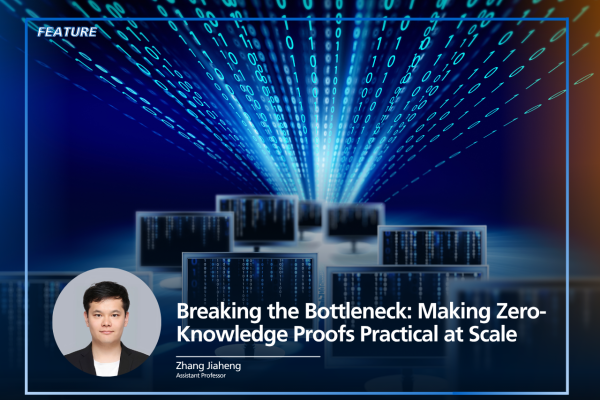
ZHANG Jiaheng is an Assistant Professor in the Department of Computer Science at the National University of Singapore (NUS), School of Computing. His work bridges cryptography, artificial intelligence, and system security, with a focus on scalable and privacy-preserving technologies. He teaches CS3235 – Computer Security and leads research in zero-knowledge proofs, LLM safety, and trustworthy AI. Research Interests: His research spans Cryptography , Security , Machine Learning & AI , Privacy , and Algorithms & Theory . He specializes in making zero-knowledge proofs practical at scale and securing large language models against jailbreaking, backdoors, and privacy leaks. His recent projects include zkGPT, BatchZK, and Guardreasoner, highlighting his dual focus on theoretical foundations and real-world applications. The recent publications show a strong trend toward scalable zero-knowledge systems and AI security , particularly in verifying and protecting LLMs. These works integrate cryptographic rigor with modern AI challenges, reflecting a cohesive research vision at the frontier of trustworthy computing. Scientific Contributions: Developed scalable collaborative zk-SNARKs for efficient proof generation. Pioneered techniques for secure LLM inference and jailbreak detection. Advanced GPU-accelerated and distributed zero-knowledge proof systems. Advising & Grants: While specific students and grants are not listed, his active publication record in top-tier venues suggests ongoing research supervision and external funding in cybersecurity and AI. He is likely involved in advising PhD and Master’s students in cryptography and AI security. Labs & Teams: He is part of the NUS School of Computing research ecosystem, potentially affiliated with cybersecurity or AI labs, contributing to Singapore’s leadership in privacy-preserving technologies.
Surya Teja Kandukuri is a Researcher at the Department of Engineering Sciences at the University of Agder, Norway. His work focuses on fault diagnosis, prognostic health management, and control systems for renewable energy applications, particularly wind and hydroelectric power systems. Education: PhD in Mechatronics, University of Agder (2014-2018) MSc in Systems and Control, Delft University of Technology, Netherlands (2003-2006) B.Tech in Electrical and Electronics Engineering, Nagarjuna University, India (1999-2003) Research Interests: Dr. Kandukuri specializes in model-based fault diagnosis and prognostic system health management for complex engineering systems. His research integrates system identification, estimation, and control theory with advanced machine learning techniques to develop predictive maintenance solutions for renewable energy infrastructure. He has particular expertise in wind turbine systems, where he has developed innovative approaches for monitoring pitch systems, detecting electrical faults in induction motors, and assessing performance degradation over time. His work extends to hydroelectric power plants through the PHMHydro project, where he applies similar health monitoring principles to water turbine systems. The integration of physics-based models with deep learning frameworks represents a key innovation in his research approach, enabling more accurate and timely fault detection in critical infrastructure. Publications Trends: Dr. Kandukuri's publication record demonstrates a consistent focus on health monitoring systems for renewable energy infrastructure. His recent work (2022-2025) shows increasing integration of deep learning techniques with traditional signal processing methods for fault diagnosis. There's a clear progression from wind turbine systems to broader applications in hydroelectric power, reflecting expanding research scope. His collaborations span multiple countries and institutions, particularly with Norwegian and international research partners. Research Groups: Intelligent Mechatronics (iTron) Intelligent Monitoring Projects: Performance and Health Monitoring for Hydroelectric Powerplants (PHMHydro)
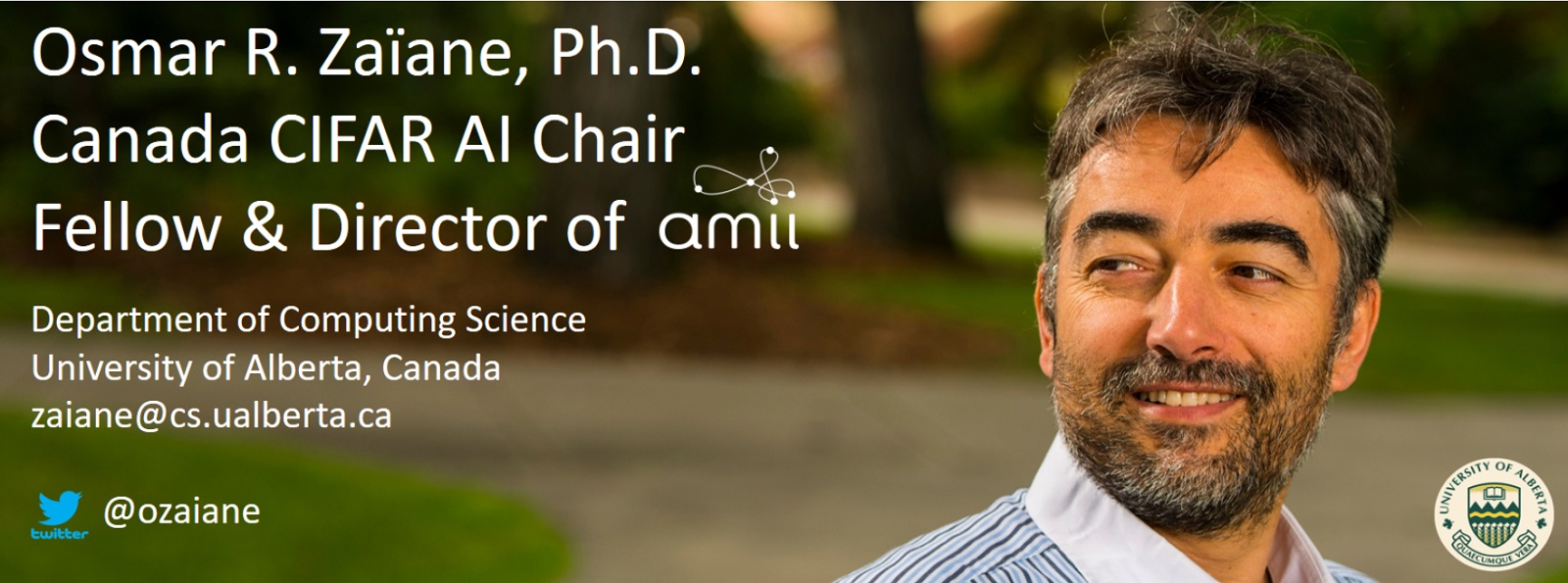
Osmar Zaiane is a Professor in the Department of Computing Science at the University of Alberta's Faculty of Science. With over 20 years of service at the university, he has established himself as a leading researcher in data mining and machine learning with applications across multiple domains. His educational background includes a Ph.D. in Computer Science from Simon Fraser University (1999), a Master's in Computer Science from Laval University (1992), a Master's in Electronics from Institut National des Sciences et Techniques Nucléaires and Paris XI University (1989), and a Bachelor's in Computing Science from Institut Supérieur de Gestion, Université de Tunis (1988). Zaiane's research focuses on discovering patterns in large complex datasets with practical applications. His primary research interests include data mining, machine learning, social network analysis (particularly community mining and link prediction), and precision health applications. He has made significant contributions to associative classifiers, class imbalance learning, explainable AI, and educational data mining. His work spans multiple application domains including healthcare (particularly for Alzheimer's disease prediction, diabetic retinopathy grading, and lung cancer detection), social media analysis, and natural language processing. His publication record shows a strong focus on medical AI applications, with numerous recent papers on medical image segmentation, brain network analysis, and diagnostic systems. His work increasingly integrates large language models and transformer architectures with traditional machine learning approaches. Best Paper Award at IEEE/ACM Int. Conf. on Advances in Social Network Analysis and Mining (2023) Best Paper Award at International Symposium on Foundations and Applications of Big Data Analytics (2022) Best Paper Award at International AAAI Conference on Web and Social Media (2019) Best Paper Award at 29th International Conference on Database and Expert Systems Applications (DEXA) (2018) Zaiane has supervised over 80 graduate students during his career at the University of Alberta. His research has been supported by numerous grants, particularly in the areas of precision health and educational data mining. He maintains an active research lab focusing on applied machine learning with strong industry and healthcare partnerships. His current work explores the intersection of traditional machine learning techniques with emerging large language models and vision-language models for healthcare applications.
Dr.-Ing. Rita Streblow is a leading researcher at RWTH Aachen University's Institute for Energy Efficient Buildings and Indoor Climate, where she heads the Digital Energy Neighbourhoods team (since 2021). Formerly, she served as Chief Engineer at the same institute (2007-2023) and held a professorship in Digitale Vernetzung von Gebäuden, Energieversorgungsanlagen und Nutzenden at Technische Universität Berlin (2019-2024). Since 2025, she has been an Associate Member of the Einstein Center Digital Future. She earned her doctorate from RWTH Aachen in 2011 with a thesis on thermal comfort modeling. Her research spans energy-efficient building systems , smart grid integration , and HVAC optimization , with focal areas including: Digitalization of energy neighborhoods and local market mechanisms Thermal comfort modeling for inhomogeneous environments Semantic interoperability in building automation Retrofit strategies for residential and office buildings Analysis of her recent publications reveals strong emphasis on smart building technologies , district-scale energy management , and data-driven fault detection , with recurring themes of IoT integration, open-source tool development, and policy-relevant energy planning. She has received notable scientific awards including: Borchers-Plakette, RWTH Aachen (2012) Award for Young Researchers, German Society of Refrigeration and Air Conditioning (2011) She leads experimental research at the Urban Energy Lab 4.0 and collaborates on national projects like PLUG-N-HARVEST (adaptive façade retrofits) and AGENT (multi-agent energy systems).
Robert Calderbank is a distinguished academic and researcher at Duke University, holding professorships in Computer Science, Electrical and Computer Engineering, and Mathematics. He serves as Director of the Information Initiative at Duke and is affiliated with the Duke Quantum Center. His interdisciplinary work bridges information theory, quantum computing, and biomedical applications. Education: Ph.D. from California Institute of Technology (1980) Previous Institution: Princeton University (Distinguished Professor) Calderbank's research spans wireless communications, distributed storage systems, machine learning, and quantum information theory. Recent work focuses on two-dimensional magnetic recording, quantum error correction, and biomedical imaging with pump-probe microscopy. His publications demonstrate sustained innovation in constrained coding, matrix completion, and subspace classification. Scientific contributions include grants from the National Science Foundation and collaborative projects with the University of Maryland. Awards include Fellowships from the Royal Society, IEEE, and AAAS. His teaching and mentorship at Duke and Princeton have shaped next-generation signal processing and computer science research.
Prof. Dr. Behçet Uğur Töreyin is a full Professor at the Informatics Institute of Istanbul Technical University, where he also serves as Head of Department since 2023. He leads the Signal Processing for Computational Intelligence (SP4CING) research group, focusing on advanced signal and image processing techniques for intelligent systems. His work spans interdisciplinary applications in bioimaging, environmental monitoring, surveillance, and remote sensing. PhD in Electrical and Electronics Engineering, İhsan Doğramacı Bilkent University (2009) MS in Electrical and Electronics Engineering, İhsan Doğramacı Bilkent University (2003) BS in Electrical and Electronics Engineering, Middle East Technical University (2001) His research interests include signal processing, image processing, machine learning, pattern recognition, deep learning, computer vision, and compressed domain analysis. He has pioneered work in flame detection, video understanding in compressed domains, and efficient neural architectures. His recent publications emphasize green AI, model efficiency, and privacy-preserving techniques. The analysis of his 15 most recent articles (2022–2024) reveals a strong focus on compressed domain processing, efficient deep learning models (e.g., HaLViT), biomedical imaging, and environmental applications. He frequently employs transformer models, CNNs, and hybrid architectures for tasks such as Raman spectroscopy quantification, smoking detection in video, and server fault diagnosis using thermal imaging. Scientist of the Year, SCIENCE HEROES ASSOCIATION (2017) Entrepreneurial and Innovative Graduation Design Project (BTP) Competition, ITU (2016) 2241 Industrial Undergraduate Thesis Competition, TÜBİTAK (2016) Golden Youth, İş Bank (1997) Prof. Töreyin has supervised several students, including Mr. Berk Arıcan, whose M.S. thesis won the best thesis award in computer science at ASELSAN Akademi in 2023. He has led numerous research projects funded by TÜBİTAK and other agencies, including work on quantum machine learning for carbon credit trading and lip-sync error detection in live broadcasts. He actively mentors students and promotes innovation in computational intelligence. He leads the SP4CING research group at ITU, which focuses on designing signal processing techniques for computational intelligence. The group's work integrates deep learning, compressed domain analysis, and multi-modal sensing for real-world applications in healthcare, environment, and industry.
Suhail Yousaf is a Lecturer in Computer Science at the School of Computer Science & Engineering, Constructor University Bremen gGmbH. His academic career spans roles at the University of Engineering and Technology Peshawar, Pakistan, where he served as an Assistant Professor (2018-2023) and Lecturer (2013-2018, 2005-2007). He earned his PhD and MSc in Distributed and Parallel Computer Systems from Vrije Universiteit Amsterdam (2009-2014, 2007-2009), and an MSc in Computer Science from Quaid-i-Azam University, Islamabad (2002-2004). Education PhD in Distributed Computer Systems, Vrije Universiteit Amsterdam (2009-2014) MSc in Parallel and Distributed Computer Systems, Vrije Universiteit Amsterdam (2007-2009) MSc in Computer Science, Quaid-i-Azam University (2002-2004) His research focuses on distributed computing, machine learning, and environmental monitoring. Key areas include earthquake phase classification, landslide detection, and PM2.5 forecasting using neural networks and time-series analysis. He has also contributed to GPU acceleration in optimization algorithms and fake news detection via ensemble methods. Recent publications highlight his interdisciplinary work in environmental science and high-performance computing. For instance, the 2024 paper 'ConvEQ' applies convolutional neural networks to seismic signal processing, while 2020 studies explore crop monitoring, air quality prediction, and GPU-based simplex method improvements. Teaching Roles MDE-CS-02 Parallel and Distributed Computing (Spring 2025, Spring 2024) SDT-104 Scientific Programming with Python (Fall 2024) CH-250 Programming in Python and C++ (Fall 2023) ACS-201 Databases and Web Services (Fall 2024, Fall 2023) ACS-106 Distributed Development (Spring 2024, Fall 2023)
Andrea Stocco is an Assistant Professor at the Technical University of Munich (TUM) within the Chair of Software Engineering for Data-Intensive Applications and the School of Computation, Information and Technology , while also serving as Head of the Automated Software Testing Field of Competence at fortiss GmbH in Munich. His research bridges software engineering and deep learning, focusing on enhancing the robustness, reliability, and dependability of data-intensive systems, particularly in autonomous driving and web applications. Key research areas: Testing AI-based systems, autonomous driving validation, computer vision for software engineering, web test automation, and reliability of DL systems Notable awards: IEEE Computer Society TCSE Distinguished Paper Award (2025), ACM SIGSOFT Distinguished Artifact Award (2020), Best Presentation Award at NEXTA 2021 Leadership roles: Program Chair for ASE 2024 (Research Track), ICSE 2024 (Demonstration Track), and SCAM 2024 (Research Track) Editorial involvement: Empirical Software Engineering journal (2025), Journal of Software: Evolution and Process (2024), ACM TOSEM Replicated Computational Results Distinguished Reviewers Board His work explores techniques like anomaly detection, uncertainty quantification, and attention maps to improve safety-critical systems' testing. Recent publications examine digital twins for autonomous driving, generative AI in test input generation, and the reality gap between virtual and physical testing environments. Andrea actively contributes to conference program committees in software engineering and testing, including ASE, ICSE, FSE, and ICST.
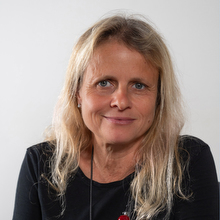
Flaminia Luccio is an Associate Professor at Ca' Foscari University of Venice, affiliated with the Department of Environmental Sciences, Computer Science and Statistics. Her research focuses on computer security, cryptography, distributed systems, and usability engineering. She has contributed to projects like the SAFE PLACE IoT security initiative and the FWS firewall analysis tool. Luccio teaches courses such as Cryptography and Advanced Algorithms at both undergraduate and graduate levels. Research: Her work spans formal verification of cryptographic protocols, secure IoT implementations, and usable security solutions for QR codes and biometric authentication. She has led projects involving secure hardware configuration for cloud environments and resilient firewall management systems. Recent contributions address side-channel vulnerabilities and malware detection through machine learning. Teaching: Courses include Cryptography (Master's), Algorithms and Data Structures (Bachelor's), and Web Technologies for Tourism (Master's). Teaching materials are accessible via her departmental website and personal profile. Collaborations: Collaborates with researchers like Riccardo Focardi on cybersecurity frameworks. Engages in interdisciplinary projects combining accessibility with technology, such as improving tourism websites for users with disabilities.