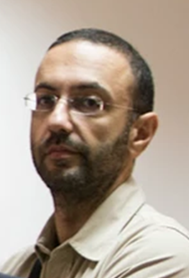
Behnam Tamimi is a Sessional Lecturer at the University of Waterloo, specializing in power systems engineering and control systems. His research focuses on microgrid interfaces, voltage stability, and hybrid power flow controllers. He contributes to IEEE standards through task forces on voltage stability analysis and security assessment. His work emphasizes practical applications of theoretical models, including prototype development and field testing of control systems for distribution networks. Key areas of exploration include unbalanced network conditions, small-signal oscillatory dynamics, and the integration of renewable energy sources into existing grids. Tamimi's contributions to benchmark systems and test models have advanced industry practices in grid reliability and resilience. His research bridges academic theory with real-world grid challenges, addressing both steady-state and dynamic system behaviors.
Michail Papoutsidakis is a Professor and Deputy Head of the Department of Industrial Design and Production Engineering at the School of Engineering, University of West Attica. He also directs the Postgraduate Program in New Technologies in Shipping and Transport (co-founded with the University of Aegean) and the 'Unmanned Autonomous and Remote-Control Systems' program. His academic background includes a PhD from the Bristol Robotics Laboratory (UK) focusing on control systems and robotics, along with a postdoctoral research fellowship at the University of Thessaly. Education: BSc in Automation Engineering (2000, Technological Institute of Piraeus), MPhil in Control Systems (2004, University of the West of England), and PhD in Robotics and Artificial Intelligence (2004, BRL). Research interests span robotics, mechatronics, Industry 4.0, additive manufacturing, and smart infrastructure. He leads the Research Lab 'Industrial Systems and Mechatronics Applications' and has authored over 150 publications. Notable contributions include a patented 'Self-propelled polymorphic test base' for robotics education and pioneering work in predictive maintenance using machine learning. His academic contributions extend to educational innovation, including open-source robotics platforms (DuBot) and STEM-focused curricula emphasizing sustainability. He has directed numerous projects funded by national and international bodies, with a focus on bridging theoretical research and practical industrial applications. Professional roles include leadership in postgraduate program development, research lab management, and industry-academia collaboration through applied research initiatives in shipping, logistics, and smart manufacturing systems.
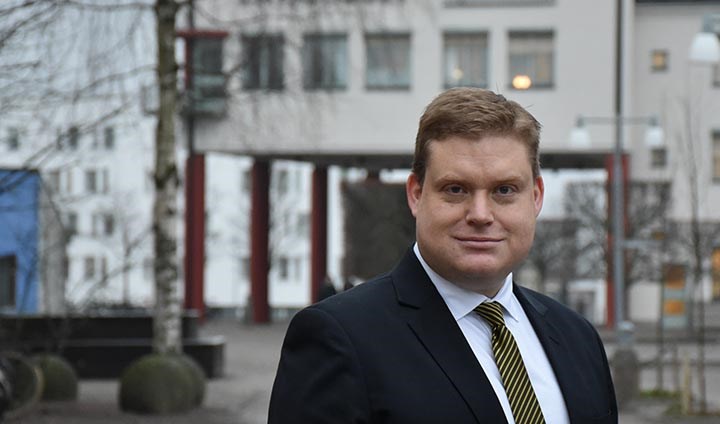
Magnus Löfstrand is a Professor of Mechanical Engineering at Örebro University, Sweden. He holds a PhD in Computer-Aided Design (2007) from Luleå University of Technology and a Docent (2015) in Product and Production Development from Chalmers University of Technology. His academic career spans multiple institutions, including Uppsala University and Umeå University prior to his current role. Research focuses on industrial system availability, digital twin technology, and data-driven approaches for optimizing production systems. Key areas include simulation-driven design, predictive maintenance, and integrating mechanical engineering with information technology. His work emphasizes sustainability through resource-efficient production processes and competitive industrial advantages. Teaching responsibilities include courses in the Industrial Engineering and Management program at Örebro University, covering topics like Process Development, Reliability Engineering, and Academic Writing. He supervises bachelor's and master's theses across engineering disciplines. Collaborations with institutions like the University of Nottingham and Umeå University's Logic and Applications group highlight his interdisciplinary approach. He is a member of the American Society of Mechanical Engineers (ASME) and actively participates in international conferences and research projects, including the AVANS MAXI program and digital twin initiatives in mining innovation.
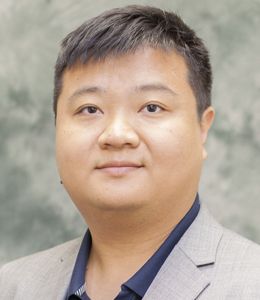
Professor Xingxing Zhang is a Professor of Energy Engineering at Dalarna University's School of Information and Engineering, serving as Head of Subject in Energy Engineering and Director of the Doctoral Program in Energy Systems in the Built Environment. He holds advanced degrees in HVAC, Sustainable Building Design, Solar Energy Systems, and Global Energy Management. His research focuses on urban energy systems, adaptive solar facades, and data-driven building/city analytics, with emphasis on regenerative approaches for buildings and cities. Education : Bachelor's in Heating, Ventilation, and Air Conditioning (HVAC) Master's in Sustainable Building Design PhD in Solar Energy Systems MBA in Global Energy Research Interests : Dr. Zhang's work spans two core areas: Adaptive Solar Facades (including PV/PVT systems, heat pumps, and passive design) and Data Analytics (urban energy modeling, digitalization, and positive energy districts). He explores intersections between buildings, energy systems, resource efficiency, mobility, and data science. Grants & Editorial Roles : He has secured funding from EU H2020, Swedish Energy Agency, Nordic Energy Research, and others. He serves as Subject Editor for Building Simulation , Associate Editor for Frontiers in Sustainable Cities , and Editorial Board Member for Buildings and Innovation Energy . Recent projects include GränsENERGI , PED-ACT , and Agent-GIS-5GDHC .
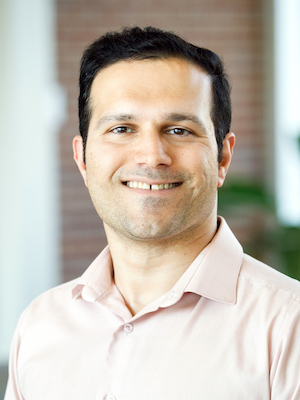
Weisong Tian, PhD, is an Assistant Teaching Professor in the Department of Electrical Engineering at Widener University. His research focuses on control systems, nonlinear systems, state estimation, power systems, and microgrid technology. He teaches courses such as Electric Circuits, Probability & Statistics, Controls, and Special Topics in Controls. Education includes a PhD in Electrical Engineering from the University of Texas at San Antonio (2013), an MS in Electrical Engineering from the same institution (2009), and a BS in Electrical Engineering from Sichuan University (2007). His research emphasizes applications in power systems, including microgrid control, power quality, fault analysis, and energy consumption prediction. Recent publications explore topics like nuisance tripping prediction, power resilience, and adaptive control strategies for renewable energy systems. Awards Distributed Synchronization Control of a Group of Unmanned Aerial Vehicles, Widener University (2017) Advising & Grants Advising details are not explicitly listed, and grants are not mentioned in available texts. Labs & Teams Specific lab affiliations or collaborative teams are not detailed in the provided information.
Ali Eslami is an Associate Professor in the Department of Electrical and Computer Engineering at Wichita State University. His research focuses on applying probabilistic methods and machine learning to study complex systems such as gene regulatory networks and cyber-physical systems. He holds a Ph.D. from the University of Massachusetts Amherst and has collaborated with prominent institutions like Duke University and Georgia Tech. His work spans error control coding, IoT design, and resilient network analysis. Education: Ph.D. in Electrical and Computer Engineering, University of Massachusetts Amherst (2013) M.Sc. in Communications Systems & Signal Processing, Sharif University of Technology (2006) B.Sc. in Electrical Engineering, Sharif University of Technology (2004) Research Interests: Probabilistic methods for complex networks Machine learning in cyber-physical systems Error control coding in communications and biological systems Resilience in multi-layer networks IoT and wireless network design Awards: Recipient of the Young Faculty Risk Taker Award (2017) from Wichita State University's Office of Academic Affairs Advising & Collaborations: Advised over a dozen graduate and undergraduate students, many of whom have pursued roles in academia and industry Collaborated with leading researchers at Duke University, Texas A&M, and Georgia Tech Labs & Teams: Leads a research group focused on evolutionary AI and network resilience Team members have presented at conferences and developed projects like Shocker Controls TM
Ryszard Chachurski is a Professor at the Military University of Technology, specializing in mechanical and aerospace engineering with a focus on aircraft engine design, turbine dynamics, and icing environment analysis. He has contributed to over 17 publications, 20 promoted theses, and 2 projects, with a h-index of 1 in both Scopus and Web of Science. His research spans miniature jet engines, UAV propulsion systems, and engine performance under extreme conditions. Key areas of expertise include ground testing of turbine engines, structural analysis of ducted fans, and in-flight icing susceptibility of induction systems. He has explored environmental threats in aviation, atmospheric effects on engine performance, and anti-icing systems for aircraft safety. His work integrates numerical modeling (e.g., GasTurb simulations) with experimental validation. Chachurski’s publications emphasize practical applications like mobile engine test stations for aerial targets and modal analysis for engine diagnostics. He has also addressed challenges in unmanned aerial vehicle (UAV) propulsion systems and piston engine icing problems. His research often bridges theoretical models with real-world testing, such as analyzing wing-in-ground-effect craft water landings and turbine blade strength under dynamic loads.
Umit Cali is a Professor and Chair in Digital Engineering for Future Technologies at the University of York, UK, and holds a part-time Professor role in Energy Informatics at NTNU (Norwegian University of Science and Technology). He specializes in energy systems, blockchain, IT law, and data science, with over 20 years of experience in academia and industry. His research focuses on energy informatics, cybersecurity, and renewable energy integration. Education: PhD in Electrical Engineering and Computer Science (University of Kassel, Germany) and LL.M in IT and IP Law (University of Goettingen, Germany). Research Interests: Blockchain applications in energy systems, AI-driven energy management, cybersecurity for critical infrastructure, legal frameworks for digital technologies, and sustainable energy policies. Recent work emphasizes digital twin technology for energy systems optimization, decentralized energy markets, and ethical AI deployment. His publications span energy storage, smart grid cybersecurity, and policy analysis for renewable energy adoption. Professional Experience: Previously worked at IBM, Fraunhofer Institute, EnBW, and as an assistant professor at multiple universities. Serves as Vice Chair of the IEEE Blockchain in Energy Standards Working Group (P2418.5).
Asoke Nandi is a Professor at Brunel University London's Electronic and Computer Engineering department since 2013, with prior roles at University of Liverpool (David Jardine Professor, 1999-2010), University of Strathclyde (1995-1998 Reader, 1991-1995 Senior Lecturer), and Imperial College London (1987-1991 Lecturer). He holds Distinguished Visiting Professor roles at Xi’an Jiaotong University (China) and Jyväskylä University (Finland), where he was Finland Distinguished Professor (2010-2014). Ph.D. in Physics, University of Cambridge Over 600 technical publications (280 journal papers, 6 books) Google Scholar: 32,035 citations, h-index 83, i10-index 300 Research Focus: Signal processing and machine learning innovations in: Big and Heterogeneous Data Modulation Classification Fault Diagnosis Blind Source Separation Biomedical Signal Processing Clustering Algorithms Publication Trends: His work spans physics (Z-boson detection, 1983), telecommunications (modulation recognition, 1988-2015), biomedical engineering (fetal ECG extraction, 2001), mechanical systems (fault detection, 2002), and machine learning (FRFCM clustering, 2018). Key methodologies include artificial neural networks, genetic algorithms, and higher-order statistics. Scientific Honors: 10+ Fellowships (Royal Academy of Engineering, IEEE, IET, etc.) Heinrich Hertz Award (IEEE, 2012) Glory of Bengal Award (2010) Mountbatten Premium (IEE, 1998)
Robert Kristoffer Nilssen is a Professor at the Department of Electric Energy at the Norwegian University of Science and Technology (NTNU). His research focuses on advanced electrical machines, renewable energy systems, and fault diagnosis in power systems. He specializes in topics such as synchronous generators, superconducting technologies, and magnetic field analysis. His work addresses challenges in energy conversion efficiency, fault detection methodologies, and high-performance motor design. Dr. Nilssen has published extensively in top-tier journals and conferences, including IEEE Transactions and international symposiums on electrical machines and systems. His research explores cutting-edge applications such as superconducting propulsion systems for aircraft and wind power generators. He has contributed to the development of analytical models for magnetic field analysis and loss computation in electric machines. Collaborations with industry and academia highlight his role in bridging theoretical advancements with practical engineering solutions. Dr. Nilssen’s recent work emphasizes sustainable energy systems, including studies on fractional-slot winding configurations, HTS (High-Temperature Superconductor) armature windings, and multiphase superconducting topologies for wind turbines. His publications reflect expertise in electromagnetic design, fault monitoring techniques, and multi-physics simulation frameworks.
Dr. Paul Antony Selvadurai is a Lecturer at the Department of Earth and Planetary Sciences at ETH Zürich and affiliated with the Schweiz. Erdbebendienst (SED). His research focuses on laboratory experimental studies of rock mechanics, acoustic emissions, and frictional processes to understand earthquake nucleation and fault behavior. He investigates the interplay between subsurface conditions, fault zone dynamics, and induced seismicity. Key research interests include: Thermo-hydro-mechanical modeling of fracture systems Role of wear and asperity evolution in fault stability Hydraulic stimulation effects on crystalline rock failure Seismic hazard assessment methodologies Notable contributions involve experimental facilities like the Bedretto Underground Laboratory, where he studies microseismicity under controlled conditions. His work bridges laboratory observations with field-scale phenomena, emphasizing scalable insights from labquakes to megathrust earthquakes. He has received the John Carter Award (2017) for his contributions to experimental seismology. Current projects explore fault surface characteristics, water-clay interactions in clay-rich formations, and aseismic deformation localization mechanisms. His research integrates advanced monitoring techniques including distributed strain sensing and acoustic emission analysis to unravel deformation precursors and energy dissipation patterns during rock failure processes.
Christian M. Franck is a Full Professor of High Voltage Engineering at ETH Zurich's Department of Information Technology and Electrical Engineering, where he leads the Power Systems and High Voltage Laboratory. Appointed Assistant Professor in January 2010, promoted to Associate Professor in June 2015, and elevated to Full Professor in March 2020, he has established himself as a leading researcher in electrical power transmission technologies. Dr. Franck's academic foundation includes physics studies at the Universities of Bonn, Edinburgh, and Kiel (diploma 1999), followed by a Ph.D. in experimental physics from the Max-Planck-Institute for Plasma Physics in 2003. His industry experience at ABB Research Center (2003-2010), where he headed the high voltage systems and gas circuit breakers group, provided crucial practical insights that inform his research approach. Research Focus: His laboratory investigates 'technologies for future electric power transmission systems' with four primary thrusts: High Voltage Gaseous Insulation Systems, Future Overhead Power Transmission Lines, High Voltage Solid Insulation, and Current Interruption. This includes developing SF6 alternatives, HVDC insulation systems, hybrid AC-DC overhead lines, corona mitigation techniques, and advanced circuit breaker technologies. His methodology combines cutting-edge experimental techniques with multiphysics simulations to achieve both practical solutions and fundamental physical understanding. Analysis of his recent publications (2023-2025) reveals a strong emphasis on eco-friendly alternatives to traditional insulating gases, advanced monitoring systems for circuit breakers, and the physics of current interruption in novel gas mixtures. His work bridges fundamental gas discharge phenomena with practical engineering applications in power transmission infrastructure. Full Professor of High Voltage Engineering, ETH Zurich (March 2020 - present) Associate Professor, ETH Zurich (May 2015 - March 2020) Assistant Professor, ETH Zurich (January 2010 - May 2015) Group Leader, High Voltage Systems and Gas Circuit Breakers, ABB Research Center (2005-2010) Dr. Franck teaches foundational and advanced courses including Networks and Circuits I, High Voltage Engineering, and Introduction to Electric Power Transmission. His research group maintains strong industry connections, ensuring practical relevance while advancing the fundamental science of high voltage engineering. The laboratory's work directly addresses critical challenges in the energy transition, particularly in developing sustainable alternatives to SF6 and enabling more efficient electrical energy transmission systems.
Dr. Jane Lehr is a Professor in the Department of Electrical and Computer Engineering at the University of New Mexico (UNM), where she has served since 2013. She previously chaired the department from 2013 to 2015. A Fellow of the IEEE since 2008, she is actively involved in the Applied Electromagnetics Group, focusing on pulsed power systems, high-voltage phenomena, and electrical insulation. Her research explores topics like exploding wire phenomena, corona discharges, and dielectric breakdown mechanisms. Education: Ph.D. in Electrical Engineering, New York University, 1996 B.E. in Electrical Engineering, Stevens Institute of Technology, 1985 Research Interests: Dr. Lehr’s work spans theoretical and applied aspects of electrical engineering, including pulsed power systems, high-voltage insulation, plasma dynamics, and advanced semiconductor switches. Her recent projects address challenges in aircraft MVDC power systems, laser-triggered gas switches, and high-power Marx generators. Publications Trends: Her recent articles highlight advancements in Marx generator optimization, photoconductive semiconductor switches, and partial discharge analysis in high-voltage systems. She also explores novel applications of nanotechnology in photonic sensors and low-pressure effects on aircraft power cables. Awards: 2015 IEEE Nuclear and Plasma Sciences Society’s Richard F. Shea Distinguished Member Award IEEE Fellow (2008–present) Advise & Grants: Dr. Lehr has led projects funded by organizations like Sandia National Laboratories and the Air Force Research Laboratory. Her work emphasizes practical applications of pulsed power in aerospace and energy systems. Labs & Teams: She collaborates within the Applied Electromagnetics Group at UNM, focusing on experimental and computational studies of high-voltage phenomena and advanced power electronics.
Saeed Peyghami is an Associate Professor at Aalborg University's Applied Power Electronic Systems department within the Faculty of Engineering and Science. He holds a PhD in Electrical Engineering from Sharif University of Technology (2017) and has been a faculty member since 2021 after a postdoc at Aalborg. His research focuses on power system reliability, power electronics control, and quantum computing applications in energy systems. He leads and collaborates on projects like SOLARIS (Horizon Europe) and Pro-Risk (Denmark), addressing renewable integration, risk modeling, and grid resilience. Key projects include designing resilient microgrids, optimizing motor drives for high-speed applications, and probabilistic risk assessment for green energy systems. He supervises four PhD students, including work on integrated motor drives and electromagnetic interference mitigation. His work contributes to UN Sustainable Development Goals related to clean energy and infrastructure. Publications emphasize reliability-driven design, microgrid stability, and EMI mitigation in power electronics. He actively publishes in journals like IEEE Access and Renewable and Sustainable Energy Reviews, focusing on both theoretical advancements and practical implementations in modern power systems.
Christian Mai is a Research Fellow at Aalborg University (AAU) in the Faculty of Engineering and Science, Esbjerg Energy Section, specializing in robotics and sensing technologies for terrestrial and underwater environments. He contributes to AAU BLUE – Marine & Maritime Research with expertise in low-cost hardware, open-source software, and digital twin simulations for offshore applications. Education: PhD in Engineering (Cyberphysical Systems) from University of Southern Denmark (2016-2019, awarded 2020) MSc in Information Technology (Intelligent Reliable Systems) from Aalborg University (2012-2014) BSc in Electronics and Data-technology from Aalborg University (2009-2012) Mai's research integrates robotics, computer vision, and digital twins to solve marine challenges including underwater vehicle localization, marine growth monitoring, and offshore fault detection. His work emphasizes cost-effective solutions using consumer hardware and open-source frameworks, directly supporting UN Sustainable Development Goals for clean energy and sustainable infrastructure through innovations in offshore wind farm maintenance. Recent publications (2024-2025) reveal strong trends in underwater AI-driven sensing , with hyperspectral imaging for object segmentation and synthetic data generation for marine-growth analysis dominating his output. Key focus areas include thruster propeller diagnostics, marine-fouling composition estimation, and acoustic simulation for underwater navigation, reflecting his dual emphasis on theoretical algorithms and field-deployable systems. Scientific Awards: MSCA Certificate of Excellence (2025) Innovation Project of the Year (2024) Best Session Paper Award (2022) Esbjerg University Price (2016) Mai serves as Principal Investigator for AAU-funded projects including Virtual acoustic underwater simulations (2024) and Virtual underwater environments (2023), while participating in EU/national grants like ACOMAR (EUDP-funded marine growth removal) and DIN-ECO (EIT DIGITAL digital innovation). His grant portfolio demonstrates strong industry-academia collaboration in offshore robotics, with funding spanning simulation tools, sensor development, and autonomous systems for renewable energy infrastructure. Within AAU BLUE, Mai collaborates in interdisciplinary teams developing next-generation underwater robotics for offshore wind farm inspection and maintenance. His lab work combines hardware prototyping, sensor fusion, and digital twin validation, with current efforts focused on acoustic simulation environments and cost-effective marine-fouling monitoring systems for operational deployment.