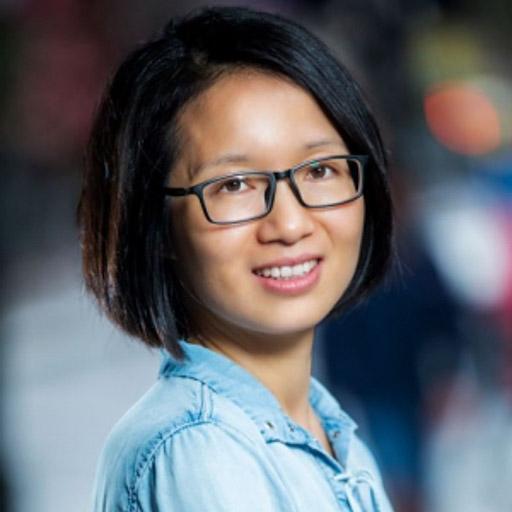
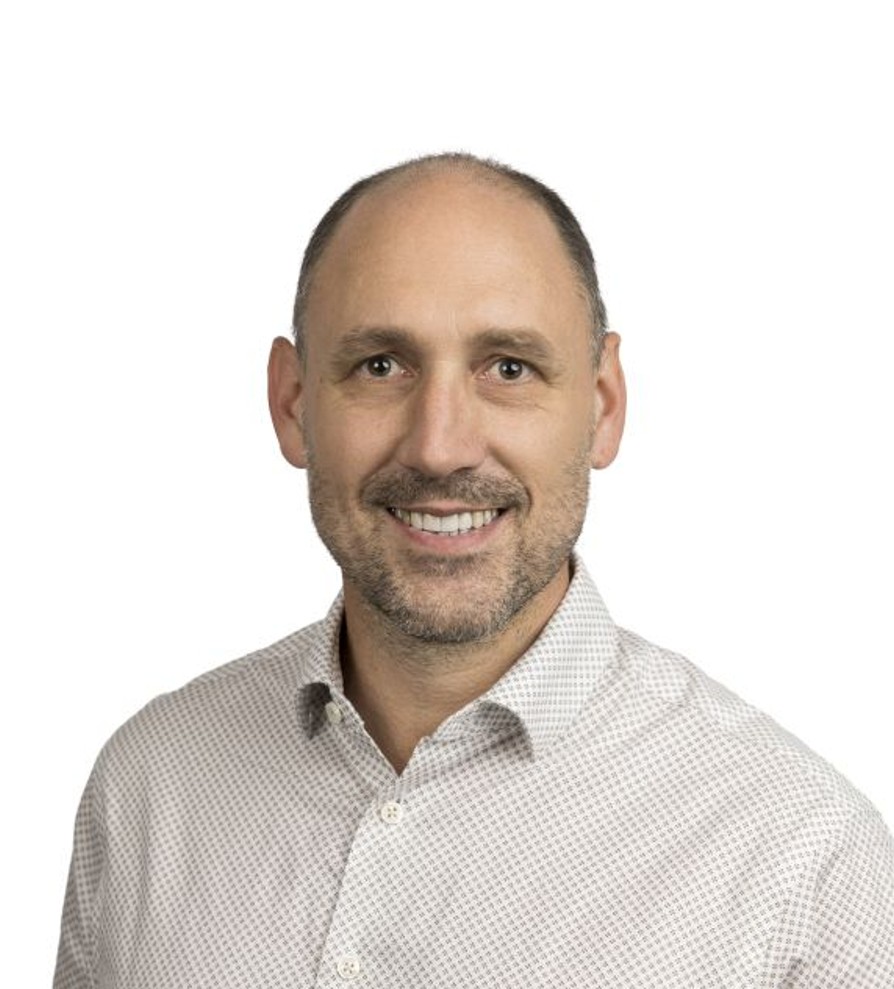
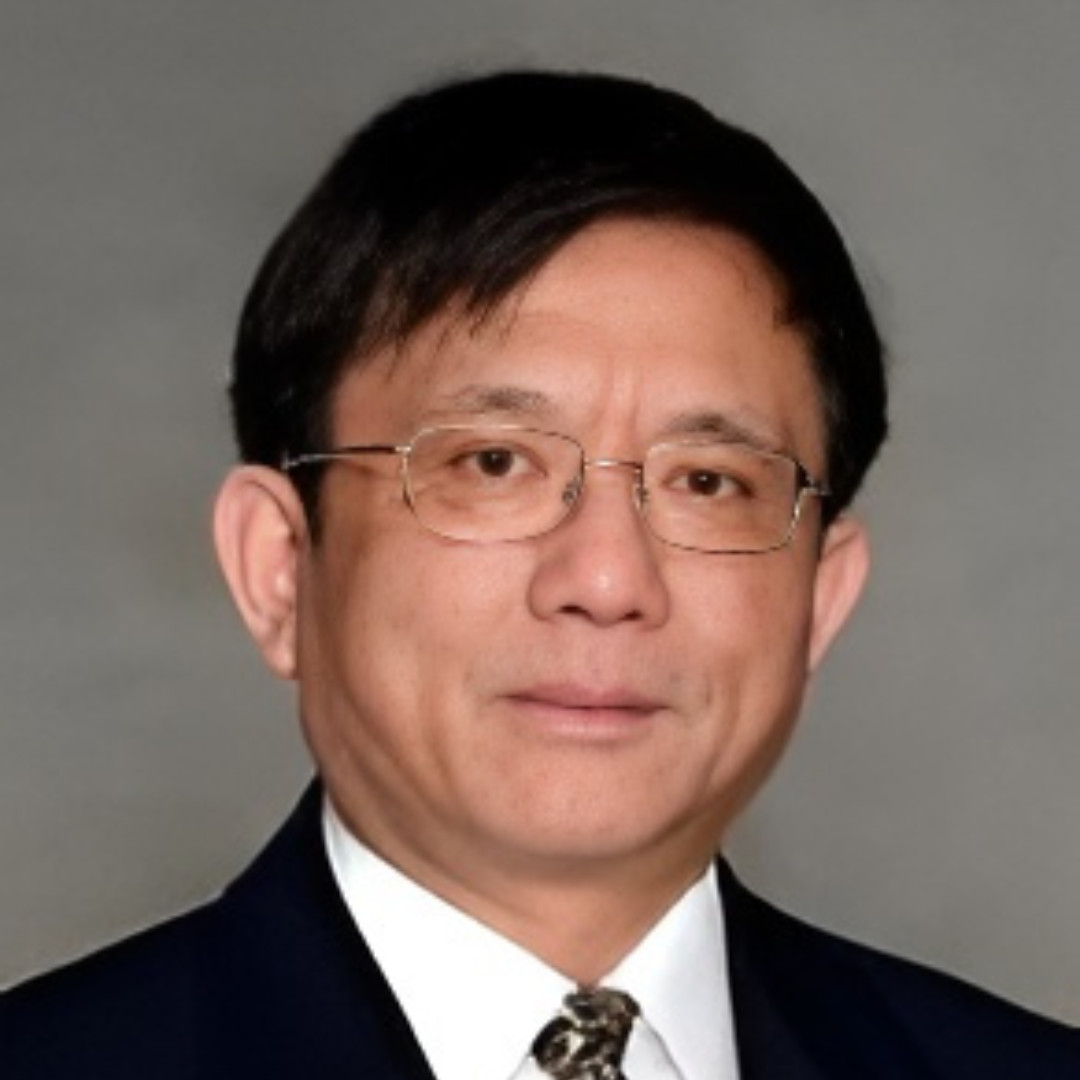
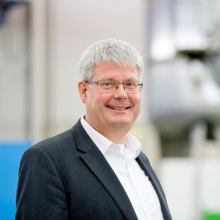
Prof. Dr. Tobias Gemmeke is a University Professor at RWTH Aachen University's Faculty of Electrical Engineering and Information Technology, leading the Chair of Integrated Digital Systems and Circuit Design. His work focuses on neuromorphic computing, hardware accelerators, and energy-efficient electronics. He has pioneered advancements in FPGA-based computational neuroscience simulators, neuromorphic processor architectures, and sensor integration for industrial and medical applications. Research interests include time-domain computing, ReRAM reliability, and co-optimization of neural networks with hardware. Notable contributions include the neuroAIx framework for accelerated neuroscience simulations and energy-efficient ASIC designs for post-quantum cryptography. He actively explores memristive devices and domain generalization techniques for edge computing. Recent publications highlight innovations in spiking neural networks, sensor systems for plain bearings, and time-domain compute-in-memory engines. His work bridges theoretical neuroscience with practical hardware implementations, emphasizing scalability and real-time performance.
Dorte Hammershøi is a Professor in the Department of Electronic Systems at The Technical Faculty of IT and Design, Aalborg University, Denmark. Her research focuses on acoustics, sound engineering, and hearing science with significant contributions to human hearing, ear canal acoustics, and audio technology applications. Her research interests include: Temporary Threshold Shift and frequency resolution in human hearing Ear canal acoustics and sound pressure level measurement Distortion Product Otoacoustic Emission (DPOAE) analysis Impulse response and acoustic impedance studies Hearing aid technology and rehabilitation methodologies Virtual reality audio interfaces and accessibility applications Professor Hammershøi's recent publications demonstrate a strong clinical-engineering interdisciplinary approach, bridging theoretical acoustics with practical hearing rehabilitation applications. Her work on hearing aid fitting methodologies, occupational noise exposure effects, and virtual reality audio interfaces shows consistent innovation in translating engineering principles to clinical practice. The research shows particular attention to individualized hearing solutions and accessibility technologies. Her scientific contributions have been recognized with: Dansk Lydpris 2020 (awarded November 17, 2021) Ambassadør for Aalborg (awarded September 15, 2004) Professor Hammershøi has supervised 5 PhD students and led numerous research projects including the ongoing "Audio Only VR for Blind Gamers" project (2024-2028) funded by the Independent Research Foundation of Denmark, and the completed "BEAR: Better Hearing Rehabilitation" project (2016-2022). Her research has attracted significant media attention with 110 press/media appearances discussing hearing damage prevention, tinnitus, and public health implications of noise exposure. She maintains active professional engagement through committee memberships (46 documented activities), international collaborations, and contributions to clinical practice guidelines. Her work continues to influence both academic research and practical applications in hearing science and audio engineering.
Buyung Kosasih is a Professor in the School of Mechanical, Materials, Mechatronic and Biomedical Engineering at the University of Wollongong. He has held this position since 2000 and focuses on teaching and research in mechanical engineering, including Machine Dynamics, Finite Element Methods, and Renewable Energy Technology. His research spans fluid dynamics in industrial processes, renewable energy systems, and aqueous lubrication. Key projects include 3D-printed surfboard fin optimization and steel coating dynamics. Research interests emphasize experimental and computational fluid dynamics, particularly in renewable energy turbines and tribological systems. Notable awards include the 2013 Outstanding Contribution to Teaching and Learning Award. He has supervised numerous students and led over 20 funded projects, including ARC grants for steel innovation and renewable energy. Collaborative work includes the Steel Research Hub and HVAC/cool roof efficiency studies.
Ye Zhisheng is the Dean’s Chair and Associate Professor in the Department of Industrial Systems Engineering & Management at the National University of Singapore (NUS). His research focuses on reliability engineering, inventory control, emergency response systems, and statistical modeling. He holds a PhD in Industrial and Systems Engineering from NUS, along with a BEng in Material Science and Engineering and a BEco in Economics from Tsinghua University. His work emphasizes practical applications in mission-critical systems, predictive maintenance, and data-driven decision-making. Current research initiatives include optimal maintenance policies for manufacturing systems, degradation analysis of bearings, and federated learning approaches for battery lifecycle prediction. He has pioneered methods for integrating physics-informed neural networks into prognostics and health management (PHM) systems. Key technical contributions span advanced statistical methodologies like sieve estimation for survival data, phase-type distributions modeling, and condition-based maintenance optimization. His interdisciplinary approach bridges operations research, mechanical engineering, and computer science to address complex reliability challenges. Recent projects include resilient consensus-based power grid management and contamination source identification frameworks. Notable collaborations involve developing intelligent cross-domain fault diagnosis systems using transformer networks and advancing the Internet of Federated Things (IoFT) for distributed data analytics. His work has been applied in aerospace, telecommunication infrastructure, and medical emergency response systems.
Xiaolei Fang is Associate Professor in the Edward P. Fitts Department of Industrial and Systems Engineering at North Carolina State University. His research develops advanced statistical learning, deep learning, and optimization methods for industrial applications involving high-dimensional data, with particular focus on condition monitoring, failure prognostics, and system performance optimization. He holds a PhD in Industrial Engineering and MS in Statistics from Georgia Tech. Professor Fang's research integrates machine learning with industrial engineering to solve complex problems in predictive maintenance, quality control, and energy systems. His methodological innovations include federated learning approaches for privacy-preserving prognostics, distributionally robust machine learning models, and tensor-based statistical methods for manufacturing quality diagnostics. He has received multiple prestigious awards including the ISE Outstanding Research Award (2024), Sigma Xi Best PhD Thesis Award (2019), and SAS Data Mining Best Paper Award (2016). His research has been funded by NSF, Cisco Systems, and the US Department of Energy. Professor Fang teaches courses in Quality Design & Control, Statistical Models for Systems Analytics, High-Dimensional Data Analytics, and Optimization Models. He has supervised 9 PhD students to completion and currently advises 7 graduate students working on projects spanning federated learning for prognostics, tensor-based quality control, and machine learning applications in manufacturing and energy systems.
Dr. Chunyan Lai is an Associate Professor at the Department of Electrical and Computer Engineering, Concordia University. Her research focuses on electric drives, motor control, power electronics, electrified vehicles, and vehicle-to-grid solutions. She contributes to both graduate and undergraduate education through courses such as Controlled Electric Drives and Hybrid Electric Vehicle Power Systems . Research Emphasis : Electric motor drives and control systems, electrified transportation, power electronics innovations, and energy management strategies. Publications : Specializes in sensorless control techniques for Permanent Magnet Synchronous Motors (PMSM), thermal management in electric machines, and advanced energy trading frameworks for smart grids. PhD Opportunities : The Power Electronics and Energy Research (PEER) Group under Dr. Lai offers positions for developing efficient motor drives for EVs and grid-connected power converters. Collaboration : Industry-adjacent research with requirements for professional communication, patent development, and technical dissemination.
Dr. Wade Smith is a Senior Lecturer within the School of Mechanical and Manufacturing Engineering at the University of New South Wales. He is an active member of the WAVES research group (Wear, Aeroacoustics and Vibration in Engineering Systems) and conducts his research in the Tribology and Machine Condition Monitoring laboratory. His primary research interests include vibration-based diagnostics of rotating machinery, prognostics of rotating machinery, gear wear monitoring and prediction, simulation and modeling of rotating machines for diagnostic applications, and signal processing of machine vibration signatures using cyclostationarity. His work has significant applications in industrial machinery health monitoring and predictive maintenance systems. Dr. Smith's recent publications demonstrate a consistent focus on advanced diagnostic techniques for rotating machinery, with particular emphasis on gear systems and bearings. His research integrates traditional mechanical engineering principles with modern signal processing and machine learning approaches to develop more effective condition monitoring solutions. He actively supervises PhD and Masters students on projects related to gear diagnostics, wear monitoring, and vibration analysis. His current research projects include gear diagnostics in planetary gearboxes using internal sensors, gear wear monitoring and prediction, sliding contact-induced vibration studies, and transmission-error-based gear diagnostics. Dr. Smith's laboratory is equipped with specialized facilities including gearbox test rigs (both planetary and parallel configurations), a rolling element bearing test rig, an engine test rig, friction rig, tribometer, high-quality microscope, and extensive instrumentation for vibration analysis. His research has attracted collaborations with institutions including Queensland University of Technology, SpectraQuest (USA), Weir Minerals, University of Technology Sydney, RWTH Aachen University (Germany), and Safran.
Prof. Dr.-Ing. Hans-Georg Herzog is a Professor of Energy Conversion Technology at the Technical University of Munich (TUM), School of Engineering and Design. He has headed the Energy Conversion Technology group at TUM since 2002 and is a Senior Member of IEEE and member of VDE and VDI professional organizations. His research focuses on energy-efficient electromechanical drives and related technologies critical for modern electric and hybrid vehicles. Prof. Herzog's research interests encompass energy-efficient electromechanical drives, with key expertise in design and optimization of hybrid-electric and battery-electric powertrains, automated design methods for electromechanical actuators, energy and power management systems, and analysis of loss mechanisms in soft magnetic materials. His work bridges fundamental electromagnetic theory with practical automotive applications, particularly in fault-tolerant systems and reliability engineering for electric propulsion. His recent publication trends show a strong focus on vehicular power systems, with particular emphasis on electronic fuses, fault diagnosis in multiphase machines, wireless power transfer, and reliability analysis of electric aircraft propulsion systems. The research spans from fundamental electromagnetic modeling to practical automotive applications, with increasing attention to autonomous driving power requirements and next-generation vehicle electrical architectures. Prize for Good Teaching of the Free State of Bavaria (2010) Prof. Herzog leads a substantial research team including doctoral candidates and postdoctoral researchers who contribute to his extensive publication record. His research group collaborates with automotive industry partners on various grants focused on electric vehicle technology, power system reliability, and advanced electromagnetic systems. The team regularly develops novel methodologies for machine design, fault tolerance analysis, and power system optimization. The research is conducted within TUM's Energy Technology Workshop with specialized facilities for electrical machine testing, power electronics development, and automotive power system simulation. The team maintains strong connections with industry partners in the automotive and aerospace sectors, facilitating technology transfer from academic research to practical applications.
Professor Ingrid Bouwer Utne is a faculty member at the Department of Marine Engineering, Norwegian University of Science and Technology (NTNU). Her primary research focuses on risk analyses of ships, marine systems, and autonomy, with emphasis on operational safety, maintenance management, and risk control in autonomous maritime technologies. Key Projects: Leader of the Risk Group at NTNU, involved in the SFI Autoship initiative and ERC AdG BREACH project addressing risk-based rationality in autonomous systems. Research Interests: Autonomous systems design, probabilistic risk assessment, safety engineering, and risk-informed decision-making for marine operations. Grants & Funding: Secured funding from the Research Council of Norway, MAROFF, and industry partners for projects like ORCAS (Online Risk Management for Autonomous Ships) and UNLOCK (Supervisory Risk Control). She supervises numerous PhD students and postdocs, focusing on topics such as autonomous vessel navigation, risk modeling for underwater robotics, and decarbonization of maritime systems. Her work bridges theoretical risk analysis with practical applications in marine autonomy and safety systems.
Dr. Yuping He is a Professor in the Department of Automotive and Mechatronics Engineering at the University of Ontario Institute of Technology (UOIT). He holds a PhD in Mechanical Engineering from the University of Waterloo (2002) and has extensive academic and industry experience, including postdoctoral fellowships at the University of Windsor and University of Waterloo. His research focuses on autonomous driving, vehicle dynamics, chassis design, and active safety systems, with expertise in modeling and simulation techniques. Education: PhD (Mechanical Engineering), University of Waterloo, 2002 MASc (Automotive Engineering), Tsinghua University, China, 1991 BASc (Automotive Engineering), Hubei Automotive Industries Institute, China, 1985 Research interests include automated design synthesis, multidisciplinary optimization, and driver-hardware-in-the-loop simulations. He has contributed to advancements in heavy vehicle stability control, trailer steering systems, and energy-saving strategies for steer-by-wire vehicles. His work bridges mechanical systems, control engineering, and real-time simulation technologies. Awards include the 2010 Research Excellence Award from UOIT’s Faculty of Engineering and Applied Science, and a nomination for the Governor-General’s Gold Medal (2003). His publications span journals like Vehicle System Dynamics and ASME Journal of Computational and Nonlinear Dynamics , with a focus on improving vehicle safety and performance through advanced control strategies. Advising and Grants: Dr. He has advised student teams in capstone projects, including the 2010 FEAS Capstone Design Competition-winning team. His research integrates industrial collaboration, as seen in roles like Senior Product Engineer at American Axle & Manufacturing (2005). His work emphasizes practical applications in automotive and mechatronic systems.
Emine Ayaz is a Professor at Istanbul Technical University's Department of Electrical Engineering. Her research spans fault detection in electric motors, signal processing, and nuclear power plant monitoring, with recent work integrating deep learning (e.g., dual RNN architectures) and medical applications (e.g., parasitology, plant-based wound healing). Key Collaborations : International partnerships in motor diagnostics and nuclear engineering. Projects : Led grants on high-voltage training and predictive maintenance for TEİAŞ and industrial processes. Research Trends : Recent publications emphasize neural networks for motor fault classification, coherence analysis for insulation diagnostics, and interdisciplinary work in plant biotechnology and parasitology. Labs & Teams : Involved in projects analyzing vibration signals, wavelet transforms, and sensor fusion for industrial and nuclear systems.
Prof. Dr.-Ing. Stephan Staudacher is the Director of the Institute of Aircraft Propulsion at the University of Stuttgart. His work focuses on aircraft propulsion systems, gas turbine performance, and turbomachinery design. He holds a professorship in the Faculty of Mechanical Engineering and Aerospace, leading research in advanced engine technologies, erosion effects, and fault detection algorithms. Research interests include engine reliability, computational fluid dynamics (CFD), and experimental validation of propulsion systems. His publications emphasize topics like neural network applications for fault detection, ice crystal icing simulations, and particle transport in additive manufacturing processes. Recent studies highlight the optimization of composite-cycle engines and assessment of mission severity caused by erosion. Key contributions include advancements in engine condition monitoring, transient performance analysis, and the development of Stuttgart University’s Altitude Test Facility (ATF). His work bridges theoretical models with industrial applications, addressing challenges in both civil and military aviation propulsion systems.
Debbie Senesky is an Associate Professor at Stanford University in both the Aeronautics and Astronautics Department and the Electrical Engineering Department, as well as a Senior Fellow at the Precourt Institute for Energy. She serves as the Principal Investigator of the EXtreme Environment Microsystems Laboratory (XLab) and Site Director of nano@stanford. Dr. Senesky received her B.S. in mechanical engineering from the University of Southern California (2001), followed by M.S. (2004) and Ph.D. (2007) degrees in mechanical engineering from the University of California, Berkeley. Prior to joining Stanford, she held positions at GE Sensing (formerly NovaSensor), GE Global Research Center, and Hewlett Packard. Her research focuses on developing nanomaterials and electronic systems capable of operating in extreme environments, including high-temperature conditions for Venus exploration, microgravity synthesis of nanomaterials, and harsh environment electronics. Dr. Senesky's work bridges multiple disciplines, connecting aerospace engineering, electrical engineering, materials science, and space technology to solve challenges in extreme environment applications. Dr. Senesky has made significant contributions to the field of high-temperature electronics, GaN-based sensors, graphene aerogel synthesis in microgravity, and materials for space applications. Her recent publications demonstrate a strong focus on practical applications of these technologies, particularly for space exploration and extreme environment sensing. Presidential Early Career Award for Scientists and Engineers (PECASE), NASA (2025) Emerging Leader Abie Award from AnitaB.org (2018) Early Faculty Career Award from NASA (2012) Gabilan Faculty Fellowship Award (2012) Sloan Ph.D. Fellowship (2004-2006) Dr. Senesky actively advises students at all levels, from undergraduate to postdoctoral researchers, and has established herself as a leader in promoting diversity in STEM through her role as Faculty Advisor for the Stanford Chapter of the National Society of Women Engineers. Her collaborative approach is evident in her numerous interdisciplinary projects and partnerships with NASA, industry, and other research institutions. She directs the EXtreme Environment Microsystems Laboratory (XLab), which focuses on developing technologies for operation in extreme environments including high temperature, radiation, and microgravity conditions. The lab's work has applications for space exploration, particularly for Venus missions, as well as terrestrial applications requiring robust electronics.
Steven Ceron is an Assistant Professor in Robotics at the University of Michigan's College of Engineering. His research focuses on swarm robotics, multi-agent systems, and programmable self-organization of micro- and macro-scale robot swarms. He leads the Synergetic Adaptive Machinas (SAM) Lab, which develops reconfigurable robot swarms for biomedical applications and smart materials integration. Key research areas include microrobot fabrication, heterogeneous swarm coordination, and self-reconfigurable modular systems. His work envisions seamless integration of robot swarms into daily life through innovations in design, control, and scalability. Recent publications emphasize swarmalator dynamics, strain-based coordination in soft robots, and scalable fabrication methods. His lab explores both theoretical frameworks and practical implementations, bridging micro-scale and macro-scale robotics applications. Though no awards were explicitly listed, his contributions to novel fabrication techniques and modular robotics suggest ongoing recognition in the field. Advising and grant details are not provided here, but his lab's focus on biomedical and aerospace applications indicates active collaborative projects.
Amir R. Nejad is a Professor at the Department of Marine Technology, NTNU, and leads the Marine Energy Systems and Autonomics (MESA) research group. He chairs the EAWE WindEurope Scientific Track Committee and co-founded the Drivetrain Technical Committee at the European Academy of Wind Energy (EAWE). He is also involved in ISO committees, editorial boards of journals like Wind Energy Science , and contributes to standards for offshore wind energy. Education: Ph.D. in Marine Technology, NTNU (top 10% international ranking) M.Sc. Subsea Engineering, University of Aberdeen (Distinction) B.Sc. Mechanical Engineering, Tehran University (Honors) Research Interests: Focus on stochastic and reliability-based design, dynamic modeling of electro-mechanical systems, fault detection, and condition monitoring in marine and offshore renewable energy applications. Key areas include wind turbine drivetrains, floating offshore systems, and digital twin technology. Awards: 2x Best Lecturer, NTNU (2015-2016, 2019-2020) Best Poster Award, Torque Conference 2016 Nowitech Ph.D. Fellowship, 2012-2015 Advising & Grants: Supervises Ph.D. students in drivetrain design and offshore systems. Leads projects on marine system dynamics and vibration through the MD Lab. Collaborates with industry on drivetrain testing and reliability. Labs & Teams: Director of the Marine System Dynamics and Vibration Lab (MD Lab), fostering innovation in offshore renewable energy systems and digital twin applications.