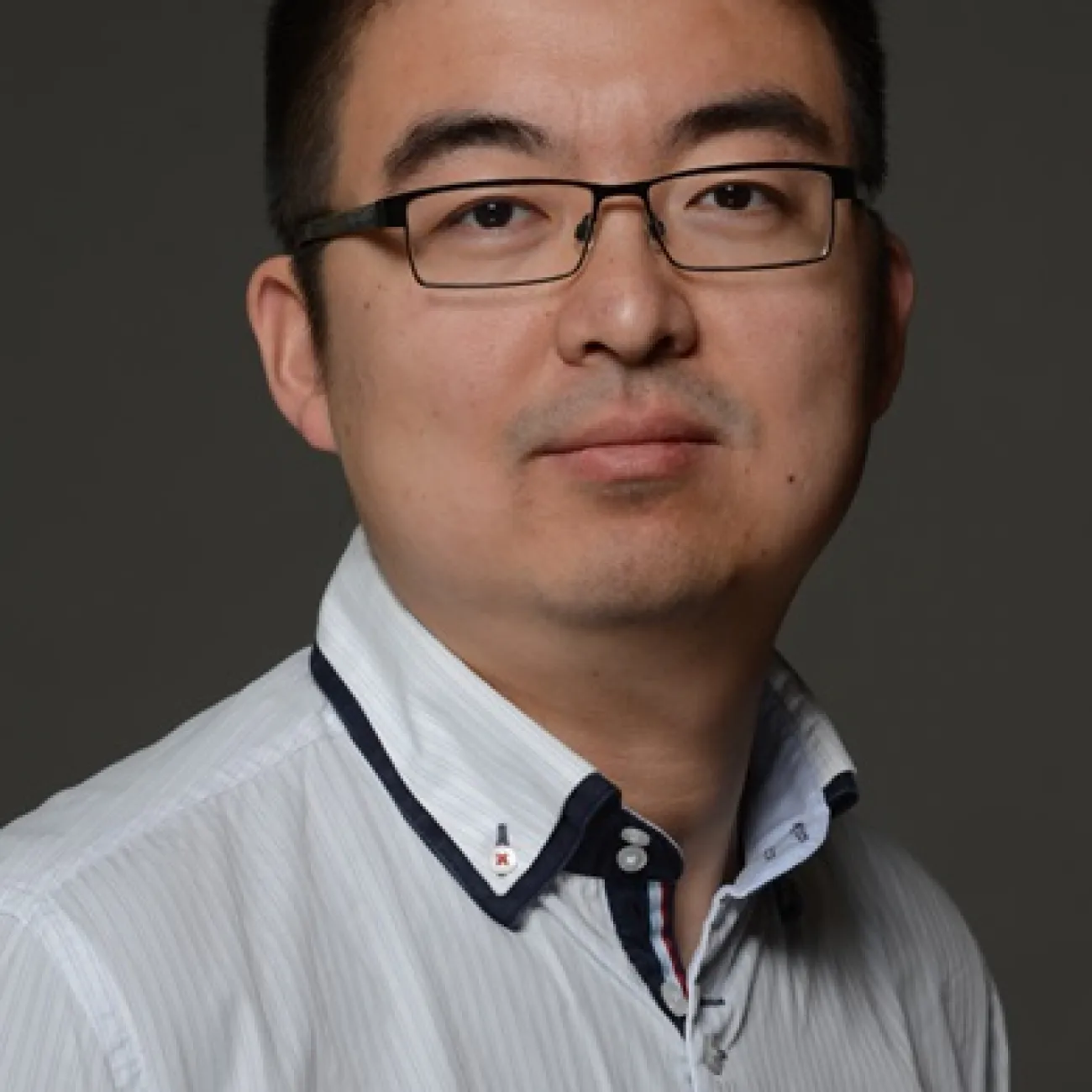
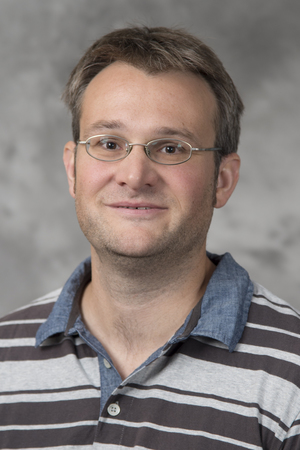
Dr. Xi Yu is a Lecturer in Chemical Engineering at the University of Southampton, affiliated with the Faculty of Engineering and the Environment. He holds a Bachelor's from Tianjin University and a Ph.D. from the University of Sheffield. His research focuses on low carbon fuels, granulation techniques, and computational fluid dynamics. He has supervised PhD students such as Jerin Jacob and is currently accepting new PhD applicants in these areas. Dr. Yu's educational background includes degrees in Chemical Engineering and prior academic roles at Aston University and the Energy and Bioproducts Research Institute (EBRI). His work spans bioenergy systems, particle technology, and multi-physics modeling. Key research projects include advancements in biomass gasification, biofuel production, and sustainable energy systems. His publications emphasize computational modeling, fluid dynamics, and biomass utilization. Recent articles explore topics like absorption chiller systems, fluidization validation, and bio-oil aging strategies. He contributes to teaching modules such as CHEG3000 and CHEG3004, reflecting his commitment to both research and education.
Daniel Holz is a Professor of Physics and Astronomy & Astrophysics at the University of Chicago, affiliated with the Enrico Fermi Institute, Kavli Institute for Cosmological Physics, and the College. His research focuses on gravitational wave astrophysics, cosmology, and black hole dynamics, contributing to major discoveries like GW150914 and GW170817 as part of the LIGO collaboration. He holds a BA from Princeton and a PhD from the University of Chicago, with postdoctoral fellowships at the Albert Einstein Institute (Germany), Kavli Institutes in Santa Barbara and Chicago, and a Richard Feynman Fellowship at Los Alamos National Laboratory. Research interests include gravitational-wave standard sirens for cosmology, black hole-neutron star mergers, and testing general relativity. Awards include the NSF CAREER Award, Quantrell Teaching Award, and Breakthrough/Gruber Prizes (via LIGO). He chairs the Bulletin of the Atomic Scientists' Science and Security Board, guiding the Doomsday Clock, and directs the UChicago Existential Risk Laboratory (XLab), addressing nuclear, climate, and AI risks. His lab and collaborations leverage multi-messenger astronomy and advanced data analysis techniques. Notable contributions include pioneering gravitational-wave cosmology methods and advancing understanding of cosmic expansion tensions.
Amir Bahadori serves as Professor and Nuclear Engineering Program Director in the Department of Mechanical and Nuclear Engineering at Kansas State University's Carl R. Ice College of Engineering, holding the Hal and Mary Siegele Professorship in Engineering. He directs the Radiological Engineering Analysis Laboratory (REAL) and established the Institute for Radiation Health Studies (IRHS) in 2024, focusing on radiation protection, space radiation environments, and radiation health effects. His educational background includes: Ph.D. in Biomedical Engineering, University of Florida (2012) M.S. in Nuclear Engineering Sciences, University of Florida (2010) B.S. in Mechanical Engineering and Mathematics, Kansas State University (2008) Bahadori's research spans radiation transport modeling, dosimetry, and risk assessment with applications in space exploration, medical physics, and radiation epidemiology. He develops computational frameworks for radiation exposure scenarios and biological response prediction, emphasizing space radiation protection for Artemis missions and chronic exposure studies through the Million Person Study collaboration. Analysis of his recent publications reveals dominant themes in space radiation measurement (Artemis missions), radiation epidemiology (Million Person Study innovations), and advanced detection systems (miniaturized neutron spectrometers). His work increasingly integrates big data approaches for radiation risk assessment and electrostatic shielding concepts for deep-space exploration. His scientific recognition includes: NASA Graduate Student Research Fellowship (2009) Certified Health Physicist designation Big 12 faculty fellowship (2022-2023) NCRP council election (2024) Two USPTO patents Bahadori secures substantial research funding from NASA for space radiation instrumentation, Department of Energy projects via the Kansas City National Security Campus, and collaborative epidemiological studies. He mentors nuclear engineering graduate students while leading interdisciplinary teams developing radiation protection solutions for aerospace and medical applications. His laboratory infrastructure includes the REAL with Beocat high-performance computing resources, radiation detectors, and a 3D printer, plus the IRHS with a Precision X-ray XRad320 irradiator and radon chamber. These facilities support collaborations across K-State colleges and external organizations for radiation health effect studies.
Johannes Brandstetter is an Associate Professor at the Institute for Machine Learning at Johannes Kepler University Linz (JKU) where he leads the "AI for data-driven simulations" research group. He is also Co-founder and Chief Scientist at Emmi AI, bridging academic research with industrial applications in AI-driven physics simulation. Brandstetter earned his PhD after working at CERN's CMS experiment on Higgs boson physics. In 2018, he transitioned to machine learning, joining Sepp Hochreiter's research group in Linz. From 2021-2023, he worked at the Amsterdam Machine Learning Lab under Max Welling and Microsoft Research, developing expertise in Geometric Deep Learning and neural surrogates for partial differential equations. He returned to JKU in October 2023 to establish his own research group. His research spans Machine Learning, Deep Learning, and Physics-Informed Machine Learning with focus areas including Neural PDE solvers, Computational Fluid Dynamics, and Climate Modeling. Brandstetter believes AI is poised to revolutionize industrial-scale simulations, potentially saving thousands of compute hours across engineering domains. His work integrates computer vision, numerical simulation, and engineering components to advance data-driven approaches. Recent publications reveal a strong trend toward foundation models for scientific applications, particularly in atmospheric modeling (Aurora), geometric deep learning, and neural surrogates for complex physical systems. His interdisciplinary work spans computer vision, climate science, computational physics, and engineering, demonstrating the versatility of his research approach. Principal Investigator for "AlKa-DL: Alpine karst spring discharge prediction" (FWF-funded, 2024-2027) Principal Investigator for Cluster of Excellence "Bilateral Artificial Intelligence" (FWF-funded, 2024-2029) Co-PI for "Fast, efficient and flexible CFD simulation through generative AI" (FFG-funded, 2025-2026) As an educator and researcher, Brandstetter actively engages with the scientific community through invited talks at major conferences including presentations on "Closing the Gap Between Scientific Foundation Models and Real-World Applications" (March 2025) and "Scientific Machine Learning for Science and Engineering" (February 2025).
Celia Reina is an Associate Professor in the Department of Mechanical Engineering and Applied Mechanics at the University of Pennsylvania’s School of Engineering and Applied Science (SEAS). Her research focuses on multiscale modeling of materials, bridging statistical mechanics, thermodynamics, and machine learning. She develops novel frameworks for predicting non-equilibrium material behavior using data-driven methods and uncertainty quantification. Her work emphasizes integrating computational tools like neural networks (Stat-PINNs, VONNs) with physical principles to model dissipative systems, phase transitions, and mesoscale dynamics. Key areas include coarse-graining techniques, epistemic uncertainty analysis, and predictive modeling of complex materials under dynamic loading. Recent publications highlight advancements in stochastic systems, resonant metamaterials, and the derivation of thermodynamic models from particle-level fluctuations. She leads efforts in experimental-simulation co-design to enhance predictive capabilities in materials science.
Susan T. Lepri is a Professor in the Department of Climate and Space Sciences and Engineering at the University of Michigan's College of Engineering, where she serves as Director of the Space Physics Research Laboratory. Her work focuses on heliospheric physics, utilizing spacecraft data from missions like ACE, WIND, and Solar Orbiter to investigate solar wind origins and coronal mass ejections. Her educational background includes: Ph.D. in Atmospheric and Space Sciences, University of Michigan M.S. in Atmospheric and Space Sciences, University of Michigan B.S. in Physics, Astronomy and Astrophysics, University of Michigan Lepri's research centers on tracing charged particles in the heliosphere using heavy ion measurements to study solar wind sources, coronal mass ejection physics, and particle acceleration mechanisms. She develops space-based ion mass spectrometers for missions including the European Space Agency's Solar Orbiter (Heavy Ion Sensor) and the Interstellar Mapping and Acceleration Probe. Her work integrates statistical analysis of solar wind composition with magnetohydrodynamic model validation to unravel plasma behavior in space environments. Analysis of her 15 most recent publications (2015-2017) reveals consistent focus on solar wind composition dynamics, particularly charge state evolution and elemental fractionation. Key themes include magnetic reconnection signatures in slow solar wind formation, anomalous composition in depleted interplanetary coronal mass ejections, and solar wind charge exchange contributions to X-ray backgrounds. Her instrumentation work bridges observational gaps in inner heliospheric measurements. Major recognitions include: 2018 Claudia Joan Alexander Trailblazer Award (University of Michigan) 2012-2013 Kenneth M. Reese Outstanding Research Scientist Award 2008 JGR-Space Physics Excellence in Refereeing Citation NASA Graduate Fellowship (2001-2003) Lepri actively mentors through outreach programs including K-12 initiatives with the Michigan Space Grant Consortium and Detroit Area Pre-College Engineering Program. She has coordinated Rochester Adams High School STEAM fairs and elementary science outreach while developing educational content like MConnex videos. Her research is supported by NASA grants enabling instrument development for Solar Orbiter and IMAP missions, with collaborations spanning international space agencies and academic institutions. As Director of the Space Physics Research Laboratory, she leads teams developing next-generation space instrumentation, particularly ion mass spectrometers for heliospheric exploration. Current projects include the Heavy Ion Sensor for Solar Orbiter (measuring inner heliospheric composition) and innovative sensors for IMAP, advancing capabilities to trace solar wind sources and particle acceleration mechanisms.
Dr. Ian Abel is an Associate Research Scientist at the Institute for Research in Electronics & Applied Physics (IREAP) at the University of Maryland, where he has been since 2018. His expertise spans fusion energy, plasma physics, and computational modeling. Abel holds a B.A. in Mathematics (2006) and M.S. in Applied Mathematics (2007) from the University of Cambridge, followed by a Ph.D. in Theoretical Physics from the University of Oxford (2012). His research focuses on magnetically confined fusion systems, particularly edge dynamics in tokamaks and innovative centrifugal mirror concepts. He has contributed to the development of gyrokinetic simulation tools like the GX code and the MaNTA transport model. Abel’s work also explores machine learning applications in plasma turbulence analysis and centrifugal mirror fusion reactor design for space propulsion. His research leverages advanced numerical methods, including GPU-native algorithms and adjoint-based optimization techniques for plasma equilibria. Key projects include the Centrifugal Mirror Fusion Experiment (CMFX), where he investigates plasma confinement and transport phenomena. His publications emphasize interdisciplinary approaches, integrating computational fluid dynamics, statistical physics, and high-performance computing to address challenges in fusion energy and plasma dynamics. While no specific awards are listed, his contributions to gyrokinetic turbulence modeling and centrifugal confinement systems are central to current fusion research.
Anna-Karin Tornberg is a Professor in Numerical Analysis at the Department of Mathematics, KTH Royal Institute of Technology. She holds positions as Vice Chair of the Department of Mathematics and previously served as Head of the Numerical Analysis division (2011–2023). Her research focuses on numerical methods for PDEs, particularly boundary integral methods for fluid flows involving particles and drops. She is active in the Linne FLOW Centre and Swedish e-Science Research Center (SeRC). Key roles include membership in the Royal Swedish Academy of Engineering Sciences (IVA), Royal Academy of Sciences, and receipt of awards like the Göran Gustafsson Prize (Mathematics, 2014). She has advised numerous PhD students and postdocs, including current supervisees Anna Broms, David Krantz, and Emanuel Ström. Her work spans theoretical, computational, and applied fluid dynamics with emphasis on microfluidics and high-accuracy numerical techniques. Education includes a PhD in Numerical Analysis from KTH (2000) followed by postdoctoral positions at NYU’s Courant Institute. Promoted to Full Professor at KTH in 2012. Service roles include membership in KTH’s University Board, Faculty Council, and editorial roles at Advances in Computational Mathematics and BIT Numerical Mathematics . Active in international conferences, delivering plenary/invited lectures at ICIAM, ECM, and ICM. Research group projects include development of fast numerical methods for microfluidics and molecular dynamics simulations. Current openings for PhD candidates in numerical methods for non-elliptic PDEs in time-dependent domains. Her lab collaborates on high-performance computing and fluid-structure interaction problems.
Prof. Dr. Eda Taşçı is a faculty member at the Faculty of Engineering, Dumlupınar University, specializing in Metallurgical and Materials Engineering. With a career spanning over two decades, she has held positions including Research Assistant (2002-2010), Associate Professor (2011-2022), and Professor (2022-present). She served as Deputy Head of Department (2017-2018) and Vocational School Directorate (2018-2021). Education: PhD in Ceramic Engineering (2004-2010), Master's (2001-2004), and Bachelor's (1997-2001) from Anadolu University. Her research focuses on inorganic materials like ceramics and cement, emphasizing production processes, surface properties, and sustainable applications. Key projects include enhancing glaze chemical resistance, pozzolan-cement interactions, and industrial metallic glaze development. Her publications span topics from ancient mudbrick materials to modern ceramic processing, highlighting interdisciplinary work in material science, environmental engineering, and industrial chemistry. She received the Turkish Cement Manufacturers Association Trailblazers Scholarship in 2008. Email: eda.tasci@dpu.edu.tr
Professor LIU Kaijun is a distinguished space plasma physicist currently serving as Professor and Deputy Head of Department at Southern University of Science and Technology (SUSTech) in Shenzhen, China. He previously held academic positions at Auburn University in Alabama, USA, where he was promoted from Assistant Professor (2012) to tenured Associate Professor (2017). His career includes significant research experience at Los Alamos National Laboratory and the Finnish Meteorological Institute following completion of his doctoral studies. 2007: Ph.D. in Space Plasma Physics, Cornell University 2002: M.S. in Space Physics, Peking University 1999: B.S. in Space Physics, Peking University Professor Liu specializes in theoretical and computational space plasma physics, with particular expertise in plasma instabilities and wave-particle interactions in Earth's radiation belts. His work also encompasses pickup ion dynamics in the heliosphere and solar wind-planet interactions. His research employs advanced computational techniques including particle-in-cell simulations and linear stability analysis to understand fundamental plasma processes. Analysis of Professor Liu's publication record from 2015-2018 reveals a consistent focus on electromagnetic wave phenomena in space plasmas, particularly examining Bernstein instabilities, Alfvén-cyclotron waves, and magnetosonic waves. His work demonstrates strong interdisciplinary connections between theoretical plasma physics, computational modeling, and spacecraft observations, with significant contributions to understanding radiation belt dynamics and heliospheric plasma processes. National-level Leading Talent (2019) Professor Liu has established a robust research program with extensive collaborations across international institutions including Los Alamos National Laboratory, NASA missions, and various universities. His work has been supported by research grants enabling advanced computational studies of space plasma phenomena. He advises graduate students in space physics and leads research projects investigating fundamental plasma processes relevant to space weather prediction and heliospheric physics. Professor Liu directs a computational plasma physics research group at SUSTech's Department of Earth and Space Sciences, utilizing high-performance computing resources to simulate complex plasma phenomena in Earth's magnetosphere and the heliosphere. His team collaborates with observational space physics groups to validate theoretical models against spacecraft measurements from missions including Van Allen Probes and THEMIS.
Federico Bonetto is a Professor at the School of Mathematics , Georgia Institute of Technology. His research spans equilibrium and non-equilibrium statistical mechanics , chaotic systems , and mathematical physics . Research Themes : Fermi surfaces in interacting fermion systems Chaos and large deviations in billiards Fourier's law in anharmonic oscillators Game theory applications to economic models Teaching : Regular instructor of courses like Partial Differential Equations , Linear Algebra , and Probability & Statistics since 2002. Publications : Over 40 works since 1995, focusing on Kac models, thermostatted systems, and statistical mechanics of coupled maps. Recent articles (2019-2025) explore non-equilibrium entropy decay , fermionic criticality , and monetary policy experiments .
Jonathan Freund is Professor of Mechanical Science and Engineering and Aerospace Engineering at the University of Illinois at Urbana-Champaign, holding the Donald Biggar Willett Professorship since 2016. He serves as Head of Aerospace Engineering (2020-present) and is Co-Director of the Center for Exascale-enabled Scramjet Design (CEESD). His academic journey began with all three degrees in Mechanical Engineering from Stanford University (B.S. 1991, M.S. 1992, Ph.D. 1998), followed by faculty positions at UCLA (1997-2001) before joining UIUC. Freund's research spans fluid mechanics with applications in biomedical systems, aeroacoustics, and materials science. His work focuses on computational modeling of cellular blood flow, jet noise control, plasma-coupled combustion, uncertainty quantification, and nanoscale material processing. He develops advanced simulation tools to investigate phenomena ranging from atomically thin liquid films to spacecraft propulsion systems. His laboratory leverages high-performance computing to solve complex multiphysics problems requiring exascale capabilities. Analysis of his recent publications reveals a strong emphasis on computational fluid dynamics applied to biological systems (35%), aeroacoustics and jet noise (25%), materials processing at nanoscale (20%), and uncertainty quantification methods (20%). His work consistently bridges fundamental fluid mechanics with practical engineering applications, particularly in medical technologies and advanced propulsion systems. Donald Biggar Willett Professor (2016-present) Kritzer Faculty Scholar (2011-2016) Fellow of the American Physical Society (2011) Campus Excellence in Faculty Mentoring Award (2017) APS DFD Gallery of Fluid Motion Winner (2000) Associate Fellow of AIAA (2012) Freund has advised numerous graduate students and received multiple teaching honors including the Engineering Council Award for Excellence in Advising (2008, 2012) and repeated recognition on the List of Excellent Teachers. His research has been supported by agencies including the Department of Energy's National Nuclear Security Administration. He leads the CEESD center which develops physics-faithful predictive simulations for scramjet design using advanced high-temperature composite materials.
Prof. Dr. Michael Kramer is a Professor of Astrophysics at the University of Manchester and a Scientific Member (Managing Director) at the Max Planck Institute for Radio Astronomy. He leads the COMPACT Research Group and specializes in radio astronomical fundamental physics. University of Manchester: Professor for Astrophysics Max Planck Institute for Radio Astronomy: Managing Director, Radio Astronomical Fundamental Physics Research Interests: Dr. Kramer focuses on pulsars , neutron stars , and gravitational physics , using these as tools to test general relativity , detect gravitational waves , and study transients in the Milky Way. Recent Research Trends: His 15 most recent publications emphasize fast radio bursts (FRBs) , axion dark matter searches , black hole imaging , and pulsar timing arrays for gravitational wave detection. Studies include the M87 jet, Galactic Center magnetars, and MeerKAT telescope optimizations.
Ewan Dolier is a Research Fellow in the Department of Physics at the University of Strathclyde, Faculty of Science. He is actively involved in cutting-edge research on laser-driven ion acceleration and plasma physics, working within the SCAPA (Scottish Centre for the Application of Plasma-based Accelerators) facility. His work bridges experimental physics and machine learning techniques to optimize and diagnose high-energy particle beams. His research interests include: Laser-Plasma Interactions Machine Learning for Physics Optimization Proton and Ion Beam Acceleration Synthetic Diagnostics using Neural Networks High Repetition Rate Laser Systems Relativistic Transparency Regime Physics The recent trend in his publications shows a strong focus on integrating artificial intelligence and deep learning models into the control and analysis of laser-driven particle acceleration experiments. His work spans experimental design, data-driven optimization, and advanced diagnostics using scintillating fiber spectrometers and synthetic models. His scientific contributions have been presented at major plasma physics conferences and published in high-impact journals such as Communications Physics and High Power Laser Science and Engineering . Notable projects include: External Experiment at the Gemini High-Power Laser Facility (Deep Learning for Ion Acceleration) Development of High Repetition-Rate Target Systems at SCAPA Doctoral Training Partnership research (2019–2024) He collaborates extensively with leading researchers such as Paul McKenna and Ross Gray, and contributes to multi-investigator datasets and simulations. Ewan Dolier completed his PhD in 2024 with a thesis on advancing laser-driven ion acceleration using machine learning and instability analysis.
Andreas Jung is an Associate Professor of Physics and Astronomy at Purdue University, affiliated with the CMS experiment at CERN. His research focuses on understanding the electroweak scale stabilization via precision measurements of top quark interactions, Higgs boson studies, and detector R&D. He also explores quantum algorithms for high-energy physics and supply chain optimization. Jung earned his Ph.D. from the University of Heidelberg (2009) and a diploma from the University of Dortmund (2004). Education: Ph.D. in Physics, University of Heidelberg, 2009 (Dissertation: D* Meson Cross Section Measurement) Diploma in Physics, University of Dortmund, 2004 (Commissioning of H1 Fast Track Trigger) Research Interests: High Energy Physics, Particle Physics, Detector Development, Quantum Computing Applications, Material Science for Detectors, and Collider Experiments. His work includes analyzing top quark spin correlations, quantum annealing for vertex reconstruction, and carbon fiber composites for CMS upgrades. Awards: Senior Distinguished Researcher fellowship at Fermilab LHC Physics Center (2019) 3-year PhD scholarship from German Research Society (2004–2007) Teaching & Leadership: Teaches courses on particle physics and data science. Serves as Convener of CMS TOP Physics Analysis Group and leads detector mechanics R&D. Engages in quantum computing collaborations with DoD and industry partners. Labs/Teams: Jung Research Group at Purdue, CMS Collaboration, and Purdue Quantum Science & Engineering Institute (PQSEI). Active in detector development for the High-Luminosity LHC upgrade, including carbon fiber support structures and silicon pixel detectors.