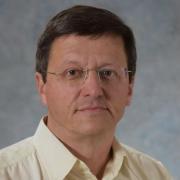
Renald Schaubمشاهده پروفایل
دانشیار
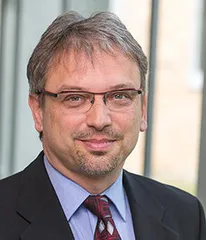
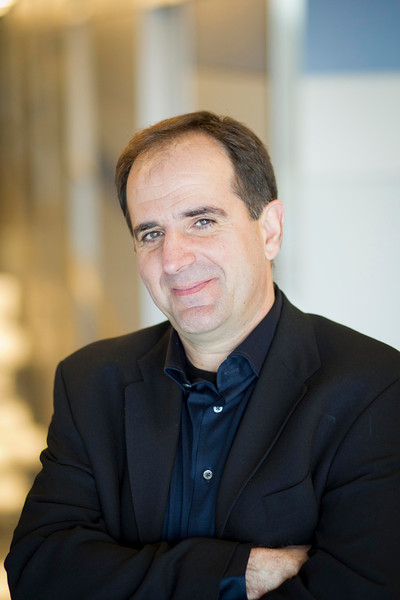
Dr. Renald Schaub is a Reader in the School of Chemistry at the University of St Andrews, where he also serves as the Director of the Scottish Centre for Interdisciplinary Surface Spectroscopy (SCISS). He leads the Schaub Research Group, which focuses on the application of high-resolution scanning probe microscopy and spectroscopy to study fundamental processes related to the nano-scale design and characterisation of functional materials. His research has significant implications for heterogeneous catalysis, photo-catalysis, molecular electronics, and other technological applications. Dr. Schaub graduated in 1996 from the Department of Physics at the University of Lausanne, Switzerland. He then completed his PhD at the Department of Physics of the Swiss Federal Institute of Technology in Lausanne (EPFL), followed by postdoctoral research at the Interdisciplinary Nanoscience Centre of the University of Aarhus in the group of Professor F. Besenbacher. Dr. Schaub's research focuses on understanding fundamental principles and mechanisms involved in the chemistry and physics of surfaces. His group employs scanning probe microscopies (STM, AFM) to obtain high-resolution, real-space information on surface phenomena, supported by theoretical calculations (DFT). Their work goes beyond traditional high-magnification topography to include local electronic and vibrational spectroscopy of single atoms/molecules, atomic and molecular manipulation, fast-acquisition imaging for studying surface dynamics, and high-pressure measurements for meaningful studies at the gas/solid interface. Key research areas include graphene, molecular electronics, and surface science approaches to heterogeneous catalysis. The group's recent publications demonstrate a strong focus on graphene nanoribbons, molecular switches, and functionalized graphene for various applications. Their work combines experimental STM/AFM techniques with theoretical approaches to understand surface phenomena at the atomic scale, with applications spanning from molecular electronics to catalysis and biosensing. Dr. Schaub has received several prestigious awards including the EaStCHEM Hirst Fellowship from the Scottish Funding Council (£30k), and Researcher Fellowships from the NSF-Switzerland (Junior: 56k CHF; Senior: 132k CHF). As an advisor, Dr. Schaub has supervised numerous PhD students whose research has led to publications in high-impact journals such as Science, Nature Communications, ACS Nano, Nano Letters, and Physical Review Letters. His group has secured funding from various sources including EPSRC, Scottish Funding Council, and Technology Strategy Board for projects related to graphene-based devices, functionalized graphene electrodes, and graphene layer development. The Schaub Research Group is part of EaStCHEM, a joint research school between the Universities of St Andrews and Edinburgh, and is affiliated with the Scottish Centre for Interdisciplinary Surface Spectroscopy (SCISS). They operate a low-temperature STM combined with q-plus AFM sensor (CreaTec/SPECS instrument), capable of operating at 5K with exceptional stability for atomic-scale investigations.