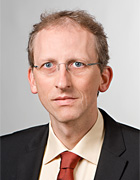
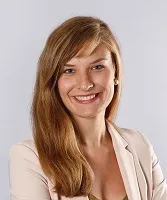
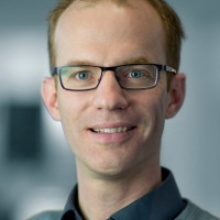
Gerlind Plonka is a Professor of Applied Mathematics at the University of Göttingen, specifically within the Institute for Numerical and Applied Mathematics (NAM). Her research focuses on Numerical Fourier Analysis Wavelet Theory Regularization and Nonlinear Diffusion Methods Fast Algorithms and Numerical Stability Signal and Image Processing Applications Her recent publications emphasize structured subsampling in Fourier domains, Prony-type methods for exponential sum recovery, and deep learning integration in medical imaging. She supervises active PhD candidates including Benjamin Kocurov, Anahita Riahi, Yannick Nicola Riebe, and Janina Schmidt, with a legacy of advising over 50 graduates across diverse topics like Sparse FFT Algorithms Phase Retrieval Constraints Wavelet-Based Image Compression Nonlinear Diffusion Filters High-Dimensional Data Approximation
Bastian Köpcke is a researcher at the Department of Computer Science, Westfälische Wilhelms-Universität Münster. His work focuses on parallel computing, GPU systems programming, and compiler design, with notable contributions to safe GPU language development (e.g., Descend) and optimizing high-performance numerical algorithms. He collaborates with Prof. Dr. Sergei Gorlatch on multiple research and teaching projects. Affiliation: Faculty of Mathematics and Computer Science Location: Einsteinstr. 62, Room 707, 48149 Münster Research interests include GPU architecture exploitation, compiler optimizations for parallel systems, and memory-safe programming models. His publications address tensor core utilization, FFT code generation, and distributed systems architecture. Teaching activities involve capstone projects on GPU algorithms, parallel programming, and compiler optimization, often co-taught with senior faculty. No explicit awards or grants are listed in the provided data.
Jean Braun is affiliated with the Institut des Sciences de la Terre (ISTerre) in Grenoble, France. Their research spans multiple domains in Earth sciences, including thermochronology , landscape evolution modeling , and glacial-isostatic adjustment . Key contributions involve inverse modeling techniques for reconstructing topographic history, quantifying exhumation rates, and analyzing the interplay between climate and tectonic processes. Research Interests: Temperature distribution, Himalayan tectonics, passive margin escarpments, and climate-driven geomorphic processes. Jean Braun’s recent work emphasizes the impact of glacial isostatic adjustment on river dynamics, as seen in studies of the U.S. mid-Atlantic coast and the Yellow River Delta. Their methodological innovations include the CLICHE and FastScape models, which integrate climate variability and efficient algorithms for solving stream power equations. Key findings highlight the longevity of passive margin escarpments due to flexural rebound and the role of rock thermal conductivity in refining exhumation rate estimates. Notable publications span journals like Earth and Planetary Science Letters , Geomorphology , and Tectonophysics , with a focus on inverse modeling, thermochronological data analysis, and the tectonic evolution of regions such as Scandinavia, the Himalayas, and the Namibian margin. Collaborative efforts with researchers like T. Pico, K. Mezger, and P.A. Van Der Beek underscore interdisciplinary approaches to understanding Earth’s surface processes.
Chenliang Li is a Professor at the School of Computer Science and Engineering, Nanyang Technological University, Singapore. He holds a PhD in Computer Science from the same institution (2013). His research focuses on information retrieval, machine learning, recommendation systems, natural language processing, and social media analysis. He has published extensively in top-tier venues such as SIGIR, CIKM, ACL, and IEEE TKDE. Key contributions include advancements in sequential recommendation systems using diffusion models and transformers, knowledge graph reasoning with GNNs, and applications of pretrained language models in NLP tasks. His work bridges theory and practice, addressing challenges in data-driven decision making and large-scale systems. Recent publications (2023-2025) explore topics like cross-city POI recommendation, bias-agnostic recommender systems, and multimodal vision-language models. He collaborates widely with industry and academia, contributing to open-source projects like ModelScope-Agent.
Paul Gibbon is a Professor and current Head of the HPC in Applied Sciences and Engineering division at the Jülich Supercomputing Centre (JSC), Forschungszentrum Jülich. He also maintains a part-time teaching appointment at Katholieke Universiteit Leuven where he teaches computational physics. Having joined JSC in 2001, he helped establish the Simulation Labs for Plasma Physics in 2008 and served as Head of the Computational Science Division from 2009 to 2022. After a brief period working in the fusion energy industry, he returned to JSC in 2024 as co-head of his current division. Gibbon's educational background includes physics studies at Bristol University followed by plasma physics research at Imperial College London. His postdoctoral journey took him across Europe to CEA Saclay and the University of Jena before settling at JSC. His research spans computational plasma physics, laser-based particle and radiation sources, and parallel mesh-free N-body simulation techniques. His publication record demonstrates significant contributions to computational plasma physics, with recent work focusing on N-body simulation methods (particularly the PEPC solver), laser-plasma interactions, particle acceleration mechanisms, and fusion energy applications. His research shows a clear trajectory from fundamental plasma simulation methods toward practical fusion energy applications, with substantial contributions to high-performance computing techniques for scientific simulation. Gibbon has been instrumental in advancing high-performance computing applications for plasma physics and fusion research, with leadership roles in developing simulation capabilities at one of Europe's premier supercomputing centers. His work bridges theoretical plasma physics with practical computing implementations, contributing to both the computational methods community and fusion energy research.
Prof. Dr.-Ing. Marc-André Keip is a Professor for Materials Theory at the Institute of Applied Mechanics (CE), University of Stuttgart. He serves as the Dean of the Computational Mechanics of Materials and Structures (COMMAS) program and Head of the Chair of Materials Theory. Additionally, he is the Academic Dean of the Department of Civil and Environmental Engineering at the University of Stuttgart since 2019. Prof. Keip earned his Doctoral degree in Engineering Sciences from the University of Duisburg-Essen in 2011 with a dissertation titled "Modeling of electro-mechanically coupled materials on multiple scales" under the supervision of Prof. Dr.-Ing. Jörg Schröder. He completed his Diploma in Civil Engineering from the University of Duisburg-Essen in 2004 after studying there from 1999-2004. His research focuses on Continuum Mechanics , Computational Mechanics , and Materials Theory , with specific interests in: Theory of Porous Media Elasticity and Plasticity Constitutive Modeling at Large Strains Homogenization Techniques Micro-Mechanics Finite Element Formulations Prof. Keip's recent publications (2018-2019) demonstrate a strong focus on phase-field modeling approaches for fracture mechanics, computational homogenization techniques, and multiscale modeling of electro-magneto-mechanically coupled materials. His work bridges theoretical continuum mechanics with advanced computational implementations, particularly in the areas of magneto-electro-active polymers, fracture mechanics, and constitutive modeling of complex materials. Among his recognitions, Prof. Keip received the Teaching Award of the University of Stuttgart in 2018. As Head of the Chair of Materials Theory, Prof. Keip oversees teaching activities covering undergraduate and graduate courses in Civil Engineering, Environmental Engineering, Medical Engineering, Simulation Technology, and Computational Mechanics of Materials and Structures. His research group has supervised numerous Bachelor's and Master's theses on topics related to computational mechanics, materials modeling, and finite element methods.
Dr. Melanie Kircheis is a Junior Professor in Numerical Mathematics at the Faculty of Mathematics, Chemnitz University of Technology. She maintains an active research program focused on numerical methods for Fourier analysis and sampling theory, with significant contributions to the field of nonuniform fast Fourier transforms. Her research expertise spans numerical mathematics with particular emphasis on Fast Fourier Transform algorithms, sampling theory, and their applications in signal processing and medical imaging. Dr. Kircheis has developed innovative methods for the inversion of nonequispaced fast Fourier transforms and has investigated regularization techniques for Shannon sampling formulas. Her work bridges theoretical foundations with practical implementations, addressing computational challenges in reconstructing Fourier transforms from irregularly sampled data. Analysis of Dr. Kircheis's publication record reveals a sustained research trajectory with increasing impact. Her work demonstrates progression from theoretical foundations of sampling theorems to sophisticated algorithmic implementations. A significant portion of her research addresses the mathematical and computational challenges of reconstructing Fourier transforms from nonequispaced samples, with direct applications in medical imaging technologies such as MRI. Her recent publications indicate continued innovation in parameter optimization for sampling methods and extension of these techniques to multivariate settings. Dr. Kircheis has established a productive research collaboration with Professor Daniel Potts at Chemnitz University of Technology, as evidenced by their co-authored publications spanning multiple years. Her research has been published in reputable journals including Linear Algebra and its Applications and Sampling Theory, Signal Processing, and Data Analysis, with her 2019 paper on direct inversion of the nonequispaced fast Fourier transform accumulating 34 citations.
Prof. Manfred Tasche is a Professor at the Department of Mathematics, University of Rostock. He is affiliated with the Institut für Mathematik , located at Ulmenstr. 69, Haus 3, Raum 417. His research focuses on Fourier Analysis, Wavelet Theory, and Numerical Mathematics, including approximation methods, fast algorithms for discrete Fourier transforms, and structured matrices. He has co-authored the book Numerical Fourier Analysis (2018) with G. Plonka, D. Potts, and G. Steidl. His current teaching includes the course Numerical Fourier Analysis during the Winter Semester 2018/2019. Prof. Tasche has advised numerous graduate students, including doctoral candidates such as Reiner Creutzburg, Jürgen Prestin, and Gerlind Plonka, who have achieved notable academic success. His master’s students include Peter Eipert, Ricardo Janzer, and Axel Wegener, among others. His students have contributed to diverse topics such as image restoration, phase reconstruction, and algorithm stability analysis. His research group explores advanced numerical techniques and their applications in signal processing and mathematical modeling. Collaborations include interdisciplinary projects with the Institute of Anatomy for cell decomposition studies.
Karl Bringmann is a Professor at Saarland University since November 2019 and is affiliated with the Max Planck Institute for Informatics, where he works in the Department of Algorithms and Complexity. He has established himself as a leading researcher in theoretical computer science, particularly in fine-grained complexity and algorithm design. His work bridges theoretical insights with practical applications in optimization problems. Bringmann's research focuses on conditional lower bounds (often based on the Strong Exponential Time Hypothesis) and algorithm design, with particular emphasis on optimization problems, string algorithms, and computational geometry. His work has significant implications for fundamental problems like Subset Sum, Knapsack, and Integer Programming, with applications ranging from scheduling to post-quantum cryptography. He develops innovative approaches combining modern algorithmic techniques, mathematical structure theory, and fine-grained complexity to design faster algorithms and establish optimality. His publication record shows a consistent trend toward developing near-optimal algorithms for fundamental problems, with significant contributions to fine-grained complexity theory. His work often establishes tight conditional lower bounds while simultaneously providing matching upper bounds, creating a comprehensive understanding of problem complexity. He has made notable advances in string algorithms (particularly edit distance), geometric problems, and optimization. ERC Starting Grant 2019: Technology Transfer between Integer Programming and Efficient Algorithms (TIPEA) EATCS Presburger Award for Young Scientists 2019 Heinz Maier-Leibnitz-Prize 2019 EATCS Distinguished Dissertation Award 2015 Google European Doctoral Fellowship 2012-2014 Bringmann leads the ERC-funded TIPEA project (2019-2024), which investigates fundamental optimization problems with the goal of developing next-generation industrial solvers. He advises several PhD students including Nick Fischer, Alejandro Cassis, and Vasileios Nakos, and has served on numerous program committees for top theoretical computer science conferences including STOC, FOCS, SODA, and ICALP. His teaching includes advanced courses on Fine-Grained Complexity Theory and Competitive Programming.
Prof. Herbert De Gersem is a Full Professor at the Technische Universität Darmstadt, leading the Computational Electromagnetics Laboratory within the Department of Electrical Engineering and Information Technology. Previously, he held a professorship at KU Leuven (Belgium) from 2006 to 2014, focusing on wave propagation and signal processing. His academic journey began as a research assistant at TU Darmstadt and KU Leuven from 1995 to 2006, specializing in computational electromagnetics and electromagnetic field theory. His research spans electromagnetics, computational electromagnetics, and particle accelerator physics, with applications in electric machines, high-voltage technology, and high-frequency components. Key projects include simulations for muon colliders, rotor optimization in axial flux machines, and thermal analysis of HVDC cable joints. He collaborates on advanced topics like foil winding homogenization and magneto-thermal quench simulations for superconducting magnets. Prof. De Gersem’s publications emphasize innovative numerical methods, such as adjoint sensitivity analysis and data-driven modeling, alongside experimental validation. His work bridges computational theory with practical engineering challenges, addressing energy efficiency, thermal management, and high-performance accelerator design. Despite no listed scientific awards, his extensive contributions to the field are evident through his prolific research output and international conference participation. His academic advising and mentorship are integral to his role, though specific student names are not documented here. Ongoing projects involve interdisciplinary collaborations, including hybrid modeling approaches for engineering systems and optimization strategies for electric machine design under thermal constraints.
Prof. Thomas Eibert holds the position of Full Professor of High-Frequency Engineering at the Technical University of Munich (TUM), part of the TUM School of Computation, Information and Technology. His academic journey includes a doctorate from the University of Wuppertal (1997), research at the University of Michigan (USA), and roles at Deutsche Telekom's Technology Center and the Fraunhofer Institute. Specializing in high-frequency electromagnetic processes, his research focuses on novel antenna technologies, electromagnetic modeling algorithms, and field transformation techniques. Key contributions include advancements in near-field imaging, inverse source solutions, and microwave sensor systems. Notable awards include the Best Measurement Paper Award at EuCAP (2020, 2019), the ESA Antenna Workshop's Best Innovative Paper (2013), and the VDE ITG Literature Prize (2008). His work bridges theoretical developments with practical applications in automotive antennas, radar systems, and environmental impact analysis of antenna performance. Current research emphasizes UAV-based measurement systems and low-frequency stabilization methods for electromagnetic simulations. Education: Doctorate in Electrical Engineering (University of Wuppertal, 1997) Professional Roles: Head of Fraunhofer Institute's Antennas and Scattering Department (2002–2005), Professor at University of Stuttgart (2005–2008) Research Groups: Active in the Department of Electrical Engineering, collaborating on projects involving radar imaging, antenna design, and electromagnetic field transformations. Publications span journals such as IEEE Transactions on Antennas and Propagation, focusing on topics like phase retrieval, decoupling networks, and frequency-selective surfaces. His lab develops practical measurement frameworks for large-scale antenna systems and environmental resilience testing.
Simone Preuss, M.Sc., is a Research Associate at the Chair of Vibro-Acoustics of Vehicles and Machines at the Technical University of Munich (TUM). She is affiliated with the TUM School of Engineering and Design, Department of Engineering Physics and Computation. Her research focuses on advanced computational acoustics techniques, particularly the Boundary Element Method (BEM), viscothermal acoustics, and acoustic metamaterials. Her recent work explores the integration of machine learning with BEM for robust sound field calculations and damping quantification. She has contributed to projects involving fluid-structure interaction, inverse acoustics, and numerical methods in Python. Her publications address challenges in thermoviscous acoustics, fast multipole BEM, and isogeometric analysis. Simone actively teaches courses such as Numerical Acoustics in Python and collaborates with colleagues including Steffen Marburg, Ahmed Mostafa Shaaban, and Johannes Schmid. Her research bridges theoretical advancements in acoustics with practical applications in engineering mechanics and vehicle acoustics.
Tim Jahn is a MATH+ junior research group leader for "Mathematics of Data Science" at the Technical University of Berlin since September 2023. Previously, he served as Acting Professor for "Data Assimilation" at the University of Potsdam from October 2023 to March 2024, and as a Research Associate with the "Hausdorff Postdoc" position at the University of Bonn from September 2021 to August 2023. Dr. Jahn received his Doctorate with highest honors (summa cum laude) from the University of Frankfurt in April 2021, following an M.Sc. in Mathematics (2016, grade 1.0) and B.Sc. in Physics (2015, grade 1.1), both from the same institution. His academic journey included an Erasmus exchange at Stockholm University in 2014. Dr. Jahn's research focuses on statistical inverse problems , stochastic optimization , dimension reduction , and analysis of neural networks . His work bridges theoretical mathematics with practical applications in data science, particularly in developing regularization methods that function without precise noise characteristics. His publication record shows a clear evolution from fundamental mathematical theory toward increasingly applied work connecting with machine learning methodologies, with his 2024 paper on "Early Stopping of Untrained Convolutional Neural Networks" representing a significant contribution at this intersection. His research program has been supported through competitive fellowships including the prestigious Hausdorff Postdoc fellowship at the University of Bonn and his current MATH+ junior research group leadership at TU Berlin, funded by the Berlin Mathematics Research Center. As leader of the "Mathematics of Data Science" group within the Institute of Mathematics, Dr. Jahn directs research that develops rigorous mathematical foundations for modern data analysis techniques, with particular emphasis on uncertainty quantification and the interface between classical inverse problems and contemporary machine learning approaches.
Dirk Pflüger is a Professor at the University of Stuttgart's Institute of Parallel and Distributed Systems, within the Faculty of Computer Science, Electrical Engineering and Information Technology. His research focuses on high-performance computing (HPC), parallel and distributed systems, and sparse grids. He has led projects in astrophysical simulations, machine learning applications, and uncertainty quantification. Notable contributions include developing scalable algorithms for exascale computing using HPX, Kokkos, and SYCL frameworks. His expertise spans distributed computing architectures, task-based parallel programming, and interdisciplinary applications in astrophysics and medical AI. Recent work includes optimizing hyperparameter tuning, simulating stellar mergers, and enhancing blood glucose prediction models using deep reinforcement learning. Pflüger's research emphasizes performance portability, fault tolerance, and cross-platform collaboration. He has contributed to open-source tools like PLSSVM and hws, which address hardware monitoring and GPU acceleration challenges. His work bridges theoretical advancements with practical implementations for real-world computational problems.
Matthias Saurer is a researcher at the Technical University of Munich , affiliated with the Chair of High-Frequency Engineering under Prof. Dr.-Ing. Thomas Eibert. His work focuses on electromagnetic engineering, inverse source methods, and numerical modeling. Research interests include Advanced electromagnetic ray tracing Near-field antenna measurements and transformation techniques Hybrid numerical modeling with fast integral methods Inverse equivalent source solutions for directive antennas Recent publications highlight his contributions to 3D imaging algorithms, spectral filtering, and noise/error analysis in electromagnetic simulations. He collaborates on projects like UAV-based electromagnetic field measurements and metamaterials research.