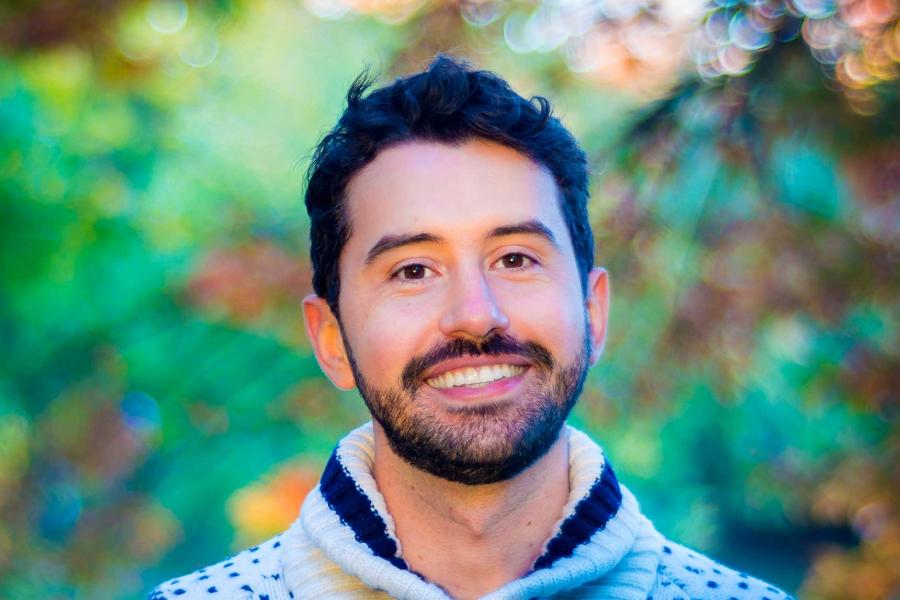
Prof. Mariusz Jerzy Stolarski is a full-time faculty member at the University of Warmia and Mazury in Olsztyn, affiliated with the Department of Genetics, Plant Breeding and Biomaterial Engineering within the Faculty of Agriculture and Forestry. His research focuses on bioeconomy, renewable energy systems, and sustainable biomass production. Scientific discipline: Agriculture and horticulture ORCID: 0000-0003-0712-9678 Email: mariusz.stolarski@uwm.edu.pl Phone: +48 89 523 48 38 His research explores biomass valorization, biofuel processing, and environmental efficiency assessments across agricultural and forestry systems. Recent work examines supercritical CO2 extraction effects on biomass stability, intercropping systems in organic farming, and economic viability of multi-purpose energy crops like industrial hemp and Virginia fanpetals. Scientific indicators highlight significant contributions: 79/96 publications (WoS/Scopus), 878/1141 citations (WoS/Scopus), H-index 21/24, and Google Scholar H-index 29 with 3089 citations. He has promoted 4 doctors and currently supervises 2 doctoral students.
Dr. Martin Zuidhof is a Professor in the Department of Agricultural, Food & Nutritional Science at the University of Alberta. His primary research focus is on Poultry Systems Modeling and Precision Feeding, particularly in optimizing broiler breeder management and energy partitioning. He holds a PhD in Animal Science from the University of Alberta and has pioneered transformative precision feeding systems that achieve unprecedented flock uniformity ( Education: PhD, Animal Science, University of Alberta Research Interests: Dr. Zuidhof’s work centers on advancing precision livestock systems through mathematical modeling (e.g., multiphasic growth models), optimizing pullet body weight for reproductive efficiency, and addressing societal concerns about animal welfare in poultry production. His innovations in precision feeding systems reduce nutrient waste while enabling precise metabolic studies. Publications: Over 50 peer-reviewed articles since 2004, spanning topics from energy partitioning to smart farming technologies. Recent work emphasizes low-cost sensor applications and Big Data integration in poultry systems. Teaching: Instructs courses like Applied Poultry Science (AFNS 571/AN SC 471) and Principles of Animal Agriculture , emphasizing experiential learning and critical scientific thinking. Grants/Advising: No explicit grants listed, but his research has received institutional support. No advisee names found in provided texts.
Taro Mieno is an Associate Professor in the Department of Agricultural Economics at the University of Nebraska-Lincoln, specializing in precision agriculture and water resource economics. His work bridges agricultural policy, spatial econometrics, and environmental sustainability. University: University of Nebraska-Lincoln Department: Agricultural Economics Academic Rank: Associate Professor Research Interests: Precision agriculture and variable rate technologies Groundwater economics and drought resilience On-farm experimentation and data-driven decision making Agricultural policy and environmental externalities Machine learning applications in agronomic optimization Soil-water interactions and resource management Email: tmieno2@unl.edu
Dr. Lawton Stewart serves as a Professor and Extension Coordinator in the Department of Animal and Dairy Science at the University of Georgia's College of Agricultural & Environmental Sciences. With over 15 years of experience at UGA, Dr. Stewart leads statewide extension and applied research initiatives focused on beef cattle production systems in Georgia, building a synergistic program that leverages knowledge, collaboration, communication, and technology to improve the livelihood of Georgia's beef cattle producers. Dr. Stewart's educational background includes: B.S. in Animal Science from the University of Georgia M.S. in Agronomy with emphasis in Forage Management from the University of Florida Ph.D. in Animal Science with emphasis in Ruminant Nutrition and Forage Utilization from Virginia Tech Post-Doctoral Research Fellowship at the University of Kentucky investigating nitrogen metabolism in ruminants Dr. Stewart's research and extension program focuses on beef cattle nutrition, management, and forage systems, with particular emphasis on improving production efficiency in Georgia's diverse beef operations. His work integrates fundamental animal science research with practical extension programming to address challenges specific to southeastern US agriculture. Key areas include optimizing beef-forage systems, evaluating preconditioning and backgrounding strategies, developing sustainable parasite control methods, and investigating the impacts of nutrition on reproductive performance. He actively explores opportunities in beef cattle production such as stockering and retained ownership to enhance producer profitability. Analysis of Dr. Stewart's recent scholarly output reveals a strong thematic focus on integrated beef-forage systems, with particular attention to alfalfa-bermudagrass mixtures, nutritional impacts on reproductive physiology, and innovative management strategies for southeastern production environments. His publications bridge fundamental research with practical applications, addressing challenges like cotton byproduct utilization, baleage production, and sustainable grazing systems while maintaining scientific rigor through collaborations across multiple institutions. Dr. Stewart has received recognition for his contributions to student development: Student Career Success Influencer Award (2023) As an active researcher, Dr. Stewart manages a substantial portfolio of funded projects totaling significant grant support, primarily through the Georgia Commodities Commission for Beef, Cotton Incorporated, Merck & Co., and the Georgia Farm Bureau Federation. His research program includes studies on parasite control, forage improvement, cotton byproduct utilization, and sustainable beef production systems. He coordinates the UGA Beef Team, providing travel and educational support for student competitions including the Elite Stockman Short Course and Top Hand Stockmanship and Stewardship Contest, demonstrating his commitment to developing the next generation of agricultural leaders. Dr. Stewart participates in multiple interdisciplinary research teams focused on beef-forage systems across the southeastern United States, collaborating with agronomists, animal scientists, and extension specialists to address complex challenges in beef production. His program maintains strong industry partnerships that ensure research addresses practical on-farm challenges while advancing scientific understanding of beef cattle production systems in the southeastern agricultural environment.
Manish N. Raizada is a Professor in the Department of Plant Agriculture at the University of Guelph's Ontario Agricultural College, serving as International Relations Officer. His research spans fundamental and applied studies in crop probiotics and sustainable agriculture for small-scale farmers. His research focuses on three core projects: (1) Plant Microbiome Inheritance, where his lab discovered seed-borne microbiomes and pollen microbiome selection; (2) Evolving Bacteria for Farmers, developing nodule-crushing techniques for legume inoculation; and (3) Empowering Small Scale Farmers through Sustainable Agriculture Kits (SAKs) impacting 272,000 people. His work integrates microbial ecology with practical farming solutions, emphasizing indigenous knowledge systems and democratization of agricultural technologies. Raizada's publications reveal strong trends in plant-microbe interactions (particularly maize and legumes), sustainable intensification for smallholders, and microbiome engineering for pathogen resistance. His work spans agricultural science, microbiology, and development studies with emphasis on real-world implementation in Nepal, Haiti, and Africa. He actively mentors graduate students and postdocs, with alumni securing faculty positions globally. His lab has developed practical resources including Farmpedia (an online encyclopedia for small-scale farmers in 108 languages) and SAKBooks (picture-based agricultural lessons). Raizada collaborates extensively with international organizations including UN FAO (where he's delivered keynote addresses), IFA, and CGIAR. His work has been featured in BBC World Service, CBC Radio, and Canadian Geographic, demonstrating significant policy and public impact.
Prof. Dr. Christian Lippert is a Professor at the University of Hohenheim's Department of Production Theory and Resource Economics. He specializes in agricultural economics, resource management, and sustainable farming systems. His research focuses on organic agriculture, risk analysis in farming, and climate change impacts on agriculture. He leads projects such as the NOcsPS and ReBioBW initiatives and collaborates with institutions in Bhutan and Colombia. Research interests include crop portfolio optimization, yield stability, organic conversion strategies, and social networks in farming communities. His work combines economic modeling with field trials to address production risks and sustainable practices. Major publications include studies on Bhutan's organic sector, pesticide use alternatives, and climate change adaptation in German agriculture. He teaches courses in farm economics, environmental resource economics, and value chain development at the M.Sc. and B.Sc. levels. His team includes researchers like Dr. Tatjana Krimly and Dr. Isabell Pergner. Advising and grants focus on organic farming transitions and resource optimization. He leads a research group exploring lignocellulosic perennials and Ricardian climate impact analyses. His office is located at Containerbau südlich des Biogebäudes in Stuttgart.
Dillon Feuz serves as Professor and Ag Economics Specialist in Utah State University's Department of Applied Economics, concurrently coordinating livestock farm operations. His dual academic-extension role bridges theoretical research with practical ranch management guidance across Western U.S. agricultural communities. Education: PhD in Agricultural Economics, Colorado State University (1990) MS in Agricultural Economics, University of Wyoming (1986) BS in Ag Business, University of Wyoming (1984) Feuz's research examines economic decision-making in beef production systems through consumer preference analysis, risk management modeling, and market structure evaluation. His work integrates experimental economics with real-world ranch data to quantify impacts of pricing mechanisms, trade policies, and production innovations on producer profitability. Recent studies explore sustainable feedlot alternatives, cattle size optimization under grazing regulations, and dairy margin protection forecasting. His 48+ journal articles reveal consistent focus on livestock economics with evolving methodological sophistication—from early spatial price analysis to contemporary consumer experimental auctions and bio-economic modeling. Key thematic threads include value-based marketing efficacy, futures hedging strategies for cattle feeders, and economic sustainability metrics for alternative production systems. Award Highlights: USU Extension Specialists Association Specialist of the Year (2010) Western Ag Economics Association Outstanding Extension Program (2000) American Ag Economics Association Distinguished Extension Program (1997) Feuz mentors graduate students in agricultural economics research while directing extension programming that reaches ranchers through workshops, publications, and direct consultation. His Beehive Master Beef Manager Program demonstrates applied risk management education impacting producer decision-making. As Livestock Farm Coordinator, he oversees university facilities supporting hands-on research in beef production systems and sustainable ranching practices.
Luke Roy is an Extension Professor and Assistant School Director of AFFC Operations at Auburn University's School of Fisheries, Aquaculture & Aquatic Sciences. He leads extension programs focused on enhancing biological and economic sustainability in catfish and shrimp farming in Alabama and the U.S., with a particular emphasis on inland low-salinity aquaculture. His role bridges industry needs and academic research, promoting technological adoption and rural development in Latin America. Education: While formal education details are not explicitly stated, his expertise aligns with advanced training in aquatic sciences or related fields given his research and extension roles. Research Interests: His work centers on aquaculture production systems, feed optimization, disease management, and economic analyses. Key areas include genetic improvement in fish, microbiome impacts on fish health, and sustainable practices in shrimp and tilapia farming. He also investigates avian depredation impacts and biosecurity measures in aquaculture. Labs/Teams: Based at the Alabama Fish Farming Center, he collaborates with industry stakeholders and academic teams to develop practical solutions for commercial producers. His extension activities include demonstrations of new technologies like split-pond systems and biofloc tanks. Grants/Advising: While specific grants are not listed, his publications indicate funded research on topics like synbiotic systems for shrimp, dietary enzyme impacts, and thermal tolerance in fish. He advises industry through extension programs without explicitly listed student advisees.
Jeremy Moghtader serves as Campus Farm Program Manager and Adjunct Lecturer in the School for Environment and Sustainability at the University of Michigan. Previously, he spent 10 years as Director of Programs and Farm Manager at Michigan State University Student Organic Farm, overseeing 15 acres of production and a year-round CSA program. He developed the MSU Organic Farmer Training Program and Farmer Field School, focusing on organic farming techniques and farm business development. Education: M.S. in Resource Ecology and Management (University of Michigan School of Natural Resources and Environment), B.S. in Economics (University of Michigan). Research interests center on agro-ecology, sustainable food systems, and bridging academic research with practical farming applications. His work emphasizes ecological farming practices, community food systems, and education for future agricultural leaders. Key contributions include co-authoring the influential 'Organic Agriculture and the Global Food Supply' paper and founding roles in organizations like the Ann Arbor Farm to School Collaboration and Tilian Farm Development Center. He has been twice nominated for the MOSES Organic Farmer of the Year award. Engaged in multiple non-profit initiatives including Agrarian Adventure and Food System Economic Partnership. Active in advancing equitable food access and farm viability through collaborative networks.
Daumantas Bloznelis is an Associate Professor of Business Analytics at the Norwegian University of Life Sciences (Ås, Norway) and an Adjunct Associate Professor at the University of Inland Norway (Rena, Norway). He holds a PhD in Economics from the Norwegian University of Life Sciences, with visiting scholar experience at Cornell University (USA). His research focuses on financial econometrics, commodity markets, and statistical price modeling, with particular emphasis on risk management and forecasting in aquaculture sectors. Bloznelis has extensive experience in academia, including teaching courses on machine learning, econometrics, and quantitative methods across multiple universities. He has supervised numerous PhD and Master’s theses, contributing to the development of future scholars in finance and management. His work also extends to applied research, such as cross-hedging carbon risk and portfolio optimization in electric vehicle sectors. Bloznelis has received several accolades, including scholarships from the Norwegian Research Council and Vilnius University, and awards for academic excellence in Lithuania. Education: PhD in Economics/Finance (2011–2016), Norwegian University of Life Sciences MSc in Statistics/Econometrics (2009–2011), Vilnius University BSc in Statistics/Econometrics (2005–2009), Vilnius University Research Interests: Bloznelis specializes in statistical price modeling, forecasting methodologies, and risk management in financial and commodity markets. His work integrates machine learning and econometric techniques to address practical challenges in sectors like salmon farming and electric vehicles. He also explores the application of copula models and factor analysis to portfolio optimization and market dynamics. Key Awards: 3rd prize in International Econometric Team Competition (2010) PRESIDENT OF LITHUANIA AWARD for dictation contest (2007) Prime Minister of Lithuania Award for matriculation excellence (2005) Professional Contributions: Bloznelis has presented at over 30 international conferences, including NCCC commodity price analysis meetings and CEMA annual conferences. He serves on the Board of Advisors for Vilnius University’s Faculty of Mathematics and Informatics. His research outputs include influential papers on futures market biases, hedging strategies, and factor models in commodity pricing.
Sarah Sellars is an Assistant Professor and Extension Specialist at the Ness School of Management and Economics, South Dakota State University (SDSU), focusing on sustainable farm and food systems. Her work bridges agricultural economics with practical farm management strategies. She holds a Ph.D. from the University of Illinois at Urbana-Champaign, an M.S. from Purdue University, and a B.S. from the University of Illinois at Urbana-Champaign. Her research emphasizes the profitability and policy implications of cover crops, nutrient management, and precision agriculture in Midwestern farming. Key areas include conservation adoption, agricultural policy analysis, and cost management strategies for farmers. Her SDSU Extension programs provide actionable insights on input prices, climate-smart practices, and policy frameworks to support South Dakota's agricultural stakeholders. Her recent work trends highlight a focus on cover crop economics, carbon market mechanisms, and the interplay between crop insurance and climate technology adoption. These studies aim to enhance farm resilience and sustainability while addressing economic and environmental challenges. No scientific awards are listed in the provided information. Her advisory and grant activities are centered on Extension programming rather than traditional student mentoring. She collaborates closely with SDSU's agricultural teams and regional stakeholders to translate research into practical solutions for farmers and ranchers.
Dr. Frederic Ang is an Associate Professor in the Business Economics Group at Wageningen University & Research since 2023, specializing in agri-food sector productivity and sustainability. He holds a joint Ph.D. from KU Leuven and Hasselt University (2015), followed by postdoctoral roles at the University of Reading and Swedish University of Agricultural Sciences. His research focuses on sustainable intensification, dynamic optimization, and agricultural productivity analysis. He currently serves as Associate Editor of the Journal of Productivity Analysis and Co-Editor of the Journal of Agricultural Economics . Key honors include the 2023 AES Outstanding Contribution Award and 2020 Best Referee Award. His work addresses agricultural efficiency, environmental policy, and farm-level decision-making. Education: Joint Ph.D. in Bioscience Engineering and Business Economics (2015) Master of Advanced Studies in Economics (2015) M.Sc. in Tropical Natural Resources Management (2009) B.Sc. in Biosystems Engineering (2007) Research Interests: Dr. Ang examines agricultural productivity through lenses of production economics, exploring sustainable practices and environmental-economic trade-offs. His work bridges theoretical models (e.g., Hicks-Moorsteen productivity indicators) with applied analyses of farm-level data, emphasizing nitrogen management, energy resilience, and microbial innovations. Awards & Grants: Recognized for contributions to agricultural economics journals and policy research. Active in OECD initiatives on productivity and environment. Projects include leading the SIMBA initiative on microbiome applications and the MINDSTEP project modeling farmer decisions under EU policies. Labs & Collaborations: Engaged with interdisciplinary teams in the Business Economics Group and international partners via projects like MIXED (agroforestry systems) and MINDSTEP. Coordinates research on circular economy principles and climate-smart agriculture.
Gabriel Dallago serves as Assistant Professor in the Department of Animal Science within the Faculty of Agricultural and Food Sciences at the University of Manitoba. His research integrates advanced data analytics with livestock production systems to enhance animal welfare and farm decision-making processes. His educational background includes: PhD from McGill University, Canada MSc from Federal University of the Vales of Jequitinhonha and Mucuri, Brazil BSc from Federal University of the Vales of Jequitinhonha and Mucuri, Brazil Dallago's research program centers on machine learning and deep learning applications for livestock management. Key initiatives include developing predictive models for animal bio-responses, integrating multimodal data streams to analyze complex farm systems, and optimizing dairy cow longevity through data-driven interventions. His work bridges computational science with practical agricultural challenges, focusing on tangible improvements in production efficiency and animal well-being. Precision monitoring of dairy cow behavior and welfare Early-life management impacts on herd productivity Computer vision applications for livestock assessment Economic modeling of livestock production systems Analysis of his 15 most recent publications (2022-2025) reveals strong thematic concentration in dairy science (47%), swine production (20%), and animal nutrition (20%), with consistent application of computational methods. Notable trends include increasing use of machine learning for welfare assessment (evident in 60% of recent works), growing emphasis on economic sustainability metrics, and innovative sensor integration for real-time livestock monitoring. Dallago teaches ANSC 7500 (Methodology in Agricultural and Food Sciences) and AGRI 4100 (Current Issues in Agricultural Systems), though specific advising relationships and grant details remain unreported in available materials. His research appears to operate through interdisciplinary collaborations leveraging computational tools and on-farm data collection systems, though dedicated laboratory descriptions are absent from current documentation.
Maninder Singh is an Associate Professor of Cropping Systems Agronomy at the Department of Plant, Soil and Microbial Sciences, Michigan State University (MSU), located within the College of Agriculture & Natural Resources. His research focuses on improving the productivity, profitability, and resiliency of Michigan's cropping systems through optimized variety selection and management strategies, particularly in corn, soybean, and wheat systems. His work integrates climatic patterns, modern farming practices, and economic conditions to address emerging challenges like mycotoxin contamination, soil health, and pest interactions. Education: Ph.D., University of Florida (Agronomy); M.S., Punjab Agricultural University (Agronomy); B.S. (Hons.), Guru Nanak Dev University (Agriculture). Research Interests: Cropping systems, precision agriculture, crop physiology, climate resilience, and sustainable farming practices. Key Focus Areas: Mycotoxin management in silage crops, soil biological health, and optimizing planting strategies for Michigan's climatic conditions. Dr. Singh's publications (2023–2025) highlight advancements in corn kernel moisture estimation, soybean nitrogen fixation, and biochar application impacts. He collaborates widely with institutions like the Kellogg Biological Station and engages in farmer-focused research to bridge practical agricultural challenges with scientific solutions. Teaching: CSS212 Advanced Crop Production (since 2017). Labs: Cropping Systems Agronomy Lab.
Milton Boyd is a Professor in the Department of Agribusiness and Agricultural Economics at the University of Manitoba, Faculty of Agricultural and Food Sciences. He also serves as an Adjunct Professor in Risk Management and Actuarial Science at the Asper School of Business. His research and teaching focus on quantitative finance, risk management, derivatives, and international business. PhD, Purdue University, United States MA, Washington State University, United States BA, Seattle Pacific University, United States His research interests center on quantitative finance and agricultural risk management , with a strong emphasis on derivatives, portfolio strategies, and market behavior. He applies statistical and financial modeling to real-world agricultural and commodity markets, often integrating international and policy perspectives. His work bridges academic rigor with practical application in agribusiness and government sectors. His recent publications reflect a consistent focus on financial risk modeling, commodity pricing, and market efficiency. Themes include hedging strategies, volatility analysis, and the role of futures markets in price discovery and income stability. His work spans both developed and emerging markets, with increasing attention to Asia and global trade dynamics. Two University of Manitoba Awards for Research and Outreach Fellow of Seattle Pacific University Best Conference Presentation Award Outstanding Journal Paper Award Dr. Boyd has advised numerous graduate students and contributed to academic service through editorial roles, conference committees, and keynote presentations. He has secured research funding through university and external grants, though specific grants are not listed. His outreach includes media commentary, industry training, and policy advising, particularly in commodity market development. He has been actively involved in professional development and public service, including teaching short courses at the Winnipeg Commodity Exchange (ICE), Canadian International Grains Institute, and Canadian Securities Course. He has served as a Policy Advisor for the Frontier Center for Public Policy and as a columnist for Grainews , contributing to public understanding of financial and commodity markets.