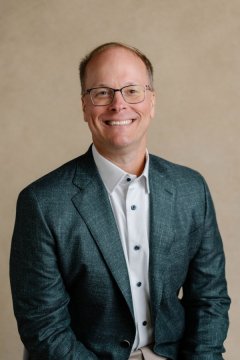
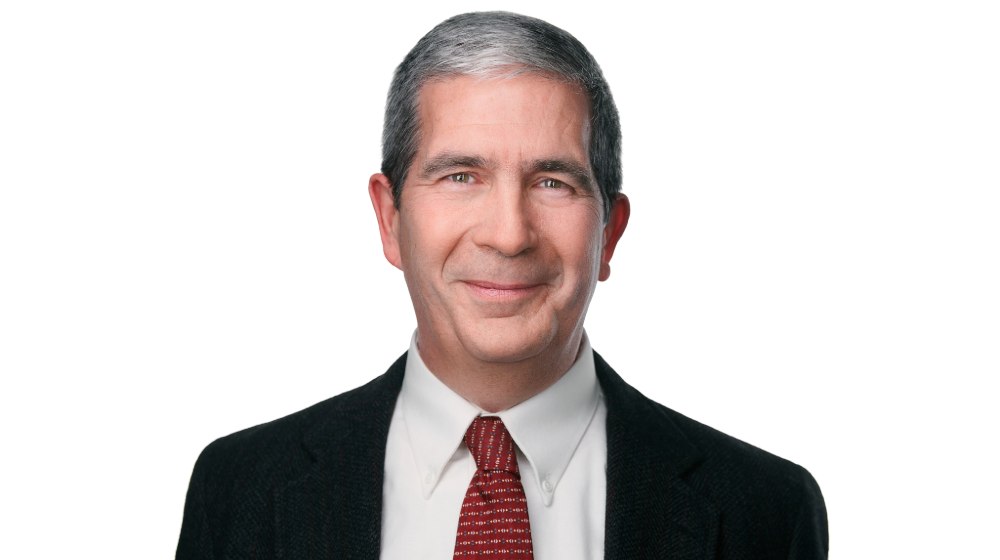
Chris Bittinger is an Assistant Professor of Practice at Purdue Polytechnic Institute, specializing in leadership and project management. With over 25 years of corporate experience, he delivers expertise in executive coaching and strategic planning. He is the founder of Open Pivot Inc., offering professional training and consulting to over 100 clients across industries like non-profit, healthcare, and technology. He serves on the Cathedral High School Board and founded their Emerging Leaders initiative. Education includes a Doctor of Education (University of Pennsylvania), Master of Science in Education (University of Pennsylvania), Master of Business Administration (Indiana Wesleyan University), and Bachelor of Science in Education (Butler University). Certifications include Hogan Assessments, Advanced Facilitation Training, and Columbia University’s Executive Coaching Certification. Research interests focus on executive coaching’s impact on stress management, burnout mitigation, and conflict resolution. His work emphasizes organizational wellness and leadership development. Awards include the 2017 Service to Cathedral High School Award and the 1997 Eliza Baker Memorial Scholarship. Advising and consulting have guided over 1000 professionals, including executives and managers. Public speaking engagements cover topics like the Burnout Pandemic and Conflict Resolution. He resides in Carmel, Indiana, with his family and is a passionate Purdue sports fan.
Toni Liechty is an Associate Professor in the Department of Recreation, Sport and Tourism at the University of Illinois, with a cross-appointment in the Center for Global Studies. She also serves as the Director of Undergraduate Studies, playing a key role in academic leadership and curriculum development. Her work is deeply rooted in understanding how leisure contributes to health, inclusion, and well-being across the lifespan, particularly among older adults, individuals with disabilities, and marginalized communities. Her research interests span a wide spectrum of topics including aging and leisure, disability inclusion, body image, sport participation in later life, virtual communities, and socioecological influences on physical activity. She employs qualitative, community-engaged, and longitudinal methods to explore how leisure functions as a source of empowerment, resilience, and social connection. The 15 most recent articles reflect a strong focus on post-pandemic leisure adaptation, inclusive fitness programming, and the role of identity and community in leisure contexts. Her work increasingly examines virtual and hybrid leisure forms (e.g., the Hogwarts Running Club), while maintaining a commitment to real-world applications in parks, recreation, and health promotion. Themes of equity, accessibility, and empowerment recur across her publications. One honor listed in Scopus profile (specific name not provided in text) Liechty is actively engaged in research grants and community partnerships, particularly those focused on disability-inclusive fitness and aging well through leisure. While student advisees are not listed in the provided text, her role as Director of Undergraduate Studies suggests strong mentorship and educational leadership. She collaborates with interdisciplinary teams and community partners to translate research into practice, especially in public health and recreation programming. Her work is associated with research labs or teams focused on community health, global studies, and leisure behavior, though specific lab names are not mentioned. Her research trajectory indicates a continued emphasis on developing and evaluating interventions that promote equitable access to meaningful leisure experiences.
Daniel Covell is a Professor of Sport Management at Western New England University's College of Business. He holds a Ph.D. and M.S. in Sport Management from the University of Massachusetts, along with a B.A. from Bowdoin College. His academic career focuses on organizational performance, stakeholder management, and cultural dynamics in collegiate athletics. Education Ph.D., University of Massachusetts (Sport Management) M.S., University of Massachusetts (Sport Management) B.A., Bowdoin College Covell's research examines intercollegiate athletics governance, historical transitions in sports programs, and the cultural impact of hockey on educational institutions. His work bridges practical sport organization management with historical analysis of athletic programs. Key publications include books on sport organizational accountability (2019, 2013, 2010), book chapters on youth sports and sporting goods industries (2015), and journal articles analyzing Bowdoin College's athletic history (2016, 2014, 2013). His work often explores stakeholder expectations and organizational change in collegiate sports.
Stefan Scharnowski is an Assistant Professor at the Chair of Business Administration and Finance at the University of Mannheim's Faculty of Business Administration. He has held this position since 2020 and also serves as an Adjunct Lecturer at the Frankfurt School of Finance and Management since 2022. His academic career at the University of Mannheim began with doctoral studies in 2013, leading to his PhD in Economics in 2020 with a dissertation titled "Essays in Empirical Market Microstructure." Dr. Scharnowski's educational background is deeply rooted at the University of Mannheim: Ph.D. in Finance, University of Mannheim (2020) M.Sc. Business Administration, concentration in Finance, University of Mannheim (2014) B.Sc. Economics, concentration in Econometrics, University of Mannheim (2011) Semester abroad at the Norwegian School of Economics and Business Administration, Bergen, Norway (2010) Dr. Scharnowski's research focuses on digital finance and empirical market microstructure, with particular expertise in high-frequency trading, cryptocurrencies, liquidity, blockchains, financial regulation, price efficiency, and tokenization. His work bridges theoretical financial concepts with practical blockchain applications, examining how technological innovations reshape traditional financial markets. He has made significant contributions to understanding cryptocurrency markets, market microstructure in digital assets, and the regulatory implications of decentralized finance. Dr. Scharnowski's publication record reveals a strong trajectory in cryptocurrency and market microstructure research, with increasing focus on blockchain applications since 2021. His work spans theoretical market microstructure analysis, empirical cryptocurrency studies, and regulatory implications of digital assets. Recent publications demonstrate expertise in price discovery mechanisms, liquidity dynamics in digital markets, and the behavioral aspects of cryptocurrency trading. His collaborative work on "Nonstandard Errors" in the Journal of Finance represents a significant contribution to research methodology in finance. While specific awards aren't prominently featured, Dr. Scharnowski's work has garnered significant attention in both academic and media circles, with coverage in Financial Times' Alphaville, Mannheimer Morgen, and Die Rheinpfalz. Dr. Scharnowski actively supervises both bachelor's and master's theses at the University of Mannheim, with recent topics spanning climate finance, privacy coins, tokenized stocks, price discovery on decentralized exchanges, and cryptocurrency volatility patterns. His teaching portfolio is extensive, covering FinTech, Investments, Empirical Finance, and Stata in Finance at both graduate and undergraduate levels. He has received research support from the German Science Foundation (DGF) for his Market Microstructure Database Xetra project, which provides valuable liquidity measures for researchers studying the German equity market. Dr. Scharnowski is affiliated with several research centers including the Graduate School of Economic and Social Sciences at the University of Mannheim and has collaborated with the SAFE Research Center at Goethe University Frankfurt. His work on the Market Microstructure Database Xetra demonstrates his involvement in collaborative research infrastructure development. He frequently presents at international conferences and collaborates with researchers globally, as evidenced by his extensive conference presentation record and multi-institutional co-authorships.
Markus Egli is a Professor in Soil Science and Geochronology at the Department of Geography, Faculty of Mathematics and Natural Sciences, University of Zurich. He has been affiliated with the university since 1998 and heads the geochronology laboratory. He also holds guest and teaching positions at the University of Palermo and the University of Applied Sciences in Wädenswil. His research spans alpine and Mediterranean environments with a focus on landscape dynamics, soil formation, and geochronological methods. Ph.D., University of Zurich (1995) Habilitation (Venia Legendi), University of Zurich (2003) Post-Doc, Research Institute for Soil Study and Conservation, Florence (2000–2002) Research stays at Macaulay Institute (Scotland), University of Michigan (USA), Northern Iowa University (USA), and St. Petersburg State University (Russia) His research interests include landscape dynamics , chemical weathering , soil formation , clay mineralogy , and carbon sequestration in alpine and Mediterranean environments. He employs numerical dating methods (e.g., 10Be, 14C) and fallout radionuclides (e.g., 137Cs, 239+240Pu) to reconstruct long-term erosion rates, soil development, and paleoenvironmental changes. His work integrates field studies with geochemical and mineralogical analyses. The most recent publications highlight trends in soil erosion and redistribution , landscape evolution in mountain regions , clay mineral formation , and paleoenvironmental reconstruction using geochemical tracers . His research spans Europe, South America, and Asia, emphasizing interdisciplinary approaches in geomorphology, soil science, and Quaternary geology. Editor, CATENA (since 2014) Editorial Board, Geoderma Editorial Board, BGS-Bulletin Guest Editor, Radiocarbon , Geografiska Annaler , Journal of Soils and Sediments Markus Egli has supervised numerous research projects, including the multidisciplinary GISALP project on high-mountain environments. He has collaborated with researchers across Europe and North America and has contributed to understanding soil-landscape interactions , fire history , and human impact on soil systems . His editorial and collaborative roles underscore his leadership in the soil science and geochronology communities. He leads the geochronology laboratory at the University of Zurich and continues to mentor students and early-career scientists.
Michael F Collins is a Professor at the UMass Chan Medical School, specifically within the T.H. Chan School of Medicine and the Department of Population and Quantitative Health Sciences. His primary focus areas include Medical Education and Public Health , with additional expertise in biostatistics and health services research. Education : AB in Chemistry from the College of the Holy Cross and MD from Tufts University School of Medicine. Collins’s research explores educational reforms and public health strategies , particularly during crises like the COVID-19 pandemic . His work addresses accelerated medical graduation , residency match integrity , and ethical standards in clinical training . His recent publications highlight trends in medical education policy and pandemic-driven healthcare adaptations . Key subfields include residency programs , workforce deployment , and interdisciplinary collaboration . Scientific Awards : Fellow of the American College of Physicians (FACP). Collaborations : Co-authored works with Terence Flotte, Deborah DeMarco, and Pang-Yen Fan.
Prof. Dr. Vikram Unnithan is a Professor of Geoscience at the School of Science , Constructor University Bremen (formerly Jacobs University Bremen). With a doctorate from University College Dublin (2001) and an MSc equivalent from Utrecht University , his academic background spans geology, geophysics, and applied geophysics. Research Interests : As a marine geologist and applied geophysicist, Unnithan focuses on Hydrocarbon exploration and seismic interpretation Gas hydrate systems and fluid transport models Planetary geosciences and lunar cave detection Geo-informatics and GIS data analysis Cold-water coral studies and marine habitat mapping Recent Publications highlight interdisciplinary work on planetary analog environments (Vulcano Island, Lanzarote), gas hydrate dynamics in deep-sea fans (Nile Deep-Sea Fan), and advanced robotic exploration tools (DAEDALUS systems). His teaching portfolio includes 20+ years of curriculum development for courses in sedimentology, marine geophysics, and GIS, with annual marine excursions on the German Research Vessel Heincke. Professional Affiliations include memberships in American Association of Petroleum Geologists (AAPG) American Geophysical Union (AGU) Society of Exploration Geophysicists (SEG) European Association of Geologists and Engineers (EAGE) German Geophysical Association German Geological Association (GV) Leadership Roles : Unnithan has served on multiple institutional committees including the Faculty IT Committee (2005–2015), Undergraduate Admission Committee (2008–2018), and as an ombudsman (2013–present). His work bridges marine geophysics with planetary exploration through collaborations with the European Space Agency and DAEDALUS robotics projects.
Kathryn Conrad is a Professor in the Department of English at the University of Kansas, where she also serves as Interim Director of Composition. Her work bridges literary studies, technology, and cultural critique, with a focus on modernism, surveillance, and artificial intelligence. Her research spans: 20th-century British, Irish, and Northern Irish literature Science, technology, and culture Critical AI literacy and ethics Surveillance studies Fanfiction and digital culture Self-proclaimed 'critical possum studies' Conrad’s scholarship consistently examines how discourse shapes material realities, particularly in politically contested spaces like Northern Ireland and in digital environments. Her recent work emphasizes the ethical implications of AI in education, advocating for critical literacy, student privacy, and human-centered pedagogy. Her publications from 2023–2024 reveal a strong trend toward AI policy, critical digital literacy, and the ethics of automation in teaching. These works reflect her leadership in national conversations on AI in higher education, including contributions to Critical AI , NORRAG, and her Substack blog Pandora's Bot . Her scientific and teaching honors include: Hall Center for the Humanities Research Fellowship (2016) Byron T. Shutz Award for Excellence in Teaching (2007) Keeler Intra-University Fellowship (2005) Conger-Gabel Teaching Professorship (2004–2007) She is actively involved in educational initiatives, including co-directing the AI & Digital Literacy project with the National Humanities Center and serving on Harvard’s AI Pedagogy Project advisory board. She mentors educators through workshops and institutes, emphasizing the importance of slowing down, critical reflection, and ethical engagement with emerging technologies. Conrad leads or participates in several research teams and projects: AI & Digital Literacy Project (with Sean Kamperman and National Humanities Center) AI & Digital Literacy Institute (funded by Hall Family Foundation and William T. Kemper Foundation) Founding Advisory Board, Harvard AI Pedagogy Project Editorial contributions to Critical AI and Transformative Works and Cultures
Craig Crow is a faculty member in the Business Department at Geneva College, specializing in Sport Management. He previously held full-time academic positions at West Liberty University (2009–2023) and East Stroudsburg University (2007–2009), where he contributed significantly to sport management education and research. Ed.D., West Virginia University, 2011 M.S., West Virginia University, 2004 B.S., West Liberty State College, 2002 Dr. Crow’s research focuses on the operational and managerial aspects of collegiate and professional sports, including stadium foodservice outsourcing, fan behavior, digital media usage, and competitive balance in college football. His work bridges academic inquiry with practical applications in sport organizations. His recent publications reflect a strong trend in college athletics management, with emphasis on operational efficiency, fan experience, and policy implications. Topics such as alcohol sales in stadiums, social media strategies, and BCS impact demonstrate a consistent focus on governance, ethics, and business practices in modern sport. 2017-18 West Liberty University Faculty Excellence in Service Award West College of Business 2012-2013 Excellence in Teaching Award Editor's Choice Award, Journal of Sports Administration & Supervision (2010) Dr. Crow has advised institutional research projects and served as a peer reviewer for academic conferences. He has consulted for collegiate and professional sport organizations on guest services and venue audits. Though no formal grants are listed, his active conference participation and publications indicate sustained scholarly engagement. He has contributed to the accreditation process as a site visitor for IACBE and served on the review board for Case Studies in Sport Management, demonstrating leadership in academic standards and curriculum development.
Birton Cowden is an Associate Professor at Kennesaw State University's Leven School of Management, Entrepreneurship and Hospitality , serving as Academic Director of the Robin and Doug Shore Entrepreneurship and Innovation Center and Management Discipline Lead for the Ph.D. in Business Administration program. Email: bcowden@kennesaw.edu Office: KC 409 Educational Background: Ph.D. in International Business and Marketing - Saint Louis University M.S. in Strategic Management - Indiana University MBA - Indiana University BBA in Management Information Systems - University of Illinois B.A.L.A.S. in Political Science - University of Illinois Research Focus: Cowden investigates organizational entrepreneurship , effectuation theory , and gender dynamics in innovation , with significant contributions to understanding uncertainty in business decision-making and institutional entrepreneurship . His work spans global contexts, including blockchain governance and China's SME sector. Publication Trends: Recent work examines the intersection of entrepreneurial curiosity with technological innovation , gendered funding disparities , and stakeholder optimization in sport business models. Scientific Awards: Agile Project Fundamentals Certificate - Velociteach 2019 Design Thinking Certificate - Stanford d.school 2016 Lean Launchpad Certification - Venturewell 2015 Certificate in University Teaching Skills - Saint Louis University 2014
Neal Ternes is an Assistant Professor in the Department of Kinesiology and Physical Education at Northern Illinois University, part of the College of Education. His research and teaching focus on sport management, legal and ethical issues in sport, intercollegiate athletics, and the intersection of sport and public policy. His research interests include: Sport and Government Policy First Amendment Law in Sport Globalization and Politics of Sport Legal and Ethical Aspects of Sport Name, Image, and Likeness (NIL) in College Athletics Labor Law and the Gig Economy in Sport His recent publications examine pressing legal and policy issues in college sports, particularly around free speech, NIL rights, and labor rights. These works appear in leading journals such as the Journal of Sport Management , Cardozo Arts & Entertainment Law Journal , and International Journal of Sport Policy and Politics . The body of work reflects a strong trend toward constitutional law, athlete rights, and institutional governance in intercollegiate athletics. He teaches courses including: LESM 360 - Sport Event and Facility Management LESM 436 - Professional Development and Careers in Sport Management LESM 439 - Legal and Ethical Aspects of Sport LESM 461 - Issues in Intercollegiate Athletics LESM 543 - Research Seminar in Sport Management LESM 561 - Issues in Intercollegiate Athletics Neal Ternes advises students and conducts research in sport policy and law. He collaborates with scholars such as S.C. Ehrlich and M. Williamson-Gourley on legal and ethical dimensions of modern college athletics. While specific grant funding is not mentioned, his research output suggests active scholarly engagement and potential external support. He is affiliated with the Fitness Assessment, Consulting and Technology (FACT) lab and other outreach initiatives through the Department of Kinesiology and Physical Education, contributing to research and community programs such as the NIU Healthcare Education Alliance for Learning and Scholarship (HEALS) and the Oak Crest Retirement Center Exercise Program.
Cataldo De Blasio is a Professor in the Faculty of Natural Sciences and Engineering at Åbo Akademi University, specializing in Energy Engineering for a sustainable future. He leads several EU and national research projects focusing on green energy technologies, carbon-neutral fuels, and waste-to-energy systems. Doctor of Science in Technology, PhD in Chemical Engineering – Åbo Akademi University (2010) Main subject: Process Design and Systems Engineering Supplementary subject: Heat Engineering His research interests span gasification engineering, supercritical water gasification, biogas integration, P2X technologies, and thermal conversion of waste. He actively contributes to the UN’s Sustainable Development Goals through his work in clean energy and sustainable infrastructure. Recent publications highlight advancements in hybrid energy storage, CO2 stream mapping, and process simulation for biofuel production. His work demonstrates a strong trend toward integrated, sustainable energy systems using waste feedstocks and innovative conversion technologies. Scientific awards include: Best Paper Award, 5th World Congress on New Technologies (NewTech’19) He supervises Master’s students, participates in peer review and editorial boards, and delivers public and invited speeches on research opportunities and sustainable energy. His team collaborates internationally, including with Indian Institutes of Technology, and is involved in regional innovation projects in Vaasa and Ostrobothnia. He is also a guest researcher at IIT Goa and leads projects like FOR-BLEND, AINA, Map-Up-P2X, and Map_CO2_Streams, supported by EU, Business Finland, and the European Commission.
Frederick Kaefer is an Associate Professor of Information Systems at the Quinlan School of Business, Loyola University Chicago. His research emphasizes machine learning, ethical data use, and societal impacts of algorithms. He previously directed the Master of Science in Information Systems Management program and was recognized as Outstanding Graduate Faculty Member of the Year. Kaefer holds a PhD in Management Information Systems from the University of Iowa, along with an MBA and BS in Mathematics/Computer Science from Loyola University Chicago. Key research interests include wireless communication technologies, network security, and decision support systems. He actively contributes to professional organizations such as the Association for Information Systems (AIS) and INFORMS. Kaefer has taught over 15 courses spanning undergraduate and graduate levels, including programming, telecommunications, and global IT strategy. His award-winning work includes 'Data for Societal Good' and 'Teaching Data for the Greater Good,' integrating Ignatian pedagogical principles. He has received grants for research exploring ethical AI applications and cybersecurity solutions. Kaefer is affiliated with Loyola's UX & Biometrics Lab and contributes to the Behavioral Lab, focusing on human-centered technology design.
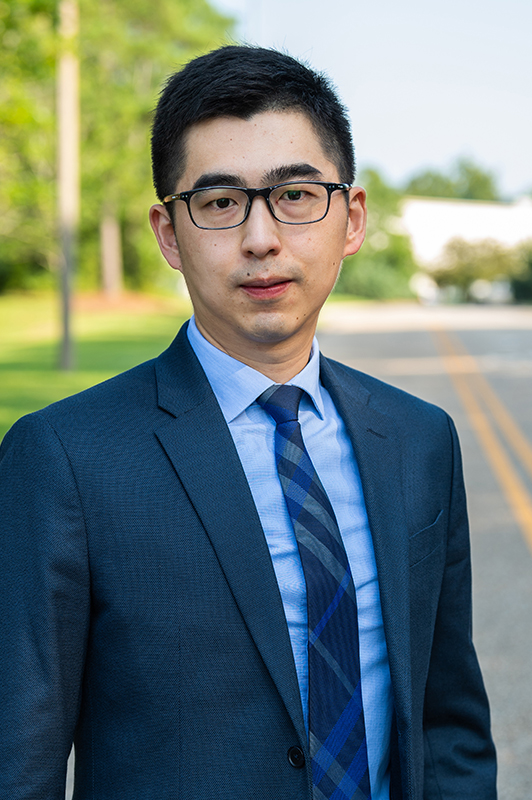
Fan Yin is an Associate Research Professor and Assistant Director at the National Center for Asphalt Technology (NCAT), Auburn University, where he contributes to research and leadership in pavement and asphalt technology. He is affiliated with the Department of Civil and Environmental Engineering within the Samuel Ginn College of Engineering. His research interests include: Balanced mix design for asphalt pavements Utilization of recycled pavement materials Advanced characterization of asphalt materials These areas align with sustainable infrastructure development and innovative pavement engineering practices. While no recent publications are listed, his work likely emphasizes performance-based material design and environmental sustainability in transportation systems. Fan Yin has been recognized through his leadership role at NCAT, though specific awards are not mentioned in the available text. He advises students and may lead research grants related to asphalt technology and sustainable pavement solutions, though no specific advisees or funding details are provided. His work is supported through NCAT’s research infrastructure and collaborations with transportation agencies. Fan Yin is actively involved with the National Center for Asphalt Technology, a leading research center dedicated to advancing asphalt pavement engineering through innovation, education, and industry partnerships.
Christopher Wong Michaelson is a philosopher and academic specializing in business ethics and meaningful work. He holds positions at New York University's Leonard N. Stern School of Business as an Adjunct Professor and at the University of St. Thomas as the Opus Distinguished Professor of Principled Leadership. He also serves as Academic Director of the Melrose and The Toro Company Center for Principled Leadership and is President of the Society for Business Ethics. Education: Ph.D. in Philosophy, University of Minnesota His research and teaching focus on ethics in business, professional responsibility, corporate governance, and the philosophy of work. He explores how individuals and organizations can find purpose and meaning in work, especially in the context of modern challenges like burnout, AI, and evolving career expectations. His interdisciplinary approach draws from philosophical ethics, organizational psychology, and real-world business practice. Christopher Wong Michaelson’s recent publications and media appearances center on the themes of his forthcoming book, Is Your Work Worth It? , which investigates the balance between résumé virtues and eulogy virtues, critiques the 'do what you love' mantra, and reimagines retirement as a new beginning. His articles analyze work in relation to identity, societal value, and long-term fulfillment, often connecting philosophical insights with contemporary issues in leadership and employment. Scientific and Professional Recognition: President, Society for Business Ethics Affiliate Faculty, University of Minnesota Center for Bioethics Academic Fellow, Ethics and Compliance Initiative Member of multiple editorial boards Host of the podcast Work in Progress with Christopher Michaelson He advises on ethical leadership and has contributed to public discourse through interviews with Business Insider , Forbes , and other outlets. His work bridges academia and practice, offering guidance to business leaders on building purpose-driven organizations. He is actively involved in research, teaching, and public engagement, with no indication of retirement or former status. Affiliated Centers and Initiatives: Melrose and The Toro Company Center for Principled Leadership (Academic Director) University of Minnesota Center for Bioethics (Affiliate Faculty)