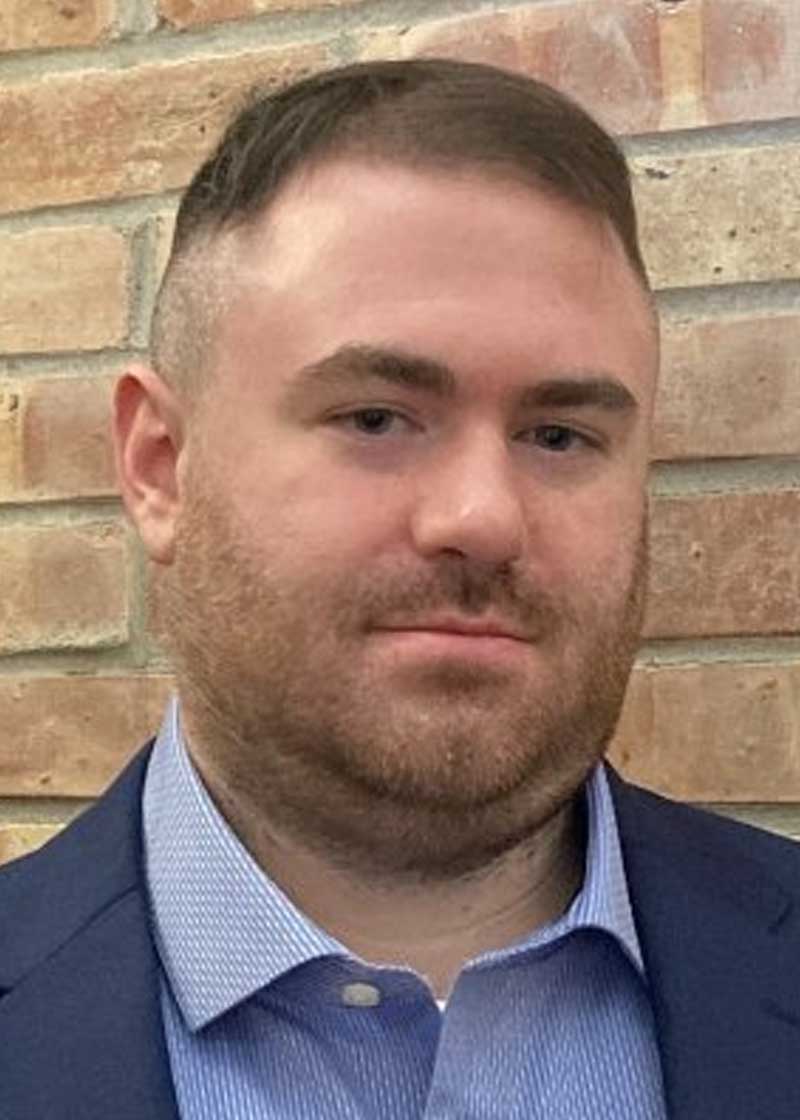
Ian Hawkins is an Assistant Professor at the University of Alabama at Birmingham , focusing on Media Psychology , Intergroup Conflict , and Collective Action . He holds a Ph.D. in Communication and Media from the University of Michigan, with prior M.S. and B.S. in Psychology from Central Michigan University. His research employs social scientific methods to analyze how media representations of marginalized groups shape societal attitudes and policy preferences. Current work explores cross-device news consumption dynamics using eye-tracking to assess attention patterns in headline processing. He publishes in New Media and Society , Journal of Communication , and Psychology of Popular Media . Teaching responsibilities include Mass Communication History and Effects and Social Media Use courses. Contact: ihawkins@uab.edu
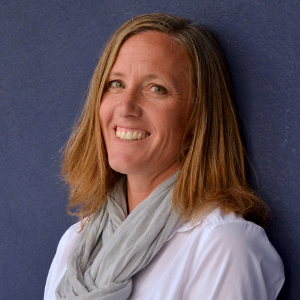
Dr. Ava Green is a Lecturer in Forensic Psychology at City, University of London, within the School of Health and Psychological Sciences, Department of Psychology. She completed her PhD in Forensic Psychology at Edinburgh Napier University in 2020 and has held academic positions at Queen Margaret University and Edinburgh Napier University. She is a Chartered Psychologist and a Fellow of the Higher Education Academy. Her educational background includes: PhD in Forensic Psychology, Edinburgh Napier University (2017–2020) MSc in Applied Criminology and Forensic Psychology, Edinburgh Napier University (2015–2016) BSc (Hons) in Psychology, Edinburgh Napier University (2011–2015) Dr. Green’s research focuses on gender differences in personality disorders, particularly narcissism in women, its aetiology, diagnostic assessment, and links to intimate partner violence. She explores how narcissism manifests differently across genders and challenges diagnostic biases in clinical settings. Her work also extends to criminal false confessions and the behavioural manifestations of narcissism in forensic contexts. Her recent publications reveal a consistent focus on narcissism through both empirical research and public engagement. Articles span clinical studies using ICD-11 frameworks, gendered analysis of personality disorders, and accessible commentary in outlets like The Conversation. Her work integrates clinical, forensic, and social psychological perspectives, emphasizing the importance of accurate diagnosis and gender-informed assessment. Her scientific recognition includes: Fellow of the Higher Education Academy Chartered Psychologist, The British Psychological Society Dr. Green is actively involved in teaching and academic leadership, serving as Programme Lead for the BSc Psychology with Criminology and Module Leader for Forensic Psychology. She supervises PhD students and welcomes research collaborations. Her professional experience includes grant acquisition and interdisciplinary research, often in collaboration with international scholars in psychology and psychiatry. She is affiliated with research teams focusing on personality disorders and contributes to academic discourse through book chapters and peer-reviewed journal articles. Her work is supported by a strong foundation in both clinical theory and empirical methodology.
Dr. Lindsay C. Malloy is an Associate Professor in Forensic Psychology at Ontario Tech University's Faculty of Social Science and Humanities. Previously, she held faculty positions at Florida International University (2011–2017) and completed postdoctoral training at the University of Cambridge (UK). Her research focuses on children's disclosure of traumatic experiences, memory suggestibility, investigative interviewing techniques, and legal implications of such findings. She has been supported by grants from the U.S. National Science Foundation, National Institute of Child Health and Human Development, and Department of Health and Human Services. Notable awards include the Saleem Shah Award and Diane J. Willis Early Career Award. Malloy teaches courses such as The Child Witness and Children and the Law . Education: PhD (Psychology and Social Behavior, University of California, Irvine, 2008); MA (Social Ecology, UC Irvine) Research Interests: Developmental psychology and law, child maltreatment disclosure, investigative interviewing, and legal system impacts. Her work bridges psychological research and legal practice, emphasizing ethical interviewing methods and improving legal outcomes for youth. Recent grants include studies on ADHD-related memory challenges and child recantation dynamics. Malloy collaborates on projects addressing confessions, juvenile justice perceptions, and forensic methodologies. Awards: Saleem Shah Award (APA Division 41), Diane J. Willis Award (APA Division 37). Grants: Over $364,000 in funding from NSF, NIH, and HHS for projects on child memory, disclosure patterns, and forensic interviewing. Malloy's publications span journals like Developmental Psychology and Law and Human Behavior , with co-edited works on children’s testimony. Her lab focuses on applied research to inform policy and practice in forensic settings.
Jodi Quas is a Professor in the Department of Psychological Science at the University of California, Irvine, with joint appointments in Nursing Science. Her work bridges developmental psychology and legal contexts, focusing on vulnerable child populations. Her research investigates: Memory development in early childhood Impact of trauma/stress on cognitive processes Child witnesses' experiences in legal systems Physiological stress reactivity patterns Emotional regulation in maltreated children Key methodologies include laboratory stress paradigms, longitudinal field studies, and forensic interview analysis. Recent publications reveal dominant trends in: Multi-system physiological stress measurement (HPA axis, autonomic responses) Developmental trajectories in trauma processing Interview techniques for abuse disclosure Courtroom consequences for child victims Her work consistently emphasizes practical applications for legal and child welfare systems. Quas actively mentors graduate students and leads the Adolescent and Childhood Experience Lab, currently recruiting for the My Life and Me project studying teens aged 12-18. Her collaborative network spans UC Davis, George Mason University, UC Berkeley, and medical institutions. Lab operations include: Community-based research across Orange County National/international field studies Partnerships with law enforcement Clinical collaborations with physicians Current projects examine stress-coping mechanisms, maltreatment-emotional competence links, and legal system impacts on youth.
Saul Kassin is a **Distinguished Professor of Psychology** at John Jay College of Criminal Justice, CUNY. As a **Professor Emeritus at Williams College**, he pioneered research on false confessions since the 1980s. He has held leadership roles in the Psychology-and-Law Division of the APA and authored its influential White Paper on false confessions. His work focuses on interrogations, forensic confirmation bias, jury decision-making, and wrongful conviction prevention. **Education**: - Ph.D. in Personality & Social Psychology, University of Connecticut (1978) - Postdoctoral fellowships at University of Kansas, Federal Judicial Center, Stanford University - B.S. in Psychology, Brooklyn College (1974) **Research Interests**: Kassin explores how innocent people confess, the psychological mechanisms behind false confessions, and the systemic flaws in criminal justice systems. He examines police interrogation tactics, juror biases, and the contamination of evidence by confessions. His work emphasizes practical reforms, such as video recording interrogations and curbing forensic bias. **Awards & Recognition**: Recipient of lifetime achievement awards from APA, APS, AP-LS, EAPL, and iiiRG. His contributions are highlighted in media like Ken Burns’ The Central Park Five and his 2022 book Duped . **Grants & Consultancy**: Consulted on high-profile cases and policy reforms. Advocates for transparency in legal processes and has authored textbooks like Social Psychology (12th ed., 2024). **Teams & Labs**: Leads a research group at John Jay conducting experiments on interrogation dynamics, forensic science bias, and legal decision-making.
Dr. Amy-May Leach is a Professor of Forensic Psychology and Associate Dean, Research, Innovation and Graduate Studies in the Faculty of Social Science and Humanities at Ontario Tech University. She holds a PhD in Social Psychology from Queen’s University and brings unique applied experience from her prior role as a Canada Border Services Agency officer, which informs her research on forensic interviewing and decision-making. MA, Developmental Psychology, Queen's University (2002) PhD, Social Psychology, Queen's University (2006) Dr. Leach’s research centers on deception detection in forensic contexts, particularly focusing on vulnerable populations such as children and non-native speakers. Her work explores how language proficiency, interpreter presence, cognitive load, and cultural factors affect lie detection accuracy and bias. She also investigates wrongful convictions, eyewitness memory, and confessions and interrogations. Her interdisciplinary research bridges social, cognitive, and developmental psychology with legal applications. Her recent publications reveal a strong focus on linguistic and cognitive factors in deception, including studies on non-native speakers, veiled witnesses, and gaze behavior in child interviews. The recurring themes include observer bias, the impact of language barriers, and the use of cognitive load techniques to detect deception. Dr. Leach has received competitive research funding from the Social Sciences and Humanities Research Council (SSHRC) and the American Psychology-Law Society. Her grants support projects on language proficiency and testimony, coercion assessment, and deception in concealed witnesses. SSHRC Insight Grant (2018) SSHRC Insight Development Grant (2016, 2011) SSHRC Standard Research Grant (2011) AP-LS Grant-in-Aid (2010) She actively supervises graduate students at both the Master’s and PhD levels, mentoring research on interpreter use, cognitive load, and deception cues in multilingual interviews. Her leadership extends to academic administration as Associate Dean, where she supports research, innovation, and graduate education. She leads thelieLab.com, a research group dedicated to understanding deception in real-world forensic settings.
Dr. Yael Landman serves as Assistant Professor of Bible at the Jewish Theological Seminary. She earned her PhD from Yeshiva University and specializes in the intersection of biblical law and narrative within their ancient Near Eastern context. Her research focuses on biblical legal texts and their theological implications, particularly examining how legal concepts function within broader biblical narratives. Dr. Landman's work bridges traditional Jewish exegesis with modern scholarly approaches to biblical interpretation. She is the author of Legal Writing, Legal Practice: The Biblical Bailment Law and Divine Justice (Brown Judaic Studies, 2022), which explores connections between biblical legal texts and practical applications in ancient Israelite society. Dr. Landman's scholarly contributions demonstrate expertise across both narrative analysis and legal interpretation of biblical texts, with particular attention to moral accountability and atonement mechanisms in the Hebrew Bible. Her work appears in scholarly publications that engage with contemporary academic discourse while maintaining connection to traditional Jewish interpretive frameworks.
Brian L. Cutler is a Professor and Media Psychology Program Director at Fielding Graduate University, with additional appointment as Professor of Forensic Psychology at the University of Ontario Institute of Technology. With over 30 years of faculty experience spanning two U.S. and one Canadian university, he has established himself as a leading authority in forensic psychology and legal psychology. Dr. Cutler earned his Ph.D. in Psychology from the University of Wisconsin at Madison in 1987. His academic journey includes tenured faculty positions at multiple institutions and 19 years of academic administration experience. He has continuously conducted psychological research on legal issues since 1983, establishing a robust scholarly career. Dr. Cutler's research program focuses on the critical intersection of psychology and law, with particular expertise in eyewitness identification, false confessions, and recorded criminal interrogations. His work spans Applied Social Psychology, Law and Public Policy, Judgment and Decision Making, and Person Perception. His research has significant implications for legal procedures, criminal justice reform, and the prevention of wrongful convictions. His scholarly contributions have helped shape best practices in eyewitness identification procedures and interrogation techniques. Analysis of Dr. Cutler's publication record reveals a consistent focus on improving the reliability of eyewitness evidence and understanding the psychological dynamics of interrogations. His research demonstrates how memory contamination can occur in lineup identifications, how coercive interrogation tactics can produce false confessions, and how technological advancements impact legal proceedings. Recent work has examined the effects of the pandemic on courtroom procedures and the development of standardized assessment instruments for interrogations. Throughout his career, Dr. Cutler has supervised numerous master's theses and doctoral dissertations. He has authored or co-authored significant research grants and has served as a consultant and expert witness in high-profile legal cases involving eyewitness identification and coercive interrogation. His expertise is regularly sought by legal professionals seeking to understand the psychological factors that impact legal evidence. As the founder and president of Coral Coast Group, Dr. Cutler extends his scholarly work into practical applications, providing behavioral research services to diverse clients. He has taught continuing legal education courses to attorneys across the United States and has held leadership positions including editor-in-chief of Law and Human Behavior (2005-2011) and president of the American Psychology-Law Society (2011-2013).
Robin Kranendonk MSc is a Postdoctoral Researcher at the Netherlands Institute for the Study of Crime and Law Enforcement (NSCR), holding a concurrent affiliation with the Free University of Amsterdam where she served as Lecturer in Forensic Psychology in 2018. Her academic career spans police interrogation research, victimology, and forensic evidence communication since 2009, with current work focused on the NSCR-Police Academy collaboration developing the Strategic Police Research Agenda 2023-2026. Her research expertise centers on vulnerable populations within criminal justice systems, particularly suspects with mild intellectual disabilities. Key investigation areas include: Police interrogation techniques adaptation for cognitively vulnerable suspects DNA evidence report comprehensibility for legal professionals Victim needs assessment in criminal proceedings Official police report accuracy and bias analysis Impact of recording media (audio/video/text) on evidence interpretation Her doctoral research demonstrated how interrogation training improves outcomes for suspects with intellectual disabilities, directly influencing policy implementation. Analysis of her publication history reveals consistent focus on evidentiary reliability across three interconnected domains: suspect vulnerability (60% of works), victim procedural needs (25%), and forensic documentation standards (15%). Recent work emphasizes technological solutions for interrogation quality improvement and specialized knowledge application in diverse interview contexts. Award recognition: Master's Thesis Prize in Criminology (Vrije Universiteit Amsterdam, 2012) Kranendonk actively bridges academic research and police practice through her NSCR-Police Academy partnership, collaborating with experts like Nicolien Kop (Criminaliteitsbeheersing) and Christianne de Poot (Forensic Research). Her secondary roles include Board Membership for the Study & Work Customised Foundation, focusing on quality management for vulnerable job seekers. Current projects examine memory-enhancing techniques in witness interviews and waiver of legal rights by intellectually disabled suspects. She operates within NSCR's Evidence-based Policing research group, strengthening scientific-practical integration for evidence-based police methodology through the Kenniscentrum Opsporing en Criminaliteitsbeheersing knowledge center.
Brent Snook is a Professor in the Department of Psychology at Memorial University of Newfoundland, Faculty of Science. His research focuses on Psychology and Law, particularly improving investigative practices and decision-making within the criminal justice system. He holds advanced degrees: B.A. from Memorial University, M.Sc. and Ph.D. from the University of Liverpool. Snook’s research examines psychological-based investigative methods, including interrogation practices, witness interviewing techniques, and alibi assessment. His work aims to enhance legal literacy and ensure ethical standards in criminal justice. Key areas include youth interrogation rights, false confessions, and the efficacy of police questioning strategies. Recent studies explore cognitive biases in legal contexts and multimedia tools to improve witness comprehension. Publications span forensic psychology, legal decision-making, and investigative interviewing. His work highlights challenges in current interrogation models and advocates for evidence-based reforms. Snook collaborates with law enforcement agencies to train professionals in ethical practices. He leads the Psychology and Law Lab, emphasizing practical applications of research to real-world criminal justice challenges. Education: B.A. (Memorial University), M.Sc. and Ph.D. (University of Liverpool) Affiliations: Faculty of Science, Psychology Department, Psychology and Law Lab Labs/Teams: Psychology and Law Lab at Memorial University
Denise R Beike is a Professor in the Department of Psychology within the College of Arts & Sciences at the University of Arkansas. She holds a Ph.D. and B.A. from Indiana University and has been actively contributing to psychological science with a focus on memory and emotion. Her research interests center on autobiographical memory , emotions such as regret and longing , and the interplay between memory and the self . She investigates how people remember personal experiences, how these memories shape identity, and how emotional valence and relational closeness are influenced by memory sharing. The recent publication trends indicate a strong focus on the social and emotional dimensions of memory. Her work explores how sharing specific memories enhances relational closeness, how regret is shaped by missed opportunities, and how closure affects behavior. Themes of self-disclosure, emotional regulation, and memory accuracy recur across her research, often bridging cognitive, social, and clinical psychology. Professor, Department of Psychology, University of Arkansas Ph.D., Indiana University, 1996 B.A., Indiana University, 1990 She has mentored numerous students who appear as co-authors on her publications, indicating active graduate supervision. Her work also touches on research ethics, particularly regarding the treatment of research assistants. While no specific grants are mentioned, her sustained publication record suggests ongoing research activity. Notable collaborative works include the book Memory 101 and co-editing The Self and Memory . Her research has been published in high-impact journals such as Journal of Experimental Psychology: General , Personality and Social Psychology Bulletin , and Memory .
Dr. Stella Bain is a Senior Lecturer in Psychology at Glasgow Caledonian University. Her work focuses on forensic psychology, interrogative suggestibility, and confession dynamics. She actively publishes and collaborates in peer-reviewed journals and conferences. Institution: Glasgow Caledonian University Role: Senior Lecturer in Psychology Research Interests: Dr. Bain specializes in forensic psychology, particularly examining factors influencing false confessions, interrogative suggestibility, self-esteem, and coping strategies. She also explores animal-assisted interventions in forensic settings. Publication Trends: Her recent work (2023) addresses animal-assisted interventions in forensic contexts, while earlier studies (2014–2019) analyze confession outcomes, interviewer behavior, and staff attitudes toward vulnerable populations. Key Topics: Interrogative suggestibility, false confessions, self-esteem, forensic interviewing, animal-assisted therapy, youth care Conference Participation: Dr. Bain has presented at major forensic psychology conferences, including the British Psychological Society Division of Forensic Psychology Annual Conference (2014) and the 2nd International Conference on Investigative Interviewing (2003).
Tze-Tien Hsu is a Professor at the College of Law , National Cheng Kung University, with a Doctor of Law from the University of Tübingen, Germany. His research focuses on Criminal Law , Criminal Procedure Law , Medical Criminal Law , and Comparative Law . Education: Doctor of Law, University of Tübingen, Germany Research Interests include the interplay between German and Taiwanese legal frameworks , with a focus on criminal intent , evidentiary standards , and human rights in criminal proceedings . He has extensively analyzed corporate criminal liability , medical law intersections , and judicial reforms . Recent Publications (2015-2018) address corporate accountability , criminal intent classifications , and judicial precedents , reflecting his expertise in comparative criminal law and legislative reform . Service includes contributions to legal reforms and judicial training, with a focus on prosecutorial ethics and criminal procedure .
Lisanne Adam is a Lecturer in Law at RMIT University's School of Law, specializing in criminal law and procedure, policing, and forensic psychology. She transitioned to academia after practicing law in Amsterdam and Sydney, and collaborated with the University of Sydney's School of Psychology to study psychological aspects of criminal procedures. Her research focuses on wrongful convictions, involuntary confessions, and the intersection of technology with legal processes. She holds a PhD from 2023 on involuntary false confessions in Australia. Her work critiques evidence admissibility and judicial discretion in confession cases. She is also an admitted lawyer in the NSW Supreme Court. Key research themes include cryptocurrency in criminal courts, human rights in prisons, and evidence-based policing practices. She actively supervises postgraduate research in areas like blockchain adoption in academic publishing and criminal procedure compliance. Lisanne has published in international law journals and co-authored analyses on Julian Assange's due process challenges. While no formal awards are listed, her contributions to legal discourse on technology and justice are widely recognized.
Professor Mark Howe is a distinguished academic in developmental psychology, currently serving in the Department of Psychology at City St George's, University of London. With a career spanning over 40 years, he previously held prominent positions including University Chair in Developmental Psychology at Lancaster University (2005-2012), Professor of Psychology and Dean roles at Lakehead University in Canada (1999-2005), and Professorships at Memorial University and the University of Victoria. As Editor of Memory journal, he has significantly shaped the field while providing expert consultation on memory in legal contexts across Canada, the USA, and UK for over two decades. Professor Howe's research focuses on memory development across the lifespan, with expertise in adaptive memory systems, autobiographical memory formation, false memory phenomena, and the cognitive mechanisms underlying memory in both typical and traumatic contexts. His work bridges theoretical understanding with practical applications, particularly in legal settings where memory reliability is crucial. He has made significant contributions to understanding how children's memory systems develop, how trauma affects memory processes, and how false memories can form and influence behavior and decision-making. His scholarly output reveals consistent focus on memory development, false memory phenomena, and legal applications. Recent publications (2023-2025) demonstrate continued leadership in examining the neuroscience of dissociative amnesia, refining forensic guidelines for memory testimony, investigating memory development trajectories, and exploring how false memories can positively influence problem-solving and decision-making processes. Fellow of the British Psychological Society Fellow of the American Psychological Association Fellow of the Psychonomic Society Fellow of the Association for Psychological Science Professor Howe has secured substantial research funding including Economic and Social Research Council UK grants totaling over £950,000 for projects on false memory development and priming, plus a $1.54 million National Institute of Mental Health grant examining memory processes in maltreated children. His media contributions and public lectures on memory and trauma have helped translate complex psychological concepts for broader audiences while maintaining rigorous scientific standards.