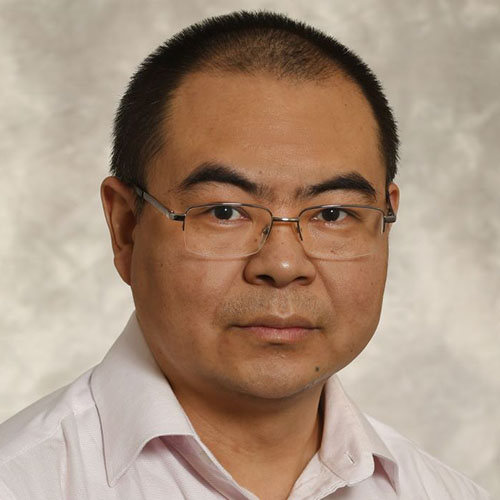
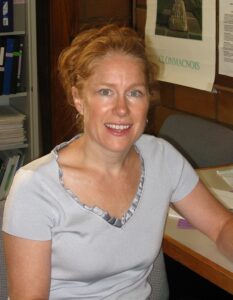
Gary W. Felton is a Professor and Department Head of Entomology at the Pennsylvania State University's College of Agricultural Sciences. His research focuses on chemical ecology, insect-plant interactions, and induced plant defenses against herbivores. Key Affiliations: Pennsylvania State University, College of Agricultural Sciences, Department of Entomology Research Interests: Dr. Felton investigates how plants perceive and respond to herbivore attacks, with particular emphasis on biochemical mechanisms like flavonoid-mediated defenses, microbial interactions in Lepidoptera, and stomatal regulation of volatile signaling. His work bridges agricultural sustainability and ecological theory. Recent Publications: His 2025 studies explore salinity stress impacts on tomato defenses, microbiome roles in herbivore digestion, and volatile-mediated host plant specialization. Earlier works (2023-2024) examine water stress effects, flavonoid toxicity, and microbial influences on plant-herbivore dynamics. Scientific Awards: Huck Chair of Chemical Ecology (2022) Laboratory Focus: The Felton Lab studies herbivore-induced plant defenses, microbial symbiosis in pest species, and integrated pest management strategies across crops like maize, tomatoes, and sorghum.
Dr. Michael Stevens is a Senior Lecturer at University of New South Wales (UNSW) Canberra , where he focuses on advanced manufacturing and biomedical device control systems . His work bridges digital manufacturing for SMEs with smart artificial heart technologies , emphasizing industry collaboration and translational research. Specializes in physiological control systems for rotary blood pumps Develops unobtrusive fall detection systems for dementia patients Leads international projects on total artificial heart development Education : B.Eng (Medical - First Class Honours), Queensland University of Technology (2010) PhD in Physiological Control for Biventricular Assist Devices, University of Queensland (2014) Research Trends show consistent focus on: Machine learning for biomedical diagnostics (2018–2025) mmWave radar and thermal sensors in patient monitoring (2021–2024) Computational fluid dynamics in artificial heart modeling (2016–2024) Physiological control algorithms for rotary blood pumps (2011–2025) Scientific Awards : UNSW Scientia Education Award (2021) for contextual teaching Heart Foundation Runner-up for "Smart Artificial Hearts" pitch (2021) ARC PGC Supervisor Award (2017) for mentoring Grants & Supervision : Holds over $6 million in competitive funding including MRFF and ARC grants. Currently supervises 4 PhD students while maintaining industry partnerships with VitalCare and BiVACOR. Labs & Facilities : Works across UNSW Engineering labs and Graduate School of Biomedical Engineering platforms, including mock circulation loops and high-performance computing clusters for CFD simulations.
Angelina Wang is an incoming Assistant Professor at Cornell Tech and the Department of Information Science at Cornell University, starting Fall 2025. Her research focuses on responsible AI, particularly machine learning fairness and algorithmic bias. She holds a Ph.D. in Computer Science from Princeton University and a B.S. in Electrical Engineering and Computer Science from UC Berkeley. Current postdoctoral work at Stanford’s HAI and RegLab explores sociotechnical challenges in AI deployment. Her research addresses fairness evaluation in generative AI, societal impacts of AI systems, and ethical trade-offs in algorithm design. Notable awards include the NSF GRFP, Siebel Scholarship, and Microsoft AI & Society Fellowship. Her work bridges technical and social dimensions of AI, emphasizing human-centered evaluation and interdisciplinary collaboration. Recent publications span medical AI applications (e.g., Alzheimer’s subphenotypes, corticosteroid treatment efficacy) and foundational fairness research. She advocates for proactive ethical considerations in technical work, citing examples like surveillance risks in facial recognition and dataset biases in computer vision. Angelina advises prospective PhD students in Cornell’s Information Science program and collaborates on projects like SciDaSynth for scientific knowledge synthesis. Her advocacy includes challenging fairness impossibility theorems and promoting algorithmic pluralism in auditing practices.
J. Haadi Jafarian is an Assistant Professor in the Department of Computer Science and Engineering at the University of Colorado Denver, where he leads the Active Cyber and Infrastructure Defense (ACID) Lab. He earned his Ph.D. from the University of North Carolina Charlotte in 2017. Research Interests: Active Cyber Defense (Moving Target Defense, Cyber Deception) Big Data Analytics for Cyber Threat Intelligence Security for Cyber-Physical Systems & Critical Infrastructures Cyber Resilience and Automation Recent Publications highlight innovations in traffic obfuscation, adversarial machine learning, and deception-based threat detection. His work spans network security, cybersecurity analytics, and scalable defense frameworks. Teaching includes: CSCI 4743/5743: Cyber and Infrastructure Defense (Fall 2023) CSCI 4742/5742: Cyber Programming and Analysis (Spring 2023) CSCI 4741: Cybersecurity Principles (Spring 2022) CSCI 4800: Web Application Development (Spring 2021) CSCI 3761: Computer Networks (Spring 2020) Labs & Teams: The ACID Lab focuses on developing proactive cyber defense strategies, including moving target defense, deception techniques, and security analytics for critical infrastructure.
Associate Professor Jenni Ilomaki holds a position at Monash University's Centre for Medicine Use and Safety. With expertise in clinical pharmacy, epidemiology, and public health, she leads a research group analyzing administrative claims data. Her work spans collaborations with governmental and non-governmental organizations globally, yielding over 150 peer-reviewed publications and $4 million in grants. She previously served as Chair of ASCEPT's Pharmacoepidemiology Special Interest Group and currently serves as Science Lead for the Monash Addiction Research Centre and Executive Editor of the British Journal of Clinical Pharmacology. Education includes a Bachelor of Science (Pharmacy) from the University of Kuopio (1999) and Master of Science (Pharmacy) from the University of Kuopio (2004). She completed a PhD in alcohol epidemiology at the University of Eastern Finland (2011) and a postdoc at the University of South Australia (2011-2014). Notable recognitions include Young Epidemiologist of the Year (2011) and the Ronald D. Mann Best Paper Award (2021). Key research focuses on quality use of medicines, medicine safety, large population studies, and innovative epidemiological methods. Major projects include developing clinical decision support tools for cardiovascular prevention, analyzing preventable hospitalizations in aged care, and investigating psychotropic medication trends in youth. Her work contributes to UN Sustainable Development Goals related to health equity and non-communicable disease reduction. Recent publications emphasize drug repurposing (e.g., SGLT2 inhibitors), opioid prescribing patterns, hip fracture outcomes, and dementia detection algorithms. She chairs multinational studies on stroke and myocardial infarction cost burdens, demonstrating interdisciplinary impact across pharmacology, epidemiology, and health economics.
Lili Liu is the Dean of the Faculty of Health and a Professor at the University of Waterloo. Her research focuses on leveraging technologies to support older adults and family caregivers, particularly those living with dementia. She leads projects funded by Age-Well NCE, including apps for dementia risk management, usability scales for locating missing persons, and national data strategies. Collaborating with Ryerson University, she develops drone algorithms for locating cognitively impaired individuals. Education: PhD, MSc, and BSc in Rehabilitation Science and Occupational Therapy from McGill University. Research interests emphasize assistive technologies, caregiver support, smart home systems, and mixed-methods approaches. She explores ethical challenges in tech adoption, such as privacy concerns in alert systems and guardianship implications. Recent work includes digital storytelling interventions and frameworks for autonomy and independence in aging populations. Publications span dementia-related wandering, technology acceptance, and fall detection, with a focus on translational research. She advocates for policy changes through initiatives like Alberta’s Bill 210 (Silver Alert system). Current lab activities include the Aging and Innovation Research Program (AIRP), focusing on tech solutions for aging challenges.
Keenan Albee is a Robotics Technologist at NASA’s Jet Propulsion Laboratory and an incoming Assistant Professor at the University of Southern California (starting Fall 2025). His research focuses on autonomous robotics for extreme environments including lunar missions, microgravity, and underwater operations. Education: Ph.D. in Aeronautics and Astronautics (Autonomous Systems), MIT (2022) S.M. in Aeronautics and Astronautics, MIT (2019) B.S. in Mechanical Engineering, Columbia University (2017) Albee’s work integrates optimal control , reinforcement learning , and motion planning to develop autonomy for mobile robotic systems operating under uncertainty. His expertise spans space robotics , microgravity systems , and underwater robotics , with a focus on environment-aware algorithm design. Recent research includes parametric information-aware motion planning (RATTLE algorithm), distributed multi-agent exploration, and robust control for uncooperative targets. His publications highlight on-orbit validation of autonomy algorithms via NASA’s Astrobee platform and upcoming lunar missions. Scientific Awards: NASA Space Technology Research Fellowship (2022) Albee actively develops open-source autonomy frameworks and will establish the Laboratory for Autonomous Systems in Exploration and Robotics (LASER) at USC. His work bridges theoretical control methods with real-world deployment, including first-of-its-kind achievements in space robotics.
Peter Karsmakers serves as Associate Professor at KU Leuven's Department of Computer Science within the Faculty of Engineering Technology, based at the Geel Campus. He coordinates the Declarative Languages and Artificial Intelligence (DTAI) research group and holds leadership roles including coordinator of Research and Education for Computer Science across Geel and Diepenbeek Campuses. Karsmakers earned his PhD in Engineering Science in May 2010, focusing on kernel-based learning algorithms for sparse modeling and efficient predictions from large datasets. His doctoral work established foundations for his current research trajectory in resource-constrained machine learning systems. His research integrates machine learning with signal processing for real-time sensor data interpretation, specializing in anomaly detection from acoustic, radar, and accelerometer signals on embedded devices. Current projects address industrial condition monitoring, elderly care systems, and livestock facility monitoring through three main tracks: acoustic monitoring (e.g., SINS, WATCHDOG), radar-based systems (e.g., FARADAY, NextPerception), and smart electronics for power converters. Recent publications demonstrate strong trends in constraint-guided deep learning architectures for industrial applications, cross-environment robustness in sensor systems, and domain-knowledge integration to reduce data requirements. His work consistently bridges theoretical machine learning with practical implementations in resource-constrained environments. No scientific awards or fellowships were mentioned in the provided materials. Karsmakers supervises over 10 master's theses annually and coordinates a research team of 10 PhD students and a post-doc within DTAI-ADVISE. He has secured approximately 2.3 million euros in funding through VLAIO, EU-ECSEL, and bilateral industry contracts, including 10 active projects such as AutoEdgeML (2024-2028) and Fault Tolerant Neural Networks for Space Applications (2024-2027). He leads the DTAI-ADVISE research group focused on developing software that attaches semantics to sensor data on resource-constrained devices. The team operates across multiple campuses with specialized labs for acoustic monitoring (Geel), radar-based systems (in collaboration with ESAT-TELEMIC), and smart electronics (with Electrical Engineering department), maintaining strong industry partnerships with companies in healthcare, manufacturing, and agriculture sectors.
Brian Horsak is a Professor and Head of the Center for Digital Health and Social Innovation at Fachhochschule Steyr. He holds an endowed professorship in Applied Biomechanics and Rehabilitation Research, focusing on integrating advanced technologies like VR/AR, machine learning, and wearable devices into clinical gait analysis and motor rehabilitation. His roles include leading the Institute of Health Sciences and contributing to the Department of Health Sciences and Media and Digital Technologies. Education: Dr. rer. nat. (2012, University of Vienna), Habilitation in Kinesiology (2020, University of Vienna), Master's in Sports Science (2002–2008, University of Vienna). Research interests revolve around improving patient care through biomechanical innovations, including musculoskeletal simulations, gait pattern analysis, and rehabilitation technologies. He leads projects like ReMoCap-Lab (motion capture for motor rehabilitation) and chairs the Applied Biomechanics in Rehabilitation Research initiative. Key achievements include the Lower Austria Innovation Prize (2021), multiple best paper awards, and grants for projects like TRUST AI and VReeze. His work bridges clinical practice with digital health solutions, emphasizing explainable AI (XAI) in gait classification and VR-based balance training. Notable contributions include developing the GaitRec dataset and studies on smartphone-based motion capture reliability. He collaborates internationally, publishing widely in Gait & Posture , Scientific Reports , and IEEE journals. Current projects focus on AI-driven gait analysis, musculoskeletal modeling, and XR applications in healthcare.
Bryce Westlake is an Associate Professor in the Department of Justice Studies within the College of Social Sciences at San Jose State University. He is a leading researcher in digital forensics and child sexual abuse material detection, with significant contributions to both forensic science education and alternative sexuality studies. Education: Ph.D. in Criminology from Simon Fraser University (2015) Master's degree in Criminology from Simon Fraser University Bachelor of Arts degree in Psychology and Sociology (double major) from University of British Columbia Dr. Westlake's research spans two primary areas with significant societal impact. In digital forensics, he focuses on developing automated tools to detect, collect, analyze, and match child sexual abuse material disseminated online. His work involves international collaboration with researchers, law enforcement agencies, and government partnerships to create more effective detection systems. In his secondary research area, he explores alternative sexuality, particularly BDSM communities, conducting multi-phasic, kink-positive studies examining health and safety within these communities. His research aims to destigmatize participation through a deeper understanding of the social and emotional enrichment practitioners receive from activities. His recent publications demonstrate a clear trend toward increasingly sophisticated technical approaches to combating child sexual exploitation while simultaneously advancing understanding of alternative sexual practices. The technical publications focus on biometric identification, file structure analysis, and ethical web scraping methods, while his BDSM-related work emphasizes community safety, education pathways, and mental health benefits. This dual focus positions him uniquely at the intersection of technology, law enforcement, and human sexuality research. Scientific Awards: The Storytellers Award (Social Sciences and Humanities Research Council) - April 2014 Canadian Graduate Scholarship (Social Science and Humanities Research Council) - May 2012 Dr. Westlake has been heavily involved in developing the forensic science program at SJSU, creating six undergraduate courses, revising two graduate courses, and introducing one graduate course. In Fall 2020, he created and implemented a new concentration in digital evidence (computer forensics) for forensic science majors - one of the first in-person digital forensic bachelor of science degrees in the United States meeting FEPAC standards. He has developed and directs the Silicon Valley Digital Forensics Laboratory, which began accepting students for internships in Fall 2024. He was awarded a three-year $497,948 grant from the National Science Foundation in 2023 to study 'Training digital forensics examiners through hands-on education investigating live criminal investigations.' Through the Silicon Valley Digital Forensics Laboratory and partnerships with criminal justice agencies (district attorneys offices, law enforcement agencies, etc.), Dr. Westlake provides students with training and practical experience conducting digital forensic investigations from start (evidence collection) to finish (report writing and testimony). He also co-hosted the first annual Child Sexual Abuse Reduction Research Network workshop in Adelaide Australia in December 2023.
Lyndia Wu is an Assistant Professor in the Department of Mechanical Engineering at the University of British Columbia's Faculty of Applied Science, where she holds the prestigious Canada Research Chair in Wearable Brain Injury Sensing. She leads the SimPL (Sensing in Biomechanical Processes Lab) and maintains an active research program focused on biomechanics and medical device development. Her educational background includes: B.A.Sc. from the University of Toronto M.S. from Stanford University Ph.D. from Stanford University Postdoctoral Fellowship from Stanford University Dr. Wu's research program centers on developing novel sensing and data analytics technologies to study human biomechanics in health and disease states. Her primary research areas encompass brain injury or concussion biomechanics using advanced sensing, modeling, and machine learning approaches, as well as the development of innovative sensors and algorithms for studying sleep disorders like obstructive sleep apnea. She specializes in wearable sensors for brain health monitoring, traumatic brain injury mechanisms, and AI applications in healthcare settings. Analysis of her recent publications reveals a strong focus on sports-related head impacts (particularly in soccer), EEG monitoring following impacts, and sleep monitoring after concussions. Her work demonstrates interdisciplinary collaboration across biomechanical engineering, neuroscience, and clinical medicine, with publications spanning biomechanics, neurotrauma, biomedical instrumentation, and signal processing domains. Dr. Wu has received significant recognition for her work, including: Scholar Award from the Michael Smith Foundation for Health Research (2019) Junior Faculty Teaching Award from UBC Mechanical Engineering (2022) She actively supervises graduate students in Mechanical Engineering programs (MASc and PhD) and collaborates extensively across disciplines. Dr. Wu is affiliated with multiple research centers including the Institute for Computing, Information and Cognitive Systems (ICICS), Origins of Balance Deficits and Falls, and SmarT Innovations for Technology Connected Health (STITCH), reflecting her interdisciplinary approach to solving complex biomedical challenges. As director of the SimPL lab, she leads a research team developing cutting-edge sensing solutions for biomechanical processes with particular emphasis on brain injury prevention, monitoring, and recovery assessment through innovative engineering approaches.
Hazem U. Abdelhady is a Postdoctoral Research Fellow at the University of Michigan's School for Environment and Sustainability (SEAS), jointly appointed with the Cooperative Institute for Great Lakes Research (CIGLR). He will join Texas A&M University's Department of Geography as an Assistant Professor in Fall 2025. His research focuses on coastal and hydrodynamic processes, leveraging machine learning, remote sensing, and physics-based modeling to address climate-driven challenges in lakes and coastal systems. Dr. Abdelhady holds a PhD from Purdue University in Hydraulics and Hydrology Engineering and Computational Engineering (2024), an MS in Irrigation and Hydraulics Engineering from Cairo University (2020), and a BS in Civil Engineering (2018). His postgraduate certificate in Geospatial Information Sciences underscores his expertise in spatial data analysis. His research interests include coastal hydrodynamics, physical limnology, and AI-driven environmental modeling. Key projects involve understanding shoreline changes in Lake Michigan, predicting ice cover dynamics, and developing tools for climate adaptation. The Aggie CIS Lab , launching at Texas A&M in Fall 2025, will further advance these efforts, bridging disciplines to enhance coastal resilience. Recent work highlights include studies on climate impacts on lake temperatures, machine learning applications for wave modeling, and automated shoreline detection algorithms. He actively recruits PhD students for Fall/Spring 2026 to investigate Great Lakes dynamics and resilience strategies. Collaborations span academic and governmental institutions, emphasizing interdisciplinary approaches to environmental challenges. His publications span high-impact journals and conferences, reflecting contributions to both theoretical and applied aspects of water resources engineering.
Assoc. Prof. Nhien An Le Khac is an Associate Professor at the School of Computer Science, University College Dublin. He serves as Programme Director for the MSc in Forensic Computing & Cybercrime Investigation, which has trained over 1,500 law enforcement officers globally. His research focuses on cybersecurity, digital forensics, AI security, and secure healthcare IT systems. He holds a PhD from Institut National Polytechnique de Grenoble (France) and has supervised 9 PhD students. His work includes pioneering contributions to electromagnetic side-channel analysis (EM-SCA) for IoT forensics, blockchain forensics, and AI-based fraud detection. Education: BSc/MSc: Vietnam National University, Ho Chi Minh City PhD: Institut National Polytechnique de Grenoble, France Professional Certificate in University Teaching & Learning: UCD Research Interests: Cybersecurity, Digital Forensics, AI Security, Machine Learning, Cloud Computing, Big Data Analytics, Healthcare IT Security. Recent Article Trends: Focus on EM-SCA for IoT device forensics, illicit Bitcoin transaction tracking, and cross-device ML portability. His work bridges theoretical AI advancements with practical forensic applications, emphasizing privacy preservation and explainable AI. Awards & Recognition: World’s Top 2% Scientists (2024) UCD Teaching Excellence Awards (2022, 2018) Best Paper Awards at Elsevier, AI-2022, and DFRWS conferences Grants & Advising: Principal Investigator on grants like Cloud Atlas, CERBERUS, and Urban ARK. Advised 9 PhD students who now work in academia/research globally. Active in funding initiatives like ML-Labs (SFI-funded). Labs & Teams: Leads ASEADOS Lab and maintains datasets like EM-SCA and InSDN. Collaborates globally on forensic frameworks and cybersecurity tools.
Shuangquan (Peter) Wang is an Assistant Professor of Computer Science at Salisbury University. He holds a PhD in Computer Science from the College of William & Mary (2020) and a PhD in Pattern Recognition and Intelligent Systems from Shanghai Jiao Tong University (2008), along with earlier degrees from Wuhan University of Technology and Wuhan Institute of Technology. His research focuses on mobile/wearable computing, activity recognition, smart health, and machine learning. He has over 10 years of experience in academia and industry, including roles at Philips Research East Asia and Nokia Research Center (Beijing). His work emphasizes wearable sensor-based health monitoring, such as fall detection, mastication analysis, and Parkinson’s disease monitoring. He leads the WISH Research Lab and serves as an Associate Editor for Elsevier's Smart Health Journal. Recent contributions include papers on salinity anomaly detection (2024), LLM-based user requirement analysis (2024), and socially acceptable food recognition (2022). His research trends emphasize interdisciplinary applications of machine learning in healthcare and sensor-driven human activity analysis. Professional service roles include coordinating Salisbury University’s Center for Applied Mathematics and Science (2021–2024) and chairing ACM/IEEE CHASE conferences. He has delivered invited talks on artificial intelligence and its societal impacts to diverse audiences, including the Institute of Retired Persons at Salisbury University. His lab, WISH Research Lab, explores innovative solutions in smart health and mobile computing, integrating wearable technologies with machine learning for real-world health applications.
Katherine Lanigan is Professor of Chemistry in the Department of Chemistry and Biochemistry at University of Detroit Mercy's College of Engineering & Science, teaching General Chemistry, Quantitative Analysis, and Instrumental Analysis since joining the faculty in 2001. Her educational background includes: Ph.D. in Chemistry, University of Iowa (1996) B.S. in Chemistry, University of Dayton (1990) Dr. Lanigan's research integrates analytical chemistry with environmental science through two primary avenues: trace metal analysis in ecological systems using FAAS, XRF, and UV/vis spectroscopy, and investigations of photocatalytic reactions involving nanoparticles for contaminant degradation. Her secondary focus examines adsorbed species at liquid/solid interfaces of metal oxide films using ATR-FTIR, with recent expansion into cloud point extraction methods for metal preconcentration in water samples. These efforts address critical environmental monitoring and remediation challenges. Analysis of her 2015-2024 publications reveals dual expertise in environmental analytical chemistry and pedagogical innovation, with environmental work emphasizing practical metal detection techniques and education research developing theme-based water quality activities across instructional levels. Her scientific recognition includes: National Institute of Health ReBUILDetroit Pilot Project Course Development Award (2017, co-PI) UDMPU Faculty Research Awards (2016, 2015) Dr. Lanigan has mentored 38 students since 2002, with alumni pursuing dentistry (University of Detroit Mercy, Case Western, Michigan, Pennsylvania), medicine, and chemistry careers. Her secured funding supports both research instrumentation and educational development initiatives. The active Lanigan Research Group currently comprises Jisoo Kim, Heewoong Kim, and Tina Lee, with Kelly Cho, Alina Varghese, and Abdel El Sayed joining for Fall 2025 projects on photocatalytic nickel oxidation and drinking water metal analysis.