- Cybersecurity
- Machine Learning
- Data Analytics
- +۵ مورد دیگر
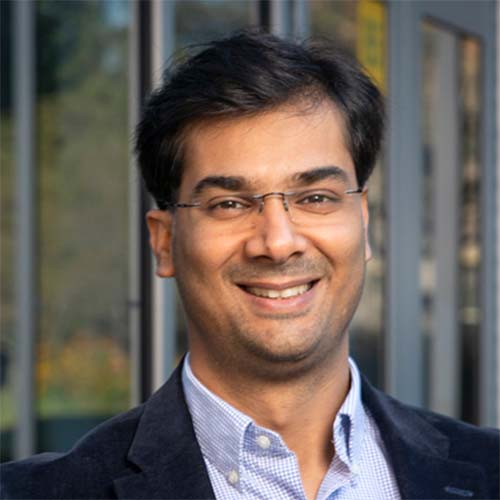
Dr Zhiyuan (Thomas) Tan is an Associate Professor at Edinburgh Napier University’s School of Computing, Engineering and the Built Environment . He is internationally recognised for his cybersecurity research and has been listed among Stanford University’s Top 2% Scientists for 2021–2023. Education BEng (2005) with high distinction – North-eastern University, China MEng (2008) – Beijing University of Technology, China PhD in Computer Systems (2014) – University of Technology Sydney, Australia Research Interests Dr Tan’s research integrates cybersecurity with machine learning and data analytics. His core areas include: Intrusion detection and defence of critical service systems Adversarial machine learning for malware and anomaly detection Virtualisation security through non-parametric behaviour modelling IoT and vehicular network security—cloud/edge/cloudlet frameworks Privacy-preserving AI and federated machine unlearning Smart-city digital forensics and cyber-physical system resilience Research Output Trends His recent articles (2020–2025) reveal a strong focus on federated learning, edge & mobile computing, UAV coordination, and AI-driven security. Topics span advanced steganography, metamorphic malware, graph injection attacks, and trustworthiness in vehicular platoons, all anchored in real-world IoT and transportation applications. Awards & Distinctions Stanford University Top 2% Scientists List (2021, 2022, 2023) National Research Award 2017 – Research Council of the Sultanate of Oman Best Paper Awards (three instances) Kaspersky Lab Student Cyber Security Conference – Finalist Award SICSA Supervisor of the Year 2019 – Honourable Mention Grants & Leadership Dr Tan has attracted over £200k in external funding including: Carnegie Trust (£73,564) – Federated Machine Unlearning ENU Development Trust (£29,998) – Machine Unlearning Royal Society (£12,000) – VANET Security & Privacy SICSA & other awards for MemoryCrypt, AI Secrets, behaviour biometrics, and visiting-fellow schemes. Supervision & Mentoring Since 2013 he has supervised or co-supervised 16 doctoral candidates and several master’s students; six PhDs have successfully graduated. Roles range from Director of Studies to additional supervisor across diverse topics from malware evolution to VR olfactory interfaces. Research Groups & Collaboration He is affiliated with the Centre for Artificial Intelligence and Robotics , the Centre for Distributed Computing, Networking and Security , and the Centre for Cybersecurity, IoT and Cyber-physical Systems at ENU, fostering interdisciplinary collaboration with national and international partners.