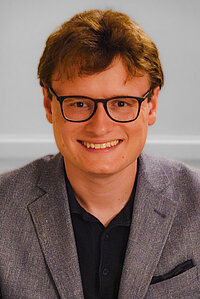
Michael Lampis is a Maître de conférences HDR (Assistant Professor) at LAMSADE , Universite Paris Dauphine. His research focuses on theoretical computer science , particularly in approximation algorithms , parameterized complexity , and graph algorithm design . He has held post-doctoral positions at Kyoto University and KTH, Stockholm, and earned his PhD from the Graduate Center of CUNY under Amotz Bar-Noy. Research Interests include: Structural Graph Parameters (treewidth, pathwidth, clique-width) Algorithmic Meta-Theorems Approximation Schemes Combinatorial Optimization Computational Complexity Recent Research Trends highlight his work on parameterized approximation algorithms for graph problems (e.g., feedback vertex set, matching) and complexity analysis of games/puzzles. His projects S-EX-AP-PE-AL (ANR JCJC), COAL-GAS (CNRS-PSL), and collaborations with Japanese institutions (PARAGA, GRAPA) emphasize cross-border innovation. Scientific Awards include: Best Student Paper Award at WG 2025 Best Paper Award at SOFSEM 2024 Advising involves PhD students Ioannis Katsikarelis, Louis Dublois, and Manolis Vasilakis, alongside Master's advisees like Edouard Nemery and Alban Guerbois. He actively participates in peer review for conferences (ICALP, ESA, STACS) and journals (Algorithmica, JCSS, DAM).
Argyrios Deligkas is a Senior Lecturer (equivalent to Associate Professor) at the Royal Holloway University of London. He obtained his PhD from the University of Liverpool under the supervision of Rahul Savani and held postdoctoral positions at the University of Liverpool and the Technion (Industrial Engineering and Management department). His research focuses on computational aspects of game theory, optimization, and complexity. Key interests include: Algorithmic Game Theory and Mechanism Design Computational Complexity (PPAD/PPA-hardness) Fixed-parameter algorithms and combinatorial optimization Fair division and resource allocation Equilibrium computation in multi-agent systems Recent publications (2023-2025) demonstrate a strong emphasis on computational hardness in fair division (e.g., PPA-hardness proofs), mechanism design with real-world constraints, and parameterized algorithms for pathfinding/graph problems. Collaborative work with European researchers dominates his output, with frequent appearances at AAAI, IJCAI, and AAMAS. He actively presents at conferences (e.g., ALGA2025, WINE 2024) and collaborates internationally, including visits to universities in Vienna, Prague, Glasgow, and Edinburgh.
Simon Finster is an Assistant Professor in the Department of Economics at Johannes Kepler University Linz, specializing in microeconomic theory, auction and market design, energy economics, and industrial organization. He joined JKU Linz in October 2025 after serving as a postdoc at CREST/Inria FairPlay and completing his PhD at the University of Oxford, Nuffield College under Paul Klemperer's supervision. His research focuses on developing frameworks for preferences over how goods should be partitioned between buyers in indivisible goods markets, devising pooled testing mechanisms for infectious diseases in populations with heterogeneous welfare weights, and reconciling welfare and revenue concerns in quasi-Fisher markets. He approaches market design through both theoretical analysis and practical implementation in lab and field settings. Finster is actively involved in the academic community as a co-organizer of GAIMSS (Games and Artificial Intelligence Multidisciplinary Summer School), which brings together researchers from mathematics, computer science, and economics. The 2025 edition will be held at Université Toulouse Capitole with distinguished speakers including José Correa, Penélope Hernández, Tristan Tomala, and Paul Dütting. His recent publications accepted in top venues include work on selling multiple complements with packaging costs, equitable auctions, and competitive and revenue-optimal pricing with budgets. These publications reflect his focus on bridging theoretical market design with practical applications. At JKU Linz, he teaches 'Public Finance, Environment and Health' and maintains an active research program with presentations at major international conferences across Europe and North America. His work demonstrates a strong commitment to applying economic theory to solve real-world problems while advancing theoretical understanding in microeconomics and game theory.
Victor Klockmann is a Junior Professor of Microeconomics, specifically focusing on the Economics of Digitization at the University of Würzburg's Faculty of Management and Economics, Department of Economics. He also serves as an Associate Research Scientist at the Center for Humans and Machines, Max Planck Institute for Human Development in Berlin, and is an Affiliated Researcher at the Frankfurt Laboratory for Experimental Economic Research (FLEX) at Goethe University Frankfurt. His academic career spans multiple prestigious institutions with a focus on the intersection of economics, artificial intelligence, and human behavior. PhD in Economics (Dr.rer.pol), Goethe University Frankfurt, 2021 (Summa cum laude) M.Sc. Quantitative Economics, Goethe University Frankfurt, 2018 M.Sc. Mathematics, Goethe University Frankfurt, 2016 B.Sc. Mathematics, Goethe University Frankfurt, 2014 Professor Klockmann's research focuses on the economic and ethical implications of artificial intelligence, behavioral and experimental economics, game theory, and organizational economics. His work examines how new technologies impact organizations and human behavior, the interaction and cooperation between humans and non-human agents, and the future of work in times of technological change. His experimental approach combines theoretical economics with laboratory experiments to understand the nuanced dynamics of human-AI interactions. Analysis of his publications reveals a strong emphasis on ethical considerations in AI deployment, particularly regarding distributional fairness, social preferences toward machines, and intergenerational responsibility. His work spans multiple disciplines, bridging economics, computer science, psychology, and ethics, with a consistent focus on experimental methodologies to generate empirical evidence about human behavior in technological contexts. Scientific Awards and Recognition: External Funding from DFG for Strategic Interactions in Organizational Decision-Making (2024) Funding from Hessian Center for AI for Cooperation with Machines (2023) PhD Paper Award at IAREP/SABE Conference (2019) Prize for Best Master in Quantitative Economics (2019) Professor Klockmann actively supervises bachelor's and master's theses in Business Management, Economics, Business Informatics, and related fields. His research has attracted significant external funding from the German Research Foundation (DFG), the Hessian Center for Artificial Intelligence, and the Leibniz Institute for Financial Research SAFE. His current projects explore strategic interactions with generative AI, cooperation in human-algorithm settings, and the organizational implications of new technologies. He is affiliated with the Man and Machine research team at the Max Planck Institute, where he investigates human-AI interaction dynamics, and contributes to the Frankfurt Laboratory for Experimental Economic Research (FLEX), which specializes in experimental approaches to economic questions. His research environment combines cutting-edge experimental facilities with theoretical economic analysis to address pressing questions about technology's role in society.
Jens Gudmundsson is an Assistant Professor at the Department of Food and Resource Economics, University of Copenhagen, Denmark. He is affiliated with the Center for Blockchains and Electronic Markets (BCM), which is funded by the Carlsberg Foundation. His work bridges theoretical economics with practical applications in blockchain technology and environmental systems. His primary research interests include: Game Theory Fair Allocation Matching Theory Mechanism Design Theory Social Choice Theory Blockchain Applications Environmental Economics Dr. Gudmundsson earned his PhD in Economics on matching theory from Lund University in 2015. His research portfolio demonstrates sophisticated applications of economic theory to real-world problems, particularly in decentralized systems. His publications span top journals including Management Science, Games and Economic Behavior, and Journal of Environmental Economics and Management, reflecting interdisciplinary impact across economics, computer science, and environmental studies. His scientific work shows consistent development across three main streams: blockchain economics (focusing on incentive structures and smart contracts), environmental resource allocation, and fundamental game theory. Recent publications through 2025 indicate ongoing productivity and relevance in addressing contemporary challenges in decentralized systems design and fair resource distribution.
Professor Joanna Józefowska is a distinguished academic at Poznań University of Technology, where she serves as a full professor in the Faculty of Computing and Telecommunications, Institute of Computer Science. With a career spanning over three decades since completing her doctoral dissertation in 1990, she has established herself as a leading expert in operations research and scheduling algorithms. Her research spans several key areas within operations research, with particular emphasis on: Discrete-continuous scheduling problems Resource allocation and optimization Just-in-time scheduling models Applications of apportionment theory Energy-efficient computing systems Quantum approaches to transportation problems Professor Józefowska's recent work demonstrates her ability to adapt traditional operations research methods to address contemporary technological challenges, with publications in 2022-2023 focusing on energy-efficient computing systems and quantum approaches to electric vehicle charging infrastructure. Her research output shows consistent productivity throughout her career, with publications appearing in reputable journals such as European Journal of Operational Research, Annals of Operations Research, and Computers and Operations Research. As an academic mentor, Professor Józefowska has successfully guided multiple doctoral students to completion, with dissertations covering topics ranging from ontology enrichment to discrete resource allocation. Her supervision has helped develop the next generation of researchers in operations research and computer science, contributing to the academic ecosystem at Poznań University of Technology and beyond. Her scholarly contributions extend beyond research and supervision to include editorial roles for significant publications in her field, demonstrating recognition of her expertise by the broader academic community. Professor Józefowska continues to actively contribute to the advancement of knowledge in operations research while maintaining her position as a respected academic at one of Poland's leading technical universities.
David Lowing is an Assistant Professor at Ecole Normale Supérieure de Rennes, where he conducts research in cooperative game theory and its applications to economic and environmental problems. He is also a research fellow at the CREM laboratory and the RENEL chair, with additional association with the Research Center on Economic Strategies (CRESE). Dr. Lowing earned his Ph.D. in economic theory from the University of Saint-Etienne in June 2022 under the supervision of Prof. Philippe Solal and Prof. Stéphane Gonzalez. Prior to his current position, he completed post-doctoral fellowships at the Multi-Agent Laboratory (University of Kyushu), the Industrial Engineering Research Department (CentraleSupélec), and the Economics of Gas Chair (Mines Paris). Dr. Lowing's research focuses on the axiomatic design of fair allocation rules, with particular emphasis on cooperative game theory applications. His work spans several domains including environmental economics (pollution control, river management, carbon capture and storage), public service pricing, and multi-choice games. He has developed theoretical frameworks that address practical problems in cost allocation across various contexts, with recent work increasingly focused on climate change mitigation challenges. His publication record shows consistent output in top journals including International Journal of Game Theory, Social Choice and Welfare, and Journal of Mathematical Economics. Recent publications demonstrate strong application of game-theoretic approaches to environmental challenges, particularly in the areas of carbon capture and storage, polluted river management, and international climate agreements. Cost allocation mechanisms for European CCS infrastructure Fair effort-sharing frameworks for climate change mitigation Solution concepts for cooperative games with hierarchical structures Axiomatic approaches to pollution control and river management Dr. Lowing maintains an active collaboration network across Europe and Japan, working with researchers including Kevin Techer, Takaaki Abe, and Satoshi Nakada. His work bridges theoretical developments in cooperative game theory with practical applications in environmental policy and public economics, making significant contributions to both academic literature and potential policy implementation. His research group focuses on developing axiomatic approaches to fair division problems, with particular attention to hierarchical structures, permission systems, and multi-choice settings. The team collaborates with researchers across Europe and Japan on applications related to climate policy and environmental management, with growing emphasis on practical implementation of theoretical frameworks.
Gianluca Brero is an Assistant Professor of Information Systems and Analytics in the College of Business at Bryant University, specializing in AI-driven optimization of economic platforms including electricity trading, spectrum auctions, and supply chains to enhance efficiency and fairness. His academic credentials include: Ph.D. in Computer Science from University of Zurich (2020), advised by Sven Seuken Double Master's in Mathematics from Turin Polytechnic and Milan Polytechnic (Alta Scuola Politecnica) Bachelor's in Mathematics from Turin Polytechnic, all earned summa cum laude Dr. Brero's research integrates machine learning, reinforcement learning, and game theory to solve complex market design problems. His work develops novel algorithms for combinatorial auctions, sequential pricing mechanisms, and AI collusion mitigation, with direct applications in critical economic infrastructure. He emphasizes ethical AI deployment throughout his methodology. His publication trajectory shows consistent output in top AI/economics venues (AAAI, IJCAI, AAMAS, NeurIPS) from 2014-2025, with increasing focus on real-world platform optimization. Recent work (2021-2025) demonstrates growing impact in applying ML to economic mechanisms and collusion prevention. Key recognitions include: Jeanne and John Rowe Fellow in Data Science Top mathematics graduate at Turin Polytechnic As an educator, Dr. Brero teaches deep learning, AI ethics, and statistics at Bryant, building on prior teaching at University of Zurich and Brown University. His mentorship focuses on equipping students with both technical rigor and ethical frameworks for AI development. While specific grant details aren't public, his postdoctoral appointments and publication record indicate sustained research funding. Though no formal lab is established at Bryant, his collaborative network spans Brown, Harvard, University of Zurich, and Microsoft Research, providing students access to interdisciplinary research opportunities in market design.