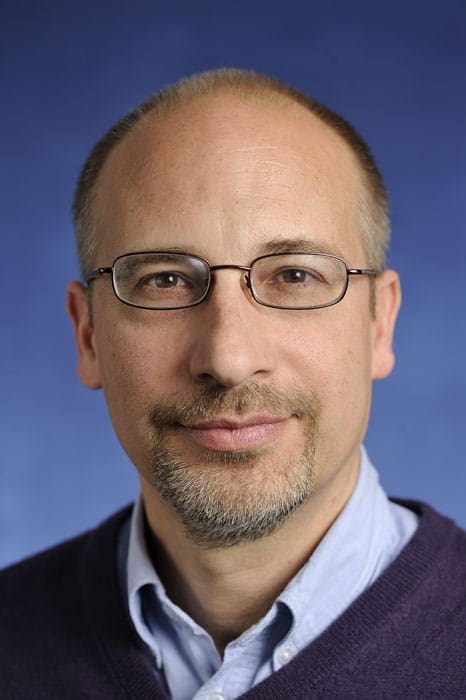
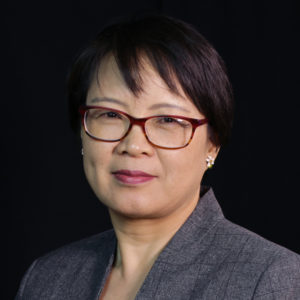
Joel Andreas is a Professor of Sociology at Johns Hopkins University since 2003, serving as Program Director of the East Asian Studies Program. His research focuses on political contention, social inequality, and social change in contemporary China. He holds a PhD in Sociology from UCLA and teaches social theory, political sociology, and courses on Chinese society. He has held visiting positions at universities including the University of Sydney, Hong Kong University, and Ningxia University. His work examines labor movements, rural land policies, and class dynamics in China. Recent research includes analyses of staff-worker congresses, rural land dispossession, and the persistence of militarism in U.S. policy. He critiques market reforms and explores the legacy of the Cultural Revolution. Andreas has contributed to debates on China’s transition to capitalism and the decline of socialist systems. His publications span topics from urbanization to state coercion in rural development. He maintains an active role in academic exchanges and policy-relevant research on China’s socio-political landscape.
Prof. Dr. Stefanie Hellweg serves as a Full Professor for Ecological Systems Design at the ETH Zürich , Department of Civil, Environmental and Geomatic Engineering. She is Deputy Head of the Institute of Environmental Engineering and leads groundbreaking research at the intersection of industrial ecology, life cycle assessment, and circular economy systems. PhD in Environmental Engineering (ETH Zürich, 2000) Industrial Engineering Degree (Karlsruhe University, 1996) Her research develops advanced methodologies for environmental impact assessment of products and technologies, focusing on: Life Cycle Assessment (LCA) with correlated uncertainty modeling Circular economy implementation in chemical and energy sectors Industrial symbiosis optimization for heat and nutrient flows Urban wastewater systems redesign for resource recovery Chemical pollution analysis in plastic materials Key publication trends reveal expertise in: Hybrid wastewater treatment systems Energy-efficient greenhouse cultivation Exergy analysis for sustainability metrics Machine learning applications in environmental modeling Policy-relevant industrial ecology studies She actively participates in global sustainability initiatives as: President of the International Society of Industrial Ecology (ISIE) Member of UN Environment's International Resource Panel Editorial board member for leading environmental journals
Andy Lamey is an Associate Teaching Professor in the Department of Philosophy at the University of California, San Diego (UCSD). He holds a PhD in Philosophy from the University of Western Australia (2011). His research focuses on applied ethics, political philosophy, and animal ethics, with notable works addressing topics like refugee rights, freeganism, and the ethics of food consumption. Lamey is the author of Duty and the Beast (2019) and Frontier Justice (2011), and co-creator of Justice: The Game , an educational role-immersion game for teaching political philosophy. His teaching includes courses on ethics, political philosophy, and free expression. Recent courses at UCSD include Phil 28 (Ethics & Society II) on free speech and Phil 172 (Topics in Political Philosophy) analyzing Robert Nozick’s Anarchy, State, and Utopia . Lamey’s work bridges philosophical theory with contemporary issues, including immigration policy, animal rights, and literature. Key contributions include analyses of refugee rights, critiques of jurisdictional arguments for immigration control, and explorations of animal ethics through figures like Temple Grandin. He has published over 25 peer-reviewed articles and book chapters, and his writings engage with thinkers like Plato, G.A. Cohen, and J.M. Coetzee.
Stavros G. Vougioukas is a Professor and Vice Chair in the Department of Biological and Agricultural Engineering at the University of California, Davis. His research focuses on agricultural robotics, mechanization, and automation for specialty crops, with particular emphasis on robotic harvesting systems and precision agriculture technologies. He leads initiatives in developing actuator systems, perception, and control mechanisms to optimize crop management. Key areas of expertise include robotic fruit harvesting, autonomous vehicle navigation in orchards, and site-specific pest management strategies. His work integrates mechanical engineering principles with advanced automation to address labor shortages and improve agricultural efficiency. Recent projects emphasize data-driven solutions for yield estimation, worker activity analysis, and economic viability of robotic systems. Academic contributions span over 50 peer-reviewed publications (2023-2025), with a focus on robotic orchard platforms, crop transport systems, and sensor-based automation. Notable innovations include vacuum suction end-effectors for fruit harvesting and GNSS-free navigation systems for autonomous vehicles. He also explores sustainable agricultural machinery through techno-economic analyses of electric/hybrid tractors. Current research bridges robotics and agricultural economics, addressing labor cost optimization and precision irrigation. His lab collaborates with industry partners to translate prototypes into field-ready solutions, emphasizing practical applications for specialty crop production systems.
Fengqi You is the Roxanne E. and Michael J. Zak Professor in Energy Systems Engineering at Cornell University. He holds affiliations with multiple departments and graduate fields, including Chemical Engineering, Computer Science, and Sustainability. His research focuses on systems engineering, artificial intelligence, and their applications in energy systems, digital agriculture, and sustainability. You serves as Chair of Ph.D. Studies in Systems Engineering and leads initiatives like the Cornell AI for Sustainability Initiative (CAISI) and the Cornell Institute for Digital Agriculture (CIDA). Education: B.Eng. from Tsinghua University (2005), Ph.D. from Carnegie Mellon University (2009). Before Cornell, he worked at Argonne National Laboratory and Northwestern University. Research Interests Decarbonization of energy systems (e.g., photovoltaics, battery tech) Material informatics and computer-aided molecular design AI-driven solutions for agriculture and climate resilience Supply chain optimization and smart manufacturing Awards & Recognition Fellow of AAAS, AIChE, and Royal Society of Chemistry Over 25 major awards including NSF CAREER (2016), AIChE Research Excellence (2017), and the 2024 Cecil Award Grants & Leadership Recipient of NSF NRT Award for AI in Sustainability Sciences Amazon Research Award for LCA transparency using LLMs Labs & Initiatives Cornell AI for Science Institute (CUAISci) Cornell Institute for Digital Agriculture (CIDA)
Veronika Settele is a historian specializing in 19th-20th century societal transformations, currently serving as a Visiting Professor and junior research group leader at the University of Bremen since 2023. Her work bridges History of Sexuality , Food History , and Animal Studies , examining intersections between economic systems, technological shifts, and cultural norms. Education : PhD in History (2015-2020), Freie Universität Berlin MSc in European Politics and Society (2011-2014), University of Innsbruck Magister in History (2007-2012), University of Innsbruck Research Focus : Her scholarship interrogates how sexuality , animal husbandry , and food systems reflect and shape societal structures. Current projects like "Hinter der Norm" analyze sexuality's secularization through religious practice lenses, while her publications explore industrial agriculture's moral and economic dimensions. Article Trends : Spanning 2012-2024, her work traces industrial agriculture (1945-1990), animal labor dynamics , and sexuality as cultural practice , with keywords spanning Capitalism , Technological History , and Environmental Ethics . Scientific Recognition : Opus Primum Preis der Volkswagen Stiftung Deutscher Studienpreis Friedrich-Meinecke-Preis Fonds Deutscher Studienpreis der Körber-Stiftung Gerald D. Feldman-Reisebeihilfen Academic Leadership : She co-organized conferences like "Beyond Norms and Categories" , serves on the editorial board of Zeithistorische Forschungen , and has taught seminars on transnational reform movements, Holocaust studies, and capitalism history at the University of Bremen and Sorbonne Université.
Gabriela Jarzębowska-Lipińska is an Assistant Professor at the School of Liberal Arts, University of Warsaw, specializing in Critical Animal Studies and Environmental Humanities. Her work examines interspecies relations through historical, cultural, and sociological lenses. Education: PhD in Cultural and Religious Studies (2020, University of Warsaw) International Experience: Fulbright Junior Fellow (2018–2019), visiting scholar at Linköping University (2016) and UC Santa Cruz (2019) Research focuses on animal representation in culture, environmental conflict rhetoric, and modernity's impact on human-animal relations. She explores topics like rat extermination as cultural practice, interspecies ethics in state socialism, and posthumanist collectives. Her recent publications address factory farming as capitalist imagination failure, animal biographies, and urban rodent media narratives. Key scientific contributions include the concept of "species cleansing" and critical analysis of sanitary discourse in totalitarian regimes. She advocates for animal welfare frameworks that challenge anthropocentric policies.
Prof. LFM (Leo) Marcelis is a Professor and Chairholder at the Department of Horticulture and Product Physiology, Wageningen University & Research. His research focuses on plant physiology in controlled environments, energy-efficient horticultural systems, and vertical farming technologies. He leads major projects such as SKY HIGH and 'LED it be 50%', aiming to revolutionize plant production through smart lighting and sustainable practices. Key research interests include optimizing crop growth under LED lighting, closed-system agriculture, and enhancing resource use efficiency. Marcelis coordinates courses on plant physiology, greenhouse horticulture, and vertical farming. He actively collaborates with industry partners, governments, and international institutions to bridge academic research with practical applications in global horticulture. He serves as Vice Chair of the Leibniz Institute’s Science Advisory Board and as Chief Editor of the Crop and Product Physiology section in Frontiers in Plant Science . His work emphasizes interdisciplinary approaches, integrating physiology, engineering, and data science to address food security and sustainable agriculture challenges. Marcelis advises numerous PhD students on projects related to plant-light interactions, crop modeling, and vertical farming scalability. His research has contributed to advancing energy-saving technologies and improving crop quality in both greenhouse and urban agricultural settings.
Huaiyin Li is the Karen and Patrick Walker Professor in History at the University of Texas at Austin, where he has been a faculty member in the Department of History and Asian Studies since 2000. He earned his Ph.D. from the University of California, Los Angeles (UCLA) and specializes in modern and contemporary Chinese history, economy, society, and politics. Education: Ph.D., UCLA, Department of History His research spans multiple subfields including agrarian studies, gender and family dynamics, rural governance, and comparative development. He has authored several award-winning books such as Village China under Socialism and Reform (2009) and The Master in Bondage: Factory Workers in China, 1949-2019 (2023), analyzing China's socio-political transformations through micro-histories and macro-historical frameworks. Recent publications focus on Qing state formation, rural taxation, socialist labor relations, and historiographical shifts in modern China. His work integrates fiscal analysis, institutional studies, and cultural transitions, often comparing China's developmental trajectory with global contexts. Scientific Awards: 2009 Cecil B. Currey Book Award (Association of Third World Studies) 2010 Robert W. Hamilton Book Runner-up Award (University of Texas at Austin) 2010 CHUS Award for Academic Excellence 2014 Robert W. Hamilton Book Runner-up Award (University of Texas at Austin) Huaiyin Li teaches courses on Modern China, Women and Gender in China, and Post-Mao transformations, with office hours in GAR 3.202. His research continues to influence debates on state-society relations and China's modernization processes.
Dr. Gordon Hodson is a Distinguished Professor of Psychology at Brock University, Canada. He specializes in intergroup relations, prejudice, and dehumanization, with a focus on linking human-animal relations to broader systems of oppression. His work bridges academia and advocacy, exploring how ideologies like social dominance underpin both speciesism and ethnic prejudice. Education: Ph.D. (Psychology) from Western University (formerly University of Western Ontario). Research Interests: His studies examine intergroup contact's role in reducing bias, the psychological roots of prejudice, and the cognitive mechanisms underlying dehumanization. Key areas include: Intergroup contact theory Prejudice dynamics Human-animal relations Political radicalization Publications & Awards: Authored/edited over 150 peer-reviewed articles and books, including Why We Love and Exploit Animals . Honors include the SPSSI Gordon Allport Award (2019) and the APA Division 34 award (2016). Lab & Team: Leads the Brock Intergroup Attitudes Scholarship (BIAS) Lab, training students in prejudice research. Collaborates internationally on projects addressing speciesism, climate change, and pandemic risks linked to meat consumption. Grants & Future Work: Active in securing funding for research on intergroup contact generalization effects and policy implications of dehumanization. Current projects include longitudinal studies on prejudice trends and interventions to enhance cognitive liberalization.
Josée Johnston is a Professor of Sociology at the University of Toronto and serves as Chair of the Tri-Campus Graduate Department. Her work spans multiple campuses within the University of Toronto system, with offices located at UTM (DV3230) and UTSG (17125-37, 700 University Ave, 17th floor). As an active faculty member available for supervising graduate students, she contributes significantly to sociology education and research across the university's three campuses. Dr. Johnston's research program centers on the intersections of culture, consumption, and environmental issues with politics and inequality. Her work explores ethical consumption and food politics through the lens of food, examining how class, gender, and power shape our relationship with what we eat. She has made significant contributions to understanding 'foodies'—their values, eating habits, and how food remains central to identity and belonging in contemporary society. Her research extends to appearance politics, examining how young people navigate beauty standards through an intersectional lens of privilege and inequality. Analysis of Dr. Johnston's recent publications reveals a consistent focus on food sociology, with particular attention to meat consumption, ethical food systems, and the cultural contradictions inherent in modern eating practices. Her work spans multiple disciplines including environmental sociology, gender studies, and political sociology, often employing intersectional frameworks to examine how power dynamics shape consumption practices. A notable trend in her scholarship is the examination of how everyday food practices reflect broader social inequalities and political divisions. Dr. Johnston is actively engaged in research funding, serving as a co-investigator on an SSHRC-funded project led by Dr. Emily Huddart Kennedy (UBC) that explores affective polarization and climate action. This research investigates how emotions, relationships, and political divisions shape possibilities for decarbonization in Canada. She is also working on an updated edition of Introducing Sociology Using the Stuff of Everyday Life (Routledge), co-authored with Kate Cairns and Shyon Baumann, which introduces core sociological concepts through everyday material culture.
Thomas Graham is an Assistant Professor and PhytoGro Research Chair in Controlled Environment Systems at the University of Guelph, where he also serves as R&D Manager for the Controlled Environment Systems Research Facility (CESRF). His academic journey includes a BSc in Environmental Sciences from the University of Guelph and Stirling University (1997), an MSc in Horticulture (2001), and a PhD in Environmental Biology (2012), all from the University of Guelph. He completed a NASA Post-Doctoral Fellowship (2012–2015) at Kennedy Space Center, focusing on bioregenerative life-support systems for space exploration. Dr. Graham’s research expertise spans controlled environment agriculture (CEA) , space biology , medicinal crop production , and water remediation . He leads projects addressing food security, crop diversification in urban farming, and sustainable practices for high-intensity agriculture. Key initiatives include developing CEA systems for medical crops, optimizing tree crops for spaceflight, and advancing composting-based closed-loop systems. His scientific contributions are reflected in roles as Associate Editor for Gravitational and Space Research and Editor for special issues on Agriculture in Space . He collaborates with NASA, USDA, OMAFRA, and international agencies like the German Space Agency (DLR). Awards include the NASA Post-Doctoral Research Fellowship. Dr. Graham emphasizes mentorship, conducting bi-weekly graduate meetings and fostering student autonomy while providing structured support. His lab integrates interdisciplinary approaches to tackle global challenges, from climate resilience to lunar food production.
Professor Christian Diehm is a full Professor in the Department of Philosophy at the University of Wisconsin–Stevens Point (UWSP), where he has taught since 2005 and has served as the Environmental Ethics Program Coordinator since 2006. He also co-coordinates the Environmental Studies Program and sits on the campus Animal Care and Use Committee. Education Ph.D. in Philosophy, Villanova University M.S. in Philosophy, Villanova University B.A. in Philosophy, Salisbury University Research Interests Diehm’s scholarly work explores the intersections of ethics and the natural world, focusing on deep ecology , animal ethics , environmental ethics , and the ethics of wildlife conservation . His investigations span theoretical frameworks such as Levinas-inspired environmental thought, ecofeminism, and the philosophical underpinnings of biodiversity and species preservation. Publication Trends Across more than two decades, his articles and edited volumes have consistently engaged with the moral dimensions of human–nature relationships. Recurring themes include the moral status of non-human animals, the philosophical justification for conserving species and ecosystems, critiques of anthropocentrism, and the application of phenomenological and deep-ecological insights to contemporary conservation dilemmas. Scientific & Teaching Awards UW-Stevens Point Excellence in Teaching Award (2013) Visiting Scholar, Institute for Environmental and Regional Studies, Pace University, New York (Fall 2002) Campus Roles & Service Professor Diehm chairs the Department of Philosophy and actively contributes to interdisciplinary environmental programs. He teaches courses ranging from introductory philosophy to advanced seminars in environmental and animal ethics, fostering an undergraduate major and certificate program in Environmental Ethics—one of the first and few in the United States. Labs, Teams & Future Work While no formal laboratory is listed, his intellectual community includes the International Society for Environmental Ethics (member since 2005) and collaborative networks with environmental philosophers and conservation scientists worldwide. Future scholarly directions are likely to continue interrogating the ethical challenges posed by emerging conservation technologies and deepening society’s connection to the natural world.
Prof. MARIA ROSARIA MARCONE is a Full Professor at the Department of Management, Polytechnic University of Marche. Her research focuses on Business Economics and Management, with emphasis on supply chain resilience, innovation management, sustainability, and digital transformation in manufacturing and agritech sectors. She explores topics such as knowledge management, international SME strategies, and the role of technology in reshaping industry dynamics. Her work frequently addresses global challenges like green transformation and digital platforms' impact on creativity. Contact: mrmarcone@univpm.it or m.r.marcone@univpm.it . Research Interests: Supply Chain Management & Resilience Sustainable Business Models Innovation Ecosystems Knowledge Transfer Mechanisms Agritech & Manufacturing Digitization SME Internationalization Strategies Recent Trends in Publications: Recent work highlights the interplay between digital technologies and sustainability, with studies on green transformation in China's real estate, innovative supply chain ecosystems, and the role of third-party actors in business relationships. She also investigates how digital platforms enhance remote worker creativity through knowledge sharing. Labs/Teams: Active in interdisciplinary research groups focusing on supply chain innovation and sustainability, leveraging her university's strategic location in Marche's manufacturing districts.
Genhua Niu is a Professor at Texas A&M AgriLife Research and Extension Center in Dallas and the Department of Horticultural Sciences, Texas A&M University. Her research focuses on controlled environment agriculture, indoor vertical farming, and plant stress physiology. She holds a B.S. and M.S. in Agricultural Engineering from Zhejiang University and a Ph.D. in Horticultural Engineering from Chiba University. Education: B.S. Agricultural Engineering, Zhejiang University M.S. Agricultural Engineering, Zhejiang University Ph.D. Horticultural Engineering, Chiba University Research Interests: Genhua’s work addresses sustainable crop production through advanced technologies like hydroponics, biostimulants, and vertical farming systems. She investigates how light quality, temperature, and nutrient management impact plant growth and stress tolerance. Her studies include optimizing controlled environments for high-value crops such as lettuce, basil, and watermelon, while exploring solutions for salinity and nutrient deficiencies. Recent work highlights innovative uses of agricultural waste as biofertilizers and the physiological mechanisms underlying crop responses to environmental stressors. Publications: Her recent articles emphasize interdisciplinary approaches to plant factory systems, biostimulant applications, and environmental control in horticulture. Key themes include optimizing light spectra and thermal regimes for leafy greens, assessing organic fertilizer efficacy, and leveraging waste materials for sustainable agriculture. Awards: No awards explicitly listed in the provided text. Grants & Advising: While specific grants are not detailed, her research aligns with Texas A&M’s focus on agricultural innovation. No advisee names are listed in the text. Labs/Teams: Affiliated with Texas A&M AgriLife Research and Extension Center, Dallas, focusing on urban agriculture and horticultural engineering solutions.