Andrea Kő is a researcher at the Corvinus University of Budapest's Institute of Data Analysis and Informatics, with a focus on artificial intelligence, fintech, and big data applications. She has held positions in the Department of Information Systems until 2022 before transitioning to her current role. Her work emphasizes investment recommenders, Industry 4.0 readiness, and e-government solutions. Her research spans financial technologies, manufacturing optimization, and organizational resilience in SMEs. Notable contributions include hybrid AI models for production systems and frameworks for digital transformation assessment. She actively contributes to international conferences like EGOVIS and BiDEDE, editing proceedings and presenting on topics such as robo-advisors and smart manufacturing. Key projects include the CCMS2.0e maturity model for Industry 4.0 adoption and studies on pandemic impacts on SMEs. Her work integrates machine learning (ANFIS, MMNN) with domain-specific challenges, addressing both theoretical and practical aspects of digital innovation across sectors.
Codruta Ignea is an Assistant Professor in the Department of Bioengineering at McGill University , Montreal, Canada. Her research focuses on synthetic biology and metabolic engineering, specifically reconstructing biosynthetic pathways in microbial chassis for high-value compound production. Areas of Expertise : Synthetic Biology, Metabolic Engineering, Biological Membrane Engineering Contact : codruta.ignea@mcgill.ca , McConnell Engineering Building, 817 Sherbrooke Street West, Montreal, QC H3A 0C3 Her work involves designing synthetic biosystems that bio-mimic producer organism environments to enhance bioprocess performance, discovering novel enzymatic activities, and expanding natural chemical diversity for drug discovery. Key applications include pharmaceutical production and new-to-nature molecules with improved bioactivities. Recent publications highlight her contributions to yeast engineering for terpenoid biosynthesis, pathway optimization, and artificial intelligence integration in synthetic biology. Her team has developed systems for producing anti-cancer, anti-viral, and anti-inflammatory compounds through microbial platform innovation.
Prof. Dr.-Ing. Stefan Schulte is a Full Professor at Hamburg University of Technology, leading the Institute for Data Engineering and the Christian Doppler Laboratory Blockchain Technologies for the Internet of Things (CDL-BOT). He holds a diploma in Economics and a Bachelor's in Computer Science from the University of Oldenburg, followed by a Master's in Information Technology (with Merit) from the University of Newcastle. After completing his PhD at TU Darmstadt in 2010, he held roles as Postdoctoral Researcher at TU Wien, Assistant Professor (tenure-track), and eventually Associate Professor before joining TU Hamburg in 2021. His research focuses on data engineering, blockchain technologies applied to IoT, elastic computing, and quality-of-service (QoS) aspects in smart systems. Notable contributions include work on fog computing, federated learning, and cross-blockchain interoperability. He has published over 140 papers in top-tier venues like IEEE Transactions on Services Computing and ACM Computing Surveys. Key awards include Best Paper Awards at the IEEE International Conference on Blockchain (2020) and the European Conference on Service-Oriented and Cloud Computing (2023). Prof. Schulte chairs major conferences such as the IEEE International Conference on Fog and Edge Computing (ICFEC 2025) and serves on editorial boards for journals like IEEE Transactions on Services Computing. He leads CDL-BOT, a lab exploring blockchain applications in IoT and manufacturing. His industrial collaborations include projects like SIMPLI-CITY (smart mobility) and CREMA (cloud-based manufacturing). Current research emphasizes blockchain interoperability, federated learning frameworks, and edge-AI systems. He actively reviews proposals for the German Research Foundation, EU programs, and industry initiatives.
Professor Jonathan Corney holds the Chair of Digital Manufacture in the School of Engineering at the University of Edinburgh. His research focuses on advanced manufacturing technologies, including digital twin applications, smart factory optimization, sustainability engineering, and additive manufacturing. He leads projects addressing human factors in industrial environments, predictive analytics for production processes, and intellectual property challenges in modern manufacturing systems. His academic background encompasses mechanical engineering with specialization in CAD/CAM systems, hydroforming technology, and patent analysis for design innovation. Corney has pioneered methods like the Economic and Environmental Impact Assessment for Sustainability (EENIAS), and developed decision support frameworks for energy-efficient scheduling and garment reprocessing in circular economies. Key research themes include: Smart factory design through real-time worker movement analysis Cyber-physical systems for supply chain optimization Machine learning applications in manufacturing process control Human-centric automation and safety protocols His recent work emphasizes predictive modeling using spatio-temporal graph networks, digital twin integration in assembly processes, and sustainable manufacturing practices. Over 150 peer-reviewed articles demonstrate his contributions to near-net-shape manufacturing, intellectual property management, and crowdsourced design methodologies.
John Basl is an Associate Professor at the Khoury College of Computer Sciences , Northeastern University , with an affiliate appointment in the Department of Philosophy and Religion. His research focuses on the ethics of technology , particularly artificial intelligence , data ethics , and environmental ethics , while bridging moral philosophy and interdisciplinary collaboration. He holds a PhD in Philosophy (2011) from the University of Wisconsin, Madison . His work includes empirical studies on ethics education in computer science and theoretical explorations of machine moral status and automated decision-making . He co-edited the book Designer Biology: The Ethics of Intensively Engineering Biological and Ecological Systems (2013). Recent publications analyze transparency in AI systems (2025, 2023) and the moral implications of synthetic biology (2013). His research also extends to international climate negotiations (2014) and animal ethics (2018). He leads the Northeastern Ethics Institute , promoting interdisciplinary ethical frameworks.
Alexander Mertens serves as Associate Professor and Department Head of the Institute of Industrial Engineering within RWTH Aachen University's Faculty of Mechanical Engineering, concurrently leading the Ergonomics and Human-Machine Systems group. His dual doctorates (Dr.-Ing. and Dr. rer. medic.) underpin his interdisciplinary approach bridging engineering and medical sciences. His research centers on human-centered technology integration , with core interests in Ergonomics , Human-Machine Systems , and Virtual Reality applications . He investigates physiological workload monitoring, human-robot collaboration, and inclusive workplace design—particularly through AR/VR systems and sensor-based interventions for manufacturing and healthcare contexts. His work emphasizes translating biomechanical and psychosocial insights into practical solutions for worker safety and performance. Analysis of his 2024-2025 publications reveals three dominant trends: human-robot collaboration in manufacturing (evident in VR-based robot assistance studies), physiological workload assessment (using pupillometry and multimodal signals), and workplace health innovation (addressing interruptions, musculoskeletal disorders, and aging populations). These threads consistently prioritize human factors in digital transformation across automotive, healthcare, and industrial domains. Prof. Mertens directs the Ergonomics and Human-Machine Systems laboratory, driving initiatives like AixistenzRobotik (Aachen Competence Center for Interactive Robotics in Health/Care) and workHEALTH (holistic prevention of work-related musculoskeletal disorders). His team develops adaptive interfaces for inclusive factories and evaluates digital escape signage through age-differentiated studies, maintaining strong industry partnerships for real-world implementation.
Jean-Marie Bonnin is a Researcher at IMT Atlantique , affiliated with the Network Systems, Cyber Security and Digital Law department. His work spans autonomous industrial vehicles, vehicular networks, and cooperative systems, with a focus on energy management, task allocation, and safety protocols. IMT Atlantique, Rennes Campus Research in Industry 4.0 and Smart Mobility Research Interests : Autonomous Industrial Vehicle Fleets Fuzzy Logic for Multi-Agent Systems V2X Communication Protocols Scientific Contributions include: Modeling energy consumption in extreme-edge IoT nodes Decentralized task allocation for autonomous vehicles Collision avoidance in industrial environments
Dr. Puren Ouyang serves as an Associate Professor in the Department of Aerospace Engineering at Toronto Metropolitan University, where he holds a Professional Engineering license (PEng). His academic foundation includes a BASc from Huazhong University of Science and Technology (1985), followed by MSc and PhD degrees from the University of Saskatchewan (2002, 2005). He teaches core courses including AER 509 Control Systems, AER 520 Stress Analysis, and AE 8141 Advanced Aerospace Manufacturing. His educational credentials: PhD in Engineering, University of Saskatchewan (2005) MSc in Engineering, University of Saskatchewan (2002) BASc in Engineering, Huazhong University of Science and Technology (1985) Ouyang pioneered position domain control methodology, replacing traditional time/frequency references with position-based systems to enhance robotic precision in contour tracking. His research directly addresses industrial manufacturing challenges where 24/7 machine reliability determines product accuracy. Key focus areas include robotic control systems, mechatronics integration, hybrid system dynamics, and synchronized multi-DOF manipulation for CNC applications. His 2013-2016 publications reveal consistent innovation in position-domain robotics control, with emphasis on contour tracking algorithms, multi-axis synchronization, and adaptive learning techniques. These works bridge theoretical control frameworks with industrial manufacturing applications, frequently targeting CNC machine optimization where 80% of North American factories rely on automated systems. Key recognitions: Best Conference Paper in Integration Award at IEEE ICIA 2011 NSERC Postdoctoral Fellowship (2005-2007) As an active supervisor, Ouyang mentors graduate students in robotics and control systems through the ISRMM Laboratory. His NSERC fellowship demonstrates sustained research capability, while his industry-focused publications suggest ongoing grant activity in advanced manufacturing automation. Current supervision availability indicates active research program development. The Intelligent Systems & Robotics / Micro Manufacturing (ISRMM) Laboratory serves as his primary research hub, driving innovations in robotic precision manufacturing, micro-scale production systems, and real-time control architectures for industrial applications.
Ingrid Moerman is a part-time Professor at Ghent University and a staff member at the Internet Technology and Data Science Lab (IDLab), a core research group of imec embedded within Ghent University and the University of Antwerp. She coordinates mobile and wireless networking research and leads a team of over 30 researchers at Ghent University, with extensive involvement in European and national funding initiatives. She received her Electrical Engineering degree (1987) and Ph.D. (1992) from Ghent University. Her research spans collaborative networks, cognitive radio, software-defined radio, IoT, LPWAN, and high-density wireless access, emphasizing experimentally-supported development of next-generation wireless systems with practical implementations in spectrum management and real-time control. Recent publications (2024-2025) reveal a strong pivot toward AI-integrated wireless networking, featuring OFDMA scheduling innovations, Wi-Fi 6/7 interference mitigation, and time-sensitive networking for industrial applications. Key trends include 5G/6G convergence, vehicular communication enhancements, and digital twin frameworks for network observability, reflecting her focus on mission-critical industrial use cases. Her accolades include: 9 Best Paper Awards 2 FWO Prizes (Research Foundation - Flanders) IMEC Prize of Excellence 2001 MSc Thesis Award (as promoter) Best Demo/Exhibit Award at ICT 2013 DARPA Spectrum Collaboration Challenge Prize ($750,000) She has coordinated major EU projects (FP7/H2020: CREW, WiSHFUL, eWINE, ORCA) with industry partners, securing substantial funding for experimental wireless research. Her grant portfolio emphasizes collaborative innovation in spectrum sharing and neutral-host architectures for multi-operator environments. At IDLab, she directs advanced wireless testbeds supporting real-world validation of technologies like openwifi and White Rabbit, with active experimentation in time-sensitive networking and spectrum collaboration for industrial IoT deployments.
Overview ASSILA Ahlem is a Researcher-Lecturer at CESI, specializing in Human-Machine Interaction (HMI), Augmented Reality (AR), and Virtual Reality (VR). She holds a PhD in Computer Science from Université de Valenciennes (2016) and a postdoctoral position at Institut Image ARTS ET METIERS PARISTECH (2017). Her research focuses on usability evaluation, digital twin technology, and BIM-integrated XR systems. She has supervised multiple engineering and master’s projects, including AR application development for network management. Research Contributions Developed frameworks for integrating subjective/objective usability metrics using ISO standards Proposed maturity models for BIM-based AR/VR systems Explored digital twin applications in manufacturing and construction industries Education & Responsibilities Teaches computer science at all engineering levels (L1-M2) at CESI Reims, including algorithmics, HMI design, and project-based learning. Served as pilot for engineering program cycles (2017–2020). Active in organizing international conferences (e.g., HCI 2020, Flexible Automation 2018) and peer review for journals like IJISE and IEEE VR. Awards & Recognition No specific awards listed, but recognized for contributions to HCI and industry-relevant research. Advising & Grants Supervised over 10 student projects including PFEs and internships. Actively participates in jury panels for engineering thesis defenses and academic promotions across multiple institutions. Labs & Collaborations Member of the CESI Chair for Industry and Services of Tomorrow, focusing on technology integration in construction and manufacturing sectors.
Angelo Corallo is an Associate Professor at the Department of Experimental Medicine, University of Salento, specializing in technologies and methodologies for collaborative processes in industrial systems. His research spans Digital Business Ecosystems , Cybersecurity , and Collaborative Product Design , focusing on the interplay between technology and organizational dynamics. He leads interdisciplinary research divisions in Open Networked Business Management , Learning and Innovation , and Collaborative Product Design . Research Interests : Corallo's work integrates Information and Communication Technologies (ICT) with Business Management, particularly in Digital Twins for healthcare and manufacturing Knowledge Modeling and Ontology Engineering Industry 4.0 and Smart Manufacturing Agri-Food Sustainability through digitalization Scientific Contributions : His recent articles explore trends in Cybersecurity for Industrial IoT Metaverse Applications in business models Traceability Systems in food supply chains Collagen-Based Biomaterials from aquaponics
Martin Henze is a tenure-track Assistant Professor at RWTH Aachen University's Department of Computer Science, where he leads the Security and Privacy in Industrial Cooperation (SPICe) research group. Additionally, he co-leads the Secure Production & Energy Networks research group at the Fraunhofer Institute for Communication, Information Processing and Ergonomics FKIE in Bonn, Germany. His work bridges academic research with practical industrial security applications, focusing on critical infrastructure protection. Dr. Henze's research interests center on technical security and privacy aspects of industrial networks and data sharing, with special emphasis on energy and production sectors. His work spans industrial intrusion detection, 5G security for industrial applications, IoT security in constrained environments, and blockchain security. He develops practical security solutions that balance protection needs with the resource constraints and operational requirements of industrial systems, particularly focusing on making security both effective and comprehensible for operators. His recent publications demonstrate a strong focus on industrial security challenges, with particular emphasis on intrusion detection systems that maintain operator control, TLS optimization for resource-constrained industrial IoT, 5G security for production systems, and novel approaches to securing legacy industrial protocols. His work consistently addresses the tension between security requirements and operational constraints in industrial settings. Nachwuchsförderpreis Verbraucherforschung NRW Borchers-Plakette ICT Young Researcher Award Dr. Henze actively contributes to the academic community through service on numerous prestigious program committees including ACM CCS, IEEE S&P, NDSS, and USENIX Security. His teaching portfolio includes graduate courses on Industrial Data Security, Industrial Network Security, and specialized seminars on 5G/6G Security and IoT Security. His research is highly collaborative, frequently involving partnerships across institutions and with industry to address real-world security challenges in critical infrastructure. He heads the SPICe research group at RWTH Aachen, which focuses on developing practical security and privacy solutions for industrial cooperation scenarios. The group's work emphasizes creating security mechanisms that are not only technically sound but also comprehensible and usable by industrial operators, recognizing that the human element is critical in maintaining security in complex industrial environments.
Prof. Dennis Kolberg serves as Professor of Industrial Engineering at Lübeck University of Applied Sciences, holding dual leadership roles as Head of Industrial Engineering Bachelor/Master programs and Head of the Institute for Entrepreneurship and Business Development (IEBD). His career uniquely bridges academic research and industry implementation, with recent executive experience as Chief Product Officer at DIGIMONDO (2020-2023) and co-founding SPARETECH (2019). M.Sc. Industrial Engineering, University of Bremen (2007-2014) Ph.D. in Industrial Engineering, Technical University of Kaiserslautern (2014-2018) focusing on Industry 4.0 and Lean Management Vocational Training as Industrial Clerk, RK Rose+Krieger (2004-2007) His research pioneers the integration of lean production methodologies with digital technologies , specializing in Industry 4.0 implementation and OT/IT convergence for manufacturing environments. Key contributions include developing reference architectures for cyber-physical production systems and optimizing human-machine interfaces through lean automation principles. Current work emphasizes digital transformation in B2B contexts , particularly for software startups in industrial settings. Publications from 2015-2022 reveal a consistent trajectory from foundational CPS architectures toward applied IoT solutions, with recent focus on digital twins for production optimization. His work consistently bridges theoretical frameworks and practical implementation , demonstrating how lean principles enhance digital transformation outcomes in manufacturing. Kolberg actively supervises bachelor's and master's theses at Lübeck University of Applied Sciences, with students registering via email for thesis topics. His industry background informs practical research directions, though specific grant funding isn't detailed in available sources. As IEBD Director, he drives academic-industry partnerships focused on digital entrepreneurship. Leading the Institute for Entrepreneurship and Business Development, Kolberg oversees initiatives connecting academic research with business development in digital manufacturing. Previously at DFKI's SmartFactory KL, he directed research on changeable cyber-physical production systems, establishing methodologies now applied in his current industry collaborations.
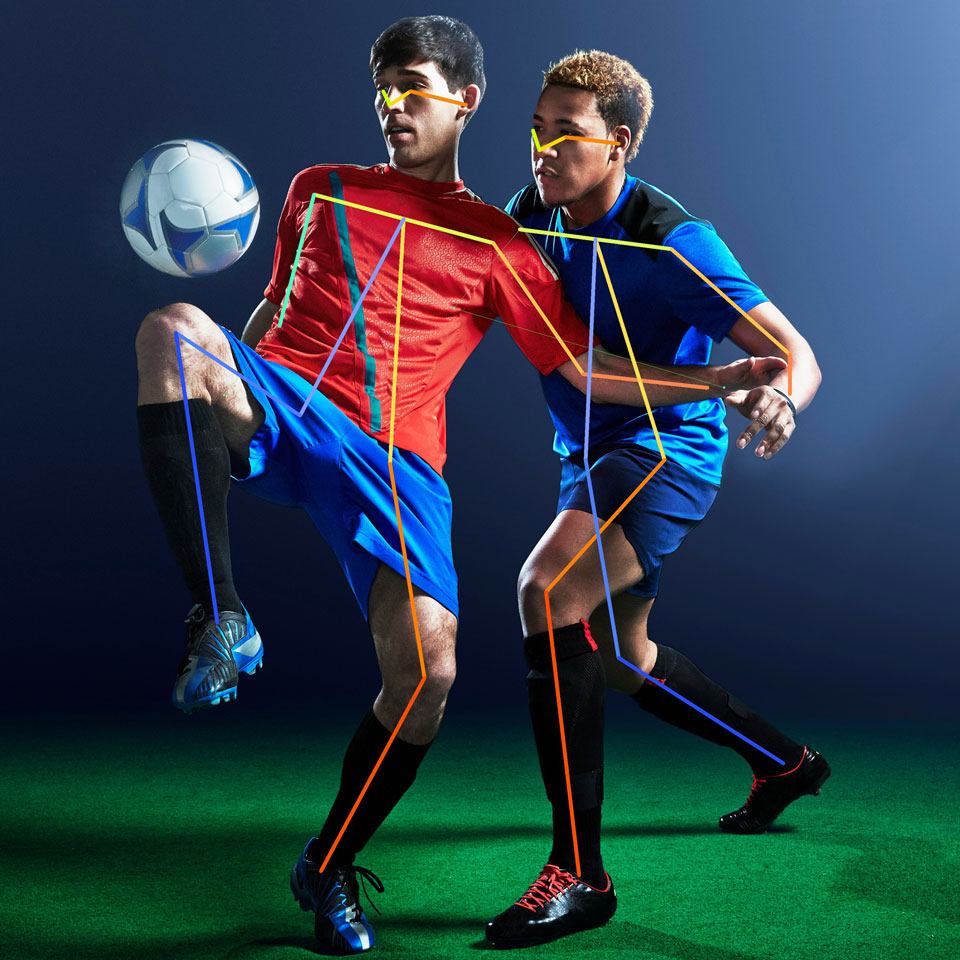
Professor Baihua Li is a Professor of Computer Vision and Machine Learning in the Department of Computer Science at Loughborough University. She is a key member of both the Centre for Sensing and Imaging Science and the Vision, AI, Autonomous and Human Centred Systems Research Group. With over 15 years of research experience, her work spans multiple disciplines including healthcare, sports science, environmental protection, and food manufacturing. Her educational background includes a BSc and MSc in Electronic Engineering from Tianjin University, China (one of China's top 15 universities), followed by a PhD in Computer Science from Aberystwyth University, UK. Prior to joining Loughborough University in 2015, she served as a Lecturer and later Senior Lecturer at Manchester Metropolitan University. Professor Li's research focuses on developing novel AI and machine learning technologies with applications across diverse sectors. Her primary expertise lies in computer vision, pattern recognition, and signal/image processing. She has made significant contributions to human motion tracking and activity recognition, which have been applied in sports performance analysis, healthcare diagnostics, and robotics. Her work emphasizes practical applications that solve real-world problems, from improving football analytics to developing sandwich-making robots. Her research team has developed AI systems for air pollution prediction, upper-limb prosthesis control, autism spectrum condition diagnosis in adults, and retinal disease identification. She has also led projects involving intelligent drone logistics for medical supplies and agricultural robots for precision crop spraying. MSDUK Innovation Challenge Award under category Industry 4.0 in 2019 Made in the Midlands 2023 Food and Drink Award for the Millitec KTP project Professor Li has secured over £1.4 million in external funding in the last three years, with ongoing grants exceeding £1.2 million. She leads a research team comprising 6 Postdoctoral Research Associates and 7+ PhD students. Her projects include AI for sleep breathing disorder diagnosis (£540k), food manufacturing automation (£204k), football action event detection (£359k), air quality monitoring (£470k), and agricultural robotics (£500k). She serves as the Impact Coordinator for her department, emphasizing the transfer of research to industry for societal and economic benefits. She leads an active research team within the Centre for Sensing and Imaging Science and the Vision, AI, Autonomous and Human Centred Systems Research Group. Her laboratory work spans multiple application domains including sports analytics with Statmetrix, food manufacturing automation with Millitec, environmental monitoring through the Triple-Network Air Quality project, and agricultural robotics for precision farming. Her team has developed the i-Gene delta robot that produces 750,000 sandwiches daily for a UK factory, addressing industry skills shortages.
Suchi Rajendran is an Assistant Professor with a joint appointment in the Department of Industrial and Systems Engineering and the Department of Marketing at the University of Missouri, Trulaske College of Business. She is also the Director of Undergraduate Studies in ISE and actively leads research in prescriptive analytics, operations research, and data-driven decision-making across healthcare, transportation, and business systems. Education: PhD in Industrial Engineering, Pennsylvania State University Her research focuses on applying advanced analytics to solve complex real-world problems. Key areas include optimizing healthcare delivery systems, supply chain and logistics (notably blood supply chains and port operations), marketing data analytics, and emerging transportation systems such as air taxis and electric vehicle infrastructure. She leverages predictive and prescriptive artificial intelligence to forecast demand and recommend optimal operational strategies. Her recent work, highlighted in university news up to 2025, demonstrates a strong trend toward interdisciplinary, AI-powered solutions in logistics, sustainability, and public service. She frequently collaborates with industry partners like Case New Holland and Schneider Electric, and has secured funding from agencies such as the Alaska Department of Transportation and the National Science Foundation. Scientific Awards and Recognitions: Richard Wallace Faculty Incentive Grant Bob Bloss Faculty Enhancement Grant Winemiller Excellence Award in Data Analytics NSF CHOT Scholar (Penn State) Service Enterprise Engineering Fellow DAAD-WISE Fellowship (Germany) Lean Six Sigma Black Belt Dr. Rajendran is actively involved in mentoring students, having advised honors-winning graduate and undergraduate researchers. She leads an NSF-funded Research Experiences for Undergraduates (REU) program that brings 10 students annually to Mizzou to work on AI-enabled operations engineering. Her grants support hands-on, interdisciplinary research that prepares the next generation of engineers and data scientists. She is affiliated with cutting-edge research initiatives involving simulation modeling, digital communication platforms, and AI integration in industrial systems. Her lab and team focus on developing practical, scalable solutions for logistics, healthcare, and sustainable transportation, often through collaborative, real-world projects with public and private stakeholders.