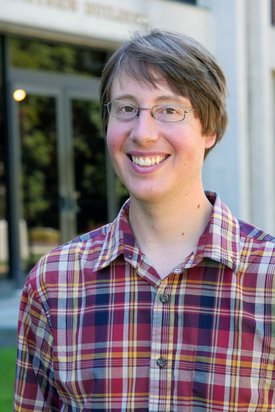
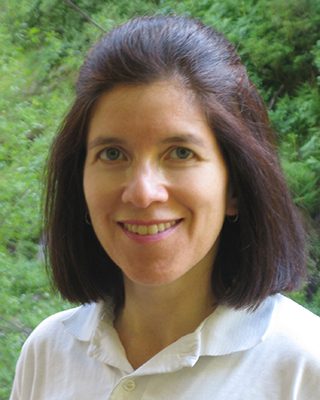
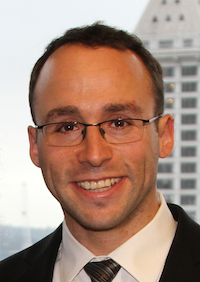
John Laiho is an Associate Professor in the Department of Physics at Syracuse University, part of the College of Arts & Sciences. His research focuses on high energy particle physics and lattice field theory, particularly lattice quantum chromodynamics and quantum gravity applications. He holds a PhD from Princeton University (2004) and has held academic positions at Fermilab, Washington University in St. Louis, and the University of Glasgow before joining Syracuse in 2013. Education: PhD in Physics, Princeton University (2004) BA in Physics and Mathematics, Rhode Island College (1998, summa cum laude) Research Interests: Specializes in lattice field theory techniques for studying quark-flavor physics, beyond the Standard Model physics, and quantum gravity. Recent work includes dynamical dark energy models and improved lattice quantum gravity simulations. Grants & Collaborations: DOE-funded project on theoretical particle physics and cosmology (2013–2025) CUSE grant exploring quantum information and fundamental physics (2018–2023) Teaching Highlights: Teaches advanced mechanics, relativity, and computational physics courses. Supervises independent studies and has taught a range of undergraduate/graduate physics topics.
Steve Collins is an Associate Professor of Mechanical Engineering at Stanford University, with a courtesy appointment in the Department of Bioengineering. His research focuses on wearable robotics, biomechanics, and human-machine interaction. He leads projects on exoskeleton optimization, prosthetic design, and energy-efficient robotic actuators. His work aims to improve mobility for older adults and individuals with mobility impairments through innovative assistive technologies. Research Interests: Collins explores biomechanical principles underlying human movement, exoskeleton torque control strategies, and the design of devices that reduce metabolic costs during walking. His lab develops both hardware (e.g., exoskeleton emulators) and software (e.g., AddBiomechanics modeling tools) to advance assistive technologies. Key Contributions: He pioneered human-in-the-loop optimization methods for exoskeleton control, demonstrated energy-saving designs for ankle exoskeletons, and investigated how exoskeletons can enhance balance and reduce fall risks. His team also developed the 'Tripod' prosthesis emulator and electrostatic clutch systems for energy-efficient actuators. Grants & Collaborations: His work is supported by NSF grants (e.g., NRI: Small grant for exoskeleton control) and industry partnerships. He collaborates with clinicians to translate robotic innovations into clinical applications for amputees and aging populations. Labs & Teams: His research is conducted in Stanford's robotics and biomechanics facilities, focusing on interdisciplinary projects at the intersection of mechanical engineering, bioengineering, and computer science.
Dr. Eleodor Nichita is an Associate Professor in the Department of Energy and Nuclear Engineering at the University of Ontario Institute of Technology (UOIT), part of the Faculty of Engineering and Applied Science. He holds a PhD in Nuclear Engineering from Georgia Institute of Technology (USA) and additional degrees from McMaster University and the University of Bucharest. His research focuses on neutron transport, reactor kinetics, advanced nuclear reactor design, and radionuclide production. He teaches a wide range of courses including reactor physics, neutron detectors, and medical imaging applications of radiation. Education: PhD in Nuclear Engineering, Georgia Institute of Technology, United States MS in Health Physics, Georgia Institute of Technology MS in Medical Physics, McMaster University BS in Engineering Physics, University of Bucharest, Romania Research interests emphasize mathematical modeling for nuclear systems, neutronic design of advanced reactors, and production of medical isotopes like Mo-99. His work addresses reactor safety, lattice homogenization techniques, and SCWR (supercritical water-cooled reactor) dynamics. Over 50 peer-reviewed papers and book chapters reflect his contributions to CANDU reactor analysis, PHWR fuel bundle design, and educational innovations in nuclear engineering. Advising and grants: While specific student names are not listed, his extensive teaching portfolio (including graduate-level reactor physics courses) indicates active mentoring. Research grants likely support his work on reactor kinetics and SCWR technology. Lab affiliations: His research is conducted through the Energy Systems and Nuclear Science Research Centre (ERC) at UOIT, focusing on numerical methods and experimental validation for reactor analysis.
Colin Cooper is a Professor of Cancer Genetics at the Norwich Medical School, University of East Anglia. He is also a member of the Metabolic Health and Cancer Studies research groups. His work focuses on genomic evolution, tumor microbiome dynamics, and biomarker development for prostate cancer and musculoskeletal health. Cooper’s recent research explores the interplay between cancer genetics and microbial communities, emphasizing their role in prognosis and treatment outcomes. He investigates clonal evolution in tumors, mutational signatures, and non-invasive diagnostic tools like urinary extracellular vesicles. His collaborations span genomics, microbiology, and clinical applications. 2025: Causes of evolutionary divergence in prostate cancer (Genomics, Precision Medicine) 2024: Applications of urinary extracellular vesicles... (Biomarker Development, Liquid Biopsy) 2023: Caution regarding pan-cancer microbial structure (Methodological Considerations, Microbiome Analysis) In 2022, Cooper received the European Urology Oncology SoMe Award for his contributions. His work is frequently cited and has been featured in media outlets globally, highlighting his impact on cancer and aging research.
Craig A. Bond is a Professor at the RAND School of Public Policy, a Senior Economist at RAND Corporation, and Editor-in-Chief of the RAND Journal of Economics. His work bridges military resource allocation and environmental economics through advanced econometric modeling. Current Roles: Research QA Manager (RAND Arroyo Center), Senior Economist Methodological Expertise: Stochastic dynamic programming, discrete choice modeling, non-market valuation Key Research Themes: Military readiness, coastal resilience, green infrastructure, post-disaster recovery Research Interests: Craig Bond specializes in natural resource economics , environmental economics , and applied welfare economics , with recent work focusing on: Risk modeling for defense acquisitions and personnel strategy Resilience dividend valuation frameworks Green infrastructure cost-benefit analysis Climate adaptation in coastal communities Publication Trends: His 15 most recent works (2017-2025) show interdisciplinary focus across: Military Economics: Recruiting optimization, training requirements, economic multipliers Environmental Policy: Coastal land loss, invasive species impact, water management Resilience Modeling: Disaster recovery frameworks, adaptive systems
Professor Patrick Diamond is a leading academic in Public Policy at Queen Mary University of London's School of Politics and International Relations. He holds a BA, MPhil from Cambridge, and a PhD from Sheffield. His work focuses on UK productivity, regional inequality, governance structures, and social democratic ideologies. He has held senior roles in UK government, including Head of Policy Planning in Downing Street, and has been a Local Councillor in Southwark. Currently, he chairs Policy Network, advises international organizations, and serves on boards of think-tanks and trusts. His research explores policy advisory systems, Brexit impacts, and Labour Party evolution. He has authored over 20 books and numerous articles, including seminal works on British political history and governance reform. He has secured significant research funding from ESRC, Research England, and others. Educational Background: BA, MPhil (Cambridge); PhD (Sheffield). Research Interests: UK productivity, regional inequality, comparative governance, policy advisory systems, Northern Ireland governance, social democracy, and British Labour Party dynamics. He has led projects on English governance post-Brexit, well-being mapping in London, and economic change in East London. Awards and Grants: ESRC Productivity Institute grant (2022-25), Research England Impact Fund (2023-24), multiple ESRC Impact Acceleration Awards. Fellowships include Visiting Fellow at Kellogg College (Oxford), Policy Fellow at the Ministry of Justice Strategy Unit, and Academy of Social Sciences membership. Students and Supervision: Supervised PhD candidates including Matthew Lloyd, Fathima Sulaiman, and Karl Pike, focusing on British politics, governance, and policy analysis. Active in mentoring doctoral research on political leadership and spatial policy. Public Engagement: Advises international bodies like the Latin American Development Bank and Humana International. Serves on boards of Dartington Service Design Lab and Prisoners’ Education Trust. Regularly contributes to media outlets including BBC Radio 4, Guardian, and Financial Times.
Dr. Stefanie Jannedy is a senior researcher at the Leibniz-Zentrum Allgemeine Sprachwissenschaft (ZAS) in Berlin, where she has been employed since 2008. She is a Principal Investigator of the DFG project C02 "Variation in Situated Interaction" within the Collaborative Research Center 1412 (CRC 1412) on "Register: Language-Users' Knowledge of Situational-Functional Variation." As a member of the Laboratory Phonology Group, her work focuses on sociophonetic aspects of language variation. Dr. Jannedy's research centers on language register, phonetic variation, and sociolinguistic patterns in speech. Her work particularly examines how situational contexts influence phonetic detail in speech production, with a focus on intra-individual variation. She has developed innovative experimental methods, including smartphone applications like "Plapper" for self-recording speech data in controlled conditions. Her research spans formal and informal speech contexts, examining speech rate, vowel dispersion, filler particles, and other phonetic features that vary systematically across different communicative situations. Analysis of her publication record shows a strong focus on register variation, particularly how speakers systematically adjust their speech across different social contexts. Her work combines experimental methods with corpus-based approaches to investigate fine phonetic detail in relation to situational factors. Recent publications demonstrate increasing interdisciplinary connections between phonetics, sociolinguistics, and cognitive science in understanding register knowledge. Dr. Jannedy has advised several students including Schüppenhauer, Gediminas, Witt, Johannes, and Hong, Nhung-Le. Her research is primarily supported through the CRC 1412 framework, which represents a major collaborative effort in register studies. Her laboratory work involves experimental setups that simulate tele-conference interactions to systematically manipulate social contexts while measuring subtle phonetic differences. This methodological innovation allows for controlled examination of register variation that would be difficult to capture in naturalistic settings.
Prof. Fatih Terzi is a faculty member in the Department of Urban and Regional Planning at Istanbul Technical University's Faculty of Architecture. His research focuses on sustainable urban development, resilience, ecology, GIS applications, and smart cities. He has held visiting researcher positions at Clemson University (USA), University College London, and Technical University Berlin. He has led projects supported by EU, TÜBİTAK, and others, addressing ecological planning, risk reduction, and urban regeneration. His work bridges academic research with practical urban planning, including projects with municipalities and the Ministry of Environment. He has received multiple awards for research and design, including the Best Paper Award (2025) and TÜBİTAK recognitions. Education: PhD in Urban and Regional Planning from Istanbul Technical University (2010), MSc in Urban Planning (2004), BSc in Urban and Regional Planning from Yıldız Technical University (2000). Research interests include spatial strategic planning, ecological cities, and climate-sensitive urban design. He uses urban modeling and GIS to address sustainability challenges. His recent projects include Istanbul's flood risk analysis, green space strategies, and sustainable city planning in Kayseri and Malatya. Notable awards include the 2024 TÜBİTAK award for urban resilience projects and the 2023 Istanbul Technical University Academic Performance Award. He has also been recognized for design competitions, including the İzmir Ecological Living Area Project (2021) and the 2017 Balkan Architectural Biennale Urbanism Grand Prix. Prof. Terzi holds administrative roles at Istanbul Technical University, including Merkez Danışma Kurulu Üyeliği (2023–present). He oversees academic projects on urban resilience, smart cities, and ecological planning, contributing to both national and international initiatives.
Jim Rogers is an Associate Professor and Chair of PhD Studies at the School of Communications, Dublin City University. His research focuses on media and cultural industries, music, and copyright, with an emphasis on the digital transformation of the music industry, global strategies, and policy implications. He has authored and edited multiple books and articles on topics such as the evolution of performing rights organizations, the audio-visual nexus, and Ireland's music industry success. Rogers has presented at international conferences across Europe, Africa, Asia, and the Americas, engaging with issues like intellectual property, creative destruction, and cultural policy. His work bridges academic theory and industry practice, addressing the intersection of technology, law, and cultural production.
Prof. Dr. Martin Johns serves as Chair of Application Security at the Institute for Application Security within the Carl Friedrich Gauss Faculty at Technical University Braunschweig. He joined TU Braunschweig after working as Research Expert at SAP Security Research, where he shaped security strategy and led software security teams. Prior to SAP, he worked as software engineer in Germany at companies like TC Trustcenter and Infoseek Germany. Academic qualifications include a PhD in Computer Science (University of Passau, 2009) and a Diploma in Computer Science (University of Hamburg, 2003). His research focuses on web security and software security , particularly secure programming , vulnerability detection , and attack mitigation strategies. Recent publications cover topics like GDPR compliance frameworks , WebAssembly security , federated learning privacy , and server-side request forgery (SSRF) defenses. His work appears in top conferences including IEEE S&P, CCS, WWW, and ACM CODASPY.
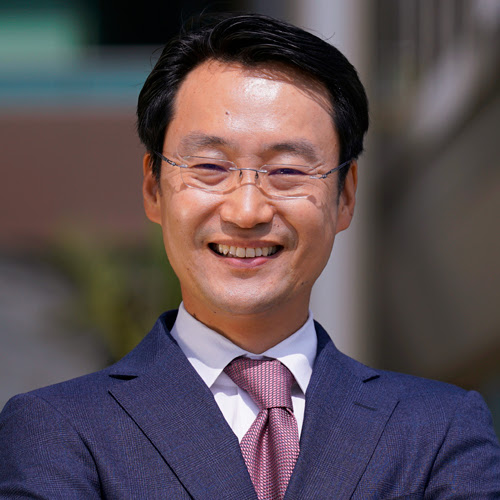
Hyoduk Shin holds the Jimmy Anklesaria Presidential Chair in Innovation and Entrepreneurship as a Professor of Innovation, Information Technology, and Operations at UC San Diego's Rady School of Management. His research bridges operations management, information systems, and strategic decision-making across multiple industries. His educational background includes: Ph.D. from Stanford University M.S. in Statistics from the University of Chicago M.S. in Management Engineering from Korea Advanced Institute of Science and Technology B.S. in Industrial Engineering from Korea Advanced Institute of Science and Technology Professor Shin's research explores critical intersections of supply chain transparency , information economics , and innovation dynamics . He investigates how forecast sharing impacts supply chain coordination, how cybersecurity investments affect open source ecosystems, and how operational constraints shape competitive strategies. His work in pharmaceutical supply chains addresses drug shortages through mandated reporting systems, while his entertainment industry research analyzes release strategies amid digital disruption. This multidisciplinary approach reveals fundamental principles about information value in complex business environments. His publication portfolio (2013-2021) demonstrates consistent contributions to top-tier journals including Management Science , Operations Research , and Information Systems Research , with emerging emphasis on healthcare operations and cybersecurity. Key thematic clusters include supply chain transparency mechanisms, open source software economics, and innovation in constrained environments. His recognition includes: Best paper award at Conference on Information Systems and Technology (2012) Management Science Meritorious Service Award (2011) Lieberman Fellowship from Stanford University (2006-2007) Chairs’ Core Course Teaching Award at Kellogg School of Management While specific grant details aren't documented in available materials, Shin's research program demonstrates sustained external validation through publication in premier outlets and industry-relevant findings. His prior position as Assistant Professor at Northwestern University's Kellogg School indicates progressive academic leadership, and his current named professorship reflects institutional recognition of research impact. The absence of student listings suggests primary focus on independent or collaborative research rather than doctoral supervision.
Dr. Tommaso Gabrieli is an Associate Professor in Real Estate at the Bartlett School of Planning, University College London (UCL), where he has been employed since September 2015. His academic career spans multiple institutions including the University of Reading, City University London, University of Warwick, and the Catholic University of Milan. His educational background includes: PhD in Economics from the University of Warwick (2009) MSc in Economics from the London School of Economics and Political Science (2003) Fellowship of the Higher Education Academy from the University of Reading (2013) As a theoretical economist trained in the ambrosian tradition of social welfare, Gabrieli's research focuses on the economic analysis of urban policy issues. His expertise encompasses economic modeling of real estate markets, financial viability of urban projects, multi-dimensional value measurements, and value-capture mechanisms. He has developed novel interdisciplinary methods bridging urban planning and design with economics, making him one of few economists actively collaborating with urban planning scholars in the UK. His work addresses Sustainable Development Goals including No Poverty, Good Health, Decent Work, Reduced Inequalities, Sustainable Cities, and Climate Action. His recent publications demonstrate a strong focus on urban design governance, value capture mechanisms, and the interface between economic theory and urban planning practice. The research spans theoretical explorations of post-growth planning and practical applications in land value recovery, particularly examining implications for housing affordability, wealth distribution, and community wellbeing in both urban and rural contexts. His work often integrates behavioral economics with spatial planning considerations. Professional recognition includes: Fellow of the Higher Education Academy Gabrieli has extensive experience supervising PhD and MSc dissertations across multiple institutions. His teaching portfolio includes Real Estate Appraisal and Valuation at UCL, where he leads relevant modules for both undergraduate and graduate programs. He has contributed to significant research projects including 'Street Appeal' commissioned by Transport for London and the Horizon 2020-funded 'UrbanMaestro' project worth 1 million Euros. His research impact has been formally recognized by Transport for London. Currently, he leads the 'Future Urban Growth Lab' project, funded by UCL Knowledge Exchange and Innovation Funding, in partnership with the Royal Town Planning Institute and Politecnico of Turin. This project aims to operationalize an urban growth model prototype for use by local authorities in planning future city development, bridging academic research with practical planning applications.
Cecilia R. Aragon is a Professor in the Department of Human Centered Design & Engineering at the University of Washington, where she also serves as an Adjunct Professor in Computer Science & Engineering, Electrical and Computer Engineering, and the Information School. She is additionally a Senior Data Science Fellow at the eScience Institute. Aragon directs the Human-Centered Data Science Lab and has made significant contributions at the intersection of human-computer interaction and data science. Her research interests focus on human-centered data science, human-centered artificial intelligence, human-centered machine learning, human-computer interaction (HCI), computer-supported cooperative work (CSCW), visual analytics, aviation and astronautics sociotechnical systems, and emotion in informal text communication. Aragon's work bridges technical and social aspects of data science, particularly examining how humans interact with and gain insight from large datasets through both quantitative and qualitative methods. Aragon's recent publications demonstrate a strong focus on understanding online communities, sentiment analysis, distributed mentoring systems, and the ethical implications of AI. Her work spans multiple disciplines including social computing, data visualization, and astrophysics data analysis, showing her interdisciplinary approach to human-centered data science. Presidential Early Career Award for Scientists and Engineers (PECASE) 2008 Fulbright Fellowship 2017-18 HCDE Faculty Innovator in Research Award, University of Washington, 2015 Distinguished Alumni Award, Computer Science, University of California, Berkeley, 2013 Top 25 Women of the Year, Hispanic Business Magazine, 2009 Aragon has secured over $28 million in research funding from organizations including the National Science Foundation, National Institute of Standards and Technology, Department of Energy, Gordon and Betty Moore Foundation, Alfred P. Sloan Foundation, Washington Research Foundation, and industry partners like Microsoft and Intel. Her educational background includes a Ph.D. in Computer Science from UC Berkeley (2004), an M.S. in Computer Science from UC Berkeley, and a B.S. with Honors in Mathematics from Caltech. She leads the Human-Centered Data Science Lab and is affiliated with the eScience Institute, the Nearby Supernova Factory, and various research groups focused on data-intensive scientific collaborations. Her work on collaborative visual analytics systems like Sunfall has had significant impact in both academic and applied settings.
Aleksandr (Sasha) Aravkin is Associate Professor in the Department of Applied Mathematics and Adjunct Associate Professor of Health Metrics Sciences, Mathematics, and Statistics at the University of Washington. He serves as Director of Mathematical Sciences at the Institute for Health Metrics and Evaluation (IHME), where he leads the Mathematical Sciences and Computational Algorithms team and contributes to strategic direction for applying mathematical sciences to analytic challenges. Dr. Aravkin earned his PhD in Mathematics (Optimization) and MS in Statistics from the University of Washington in 2010, following a BSc in Mathematics and Computer Science in 2004. His educational background forms the foundation for his interdisciplinary research approach. His research expertise spans large scale optimization, machine learning, data science, convex and variational analysis, algorithm design, robust statistics, inverse problems, and uncertainty quantification . These methodologies are applied across diverse domains including health metrics, computational medicine, tracking and navigation, seismic imaging, computational finance, and neuroscience. Dr. Aravkin has pioneered approaches for fusing physics-based and data-driven models, enabling innovative solutions to complex problems. Dr. Aravkin's publication record demonstrates a strong focus on health metrics and Global Burden of Disease studies, with recent work emphasizing meta-analytic approaches for risk-outcome relationships. His research spans epidemiological modeling, health effects of various exposures, and forecasting disease burden across populations. The publications reveal a consistent pattern of high-impact work in top journals including The Lancet and Nature Medicine, often addressing critical public health questions through rigorous statistical and mathematical frameworks. At IHME, Dr. Aravkin has led significant projects including the Burden of Proof Studies (2019-2024) which analyzed 153 risk-outcome pairs, and COVID-19 Modeling (2020-2023) where his team developed forecasting models and excess mortality estimation methods. He has also been instrumental in developing the Evidence Score model, requiring novel algorithmic approaches. His work bridges theoretical mathematical sciences with practical applications to improve global health policy and practice.
Prof. Felix Balzer is a Professor for Medical Data Science and Chief Medical Information Officer (CMIO) at Charité - University Medicine Berlin . He serves as Director of the Institute of Medical Informatics, leading digitalization efforts for patient care and overseeing implementation of the hospital's electronic medical record (EMR) systems. Medical Data Science professorship (2021) Director of Institute of Medical Informatics Acting Chief Information Officer (2024-2025) Deputy Chief Medical Officer for Clinical Digitalization (2025) His research focuses on: Digital healthcare transformation Machine learning in critical care Alarm fatigue mitigation Interoperability standards (FHIR, OMOP) Electronic health records (EHR) optimization Patient monitoring systems The 2025-2026 publications reveal expertise in ICU data analysis, predictive modeling for postoperative delirium, and pandemic response technology. His work bridges clinical practice with technical implementation through: Interdisciplinary teams Multi-center trials Real-time clinical data architectures Human factors in healthcare AI