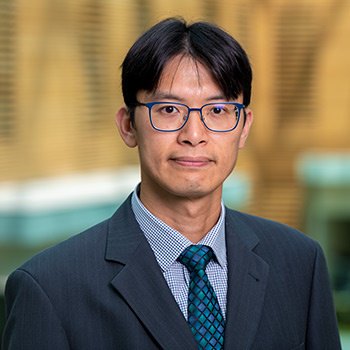
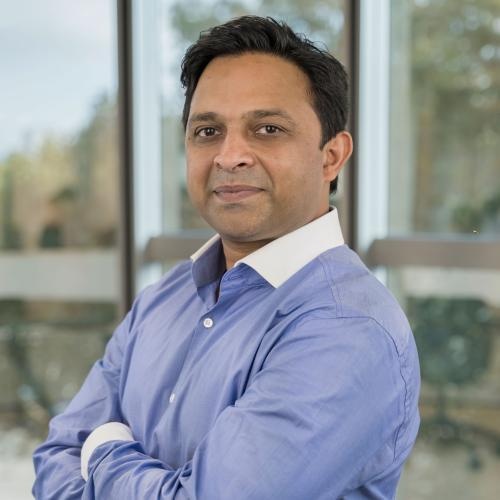
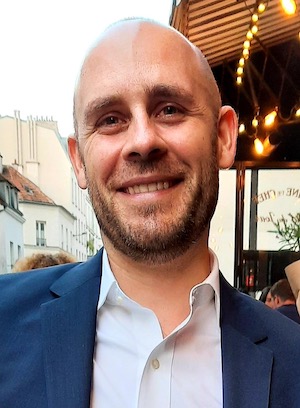
Wing Hong Chan is a Professor at the Lazaridis School of Business and Economics, Wilfrid Laurier University. His research focuses on econometrics, derivatives, risk management, and asset pricing models. He can be contacted at wchan@wlu.ca and is currently on sabbatical. His work addresses financial market dynamics, volatility modeling, and institutional policy impacts. Research interests span cryptocurrency hedging strategies, corporate credit risk in emerging markets, gold market structural breaks, and commodity futures pricing. He has investigated policy effects of price limits in China’s stock markets and the role of liquidity in commodity markets. His contributions include econometric analyses of jump risk in derivatives and long-memory processes in diamond and gold markets. Recent articles highlight Bitcoin’s hedging potential, volatility spillovers in commodity markets, and competing risks in currency regime shifts. Chan’s work bridges theoretical econometric frameworks with applied financial market issues, emphasizing practical implications for risk management and policy design. With no listed scientific awards, his focus remains on advancing quantitative methods for financial market analysis. He does not currently supervise students but maintains an active publication record. His office is located in LH3082.
Marie-charlotte Guetlein is an Assistant Professor in the Department of Management & Technology, holding a PhD from ETH Zurich and a Master's from Sciences Po Paris. Her research focuses on analyzing individual and household decision-making processes related to technology adoption and energy efficiency policies. Key areas include behavioral biases influencing energy-efficient appliance choices, citizen investments in renewable energy communities, and the design of equitable subsidy mechanisms. Education: PhD from ETH Zurich Master's degree from Sciences Po Paris Research Interests: Household preferences for energy-efficient technologies Policy acceptability and behavioral nudges Cross-country comparisons in energy behavior Discrete choice experiments applied to sustainability challenges Her recent work highlights the impact of energy literacy, income levels, and envy dynamics on policy effectiveness. She has collaborated on multi-country studies investigating factors influencing citizen engagement in renewable energy initiatives. Advising & Grants: No advising or grant information explicitly provided in the source text. Labs/Teams: No lab or team affiliations mentioned in the available materials.
Kaigang Li is an Adjunct Assistant Professor at Yale School of Medicine (Yale University), specializing in public health and traffic safety research. His work focuses on adolescent and young adult behaviors related to impaired driving, alcohol-related risks, and preventive strategies. He collaborates with interdisciplinary teams to model complex behavioral systems and evaluate intervention outcomes. Research interests include traffic safety, substance abuse prevention, and community health initiatives. Notable projects involve system dynamics modeling of impaired driving trends and mixed-methods assessments of social-environmental factors influencing risky driving behaviors. Dr. Li has contributed to studies on parental monitoring's protective effects against recurrent drunk driving and feasibility trials of community gardening health impacts. Recent publications (2024-2025) emphasize systems approaches to address alcohol-impaired driving fatalities and the role of social contexts in youth decision-making. His work is supported by collaborations with institutions like the DrivSim research group, focusing on translational traffic safety solutions. Labs/Teams: Active contributor to the DrivSim initiative, applying systems science to traffic safety challenges.
Gabriele Tondl is an Associate Professor in the Department of Economics at WU Vienna University of Economics and Business. His research focuses on international economics, European integration, regional economics, and applied econometrics. He has held academic roles since at least 1997, contributing to over 60 publications and leading multiple research projects. Research interests include international trade dynamics, foreign direct investment, regional growth patterns, and the impact of global factors on inflation and monetary policy. He has explored topics such as EU-Latin America trade relations, macroeconomic imbalances in the EU, and the effects of free trade agreements on environmental protection. Awards: Leopold Kuntschak Preis (2002), August Lösch Preis (2001), Erwin Schrödinger Stipendium (1997) Teaching: Courses on international trade policy, international economics, and development economics. Leadership: Directed projects such as 'Inflation Targets and Output Growth over the Business Cycle' and 'Macroeconomic Imbalances and Business Cycle Convergence in the EU.' His work frequently bridges theoretical frameworks with policy analysis, contributing to both academic discourse and practical economic strategies.
Konark Saxena is an Associate Professor of Finance at ESCP Business School, based in Paris. He specializes in investment strategies, sustainable finance, and the effects of monetary policy on financial markets. His interdisciplinary work integrates economics, finance, and environmental science to address climate change and resource allocation challenges. Beyond academia, he has industry experience with UBS Asset Management and contributes to practitioner journals like Journal of Portfolio Management . Education Ph.D. in Finance, University of California, Los Angeles (UCLA), 2011 Post Graduate Programme in Management, Indian School of Business (ISB), 2006 B.Tech in Computer Science, Indian Institute of Technology (IIT), 2002 Research Focus Dr. Saxena's research explores portfolio choice, asset pricing, and the intersection of climate change with financial decision-making. He investigates how climate policies influence investment strategies and develops frameworks for sustainable finance. His work also addresses macroeconomic factors, interest rate dynamics, and risk management in multi-asset portfolios. Grants & Industry Collaboration His industry partnerships include UBS Asset Management (factor portfolios, carbon-aware investing) and Barclays (trending academic research). His findings have been featured in Forbes , ABC News, and Nature Communications . Labs & Teams He leads research initiatives on sustainable investment strategies and climate finance at ESCP, collaborating with global institutions to promote environmental and economic resilience.
Andreas Neuhierl is an Assistant Professor of Finance at the Olin Business School, Washington University in St. Louis. His research focuses on asset pricing, financial econometrics, machine learning, macroeconomics, and commodity markets. He explores the intersection of advanced analytical methods and financial market dynamics, with a particular interest in forecasting, data integrity, and policy impacts. His work bridges theoretical frameworks with empirical applications, addressing topics like the influence of accounting rules on bond markets, machine learning uncertainties in asset pricing models, and the implications of missing data in financial studies. Recent projects examine noise in economic forecasts, segmentation premia in asset markets, and deep learning techniques for stock index predictions. Neuhierl has contributed to understanding FOMC meeting effects on momentum strategies, commodity market financialization, and the robustness of arbitrage portfolios. His research often critiques data snooping biases and emphasizes methodological rigor in empirical finance.
Isabelle Coll serves as a Professor at the University of Paris Est Creteil and conducts research at the Laboratoire Interuniversitaire des Systèmes Atmosphériques (LISA). She is integral to the EUR-LIVE consortium focused on life trajectories and vulnerability, contributing to master's and doctoral training programs in sustainable urban development. Her research centers on three-dimensional atmospheric pollutant modeling, with emphasis on urban expansion, economic factors, traffic networks, and collective practices. She develops integrated modeling chains to simulate socio-environmental inequalities in pollution exposure and air quality impacts, maintaining operational collaborations with public policy researchers and environmental health specialists for sustainable city initiatives. Recent publications (2019-2021) reveal consistent work on urban emission systems (OLYMPUS model), primary pollution exposure in Greater Paris, and climate-driven air quality shifts in southern France/Europe. This output demonstrates cross-disciplinary traction in Atmospheric Environment and Atmospheric Chemistry and Physics journals. Scientific awards were not referenced in the source material. No specific students or grant details appear in the text, though her EUR-LIVE role implies graduate supervision in vulnerability-focused programs. Her research requires institutional funding through LISA and consortium partnerships. She operates within LISA's atmospheric systems framework and the EUR-LIVE governance structure, with additional involvement in SERIES Remote Teachings' 'Phenomenology of air pollution' educational unit targeting urban air quality fundamentals.
Sean P. MacDonald is a Professor of Economics in the Department of Social Science at the School of Arts & Sciences, City University of New York, City Tech. She holds a Ph.D. and M.A. in Economics from The New School for Social Research, a Certificate in Labor Studies from Cornell University, and a B.A. in Sociology from the University of Maryland. She has served as the Economics discipline coordinator since 2010 and is actively involved in institutional governance through committees on interdisciplinary studies, general education, and faculty appointments. Ph.D. in Economics, The New School for Social Research M.A. in Economics, The New School for Social Research Certificate in Labor Studies, Cornell University B.A. in Sociology, University of Maryland Her research spans environmental economics, housing and mortgage markets, income inequality, and public policy, with a strong emphasis on interdisciplinary pedagogy. She explores innovative teaching methods such as place-based and virtual learning, aiming to connect urban education with real-world economic and environmental challenges. Her work integrates data visualization and collaborative teaching models to enhance student engagement and critical thinking. The 15 most recent publications reflect a sustained focus on economic crises, housing policy, and educational innovation. They span journal articles, book chapters, and conference proceedings, highlighting her dual commitment to economic research and pedagogical advancement. Key themes include the foreclosure crisis, mortgage modification effectiveness, intertemporal poverty, and the integration of interdisciplinary methods in STEM and urban education. She has been recognized through competitive fellowships, including: NEH Grant Program Fellow, Making Connections: Engaging the Humanities at a College of Technology Fourth-Year Fellow, Title V Grant Program, A Living Laboratory: Revitalizing General Education for a 21st Century College of Technology Dr. MacDonald has advised and collaborated on grant-funded initiatives that aim to revitalize general education and promote interdisciplinary learning. She has served on key institutional committees and professional organizations, including the New York State Economic Association, where she has served on the Board of Directors since 2012. Her teaching includes Microeconomics, Macroeconomics, Environmental Economics, and Visualizing Economic Data, reflecting both her research and educational priorities. She has co-edited two books on interdisciplinary place-based learning and has contributed extensively to academic discourse through publications and conference leadership. She is actively involved in academic communities, including the Association for the Study of Higher Education and the New York State Economic Association. Her work bridges economic analysis with educational innovation, particularly in urban technical colleges, aiming to make economics more accessible, relevant, and impactful for diverse student populations.
Ganesh R. Naik is an Adjunct Professor at the College of Medicine and Public Health, Flinders University, and a Full Member of the Flinders Health and Medical Research Institute. He is ranked in the top 2% of researchers worldwide in Biomedical Engineering (Stanford University). His expertise lies in biomedical signal processing, algorithm design, and health technologies, with significant contributions to sleep research and global disease burden studies. PhD in Electronics Engineering (Biomedical Engineering, Data Science, Signal Processing), RMIT University, 2009 Dr. Naik's research focuses on advanced signal processing techniques such as independent component analysis, blind source separation, and machine learning applications in biomedical data. His work spans areas including electromyography, sleep disorders, and large-scale epidemiological modeling through the Global Burden of Disease (GBD) Study. The recent publications highlight a strong interdisciplinary trend, combining biomedical engineering with public health and artificial intelligence. Key themes include sleep apnea and diabetes, neurological disorders like epilepsy and Parkinson’s, wearable sensors, and AI-driven cybersecurity. His editorial leadership in journals like IEEE Access and Frontiers in Neurorobotics underscores his influence in the academic community. Scientific Awards and Honors: Bridge and BridgeTech Industry Fellowship (2023) Chancellor’s Postdoctoral Research Fellowship, UTS (2013–2016) ISSI Overseas Fellowship, Skills Victoria (2010) IEEE Victoria Travel Scholarship (2008) Baden-Württemberg PhD Scholarship, Germany (2006–2007) Dr. Naik has supervised numerous research students and led major projects, including a multimillion-dollar CRC project on sleep at Western Sydney University. He has edited 12 books and authored over 150 peer-reviewed publications, cited over 5,000 times. His current research involves wearable technologies, digital twins for health, and AI-based predictive models for chronic diseases. He is actively involved in editorial roles and international collaborations, contributing to advancements in biomedical engineering and public health policy. His lab work emphasizes real-world applications of signal processing in clinical and community settings.
George Zangaro is a Professor at the Johns Hopkins School of Nursing , serving as the Associate Director for the DNP Executive Track . With extensive experience in healthcare leadership, workforce analysis, and academic nursing education, he bridges clinical expertise with quantitative research methodologies. Former Dean at Walden University’s College of Nursing Past Chief Policy and Scientific Officer at AACN Former Director of the National Center for Health Workforce Analysis (HRSA) His research focuses on nursing workforce dynamics , particularly burnout and wellness among faculty, and strategic educational program development. He specializes in systematic reviews, meta-analysis, and psychometric evaluation. Recent publications examine burnout trends , nursing faculty wellness , and DNP program outcomes . His work informs health policy and workforce planning. Scientific Awards: Fellow of the American Academy of Nursing (FAAN) Dr. Zangaro has contributed to funded research studies as principal investigator, associate investigator, and consultant. He retired from the U.S. Navy after 25 years of active service in 2007, integrating military healthcare insights into his academic work.
Erlend Alfnes is an Associate Professor at the Department of Industrial Technology , UiT The Arctic University of Norway, based in Narvik. His work focuses on industrial technology and production management within engineer-to-order (ETO) manufacturing environments. Research Themes : Industry 4.0 integration, Lean manufacturing, sustainable shipbuilding, supply chain uncertainty mitigation, hydrogen transition in maritime, and digitalized logistics frameworks. Methodologies : Multiple case studies, systematic literature reviews, framework development, and empirical investigations into ETO operations. Key Collaborations : Regularly co-authors with researchers like Marco Giovanni Semini, Fabio Sgarbossa, and Jonathan Gosling on projects such as Industry 5.0 enabled Smart Logistics . Publication Trends : Recent works emphasize Industry 4.0's impact on Lean barriers (2025), circular economy practices in ETO shipbuilding (2025), operator 4.0 frameworks (2024), and hydrogen transition in maritime value chains (2024). Earlier contributions explore digitalized yard logistics (2023), spare parts inventory guidelines (2023), and tactical delivery date practices (2022). Technical Expertise : Advanced knowledge in CONWIP systems, Kanban optimization, and spare parts classification. His work bridges theoretical models with practical applications in shipbuilding and engineer-to-order production.
Shih-Kuei Lin is a Professor in the Department of Money and Banking at National Chengchi University's College of Commerce, where he has served since 2010, advancing from Associate Professor to full Professor. He has held significant leadership roles including Department Chair from 2016-2020 and currently serves as a full-time faculty member with ongoing research projects through 2027. His educational background includes a Ph.D. in Statistics from National Chengchi University (2000-2004), a Master's in Statistics from the same institution (1995-1997), and a Bachelor's in Mathematics from National Cheng Kung University (1990-1994). His research expertise spans Financial Engineering, Derivatives, Financial Econometrics, Actuarial Finance, and has recently expanded to include Financial Big Data, Green Finance, Climate Finance, and Banking Management Strategy. Professor Lin's work demonstrates a sophisticated approach to financial modeling, particularly in derivatives pricing under complex market conditions including jump diffusion models, regime-switching frameworks, and stochastic volatility environments. His recent publications show an increasing focus on ESG integration, climate finance applications, and machine learning approaches to portfolio management. His research has been consistently published in top-tier finance journals including the Journal of Banking and Finance, Review of Quantitative Finance and Accounting, and International Review of Financial Analysis. His research portfolio includes over 40 publications since 2003, with a particularly productive period from 2019-2024. His work shows evolution from traditional financial engineering topics toward contemporary issues including climate risk, ESG integration, and machine learning applications in finance. National Science Council Research Award (multiple years: 108, 109, 110, 111, 112, 113) Senior Excellent Teacher (20 years) from National Chengchi University Senior Excellent Teacher (10 years) from National Chengchi University Professor Lin has served as Principal Investigator for numerous research projects funded by Taiwan's National Science and Technology Council, with current projects extending through 2027 focusing on derivatives pricing and risk management. He has also collaborated with various financial institutions including Taiwan Business Bank, Cathay Financial Holdings, and Standard Chartered Bank on applied research projects. His departmental leadership as Chair of the Department of Money and Banking from 2016-2020 demonstrates his commitment to academic administration alongside his research activities.
Dr. 羅秉政 is currently serving as an Assistant Professor at the Department of Money and Banking , National Chengchi University College of Commerce , where he has been employed since February 2022. His research focuses on quantitative finance and financial markets, with a particular emphasis on options hedging, investment strategies, and market forecasting. Education: Ph.D. in International Finance from National Taiwan University's College of Management. His work integrates statistical methodologies with financial applications, including projects on stochastic volatility modeling, multifactor investment performance, and predictive analytics for stock markets. He has received grants from the National Science and Technology Council (MOST) for studies involving: Recommender Systems in Securities Analysis Accounting Knowledge in Machine Learning Applications Asymmetric Prediction Error Costs in Asset Pricing
Prof. Dr. Canan TANRISEVER is an accomplished Associate Professor at Kastamonu University's Faculty of Tourism, Department of Tourism Guidance, where she also serves as Vice Dean. With a strong academic background including a PhD in Landscape Architecture from Ankara University, she has established herself as a leading scholar in tourism studies with particular expertise in cultural routes, sustainable tourism, and heritage tourism. Her research interests span Tourism Guidance, Sustainable Tourism, Tourism Management, Cultural Routes, Heritage Tourism, Religious Tourism, and Alternative Tourism forms. She has made significant contributions to understanding Sinan's architectural routes, religious tourism destinations, and the development of alternative tourism products. Her scholarly work demonstrates a consistent focus on both theoretical frameworks and practical applications in tourism development. TANRISEVER's publication record shows remarkable productivity with over 161 publications, including numerous articles in SSCI-indexed journals, book chapters, and edited volumes. Her recent work explores emerging tourism trends, climate change impacts, women's travel experiences, and the development of cultural routes. She has successfully led multiple research projects funded by TÜBİTAK and ERASMUS+ programs. 20+ Master's and Doctoral students supervised 11 research projects led or participated in 1 intellectual property registered Multiple editorial roles for tourism journals Her academic leadership extends beyond research to include significant administrative responsibilities as Vice Dean and Department Head. She has developed innovative curricula focusing on cultural routes education for tourist guides and has contributed extensively to tourism education in Turkey through her teaching of courses ranging from Tourism Geography to Cultural Tourism and World Heritage.
Dr. Sepehr Alizadehsalehi is an adjunct lecturer and researcher at Northwestern University's Robert R. McCormick School of Engineering and Applied Science, where he teaches in the Master of Project Management program. Concurrently, he works as an industry professional in land development and real estate in California's Bay Area. His global experience spans major construction projects across the Middle East, Europe, and North America. His educational background includes: Ph.D. in Civil Engineering with a specialization in Construction Management M.S. in Project Management M.S. in Civil Engineering B.S. in Civil Engineering Dr. Alizadehsalehi's research centers on transformative construction technologies including Building Information Modeling (BIM), Extended Reality (XR), Artificial Intelligence (AI), the Metaverse, Cognitive Digital Twins, Reality Capture Technologies, and Lean Construction methodologies. His investigations focus on practical implementation challenges and innovative applications in industrial workflows. His scholarly contributions demonstrate consistent focus on digital transformation in construction, with recent works exploring the integration of AI with extended reality, metaverse applications in AEC, and cognitive digital twins. The publications reveal strong emphasis on practical implementation challenges, sustainability considerations, and human-centric approaches to technological adoption. Dr. Alizadehsalehi actively contributes to academic discourse as an editor and reviewer for leading journals including Automation in Construction (Elsevier), ASCE Journal of Construction Engineering and Management , and Advanced Engineering Informatics .