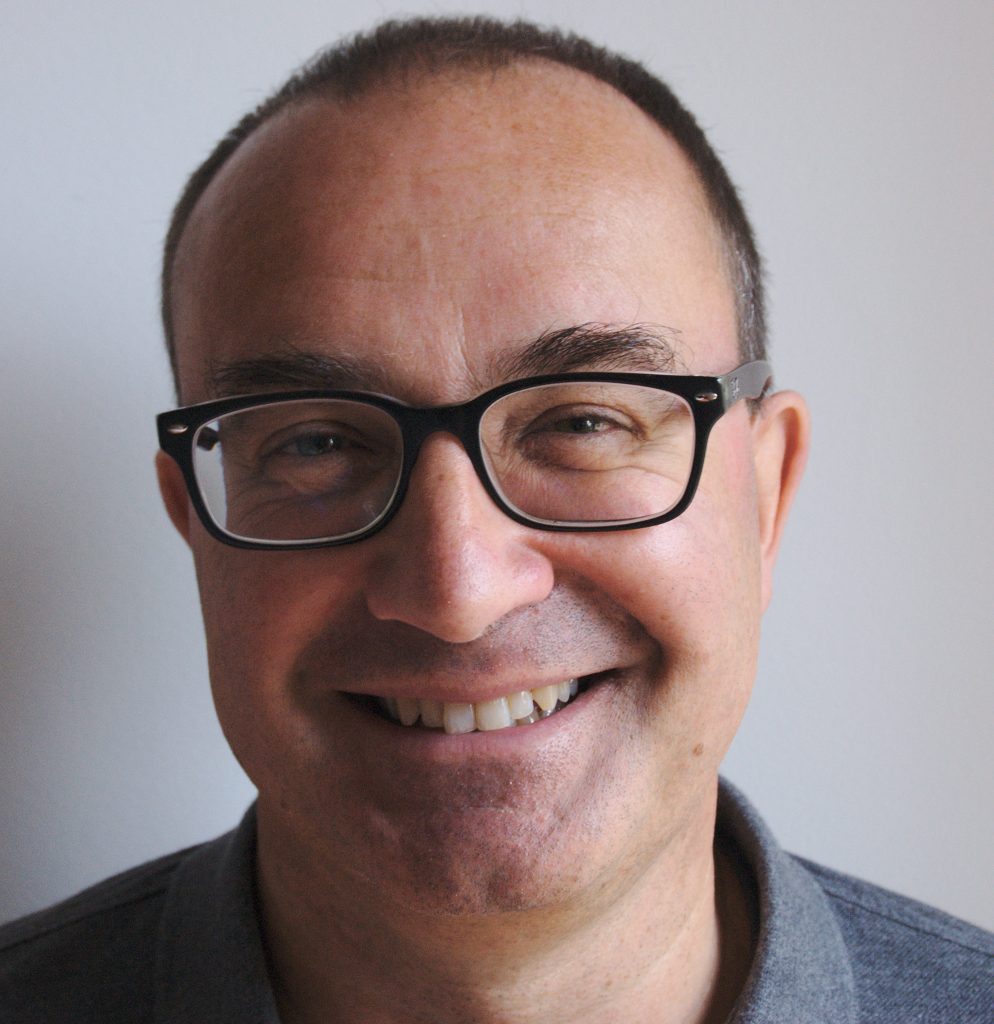
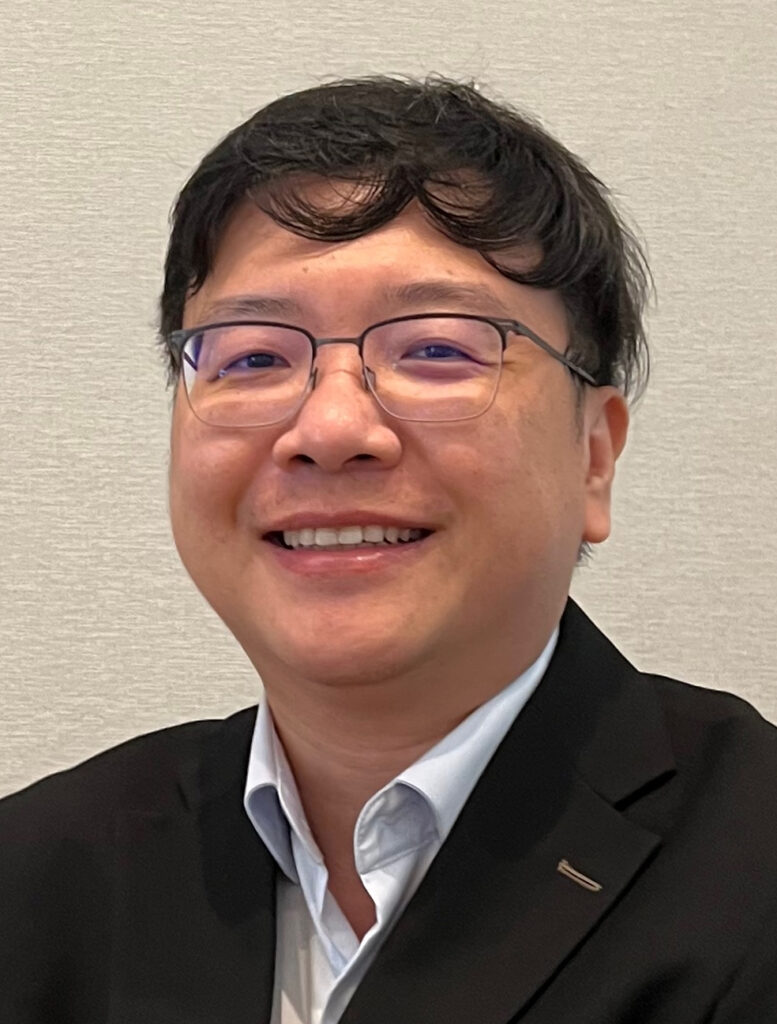
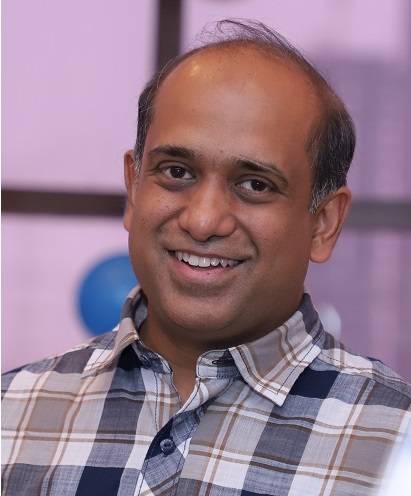
Prof. Dr. Roland Büchi is a Professor at the School of Engineering, Zurich University of Applied Sciences (ZHAW), specializing in control systems engineering and applied AI. His affiliation includes leadership roles in research projects such as the ongoing 'Digital Bridge to Computer Science' initiative. With a career spanning decades, he maintains active research output and industrial collaborations. Research Interests: Büchi focuses on control systems optimization , particularly PID controller tuning using AI methods, system identification, and applications in robotics and drone technology. His work bridges theoretical control theory with practical implementations in mechatronics. Recent efforts explore machine learning for hysteresis modeling and swarm optimization for control systems. Publication Trends: His 15 most recent works (2018-2024) emphasize AI-driven control optimization , drone technology advancements, and engineering education. Dominant themes include PID parameter tuning for time-delayed systems, drone telemetry, and adaptive learning algorithms. A notable shift toward AI/ML applications in control engineering emerged post-2020. Labs and Teams: Büchi collaborates with researchers like Lukas Gruber and has historical ties to ETH Zurich’s robotics projects. His work involves experimental validation at ZHAW’s engineering facilities, with patents in turbocharger magnetic bearing systems.
David B. Shmoys is the Laibe/Acheson Professor of Business Management & Leadership Studies at Cornell University's School of Operations Research and Information Engineering (ORIE) and holds a joint appointment in the Department of Computer Science. He is a leading researcher in approximation algorithms, stochastic optimization, and computational sustainability. His work emphasizes data-driven decision-making in enterprise and society, with applications ranging from healthcare logistics to environmental conservation. Shmoys has advised 27 Ph.D. students and served as an editorial board member for top journals like Operations Research and Mathematics of Operations Research. Education: Ph.D. in Computer Science, University of California, Berkeley (1984). Postdoctoral positions at MSRI and Harvard University, followed by faculty roles at MIT before joining Cornell. Research Interests: Design and analysis of approximation algorithms for NP-hard problems, stochastic optimization, scheduling, facility location, and inventory management. Applications include computational sustainability, epidemiological modeling, and political districting optimization. Articles Trends: Focus on optimization under uncertainty, computational sustainability, and real-world applications like air ambulance routing, bike-sharing systems, and gerrymandering analysis. Notable works include the 2018 Wagner Prize-winning paper on bike-sharing analytics and the 2013 Lanchester Prize-winning textbook on approximation algorithms. Awards: Lanchester Prize (2013), Daniel H. Wagner Prize (2018), Fellowships from ACM, INFORMS, and SIAM, NSF Presidential Young Investigator (1987). Advising & Grants: Over 27 advised Ph.D. students, with former students at MIT, Waterloo, Brown, and D-Wave. Active in grants related to data science and sustainability. Labs/Teams: Involved in the Institute of Computational Sustainability at Cornell, focusing on applying algorithms to environmental challenges. Collaborates with organizations like Motivate (bike-sharing) and Ornge (air ambulance services).
Prof. Kai S. Exner is a Professor of Theoretical Inorganic Chemistry at the University of Duisburg-Essen's Faculty of Chemistry and a member of the Zentrum für Medizinische Biotechnologie (ZMB). His research focuses on electrocatalysis , particularly optimizing electrode materials for energy applications such as batteries, electrolyzers, and fuel cells. He employs computational methods like ab initio calculations and microkinetic modeling to bridge theoretical insights with experimental and industrial applications, emphasizing sustainable catalyst design without relying on noble metals. His work integrates basic research with applied medical biotechnology through ZMB collaborations, though his primary affiliation lies in the Faculty of Chemistry. Exner has pioneered concepts like the electrochemical-step asymmetry index and free-energy span model, which are critical for screening electrocatalysts. His research group, 'Theoretical Inorganic Chemistry,' actively explores mechanisms behind oxygen and chlorine evolution reactions, emphasizing selectivity control and reaction pathway complexity. Exner received the Gottschalk-Diederich-Baedeker-Preis (2024) for advancing the energy transition through foundational electrocatalysis research. He leads Aktuelles Projekt funded by third-party grants and collaborates with facilities like the Analytics Core Facility Essen (ACE) and Imaging Center Campus Essen (ICCE). His advisory role focuses on guiding theoretical and computational approaches in electrochemistry, and he has established a reputation for interdisciplinary research connecting computational chemistry with practical energy solutions.
Richard M. Murray is the Thomas E. and Doris Everhart Professor of Control and Dynamical Systems and Bioengineering at the California Institute of Technology (Caltech). He holds a B.S. from Caltech (1985), M.S. from UC Berkeley (1988), and Ph.D. from UC Berkeley (1990). He has served in academic roles from Assistant Professor (1991–1997) to his current endowed professorship. He chaired the Engineering and Applied Science division (2000–2005) and Biology and Biological Engineering (2020–2024). His research focuses on feedback control in biological and autonomous systems, synthetic cells, and networked control systems. Collaborators include experts in robotics, synthetic biology, and systems biology. Key awards include the IEEE Control Systems Award and election to the National Academy of Engineering. His educational contributions span courses on control systems, robotics, and bioengineering. Current research projects include the Developer Cell initiative (Sloan Foundation), layered testing for autonomous systems (AFOSR), and microbiome-based environmental solutions (CHARMME, ARO). He advises numerous graduate students and postdocs, with notable alumni in academia and industry. Labs include facilities in Keck and Steele laboratories at Caltech. His work bridges control theory, synthetic biology, and autonomous systems to address societal challenges like environmental monitoring and safe autonomy.
Henrik Sandberg is a Professor at the Division of Decision and Control Systems , KTH Royal Institute of Technology , Stockholm, Sweden. He holds the title of Deputy Head of Division and is affiliated with the School of Electrical Engineering and Computer Science . Education: MSc in Engineering Physics (1999) PhD in Automatic Control (2004) from Lund University Postdoctoral position at Caltech (pre-2007) Research Interests: Focus on cyber-physical systems security , power systems , model reduction , and fundamental limitations of control systems . Key sub-areas include attack detection , networked control , privacy-preserving estimation , and resilient control architectures . Publications: Over 150 papers across IEEE Transactions and Automatica , covering topics like stealthy attacks , distributed control , LQG optimization , and thermodynamic costs in filtering . Recent work includes LWE-based encrypted control and Bayesian deception mechanisms . Scientific Awards: Best Student Paper Award Finalist at IEEE CASE 2014; Best Student-Paper Award at IEEE CDC 2004. Grants & Projects: Leads the DYNACON project (WASP Cybersec cluster) and collaborates on CERCES (critical infrastructure resilience). Serves as examiner for multiple advanced courses in cybersecurity and control systems. Contact: Email: hsan@kth.se Phone: +46 (0)8 790 7294 Room: A:607, Malvinas Väg 10, Stockholm
Haitong Li is an Assistant Professor in the School of Electrical and Computer Engineering at Purdue University's College of Engineering, joining the faculty in 2022. His research bridges nanoelectronic devices, integrated circuits, and nanotechnology-inspired AI hardware to address critical challenges in energy-efficient artificial intelligence systems. Education: Ph.D. in Electrical Engineering, Stanford University Research Interests: Dr. Li pioneers emerging memory technologies—particularly Resistive RAM (RRAM)—for in-memory computing and neuromorphic systems. His work focuses on 3D monolithic integration of RRAM and gain cell memory with CMOS to enable edge AI, with recent breakthroughs in hardware acceleration for large language models and sustainable computing. Key innovations include carbon footprint prediction for LLMs and zeroth-order fine-tuning techniques. Publication Trends: Dr. Li's 2023-2025 publications reveal a strategic shift toward sustainable AI hardware, emphasizing carbon-aware LLM inference and edge deployment. His research consistently targets data movement reduction through memory-centric architectures, spanning photonic accelerators, neuro-symbolic computing, and heterogeneous 3D integration. Awards: No scientific awards were documented in the provided sources. Advising and Grants: Current advisees and grant funding details were not specified in the available materials. Labs and Teams: Research group composition and laboratory facilities were not described in the source text.
Ronald McGarvey is a Full Professor at IÉSEG School of Management since 2022, with prior roles including Associate Professor with Tenure at the University of Missouri (2013-2022) and Senior Operations Researcher at RAND Corporation (2002-2022). He holds a Ph.D. in Industrial Engineering and Operations Research from Pennsylvania State University and an H.D.R. in Industrial Engineering from the University of Paul Sabatier, France. Education : H.D.R. (2024), Industrial Engineering, University of Paul Sabatier Ph.D. (2002), Industrial Engineering and Operations Research, Pennsylvania State University His research focuses on Operations Research and Robust Optimization applied to diverse domains: Healthcare Logistics : Modeling access disparities in rural obstetric care for American Indian populations Environmental Sustainability : Analyzing biomass energy systems, forest carbon impacts, and waste management frameworks Network Design : Developing optimization models for supply chain resilience, military logistics, and urban transit safety Policy Analysis : Evaluating multi-state environmental collaborations and localized food systems His publications demonstrate strong interdisciplinary applications of mathematical programming and spatial optimization to real-world challenges in healthcare access, energy sustainability, and transportation systems. Key Collaborations : Working with researchers in public health (Thorsen, Noble), environmental science (Aguilar), and engineering (Mirzaee, Gutierrez-Lopez)
Alexandre Jacquillat is the Maurice F. Strong Career Development Associate Professor and Associate Professor of Operations Research and Statistics at MIT Sloan School of Management. His research focuses on data-driven decision-making with applications in air traffic management, urban mobility, and decarbonization. He holds a PhD in Engineering and MS degrees from MIT and École Polytechnique. Education PhD in Engineering, MIT MS in Technology and Policy, MIT MS in Applied Mathematics, École Polytechnique Research Interests His work develops scalable optimization models for efficient, equitable, and sustainable operations. Key areas include stochastic optimization, large-scale systems design, and machine learning applications in transportation and public policy. Recent projects explore vertiport planning for urban aerial mobility and prescriptive analytics for pandemic response. Awards Harold W. Kuhn Award (2024) INFORMS Harvey Greenberg Research Award (2023) MIT Jamieson Prize for Excellence in Teaching (2023) Multiple INFORMS Best Paper Awards (2015-2023) Named Leading Academic Data Leader by Chief Data Officer Magazine (2021-2022) Teaching & Grants Teaches courses in optimization (15.093, 15.083) and analytics (15.072). His grants support work in robotic warehousing, air traffic scheduling, and disaster response logistics. Advises on transportation analytics for industry and government. Labs/Teams Leads MIT Sloan's operations research group, collaborating with industry partners like McKinsey & Co. and Booz Allen Hamilton on transportation analytics and optimization projects.
Terry C. Lansdown is an Associate Professor in the School of Social Sciences and Department of Psychology at Heriot-Watt University. His expertise lies in Human Factors, particularly focusing on driver safety, workload management, and attentional distraction in transportation contexts. Prior to his academic role, he worked as a senior researcher at the Transport Research Laboratory, contributing to numerous EU-funded and government-sponsored projects. His research integrates ergonomics principles with real-world applications, addressing issues like automated driving systems, social distractions in vehicles, and occupational health in construction industries. Key research interests include: Driver behavior and road safety Human factors in automated systems Workload and attentional demands in complex tasks Health and safety in small-to-medium enterprises (SMEs) He has led studies on pandemic response strategies, such as the CHARIS project analyzing behavioral adherence during the COVID-19 crisis. Lansdown’s work frequently bridges psychological theory with practical interventions, including text messaging campaigns to improve construction worker safety and experimental designs to evaluate automation failure responses. Collaborations span academic and industrial sectors, with publications addressing topics ranging from UV exposure in outdoor workers to the cognitive impacts of in-vehicle distractions. His contributions align with UN Sustainable Development Goals related to health (SDG 3) and sustainable cities (SDG 11).
Supratik Guha is a Professor at the Pritzker School of Molecular Engineering and Senior Advisor to Argonne National Laboratory's Physical Sciences and Engineering directorate. His work bridges industrial R&D with academic and national lab research, focusing on quantum computing , semiconductor materials , and sensor networks for water and soil monitoring. Guha leads Argonne’s quantum information science strategy and serves as Faculty Director for the University of Chicago Center in Delhi. Education: PhD in Materials Science (USC, 1991), BTech in Engineering Physics (IIT Kharagpur, 1985) Research interests span multiple domains: Quantum technologies focusing on erbium-doped oxides for quantum memory and quantum interconnects Sensor networks for soil and water quality monitoring using cyberphysical systems Nanofabrication techniques including controlled spalling for heterogeneous material integration Advanced memory technologies exploring ferroelectric and optically addressable memory at atomic scales Scientific awards include: Election to National Academy of Engineering (2015) APS Prize for Industrial Applications of Physics (2015) Vannevar Bush Faculty Fellow (2018) Fellow of Materials Research Society and American Physical Society IBM Corporate Award (2013) Advising notable students like Manish Kumar Singh (co-founder memQ ), Cheng Ji (now at Intel), and Vamsi Nittala (now at Micron Technology). His group contributes to major DOE , NSF , and USDA funded projects including: Q-NEXT - DOE National Quantum Information Center AIFARMS - NSF/USDA AI for Agriculture Institute Thoreau Project - Geospatial sensor networks Labs and teams operate across University of Chicago and Argonne National Lab , with facilities for molecular beam epitaxy , nanofabrication , and optical/electrical characterization . The group has spawned startups like memQ (quantum networking) and K1 Semiconductors (wide-bandgap material transfer).
Michele Zorzi is a Professor of Telecommunications at the School of Engineering, University of Padova, Italy, where he has held a faculty position since 2003. He leads the SIGNET (Signal processing and Networking) Research Group, focusing on cutting-edge wireless networking challenges including mmWave communications and underwater networks. His extensive publication record exceeds 600 papers in top-tier journals and conferences, reflecting significant contributions to the field through both theoretical and experimental work. He received his Laurea Degree (1990) and Ph.D. (1994) in Electrical Engineering from the University of Padova. Prior academic appointments include Politecnico di Milano (1993-1996), University of California San Diego (1995-1998), and University of Ferrara (1998-2003), where he progressed from Associate Professor to full Professor. His educational trajectory demonstrates deep roots in Italian academia with international exposure. Professor Zorzi's research spans wireless communications and networking, with current emphases on mmWave networking for vehicular systems, underwater acoustic/optical communications, non-terrestrial networks, and AI-driven networking solutions. His group conducts experimental validations including at-sea trials for underwater systems and testbeds for vehicular networks. Key projects include PRATA for predictive QoS in autonomous driving and IoT-based environmental monitoring of the Venice Lagoon, demonstrating practical applications of theoretical work. Analysis of his 2022-2025 publications reveals strong trends in applying artificial intelligence to networking challenges across diverse environments. There is significant emphasis on vehicular networks (predictive QoS, teleoperated driving), underwater systems (acoustic/optical communications, AUV swarms), and satellite networks (Starlink integration, NTN security). Experimental validation in real-world scenarios like the Venice Lagoon monitoring project and underwater sea trials characterizes his applied research approach. His scientific accolades include: IEEE Fellow (2007) IEEE Communications Society Best Tutorial Paper Award (2008, 2019) Stephen O. Rice Best Paper Award (2018) Multiple best paper awards at IEEE conferences (2005-2020) As principal investigator for numerous European and US research projects plus 20+ industry-funded initiatives, Professor Zorzi has mentored over 35 PhD students and post-docs. Graduates now hold prominent positions at institutions including Stanford, UCSD, CTTC, and Huawei. His SIGNET group maintains active international collaborations and contributes to open-source networking tools via GitHub, demonstrating commitment to community engagement. The SIGNET Research Group, housed within the Department of Information Engineering, operates specialized experimental facilities for mmWave and underwater communications. Current initiatives include AI-based predictive QoS frameworks for vehicular networks, underwater optical communication systems using ultraviolet light, and large-scale IoT deployments for environmental monitoring. The group's GitHub presence indicates strong open-science practices, while recent sea trials confirm hands-on experimental capabilities beyond theoretical work.
Dr. ONG Ghim Ping Raymond is an Associate Professor and Deputy Head (Research) at the Department of Civil and Environmental Engineering, National University of Singapore (NUS). He concurrently serves as Director (Operations) at the Coastal Protection and Flood Resilience Institute (CFI) Singapore. His expertise spans sustainable pavements, multimodal transport infrastructure, and urban mobility systems. Dr. Ong holds a B.Eng (Civil) with First Class Honours and a PhD from NUS, followed by postdoctoral research at Purdue University. He has authored/co-authored over 85 peer-reviewed journal articles and 120 conference papers. His research focuses on circular economy applications in infrastructure, car-lite urban design, and mega-projects like Tuas Port and Changi Airport expansions. Dr. Ong actively engages in policy advisory roles, serving on international committees for ASCE, ASTM, and EASTS. He has received prestigious awards including the Alfred Noble Prize (ASCE) and Takeuchi Yoshio Award (OCDI). His teaching accolades include multiple NUS Faculty of Engineering commendations. He advises on critical infrastructure projects for agencies like Changi Airport Group and Defence Science and Technology Agency. Dr. Ong frequently contributes to public discourse on transport and urban planning via media interviews and policy consultations.
Allan Larsen is a Professor and Deputy Head of Division at the Department of Technology, Management and Economics (DTU Management) at the Technical University of Denmark. He heads the Operations and Supply Chain Management Section. His academic background includes an MSc in Applied Mathematics and a PhD in Operations Research, both from DTU. He teaches courses in Operations Management and Simulation at both undergraduate and graduate levels. Research Focus: His work applies operations research methodologies to complex planning problems in supply chain management, logistics, healthcare operations, and public transport. Key areas include urban freight transport, healthcare supply chains, and optimization of public transport resources like crew and fleets. Collaborations with industries, especially in freight transport, have been extensive. He previously co-directed the Transport DTU research center and co-chaired Denmark’s Transport Innovation Network. Education: MSc in Applied Mathematics (1989–1995), PhD in Operations Research (1997–1999), both from DTU. Recognition: Recipient of the Hedorf’s transportpris award in 2022 for contributions to transport research. Research Projects: Supervises multiple PhD students (e.g., on electric freight transport, healthcare resource optimization, and Industry 4.0 applications). Active in projects like 'Pioneering Electric Heavy-Duty Freight Transport' and 'Resource optimization in healthcare.' Labs/Teams: Leads the Operations and Supply Chain Management research group and collaborates in initiatives like the Transport Innovation Network, focusing on sustainable transport solutions.
Amit Kumar is the Jaswinder and Tarwinder Chadha Chair Professor in the Department of Computer Science and Engineering at IIT Delhi. His research focuses on combinatorial optimization, online algorithms, and algorithmic fairness. He has taught courses such as Approximation Algorithms (COL 754), Design and Analysis of Algorithms (COL 351), and Numerical Analysis (COL 726). His work spans theoretical computer science with applications to clustering, scheduling, and fairness in evaluation processes. Research Interests Kumar's research emphasizes developing efficient algorithms for online and dynamic settings, particularly in constrained optimization and biased evaluation systems. He explores theoretical foundations of clustering, load balancing, and resource allocation, with recent contributions to fair food delivery systems and coreset constructions. Publications His recent work includes advancements in online convex paging (STOC 2025), consensus clustering (SODA 2025), and fairness-aware algorithms (AAAI 2024). Over 70 papers across top venues like STOC, SODA, and ICML reflect his expertise in algorithm design and analysis. Awards Best Paper Award at ISAAC 2023 for 'Clustering What Matters in Constrained Settings' Teaching & Mentorship Kumar instructs graduate and undergraduate courses in algorithms, data structures, and numerical methods. He advises students through these courses and collaborates with researchers on NSF-funded projects related to approximation algorithms and streaming systems.
Prof. Paul Stupple is a Professor of Medicinal Chemistry at Monash University, Australia, with over 20 years' experience in pharmaceutical industry and academia. He holds leadership roles at Canthera Discovery and manages the Australian Translational Medicinal Chemistry Facility. His expertise lies in small molecule drug discovery, particularly targeting cancer therapies and epigenetic regulators. Affiliations: Monash University, Faculty of Pharmacy and Pharmaceutical Sciences Canthera Discovery (Director, Medicinal Chemistry) Education: BA and DPhil in Chemistry from the University of Oxford (1992–1999). Early career at Pfizer as a medicinal chemistry leader, delivering 6 clinical candidates. Key contributions include: Licensing deals with Merck (2016) and Pfizer (2018) for preclinical projects Leading the Cancer Therapeutics CRC's medicinal chemistry program Research Interests: Small molecule drug discovery focused on histone acetyltransferase inhibitors, cancer therapeutics, and epigenetic modulation. Notable projects include development of KAT6A/B inhibitors for ER+ breast cancer and STING agonists for immunotherapy. Grants/Projects: Principal Investigator for major initiatives like MedChem Australia (2023–2028) and drug target identification platforms. Collaborates widely with institutions like WEHI and University of Sydney. Over 28 peer-reviewed publications spanning 1997–2025. Labs/Teams: Oversees the Australian Translational Medicinal Chemistry Facility, a key resource for drug discovery in Australia.