Ron Fedkiw is the Canon Professor of Computer Science at Stanford University's School of Engineering. He holds a PhD in Applied Mathematics from UCLA. His research focuses on computational algorithms for applications in computational fluid dynamics, computer graphics, biomechanics, and machine learning. Fedkiw has pioneered techniques for simulating natural phenomena in film and video games, earning two Academy Awards for his contributions to visual effects. He leads the PhysBAM lab and collaborates with industry through consulting roles at Epic Games and former work with Industrial Light & Magic. Education: PhD in Applied Mathematics, UCLA (1996). Notable awards include the National Academy of Science Award, Packard Fellowship, and multiple teaching honors. His lab has graduated 40 PhD students, many of whom have made significant impacts in academia and industry. Research interests span fluid dynamics, cloth simulation, facial animation, and integrating machine learning with physical models. Key contributions include algorithms for two-way fluid-solid coupling, muscle-based facial modeling, and neural network approaches for cloth and deformable bodies. Current projects explore physics-informed machine learning and real-time interactive simulations. Scientific Awards include two Oscars, PECASE, and Okawa Foundation grants. His work bridges computational physics and visual effects, with over 140 research papers and a textbook on level set methods. Advising and grants: Supervised 40 PhD students, securing funding through NSF, ONR, and industrial partnerships. Lab collaborations include SAIL (Stanford AI Lab) and Epic Games. Future work focuses on AI-driven physical simulations and biomedical applications.
Peter N. Belhumeur is a Professor in the Department of Computer Science at Columbia University and Director of the Laboratory for the Study of Visual Appearance (VAP LAB). He holds a Sc.B. from Brown University and a Ph.D. from Harvard University, followed by a postdoctoral fellowship at the University of Cambridge. His career includes roles at Yale University before joining Columbia in 2002. Education: Brown University (Sc.B., 1985), Harvard University (Ph.D., 1993) Postdoc: Isaac Newton Institute, University of Cambridge (1994) His research focuses on computer vision and machine learning, with applications in biodiversity and mobile technology. Notable projects include the Leafsnap, Birdsnap, and Dogsnap apps – pioneering species/breed identification tools using machine learning. He has received awards such as the PECASE, Helmholtz Prize, and EO Wilson Biodiversity Technology Pioneer Award. His work bridges academia and industry, demonstrated by collaborations with Dropbox and contributions to consumer-facing AI applications. The VAP LAB explores visual appearance modeling and computational photography.
Daria Frank is a Senior Teaching Associate in Computational Mathematics at the Department of Applied Mathematics and Theoretical Physics (DAMTP), University of Cambridge, a position held since 2023. Previously, she served as Sultan Qaboos Early-Career Research Fellow and College Lecturer in Mathematics at Corpus Christi College (2020-2023), Director of Studies in Mathematics at Selwyn College (2019-2020), and Research Associate in Fluid Mechanics at DAMTP (2015-2019). Her academic foundation includes a PhD from DAMTP, University of Cambridge (2012-2015), Part III Mathematical Tripos at Cambridge (2009-2010), Diploma in Mathematics from Friedrich-Alexander-University of Erlangen-Nuremberg (2010-2011), and undergraduate studies in Mathematics and Physics at the same institution (2006-2009). Dr. Frank's research centers on complex fluid phenomena with emphasis on buoyancy-driven environmental flows , rotating plume dynamics , and practical engineering applications . Her work investigates pollution dispersal mechanisms, tornado formation processes, and energy-efficient building systems through rigorous theoretical and experimental frameworks. Key contributions address multiphase interactions in stratified environments and vortex behavior under rotational forces, bridging fundamental fluid dynamics with real-world environmental challenges. Publication trends reveal consistent focus on geophysical and environmental fluid mechanics, with recurring themes of density stratification effects, multiphase plume behavior, and rotational influences across atmospheric, oceanic, and built environments. Her work demonstrates strong interdisciplinary connections between theoretical modeling and practical engineering solutions. Dr. Frank held the prestigious Sultan Qaboos Early-Career Research Fellowship, supporting her investigations into fluid mechanics phenomena. Her academic service includes significant teaching responsibilities as Director of Studies in Mathematics at Corpus Christi College. As Director of Studies, she oversees undergraduate mathematics education while conducting research within DAMTP's fluid dynamics community. Her Sultan Qaboos Fellowship provided dedicated research time for fluid mechanics investigations, complementing her teaching role through integration of cutting-edge research into pedagogy. Current work continues to explore environmental fluid dynamics with potential applications in climate modeling and sustainable engineering.
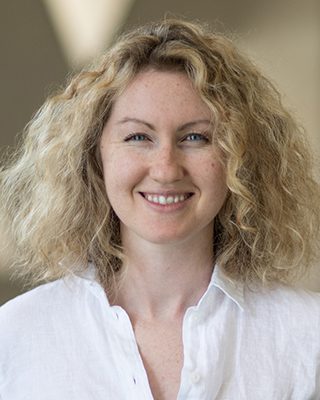
Ira Kemelmacher-Shlizerman is a Full Professor of Computer Science at the Paul G. Allen School of Computer Science & Engineering at the University of Washington and Director of the UW Reality Lab. She also serves as a Principal Scientist at Google, where she leads the Shopping Gen AI visuals teams focusing on Virtual Try-On, 3D, and product videos. Her research spans computer vision, computer graphics, and Generative AI, with particular contributions to virtual try-on technology, 3D modeling, and augmented reality applications. Professor Kemelmacher-Shlizerman's research interests focus on Generative AI applications in visual computing. Her work bridges the gap between theoretical computer vision and practical applications, particularly in e-commerce and virtual reality. She has made significant contributions to virtual try-on technology, 3D editing with generative models, and AI applications for shopping experiences. Her research combines deep learning with traditional computer vision techniques to solve challenging problems in image and video synthesis. Her recent publications demonstrate a strong trend toward Generative AI applications for visual shopping experiences, virtual try-on technology, and 3D content creation. The work spans multiple top conferences including CVPR, SIGGRAPH, and ICCV, with a focus on practical applications of computer vision and graphics. Her research has evolved from foundational work in face reconstruction and aging to current applications in virtual shopping and 3D content generation. Google faculty award Madrona prize GeekWire Innovation of the Year Award Covers of CACM and SIGGRAPH Best student paper honorable mention at CVPR'21 Best demo runner up MobiSys'22 Senior member of IEEE Distinguished Member of ACM Professor Kemelmacher-Shlizerman has successfully tech-transferred multiple research projects to industry. She founded Dreambit, a startup acquired by Meta, and previously built and launched the Face Movies feature at Google. She currently leads Google's Shopping Gen AI visuals teams, focusing on 10x improvements to shopping journeys. Her UW Reality Lab serves as a hub for AR/VR research with industry partnerships. She has mentored numerous PhD students who have become researchers in both academia and industry, with several publications featuring student co-authors receiving recognition at top conferences. Professor Kemelmacher-Shlizerman leads the Graphics and Imaging Laboratory (GRAIL) and the UW Reality Lab, which focuses on augmented and virtual reality research with industry partnerships including Google. The labs work on cutting-edge projects in virtual try-on, 3D modeling, and immersive experiences, bridging academic research with real-world applications.
Furkan Alaca is an Assistant Professor at Queen's University's School of Computing, part of the Faculty of Arts and Science. His research focuses on user authentication systems, addressing security and usability challenges. He holds a Ph.D. (2018) in Computer Science from Carleton University, an M.A.Sc. (2012) in Electrical and Computer Engineering, and a B.Eng. (2010) in Communications Engineering, all from Carleton University. His academic career includes teaching roles at Queen's University and the University of Toronto Mississauga, where he taught courses such as Cryptography, Cybersecurity, and Discrete Mathematics. He is affiliated with Queen's Security Research Group and Computer Security Research Lab. Research interests include computer and internet security, usable security, authentication mechanisms, and systems security. He has contributed to advancements in web authentication frameworks, malware analysis, and privacy-preserving technologies. His work spans conferences like IEEE and ACM, with notable publications in cybersecurity, machine learning, and network efficiency. Current teaching includes CISC 447 (Introduction to Cybersecurity) and CISC 468 (Cryptography). He has advised on courses ranging from undergraduate programming to graduate-level security topics.
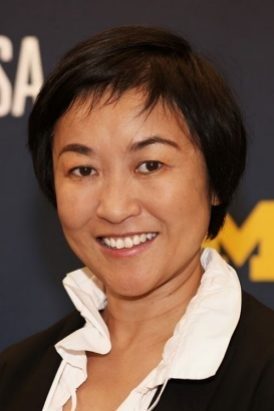
Fiona Lee is the Arthur F. Thurnau Professor of Psychology at the University of Michigan, with affiliations in Organizational Studies and the Advisory Committee. She holds a Ph.D. from Harvard University. Her research focuses on three core areas: Identity Integration (how individuals navigate multiple identities), Power Dynamics (effects of power on behavior), and Cultural Differences (impact of cultural contexts on organizations and individuals). She teaches courses on Organizational Psychology and Research Methods in Personality/Social Contexts. Lee’s work bridges social psychology and organizational behavior, emphasizing multicultural experiences and adaptation. Her recent studies explore refugee well-being, racial discrimination coping strategies, and the role of family in resettlement processes. Notably, she investigates how cultural identity integration influences creativity, decision-making, and social tolerance. Her publications span cross-cultural communication, biculturalism, and institutional barriers faced by minorities. Lee’s research often combines qualitative and quantitative methods to address real-world challenges in workplace dynamics and global mobility.
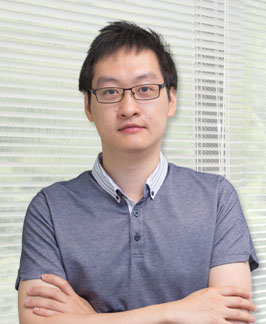
Professor Ping Luo is an Associate Professor and Assistant Director (Outreach and Advancement) at the School of Computing and Data Science, University of Hong Kong. He also serves as Associate Director (Innovation and Outreach) of the Musketers Foundation Institute of Data Science. His research focuses on developing advanced machine learning algorithms, particularly in computer vision and deep learning, emphasizing reinforcement learning, meta-learning, and foundational algorithm understanding. Luo holds a PhD from the Chinese University of Hong Kong (2014), supervised by Prof. Xiaoou Tang and Prof. Xiaogang Wang. His notable achievements include over 70 peer-reviewed publications in top venues like TPAMI, IJCV, ICML, and CVPR, alongside competition wins such as the 2014 ImageNet ILSVRC Challenge and the 2017 YouTube-8M Video Classification Challenge. His work spans applications in autonomous driving, video segmentation, and facial recognition. Education: PhD in Information Engineering (2014), Chinese University of Hong Kong Awards: 2011 HK PhD Fellow Award, 2013 Microsoft Research Fellow Award Professional Roles: Former Research Director at SenseTime Research Recruiting Postdocs, PhDs, and RAs His research interests include algorithm development for autonomous systems, deep learning foundations, and practical AI applications in computer vision. He maintains an active presence in academic outreach and industry collaboration.
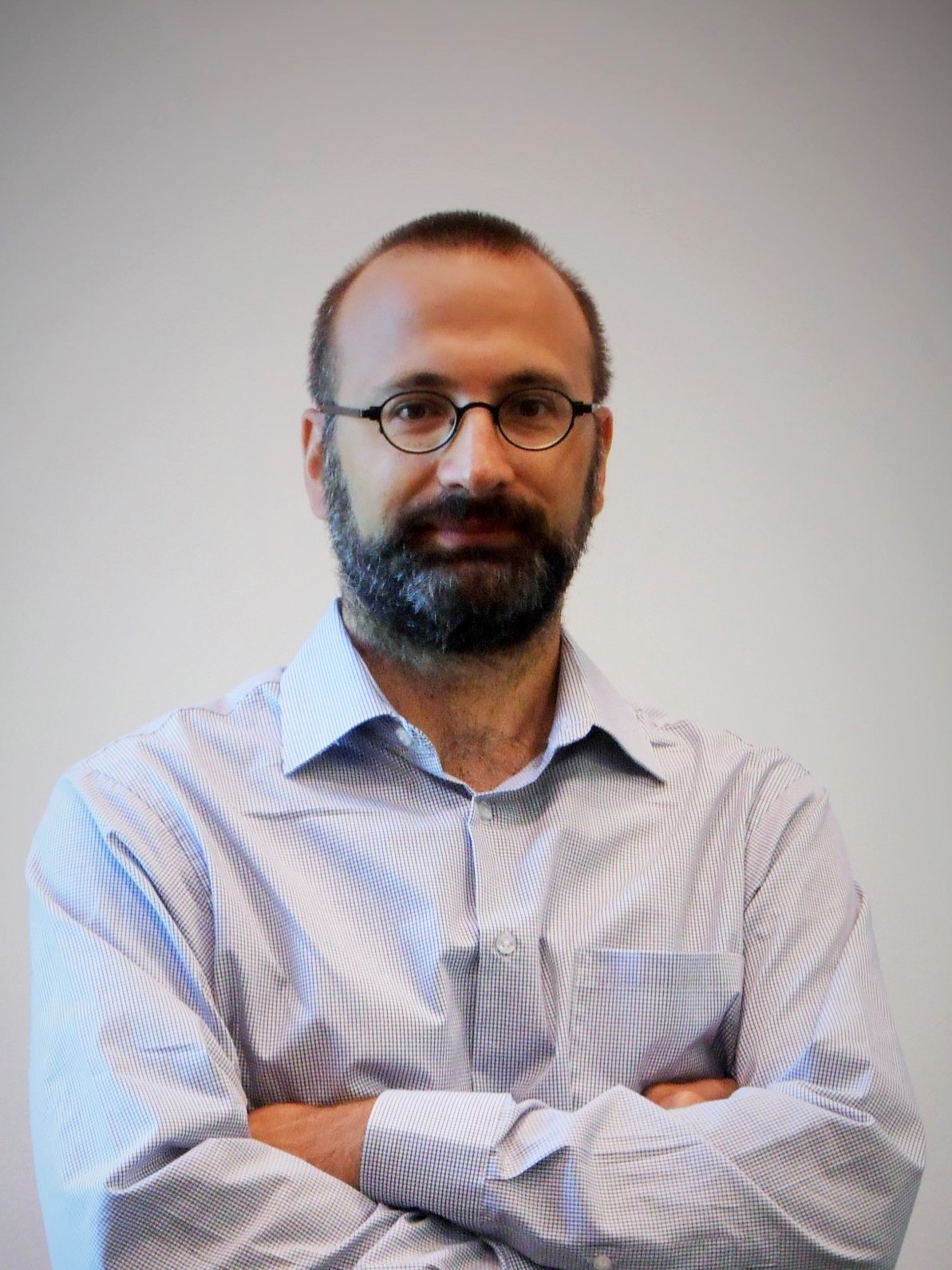
Andrea Lanza serves as Associate Professor in the Department of Italian Studies within the Faculty of Arts & Science at the University of Toronto. Originally from Italy, he completed his academic training in France at the École des Hautes Études en Sciences Sociales (EHESS), earning both his Diplôme d'Études Avancées and Doctorat degrees, following his Laurea from Università degli Studi di Milano La Statale. His scholarly profile demonstrates extensive transnational engagement with French political thought while maintaining institutional affiliation with Italian Studies. Doctorat, École des Hautes Études en Sciences Sociales (Paris) Diplôme d'Études Avancées, École des Hautes Études en Sciences Sociales (Paris) Laurea, Università degli Studi di Milano La Statale Lanza's research focuses on the historical intersections between political thought and social science, with particular emphasis on Early French Socialism (1800-1850), the making of French working classes, and Contemporary French Political Thought. His scholarly trajectory follows two interrelated axes: the emergence of socialist discourse in 19th century France and historic-philosophical debates on democratic society, especially regarding French thinkers like Lefort, Gauchet, Rosanvallon, Foucault, and Rancière. His work demonstrates remarkable interdisciplinary range, connecting political philosophy with historical anthropology, sociology, and religious studies. His recent publications reveal a growing engagement with contemporary issues including decolonization debates, cancel culture, and the epistemological challenges facing social sciences today. Lanza has also held significant administrative roles, serving as Associate Chair for Undergraduate Studies in the Department of Italian Studies during 2022-2023. Administrative Service: Associate Chair - Undergraduate, Department of Italian Studies (2022-2023) Lanza's scholarly network extends across North America and Europe, with collaborations spanning multiple disciplines. His recent editorial work on Claude Lefort's political philosophy and Marcel Gauchet's theories of democratic society demonstrates his position at the forefront of contemporary political thought scholarship.
John F. Canny is the Paul and Stacy Jacobs Distinguished Professor of Engineering at the University of California, Berkeley, in the Department of Electrical Engineering and Computer Science (EECS). He joined the faculty in 1987 and is affiliated with the Berkeley Artificial Intelligence Research Lab (BAIR), Berkeley Center for New Media (BCNM), and other research institutes. His research focuses on artificial intelligence, robotics, human-computer interaction, and computational geometry. Canny is renowned for developing the Canny edge detector and contributions to motion planning, privacy-preserving algorithms, and real-time simulation. Education: B.Sc. in Computer Science and Theoretical Physics (Adelaide University, 1979), B.E. (Hons) in Electrical Engineering (Adelaide University, 1980), M.S. and Ph.D. in Electrical Engineering (MIT, 1983 and 1987). Research Interests: His work spans AI, robotics (including universal planar manipulation), HCI (e.g., MultiView video conferencing), and security (privacy in collaborative filtering). He has pioneered algorithms for edge detection, non-linear FEM simulation, and computational algebra. Awards: ACM Fellow (2020), Okawa Research Grant (2003), AAAI Classic Paper Award (2002), NSF PYI (1989), Packard Fellowship (1988), and ACM Doctoral Dissertation Award (1987). Advising & Grants: Advised over 30 Ph.D. students, many of whom hold prominent roles in academia and industry. His grants include NSF and Packard funding for foundational research in robotics and computational methods. He currently teaches CS188: Introduction to Artificial Intelligence. Labs/Teams: Leads research at the Berkeley Institute of Design (BiD), focusing on RISC robotics, activity-based computing, and privacy-enhanced telepresence systems.
David L. Schwartz serves as the William G. and Virginia K. Karnes Research Professor of Law at Northwestern University's Pritzker School of Law, where he joined the faculty in 2015 and served as Associate Dean of Research & Intellectual Life from 2019-2022. His interdisciplinary work bridges legal scholarship, data science, and technology policy with emphasis on patent systems and judicial transparency. His educational foundation includes a BS from the University of Illinois at Urbana-Champaign and a JD cum laude from the University of Michigan Law School. Professor Schwartz specializes in empirical analysis of intellectual property systems , particularly patent litigation dynamics and court record accessibility. His research leverages computational methods to transform legal scholarship through projects like SCALES OKN, where he examines how technological interventions can democratize access to justice. This work situates him at the nexus of legal informatics , patent policy , and court system innovation , challenging traditional methodologies in legal academia. His publication trajectory reveals a decisive shift toward technology-driven legal transparency since 2018, with recent work focusing on large-scale court record analysis and open justice infrastructure. The 2024 Northwestern University Law Review article represents the culmination of his NSF-funded SCALES initiative, demonstrating how machine-readable litigation data can reshape legal scholarship and practice. As Co-Principal Investigator of the NSF-funded Systematic Content Analysis of Litigation EventS Open Knowledge Network (SCALES OKN), he leads a multidisciplinary consortium developing tools to convert opaque court records into structured, analyzable datasets. This $1.2M grant supports collaboration between legal scholars, computer scientists, and data engineers to build public infrastructure for judicial transparency. The SCALES OKN project operates as a cross-institutional research collective involving Northwestern faculty, data scientists from multiple universities, and partnerships with legal technology organizations. It maintains active development teams for natural language processing pipelines, litigation event databases, and public-facing analytical interfaces serving legal practitioners and researchers.
Dr. Deborah J. Johnson is a researcher in the Department of Human Development and Family Studies at Michigan State University, affiliated with the College of Social Sciences. She holds a Ph.D. from Northwestern University, an M.A. from Cornell University, and a B.A. from the University of Chicago. Her work focuses on racial-ethnic socialization, cultural adjustment of immigrant/refugee groups, and resilience among marginalized populations, with particular attention to South Sudanese refugees, Indigenous Australians, and Roma youth. She explores how cultural identity intersects with global contexts, gender, and education to shape developmental outcomes. Key research areas include: Racial-identity development in African American and Latina college women Cultural adaptation of Sudanese refugees and its tridimensional aspects of identity alignment Positive youth development in Indigenous Australian communities through virtual reality initiatives Policy impacts on oppressed ethnic groups' identity reformation Her work has been published in over 50 peer-reviewed articles and books, including Identity Re/Formation among Immigrant Youth and Families (upcoming) and Children and Prejudice (2018). She leads interdisciplinary projects at the intersection of education, mental health, and public policy, emphasizing equity and culturally responsive practices. Dr. Johnson collaborates with institutions like the Child Development Laboratory and Couple & Family Therapy Clinic to translate research into community-focused interventions. Her global projects span North America, Australia, and Eastern Europe, addressing systemic barriers faced by vulnerable populations.
Georgia Zellou is an Associate Professor in the Department of Linguistics at the University of California, Davis, where she co-directs the Phonetics Lab and conducts award-winning research at the intersection of phonetics, speech perception, and human-AI interaction. Her work investigates how phonetic detail is cognitively represented through variations in speech production, with significant contributions to understanding speech alignment with voice assistants, face-masked speech intelligibility, and cross-linguistic perception of synthetic voices. Her academic credentials include a Ph.D. in Linguistics from the University of Colorado at Boulder (2012), an M.A. in Linguistics from Stony Brook University (2007), and a B.A. in Linguistics & Anthropology from the University of Florida (2005, Cum Laude, Phi Beta Kappa). Ph.D., Linguistics, University of Colorado at Boulder (2012) M.A., Linguistics, Stony Brook University (2007) B.A., Linguistics & Anthropology, University of Florida (2005) Professor Zellou's research program centers on laboratory phonology approaches to real-world communication challenges, examining how acoustic-phonetic details influence speech perception across contexts. Her studies span speech alignment with voice-AI systems (e.g., Amazon Alexa), sociophonetic variation in bilingual speech, and the cognitive mechanisms underlying perceptual compensation for coarticulation. She employs experimental methods including eye-tracking, acoustic analysis, and perceptual testing to uncover how phonetic variation functions pragmatically in human communication and human-machine interaction. Analysis of her 15 most recent publications (2023-2025) reveals three dominant research trajectories: (1) human-AI voice interaction dynamics, including prosodic alignment and social evaluation of TTS voices; (2) intelligibility optimization in challenging contexts (face masks, clear speech for diverse listeners); and (3) cross-linguistic phonetic variation in vowelless words and consonant clusters. These works consistently bridge theoretical phonology with applied speech technology, demonstrating how fine-grained phonetic detail influences communication effectiveness in both human-human and human-machine contexts. Her scientific recognition includes: Fulbright Scholar (2022) for research in France Chancellor’s Award for Excellence in Undergraduate Mentoring (2019) Fellow of the Linguistic Society of America (2020) Amazon Faculty Research Award (2019) for Alexa-related speech studies Dean’s Fellow designation at UC Davis (2020-2023) Professor Zellou maintains an active mentoring practice recognized with the Chancellor’s Award, supervising undergraduate researchers in the Phonetics Lab while teaching core linguistics courses from introductory to advanced graduate levels. Her research program is supported by competitive grants including NSF funding, Amazon Research Awards, and UC Davis internal grants (Hellman Foundation, ISS Junior Faculty Grant), reflecting the translational value of her work for speech technology development. She has co-directed major initiatives including the 2019 LSA Linguistic Institute. The Phonetics Lab she co-leads serves as a hub for experimental phonetics research, focusing on speech production-perception relationships through projects investigating vocal accommodation to voice assistants, nasal coarticulation dynamics, and cross-linguistic prosody. Current collaborations with industry partners aim to implement human speech adaptation principles into voice assistant design to enhance naturalness and engagement.
Gil Kalai is a Professor of Mathematics at the Hebrew University of Jerusalem since 1992, where he holds the Henry and Manya Noskwith Chair. He also serves as an Adjunct Professor of Mathematics and Computer Science at Yale University since 2004 in a long-term part-time visiting position. His academic career includes visiting positions at prestigious institutions including MIT, Cornell, IAS Princeton, Berkeley, Bell-labs, IBM, and Microsoft. Professor Kalai's research spans multiple areas within mathematics and theoretical computer science. His work in combinatorics encompasses geometric, probabilistic, and topological approaches. He has made significant contributions to the study of convex sets and polytopes, linear programming, and theoretical computer science. His influential 1988 paper with Kahn and Linial on Boolean functions pioneered applications of Fourier analysis in theoretical computer science. Kalai's research has evolved to include the application of Fourier analysis to thresholds, influences, symmetries, noise, percolation, and social choice. He has developed theories in algebraic shifting and studied face-numbers and other combinatorial invariants of polytopes. His work on the diameter of polytopes and randomized simplex algorithms has been influential in optimization theory. In 1993, his collaboration with Kahn produced a groundbreaking counterexample to Borsuk's Conjecture in 1325 dimensions. Professor Kalai's publications reveal a consistent focus on the intersection of combinatorics, geometry, and theoretical computer science. His work shows a progression from foundational combinatorial geometry to increasingly sophisticated applications of harmonic analysis in discrete mathematics. The recurring themes across his 30+ year career include Boolean functions, polytope theory, and probabilistic methods in combinatorics, demonstrating remarkable coherence in his research trajectory. 2016 European congress of Mathematics, plenary speaker 2013 ERC advanced grant 2012 Rothschild Prize 1994 International Congress of Mathematicians invited section talk, Zurich 1994 Fulkerson Prize 1993 Erdos Prize 1992 Polya Prize Though specific details of his advising are not provided in the source material, Kalai has written over 70 scientific papers and maintains an active research blog entitled "Combinatorics and More." His 2013 ERC advanced grant indicates significant research funding for his work. His extensive collaborations with researchers across multiple institutions suggest a robust research program with numerous PhD students and postdoctoral researchers, though specific names are not mentioned in the provided texts. Professor Kalai maintains active research connections across multiple institutions including Hebrew University, Yale, and various research centers worldwide. His work bridges pure mathematics and theoretical computer science, creating a unique interdisciplinary research environment that influences both fields.
Xavier Brusset is a Professor in Supply Chain at SKEMA Business School since 2016, where he also serves as Director of the PRISM Research Center since 2017. Previously, he held professorial positions at Toulouse Business School (2015-2016) and ESSCA School of Management (2009-2015), where he was responsible for the Master 2 in Purchasing and Supply Chain Management program. His academic journey includes a PhD in Management Sciences from Université Catholique de Louvain (2010) and a Habilitation à Diriger des Recherches from Université Paris Ouest Nanterre La Défense (2016). His research spans multiple critical areas in supply chain management, with particular focus on supply chain resilience, blockchain applications, weather risk management, and pandemic impacts on supply chains. Brusset has developed innovative approaches to understanding how supply chain partners interact, how information affects their behavior, and how external disruptions like weather anomalies and pandemics impact operational efficiency. His work bridges theoretical models with practical applications, often developing decision-support tools for managers facing complex supply chain challenges. Brusset's publication record shows a clear evolution of research interests, beginning with foundational work on supply chain contracts and information sharing, then expanding to weather risk management, and most recently focusing on pandemic disruptions and blockchain applications. His 15 most recent publications (2018-2025) demonstrate increasing sophistication in modeling complex supply chain phenomena, with particular emphasis on network effects, ripple effects, and multi-echelon optimization under disruption scenarios. Editorial board member of Logistics Research Editor of International Journal of Retail and Distribution Management (2022-2023) Recognized EU expert for CINEA research projects evaluation Organizer of the Colloquium on European Research in Retailing (CERR) Reviewer for multiple top journals including International Journal of Production Economics As an advisor, Brusset has supervised doctoral students including R. Alkhudary (co-director, Université Paris 2 Panthéon-Assas) and V. Capocasale (rapporteur). His professional experience extends beyond academia to include industry roles in financial markets and logistics technology, having co-founded WebLogistix, a platform for sharing logistics information in Argentina. His research has practical applications across multiple sectors, particularly in retail, food supply chains, and manufacturing, where he develops tools to help managers mitigate risks and optimize operations under uncertainty.
Anil K. Jain is a University Distinguished Professor at Michigan State University, where he has taught and conducted research for over 50 years. His work focuses on Pattern Recognition , Biometrics , and Machine Learning , with foundational contributions to fingerprint, face, and palmprint recognition. B.S., Indian Institute of Technology, Kanpur (1969) M.S. and Ph.D., The Ohio State University (1970, 1973) in Electrical Engineering His research spans Computer Vision , Deep Learning , and Biometric Security , addressing challenges in adversarial robustness , demographic bias , and generative models . Recent publications emphasize transformer-based architectures , domain adaptation , and contactless biometric systems . Scientific awards include: Inductee, National Academy of Engineering (2016) Inductee, The World Academy of Sciences (2019) BBVA Foundation Frontiers of Knowledge Award (2025) Fellowships: Guggenheim, Humboldt, Fulbright Doctor Honoris Causa: 3 universities He has authored seminal works like Introduction to Biometrics and Handbook of Face Recognition , and served as Editor-in-Chief of IEEE Transactions on Pattern Analysis and Machine Intelligence . His leadership in Forensic Science includes roles on the Defense Science Board and AAAS study teams.