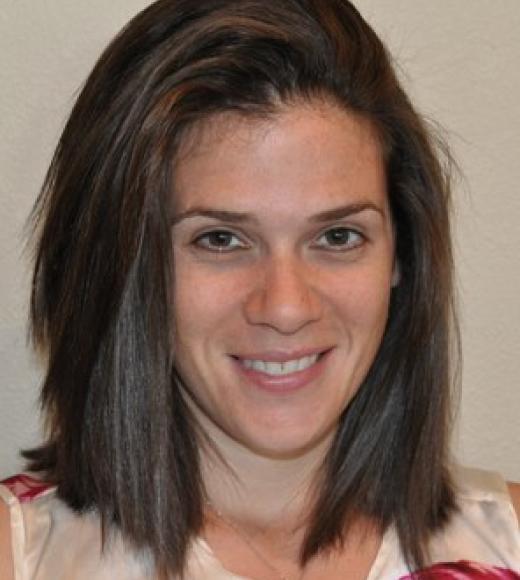
Furkan Alaca is an Assistant Professor at Queen's University's School of Computing, part of the Faculty of Arts and Science. His research focuses on user authentication systems, addressing security and usability challenges. He holds a Ph.D. (2018) in Computer Science from Carleton University, an M.A.Sc. (2012) in Electrical and Computer Engineering, and a B.Eng. (2010) in Communications Engineering, all from Carleton University. His academic career includes teaching roles at Queen's University and the University of Toronto Mississauga, where he taught courses such as Cryptography, Cybersecurity, and Discrete Mathematics. He is affiliated with Queen's Security Research Group and Computer Security Research Lab. Research interests include computer and internet security, usable security, authentication mechanisms, and systems security. He has contributed to advancements in web authentication frameworks, malware analysis, and privacy-preserving technologies. His work spans conferences like IEEE and ACM, with notable publications in cybersecurity, machine learning, and network efficiency. Current teaching includes CISC 447 (Introduction to Cybersecurity) and CISC 468 (Cryptography). He has advised on courses ranging from undergraduate programming to graduate-level security topics.
Rudolf Neu serves as Professor at the Technical University of Munich (TUM) within the School of Engineering and Design, holding a dual appointment as head of an independent research group at the Max Planck Institute for Plasma Physics (IPP) since 2014. His expertise centers on plasma-material interactions critical for fusion energy development. His academic foundation includes: Physics studies at University of Tübingen Doctorate in Nuclear Physics (1992) Habilitation in Experimental Physics at University of Tübingen (2004) Professor Neu's research pioneers tungsten-based materials for fusion reactor first walls, addressing extreme thermal and plasma conditions in devices like ASDEX Upgrade and ITER. His work bridges materials science and plasma physics to solve erosion, impurity control, and component longevity challenges essential for viable fusion power. Publication trends reveal progressive refinement from experimental ASDEX Upgrade studies (2009-2013) toward advanced tungsten solutions for DEMO reactors (2016), consistently targeting plasma-facing component durability. This trajectory demonstrates strategic alignment with international fusion roadmap milestones. Key recognition includes: Highly Cited Researchers designation (ISI Engineering category, 2014) His leadership spans critical fusion initiatives including JET task force coordination (2011-2012) and EFDA's ITER Physics Department direction (2012-2013), establishing him as a central figure in Europe's fusion research infrastructure.
Professor Shani Orgad is a leading academic in the Department of Media and Communications at the London School of Economics (LSE), where she holds the rank of Professor. Her research focuses on gender, feminism, media representations, and globalization, with notable works exploring motherhood, work-life balance, and the intersection of media with contemporary cultural narratives. Education: Orgad earned a bachelor’s degree in Media and Communications from The Hebrew University in Jerusalem, followed by a Master's and PhD in Media and Communications at LSE. She is renowned for her interdisciplinary approach, blending media studies with ethnographic research and sociocultural analysis. Research Interests: Her work critically examines media discourses around gender, motherhood, and inequality. Key themes include the 'confidence culture' critique, menopause visibility, and the role of media in shaping public perceptions of marginalized groups. She has also explored humanitarian communication and the challenges faced by NGOs in engaging the public. Awards: Orgad has been recognized for her teaching excellence, including the 2019 LSE Teaching Excellence Prize and the 2018 LSE Excellence in Education Award. Her book Confidence Culture (2022), co-authored with Rosalind Gill, challenges neoliberal individualism in modern feminist discourse. Public Engagement: She frequently contributes to public discussions on media and gender through blogs, podcasts, and media commentaries. Her work bridges academic rigor with societal relevance, addressing issues like pandemic resilience, menopause discourse, and the impact of social media on self-perception. Current Projects: During the 2024/25 academic year, Orgad is on research leave, focusing on new projects that continue her exploration of media, gender, and cultural dynamics.
John F. Canny is the Paul and Stacy Jacobs Distinguished Professor of Engineering at the University of California, Berkeley, in the Department of Electrical Engineering and Computer Science (EECS). He joined the faculty in 1987 and is affiliated with the Berkeley Artificial Intelligence Research Lab (BAIR), Berkeley Center for New Media (BCNM), and other research institutes. His research focuses on artificial intelligence, robotics, human-computer interaction, and computational geometry. Canny is renowned for developing the Canny edge detector and contributions to motion planning, privacy-preserving algorithms, and real-time simulation. Education: B.Sc. in Computer Science and Theoretical Physics (Adelaide University, 1979), B.E. (Hons) in Electrical Engineering (Adelaide University, 1980), M.S. and Ph.D. in Electrical Engineering (MIT, 1983 and 1987). Research Interests: His work spans AI, robotics (including universal planar manipulation), HCI (e.g., MultiView video conferencing), and security (privacy in collaborative filtering). He has pioneered algorithms for edge detection, non-linear FEM simulation, and computational algebra. Awards: ACM Fellow (2020), Okawa Research Grant (2003), AAAI Classic Paper Award (2002), NSF PYI (1989), Packard Fellowship (1988), and ACM Doctoral Dissertation Award (1987). Advising & Grants: Advised over 30 Ph.D. students, many of whom hold prominent roles in academia and industry. His grants include NSF and Packard funding for foundational research in robotics and computational methods. He currently teaches CS188: Introduction to Artificial Intelligence. Labs/Teams: Leads research at the Berkeley Institute of Design (BiD), focusing on RISC robotics, activity-based computing, and privacy-enhanced telepresence systems.
David L. Schwartz serves as the William G. and Virginia K. Karnes Research Professor of Law at Northwestern University's Pritzker School of Law, where he joined the faculty in 2015 and served as Associate Dean of Research & Intellectual Life from 2019-2022. His interdisciplinary work bridges legal scholarship, data science, and technology policy with emphasis on patent systems and judicial transparency. His educational foundation includes a BS from the University of Illinois at Urbana-Champaign and a JD cum laude from the University of Michigan Law School. Professor Schwartz specializes in empirical analysis of intellectual property systems , particularly patent litigation dynamics and court record accessibility. His research leverages computational methods to transform legal scholarship through projects like SCALES OKN, where he examines how technological interventions can democratize access to justice. This work situates him at the nexus of legal informatics , patent policy , and court system innovation , challenging traditional methodologies in legal academia. His publication trajectory reveals a decisive shift toward technology-driven legal transparency since 2018, with recent work focusing on large-scale court record analysis and open justice infrastructure. The 2024 Northwestern University Law Review article represents the culmination of his NSF-funded SCALES initiative, demonstrating how machine-readable litigation data can reshape legal scholarship and practice. As Co-Principal Investigator of the NSF-funded Systematic Content Analysis of Litigation EventS Open Knowledge Network (SCALES OKN), he leads a multidisciplinary consortium developing tools to convert opaque court records into structured, analyzable datasets. This $1.2M grant supports collaboration between legal scholars, computer scientists, and data engineers to build public infrastructure for judicial transparency. The SCALES OKN project operates as a cross-institutional research collective involving Northwestern faculty, data scientists from multiple universities, and partnerships with legal technology organizations. It maintains active development teams for natural language processing pipelines, litigation event databases, and public-facing analytical interfaces serving legal practitioners and researchers.
Professor Wei Cui is a distinguished scholar at the Peter A. Allard School of Law at the University of British Columbia, where he joined the faculty in 2013. His expertise spans tax law and policy, international taxation, and Chinese legal studies, with significant contributions to understanding the intersection of tax policy, climate change, and global economic governance. Professor Cui's educational background includes a BA from Harvard College, an MA in Philosophy from Tufts University, a JD from Yale Law School, and an LLM in Taxation from New York University School of Law. He maintains strong institutional affiliations with the Centre for Asian Legal Studies, Centre for Chinese Research, and Centre for Business Law at UBC. Professor Cui's research focuses on tax law and policy with particular emphasis on international taxation, carbon pricing mechanisms, Chinese fiscal systems, and the relationship between tax policy and development. His work bridges theoretical insights with practical applications in tax administration, examining how tax systems function in different political and economic contexts. He has made significant contributions to understanding China's tax system and its implications for developing countries, as well as analyzing innovative approaches to carbon pricing and digital taxation. His recent publications demonstrate a clear trajectory toward addressing contemporary challenges in tax policy, particularly the intersection of taxation with climate change mitigation and digital economy regulation. Professor Cui's research on carbon contracts for difference, output-based pricing systems, and digital services tax reflects his engagement with pressing policy questions facing Canada and the international community. Insight Grant from the Social Sciences and Humanities Research Council of Canada Insight Grant from the Social Sciences and Humanities Research Council of Canada Professor Cui has engaged in significant scholarly supervision and research collaboration, with his work supporting numerous graduate students and research projects. His professional background includes over 10 years of tax law practice with global law firms in New York and Beijing, service as Senior Tax Counsel at the China Investment Corporation (2009-2010), and consultancy roles with China's National People's Congress, Ministry of Finance, State Administration of Taxation, and the United Nations. Professor Cui maintains active research laboratories and teams focused on comparative tax systems, with particular attention to China's fiscal development and its implications for global tax governance. His current research projects examine the evolution of international tax design as part of the post-WWII international economic order and tax/subsidy policies designed to combat climate change and support innovation.
Dr Sue Caton is a Senior Lecturer in the Department of Social Care and Social Work at Manchester Metropolitan University, within the Faculty of Health and Education. Her research focuses on social and health inequalities affecting people with intellectual disabilities, particularly digital inclusion, mental health medication decision-making, and pandemic impacts. She leads projects such as Digital Lifeline (NIHR-funded), Medications and My Mental Health (NIHR RfPB), and co-leads Our Digital Health (NIHR RfSC), emphasizing co-produced methodologies. Research Projects: Digital Lifeline: Evaluating tablet impact on social connections post-pandemic. Medications and My Mental Health: Empowering informed medication decisions for people with learning disabilities. Our Digital Health: Assessing digital health participation barriers. Key Expertise: Qualitative research, health inequalities, inclusive research design, and participatory methodologies. Her work addresses pandemic-related challenges faced by marginalized groups, including access to healthcare and social support. She has supervised four completed PhD students and currently mentors four PhD candidates exploring topics such as digital inclusion, animal-assisted interventions, and familial perspectives in parenting support. Dr Caton has led evaluations for initiatives like the Shared Lives 16+ project and the Us Too project on domestic abuse, demonstrating expertise in policy-informed research. Her contributions include over 50 peer-reviewed articles, focusing on digital participation, mental health, and pandemic resilience among people with intellectual disabilities. Awards: No specific scientific awards mentioned, though her work is funded by prestigious bodies like NIHR and UKRI. Labs/Teams: Collaborates with interdisciplinary teams including Dudley Voices for Choice, Liverpool John Moores University, and the Universities of Dundee, Warwick, and Birmingham City.
Dr. Deborah J. Johnson is a researcher in the Department of Human Development and Family Studies at Michigan State University, affiliated with the College of Social Sciences. She holds a Ph.D. from Northwestern University, an M.A. from Cornell University, and a B.A. from the University of Chicago. Her work focuses on racial-ethnic socialization, cultural adjustment of immigrant/refugee groups, and resilience among marginalized populations, with particular attention to South Sudanese refugees, Indigenous Australians, and Roma youth. She explores how cultural identity intersects with global contexts, gender, and education to shape developmental outcomes. Key research areas include: Racial-identity development in African American and Latina college women Cultural adaptation of Sudanese refugees and its tridimensional aspects of identity alignment Positive youth development in Indigenous Australian communities through virtual reality initiatives Policy impacts on oppressed ethnic groups' identity reformation Her work has been published in over 50 peer-reviewed articles and books, including Identity Re/Formation among Immigrant Youth and Families (upcoming) and Children and Prejudice (2018). She leads interdisciplinary projects at the intersection of education, mental health, and public policy, emphasizing equity and culturally responsive practices. Dr. Johnson collaborates with institutions like the Child Development Laboratory and Couple & Family Therapy Clinic to translate research into community-focused interventions. Her global projects span North America, Australia, and Eastern Europe, addressing systemic barriers faced by vulnerable populations.
Georgia Zellou is an Associate Professor in the Department of Linguistics at the University of California, Davis, where she co-directs the Phonetics Lab and conducts award-winning research at the intersection of phonetics, speech perception, and human-AI interaction. Her work investigates how phonetic detail is cognitively represented through variations in speech production, with significant contributions to understanding speech alignment with voice assistants, face-masked speech intelligibility, and cross-linguistic perception of synthetic voices. Her academic credentials include a Ph.D. in Linguistics from the University of Colorado at Boulder (2012), an M.A. in Linguistics from Stony Brook University (2007), and a B.A. in Linguistics & Anthropology from the University of Florida (2005, Cum Laude, Phi Beta Kappa). Ph.D., Linguistics, University of Colorado at Boulder (2012) M.A., Linguistics, Stony Brook University (2007) B.A., Linguistics & Anthropology, University of Florida (2005) Professor Zellou's research program centers on laboratory phonology approaches to real-world communication challenges, examining how acoustic-phonetic details influence speech perception across contexts. Her studies span speech alignment with voice-AI systems (e.g., Amazon Alexa), sociophonetic variation in bilingual speech, and the cognitive mechanisms underlying perceptual compensation for coarticulation. She employs experimental methods including eye-tracking, acoustic analysis, and perceptual testing to uncover how phonetic variation functions pragmatically in human communication and human-machine interaction. Analysis of her 15 most recent publications (2023-2025) reveals three dominant research trajectories: (1) human-AI voice interaction dynamics, including prosodic alignment and social evaluation of TTS voices; (2) intelligibility optimization in challenging contexts (face masks, clear speech for diverse listeners); and (3) cross-linguistic phonetic variation in vowelless words and consonant clusters. These works consistently bridge theoretical phonology with applied speech technology, demonstrating how fine-grained phonetic detail influences communication effectiveness in both human-human and human-machine contexts. Her scientific recognition includes: Fulbright Scholar (2022) for research in France Chancellor’s Award for Excellence in Undergraduate Mentoring (2019) Fellow of the Linguistic Society of America (2020) Amazon Faculty Research Award (2019) for Alexa-related speech studies Dean’s Fellow designation at UC Davis (2020-2023) Professor Zellou maintains an active mentoring practice recognized with the Chancellor’s Award, supervising undergraduate researchers in the Phonetics Lab while teaching core linguistics courses from introductory to advanced graduate levels. Her research program is supported by competitive grants including NSF funding, Amazon Research Awards, and UC Davis internal grants (Hellman Foundation, ISS Junior Faculty Grant), reflecting the translational value of her work for speech technology development. She has co-directed major initiatives including the 2019 LSA Linguistic Institute. The Phonetics Lab she co-leads serves as a hub for experimental phonetics research, focusing on speech production-perception relationships through projects investigating vocal accommodation to voice assistants, nasal coarticulation dynamics, and cross-linguistic prosody. Current collaborations with industry partners aim to implement human speech adaptation principles into voice assistant design to enhance naturalness and engagement.
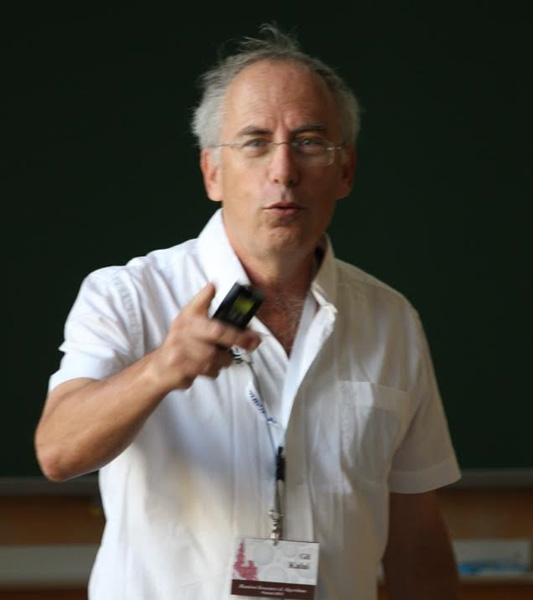
Gil Kalai is a Professor of Mathematics at the Hebrew University of Jerusalem since 1992, where he holds the Henry and Manya Noskwith Chair. He also serves as an Adjunct Professor of Mathematics and Computer Science at Yale University since 2004 in a long-term part-time visiting position. His academic career includes visiting positions at prestigious institutions including MIT, Cornell, IAS Princeton, Berkeley, Bell-labs, IBM, and Microsoft. Professor Kalai's research spans multiple areas within mathematics and theoretical computer science. His work in combinatorics encompasses geometric, probabilistic, and topological approaches. He has made significant contributions to the study of convex sets and polytopes, linear programming, and theoretical computer science. His influential 1988 paper with Kahn and Linial on Boolean functions pioneered applications of Fourier analysis in theoretical computer science. Kalai's research has evolved to include the application of Fourier analysis to thresholds, influences, symmetries, noise, percolation, and social choice. He has developed theories in algebraic shifting and studied face-numbers and other combinatorial invariants of polytopes. His work on the diameter of polytopes and randomized simplex algorithms has been influential in optimization theory. In 1993, his collaboration with Kahn produced a groundbreaking counterexample to Borsuk's Conjecture in 1325 dimensions. Professor Kalai's publications reveal a consistent focus on the intersection of combinatorics, geometry, and theoretical computer science. His work shows a progression from foundational combinatorial geometry to increasingly sophisticated applications of harmonic analysis in discrete mathematics. The recurring themes across his 30+ year career include Boolean functions, polytope theory, and probabilistic methods in combinatorics, demonstrating remarkable coherence in his research trajectory. 2016 European congress of Mathematics, plenary speaker 2013 ERC advanced grant 2012 Rothschild Prize 1994 International Congress of Mathematicians invited section talk, Zurich 1994 Fulkerson Prize 1993 Erdos Prize 1992 Polya Prize Though specific details of his advising are not provided in the source material, Kalai has written over 70 scientific papers and maintains an active research blog entitled "Combinatorics and More." His 2013 ERC advanced grant indicates significant research funding for his work. His extensive collaborations with researchers across multiple institutions suggest a robust research program with numerous PhD students and postdoctoral researchers, though specific names are not mentioned in the provided texts. Professor Kalai maintains active research connections across multiple institutions including Hebrew University, Yale, and various research centers worldwide. His work bridges pure mathematics and theoretical computer science, creating a unique interdisciplinary research environment that influences both fields.
Romin W. Tafarodi is an Associate Professor in the Department of Psychology at the University of Toronto, where he researches cultured subjectivity and identity formation. He holds a B.A. from the University of Waterloo and a Ph.D. from the University of Texas at Austin. His work examines how societal symbols and institutional relations shape human individuality and interpersonal understanding, with secondary interests in metapsychology and philosophy of science. Research interests focus on: Self-consciousness as culturally-mediated subjectivity Contingencies of identity in social relations Cross-cultural perspectives on selfhood and personhood Philosophical foundations of psychological science His publications demonstrate consistent focus on cross-cultural identity, self-esteem mechanisms, and social perception, with frequent comparative studies between Eastern and Western societies. Recent works explore multicultural adjustment, implicit bias awareness, and narrative identity in diverse cultural contexts. Current and former graduate students include: Siobhan Flanagan (current) Tara Marshall Greg Bonn Jeff Yen Courses taught in 2024-2025: PSY197: The Extended Mind PSY428: Critical Psychology PSY425: Self and Identity
Xavier Brusset is a Professor in Supply Chain at SKEMA Business School since 2016, where he also serves as Director of the PRISM Research Center since 2017. Previously, he held professorial positions at Toulouse Business School (2015-2016) and ESSCA School of Management (2009-2015), where he was responsible for the Master 2 in Purchasing and Supply Chain Management program. His academic journey includes a PhD in Management Sciences from Université Catholique de Louvain (2010) and a Habilitation à Diriger des Recherches from Université Paris Ouest Nanterre La Défense (2016). His research spans multiple critical areas in supply chain management, with particular focus on supply chain resilience, blockchain applications, weather risk management, and pandemic impacts on supply chains. Brusset has developed innovative approaches to understanding how supply chain partners interact, how information affects their behavior, and how external disruptions like weather anomalies and pandemics impact operational efficiency. His work bridges theoretical models with practical applications, often developing decision-support tools for managers facing complex supply chain challenges. Brusset's publication record shows a clear evolution of research interests, beginning with foundational work on supply chain contracts and information sharing, then expanding to weather risk management, and most recently focusing on pandemic disruptions and blockchain applications. His 15 most recent publications (2018-2025) demonstrate increasing sophistication in modeling complex supply chain phenomena, with particular emphasis on network effects, ripple effects, and multi-echelon optimization under disruption scenarios. Editorial board member of Logistics Research Editor of International Journal of Retail and Distribution Management (2022-2023) Recognized EU expert for CINEA research projects evaluation Organizer of the Colloquium on European Research in Retailing (CERR) Reviewer for multiple top journals including International Journal of Production Economics As an advisor, Brusset has supervised doctoral students including R. Alkhudary (co-director, Université Paris 2 Panthéon-Assas) and V. Capocasale (rapporteur). His professional experience extends beyond academia to include industry roles in financial markets and logistics technology, having co-founded WebLogistix, a platform for sharing logistics information in Argentina. His research has practical applications across multiple sectors, particularly in retail, food supply chains, and manufacturing, where he develops tools to help managers mitigate risks and optimize operations under uncertainty.
Anil K. Jain is a University Distinguished Professor at Michigan State University, where he has taught and conducted research for over 50 years. His work focuses on Pattern Recognition , Biometrics , and Machine Learning , with foundational contributions to fingerprint, face, and palmprint recognition. B.S., Indian Institute of Technology, Kanpur (1969) M.S. and Ph.D., The Ohio State University (1970, 1973) in Electrical Engineering His research spans Computer Vision , Deep Learning , and Biometric Security , addressing challenges in adversarial robustness , demographic bias , and generative models . Recent publications emphasize transformer-based architectures , domain adaptation , and contactless biometric systems . Scientific awards include: Inductee, National Academy of Engineering (2016) Inductee, The World Academy of Sciences (2019) BBVA Foundation Frontiers of Knowledge Award (2025) Fellowships: Guggenheim, Humboldt, Fulbright Doctor Honoris Causa: 3 universities He has authored seminal works like Introduction to Biometrics and Handbook of Face Recognition , and served as Editor-in-Chief of IEEE Transactions on Pattern Analysis and Machine Intelligence . His leadership in Forensic Science includes roles on the Defense Science Board and AAAS study teams.
Remko Van Hoek serves as Professor of Practice in the Department of Supply Chain Management at the Sam M. Walton College of Business, University of Arkansas. He teaches Sourcing and Procurement courses across undergraduate, master's, and doctoral programs. Prior to joining the University of Arkansas, Dr. Van Hoek held academic positions in Europe and served as a visiting professor at Cranfield School of Management, complemented by extensive industry experience as a supply chain and procurement executive at global corporations including Nike, PwC, and The Walt Disney Company. He currently serves on the Council of Supply Chain Management Professionals (CSCMP) Board of Directors and acts as executive director of the CSCMP Supply Chain Hall of Fame hosted by the Walton College. Dr. Van Hoek's research centers on digital transformation in procurement and supply chain management, with particular focus on blockchain implementation, artificial intelligence applications, and sustainable sourcing practices. His work investigates how emerging technologies reshape procurement processes, supplier relationship management, and risk mitigation strategies. He explores innovative approaches to supplier diversity programs, ethical sourcing frameworks, and the strategic evolution of procurement from cost reduction to value creation. His research consistently bridges academic theory with industry practice through case studies from major corporations, developing actionable frameworks for practitioners facing digital disruption and sustainability challenges. Analysis of his 15 most recent publications (2023-2025) reveals dominant themes in AI-driven supply chain risk prevention, blockchain implementation for transparency, and sustainable supplier engagement. His work demonstrates consistent industry collaboration, drawing from case studies at Walmart, Moet Hennessy, and Bayer to address post-pandemic resilience challenges. A significant portion examines procurement's strategic evolution beyond transactional functions, with recurring emphasis on ethical considerations in digital transformation and the practical implementation barriers for emerging technologies in global supply networks. As a Professor of Practice, Dr. Van Hoek integrates executive-level industry experience into curriculum development and student mentorship. His industry-engaged teaching model includes guest lecturer programs connecting students with supply chain practitioners, as evidenced by his co-authored work on integrating industry insights into supply chain education. While specific grant funding details are not publicly documented, his leadership in the CSCMP Supply Chain Hall of Fame demonstrates commitment to professional development and industry-academia knowledge transfer. Dr. Van Hoek directs the CSCMP Supply Chain Hall of Fame initiative, which documents transformative contributions to supply chain management through interviews with industry pioneers and historical case studies. This platform serves as both an educational resource for Walton College students and a professional development tool for supply chain practitioners globally. The Hall of Fame preserves critical industry knowledge while highlighting contemporary innovations in supply chain strategy and technology implementation.
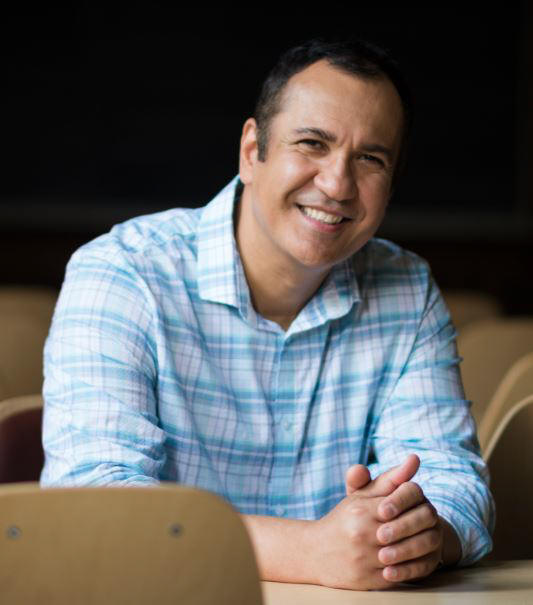
Carlos Cinelli is an Assistant Professor in the Department of Statistics at the University of Washington, where he conducts research at the intersection of causal inference, statistical methodology, machine learning, and artificial intelligence. He is also a data science fellow at the eScience Institute and affiliate faculty of the Center for Statistics and the Social Sciences, demonstrating his interdisciplinary approach to causal methodology. Dr. Cinelli received his Ph.D. in Statistics from the University of California, Los Angeles, advised by Chad Hazlett and Judea Pearl, two prominent figures in causal inference. His research focuses on developing new causal and statistical methods for transparent and robust causal claims in empirical sciences, with particular attention to challenges faced by social and health scientists. His work spans theoretical developments in causal identification, sensitivity analysis frameworks, and practical software implementations that enable researchers to assess the robustness of their causal conclusions. Cinelli's research program addresses fundamental questions about how unobserved confounding affects causal estimates and develops tools to quantify how sensitive findings are to potential violations of causal assumptions. His work on omitted variable bias frameworks has been particularly influential across multiple disciplines. Through his publications, Cinelli has established himself as a leading researcher in causal inference methodology, with papers appearing in top journals across statistics, machine learning, epidemiology, and social sciences. His work demonstrates both theoretical rigor and practical relevance, often accompanied by open-source software implementations that make his methods accessible to applied researchers. Best paper award at SBE 2024 in Econometrics Royalty Research Fund (RRF) Award recipient NSF/MMS research support As an advisor, Cinelli has successfully guided PhD students like Nick Irons to dissertation completion. He actively seeks new students with strong interests in causal inference. His research is supported by multiple funding sources including the National Science Foundation and the University of Washington's Royalty Research Fund. Cinelli contributes to the academic community through editorial work for the Journal of Causal Inference and by developing widely used software packages like sensemakr for sensitivity analysis.