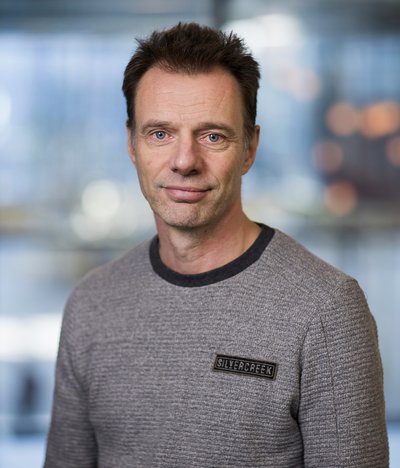
Ivan Bliznets is an Assistant Professor at the University of Groningen, affiliated with the Fundamental Computing Science department within the Bernoulli Institute, part of the Faculty of Science and Engineering. His research focuses on parameterized complexity, FPT-algorithms, and exact exponential algorithms. He holds a PhD and has published extensively in top-tier conferences and journals. Education: PhD in Computer Science (specific details not provided) His research interests span theoretical computer science, with an emphasis on developing efficient algorithms for computationally hard problems. Recent work includes studies on algorithm design for choosability, fair division mechanisms, and parameterized complexity of satisfiability and domination problems. Bliznets' publications (2023–2024) reflect a focus on algorithmic innovation in discrete mathematics, graph theory, and computational complexity. Notable areas include improving exact exponential algorithms, exploring fair division under constraints, and analyzing parameterized problems in social networks. Labs/Teams: Part of the Bernoulli Institute, a hub for interdisciplinary research in mathematics, computer science, and systems.
Bart M. P. Jansen is an Associate Professor at Eindhoven University of Technology in the Department of Mathematics and Computer Science. He leads the Graph Algorithms research group within the Algorithms cluster, focusing on foundational aspects of algorithm design and analysis, particularly in parameterized complexity and kernelization. His academic work bridges theoretical rigor with practical preprocessing techniques to reduce computational search spaces. His research interests include parameterized complexity, kernelization, graph theory, and algorithmic preprocessing. He has made significant contributions to the understanding of data reduction techniques, especially in graph problems like Feedback Vertex Set and Graph Coloring. His work often involves polynomial compressions, sparsification, and structural graph parameters, aiming to make intractable problems more manageable through preprocessing. The recent publications reflect a strong trend in theoretical computer science, particularly in fixed-parameter tractability, kernelization lower bounds, and preprocessing for NP-hard problems. His work frequently appears in top venues such as WG, MFCS, IPEC, and ESA, demonstrating sustained excellence in algorithmic research. Eindhoven Young Academy of Engineering (2022) ERC Starting Grant (2018) Christiaan Huygens Prize for ICT (2014) Best Paper Awards at WG 2021, MFCS 2016 Multiple Teaching Awards from GEWIS (2015, 2016, 2018, 2022) Veni Grant from NWO (2014) University Teaching Qualification (2016) Bart Jansen has supervised numerous PhD students, including Astrid Pieterse, Huib Donkers, Jari de Kroon, and Shivesh Kumar Roy, and currently advises Ruben Verhaegh and co-supervises Faezeh Motiei and Jeroen Lamme. His research is funded by the European Research Council under the Horizon 2020 programme (ERC grant agreement No 803421, ReduceSearch), supporting a five-year project on rigorous search space reduction. He has served on program committees of major conferences including ICALP, STACS, ESA, and SODA, and is an associate editor for ACM Transactions on Algorithms. He has also organized workshops such as SIGALGO.NL Symposium 2024 and FPT Fest 2023. He leads the Graph Algorithms group at TU/e, which is part of the broader Algorithms cluster. The group focuses on developing efficient preprocessing techniques, structural graph algorithms, and kernelization methods. His team benefits from strong international collaborations and active participation in the parameterized complexity community.
Mark de Berg is a Full Professor at TU/e and the chair of the TU/e Algorithms Group, focusing on algorithms and spatial data structures. His research spans computational geometry, FPT algorithms, and geometric networks, emphasizing practical applications in complex networks and design. He holds a PhD from Utrecht University (1992) and is co-author of seminal textbooks on computational geometry. Department: Mathematics and Computer Science Institute: EAISI Research Groups: Algorithms, EAISI Foundational His work addresses algorithmic challenges in spatial data efficiency, with over 225 publications and notable grants like the VICI grant and leadership in the Gravitation Program Networks. He serves on editorial boards and conference committees, advancing algorithmic research globally. Recent work explores approximation algorithms for geometric coverage, truthful budget aggregation mechanisms, and geometric network optimization. His contributions bridge theory and application, influencing both academic and industrial domains. Awards: VICI grant from NWO Teaching includes courses on algorithms, geometric algorithms, and discrete mathematics. His research extends to motion planning for robots and diverse combinatorial solutions, showcasing interdisciplinary impact.
Jesper Nederlof is an Associate Professor in the Algorithms and Complexity group at the Department of Information and Computing Sciences, Faculty of Science, Utrecht University. His research focuses on designing efficient algorithms for computationally hard problems, particularly in the areas of parameterized complexity, graph algorithms, and NP-complete problems. He received his M.Sc. in Applied Computing Science from Utrecht University in 2008 and his Ph.D. from the University of Bergen in 2011 with the thesis 'Space and Time Efficient Structural Improvements of Dynamic Programming Algorithms' under supervision of Pinar Heggernes. Nederlof's research interests span multiple areas of theoretical computer science, with a particular focus on designing algorithms for NP-complete problems with small exponential worst-case run time. His work extends to algorithmic game theory, information theory, representation theory, approximation algorithms, and online algorithms. He has made significant contributions to parameterized complexity, particularly in developing algorithms parameterized by structural graph parameters like treewidth and cutwidth. His publication record shows a consistent output of high-quality research in top theoretical computer science venues. His recent work demonstrates trends toward tighter bounds for exponential-time algorithms, improved space complexity, and connections between different complexity hypotheses like ETH. Many papers focus on structural parameters of graphs to develop more efficient algorithms for fundamental problems like Hamiltonian cycle, Steiner tree, and subset sum. EATCS-IPEC Nerode Prize (2023) WG best paper award (2020) Nederlof has been involved in teaching courses on algorithms, (non)-linear optimization, graph theory, (vector) calculus, modeling, and management and product development. His research has been supported by various grants including an NWO open competition project during his postdoctoral period and an EU ERC Starting Grant for the project 'Finding Cracks in the wall of NP-Completeness' (2020-2025). As a member of the Algorithms and Complexity group at Utrecht University, Nederlof collaborates with researchers working on foundational aspects of computing, contributing to the group's reputation in theoretical computer science research.
Prof. Dr. Hans Bodlaender is a Full Professor of Algorithms and Complexity at Utrecht University's Faculty of Science, Department of Information and Computing Sciences. He holds a Ph.D. in Mathematics from Utrecht University (1985) and has held academic positions since 1983, including roles at Eindhoven University of Technology. His research focuses on algorithms, computational complexity, graph theory, and parameterized complexity, with a particular emphasis on treewidth and network algorithms. He has been recognized with the EATCS-IPEC Nerode Prize (2014) and has contributed to over 500 publications. His work includes developing algorithms for graph decomposition, scheduling, and NP-hard problem analysis. He has organized international workshops and served on editorial boards, including the Journal of Discrete Algorithms. Education: B.Sc. Mathematics, Utrecht University (1981) M.Sc. Mathematics, Utrecht University (1983) Ph.D. in Distributed Computing (1985), supervised by Jan van Leeuwen Research Interests: Algorithms, complexity theory, parameterized complexity, treewidth, graph algorithms, network optimization, and computational problem-solving. His work bridges theoretical foundations with practical algorithm design, emphasizing efficient algorithms for NP-hard problems. Recent Article Trends: Focus on parameterized complexity, treewidth applications, scheduling algorithms, and algorithmic lower bounds. Recent work explores fixed-parameter tractability, graph decompositions, and hardness results for problems on structured graphs. Awards: EATCS-IPEC Nerode Prize (2014) for contributions to parameterized complexity. Grants/Advising: Extensive involvement in grant-funded research projects and academic leadership roles. Supervised numerous PhD and Master's students (details not fully listed here). Labs/Teams: Active in the Algorithms and Complexity research group at Utrecht University, collaborating on theoretical computer science and algorithmic challenges.
Mark T. de Berg is a Full Professor at Eindhoven University of Technology (TU/e), leading the TU/e Algorithms Group. He holds positions in the Department of Mathematics and Computer Science and the EAISI Foundational initiative. His research focuses on algorithms for spatial data, geometric networks, and efficient solutions for NP-hard problems. He has published over 400 works and authored influential textbooks in computational geometry. Education: MSc (Computer Science, Utrecht University, 1988), PhD (Utrecht University, 1992). Awards include the NWO Gravitation Grant (2014) and a VICI grant from NWO. He serves on editorial boards of three journals and the Computational-Geometry Steering Committee. Research Interests: Design of efficient algorithms for spatial datasets Geometric networks and FPT algorithms Applications in geographic information science and manufacturing Recent Work Trends: Emphasis on approximation algorithms, geometric data structures, and algorithmic challenges in spatial computing. Over 15 recent publications address topics like dominating sets, geometric separators, and efficient query processing in polygons. Advising & Grants: Supervised 66 students. PI in the Networks Gravitation Program. Active in international conferences and editorial roles. Labs/Teams: Core member of TU/e Algorithms Group and EAISI Foundational, fostering interdisciplinary research in algorithmic foundations.