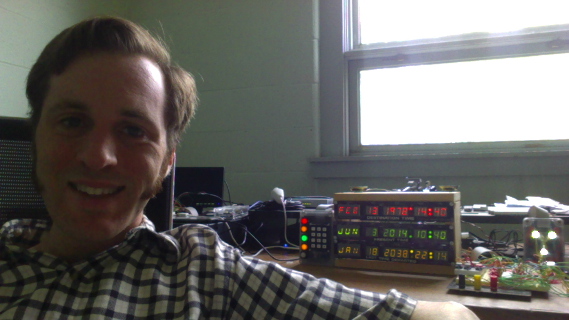
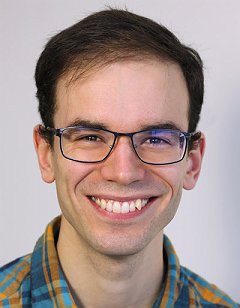
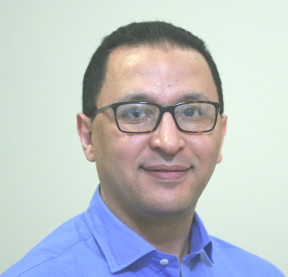
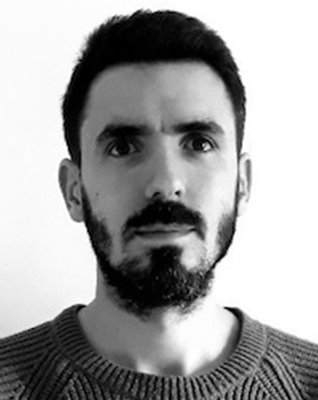
Dr. Chen-Wei Yang is a Senior Lecturer at Luleå University of Technology specializing in Dependable Communication and Computation Systems. He works within the Department of Computer Science, Electrical and Space Engineering, focusing on the intersection of computer science and energy systems. His research interests include: Engineering Smart Energy Systems Systems engineering of cyber-physical systems Data and communication interoperability Distributed automation system design Semantic modelling Dr. Yang has developed significant expertise in substation automation systems (IEC 61850) and distributed automation systems (IEC 61499) for industrial applications. His recent publications show a strong focus on energy automation systems, smart grid technologies, and digital twin implementations for energy infrastructure. His work spans both theoretical research and practical implementation, with emphasis on maintainability, interoperability, and real-time performance. Professional affiliations include: IEEE IES TCII - Sub-TC Chair on Smart Energy and Smart Grids IEEE P2805.1 WG - Self-Management Protocols for Edge Computing Node Luleå Toastmasters - Vice-president of Education Dr. Yang actively supervises PhD students and teaches multiple undergraduate and graduate courses related to programming, software design, and real-time systems. His approach combines strong theoretical foundations with practical applications in the energy sector.
Dr. Musab Coşkun serves as a Lecturer at Bingöl University's Continuing Education Application and Research Center. He maintains active international collaborations through past visiting researcher positions at the University of Koblenz and Landau (Germany) and the University of Malta. His academic credentials include: Bachelor of Science in Electrical and Electronics Engineering, Fırat University (2006-2010) with Erasmus exchange at Bialystok University of Technology, Poland (2008-2009) Master of Science in Electrical and Electronics Engineering, Fırat University (2012-2015) Doctor of Philosophy in Electrical and Electronics Engineering, Fırat University (2015-2022) Dr. Coşkun's research integrates Computer Vision, Deep Learning, and Robotics to solve practical problems in unmanned systems and human-machine interaction. His work spans theoretical algorithm development (e.g., efficient neural networks for sEMG classification) and hardware implementation (FPGA acceleration, UAV systems), with recent emphasis on reinforcement learning for robotic manipulation. The progression from 2016-2017 object tracking studies to 2021-2022 robotic grasping research demonstrates evolving technical sophistication while maintaining core computer vision expertise. His publication record shows consistent output in high-impact venues, with recent work focusing on deployable deep learning solutions for robotics. The 2018 TÜBİTAK-funded project on humanoid robot training algorithms provides evidence of competitive grant acquisition capability. As an early-career lecturer, Dr. Coşkun offers students hands-on experience with cutting-edge robotics and vision systems within Bingöl University's continuing education framework, emphasizing practical implementation skills alongside theoretical foundations.
Vincent Weaver is an Associate Professor in the Electrical and Computer Engineering Department at the University of Maine's College of Engineering. He leads the VMW Research Group, focusing on low-level systems research including hardware performance counters, computer architecture, and operating systems. Weaver received his BS in Electrical Engineering from the University of Maryland College Park in December 2000, followed by MS (January 2009) and PhD (May 2010) degrees in Electrical and Computer Engineering from Cornell University. He joined the University of Maine faculty in July 2012 as an Assistant Professor and earned tenure and promotion to Associate Professor in September 2018. His research centers on hardware performance analysis, architectural simulation, and systems programming with emphasis on Linux kernel development and embedded systems. Weaver's work bridges theoretical computer architecture with practical systems implementation, often resulting in open-source tools that advance the field. His publications reveal a consistent focus on performance analysis techniques, code optimization, and security through low-level system understanding. Weaver maintains an active teaching schedule including courses in embedded systems, operating systems, and network engineering. He values students with strong programming skills and encourages open source contributions as part of the learning process. His research group provides hands-on experience with cutting-edge processor architectures and performance analysis tools.
Dr. Mohammad A. Ahad is an Associate Professor and Interim Department Chair in Electrical & Computer Engineering at Georgia Southern University, where he has been faculty since 2011. His research focuses on bioinstrumentation, biosensors, and biomedical signal processing, particularly in Electrical Impedance Myography (EIM) for non-invasive medical diagnostics. Education: Ph.D. Electrical and Computer Engineering, University of Tennessee, Knoxville (2007) M.S. Electrical and Computer Engineering, University of Tennessee, Knoxville (2002) B.S. Electrical and Electronic Engineering, Bangladesh University of Engineering and Technology (1998) Research Focus: Dr. Ahad's work spans biomedical instrumentation development, FPGA-based system design, and computational modeling of biological systems. His EIM research enables novel diagnostic approaches for muscle pathologies and cancer detection through finite element analysis and electrode optimization. Grant Leadership: Secured competitive funding as PI for multiple NIH and NSF projects focusing on human-robot interfaces, non-invasive instrumentation, and early cancer detection techniques using impedance methods. Teaching: Specializes in hands-on engineering education including digital design with DE2 boards, embedded systems programming, and signal processing laboratories.
John Wickerson is a Senior Lecturer in the Department of Electrical and Electronic Engineering at Imperial College London. His research spans formal methods, concurrency, and hardware/software synthesis. Academic Rank: Senior Lecturer Affiliation: Imperial College London His research interests include concurrency semantics, weak memory models, transactional memory, GPU and FPGA programming, and high-level synthesis for hardware accelerators. These areas intersect formal verification, programming language design, and hardware-software interface optimization. The publications of John Wickerson reflect trends in formalizing memory models, improving hardware synthesis reliability, and testing concurrency frameworks. His work addresses challenges in quantum compiler validation, GPU workgroup progress, and weak memory persistency across Intel, ARM, and C++ architectures. He actively contributes to academic communities as a Publicity Co-Chair and Session Chair in conferences like POPL and as a Committee Member in SPLASH and PLDI. His GitHub repository activity and X (Twitter) presence further demonstrate his engagement in technical dissemination.
Dr. Aly I. El-Osery is a Professor and Chair of the Electrical Engineering Department at New Mexico Tech, where he also serves as Dean of Graduate Studies. With a complete educational background from the University of New Mexico (B.S., M.S., and Ph.D. in Electrical Engineering), Dr. El-Osery has established himself as a prominent researcher and educator in multiple engineering disciplines. His research spans several interconnected fields: Structural Health Monitoring of civil infrastructure and aerospace systems Inertial Navigation Systems and sensor fusion techniques Wireless communication systems and power control algorithms Fuzzy logic applications in engineering systems Image processing and enhancement Dr. El-Osery's publication record shows a consistent trajectory of high-impact research, with recent work focusing on advanced sensor networks for infrastructure monitoring, multi-IMU configurations for precise navigation, and innovative approaches to damage detection in critical structures. His work bridges theoretical developments with practical engineering applications. His professional service includes leadership roles as Senior IEEE member, General Co-chair for IEEE SoSE Conference 2015, and Program Co-Chair of the IEEE SMC (2011). He serves as a technical reviewer for multiple prestigious journals and has organized significant professional workshops. Dr. El-Osery maintains active laboratory work through the Intelligent Systems and Robotics Group, where students engage in cutting-edge research on autonomous systems, sensor networks, and navigation technologies. The lab environment emphasizes both theoretical understanding and practical implementation skills.
Dr. Matt Felicetti is a dedicated Lecturer in Engineering at La Trobe University's Bendigo campus, specializing in robotics, electronics, and artificial intelligence. He holds a PhD in randomized artificial intelligence for industrial applications and a bachelor's degree in computer systems engineering with top honors. Matt plays a pivotal role in enhancing the engineering capstone program and teaches subjects including Robotic System Design, Advanced Research, and Advanced Engineering Innovation. His educational background includes: PhD in Randomized Artificial Intelligence for Industrial Applications, La Trobe University (2019-2022) Bachelor of Engineering (Computer Systems) with First Class Honors, La Trobe University (2013-2016) Advanced Diploma of Electronics, Swinburne University of Technology (2011-2012) Matt's research primarily focuses on collaborative industry partnerships through the RAMPS R&D group, implementing innovative engineering solutions using electronics, sensors, embedded systems, robotics, AI, and algorithm design. He has a particular interest in field robotics and machine vision in agriculture. Beyond industry applications, Matt specializes in randomized artificial intelligence algorithms, particularly Stochastic Configuration Networks, with a focus on optimizing these algorithms for industrial environments. His research extends to low-level computing aspects including binary operations, data encoding, and hardware implementation on FPGAs or small embedded devices. His recent publications demonstrate a strong progression from theoretical algorithm development to practical implementations in specific industry contexts, with increasing attention to hardware implementation and agricultural robotics applications. The research shows a clear trajectory toward real-world industrial problem solving. Matt has received numerous scientific awards and recognitions: David Myers Medal Nancy Millis Medal SEMS Teaching Award for Industry Relevance and Student Engagement David Myers Research Scholarship D.M. Myers University Medal Fellow of the Higher Education Academy (FHEA) In terms of academic service, Matt serves as an Associate Editor for the journal Industrial Artificial Intelligence and has conducted peer reviews for Neural Computing and Applications, IEEE Transactions on Industrial Informatics, and Information Sciences. He currently leads the funded research project "Robotic Based Sewer Pipe Condition Assessment" through SmartCrete CRC (2024-2027). His teaching portfolio includes coordinating Robotic System Design, Advanced Research, and Ideas for Innovation courses. Matt is an active member of the RAMPS R&D group, which focuses on crafting innovative solutions for industry-specific problems. His work bridges academic research with practical industry applications, particularly in agricultural robotics and industrial AI implementation, demonstrating strong collaboration with researchers like Ross R, Wang D, and Putland S.
Clément QUINTON is an Associate Professor at the University of Lille, affiliated with both Inria and the CRIStAL laboratory (Centre de Recherche en Informatique, Signal et Automatique de Lille). He is an elected member of the laboratory council and maintains offices in both the Inria building (Room B312) and the M3 building (Room 224) at the Cité Scientifique campus. Dr. QUINTON is a member of the Spirals research team and holds the HDR (Habilitation à Diriger des Recherches), a French academic qualification that allows him to supervise PhD students. Dr. QUINTON's research spans several areas within computer science, with a primary focus on parallel computing, polyhedral models, and hardware acceleration. His work bridges theoretical computer science with practical applications in embedded systems and biomedical monitoring. He has made significant contributions to the fields of: Polyhedral compilation and loop optimization techniques High-level synthesis for FPGA-based hardware acceleration Systolic array design and parallel architectures Disruption-tolerant wireless sensor networks for biomedical applications Sustainable software engineering and cloud configuration Application of Large Language Models to software development Analysis of Dr. QUINTON's publication history reveals a consistent research trajectory that began with foundational work in parallel algorithms and systolic arrays, evolving toward more contemporary applications involving FPGA acceleration, polyhedral compilation, and biomedical sensor networks. His recent work shows increasing interest in sustainable computing, cloud architectures, and the application of Large Language Models to software engineering challenges. This evolution demonstrates his ability to adapt theoretical computer science concepts to address emerging technological challenges. Dr. QUINTON has supervised numerous PhD students whose research aligns with his expertise: Virginie Amand: Sustainable software services using large-scale models Alexandre Bonvoisin: Frugal software architectures for cloud-native microservices Tristan Coignion: Energy impact of Large Language Models for code Edouard Guegain: Software optimization through configuration (defended September 2023) Brell Péclard Sanwouo Chekam: Automatic detection and correction of side-channel vulnerabilities in cryptographic libraries Nada Zine: Complex and self-adaptive software systems Maxime Huyghe: Sustainable software services development based on Language Models (LLM) As a member of the Spirals research team at Inria and CRIStAL, Dr. QUINTON contributes to a collaborative environment focused on software engineering, system architecture, and sustainable computing. His work bridges theoretical computer science with practical applications in healthcare monitoring, cloud computing, and energy-efficient software development.