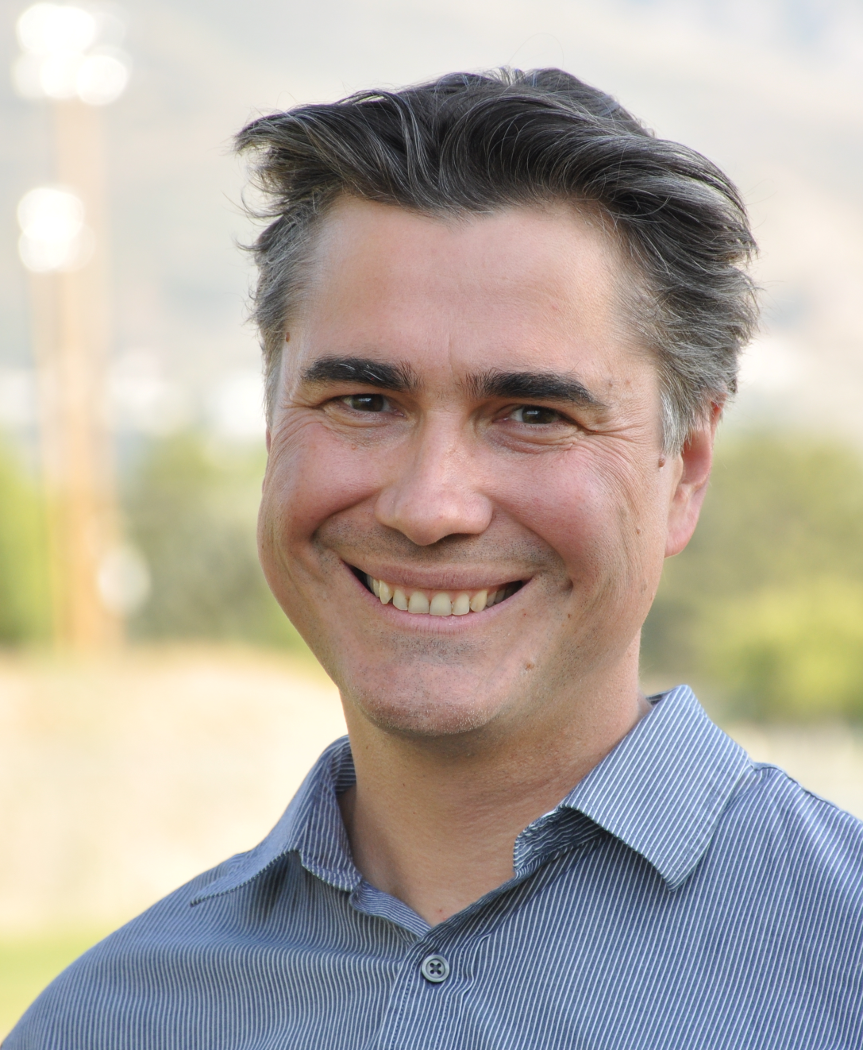
Jeremy Blackstone is an Assistant Professor in the Department of Electrical Engineering and Computer Science at Howard University's College of Engineering and Architecture. He holds a PhD in Computer Science and Engineering from UC San Diego, along with bachelor's and master's degrees from Howard University. Research specializes in: Behavioral analysis of security systems Hardware-level vulnerabilities Network attack mitigation Publications demonstrate consistent focus on side-channel attacks, hardware Trojans, and IoT security. Recent work integrates economic models with security quantification and applies machine learning to intrusion detection. Earlier contributions address power analysis countermeasures and FPGA security. No information is available regarding awards, supervised students, or laboratory affiliations.
Hadi Mardani Kamali is an Assistant Professor at the University of Central Florida (UCF) in the Department of Electrical and Computer Engineering . His research focuses on VLSI design and testing , Hardware security and trust , FPGA design , Electronic design automation (EDA) , and Applied machine learning in hardware contexts. Dr. Kamali is actively engaged in research projects related to IC/IP protection , security-aware EDA , and security of learning models .
Bernd Becker is a Professor in the Department of Computer Science at the Faculty of Engineering, University of Freiburg, Germany. He has been actively publishing in the fields of formal methods, hardware verification, and automated reasoning since the 1980s, with a sustained record of high-impact publications up to 2025. His research interests span formal verification, SAT and SMT solving, hardware testing, probabilistic systems, and embedded systems security. His work bridges theoretical advances in automated reasoning with practical applications in processor design, RISC-V verification, and safety-critical systems. The recent articles highlight a strong focus on applying formal methods to emerging challenges in hardware and AI, including POMDPs for robot planning, RISC-V security, GPU verification, and energy-efficient monitoring. There is a clear trend toward integrating symbolic computation with machine learning and probabilistic reasoning. Bernd Becker has collaborated extensively with researchers such as Ralf Wimmer, Ilia Polian, and Matthias Sauer, indicating leadership in a large, interdisciplinary research group. His work has been supported by numerous grants, though specific details are not listed in the source text. He has contributed to major conferences such as DATE, FMCAD, and SAT, and has mentored several students and researchers, though specific names are not provided. He is involved in projects related to secure scan networks, physical unclonable functions, and smart home systems.
Dr. Deepayan Bhowmik is a Senior Lecturer and Director of Research at Newcastle University's School of Computing. He holds a PhD in Electronic and Electrical Engineering from the University of Sheffield. His research focuses on image/signal processing, AI, neuromorphic vision systems, and their applications in media security, remote sensing, and space research. He actively contributes to UN Sustainable Development Goals related to clean water, environmental sustainability, and responsible consumption. Grants & Collaborations: PI of £2M EPSRC-funded North East Space Communications Accelerator (2025-2029) Co-I in Airbus-funded Smart Earth Observation Satellite Constellation project (2024-2028) Lead on JPEG Trust international standard for media authenticity Research Interests: Combines theoretical advancements in signal processing with practical applications in media forensics, environmental monitoring, and heterogeneous computing. Recent work addresses AI-generated media manipulation detection and satellite imagery analysis for ecological challenges like water hyacinth infestation. Publications: Over 28 peer-reviewed articles spanning watermarking techniques, FPGA optimization, and remote sensing applications. Recent trends show increasing focus on AI-driven media security and space-based earth observation systems.
Jialin Li is the Sung Kah Kay Assistant Professor at the School of Computing , National University of Singapore (NUS). They earned a PhD from the University of Washington under the advisement of Dan Ports and a bachelor's degree from the University of Michigan . Their research focuses on distributed systems and operating systems, particularly on co-designing systems with data center networks, data plane operating systems, and decentralized infrastructure. Research Interests : Distributed systems, network ordering, consensus algorithms, in-network processing, decentralized infrastructure, and programmable hardware. Awards : OSDI '14 Jay Lepreau Best Paper Award, NSDI '15 Best Paper Award. Students : Mentors PostDocs (Chaoyi Ruan), Graduate Students (Inho Choi, Yunfan Li, Ziji Shi, etc.), and Undergraduate Students (Mohsen Ghasemi, Akshaye Shenoi, etc.). Service : Conference Organizer (APSys '25 Program Co-Chair), Technical Committee for EuroSys, SOSP, NSDI, and others.
Jim Plusquellic is a Professor in the Department of Electrical and Computer Engineering at the University of New Mexico. He holds leadership roles including Director of the Integrated Circuit Hardware Analysis Laboratory (IC-HAL) and President/CEO of IC-Safety, LLC. His research focuses on hardware security, trust, and IoT systems, with contributions to PUF-based authentication and Trojan detection. He has authored/co-authored over 100 refereed publications and holds multiple patents. Plusquellic has been honored with awards such as the IEEE Computer Society's Outstanding Contribution Award and induction into the HOST Hall-of-Fame. Education: Ph.D., Computer Science, University of Pittsburgh, 1997 M.S., Computer Science, University of Pittsburgh, 1995 B.S., Biology, Indiana University of Pennsylvania, 1983 Research & Grants: Lead PI for the "Trusted and Assured Microelectronics Theme" under ASU's SWAP Hub ($2.5M, 2024-2028) NSF-funded projects on hardware security primitives and DFM (e.g., $300K for regional process variation analysis) Industry collaborations with Sandia National Labs, IBM, NASA, and commercial entities Key Contributions: Co-founder of the IEEE International Symposium on Hardware-Oriented Security and Trust (HOST) Developed PUF-based authentication protocols (e.g., PUF-Cash for digital currency) Authored book chapters on hardware security and Trojan detection Labs & Teams: Integrated Circuit Hardware Analysis Laboratory (IC-HAL) Collaboration with Enthentica Inc. and IC-Safety for hardware security commercialization
Dr. Andreas Hein is Associate Professor and Chief Scientist at the Interdisciplinary Centre for Security, Reliability and Trust (SnT), University of Luxembourg, specializing in future space systems. Research spans interstellar mission design, autonomous transportation, and sustainable space exploration as Executive Director of the Initiative for Interstellar Studies. Key interests include disruptive space architectures, complex systems engineering, and long-duration space projects. Recipient of the Willy Messerschmitt Award and Exemplary Systems Engineering Doctoral Dissertation Award for space systems innovation. Recent publications focus on pico-satellite technologies (POQUITO mission), space nuclear propulsion, distributed satellite systems, AI governance frameworks, and orbital debris mitigation strategies. Authored 70+ peer-reviewed articles advancing space systems engineering methodologies.
Vanessa Chen is an Assistant Professor of Electrical and Computer Engineering at Carnegie Mellon University (CMU), part of the College of Engineering. She holds a Ph.D. from CMU (2013) and prior academic appointments at The Ohio State University and Qualcomm. Her research focuses on hardware security for IoT devices, analog/mixed-signal circuits, and ubiquitous sensing systems, with notable contributions in RF fingerprinting and machine learning integration. She leads the Energy-Efficient Circuits and Systems Lab and has received prestigious awards including the NSF CAREER Award (2019). Education : Ph.D., Electrical and Computer Engineering, Carnegie Mellon University (2013) M.S., Electrical Engineering, National Tsing Hua University, Taiwan (2005) B.S., Electrical Engineering, National Tsing Hua University, Taiwan (2003) Research Interests : Chen’s work spans secure analog/RF electronics, brain-machine interfaces, and energy-efficient data conversion systems. She pioneers methods to detect hardware Trojans via electromagnetic side-channels and designs lightweight, energy-efficient transceivers for IoT. Her projects integrate machine learning for real-time threat detection and system optimization. Awards & Grants : NSF CAREER Award (2019) EAGER Grant for Real-Time Learning in Secure RF Electronics (2020) SpecEES Grant for Trusted Wireless Transceivers (2019) Advising & Outreach : Collaborates with industry partners like Apple and Analog Devices. Develops educational initiatives integrating secure sensor design into undergraduate/graduate curricula. Her lab emphasizes interdisciplinary approaches to tackle emerging cybersecurity challenges in IoT and wireless systems.
Renato Mancuso is an Associate Professor in the Computer Science Department at Boston University (BU) and director of the BU Cyber-Physical Systems Lab (CPSLab@BU). He is also affiliated with the BU Department of Electrical and Computer Engineering. He received his Ph.D. from the University of Illinois at Urbana-Champaign (2017) and degrees from the University of Rome 'Tor Vergata' (B.S. 2009, M.S. 2012). His research focuses on real-time and embedded systems, including techniques for achieving controllable timeliness in safety-critical applications, FPGA-accelerated systems, and autonomous systems. He pioneers software/hardware techniques for performance profiling and management in hybrid CPU+FPGA platforms, with applications in robotics, aviation, and autonomous ground vehicles. Key research areas include cyber-physical systems, real-time resource management, and black-box workload profiling. His work has received multiple awards, including the NSF CAREER Award (2023) and the 2024 ACM SIGBED Early Career Researcher Award. His research is supported by federal agencies (NSF) and industry partners (Bosch, Red Hat, Cisco, Xilinx). He advises numerous Ph.D. and master’s students and leads initiatives like the BU F1Tenth Autonomous Racing Organization (ACRO). His lab actively recruits students with expertise in robotics, operating systems, virtualization, and FPGA development. Notable contributions include the E-WarP profiling framework, the Omnivisor hypervisor, and innovations in FPGA-based system management. He has authored over 50 peer-reviewed publications and holds patents in embedded systems design.
Martin Gonzalez Honorio is an Associate Professor at the Department of Electronics Technology, Universidad Carlos III de Madrid. He serves as Subdirector of Students and Coordination of Final Year Projects. His research focuses on hardware security, embedded systems, and IoT security, with emphasis on physical unclonable functions (PUFs), radiation-hardened designs, and cryptographic primitives. He leads the Grupo Universitario de Tecnologías de Identificación (GUTI) research group and has contributed to over 30 publications since 2011. His work addresses challenges in secure authentication protocols, fault-tolerant electronics, and biomedical signal processing applications. Key areas: Hardware Security, IoT Infrastructure Protection, Radiation Effects on Electronics Notable contributions: SRAM PUF implementations, FPGA radiation hardening techniques, and TRNG designs using biometric data Recent research trends show strong focus on combining machine learning with hardware fingerprinting techniques for device identification, while maintaining emphasis on cryptographic protocol security. His publications reflect advancements in both theoretical foundations and practical implementations of secure embedded systems. No scientific awards or grants are explicitly listed, though his active research output indicates sustained academic engagement. His involvement in teaching and student coordination highlights commitment to academic development alongside technical research.
Thomas Eisenbarth is an Affiliate Associate Professor in the Department of Electrical and Computer Engineering at Worcester Polytechnic Institute (WPI), with a collaborative appointment in the Department of Computer Science. Since August 2017, he has also served as a Professor at the Institute for IT Security, University of Lübeck, Germany. His research spans applied cryptology, embedded systems security, side-channel analysis, and cloud security. Ph.D. in ECE, Ruhr University Bochum, Germany Former researcher at Center for Cryptology and Information Security (CCIS), Florida Atlantic University Member of Horst Görtz Institute for IT Security (HGI) during doctoral studies His research focuses on applied cryptology , secure computer architecture , side-channel and physical attacks , and cloud and virtualization security . He leads research efforts in identifying and mitigating microarchitectural vulnerabilities, particularly in cryptographic implementations. His work is closely tied to the Vernam Group at WPI. The most recent publications highlight trends in cache-based side-channel attacks , particularly in cloud and trusted execution environments (e.g., SGX). His research demonstrates practical attacks on cryptographic implementations, including false dependency exploits and cross-VM leakage, while also proposing countermeasures like CacheShield and MASCAT. The recurring themes include microarchitectural vulnerabilities , hardware-software interaction risks , and privacy threats in virtualized environments . Scientific contributions and recognitions include: Best Paper Award, CHES 2008 Editor, Springer’s Journal of Cryptographic Engineering Guest Editor, IEEE Embedded Systems Letters Special Issue on Embedded System Security General Co-Chair: CARDIS 2020, CARDIS 2021, CHES 2013 TPC Co-chair: CARDIS 2017, SPACE 2017, LightSEC 2014, WESS 2013 PC Member: USENIX Security, IEEE S&P, CRYPTO, EuroCRYPT, and others Thomas Eisenbarth has advised and collaborated with numerous researchers and students, many of whom are co-authors on his publications. His service includes extensive editorial and conference leadership roles. He has not received major grants explicitly mentioned in the text, but his sustained publication record and leadership suggest active funding. He is involved in promoting research exchanges with Europe, particularly Germany, through DAAD, DFG, and Fulbright programs. His research lab, the Vernam Group , focuses on practical side-channel analysis, secure hardware design, and cryptographic implementations. The team works on both offensive techniques (e.g., cache attacks) and defensive mechanisms (e.g., masking, threshold implementations). They utilize FPGA platforms, cloud environments, and embedded systems to evaluate real-world security.
Dr. Charles James Gillan is a Senior Lecturer at Queen's University Belfast's School of Electronics, Electrical Engineering and Computer Science, part of the Faculty of Engineering and Physical Sciences. His research focuses on high-performance computing (HPC), heterogeneous accelerators (FPGAs and GPUs), and their applications in diverse fields such as clinical physiology, electromagnetic fields, and image analysis. He collaborates extensively with the QUB Medical School on data analytics and machine learning for ICU patient monitoring. Gillan has led multiple projects, including an InterTrade Ireland-recognized Fusion project with CreVinn Ltd, which transferred FPGA programming knowledge to industry. His work spans academic and industrial partnerships, emphasizing innovation in computing systems and real-world problem-solving. His research interests include KTP projects, EPSRC funding, and H2020 initiatives. He has contributed to high-impact projects like the HPC-NI center and handheld olfactory detection systems. Awards include an InterTrade Ireland award for his Fusion project. Gillan has also engaged in outreach, training graduates in OpenCL programming and fostering industry-academia collaboration. Publications highlight advancements in neural networks for blood pressure prediction, exascale computing algorithms, and AI-driven healthcare solutions. His work bridges theoretical computing and practical applications, with a focus on edge computing architectures and transparency in food systems.
Anton Burtsev is an Associate Professor at the Kahlert School of Computing, University of Utah. His research focuses on redefining operating system architectures to address modern challenges like security attacks, data center workloads, and heterogeneous hardware. He leads the Mars Research Group, developing systems like the formally verified Atmosphere microkernel in Rust/Verus, and the high-performance DRAMHiT hash table. Key projects include Rust for Linux kernel integration, verified drivers (Veld), and isolation mechanisms like RedLeaf OS. Research interests include kernel isolation, formal verification, language safety (Rust), and overcoming the memory wall. Current work emphasizes clean-slate OS designs and retrofitted security solutions for existing kernels. Collaborative projects include Horizon (secure scientific cloud computing) and RedLeaf OS verification efforts. Advising undergraduate to PhD students interested in OS research. Notable grants include NSF CAREER (NgOS) and collaborative NSF grants on verified systems. Active in the MARS reading group and open-source contributions via repositories.
Armin Alaghi serves as a Research Scientist at Oculus Research (Redmond, WA) and holds an Affiliate Assistant Professor position at the University of Washington. His dual affiliation enables valuable knowledge transfer between cutting-edge industrial research and academic pursuits in computer systems engineering. Dr. Alaghi's research spans the intersection of embedded systems, digital circuits, and mathematics. His primary focus involves building low-power augmented reality (AR) and virtual reality (VR) systems while developing novel computation methods for unreliable beyond-CMOS technologies. His previous research contributions include significant work in stochastic computing (where he developed the STRAUSS synthesis methodology), reliable Network on chip (NoC) design, FPGA testing methodologies, NoC testing techniques, artificial neural networks implementations, asynchronous circuit design, and multi-valued logic systems. He has made his spectral-transform-based synthesis tool publicly available on GitHub, demonstrating commitment to open research. Analysis of Dr. Alaghi's publication record reveals a clear research trajectory from foundational circuit-level work toward practical applications in AR/VR systems. His publications from 2020-2025 demonstrate expertise spanning computer architecture, security for immersive technologies, neural network compression techniques, and homomorphic encryption methods. A recurring theme throughout his work is the exploration of quality-energy tradeoffs and error-resilient computing approaches, with increasing focus on security aspects of AR/VR systems in his most recent work. Dr. Alaghi maintains active connections with the broader research community, as evidenced by his Erdős number of 3 (Armin Alaghi John P. Hayes Frank Harary Paul Erdős) and his ongoing contributions to open-source research tools. His GitHub repository for stochastic computing synthesis shows community engagement with multiple contributors. At Oculus Research, Dr. Alaghi applies his theoretical expertise to practical challenges in next-generation AR/VR system development. His work bridges academic research with real-world product development, particularly in addressing energy efficiency challenges for wearable computing platforms through innovative circuit design approaches.
Vincent Weaver is an Associate Professor in the Electrical and Computer Engineering Department at the University of Maine's College of Engineering. He leads the VMW Research Group, focusing on low-level systems research including hardware performance counters, computer architecture, and operating systems. Weaver received his BS in Electrical Engineering from the University of Maryland College Park in December 2000, followed by MS (January 2009) and PhD (May 2010) degrees in Electrical and Computer Engineering from Cornell University. He joined the University of Maine faculty in July 2012 as an Assistant Professor and earned tenure and promotion to Associate Professor in September 2018. His research centers on hardware performance analysis, architectural simulation, and systems programming with emphasis on Linux kernel development and embedded systems. Weaver's work bridges theoretical computer architecture with practical systems implementation, often resulting in open-source tools that advance the field. His publications reveal a consistent focus on performance analysis techniques, code optimization, and security through low-level system understanding. Weaver maintains an active teaching schedule including courses in embedded systems, operating systems, and network engineering. He values students with strong programming skills and encourages open source contributions as part of the learning process. His research group provides hands-on experience with cutting-edge processor architectures and performance analysis tools.