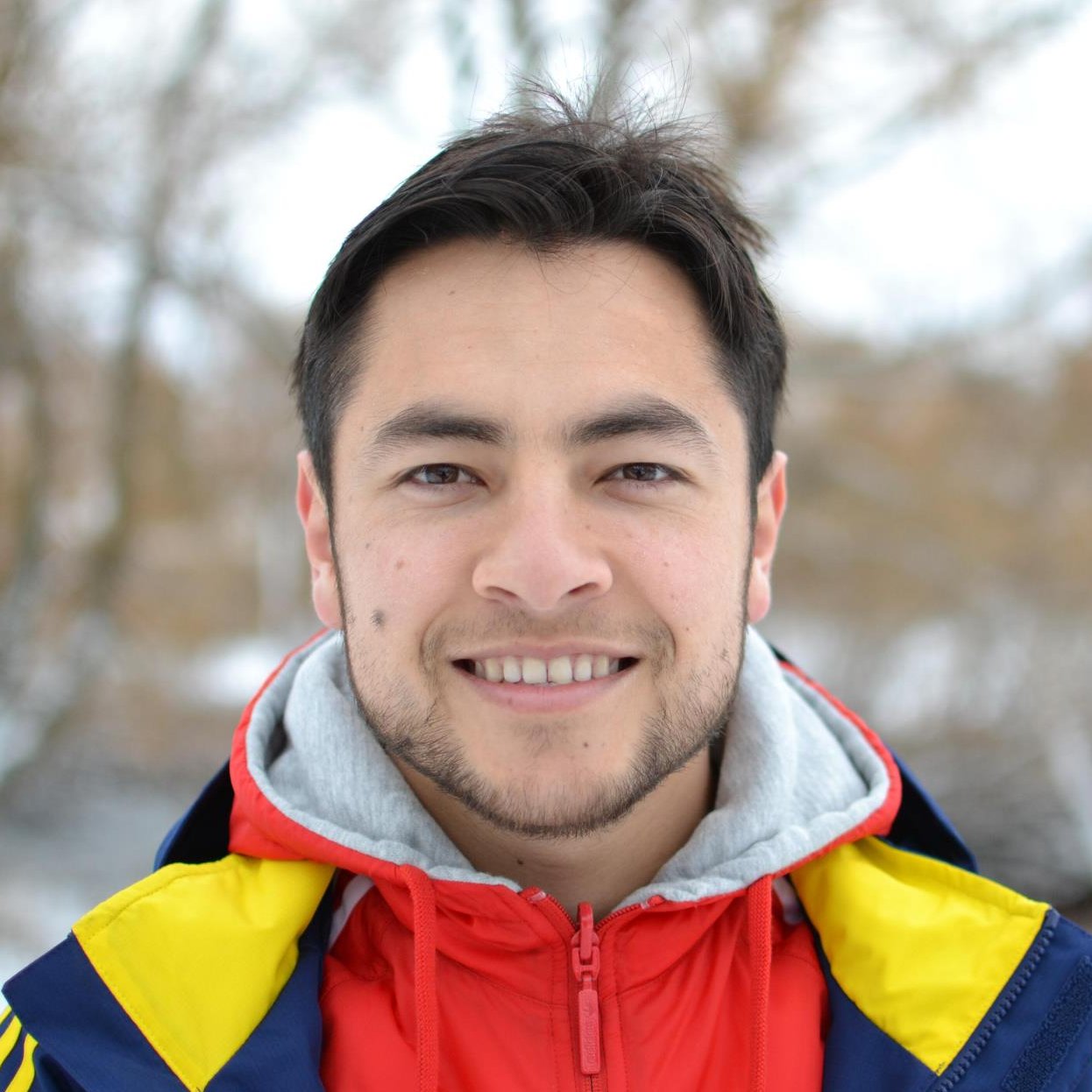
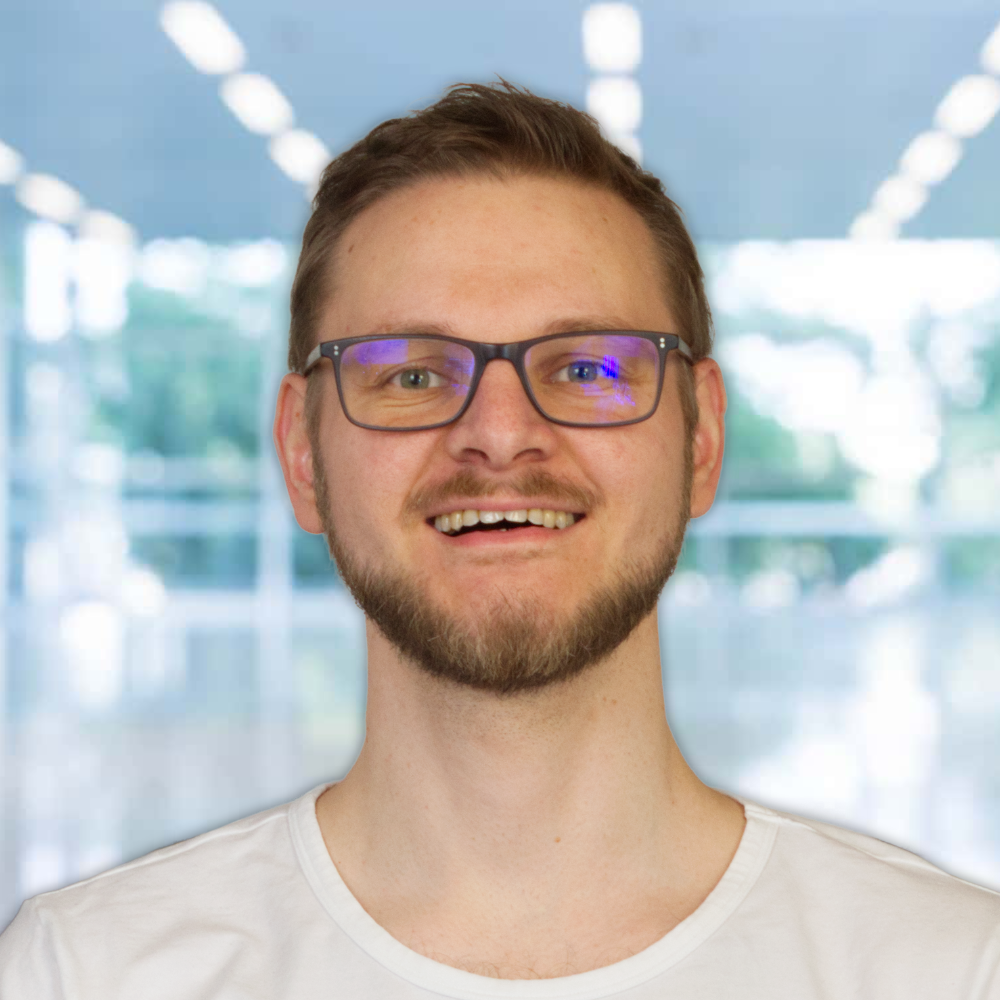
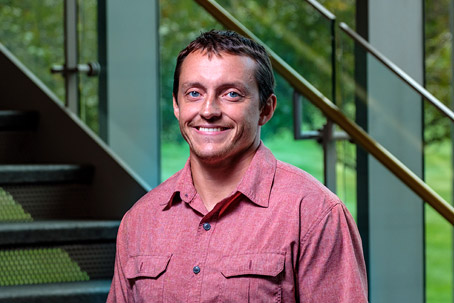
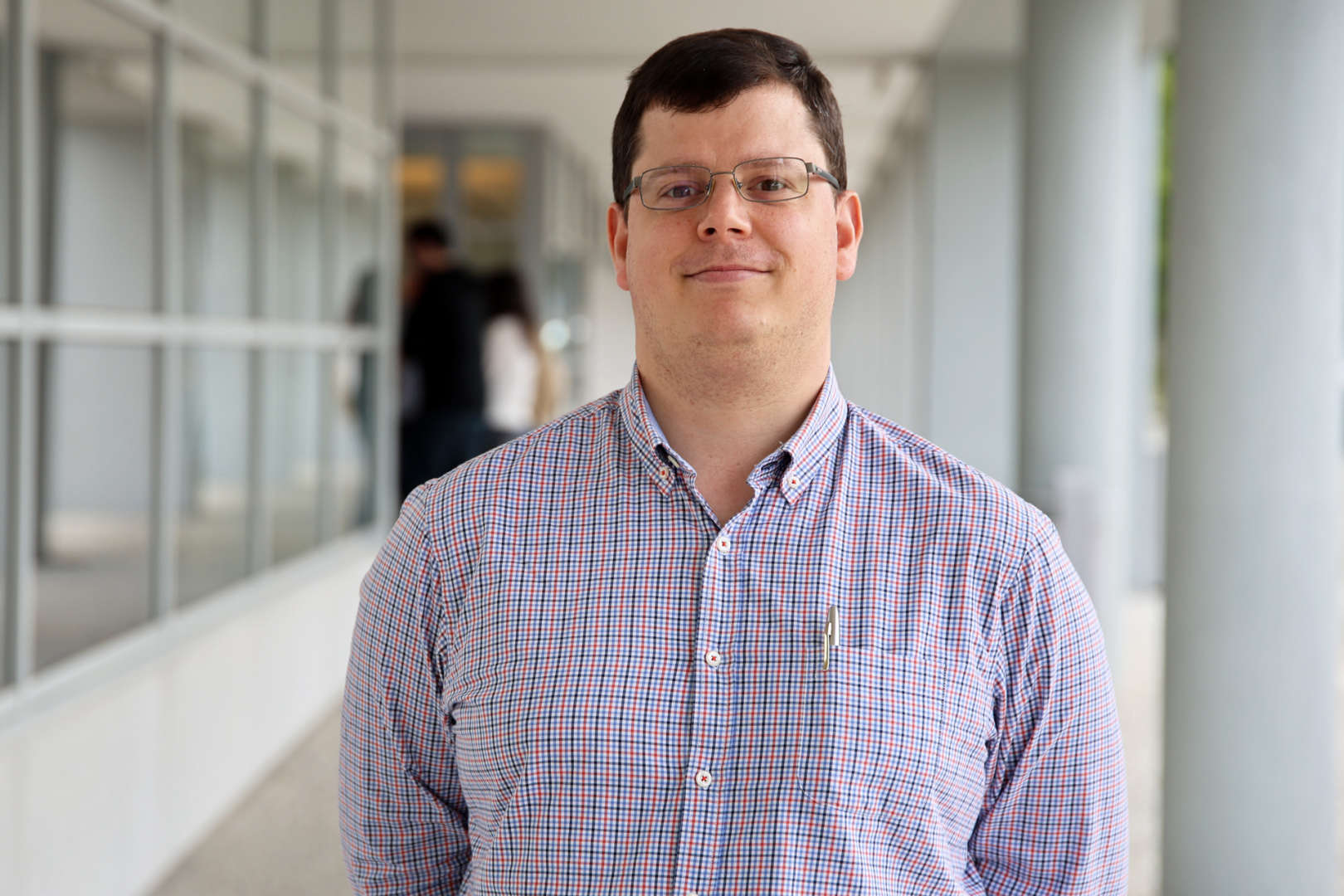
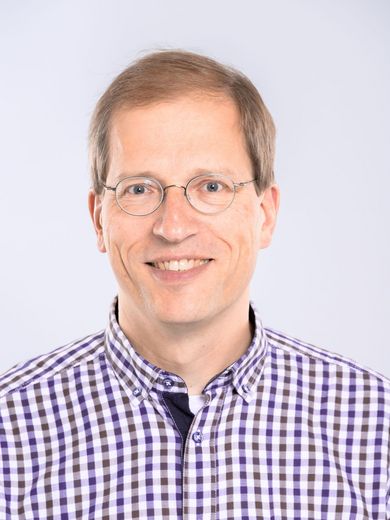
Luis Eduardo Ardila Perez is a Researcher at the Institute for Data Processing and Electronics (IPE) within the Karlsruhe Institute of Technology , affiliated with the Karlsruhe School of Elementary Particle and Astroparticle Physics . His work focuses on high-performance computing architectures for particle physics experiments. PhD Topic: Real-Time High-Performance Readout System (100 Tb/s) for the CMS Track Trigger Supervisor: Prof. Dr. Marc Weber His research spans high-energy physics detector systems , with expertise in: FPGA-based track triggering GPU acceleration for real-time processing ATCA modular electronics High-throughput data acquisition Cryogenic sensor readout Publication trends highlight: Advancements in quantum computing interfaces (RFSoC, SQUID multiplexers) Innovations in detector electronics (CMS, PANDA) Optimization of real-time data systems for extreme environments Development of scalable hardware architectures for large-scale experiments He contributes to: CMS experiment at CERN KSETA collaborative research school OpenIPMC open-source hardware initiatives
Ali Mehrpooya is a Senior Research Associate at the School of Electrical, Electronic and Mechanical Engineering at the University of Bristol. His research focuses on implementing next-generation wireless networks (Beyond-5G/6G) with specialization in hardware acceleration technologies. Dr. Mehrpooya holds BSc, MSc, and PhD qualifications. His academic background has led him to specialize in advanced communication systems with hardware implementation expertise. His primary research interests center on applying AI and machine learning models on field-programmable gate arrays (FPGAs) and systems on chips (SoCs), particularly Zynq RFSoC and MPSoC platforms. He is actively involved in multiple research groups including FPGA and SoC Development, Beyond 5G and 6G, AI & Robotics, and High Performance Networks. His work explores how these technologies can revolutionize communication capabilities across various applications within B5G/6G networks. His recent publications demonstrate cutting-edge work in nanosecond optical switching technologies, addressing critical challenges in network recovery, topology optimization, and dynamic traffic management. The research shows a clear integration of AI/ML techniques with hardware acceleration to solve complex networking problems for next-generation communication systems. Dr. Mehrpooya is affiliated with the Smart Internet Lab's HPN Group at the Merchant Venturers Building in Bristol. This research environment focuses on advanced networking solutions for high-performance applications and next-generation communication infrastructure.
Professor Park Woo-chan is affiliated with the Department of Computer Engineering at Sejong University. His research focuses on real-time ray tracing, GPU architecture for mobile devices, and FPGA implementations. He has a strong publication record in 3D graphics and AI semiconductors. 1989-1993: Bachelor's in Computer Science, Yonsei University 1993-1995: Master's in Computer Science, Yonsei University 1995-2000: Doctorate in Computer Science, Yonsei University He leads the Processor Lab, which specializes in media processors including high-performance mobile GPUs and AI semiconductors. The lab has extensive experience with industry projects for Samsung and LG, national initiatives, and industry-academia collaborations. Research interests span real-time ray tracing algorithms, GPU memory systems, lossless data compression, computer arithmetic, and hardware acceleration for 3D graphics and sound rendering. Recent publications show a strong focus on real-time sound propagation, multi-threaded algorithms, depth level control, and FPGA implementations for ray tracing. Keywords from his work include: Computer Science , Neural Networks , GPU Architecture , 3D Rendering , Mobile Graphics , and FPGA Acceleration . Contact: pwchan@sejong.ac.kr
Smith Khare is an Assistant Professor at the Maersk Mc-Kinney Moller Institute, University of Southern Denmark, specializing in Applied AI and Data Science. He is affiliated with the Centre for Clinical AI (CAI-X) in Odense and contributes to healthcare analytics through interdisciplinary research. Ph.D. in Electronics and Communication Engineering (2022) from IIITDM Jabalpur M.Tech in Electronics and Telecommunication Engineering (2015) from Veermata Jijabai Technological Institute His research focuses on explainable AI, deep learning, and signal processing for healthcare applications. Key areas include medical imaging, neurological disorder detection, and biomedical signal analysis. His work integrates AI with clinical diagnostics to improve early disease identification. Smith’s recent publications emphasize explainable AI in cervical cancer screening, liver segmentation, and neurological conditions like Alzheimer’s and Parkinson’s. He combines deep learning with optimization algorithms and hardware implementation for medical IoT systems. Best Paper Award, IEEE Sensors Journal (2024) He teaches courses such as Artificial Intelligence for Healthcare Data and Tools of Artificial Intelligence , and mentors students in AI-driven healthcare projects. His collaborations span institutions like Karolinska Institute (KI) and Odense University Hospital (OUH).
Masao Yanagisawa is a Professor at Waseda University's School of Fundamental Science and Engineering, with over 25 years of academic experience since 1998. An IEEE and ACM member, he holds a Doctor of Engineering degree from Waseda University.
Konstantin Lübeck is a Researcher at the Chair of Embedded Systems, Department of Computer Science, University of Tübingen. He holds a B.Sc. and M.Sc. in Computer Science from the same institution (2015, 2018), with academic focus on computer engineering and embedded systems. He studied at Uppsala University in 2016 as an Erasmus student and received a Stiftung Industrieforschung scholarship for his Master's thesis in 2017. B.Sc. and M.Sc. from University of Tübingen Erasmus exchange student at Uppsala University (2016) Stiftung Industrieforschung scholarship recipient (2017) His research centers on machine learning accelerator performance modeling , combining computer architecture descriptions (from register-transfer to abstract diagrams) with DNN parameters for rapid design space exploration in neural network-hardware co-design. Key methodologies include analytical models for latency, throughput, and roofline analysis of AI accelerators. The 8 listed publications (2016-2025) reveal trends in: Neural network-hardware co-design Abstract architecture modeling Ultra-low power AI accelerators Performance representatives for benchmarking Formal hardware description languages AutoML for accelerator optimization Scientific contributions include Stiftung Industrieforschung scholarship (2017) He has lectured on computer architecture since 2018 for the Bosch Learning Company initiative at Tübingen's technology transfer center and supervised 12+ theses projects (4 completed) involving Pico-CNN frameworks, cache modeling, RISC-V implementations, and systolic array architectures.
Nikolaos Alachiotis is an Associate Professor at the Digital Society Institute, specializing in Artificial Intelligence, Field-Programmable Gate Arrays (FPGA), and Genomics. His work bridges Hardware Acceleration with Bioinformatics , focusing on scalable solutions for genomic analysis and evolutionary biology. Research Themes: AI Hardware, FPGA Optimization, Population Genetics Key Collaborations: Delft University of Technology, Zenodo, Frontiers in High-Performance Computing Research Focus Alachiotis develops deep learning and FPGA-based tools for selective sweep detection and phylogenetic inference , enabling faster genomic analyses. His work spans convolutional neural networks , spiking networks , and adaptive computing for bioinformatics and radio astronomy. Recent articles highlight trends in AMD Versal SoC applications, deep learning for natural selection , and scalable genomic pipelines . Scientific Awards Outstanding Student Paper Award (2023) Supervised Work His supervised projects include Accelerating Selective Sweep Detection and Effective Data Preprocessing Techniques , often in collaboration with institutions like Zenodo and Frontiers journals.
David Gregg is a Professor in the Department of Computer Science at Trinity College Dublin's School of Computer Science and Statistics, where he serves as Global Director for Computer Science (since 2020) and previously as Head of the Discipline of Software and Systems (2018-2022). His research focuses on software performance optimization and embedded systems, with particular expertise in accelerating deep neural networks on resource-constrained platforms. He teaches Systems Programming (CS2014/5) and Concurrent Systems I (CS3014). Gregg's research spans multiple areas of computer systems including: Compiler optimization and program analysis Processor microarchitecture and parallelism (multi-core, vector, instruction-level) Computer arithmetic and domain-specific languages Low-energy embedded systems and FPGA implementations Deep neural network acceleration He has served on numerous program committees including PACT, PLDI, CC, and other major computer systems conferences, and has been on the Board of Distinguished Reviewers for ACM TACO multiple times. Professor Gregg has advised numerous PhD and MSc students, many of whom have gone on to prominent positions at companies like Intel-Movidius, Google, Amazon, and Synopsys. He leads the triNNity project which includes optimized libraries and compilers for implementing convolutional neural networks on CPUs.
Alex Nicolau is a Professor of Computer Science at the University of California, Irvine within the Donald Bren School of Information and Computer Sciences and an IEEE Fellow. He serves as Editor for PeerJ Computer Science and leads research at the Center for Embedded Computer Systems, focusing on high-performance computing systems and compiler-driven hardware optimization. His research spans Parallelizing Compilers , High-Performance Java , Power-aware Computing , and Reconfigurable Computing , with current projects including Julius C (divide-and-conquer algorithm modeling), EXPRESS (retargetable compiler framework), FORGE (distributed embedded systems optimization), SPARK (C-to-VHDL synthesis), and CoReComp (reconfigurable architecture compilers). These initiatives address critical challenges in energy efficiency, hardware-software co-design, and performance optimization for embedded platforms. Recent publications (2003-2004) reveal concentrated efforts on mobile energy efficiency and reconfigurable systems, with recurring themes of power management in multimedia streaming, task partitioning for watermarking algorithms, and network topology exploration in mesh architectures. His work demonstrates a cohesive vision bridging theoretical compiler advances with practical hardware implementations. His professional recognition includes: IEEE Fellow Professor Nicolau has mentored over 20 Ph.D. students to completion, including current advisees Weiyu Tang and Radu Cornea, and alumni like Sumit Gupta and Joseph Hummel who now lead industry and academic research. His editorial leadership as Editor-in-Chief of the International Journal of Parallel Programming and program committee roles for ICS and LCTES conferences reflect his significant contributions to the field. Based at UC Irvine's Center for Embedded Computer Systems (CECS 204), he directs a research ecosystem focused on compiler-driven hardware adaptation, with ongoing exploration into dynamic resource management and energy-aware system design for next-generation computing platforms.
Giovanni Del Galdo is a full Professor at the Technische Universität Ilmenau, where he leads the Electronic Measurement Technology and Signal Processing (EMS) group within the Faculty of Electrical Engineering and Information Technology. He also maintains an affiliation with the Fraunhofer Institute for Integrated Circuits IIS. Since 2012, he has directed a research group comprising both a Fraunhofer department and a university chair, which expanded to approximately 60 staff members following a 2016 merger with another research group. Del Galdo received his Laurea degree in Telecommunications Engineering from Politecnico di Milano in 2002 and his Dr.-Ing. from TU Ilmenau in 2007 under Prof. Martin Haardt, with a dissertation titled "Geometry-based Channel Modeling for Multi-User MIMO Systems and Applications." Prior to his current position, he worked as a Senior Scientist at Fraunhofer IIS and was a member of the International Audio Laboratories Erlangen, where he focused on audio watermarking and spatial sound representation. His research spans multidimensional signal processing, wireless communications, and advanced measurement techniques. He specializes in channel modeling, MIMO systems, Over-The-Air testing, and high-resolution parameter estimation methods including compressed sensing. His work addresses challenges from sub-THz frequencies to practical industrial applications. Analysis of his recent publications reveals strong focus on wireless channel characterization, particularly for 5G/6G and V2X applications. His research integrates theoretical signal processing with practical measurement systems, often developing novel hardware implementations for real-world testing scenarios. Key application areas include automotive communications, industrial measurement systems, and next-generation wireless technologies. Del Galdo actively supervises numerous research projects and has extensive experience with laboratory testbed development for wireless systems validation. His group maintains advanced facilities for channel sounding, OTA testing, and signal processing algorithm development, supporting both academic research and industry collaboration.
Jason Yoder serves as Associate Professor of Computer Science and Software Engineering at Rose-Hulman Institute of Technology's College of Engineering. His dual appointment bridges computational and cognitive sciences through interdisciplinary research. His educational background includes: Dual Ph.D. in Computer Science and Cognitive Science, Indiana University (2018) M.S. in Computer Science, Indiana University (2011) B.A. in Computer Science and Mathematics, Goshen College (2008, 2009) Yoder's research spans two interconnected domains. In evolutionary systems, he investigates developmental exaptations, neuromodulation in neural networks, and evolvable hardware through computational modeling. His cognitive science work examines metacognition, emotion theory, and consciousness frameworks. This dual focus manifests in bio-inspired AI approaches that integrate biological principles with computational efficiency. His publication portfolio reveals consistent contributions to artificial life conferences and computational neuroscience journals since 2014, with recent emphasis on developmental strategies in NK fitness landscapes and meta-learning architectures. Key trends include the convergence of evolutionary computation with neuromodulatory principles for adaptive systems. Notable recognitions include: National Science Foundation Research Opportunity Award (2021) Indiana University Male Big of the Year Award (2019) Sarah D. Barder Fellowship (2017) Associate Instructor of the Year Award (2016) Yoder has pioneered educational innovations in software engineering pedagogy, notably implementing exam wrappers to improve student performance. His teaching portfolio covers bio-inspired AI, evolutionary computation, and object-oriented development. Beyond academia, he maintains an active role coaching college ultimate frisbee teams and competing in multiple sports.
Darrell Elton serves as an Adjunct Lecturer in the Engineering school at La Trobe University. His academic profile demonstrates active engagement in both teaching and research within specialized engineering domains. His research interests focus on high speed circuits for laser and photo diodes , microwave circuit design , optical sensors , and electro-chemical instrumentation and signal processing . These areas reflect a strong intersection between electrical engineering and electrochemical analysis, with particular emphasis on sensor development and signal processing techniques. Analysis of his publication record reveals consistent contributions in two primary domains: electrochemical analysis (particularly Fourier-transformed voltammetry techniques) and radar/sensor systems engineering. His work frequently appears in high-impact journals like Analytical Chemistry and Journal of the American Chemical Society , with recent publications extending into 2024. Collaborative patterns show strong connections with researchers specializing in electrochemistry and radar systems. No scientific awards or formal student advisement relationships are documented in the available information. His technical work demonstrates practical applications in both laboratory instrumentation development and real-world systems like SuperDARN radar networks, indicating a research approach that bridges theoretical electrochemistry with applied engineering solutions.
Francesco Restuccia serves as an Assistant Professor in the Department of Electrical and Computer Engineering within Northeastern University's College of Engineering. He leads the Mobile Embedded NeTworked Intelligent Systems (MENTIS) laboratory, where his research focuses on pushing the boundaries of mobile computing, wireless networking, and artificial intelligence integration. His educational background includes: PhD in Computer Science, Missouri S&T, 2016 MS in Computer Engineering, University of Pisa, 2011 BS in Computer Engineering, University of Pisa, 2009 Dr. Restuccia's research program creates unconventional pathways to enhance the performance and resilience of mobile computing and networking systems. His work spans resilient and efficient AI/ML implementations, mobile computing architectures, FPGA acceleration, embedded systems design, and advanced wireless networking protocols. He has pioneered approaches that integrate deep learning directly into the physical layer of wireless communications, enabling self-adaptive systems that can dynamically optimize performance under varying conditions. His publication portfolio demonstrates consistent innovation in wireless AI systems, with recent work focusing on securing next-generation cellular networks, improving AR/VR performance through AI optimization, and addressing critical security vulnerabilities in existing Wi-Fi systems. His research has evolved from foundational work on network slicing and polymorphic wireless receivers toward more resilient AI architectures for tactical systems and spectrum-aware communications. His honors include: 2025 DARPA Young Faculty Award 2025 IEEE INFOCOM Best Paper Award 2025 Søren Buus Outstanding Research Award 2023 AFOSR Young Investigator Award 2023 ONR Young Investigator Award 2022 IEEE INFOCOM Best Paper Award 2019 Mario Gerla Young Investigator Award Dr. Restuccia has secured substantial research funding as Principal Investigator on multiple NSF and Department of Defense grants, including projects like 'Securing xApps in Open RANs with Reliable and Principled AI Red-Teaming' ($900,000 NSF grant) and 'DHARMA.AI Digital Hardware + Analog-RF for Multifunctional Apertures with AI' ($200,000 NSF grant). His research group has produced numerous patents in wireless communications and AI-driven networking. He serves on editorial boards for prestigious journals including IEEE Transactions on Mobile Computing and IEEE Transactions on Cognitive Communications and Networking, and is a Senior Member of both IEEE and ACM. At the MENTIS laboratory, Dr. Restuccia oversees a research team focused on disrupting conventional approaches to mobile computing and wireless networking through AI integration. Current projects include developing resilient AI systems for tactical applications, creating secure Open RAN implementations, and building next-generation wireless testbeds for AI-ready infrastructure.
Tiago Hekkert is a Researcher at INESC TEC's Centre for Power and Energy Systems since October 21, 2022, specializing in control systems and automation for energy applications. His work bridges theoretical physics and industrial implementation in nuclear fusion research. His educational foundation includes Engineering Physics training at Instituto Superior Técnico and professional development at the European Space Agency (ESA) in Noordwijk, where he gained hands-on expertise in software development, firmware engineering, and electrotechnics through practical space technology projects. Research focuses on real-time control architectures for plasma systems, with core competencies in ATCA standards, MARTe framework programming, and FPGA-based data acquisition. His technical approach integrates C++ development with hardware-level solutions for tokamak operations, emphasizing stability in alternating current discharges and diagnostic integration. Analysis of his 2014 publications reveals consistent specialization in extending tokamak operational capabilities through synchronized control systems. The research demonstrates cross-disciplinary methodology combining nuclear engineering constraints with real-time computing solutions, particularly advancing long-duration plasma exposure techniques relevant to fusion material testing. As part of INESC TEC's Power and Energy Systems Centre, he contributes to Portugal's energy research ecosystem through collaborations on fusion-relevant technologies, maintaining active development in control system architectures for next-generation plasma devices.
Jan Bredereke is a Professor at Bremen University of Applied Sciences (HSB) in the Faculty of Electrical Engineering and Computer Science, where he specializes in Embedded Systems. He leads the Laboratory for Computer Technology and Digital Circuits, focusing on cutting-edge research in hardware and software integration for specialized computing applications. His research spans two major phases: current work on neural networks for space applications and time/space partitioning for avionics, and earlier foundational work on formal requirements specification, mode confusions in user interfaces, and feature interactions in telecommunications systems. Bredereke's research demonstrates a consistent thread of addressing complex system interactions and reliability concerns across different technological domains. His publication record shows significant contributions to both academic literature and practical applications, with recent work focusing on implementing neural networks on resource-constrained platforms for space applications. His earlier work established important frameworks for managing feature interactions in telecommunications systems, which remains relevant to modern software engineering challenges. Bredereke has maintained an active research profile for over two decades, with publications spanning journals, conference proceedings, and books. His work bridges theoretical formal methods with practical engineering concerns, particularly in safety-critical and resource-constrained environments.