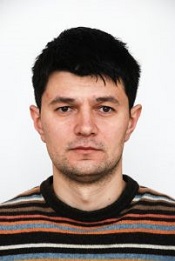
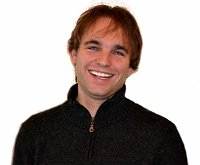
Dr. Belean Ioan Bogdan serves as an Established Researcher (R3) at the National Institute for Research and Development of Isotopic and Molecular Technologies (INCDTIM) in Cluj-Napoca, Romania. He is affiliated with the Department of Materials, Energy and Advanced Technologies within the Hi-Tech Engineering and Advanced Technologies research team. His office is located in Building Cetatea, Room 1.2, with contact available via (+40)264-584037 extension 241. Dr. Belean's research expertise spans multiple interdisciplinary domains: Advanced signal and image processing techniques Bioinformatics applications in healthcare FPGA-based digital logic design Partial differential equations for modeling Parallel and distributed computing systems His research program demonstrates consistent innovation in computational methodologies applied to real-world problems. Dr. Belean has secured significant research funding through multiple national and international projects, showing particular strength in medical imaging applications and hardware-accelerated computing solutions. Dr. Belean's academic foundation includes: MSc in Signal Processing (2007) from Technical University of Cluj-Napoca PhD in Electronics and Telecommunications (2010) from Technical University of Cluj-Napoca
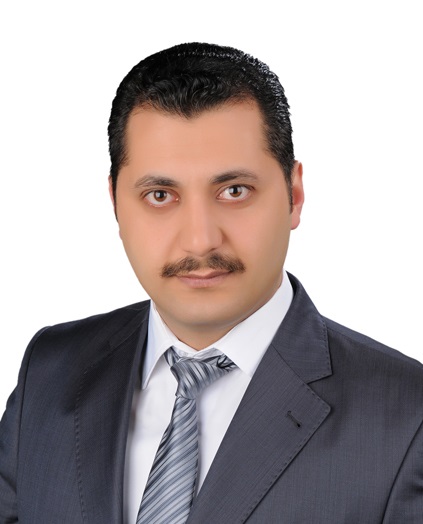
Dr. Ali Osman Arslan is an Assistant Professor in the Department of Electrical and Electronics Engineering at Gaziantep University's Faculty of Engineering. He holds a Doctorate (2021) and Master's degree (2012) from Gaziantep University, specializing in Electrical Machinery and Power Systems. University: Gaziantep University School: Faculty of Engineering Department: Electrical and Electronics Engineering Academic Rank: Assistant Professor His research focuses on advanced power conversion systems, including modular multilevel converters , hybrid inverter topologies , and adaptive control techniques for renewable energy integration and industrial applications. He has extensively studied phase-shifted PWM methods, arm inductance optimization , and submodule topologies in converter systems. Recent publications analyze comparative performances of FACTS devices and future prospects of modular converter technologies. He teaches graduate courses like Advanced Static Power Conversion and undergraduate courses covering Power Electronics and Electromechanical Energy Conversion . Scientific Awards: 2023 Most Original Design Award (Akıncılar Team) 2022 First Place & Performance Prize (Akıncılar Team) 2021 First Place Local Award (Hidden Danger R&D Team) 2021 Most Original Design Award (Toprak R&D Team) Projects: Led 2022-2023 Teknofest student support projects and contributed to electromagnetic high-speed train development (2009-2010).
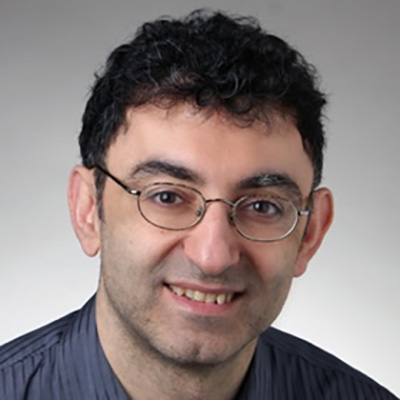
Dr. Yasir Ali Shah is a Lecturer in Computer Science at Ulster University's School of Computing, Engineering and the Built Environment , based at the Derry~Londonderry campus. His research focuses on hardware design, cryptography, and secure communication systems. Specialization: Post-Quantum Cryptography, Elliptic Curve Cryptography (ECC), FPGA/ASIC implementations Key Contributions: Optimization of cryptographic algorithms for IoT security, high-throughput hardware architectures Recent publications highlight advancements in post-quantum cryptography, including NTT/INTT optimizations, ECC hardware accelerators, and lightweight cipher implementations. His work spans both theoretical and applied domains, with a 2024 study on CPR efficacy indicating interdisciplinary collaborations. Selected trends in research output: 2024: 5 major papers on post-quantum crypto, IoT security, and medical applications 2023: Error-resistant NTT architectures and license plate recognition algorithms 2022: Optical interconnect designs and antiparasitic drug evaluations
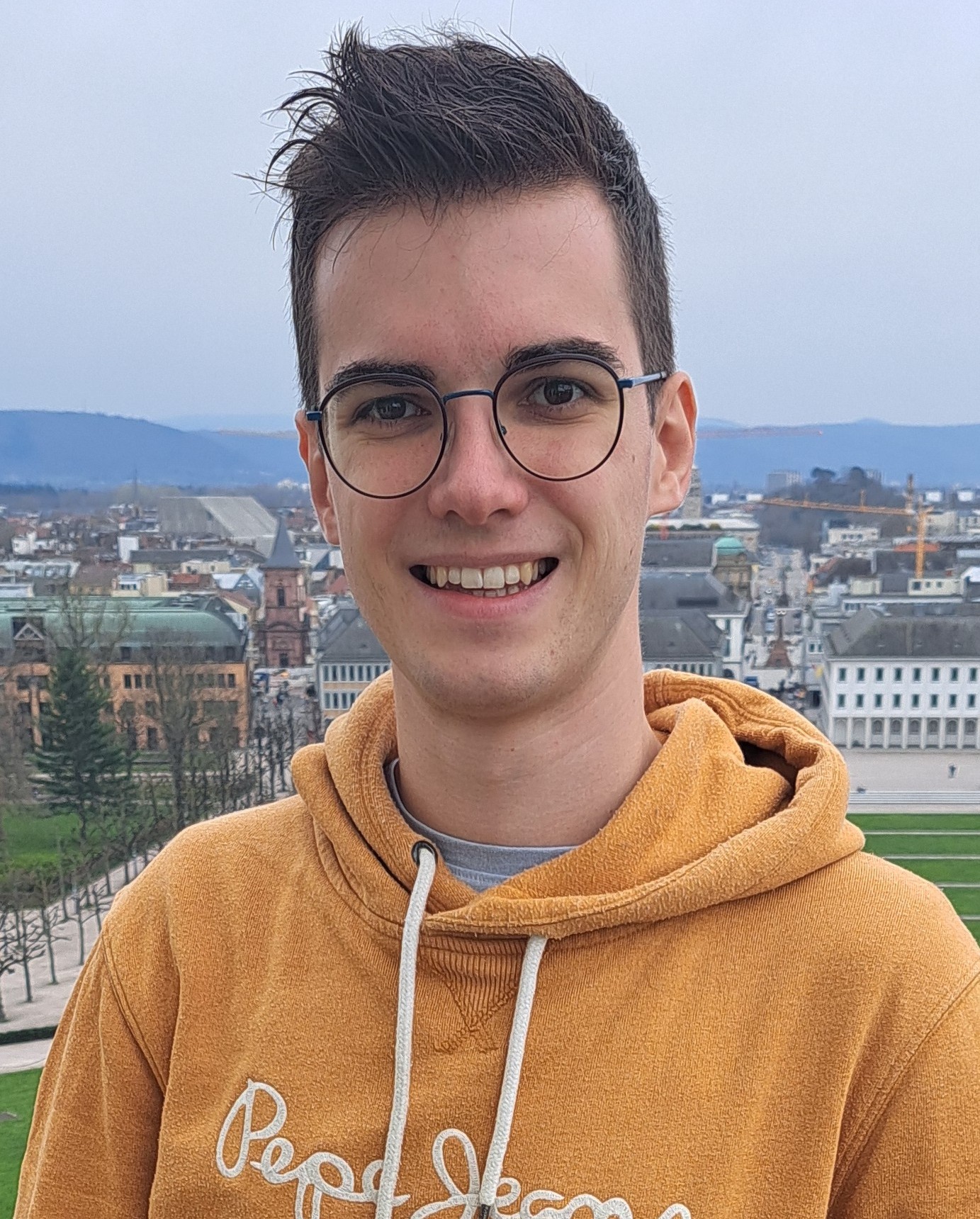
Michael Psarakis is a Professor at the Department of Informatics of the University of Piraeus , where he directs the Embedded Computing Systems Laboratory . He holds academic degrees from the University of Patras (Computer Engineering) and the National and Kapodistrian University of Athens (PhD in Informatics & Telecommunications). Research Focus : Embedded Systems Architecture with emphasis on Hardware, Fault-Tolerant Design, FPGA-based Accelerators, and Radiation Effects on Microelectronics Leadership : Scientific Director of 10+ EU/National Research Programs Professional Affiliations : IEEE Member, ACM Member, Chair of IEEE DFT Conferences (2019-2020), and Organizer/Program Committee Member of International Conferences (DATE, IOLTS, ETS, ARC).
Professor Deybuk Vitaliy Grigorovich is affiliated with Yuriy Fedkovych Chernivtsi National University , where he serves in the Department of Computer Systems and Networks under the Faculty of Physics. Holding a Doctor of Physical and Mathematical Sciences degree, he has been a full professor since 1984. PhD (1984): Kinetic properties of semiconductor crystals doped with magnetic impurities Doctoral Thesis (2004): Energy structure, chemical bonding, and properties of tetrahedrally coordinated semiconductors His research spans quantum computing and reversible logic design, focusing on thermodynamic stability of semiconductor alloys , spintronic devices , and ternary quantum circuits . Recent work addresses noise resilience in multi-control gates and phase stability of thermoelectric films . Representative publications include studies on: Extended Fredkin gate reconfiguration for fault-tolerant encryption (2025) AI-driven reversible network synthesis (2024) ZnSb-SnTe thin film thermoelectric stability (2024) He has supervised PhD candidates like: Vikluyk Yaroslav (2002) Korolyuk Yurii (2004) Ostapov Serhii (2004) As a textbook author, he has contributed to courses on electric circuits , discrete mathematics , and quantum computing . His lab at Chernivtsi University develops reversible quantum devices and low-power electronics for future technologies.
Babak Esfandiari is a Professor at the Faculty of Engineering and Design , Department of Systems and Computer Engineering , Carleton University. His research focuses on Agent-based systems , Network computing , Artificial intelligence applications , Object-oriented design , and Network management . He leads the NM-AI Research Lab and contributes to Sustainable Energy initiatives. Ph.D. from Université Montpellier II (France) Email: babak@sce.carleton.ca Office: MacKenzie Building, Room 4478 His research bridges Artificial Intelligence , Network Engineering , and Software Engineering , with applications in Mobile Robotics , Digital Twin Emulation , and Network Optimization . He has developed frameworks for BDI Agents , Trust Management , and Network Simulation , as evidenced by his publications. He teaches advanced courses such as SYSC 5103 Software Agents , SYSC 3110 Software Development Lab , and SYSC 4806 Software Engineering Lab . His work has influenced interdisciplinary domains including Energy Policy and Human-Agent Interaction .
Luis Eduardo Ardila Perez is a Researcher at the Institute for Data Processing and Electronics (IPE) within the Karlsruhe Institute of Technology , affiliated with the Karlsruhe School of Elementary Particle and Astroparticle Physics . His work focuses on high-performance computing architectures for particle physics experiments. PhD Topic: Real-Time High-Performance Readout System (100 Tb/s) for the CMS Track Trigger Supervisor: Prof. Dr. Marc Weber His research spans high-energy physics detector systems , with expertise in: FPGA-based track triggering GPU acceleration for real-time processing ATCA modular electronics High-throughput data acquisition Cryogenic sensor readout Publication trends highlight: Advancements in quantum computing interfaces (RFSoC, SQUID multiplexers) Innovations in detector electronics (CMS, PANDA) Optimization of real-time data systems for extreme environments Development of scalable hardware architectures for large-scale experiments He contributes to: CMS experiment at CERN KSETA collaborative research school OpenIPMC open-source hardware initiatives
Fabian Hummer is a Tutor at the Karlsruhe School of Elementary Particle and Astroparticle Physics: Science and Technology affiliated with the Institute for Data Processing and Electronics at Karlsruhe Institute of Technology (KIT). His work focuses on detector development for high-energy physics experiments, particularly the CMS High Granularity Calorimeter (HGCAL) at CERN. Education: Master's Degree from TU Munich (2022), Bachelor's Degree from Johannes Kepler University (2020) Research interests center on calorimetry , SiPM-on-Tile technology , and machine learning applications for particle shower reconstruction. His contributions include firmware development, real-time data processing, and time resolution optimization. Publications highlight advancements in: Full-stack integration of HGCAL with Serenity DAQ Timing performance analysis under radiation conditions ML-based five-dimensional shower separation Recent work presented at: TWEPP 2024 (Glasgow) DPG Spring Meeting 2024 HGCAL Summer Workshop 2024 He serves as a lab course tutor for Electronics for Physicists and co-organized the 9th Matter and Technologies Student Retreat.
Ali Mehrpooya is a Senior Research Associate at the School of Electrical, Electronic and Mechanical Engineering at the University of Bristol. His research focuses on implementing next-generation wireless networks (Beyond-5G/6G) with specialization in hardware acceleration technologies. Dr. Mehrpooya holds BSc, MSc, and PhD qualifications. His academic background has led him to specialize in advanced communication systems with hardware implementation expertise. His primary research interests center on applying AI and machine learning models on field-programmable gate arrays (FPGAs) and systems on chips (SoCs), particularly Zynq RFSoC and MPSoC platforms. He is actively involved in multiple research groups including FPGA and SoC Development, Beyond 5G and 6G, AI & Robotics, and High Performance Networks. His work explores how these technologies can revolutionize communication capabilities across various applications within B5G/6G networks. His recent publications demonstrate cutting-edge work in nanosecond optical switching technologies, addressing critical challenges in network recovery, topology optimization, and dynamic traffic management. The research shows a clear integration of AI/ML techniques with hardware acceleration to solve complex networking problems for next-generation communication systems. Dr. Mehrpooya is affiliated with the Smart Internet Lab's HPN Group at the Merchant Venturers Building in Bristol. This research environment focuses on advanced networking solutions for high-performance applications and next-generation communication infrastructure.
Professor Park Woo-chan is affiliated with the Department of Computer Engineering at Sejong University. His research focuses on real-time ray tracing, GPU architecture for mobile devices, and FPGA implementations. He has a strong publication record in 3D graphics and AI semiconductors. 1989-1993: Bachelor's in Computer Science, Yonsei University 1993-1995: Master's in Computer Science, Yonsei University 1995-2000: Doctorate in Computer Science, Yonsei University He leads the Processor Lab, which specializes in media processors including high-performance mobile GPUs and AI semiconductors. The lab has extensive experience with industry projects for Samsung and LG, national initiatives, and industry-academia collaborations. Research interests span real-time ray tracing algorithms, GPU memory systems, lossless data compression, computer arithmetic, and hardware acceleration for 3D graphics and sound rendering. Recent publications show a strong focus on real-time sound propagation, multi-threaded algorithms, depth level control, and FPGA implementations for ray tracing. Keywords from his work include: Computer Science , Neural Networks , GPU Architecture , 3D Rendering , Mobile Graphics , and FPGA Acceleration . Contact: pwchan@sejong.ac.kr
Prof. Dr. Manfred Hild serves as Professor and head of the Neurorobotics Research Laboratory at Berlin University of Applied Sciences and Technology (BHT), where he teaches in the Humanoid Robotics program. He is a key member of the HARMONICS research group at BHT. Dr. Hild's research spans humanoid robotics and sensorimotor control, distributed embedded systems, and the theory of nonlinear dynamic systems with emphasis on recurrent neural networks. His work also encompasses sound analysis and synthesis using programmable hardware like FPGAs. His laboratory develops complete autonomous robotic systems from electronics and mechanics through to cognitive processes and linguistic interfaces for human-machine interaction. Dr. Hild earned his doctorate with distinction from Humboldt University in Berlin in 2008 after completing studies in mathematics and psychology at University of Konstanz. Prior to BHT, he conducted research at SONY Computer Science Laboratory in Paris and Fraunhofer Institute for Autonomous Intelligent Systems. Approximately ten years ago, he founded the Neurorobotics Research Laboratory (NRL) in Berlin, where numerous national and international research projects have been conducted and dissertations supervised. Notably, some of Dr. Hild's doctoral students and former colleagues now work as robotics developers in space travel applications or lead robotics development departments at Amazon.
Adrian Sampson is an Associate Professor in the Department of Computer Science at Cornell University's Bowers College of Computing and Information Science. He leads the Capra research group, focusing on breaking down abstraction barriers and rethinking the hardware-software interface. Prior to his current position, he served as an Assistant Professor at Cornell University from 2016 to 2022 and completed his Ph.D. at the University of Washington in 2015 under advisors Luis Ceze and Dan Grossman. His research spans computer architecture, programming languages, and compilers, with a notable focus on approximate computing—the concept that computers can be more efficient if allowed to make controlled mistakes. Sampson has made significant contributions to hardware acceleration, FPGA programming, and type systems for heterogeneous computing. His work bridges the gap between software abstractions and hardware realities, particularly in the realm of accelerator design languages. The publications reveal a consistent trajectory in hardware-software co-design, with recent work focusing on predictable accelerator design, timeline types for hardware description, and geometry types for graphics programming. His research group has produced influential work on tools like Dahlia, a programming language that uses type systems to restrict high-level synthesis programs to subsets with predictable semantics and performance. Cornell Bowers CIS Ann S. Bowers Research Excellence Award (2024) Cornell Bowers CIS Computer Science Faculty of the Year (2024) Distinguished Artifact Awards (ASPLOS 2023, 2024) IEEE TCCA Young Computer Architect Award (2021) NSF CAREER award (2019) Google Faculty Research Award (2016) Sampson has advised numerous Ph.D. students whose dissertations cover topics like geometry types for graphics programming, lightweight formal methods, and compiler-driven autovectorization. His research has been supported by prestigious organizations including NSF, Google, and Microsoft Research. He serves on numerous program committees and has held leadership roles in the computer architecture and programming languages communities, including serving on the ACM SIGARCH Board of Directors.
Nikolaos Alachiotis is an Associate Professor at the Digital Society Institute, specializing in Artificial Intelligence, Field-Programmable Gate Arrays (FPGA), and Genomics. His work bridges Hardware Acceleration with Bioinformatics , focusing on scalable solutions for genomic analysis and evolutionary biology. Research Themes: AI Hardware, FPGA Optimization, Population Genetics Key Collaborations: Delft University of Technology, Zenodo, Frontiers in High-Performance Computing Research Focus Alachiotis develops deep learning and FPGA-based tools for selective sweep detection and phylogenetic inference , enabling faster genomic analyses. His work spans convolutional neural networks , spiking networks , and adaptive computing for bioinformatics and radio astronomy. Recent articles highlight trends in AMD Versal SoC applications, deep learning for natural selection , and scalable genomic pipelines . Scientific Awards Outstanding Student Paper Award (2023) Supervised Work His supervised projects include Accelerating Selective Sweep Detection and Effective Data Preprocessing Techniques , often in collaboration with institutions like Zenodo and Frontiers journals.
Tobias Grosser is an Associate Professor in the Department of Computer Science and Technology at the University of Cambridge. His research focuses on compiler technology, programming language design, and performance programming, with applications spanning hardware design, climate science, and quantum computing. He leads a research group developing innovative compiler frameworks and tools that bridge theoretical foundations with practical applications. Dr. Grosser completed his undergraduate studies in Computer Science at the University of Passau in Germany and pursued his PhD at École Normale Supérieure Paris as a Google PhD Fellow. Prior to joining Cambridge, he served as a Reader at the University of Edinburgh and held an Ambizione Fellowship at ETH Zurich. His research program centers on rethinking performance programming by re-connecting developers and compilers. He aims to make compilation more modular, predictable, automatic, and trustworthy while bringing open-source compiler innovation to increasingly diverse targets from GPUs to FPGAs and custom hardware. His work spans multiple domains including polyhedral compilation, constraint solving, quantum computing, and hardware design automation. Dr. Grosser is particularly interested in breaking down barriers between compilers and programmers by enabling their interaction through the programming language environment. His recent publications demonstrate a strong focus on compiler infrastructure development, particularly around the MLIR framework. He has pioneered work on Presburger arithmetic optimization with the FPL library, developed new intermediate representations for hardware description and quantum computing, and created tools for compiler education and prototyping like xDSL. His research shows a consistent theme of creating practical, high-performance compiler technologies that address real-world challenges across multiple domains. HiPEAC Technology Transfer Award 2021 for "Fast linear programming through transprecision computing on small and sparse data" OOPSLA 2021 Distinguished Paper Award for "FPL: Fast Presburger arithmetic through transprecision" Dr. Grosser actively mentors PhD students and postdoctoral researchers, currently supervising a team of over a dozen researchers working on various aspects of compiler technology. His group collaborates with industry partners including ARM and Xilinx, and maintains strong ties with the LLVM and MLIR open-source communities. He has secured funding for multiple research projects including work on verified compilation with Lean-MLIR, quantum compiler development, and hardware design automation. His research group operates at the intersection of multiple projects including Open-Source Electronic Design Automation, Seamless design of Smart Edge Processors, Lean-MLIR for verified compilation, FPL for fast Presburger arithmetic, and compilation frameworks for quantum computers. They maintain strong community engagement through regular Compiler Social events in Cambridge and active participation in LLVM developer meetings.
David Mendeloff is an Associate Professor at the Norman Paterson School of International Affairs (NPSIA) within Carleton University. He also serves as Associate Dean (Faculty Affairs) in the Faculty of Public and Global Affairs (FPGA) and holds the interim role of Director at Arthur Kroeger College of Public Affairs . Additionally, he is a faculty associate at Carleton’s Institute of European and Russian Studies (EURUS) and the Centre for Security, Intelligence and Defence Studies (CSIDS). Education: Ph.D. in Political Science, Massachusetts Institute of Technology (MIT) B.A. (Hons) in International Relations, Claremont Colleges (Pitzer College) Research Interests: International and Transitional Justice Impact of Accountability Mechanisms (e.g., prosecutions, truth commissions) War Termination and Post-Conflict Democratization Rule of Law Development and Human Rights Protections Coercive Diplomacy by the International Criminal Court Teaching: Courses on international conflict analysis, post-conflict peacebuilding and statebuilding, and transitional justice. Leadership Roles: Director of NPSIA’s Centre for Security and Defence Studies (2006–2015) Associate Dean (Academic) in FPGA (2018–2023)