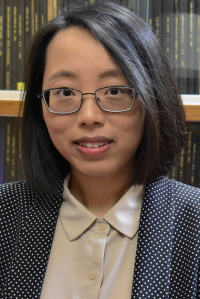
Stefania Costantini is a Professor in Computer Science with a focus on logic programming, multi-agent systems, and healthcare applications. She has contributed to the development of intelligent ecosystems for patient monitoring, ontology frameworks for medical wearables, and formal verification methods for agent systems. Research Interests: Logic-based agent modeling Complex event processing Healthcare technology integration Temporal and metalevel logic applications Wearable device classification Recent Article Trends: Stefania's work combines artificial intelligence with biomedical engineering, emphasizing real-time data analysis from wearables, noise pollution mitigation, and agent-based healthcare systems. Her publications show a consistent focus on computational logic foundations applied to practical healthcare scenarios. Collaboration Network: Key co-authors include Lorenzo De Lauretis, Fabio Persia, and C. Bertoncelli across interdisciplinary projects blending computer science with medical research.
Hans Munthe-Kaas is a Professor of Mathematics at the University of Bergen, where he is also the Center Manager of the Lie-Størmer Center. He serves as Editor-in-Chief of Foundations of Computational Mathematics and President of the Norwegian Mathematical Society. Additionally, he is a member of the scientific advisory committee for the Trond Mohn Foundation and project leader for the RCN-Fripro project CODYSMA. His research focuses on computational mathematics, particularly geometric integration, Lie theory, differential geometry, algebra and combinatorics. Munthe-Kaas investigates algebras of connections on manifolds, combinatorics for formal solutions of dynamical systems, and structure-preserving discretizations. His work bridges pure and applied mathematics with computer science, with an emphasis on mathematical abstractions in computational science as tools for constructing efficient algorithms. Analysis of numerical Lie group integrators has led him to develop Lie-Butcher theory, which combines classical B-series for integration schemes with Lie series. This research connects to control theory, stochastic differential equations, renormalization, combinatorial Hopf algebra theory, and non-commutative symmetric functions. His publications show a consistent focus on geometric integration methods, with recent work exploring post-Lie algebras, aromatic B-series, and integration on symmetric spaces. Esso prize in 1999 for PhD work Munthe-Kaas has led significant research projects including the Lie-Størmer Center and CODYSMA. His work in computational mathematics has applications in numerical linear algebra, parallel algorithms, and fast elliptic solvers. He has also contributed to multivariate Chebyshev polynomials for spectral element methods based on triangular and simplicial domains. He is active in research groups including Applied and Computational Algebra and has been instrumental in developing coordinate-free formulations for numerical algorithm design through projects like SOPHUS. His DiffMan Matlab toolbox implements these ideas for solving differential equations on manifolds.
Ali ÇINAR is a Researcher in the Department of Electrical and Electronics Engineering at Kastamonu University's Faculty of Engineering and Architecture. He holds a PhD (2023), MSc (2019), and BSc (2012) in Electrical and Electronics Engineering from Eskişehir Osmangazi University and Atılım University respectively, with expertise spanning ionospheric physics and medical imaging. His educational background includes: PhD in Electrical and Electronics Engineering, Eskişehir Osmangazi University (2023) MSc in Electrical and Electronics Engineering, Eskişehir Osmangazi University (2019) BSc in Electrical and Electronics Engineering, Atılım University (2012) Dr. ÇINAR's research bridges Ionospheric Physics and Medical Image Processing , with significant contributions in detecting ionospheric disturbances from geomagnetic/seismic events using machine learning, and developing lung nodule classification algorithms. His work employs K-Nearest Neighbors and Convolutional Neural Networks for space weather monitoring and COVID-19 detection, demonstrating exceptional interdisciplinary application of computational methods in geophysics and biomedical engineering. Publication analysis reveals dominant focus on ionospheric anomalies (70% of works), with recent expansion into medical AI. His research consistently applies advanced signal processing to complex datasets, showing increasing collaboration with Hacettepe and Bilkent Universities. The shift toward medical applications since 2020 highlights adaptability in addressing global health challenges while maintaining core geophysics expertise. Dr. ÇINAR actively collaborates with Seçil Karatay (23 joint works) and Feza Arıkan (19), contributing to Turkey's space weather research infrastructure. He participated in a TÜBİTAK-funded ionosphere modeling project (2015-2017) and maintains IEEE membership since 2010, though current involvement status is unconfirmed. His research group develops real-time ionospheric monitoring tools at Kastamonu University, with recent focus on earthquake precursor detection systems. Current projects integrate satellite data with ground-based observations to improve space weather forecasting capabilities for Turkish airspace.
Illya Vakser is a Professor of Molecular Biosciences and founding Director of the Center for Computational Biology at the University of Kansas . His work focuses on molecular modeling of protein interactions and structural genomics , specifically developing methods for protein complex prediction and genome-scale interaction networks . PhD in Biophysics, Moscow State University (1989) Postdoctoral training: Weizmann Institute, Washington University, Rockefeller University Previous faculty: Medical University of South Carolina, SUNY Stony Brook Research emphasizes fast and robust structural modeling for large-scale protein interaction networks, including the development of the FFT docking algorithm and the CAPRI protein docking competition . Publications highlight genome-wide docking , energy funnel analysis , and variant mapping on protein structures. He teaches courses in computational biology and molecular modeling , maintaining the Vakser Lab as a hub for high-throughput structural bioinformatics and cell modeling research.
Nan Li is an Assistant Professor in the Life Sciences Communication department at the University of Wisconsin–Madison . Her research bridges computational methods with interdisciplinary applications, as evidenced by her lab's work in the Discovery Building. Research Interests Dr. Li's work focuses on neural architecture search , GPU optimization , and deep learning efficiency . She develops algorithms for black-box optimization , path planning , and distributed training of neural networks, leveraging Monte Carlo Tree Search and action space design . Publication Trends Recent publications highlight expertise in GPU-accelerated algorithms , model compression , and automated machine learning . Key themes include gradient sparsification , tensor decomposition , and heterogeneous computing . Labs & Collaborations She contributes to the Discovery Building research ecosystem via her lab's website SCIMEP , fostering interdisciplinary innovation in computational sciences.
Emmanuel Bellenger serves as Professor at the University of Picardie Jules Verne within the Faculty of Engineering, leading research at LTI - Laboratoire des technologies innovantes. His career spans computational mechanics with specialization in Discrete Element Method (DEM) applications for complex material systems. Research focuses on thermal conductivity modeling of heterogeneous media, composite material behavior , and electromechanical systems for industrial diagnostics. His innovative 'Halo approach' improves stress field prediction in DEM simulations, while recent work extends to rehabilitation technology using motion analysis. Current projects include digital twins for ball bearings and thermal management systems for automotive applications. Scientific contributions span 92 publications with significant impact in computational mechanics. Key achievements include: Development of DEM-FEM coupled approaches for multi-physics modeling Numerical frameworks for thermal conductivity prediction in composites Electromechanical coupling models for bearing diagnostics Real-time assessment methods for rehabilitation exercises Professor Bellenger's work bridges theoretical mechanics with industrial applications, particularly in automotive components and advanced materials. His laboratory maintains active research in granular media simulation and composite failure analysis, with recent expansion into biomedical applications.
Dr. Ralf Brinkmann serves as Group Leader at the Institute for Biomedical Optics, University of Lübeck, and Managing Director of MLL GmbH. His research focuses on advancing optical imaging technologies for medical applications, particularly in neurosurgery and ophthalmology. His primary research interests include: Optical Coherence Tomography (OCT) and Elastography (OCE) Medical imaging for brain tumor detection Retinal laser therapies with precise temperature control Laser lithotripsy and urological applications Development of microscope-integrated imaging systems Dr. Brinkmann has published extensively with numerous high-impact publications from 2023-2025. His work demonstrates significant advancements in real-time temperature-controlled retinal treatments, in-situ brain tumor tissue delineation during neurosurgery, and improved laser stone ablation techniques. His research bridges engineering, physics, and clinical medicine to develop novel diagnostic and therapeutic approaches. His publication record shows a strong focus on: Real-time temperature-controlled retinal laser treatments Brain tumor tissue delineation during neurosurgery Optical methods for stone ablation in urology Fluorescence lifetime imaging for age-related macular degeneration Advanced image processing for medical diagnostics Dr. Brinkmann leads the AG Brinkmann research group and collaborates with numerous students and researchers, including Nicolas Detrez, Sazgar Burhan, Jessica Kren, and Paul Strenge, who frequently appear as co-authors on his publications. His work demonstrates strong interdisciplinary collaboration between engineering, physics, and clinical medicine, with direct applications to improving surgical outcomes and diagnostic capabilities.
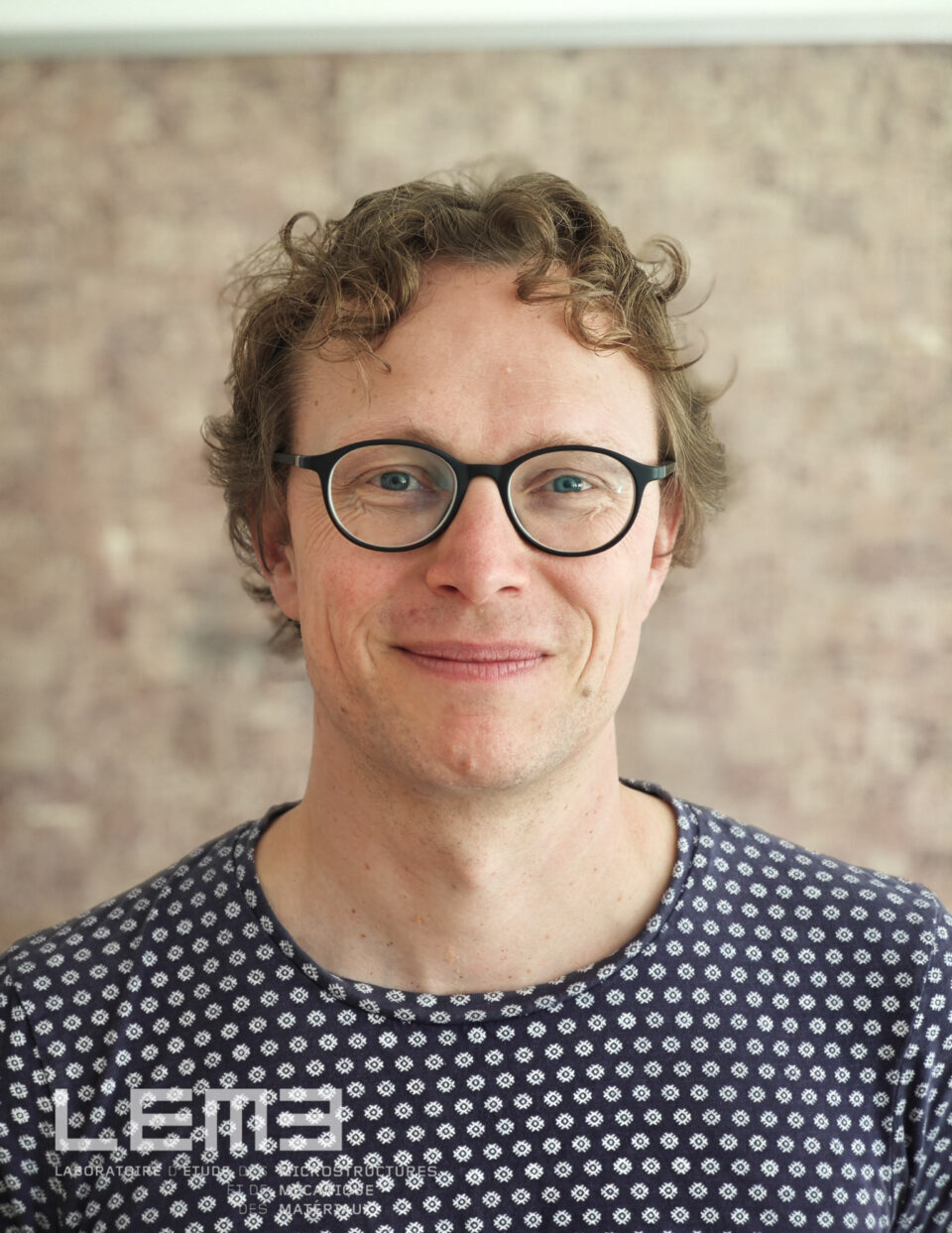
Julien Guenole is a CNRS Research Scientist (Chargé de recherche) at the LEM3 Laboratory (UMR CNRS 7239) in Metz, France, which is a joint research unit of the University of Lorraine, the National Centre for Scientific Research (CNRS), and Arts et Métiers ParisTech. He joined CNRS on January 1, 2020, after previously working at RWTH Aachen's Institute for Physical Metallurgy and Materials Physics (IMM). Guenole serves as Associate editor of Philosophical Magazine and was a Member of CoNRS (section 9) for 2024-2025. He is also Co-leader of Experimental and simulation challenges for the European COST MecaNano network. His research focuses on the plasticity of crystalline materials, complex crystals and their interfaces, multi-scale approaches, numerical nanomechanics, ion irradiation and induced defects . Guenole employs advanced computational methods including molecular dynamics, molecular statics, NEB calculations, and FFT-based approaches to bridge atomic-scale phenomena with continuum mechanics. Recent work includes developing generative machine learning approaches for microstructure design and predicting grain boundary segregation in magnesium alloys. His publication record shows consistent output in high-impact journals including Mechanics Research Communications, Communications Materials, Journal of Magnesium and Alloys, and Acta Materialia. His work frequently combines computational approaches with experimental validation, as seen in studies on metallic nanosponges and magnesium alloy plasticity. Associate editor of Philosophical Magazine Co-leader of Experimental and simulation challenges for European COST MecaNano network Member of CoNRS (section 9, 2024-2025) Supported by cluster IA ENACT (ANR - France 2030 funded project) As a supervisor, Guenole currently advises PhD student Badr LACHKAR on 'Generative Machine Learning for Microstructure Design: An Atomic-Scale-Informed Approach to Interfacial Engineering'. His lab provides opportunities for students to work at the cutting edge of computational materials science, with access to high-performance computing resources and connections to international research networks.
Dylan Agius is a Research Fellow at Deakin University's School of Engineering, part of the Faculty of Science Engineering and Built Environment. Based at the Melbourne Burwood Campus, his research focuses on advanced computational modeling of material behavior with particular emphasis on additive manufacturing processes and crystal plasticity. Dr. Agius's research interests span multiple areas of materials science and mechanical engineering: Additive Manufacturing (particularly electron beam powder bed fusion and selective laser melting) Crystal Plasticity Modeling and Finite Element Analysis Microstructure Evolution and Characterization Residual Stress Analysis in Welded and Additively Manufactured Components Mechanical Behavior of Titanium and Stainless Steel Alloys Creep and Fatigue Deformation Mechanisms His publication record demonstrates a strong focus on integrating experimental characterization with computational modeling to understand and predict material behavior. Recent work has particularly emphasized the relationship between microstructure and mechanical properties in additively manufactured metals, with applications to aerospace and safety-critical components. His research often combines advanced techniques like electron backscatter diffraction with sophisticated modeling approaches to capture material behavior at multiple scales. Dr. Agius has published extensively in high-impact journals such as International Journal of Plasticity, Materials Science and Engineering: A, and Additive Manufacturing. His research has been cited extensively, with several papers exceeding 50 citations. His collaborative research involves working with experts in materials characterization, mechanical testing, and computational modeling. Current projects appear to focus on optimizing additive manufacturing processes through computational prediction of microstructure and properties, as well as developing more accurate models for predicting deformation behavior in complex loading scenarios.