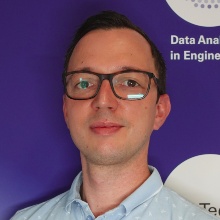
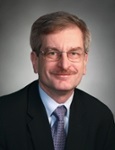
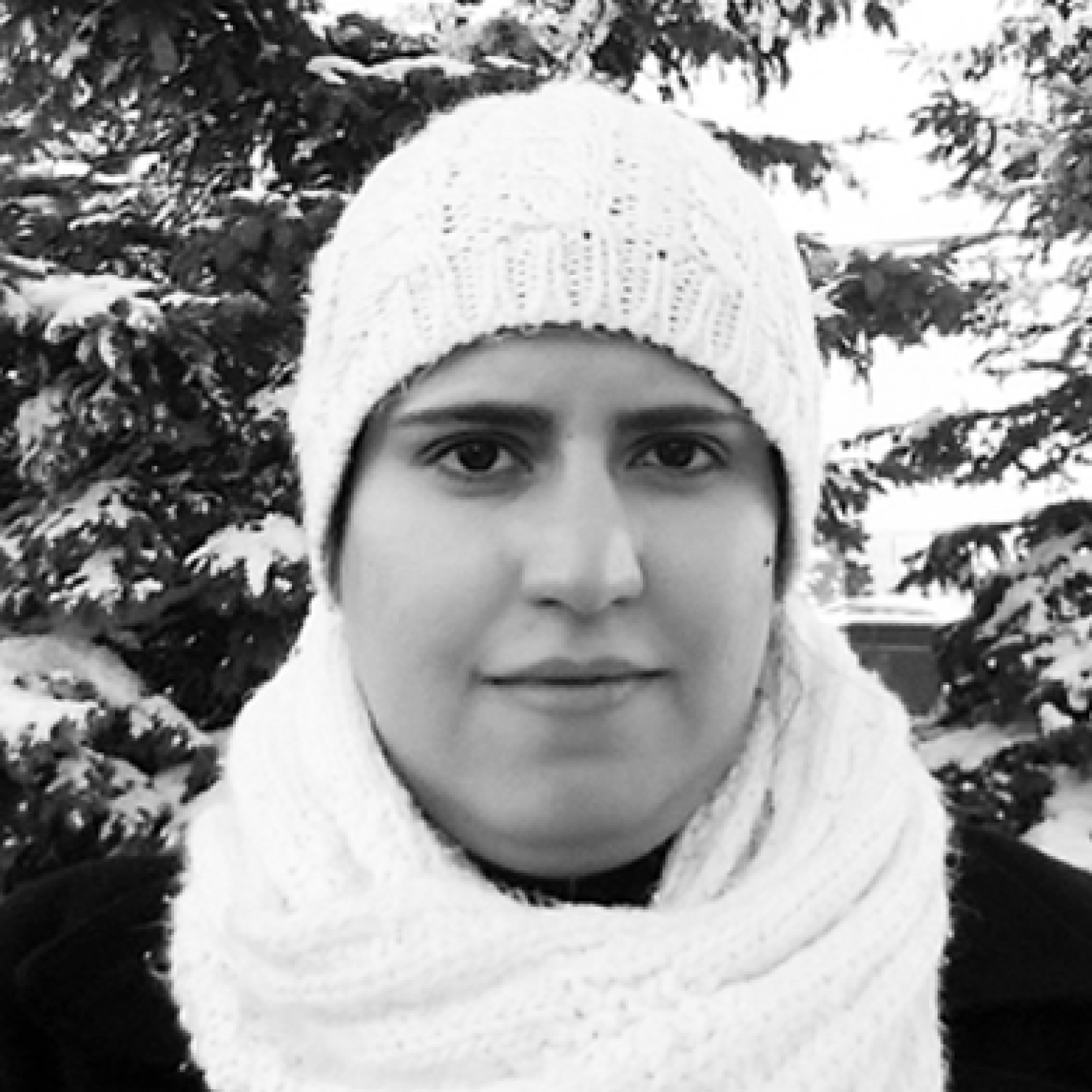
Prof. Felix Fritzen is a Heisenberg Professor (W3) for Data Analytics in Engineering at the University of Stuttgart's Institute of Applied Mechanics (MIB). His work is embedded in the Cluster of Excellence Data-Integrated Simulation Science (SimTech). He leads the EMMA Emmy Noether group (2015–2020) and previously headed the KIT Young Investigator Group CAMM. His research focuses on data-driven surrogate models, uncertainty quantification, and computational mechanics of materials, with emphasis on nonlinear model reduction and multiscale simulations. Education: Ph.D. (Dr.-Ing., summa cum laude) from KIT (2011), Dipl.-Math. techn. (2007), Dipl.-Ing. (2006). Research interests include machine learning integration with mechanics, microstructure-property relations, and high-performance simulation techniques. Notable contributions involve FFT-based homogenization, reduced order modeling, and GPU-accelerated methods. He has authored over 60 peer-reviewed papers, including works on surrogate models for microstructure forecasting and thermoelastic material analysis. Awards include the KIT PhD Award (2012) and recognition as a GAMM Junior (2012–2014). His teaching includes courses on data processing for engineers and model order reduction. Funded projects include DFG grants (EXC-2075, HE 7919/1) and the Heisenberg Professorship (FR2702/8).
Prof. Dr. Matti Schneider serves as Professor of Engineering Mathematics and Head of the Institute of Engineering Mathematics within the Faculty of Civil Engineering at the University of Duisburg-Essen. His academic leadership spans computational mechanics research and teaching core mathematics courses for civil engineering students. His educational background includes: Diploma in Applied Mathematics with distinction from TU Bergakademie Freiberg (2009) PhD (Dr. rer. nat.) from Leipzig University (2013) on "The Leray-Serre spectral sequence in Morse homology on Hilbert manifolds and in Floer homology on cotangent bundles" Professor Schneider's research focuses on advancing computational methods for solid mechanics through FFT-based homogenization techniques, microstructure modeling, and multi-scale material analysis. His work bridges applied mathematics and engineering to solve complex problems in heterogeneous material systems, with particular emphasis on numerical stability, boundary condition implementation, and efficient solver development for industrial applications. His methodologies enable accurate prediction of material behavior across scales from microscopic structures to macroscopic components. Analysis of his 15 most recent publications reveals dominant trends in FFT-based computational homogenization, with significant contributions to thermal problems, porous media, and fiber-reinforced composites. He pioneers the integration of machine learning (particularly deep material networks) with traditional numerical methods to model complex material behaviors like shear-thinning suspensions and 3D-printed materials. His work consistently addresses computational challenges in boundary condition implementation and convergence for stochastic microstructures. Professor Schneider leads the Institute of Engineering Mathematics and directs research within the ERC-funded BeyondRVE project, which focuses on extending representative volume element concepts for advanced material modeling. His collaborative network includes major German research institutions like Fraunhofer ITWM and international partners in materials science.
Yang Chen is a Lecturer in the Department of Mechanical Engineering at the University of Bath, affiliated with multiple research centres including the Centre for Integrated Materials, Processes & Structures (IMPS) and the Centre for Regenerative Design & Engineering for a Net Positive World (RENEW). He holds a PhD from the Université Paris-Est (collaborating with French Alternative Energies and Atomic Energy Commission) and completed postdoctoral research at the University of Oxford. His research focuses on advanced techniques for data-rich experiments and simulations in heterogeneous materials, particularly fibre-reinforced composites applied in aerospace, automotive, and nuclear energy sectors. Key expertise includes FFT solvers, X-ray computed tomography, nonlinear mechanical modelling, and fluid flow in porous media. He has secured prestigious fellowships, including the EPSRC Future Composites Research Hub Innovation Fellowship and the Humboldt Fellowship. Teaching responsibilities include the ME20016 Solid Mechanics 3 course for mechanical engineering undergraduates. Current PhD supervision opportunities span topics like hydrogen storage composites, nuclear fusion materials, and nuclear waste management. He actively collaborates on projects such as HyFIVE (Hydrogen Storage) and explores advanced ceramic materials for nuclear energy. His work aligns with UN Sustainable Development Goals, emphasizing sustainable innovation and energy solutions. Notable contributions include developing physics-informed neural networks for resin flow prediction and machine learning-based emulators for constitutive modelling. His publications address fracture mechanics, computational homogenization, and material degradation under irradiation. He is open to supervising doctoral students through funded programs like ZENITH and GW4+ DLTP.
Joris J.C. Remmers is an Associate Professor of Composite Materials at the Department of Mechanical Engineering, Eindhoven University of Technology (TU/e). He is also affiliated with the EAISI High Tech Systems and leads the Mechanics of Materials research group. His academic journey includes a MSc in Aerospace Engineering (TU Delft, 1998) and a PhD in Computational Mechanics (TU Delft, 2006). Remmers' research focuses on composite materials and additive manufacturing, particularly the relationship between manufacturing processes, microstructure, and mechanical properties. He employs advanced numerical techniques to study multi-physics phenomena across scales. Research Themes: Composite materials and fiber-reinforced systems 3D printing and additive manufacturing processes Numerical methods (e.g., finite element analysis, model order reduction) Micromechanical modeling of material behavior Grants and Projects: Project Manager for Innovation test bed for development and production of nanomaterials for lightweight embedded electronics (2019–2023) Awards: Emerging DMD Based Systems and Applications Best Paper Award (2025) Teaching: Leads courses on advanced manufacturing, computational mechanics, and data-driven approaches in engineering, including Advanced and Additive Manufacturing and AI-assisted innovation in portable plasma technology . Labs/Teams: Active in the Mechanics of Materials group, collaborating on multi-scale mechanics, damage modeling, and material failure analysis.
Prof. Lars Pastewka is a Full Professor of Simulation at the Department of Microsystems Engineering (IMTEK) within the Faculty of Engineering at the Albert Ludwigs University of Freiburg. His research focuses on multiscale simulation of materials, micromechanics, and tribology, with a particular emphasis on friction, adhesion, and wear. He leads a research group developing computational methods to model materials from atomic to continuum scales. His expertise includes surface forces, material interfaces, and the design of programmable materials. Key projects include studies on self-repair mechanisms in biological and artificial materials, tribogenerators, and resilient microfluidic networks. He supervises doctoral researchers such as Indre Jödicke and Mahdi Roshani, with past student Dr. Antoine Sanner completing his doctorate under his guidance. Prof. Pastewka has contributed to open science through tools like dtool and dserver, promoting FAIR data principles. His work spans interdisciplinary collaborations in materials science, biomechanics, and computational engineering. He is actively involved in academic outreach through events like the livMatS Colloquium series and contributes to teaching programs such as the Master Lab and Core Lectures initiatives. His research has been funded by Germany’s Excellence Strategy (EXC-2193/1) and addresses challenges in surface topography analysis, hydrodynamic lubrication, and material fracture mechanics. His group’s computational frameworks, including matscipy and SYMPLER, have advanced large-scale simulations in materials science.
Professor Andrew Hrymak is a distinguished academic in the Department of Chemical and Biochemical Engineering at Western University, where he has been a faculty member since 2009. Prior to his appointment at Western, he served as Professor and Department Chair at McMaster University from 1985-2009. During his tenure at Western, he held the position of Dean of the Faculty of Engineering from July 1, 2009 to July 31, 2018. He currently serves as Deputy Director of the Fraunhofer Project Centre for Composites Research at Western and has held significant editorial roles including Editor of Computers and Chemical Engineering (2002-2010) and Editor-in-Chief of International Polymer Processing (2004-2016). His educational background includes: PhD in Chemical Engineering from Carnegie Mellon University (1985) B.Eng. in Chemical Engineering from McMaster University (1980) Professor Hrymak's research focuses on the modeling, design, and optimization of materials processing systems, with particular emphasis on composites processing, injection molding, compression molding, mixing liquid coating flows, and complex rheology. His work integrates computational methods with experimental approaches to address challenges in polymer processing operations. His research spans multiple scales, from microscopic fiber-matrix interactions to macroscopic process modeling. He has made significant contributions to understanding the behavior of complex fluids and multiphase systems, particularly in the context of polymer composites manufacturing. His work often combines computational fluid dynamics with experimental validation to develop predictive models for industrial applications. Professor Hrymak's extensive publication record demonstrates a consistent focus on advancing the science and engineering of polymer processing, with recent work incorporating machine learning approaches to model complex material behaviors. His research has practical applications in automotive, aerospace, and manufacturing industries where composite materials play a critical role. His scientific recognition includes: Fellow of the Canadian Academy of Engineering (2010) Fellow of the Chemical Institute of Canada (2005) Excellence in Process Development Research Award by the Process Development Division of the American Institute of Chemical Engineers (2005) As an academic advisor, Professor Hrymak has mentored numerous graduate students through their PhD and Master's research. His current research group includes students working on projects related to structural long-fiber thermoplastics for automotive applications, compression molding simulation, and dip coating processes. His research has been supported by various funding sources including NSERC, Greenfield Global Products, and the Chinese Scholarship Council. He has also served on important committees including the Fellowship Selection Committees of the Chemical Institute of Canada and the Canadian Academy of Engineering, and was past Chair of the Board of Directors of the Chemical Institute of Canada. Professor Hrymak is actively involved with the Fraunhofer Project Centre for Composites Research at Western, where he serves as Deputy Director. His research group collaborates with industry partners on various projects related to composite materials processing and characterization. He has also been instrumental in developing the virtual process chain concept for sheet molding compound composites, which integrates multiple simulation tools to predict final part properties based on processing conditions.
Fatemeh Pourahmadian is an Assistant Professor in the Department of Civil, Environmental and Architectural Engineering at the University of Colorado Boulder. Her research focuses on wave motion and inverse problems in engineering mechanics, particularly in complex materials such as metamaterials and porous media. Education: PhD in Civil Engineering, University of Minnesota (2016) MS in Geo-Engineering, University of Minnesota (2015) MS in Mechanical Engineering, Iran University of Science and Technology (2010) Research Interests: Wave propagation in heterogeneous materials Inverse scattering techniques Elastic-wave cloaking and nonlinear dynamics Development of computational methods for material characterization Key Themes in Publications: Recent work emphasizes machine learning-based approaches for ultrasonic imaging, fast Fourier transform solvers for micropolar composites, and inverse elastic scattering in time/frequency domains. Her studies bridge theoretical frameworks with experimental validations in geomechanics and material science. Professional Affiliations: Society of Engineering Science (SES) Engineering Mechanics Institute (EMI) American Society of Mechanical Engineers (ASME) American Rock Mechanics Association (ARMA)
Prof. Dr.-Ing. Stephan Marzi is a faculty member at the Technical University of Central Hesse (THM) , affiliated with the Department of Mechanical Engineering and Energy Technology . He leads the Fracture and Materials Mechanics working group at the Institute of Mechanics and Materials Research (IMM) and contributes to the Competence Center AutoM. His teaching responsibilities include Fundamentals of Machine Dynamics , Advanced Materials Mechanics , and Higher Dynamics . Research focuses on nonlinear fracture mechanics , cohesive zone modeling , and micromechanical material characterization . Active in international collaborations with institutions like University of Luxembourg , University of Kassel , and Albert Ludwig University of Freiburg im Breisgau . Key funding sources include DFG , BMBF , and BMWI-ZIM for projects on adhesive joint failure , composite material testing , and crash-optimized adhesives . Recent publications highlight advancements in mixed-mode fracture testing , rate-dependent cohesive zone models , and FFT-based homogenization for adhesive joints. He serves as a reviewer and committee member for doctoral theses across multiple universities. Leadership roles: Member of THM's Presidential Committee for Research , Deputy Spokesperson of the IMM , and representative for the ME Department at THM. Research infrastructure: State-of-the-art laboratory equipment and a 400-core computing cluster at IMM.
Lennart Risthaus serves as a Researcher at the Department of Engineering Mathematics within the School of Civil Engineering at the University of Duisburg-Essen, Germany. He joined the university in September 2023 after previously working as a Researcher at the Institute of Engineering Mechanics, Continuum Mechanics Division at the Karlsruhe Institute of Technology (KIT) from February 2021 to August 2023. His academic appointments demonstrate a consistent trajectory in computational mechanics research within German technical universities. Dr. Risthaus completed his Bachelor's degree in Mechanical Engineering with a focus on Continuum Mechanics (2014-2018) and Master's degree in Mechanical Engineering with majors in Medical Technology and Applied Mechanics (2018-2021), both from the Karlsruhe Institute of Technology. His educational journey included an Erasmus exchange semester at the Royal Institute of Technology (KTH) in Stockholm and practical experience through internships at Reden B.V. in the Netherlands and Admedes GmbH in Germany, where he worked on finite element simulations and material testing. His research specializes in advanced computational techniques for material science, particularly FFT-based homogenization methods in micromechanics. Risthaus has developed innovative approaches for implementing Dirichlet boundary conditions in FFT-based computational frameworks and pioneered applications of tensor-train formats to enhance computational efficiency. His work bridges theoretical mathematics with practical engineering applications, focusing on solving complex boundary value problems in material behavior analysis. An analysis of his publication record reveals a clear research trajectory toward increasingly sophisticated computational methods for micromechanical simulations. His recent work demonstrates growing expertise in thermal homogenization problems and the integration of tensor-train methods with traditional FFT approaches. The consistent publication in high-impact journals like Computational Mechanics and International Journal for Numerical Methods in Engineering indicates recognition within the computational mechanics community. Risthaus actively contributes to the academic community through presentations at major international conferences including the GAMM Annual Meetings, ECCOMAS Young Investigators Conference, and the International Conference on Computational Plasticity (COMPLAS). His teaching responsibilities include leading exercises and tutorials for Mathematics courses for Civil Engineering students at both undergraduate and graduate levels, demonstrating his commitment to engineering education alongside his research activities.
Dr. Simon Stevenson is an OzGrav Senior Research Fellow at Swinburne University of Technology's School of Science, Computing and Emerging Technologies. His research focuses on gravitational wave formation channels, binary star evolution, and neutron star mass function constraints through both dynamical and isolated formation models. Key research areas: Gravitational Wave Detection, Binary Star Evolution, Compact Object Formation Professional roles: Committee Member at Astronomy Australia, Chair of OzGrav Population Modelling Program His work has resulted in significant discoveries regarding neutron star birth masses and exceptional gravitational wave events like GW190521. He employs advanced computational techniques (COMPAS, METISSE) and Bayesian inference frameworks to study binary black hole populations across cosmic history. Scientific Recognition: Special Breakthrough Prize in Fundamental Physics (2016) Vice-Chancellor's Research Excellence award (2020) FSET ECR Award (2020) As an active PhD supervisor, he's guided projects on pulsar modeling, globular cluster dynamics, and gravitational wave source characterization. His recent publications in Nature Astronomy and Physical Review X have significantly advanced understanding of compact binary populations.
Aitor Cruzado Garcia is a Research Professor in the Department of Aerospace Engineering at Texas A&M University. His expertise lies in multiscale materials modeling, computational homogenization, and crystal plasticity. He holds a Ph.D. in Industrial Engineering from Mondragon University (2013), an M.Sc. in Mechanical & Material Behavior (2010), and a B.Sc. in Industrial Engineering (2008), all from Mondragon University in Spain. His research focuses on fatigue and fracture mechanics, with particular emphasis on fretting wear modeling. Key contributions include the development of microstructure-based fatigue life models and crystal plasticity simulations for superalloys like Inconel 718. He has received the International Doctor Distinction (2013) and the Erasmus Fellowship (2007) from BAM, Germany. His work bridges computational methods (e.g., FFT-based homogenization) with experimental validation, addressing challenges in material microstructure and mechanical behavior. Recent efforts explore dislocation dynamics and size-dependent plasticity in metals. Collaborations span academia and industry, with a focus on aerospace and high-performance materials.
Prof. Dr.-Ing. habil. Stefanie Reese is a Universitätsprofessorin at the Chair and Institute of Applied Mechanics (Lehrstuhl und Institut für Angewandte Mechanik) at RWTH Aachen University. Her research focuses on computational mechanics, material modeling, and multiscale analysis with applications in polymers, biomechanics, and metamaterials. She leads projects involving advanced numerical methods like FE-FFT-based homogenization, physics-informed machine learning, and constitutive modeling of complex materials. Her work integrates interdisciplinary approaches, combining continuum mechanics with data-driven strategies to address challenges in additive manufacturing, vascular tissue engineering, and smart material systems. Key areas include damage mechanics, viscoelasticity, and thermo-mechanical coupling in polymers and composites. She collaborates on experimental validation, particularly in polymer crystallization kinetics and biohybrid implant development. Recent studies explore in-silico models for in-stent restenosis, predictive frameworks for tissue maturation, and reduced-order modeling techniques for modular structures. Her lab emphasizes bio-inspired design principles and novel material characterization methods, with a focus on real-time simulation tools for engineering applications.
Binh Nguyen serves as a Postdoctoral Researcher at the Institute of Engineering Mathematics within the Department of Civil Engineering at the University of Duisburg-Essen since October 2024, specializing in advanced computational methods for material science. His academic foundation includes: PhD in Computational Mechanics from Leibniz University Hannover (2016-2021) Dr. Nguyen's research integrates computational mechanics with artificial intelligence, focusing on FFT-based homogenization techniques, deep material networks, and multi-physics simulations for heterogeneous materials. His current ERC-funded project challenges conventional representative volume element approaches for random heterogeneous materials, pushing boundaries in predictive material modeling through novel numerical frameworks. His scholarly recognition includes: Marie Curie Postdoctoral Fellowship (2023-2024) With extensive international research experience across imec and KU Leuven, Dr. Nguyen has contributed to MEMS development and ERC-funded computational projects, maintaining active collaborations within European materials research networks while advancing his work on beyond-RVE methodologies at Duisburg-Essen. He operates within the Institute of Engineering Mathematics research ecosystem, leveraging high-performance computing infrastructure for large-scale material simulations and methodological innovation in computational homogenization.
Matthias Kabel is a Researcher and Team Manager in the Department of Flow and Material Simulation at the Fraunhofer Institute for Industrial Mathematics ITWM in Kaiserslautern, Germany. His research focuses on computational mechanics and material science, particularly in Multiscale modeling of composite materials FFT-based homogenization techniques Nonlinear elasticity and damage mechanics Efficient voxel-based simulation methods Recent publications highlight his work on FEFFT and phase-field methods for microstructural evolution Composite voxel techniques for nonlinear mechanical problems Progressive damage modeling of composites using FFT solvers These contributions emphasize computational efficiency and accuracy in simulating complex material behaviors. The Department of Flow and Material Simulation at Fraunhofer ITWM develops advanced numerical methods for industrial material science applications, including the FFT-based homogenization framework that underpins Kabel's research.
Karam SAB is a Professor at École nationale des ponts et chaussées (ENPC), leading the Mechanical and Materials Engineering department since 2020. He holds a HDR from Sorbonne University (1995) and has been a Research Director at the Navier laboratory (2010-2019). His research focuses on homogenization theory, composite materials, and structural analysis, with applications to civil engineering materials like concrete, CLT panels, and composites. He holds leadership roles at CNRS and INSIS. Education: Civil Engineer (ENPC, 1985), PhD (ENPC, 1989), HDR (Sorbonne, 1995). He teaches homogenization methods and chairs the ENPC/Sorbonne Master's in Mechanics. Current CNRS roles include Solid Mechanics Project Manager and Corporate Relations Project Manager. Research interests span mechanics of heterogeneous materials, plate theory generalizations, and computational methods. His work bridges theoretical advances (e.g., stress-gradient materials) with industrial applications in construction materials. Collaborative projects include Navier lab initiatives and EU-funded research. Publications emphasize multi-scale modeling, composite behavior, and advanced numerical techniques. His work on CLT panels, 3D-printed concrete, and fiber-reinforced materials reflects cutting-edge engineering innovation. Over 200 papers demonstrate contributions to structural mechanics and materials science. Professional activities include leading doctoral programs, directing labs, and serving on national committees. His expertise spans academic leadership, CNRS coordination, and industry-university partnerships.