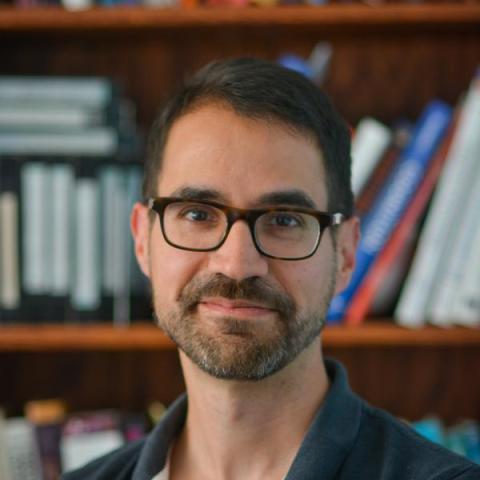
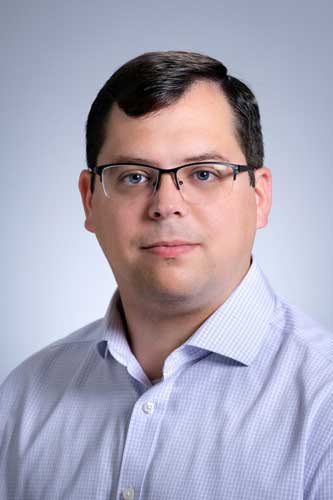
Peter Jones is a vision science researcher at City, University of London, specializing in developing novel ophthalmic assessment tools. His work focuses on creating accessible vision testing methodologies, including tablet-based perimeters (Eyecatcher), VR/AR impairment simulators (OpenVisSim), and child-friendly assessment protocols. Research Focus: Innovating visual field testing through mobile technology and AI algorithms Quantifying functional vision in retinal diseases (glaucoma, AMD, CRB1-retinopathies) Developing age-appropriate psychophysical tests for pediatric populations Validating real-world vision simulation using VR/AR technologies Publication Trends: Jones' 59+ publications demonstrate consistent focus on translational vision science. Recent work (2020-2025) emphasizes: 1) Home-based monitoring solutions for chronic eye diseases, 2) Child-friendly computerized vision assessments, and 3) Validation of novel perimetry algorithms. His collaborative studies frequently involve clinical validation across diverse populations.
Remigiusz Rak is a Professor at the Institute of the Theory of Electrical Engineering, Measurement and Information Systems within the Faculty of Electrical Engineering at Warsaw University of Technology. His research focuses on biomedical signal processing, brain-computer interfaces (BCIs), and emotion recognition systems. Specializes in EEG, ECoG, and EOG signal analysis Develops machine learning algorithms for physiological monitoring Works on real-time systems for fatigue detection and seizure prediction Research Trends : Recent publications demonstrate expertise in applying convolutional neural networks to BCI systems, developing novel methods for artifact removal in EEG signals, and creating multimodal emotion recognition frameworks combining eye-tracking and physiological data. With over 100 publications and 5 achievements documented, Professor Rak contributes to both academic research and educational innovation, including the SPRINT online learning model implementation at his university.
Katharina Rohlfing is a Professor of Psycholinguistics at Paderborn University, working within the Faculty of Arts and Humanities in the Institute of German Studies and Comparative Literary Science. She serves as Speaker for the Transregional Collaborative Research Centre 318 and is the Scientific Director of the SprachSpielLabor. Her office is located at Technologiepark 6 in Paderborn. Her research focuses on language acquisition, cognitive development, multimodal interaction, gesture and learning, and developmental robotics. Her work bridges linguistics, psychology, and human-robot interaction, with particular emphasis on how children develop language skills and how technology can support inclusive education. Her recent publications demonstrate increasing interdisciplinary work spanning linguistics, cognitive science, education, and human-robot interaction. She has been actively publishing in both theoretical linguistics journals and interdisciplinary venues focused on technology-enhanced learning. Her research increasingly incorporates robotics and digital media as tools for understanding and enhancing language development. Honorable mention at the IDC (Interaction Design and Children) (2021) Best Paper Award IEEE Transactions on Autonomous Mental Development (2016) Best Paper Award ICDL 2009 (2009) Dilthey Fellow, VolkswagenStiftung (2006) Emmy Noether-Fellow, Phase 1 (DFG) (2002) Professor Rohlfing has served in various academic leadership roles including as Specialty Chief Editor for Frontiers in Psychology: Developmental Psychology (2020-2022), Member of the Senate of Paderborn University (2018-2021), and Chair of Education for the IEEE Transactions on Cognitive and Developmental Systems Technical Committee (2012-2018). She is actively involved in multiple research projects including SAYL, SAIL, TRR 318, and merits, which focus on language development, inclusive education, and human-robot interaction. She directs the SprachSpielLabor and oversees research projects examining early language development with digital media and social robots. Her work increasingly focuses on how technology can promote inclusion opportunities in digital society, particularly for young children.
Dr. Brett Cochrane is a Lecturer at the School of Psychology, University of Aberdeen. His research investigates how humans extract environmental information through attention, memory, and cognition systems, employing methods like eye movement tracking, brain electrophysiology, and behavioral analysis. Education : Not explicitly mentioned Teaching : PS1009 (Introductory Psychology), PS3524 (Cognitive Neuroscience), PS4040 (Current Topics in Psychological Studies) His research focuses on visual imagery-attention interactions , 3D spatial cognition , and cognitive control mechanisms , particularly in visual search tasks. Publications highlight effects like distractor-induced quitting, imagery-modulated attention, and depth perception dynamics. Key article trends span visual attention , mental imagery , and cognitive neuroscience , with subfields including spatial processing, repetition priming, and top-down instruction effects. He supervises PhD students in Psychology and uses interdisciplinary methods to study perception-cognition interplay.
Cynthia Lukyanenko is an Assistant Professor of Linguistics in the Department of English at George Mason University and Director of the Processing and Acquisition of Language at Mason (PALM) lab. Her research focuses on child language acquisition, morphology, morphosyntax, language variation, and real-time language comprehension. Education: BA in Linguistics from University of Maryland College Park; MA and PhD in Developmental Psychology from University of Illinois Urbana-Champaign. Her work explores how children acquire morphosyntax and morphology in variable linguistic environments, extending to how adults process linguistic variation in real-time. Recent publications analyze negation dependencies, agreement patterns, and plural morphology in English and Spanish. She has secured a $380k NSF Linguistics Research Grant (2023-2026) for a micro-comparative study of negation in American Englishes. Supervised PhD theses include studies on Arabic dialect perception and morphophonological cues in Arabic. Her lab, PALM, investigates language processing and acquisition through experimental methods like eye-tracking. She teaches courses on research methods and language acquisition.
Tony Tang is a tenured Associate Professor at the School of Computing and Information Systems , Singapore Management University , leading the RICELab (Rethinking Interaction, Collaboration and Engagement). His research spans Human-Computer Interaction (HCI), Computer Supported Cooperative Work (CSCW), and Ubiquitous Computing. Previously affiliated with the Faculty of Information at the University of Toronto and the Department of Computer Science at the University of Calgary , he has built a career focusing on technologies that enhance human-AI interaction, mixed-reality collaboration, and immersive analytics. Education : PhD in Electrical and Computer Engineering (2010, University of British Columbia), MSc in Computer Science (2005, University of Calgary), BSc in Computer Science and Psychology (2002, Simon Fraser University) His research explores human-AI interaction (user intent expression, AI feedback), mixed reality interfaces for collaborative learning, and digital workrooms with large interactive surfaces. Recent work focuses on embodied AI agents, VR gesture design, and neurodiverse engagement in digital spaces. Key trends in his publications include immersive analytics , haptic feedback systems , and inclusive design for marginalized user groups. His work bridges theoretical insights from HCI with practical implementations in virtual and augmented environments. Grants & Funding : Current: SMU-SUTD Tier 1 Grant (S$100,000), NAVER ($1,250,000 over 5 years), Meta gift ($30,000) Past: SSHRC Partnership Engage Grant, NSERC Discovery Grant, GRAND NCE funding, MITACS Accelerate Program Scientific Awards : NSERC Post-Doctoral Fellow (2011) Eyes High Doctoral Recruitment Award (University of Calgary, 2010) Teaching & Supervision : Supervised 3 postdoctoral fellows, 26 graduate students, and 35 undergraduate students. Served as PhD Director at the University of Toronto. Developed frameworks for graduate student competencies and research proposal writing. Service & Leadership : General Co-chair for CSCW 2022 , Associate Editor for International Journal on Human-Computer Studies and HCI Journal . Held administrative roles including Associate Dean, Research at the University of Toronto (2020-2022). Labs & Teams : Leads the RICELab , which investigates novel interaction paradigms for collaboration and engagement. Collaborated on projects involving drones, 360 video systems, and haptic proxies.
Vikram Jaswal is a Professor of Psychology at the University of Virginia , where he leads research on cognitive and social processes in autism, particularly focusing on communication in nonspeaking autistic individuals. His work bridges psychology and assistive technology, with collaborations like the Jaswal Lab and University of Calgary. Research Interests : Autism communication, child development, augmented reality applications, social cognition, and neurodiversity. Recent Projects : Development of AR-based tools like HoloBoard for communication training, studies on literacy in nonspeaking autistics, and social perceptions of autistic individuals. Community Engagement : Partnerships with autistic communities to co-design interventions and prioritize lived experience in research. Key Article Trends (2023–2025): Focus on AR/XR technologies for autism support, social-cognitive biases (e.g., pain perception stereotypes), and inclusive design principles. Subfields span human-computer interaction, neurodiversity advocacy, and developmental psychology. Lab & Collaborations : The Jaswal Lab emphasizes participatory research with autistic individuals and families. Active in global conferences and interdisciplinary projects with computer scientists, educators, and neurodiversity advocates.
Edith Kaan is a Professor in the Department of Linguistics at the University of Florida. Her research focuses on psycholinguistics, neurolinguistics, and second-language acquisition, particularly examining sentence processing in bilingual and multilingual populations. She explores prediction mechanisms, code-switching, and adaptation in language comprehension using EEG, eye-tracking, and behavioral methods. Her work investigates how bilinguals manage cognitive control during language switching and how second-language learners adapt to linguistic structures. Kaan co-directs the Brain, Language and Bilingualism Lab and teaches courses such as Statistics for Linguists and Advanced Psycholinguistics. She has published extensively on topics including ERP correlates of syntactic processing, cognitive control in bilingualism, and the neurocognitive basis of language learning. Office hours are available in TUR 4127 or via Zoom, and her lab is located in TUR B122.
Jeffrey A. Ciesla is an Associate Professor in the Department of Psychological Sciences at Kent State University and Director of the Applied Psychology Center. He earned his Ph.D. from the State University of New York at Buffalo in 2004. His research focuses on cognitive and stress-related risk factors for depression, including rumination, maladaptive beliefs, and models of life stress (e.g., stress sensitization, autonomy models). He also specializes in advanced statistical techniques such as structural equation modeling (SEM) and hierarchical linear modeling (HLM) in psychopathology research. Key research areas include transgender mental health, minority stress, and the interplay between cognitive processes and emotional disorders. Dr. Ciesla’s work has explored topics such as the impact of weight stigma on eating behaviors, legislative effects on transgender youth mental health, and cannabis use outcomes. He frequently teaches courses like Introduction to Adult Psychopathology and Quantitative Methods. His recent articles highlight methodological innovations (e.g., improving depression scale scoring) and applied research on marginalized populations. Notably, studies examine post-operative outcomes for transgender individuals, stress-related legislative impacts, and cognitive biases in anxiety. Dr. Ciesla’s contributions span clinical, statistical, and public health domains, emphasizing translational research with practical implications.
Joseph Schmidt is an Associate Professor of Psychology at the University of Central Florida, where he directs the Attention and Memory Laboratory. His research integrates eye-tracking and EEG/ERP methodologies to study attention-memory interactions. Key focus areas include: Neural and behavioral correlates of visual working memory Attention guidance in real-world contexts Visual search errors in medical imaging Oculomotor patterns in neurological disorders His work bridges cognitive psychology and neuroscience, examining how memory representations shape attentional selection. Current projects investigate cognitive expectations in visual search, EEG classification methods, and attentional deficits in clinical populations.
Lauren Chase is a Senior Lecturer at Oregon State University's College of Agricultural Sciences, Department of Agricultural Education and Agricultural Sciences. She joined the department in December 2018 and currently works fully remote from Montana. Her academic credentials include a BS in Agricultural Sciences from Oregon State (2017) and an MS in Agricultural Communications from Texas Tech (2019). Education BS - Agricultural Sciences, Oregon State University (2017) MS - Agricultural Communications, Texas Tech University (2019) Research Focus: Specializing in agricultural communication, Lauren's work explores cutting-edge methodologies like continuous response measurement (dial testing), eye-tracking technologies, and semiotic analysis within agricultural contexts. Her research also examines crisis framing in agricultural communication and digital media engagement strategies. Academic Contributions: Lauren has received multiple accolades for her research, including 2021 Western Region AAAE Distinguished Manuscript Award and repeated recognition at AAAE conferences. Her publications span agricultural communication theory, media analysis frameworks, and educational outreach strategies. Scientific Awards Distinguished Manuscript Award, Western Region - American Association for Agricultural Education (2021) AAAE Western Region Conference Distinguished Manuscript Award (2019) Texas Tech University Fellowship Scholarship (2017) College of Agricultural Sciences Leadership Academy Graduate (2016) Phi Kappa Phi Honor Society (2016) Professional Affiliations: Active member of American Association for Agricultural Education, Agricultural Communications Network, Association of Communication Excellence, and Society of Agricultural Communications Scholars. She has also contributed to various public outreach initiatives including agricultural mental health advocacy.
Jan Wiener is a Professor and Head of Psychology at Bournemouth University. His research focuses on navigation, wayfinding, and cognitive aging, employing interdisciplinary methods like virtual reality, eye-tracking, and cognitive modeling. Prior to Bournemouth, he held positions at institutions such as the Max Planck Institute and the University of Tübingen, where he earned his Ph.D. in Cognitive Neuroscience (2004). Educations: Ph.D. in Cognitive Neuroscience from University of Tübingen (2004) Research interests emphasize how cognitive components like attention, memory, and spatial processing influence navigation in aging populations. His work bridges cognitive psychology, neuroscience, and environmental design, aiming to develop dementia-friendly architectural guidelines. Key articles investigate navigation strategies, spatial deficits in aging, and the impact of urban design on cognitive mapping. His recent studies include global analyses of navigation ability across cultures and the role of sleep duration in life-course segmentation. Labs/Teams: Collaborates on projects involving spatial cognition, dementia care, and virtual environments. Active in interdisciplinary teams exploring neurocognitive mechanisms of spatial behavior.
Dragoș Iliescu is a Full Professor at the Faculty of Psychology and Educational Sciences of the University of Bucharest and an Extraordinary Professor at Stellenbosch University . He has extensive leadership experience, including heading the doctoral school at Bucharest and serving as Editor-in-Chief of Intelligence , a leading journal in cognitive skills research. University : University of Bucharest Secondary Affiliation : Stellenbosch University School : Faculty of Psychology and Educational Sciences Department : Psychology Academic Rank : Professor His research interests focus on psychometrics , psychological assessment , work and organizational psychology , and cross-cultural test adaptation . Recent publications highlight his work on international competency models , job insecurity , well-being measurement , and quiet eye dynamics in sports. Notable editorial leadership roles include past Editor-in-Chief of the European Journal of Psychological Assessment and current Editor-in-Chief of Intelligence . Scientific Leadership : International Test Commission President IAAP Division 2 President Editor-in-Chief of Intelligence Key Contributions : Co-editor of International Handbook of Testing and Assessment (OUP, 2016) Author of Adapting Tests in Linguistic and Cultural Situations (CUP, 2018) Over 200 scientific publications Consultancy : 25 years of projects in psychological assessment for commercial/government sectors across four continents.
Dr. Brandon Oubre is an Assistant Professor in the Department of Computer Science at the University of Alabama at Birmingham (UAB), affiliated with the College of Arts and Sciences. He holds a Ph.D. in Computer Science from the University of Massachusetts Amherst, where he received the Outstanding Dissertation Award, followed by postdoctoral research at Harvard Medical School and Massachusetts General Hospital Neurology Department. His research focuses on applying computing technologies and sensors to improve human health monitoring, particularly in neurological disorders. Key areas include mobile health, health informatics, and quantitative behavioral assessment of neurologic diseases. He employs machine learning and data science to analyze time-series sensor data related to human movement, aiming to identify early disease signs, support clinical trials, and enable personalized care through interdisciplinary collaborations with neurology, neuroscience, and biomechanics experts. Dr. Oubre’s work emphasizes wearable sensor systems for unobtrusive monitoring of motor impairments in conditions like ataxia, stroke, and neurodegenerative diseases. His innovations include platforms like the Neurobooth for multimodal digital phenotyping and novel methods for gait analysis, oculomotor assessment, and upper-limb impairment evaluation. These techniques leverage deep learning and kinematic analysis to extract sensitive clinical metrics from sensor data. Education: Ph.D./M.S. in Computer Science, University of Massachusetts Amherst B.S. in Computer Science and Mathematics, Louisiana State University Awards: Outstanding Dissertation Award (University of Massachusetts Amherst) Advising/Grants: Details not explicitly listed in provided texts Labs/Teams: Collaborates with neurology and biomechanics teams on sensor-based health monitoring projects
Dr. Bob Fields is an Associate Professor in the Department of Computer Science at Middlesex University. His research focuses on interdisciplinary areas including human-computer interaction, mental health technology, railway safety, and collaborative work analysis. He has conducted extensive studies on suicide prevention strategies in railway environments, leveraging both qualitative and quantitative methodologies. His work integrates digital technologies with real-world applications, such as developing open-source robotic platforms for education and exploring federated learning frameworks with differential privacy for GIS systems. Fields' research spans over two decades, with notable contributions to understanding decision-making processes in complex systems like air traffic control and legal investigations. He has published extensively on topics such as distributed sensemaking, user experience design for immersive technologies (e.g., 360-degree video), and the application of mobile health (mHealth) for mental health monitoring. His publications often bridge theoretical models with practical implementations, emphasizing human-centered design principles. Key themes across his work include improving safety through technology, enhancing collaborative workspaces, and advancing educational tools via robotics and interactive systems. While no specific awards are listed, his prolific publication record reflects sustained academic engagement with high-impact societal issues such as public safety and digital health innovation.