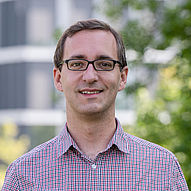
Prof. Christian Holz is an Associate Professor at the Department of Computer Science and Deputy Head of the Institute of Intelligent Interactive Systems at ETH Zürich. His work focuses on advancing human-computer interaction through innovations in wearable technologies, mixed reality systems, and sensor-driven applications. Key research areas include motion capture, physiological signal processing, and adaptive user interfaces. Holz leads the SIPLab (siplab.ethz.ch), producing influential work at the intersection of computer science and biomedical engineering. His research explores cutting-edge topics such as egocentric vision systems, wearable health monitoring devices, and VR/AR applications. Recent studies investigate cybersickness detection via EEG, heart rate estimation from eye-tracking cameras, and scalable motion capture using inertial/UWB sensors. Holz's work emphasizes practical applications in healthcare, education, and human-centered computing. Publications reflect a strong focus on interdisciplinary solutions, combining machine learning with sensor data analysis. Notable contributions include the EgoSim multi-view simulator, WildPPG biomedical dataset, and MiBOT cardiovascular modulation device. His research bridges theoretical advancements with real-world usability in domains like emergency response training, chronic disease monitoring, and immersive education.
Jennifer Olsen, PhD, is an Assistant Professor of Computer Science at the University of San Diego since 2020. She holds a PhD, MS, and BS in Human-Computer Interaction and Cognitive Science from Carnegie Mellon University, followed by postdoctoral research at the Swiss Federal Institute of Technology (EPFL), Lausanne, Switzerland. Her research focuses on the intersection of human-computer interaction, cognition, and education, emphasizing collaborative learning and educational technology design from both learner and instructor perspectives. Education: PhD in Human-Computer Interaction, Carnegie Mellon University MS in Human-Computer Interaction, Carnegie Mellon University BS in Cognitive Science, Carnegie Mellon University Research Interests: Dr. Olsen explores how collaboration supports learning, designs technologies to enhance educational practices, and investigates gaze-based metrics for understanding collaborative problem-solving. Her work spans gamified robotics, AI-driven orchestration systems, and virtual reality applications in vocational training. She emphasizes learner-centered design and the integration of social robots and virtual agents in pedagogical settings. Grants/Advising: While no specific grants or advisees are listed, her prolific publication record indicates active involvement in educational technology research and development. Her work addresses challenges in classroom orchestration, multimodal data analysis, and accessibility in educational robotics. Labs/Teams: Collaborates with interdisciplinary teams focused on educational technology, human-robot interaction, and adaptive learning systems. Her research leverages tools like FROG orchestration graphs and eye-tracking technologies to develop practical classroom solutions.
Andreas Bulling is a Professor at the Institute for Visualisation and Interactive Systems , University of Stuttgart, Germany. His research focuses on Human-Computer Interaction , Eye Tracking , and Computer Vision , with applications in Machine Learning , Virtual Reality , and Information Visualization . 2025 Publications: HOIGaze (Extended Reality), ChartQC (Data Visualization), HAIFAI (Human-AI Interaction), SummAct (Behavioral Summarization), Chartist (Chart Reading). 2024 Contributions: HumanEYEze (Multimodal AI), HOIMotion (3D Object Detection), MultiMediate'24 (Engagement Estimation), Unified Model of Saliency (Scanpath Prediction). His recent work explores gaze estimation , interactive behavior modeling , and privacy-preserving eye-tracking systems . Key subfields include Extended Reality , Neural Networks , and Behavioral Biometrics . While no explicit scientific awards are mentioned, his research has been widely cited (8,003 total citations) and downloaded (132,740 times). Andreas leads projects in Interactive Systems and collaborates with institutions such as Aalto University , KU Leuven , and National University of Singapore . His lab focuses on eye movement analysis , human motion forecasting , and task-driven input modeling .
Jeff Huang is an Associate Professor and Associate Chair of Computer Science at Brown University. His research focuses on Human-Computer Interaction (HCI), with emphases on personalized systems using behavioral data, health informatics, and user interfaces. Huang holds a PhD from the University of Washington and degrees from the University of Illinois at Urbana-Champaign. His work is funded by NSF, NIH, and ARO, and he has received awards including the NSF CAREER Award and ARO Young Investigator Award. Education: PhD in Information Science, University of Washington (2013) MS in Computer Science, University of Washington (2013) BS and MS in Computer Science, University of Illinois at Urbana-Champaign (2007) Research Interests: His work spans health informatics (e.g., sleep tracking systems like Self-E and SleepCoacher), user interface design, and leveraging behavioral data for personalized systems. Notable projects include WebGazer (webcam eye tracking), filtered.ink (creative illustration tools), and Sochiatrist (mental health analytics). Teaching: He teaches courses on user interfaces, HCI, and research methods, including CSCI 0130/1300 (User Interfaces), CSCI 2300 (HCI Seminar), and CSCI 2000 (Research Methods). Awards: NSF CAREER Award Facebook Fellowship ARO Young Investigator Award Grants & Advising: Huang leads a research group advising over 50 students, many of whom have pursued academic and industry roles. His grants support projects in HCI, health tech, and collaborative systems.
David Lindlbauer is an Assistant Professor at the Human-Computer Interaction Institute (HCII) of Carnegie Mellon University, where he leads the Augmented Perception Lab and co-directs the CMU Extended Reality Technology Center. His research bridges human perception, extended reality (AR/VR), and computational interaction techniques, focusing on developing systems that dynamically adapt interface elements based on environmental context, user cognition, and task requirements. He completed his PhD at TU Berlin under Prof. Marc Alexa and held a postdoctoral position at ETH Zurich's Advanced Interactive Technologies lab. His work has been published extensively at top venues including ACM CHI, UIST, and IEEE VR, with research themes spanning gaze tracking, spatial audio optimization, haptic feedback, and multimodal notification systems. Media outlets like MIT Technology Review and Fast Company Design have featured his innovations. Dr. Lindlbauer has received prestigious grants from Meta, NSF, and ETH Zurich, and serves on program committees for CHI, UIST, and ISMAR. He has been recognized with Best Paper awards at ISS 2023 and CHI 2016, and his lab develops tools like MineXR for personalized XR interfaces and RealityReplay for temporal change visualization in mixed reality environments.
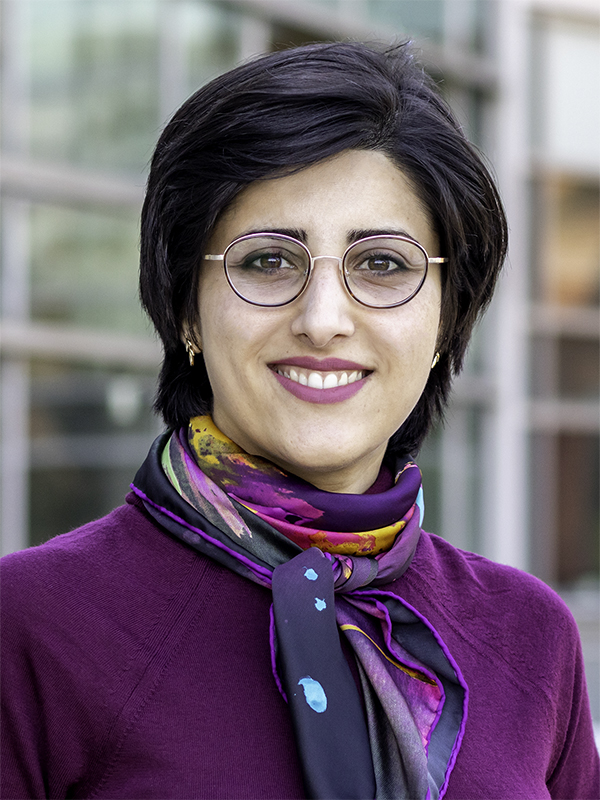
Elahe Soltanaghai is an Assistant Professor in the Department of Computer Science and a Faculty Affiliate in Electrical and Computer Engineering at the University of Illinois Urbana-Champaign. She is also a 2022 NCSA Fellow and received her PhD in Computer Science from the University of Virginia (2019), MS in Computer Engineering from Sharif University of Technology (2014), and dual BS degrees in Computer and Information Technology Engineering from Amirkabir University of Technology (2011, 2013). PhD: University of Virginia, Computer Science, 2019 MS: Sharif University of Technology, Computer Engineering, 2014 BS (Computer Engineering): Amirkabir University of Technology, 2011 BS (Information Technology Engineering): Amirkabir University of Technology, 2013 Her research spans wireless sensing and communication, focusing on Millimeter-wave Radar Sensing (for automotive, mixed reality, structural monitoring), Machine Learning for Wireless Systems (adaptive sensing/communication), Forest IoT (through-canopy biomass and soil sensing), Metaverse Technologies (gaze-based VR/AR), and Low-Power Backscatter Communication (WiFi/power-line tags). She directs the Wireless, Sensing & Embedded Networked Systems (iSENS) Lab and co-directs the Illinois Center for IoT. Her work bridges wireless networking with cyber-physical sensing , emphasizing environmental monitoring (e.g., wildfire fuel detection via radar tags) and human-computer interaction (e.g., gaze-tracking in VR). Recent articles include innovations in passive radar profiling , through-canopy biomass characterization , and integrated communication-sensing protocols . Scientific Awards: Google Research Scholar Award (2022) N2Women Rising Star (2021) ACM SIGMOBILE Dissertation Award (2020) EECS Rising Stars (2019) NCSA Faculty Fellowship (2023) Best Demo Runner-up, IPSN (2023) Teaching Excellence Award (2023) Grants: NASA FireTech Program Grant (2025) NSF Grant for Radar-based Perception (2024) Insper-Illinois Grant for VR Research (2024) Keysight Research Gifts (2022, 2023) T-Mobile Research Gift (2022)
Professor Guy Wallis is a Professor and Director of Research at the School of Human Movement and Nutrition Sciences, Faculty of Health, Medicine and Behavioural Sciences at the University of Queensland. He is also an Affiliate of the Centre for Sensorimotor Performance. His work bridges visual neuroscience, computational modeling, and applied human factors research, with significant contributions to understanding visual recognition and visuomotor behavior. Education: Bachelor (Honours) of Engineering in Electrical and Electronic Engineering from Imperial College London PhD in Visual Neuroscience from University of Oxford, UK Prof. Wallis's research program combines computational modeling with behavioral studies, many conducted in computer-controlled virtual environments. His work spans visual neuroscience, object recognition, visuomotor control, and simulator-based training. He has made significant theoretical contributions to understanding how visual recognition is achieved in biological systems and how everyday visuomotor tasks are regulated, challenging existing paradigms and offering new insights. His recent publications reveal a strong focus on virtual reality applications, visual-motor integration challenges, and cross-species cognitive studies. There's a clear trend toward investigating how virtual environments can be optimized for training and assessment, with particular attention to visual perception limitations and how humans adapt to these environments across diverse contexts from surgical training to aviation. Scientific Awards and Recognitions: Elected Fellow of the Queensland Academy of Arts and Sciences (2022) ARC Medical Research Advisory Group (2022-2024) ARC College of Experts (2019-2021) CSIRO CSS Human Research Ethics Committee member (2020-2022) UQ Health and Behavioural Sciences Faculty, HDR Supervision Award (2018) ARC Future Fellowship (2011-2014) ARC QEII Fellowship (2003-2007) UQ Postdoctoral Fellowship (2001-2003) Prof. Wallis has successfully secured funding from major organizations including the Australian Research Council, the Human Frontier Science Program, and the Wellcome Trust. His industry partnerships span diverse sectors such as construction training, mining, healthcare, and aerospace. His research has led to the development of novel training programs for health professionals, impacted the design of man-machine interfaces for mining equipment, and informed the design parameters for pilot training systems. As Director of Research, he oversees the research direction of the School of Human Movement and Nutrition Sciences, fostering interdisciplinary collaborations and supporting early-career researchers through his leadership in the Centre for Sensorimotor Performance.
Associate Professor Chen Lou is a faculty member at the Wee Kim Wee School of Communication and Information, Nanyang Technological University (NTU), Singapore. Her research focuses on consumer psychology and advertising effects, exploring how marketing communications influence behavior through information processing mechanisms. She investigates topics like influencer marketing, content strategies, and the psychological impacts of brand communications. A mixed-methods researcher, she employs techniques such as eye-tracking, psychophysiological measures, and big data analytics (e.g., sentiment analysis). Dr. Lou holds editorial roles at journals including the International Journal of Advertising and Journal of Interactive Advertising , and serves on committees for organizations like the American Academy of Advertising (AAA) and the International Communication Association (ICA). She earned her Ph.D. from Michigan State University, an M.S. from Ohio University, and a B.A. from Wuhan University. Her research has been recognized with awards such as the 2021 Mary Alice Shaver Promising Professor Award (AAA) and multiple best article awards. She actively supervises student projects, including top-winning FYPs at NTU. Key research areas include: Influencer marketing dynamics and virtual influencers Social media platform affordances and advertising effectiveness Brand activism and message framing Psychological ownership in content marketing Consumer responses to ethical and cultural messaging
Professor Mark Wilson is a Professor in Psychology at the University of Exeter, specializing in cognitive and emotional processes underpinning skill acquisition and performance under pressure. He holds leadership roles, including Head of Department for Public Health and Sport Sciences (since 2020) and previously served as Director of Research (2018–2020) and Head of Department (2020–2022) in Sport and Health Sciences. He joined the University of Exeter in 2006, progressing from Lecturer to Professor by 2017. Education: M.Eng (1st), Engineering Manufacture and Management, University of Manchester (1991–1995) PGCE, Manchester Metropolitan University (2003–2005) PhD, Manchester Metropolitan University (2001–2006) M.Sc. (Distinction), Sport and Exercise Science (Psychology Pathway), Manchester Metropolitan University (2000–2001) Research Interests: Focuses on applied and theoretical aspects of skill acquisition, performance under pressure, and interdisciplinary applications in elite sport, public health, and immersive technologies. Active in collaborative networks such as the NIHR Exeter Biomedical Research Centre and Exeter Immersive Health Technologies. Grants and Funding: Secured funding from UKRI, industry partners, and charities, with expertise in virtual immersive training (VITAL) and eye-tracking solutions. Supervised 20 PhD students to completion. Labs & Teams: Leads the Virtual Immersive Training And Learning (VITAL) group and collaborates with Exeter Brain Health Analytics and Exeter Defence, Security and Resilience networks.
David Melcher is Professor of Psychology and Program Head in Psychology at New York University Abu Dhabi (NYUAD), where he also serves as a Global Network Professor. He is affiliated with the Division of Science and leads the Perception and Active Cognition Lab, focusing on the integration of perception, attention, memory, and action within a cognitive neuroscience framework. PhD in Psychology and Cognitive Science, Rutgers University (2001) Former researcher and professor in Italy and the UK Current leadership: Program Head, Psychology, NYUAD David Melcher's research centers on cognitive neuroscience , particularly how perception, attention, working memory, eye movements, and self-motion interact to shape cognition and behavior. His lab emphasizes active cognition —the idea that perception is not passive but dynamically shaped by action, context, and goals. He investigates how temporal dynamics in neural processing organize perceptual experiences and guide decision-making. His work spans both healthy and clinical populations, exploring individual differences in spatial and temporal processing across the lifespan. The 15 most recent publications reflect a consistent focus on temporal organization in cognition , perception-action coupling , and neural mechanisms of attention and memory . Keywords across these works include cognitive neuroscience, perception, and neuroimaging, with subfields ranging from eye movement research and neural synchrony to computational modeling and clinical neuropsychology. Collectively, they demonstrate a trajectory toward integrative models of brain function that bridge behavioral, neuroimaging, and computational approaches. Among his notable recognitions is the Distinguished Scientific Award for Early Career Contribution to Psychology from the American Psychological Association (2011), highlighting the early impact of his work in cognitive neuroscience. Distinguished Scientific Award for Early Career Contribution to Psychology, APA (2011) David Melcher has advised numerous students through capstone projects in psychology and computer science, fostering interdisciplinary research at the intersection of cognitive science and technology. His research has been generously supported by major funding agencies including the European Research Council , the US National Institutes of Health , the Italian Ministry of Research and Education , and the Chinese Ministry of Foreign Expert Affairs . He also contributes to the academic community as a member of the editorial boards of Journal of Vision , Psychonomic Bulletin & Review , Perception , and iPerception . He leads the Perception and Active Cognition Lab at NYUAD, which employs a multidisciplinary approach combining behavioral experiments, neuroimaging (fMRI, EEG, MEG), eye-tracking, computational modeling, and clinical assessments. The lab’s research aims to understand how the brain constructs stable percepts from dynamic sensory input, particularly during active engagement with the environment.
Niels Henze is a Professor at the Chair of Media Informatics within the Faculty of Languages, Literature and Cultural Studies at the University of Regensburg, where he has been serving since May 2018. His research centers on human-computer interaction, with a strong focus on predictive models in interactive systems, mobile interaction, augmented and virtual reality, and attention-aware computing. His research interests include: Human-Computer Interaction (HCI) Predictive modeling for runtime adaptation Mobile and wearable interaction Augmented and Virtual Reality (AR/VR) Attention-aware and context-sensitive systems Sociocognitive aspects of interactive technologies The analysis of his recent publications reveals a consistent focus on leveraging user behavior and contextual cues to build intelligent, adaptive interfaces. His work integrates machine learning with interaction design, emphasizing real-time model updates, implicit feedback, and cognitive load awareness to improve usability and user experience across mobile and immersive platforms. Scientific awards: No awards mentioned in the provided text. Niels Henze leads research in adaptive interactive systems and advises students in the field of media informatics. He has previously held a junior professorship at the University of Stuttgart and completed his doctorate at the University of Oldenburg under Susanne Boll. He is actively involved in advancing the theoretical and practical foundations of predictive and attention-aware computing. Grants and funding sources are not specified in the text. He is associated with the Institute for Information and Media, Language and Culture (I:IMSK) at the University of Regensburg, contributing to a multidisciplinary environment that bridges informatics with cultural and linguistic studies.
Dr. İsmail ÖZTEL serves as an Assistant Professor in the Department of Computer Engineering at Sakarya University's Faculty of Computer and Information Sciences. He has been a faculty member since 2019, following his tenure as a Research Assistant from 2012-2019 at the same institution. His educational background includes: Doctorate in Computer and Information Engineering (2014-2018) from Sakarya University with thesis on "Facial expression detection on partial and full face images using machine learning methods" Master's Degree in Computer and Information Engineering (2012-2014) from Sakarya University with thesis on "Driver simulator for educational purposes" Bachelor's Degree in Computer Engineering (2007-2011) from Sakarya University Dr. ÖZTEL's research focuses on artificial intelligence, deep learning, and computer vision with significant applications in healthcare, mobile technology, and public safety. His work has evolved from foundational facial expression recognition to sophisticated medical applications including skin disease classification using smartphones, monkeypox detection from skin lesions, and pandemic response systems for face mask detection. His research demonstrates strong interdisciplinary connections between computer science and healthcare. An analysis of his publication trends reveals a clear progression toward increasingly complex deep learning architectures applied to real-world problems, with recent work emphasizing medical applications using mobile technology and public health safety systems. His 2023-2025 publications show particular focus on skin disease classification, intelligent vehicle systems, and hybrid feature extraction methods for pandemic response. Dr. ÖZTEL has served as a reviewer for numerous prestigious journals including Expert Systems With Applications (multiple years), World Wide Web, Multimedia Tools and Applications, and Journal of King Saud University - Computer and Information Sciences, demonstrating his recognition in the academic community across multiple domains. His research projects include work on facial expression detection in open scientific databases (2020), performance evaluation of transfer learning approaches (2019), and current projects on brain tumor classification systems and earthquake safety education for individuals with developmental disabilities. His international research experience includes collaboration with Filiz Bunyak in 2017, indicating global engagement in his field.
Mark Billinghurst is a Professor and Director of the Australian Research Centre for Interactive and Virtual Environments at UniSA STEM, University of South Australia. His work focuses on Augmented Reality (AR), Virtual Reality (VR), and empathic computing, emphasizing remote collaboration, human-computer interaction, and inclusive design. He has authored influential books like Computer-Supported Collaboration: Theory and Practice (2024) and pioneered systems such as Empathy Glasses and gaze-tracking interfaces for collaborative tasks. Education & Affiliations: Mark Billinghurst is affiliated with the Empathic Computing Laboratory and has collaborated globally with institutions like Keio University, Nokia, and the University of Canterbury. His research spans AR applications in manufacturing, healthcare, and social interaction, with a focus on improving accessibility and user experience. Research Interests: Dr. Billinghurst’s research explores AR/VR for remote guidance, wearable technologies, and emotional interfaces. He investigates how gaze cues, multimodal feedback, and AI can enhance collaboration and empathy in virtual environments. His work bridges technical innovation with human-centric design, addressing challenges in industrial assembly, mental health, and workplace transformation. Publications & Impact: His 2016 study on gaze tracking in remote collaboration (cited over 100 times) and 2024 book on AR collaboration highlight his contributions. Recent projects include Vibe360 (group emotion analysis) and CAEVr (biofeedback-driven empathy systems). He actively contributes to conferences like IEEE VR and CHI, shaping the future of immersive technologies. Labs & Future Work: His lab develops tools like the SAR system for aircraft drilling and empathic agents (EMiRAs). Future directions include AI-driven emotional interfaces, inclusive metaverse design, and VR solutions for cognitive rehabilitation.
Florian 'Floyd' Mueller is a Professor of Future Interfaces at Monash University in Melbourne, Australia, where he directs the award-winning Exertion Games Lab within the Department of Human-Centred Computing (ranked among the top 20 HCI departments globally). Previously, he held positions at RMIT University, Stanford, University of Melbourne, Microsoft Research, MIT Media Lab, Fuji-Xerox Palo Alto Labs, Xerox Parc, and Australia's CSIRO. Mueller is a member of the prestigious ACM SIGCHI Academy, an honorary group recognizing leaders who have made substantial contributions to Human-Computer Interaction (HCI). Professor Mueller's research focuses on the intersections between technology, the human body, and play. He originated the concept of "Exertion Interface," arguing that we should not just design "easy-to-use" interactions when "hard-to-use" interactions can also be beneficial. His work spans movement-based interactions, whole-body interfaces, uncomfortable interactions, somaesthetics, and exertion games. Mueller's research methodology often employs research through design, design ethnography, and autoethnography to explore these novel interaction paradigms, incorporating mixed-reality, augmented reality, virtual reality, electronic muscle stimulation, biosensors, wearables, and drones. His recent publications demonstrate a continued focus on bodily interactions and human-computer integration, with particular emphasis on emerging subfields like WaterHCI and SportsHCI, brain-computer interfaces, and gustosonic (taste and sound) experiences. Mueller's work has evolved from foundational exertion game concepts to more sophisticated explorations of human-computer integration where technology becomes seamlessly woven into the fabric of human experience. Professor Mueller's contributions have been widely recognized with numerous awards including: Inaugural honouree of the Australian Design Centre's Design Honours Tall Poppy award for "intellectual and scientific excellence" 10 "Best Paper Honorable Mentions" (top 5%) from premier HCI conferences 2 "Best Paper" awards (top 1%) at CHI PLAY and CHI Shortlisted for the European Innovation Games Award (alongside Nintendo's WiiFit) Nokia Mindtrek Ubimedia Award Mueller has successfully secured some of Australia's largest and most competitive research grants, achieving a remarkable 14% success rate on Australian Research Council Discovery Project applications. He has served as General co-Chair for CHI PLAY'18 and CHI'20, becoming the first Australian-based researcher to spearhead HCI's highest-ranked publication outlet, and is currently General co-Chair for CHI'24. He is Associate Editor for tier A journals including Elsevier's IJHCS (International Journal of Human-Computer Studies) and ACM's IMWUT (Interactive, Mobile, Wearable and Ubiquitous Technologies). As director of the Exertion Games Lab, Mueller leads a research team whose innovations have been experienced by over 20,000 users across 3 continents and featured on the BBC, ABC, Discovery Science Channel, and Wired magazine. The lab has produced groundbreaking work in bodily interfaces, co-founding the CHI PLAY conference series and establishing new research directions in SportsHCI and WaterHCI through recent "Grand Challenges" papers. Mueller's lab continues to push boundaries with projects exploring brain-to-brain interfaces, lucid dreaming induction, and novel gustosonic experiences.
Denise Head is Professor of Psychological & Brain Sciences and Associate Chair at Washington University in St. Louis, with an additional appointment as Associate Professor in Radiology. Her research integrates cognitive neuroscience and neuroimaging to study cognitive aging and Alzheimer's disease. PhD, University of Memphis MS, University of Memphis BS, University of New Orleans Her research focuses on age-related cognitive changes and their neural underpinnings. Key areas include spatial navigation deficits in aging, the role of lifestyle factors (exercise, sleep, stress) in brain aging, and interventions to support cognitive function in older adults. She uses virtual reality, mobile eye-tracking, and neuroimaging techniques such as fMRI and DTI. The recent publications highlight a consistent trajectory in cognitive neuroscience and aging research, with emphasis on neuroimaging biomarkers, structural brain changes, and cognitive performance in normal and pathological aging. Her work bridges psychology, neurology, and radiology, contributing to early detection and understanding of Alzheimer's disease. Scientific Awards: No awards listed in the provided text. Dr. Head advises graduate students and leads a research lab focused on cognitive aging, though specific student names are not listed. Her lab investigates mediators of brain aging and develops methods to support spatial navigation in older adults. While specific grants are not mentioned, her ongoing research and recent publications suggest active external funding. She leads a research team in the Department of Psychological & Brain Sciences, utilizing advanced neuroimaging and behavioral methods to study aging and dementia. The lab integrates real-world and virtual experimental designs to understand spatial cognition and brain health in older populations.