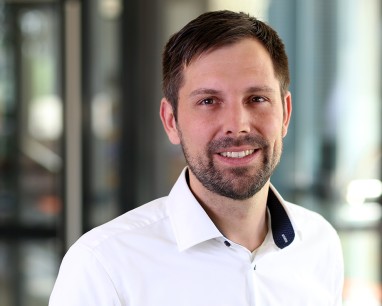
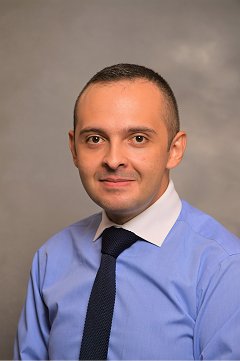
Stefan Göbel is a Professor and Head of the Serious Games Working Group at TU Darmstadt's Department of Electrical Engineering and Information Technology. With over 20 years of experience, he specializes in serious games, standardization (e.g., DIN/SPEC 91380 metadata format), and their applications in education and healthcare. His research includes authoring tools, adaptive game systems, and quality assessment frameworks like the RAL certification. He has led numerous EU and national projects, including the WTT Serious Games initiative, and co-edited multiple conference proceedings and books on serious games. His work bridges computer science, education, and healthcare, emphasizing interdisciplinary collaboration.
Dr. Benedict C. O. F. Fehringer is a Researcher at the Department of Psychology within the School of Social Sciences at the University of Mannheim. He is affiliated with Stefan Münzer's Lab and focuses on educational psychology, spatial thinking, and advanced psychophysiological measurement techniques like eye tracking and pupillometry. His work examines cognitive processes during learning and testing scenarios, particularly exploring how gaze patterns and pupillary responses reflect cognitive workload and spatial reasoning. Key research interests include adaptive teaching/learning procedures, bias awareness in education, and the diagnostic potential of eye tracking data. He has developed specialized tests such as the R-Cube-SR and R-Cube-Vis for spatial ability assessment, implemented in OpenSeame software. His interdisciplinary approach integrates machine learning and data mining to analyze educational interventions and classroom diversity effects. Recent publications emphasize retest effects in spatial cognition, cultural diversity metrics in classrooms, and the validation of bias awareness scales for teachers. His work bridges cognitive psychology, educational technology, and policy-relevant issues in multicultural education settings.
Karola Pitsch is a Professor for Multimodal Communication, Social Interaction & Technology at the Institute of Communication Studies, University of Duisburg-Essen. She leads a research group focused on multimodal interaction, human-robot interaction, and workplace communication, and directs the Multimodal Interaction & Eye-Tracking Lab. She actively supervises student theses and teaches courses in conversation analysis and multimodal data methods. Her research interests center on multimodal conversation analysis , human-robot interaction , and interaction in complex work environments , particularly in medical emergencies and public settings. She employs video ethnography, mobile eye-tracking, and micro-analytic methods to study real-world social interaction. Her work bridges linguistics, communication studies, and human-computer interaction. Her recent publications reflect a strong trend in methodological innovation for multimodal data, including anonymization tools, corpus structuring, and quality assurance workflows. She also investigates coordination in emergency drills and the use of robots in everyday contexts like museums and calendar management. Her work emphasizes ethical data handling and technical robustness in research. Scientific Awards: No awards mentioned in the text. Advising and Grants: She supervises Bachelor's and Master's theses, as evidenced by the list of supervised theses provided on her website. She leads active research projects such as 'Multimodal Personenreferenzen' and 'Interaktion & Raum', though specific grant funding is not detailed. Her team includes multiple research assistants and student employees, indicating sustained research activity and mentorship. Labs and Teams: She leads the Multimodal Interaction & Eye-Tracking Lab , which supports research using mobile eye-tracking and multi-sensor data. Her team includes scientific staff (e.g., Dr. Maximilian Krug, Anne Ferger, Felix Bergmann), student assistants, and associated researchers like Dr. Andre Krause. The group collaborates on developing tools for data processing and corpus creation.
Prof. Dr. Antonio Krüger is the CEO of the German Research Center for Artificial Intelligence (DFKI) and Director of the Ubiquitous Media Technology Lab (UMTL) at the Saarland Informatics Campus in Saarbrücken, Germany. He is a leading researcher in human-computer interaction, virtual and augmented reality, multimodal interfaces, and intelligent systems. His research interests span a broad range of topics including virtual reality (VR), augmented reality (AR), gesture interaction, haptic feedback, EEG and eye tracking, gamification, cognitive load estimation, brain-computer interfaces, and smart environments. His work emphasizes user-centered design, perceptual illusions, and real-world applications in domains such as automotive, healthcare, and education. His recent publications (2023–2024) demonstrate a strong focus on advancing VR interaction through techniques like hand redirection, synthetic gesture generation for vehicles, implicit intent recognition using multimodal sensing, and personalized object referencing. These works reflect trends toward seamless, natural, and adaptive interfaces that leverage AI, perception, and real-time feedback. Prof. Krüger supervises a large team of researchers and students, including Mansi Sharma, Amr Gomaa, André Zenner, and Martin Feick, indicating active mentorship and collaborative research leadership. His lab, UMTL, develops innovative technologies in immersive environments, wearable systems, and intelligent user assistance, contributing to both academic knowledge and practical applications.
Aimée Sousa Calepso is a doctoral researcher at the Visualization Institute (VISUS) of the University of Stuttgart , affiliated with the Sedlmair Working Group and the Cluster of Excellence IntCDC . Her work focuses on Virtual Reality , Augmented Reality , and Haptics , with expertise in User Studies and Situated Analytics . Research Projects: Cyber-Physical Wood Fabrication Platform (RP 4-1) Cyber-Physical Fabrication Platform: Fluid Fabrication (RP 4-2) Situated Analytics (AP 34) Her recent publications analyze collaborative robotics, AR/VR applications for construction workflows, and spatial user interaction. She holds an M.Sc. degree and contributes to interdisciplinary research at the intersection of architecture, engineering, and computational systems.
Dr. Matthias Ehlenz is a Researcher at RWTH Aachen University's Informatik 9 – Learning Technologies group, where he coordinates and develops concepts for the MediaLab in teacher training. He holds a Dr. rer. nat. (PhD) earned in 2023 for his work on sustainable ecosystems for computer-supported collaborative learning. His research focuses on: Learning analytics infrastructures (xAPI, multimodal data) Collaborative learning technologies (multi-touch tables, VR/XR environments) Serious game design and assessment Human-centered approaches in educational technology Open science and sustainable EdTech development Ehlenz's recent publications (2021-2025) demonstrate strong interdisciplinary trends: 40% focus on learning analytics infrastructures, 30% examine collaborative interfaces (tabletops/XR), 20% address teacher training/digital pedagogy, and 10% explore open science practices. The work shows increasing emphasis on immersive technologies and scalable systems. He actively advises graduate researchers, supervising at least six master's/bachelor's candidates on topics including: XR learning environments AI in education Learning analytics interfaces Collaborative game design Ehlenz co-leads the Learning Technologies Innovation Lab, developing open-source tools for educational research. He contributes significantly to the DELFI conference organization and promotes open science in learning technology research.
Prof. Dr. Michael Wahl is a Professor for Rehabilitation Technology and New Media at the Institute of Rehabilitation Sciences , Humboldt University of Berlin. His work bridges neurology , speech therapy , and digital innovation , focusing on augmentative and alternative communication (AAC) and rehabilitation robotics . Education: Dr. phil. (2007), Clinical Linguist (BKL) certification, ISAAC Basic Certificate in AAC Key Research: Digital media in rehabilitation, teletherapy, AAC implementation, stroke recovery, Parkinson’s disease, eye movement analysis for reading disorders Awards: No explicit awards mentioned Recent Publications: Focus on digital inclusion , robot-assisted therapy , and user-centered design in rehabilitation technologies Teaching: Lecturer at University of Potsdam and German Federal Association for Academic Speech Therapy
Dr. Marcus Tönnis is a Researcher at the Department of Augmented Reality , School of Computer Science , Technische Universität München , with extensive experience in Human-Computer Interaction and Automotive Augmented Reality systems. His work focuses on 3D User Interfaces , Contextual Information Placement , and Spatial Context Modeling for vehicle environments. Dr. Tönnis has supervised numerous Master's and Bachelor's theses in areas like Driver Assistance Systems , 3D Visualization , and Augmented Reality applications. He has received multiple scientific awards , including an Honorable Mention at the 5th Augmented Human International Conference (2014) and the Alphonse Chapanis Student Paper Award (2006). His research projects span from foundational Augmented Reality Taxonomies to Ubiquitous Tracking Systems , with a particular emphasis on Automotive Applications . Publications demonstrate expertise in 3D User Interfaces , Driver Attention Management , and Contextual Visualization principles. Honorable Mention Award (5th Augmented Human International Conference, 2014) Alphonse Chapanis Student Paper Award (Human Factors and Ergonomics Society, 2006) Best short paper (11th Symposium on Virtual and Augmented Reality, 2009) Best paper on Vehicle Ergonomics Symposium (16th World Congress on Ergonomics, 2006)
Dr.-Ing. Alireza Abbasimoshaei is a postdoctoral researcher at the Hamburg University of Technology (TUHH), affiliated with the Institute of Mechatronics in Mechanical Engineering (M-4) . His work focuses on robotics, haptics, and rehabilitation engineering. Current role: Research Fellow at TUHH Past roles: Visiting scientist at TU Braunschweig; Doctoral student at Tarbiat Modares University Education: Master's in Mechanical Engineering (University of Tehran); Bachelor's in Mechanical Engineering (Mazandaran University) Research Interests : Specializing in robotics , haptics , and rehabilitation engineering , his work bridges advanced robotic systems with practical applications in telerehabilitation, telemedicine, and assistive technologies. Key areas include: Wearable robotic devices Cloud-based control systems Immersive virtual rehabilitation environments Intelligent control strategies DevOps/Cloud development Publications & Research Trends : With over 30 peer-reviewed publications, his work spans tactile interaction optimization, sensor integration, and control system development. Recurring themes include haptic feedback mechanisms, AI-driven rehabilitation systems, and wearable PCB implementations. Scientific Awards : First place in Iranian World Robot Olympiad Elite Awards from National Elite Foundation of Iran Secured BMBF and DFG funding Social Innovation Award (Hamburg Maker Challenge) Hamburg Teaching Award for hybrid lectures Teaching & Mentorship : Lecturer in courses like Applied Mechatronic Design Methodology and Haptic Technologies , he has supervised over 40 students in projects ranging from Ultrasound haptic devices Eye-tracking control systems Whisker sensor development Exoskeleton design Labs & Projects : Co-developer of TUHH's Haptics Lab and the VRobotia educational robotics platform.
Dr. Michael Dietz is a Researcher at the Chair of Human-Centered Artificial Intelligence ( University of Augsburg , Faculty of Applied Informatics, Institute of Informatics). His work focuses on Human-Computer Interaction , Mobile Assistive Systems , and Signal Processing with Machine Learning applications. Key research trends include: Development of mobile frameworks for real-time affective feedback (SSJ Framework, SenseEmotion) Augmented reality applications for public spaces and ambient media Privacy-preserving machine learning on mobile devices Physiological signal analysis for stress detection in older adults Eye-tracking innovations for visual search detection Explainable AI techniques in facial expression recognition Projects: EmmA (Emotional mobile Avatar) Glassistant (Smart Glasses for MCI patients) SenseEmotion (Multisensorial emotion recognition) SSJ Framework (Social Signal Processing)
Prof. Dr. Henning Femmer serves as Professor of Business Information Systems, especially Requirements Engineering and IT Quality Management at the University of Applied Sciences Südwestfalen within the Department of Technical Business Administration. He supervises the Software Systems Quality Lab and teaches courses including IT quality management, Information Management, Software internship, Software Engineering, and Requirements Engineering. His research focuses on: Requirements Engineering with AI/NLP applications for requirement capture and traceability IT quality management emphasizing usability DevOps practices and CI/CD implementation in educational settings Game-Based Learning and Serious Games in Higher Education UX Research using eye-tracking technology System Engineering through hands-on projects like the NASA Mars Rover recreation The Software Systems Quality Lab pursues four main objectives: replicating current software engineering methods, developing new tools, providing practical quality engineering experience, and collaborating with regional companies. The lab employs empirical research methods and features notable equipment including a self-built NASA Open Source Rover and a Tobii Pro Spark eye-tracking camera. His scientific recognition includes the NASA Group Achievement Award from the SARP project. Prof. Femmer actively supervises student theses in Software Engineering, Requirements Engineering, IT quality assurance, Text analysis, and Agile methods. He oversees practical projects like the NASA Mars Rover recreation where students gain hands-on experience with robotics, software development, and autonomous systems. The Software Systems Quality Lab team comprises Dipl.-Ing. Volker Weiss, Dehbia Kouadria (Research Associate focusing on Serious Games in Software Engineering), and student assistants Oliver Pachatka and Arina Vovna.
Naser Al Madi is an Assistant Professor of Computer Science at Colby College, where he teaches core courses including Data Structures and Algorithms (CS231) and Software Engineering (CS321). His research integrates eye tracking with software engineering to enhance source code comprehension through analysis of developer behavior and eye movement patterns during software development. His educational background includes a PhD from Kent State University (2020), followed by a visiting research scholar position at Harvard University's School of Engineering and Applied Science and Schepens Eye Research Institute in 2023. Prior to joining Colby, he began his teaching career at Hamilton College where he taught Operating Systems and Wearable Technology courses. PhD, Kent State University, 2020 Visiting Research Scholar, Harvard University, 2023 Began teaching career at Hamilton College Dr. Al Madi's research focuses on the intersection of eye tracking technology and software engineering, particularly examining how developers comprehend source code through eye movement analysis. His work extends to Human-Computer Interaction applications in clinical rehabilitation settings and the impact of AI tools like GitHub Copilot on code readability and developer workflows. He maintains an active research blog discussing cognitive aspects of programming and regularly collaborates with undergraduate students on research projects. His recent publications analyze lexical similarity in identifier names, the readability of AI-generated code, and longitudinal eye tracking studies of developers progressing from novice to expert levels. These works collectively explore how cognitive processes affect software development practices and how tools can be designed to better support developer cognition. Dr. Al Madi is deeply committed to inclusive computer science education, advocating that 'anyone can become a computer scientist if they work hard' regardless of background. He actively mentors undergraduate researchers, emphasizing the importance of diversity in technology development to prevent exclusionary design patterns. His teaching philosophy integrates modern software engineering practices with critical analysis of AI tools, requiring students to understand and verify all AI-generated code rather than using it uncritically. Based in the Davis Science Center at Colby College, he maintains an active presence in the software engineering research community, serving on program committees for major conferences including ASE and FSE. His blog features practical career advice for students, including guidance on resume building, internship applications, and navigating the tech industry.
Andrew Begel is an Associate Professor in the Software and Societal Systems Department at Carnegie Mellon University's School of Computer Science. Previously, he was a Principal Researcher at Microsoft Research from 2006 to 2022. He received his Ph.D. in Computer Science from the University of California at Berkeley and holds a Master of Engineering from MIT. Dr. Begel is internationally recognized for his pioneering research on cooperative and human aspects of software engineering, combining empirical studies of professional software engineers with organizational behavior. His work focuses on accessibility, neurodiversity, and human-computer interaction, with particular emphasis on creating more inclusive technology workplaces. He was the first to study emotions in software engineering and conducted groundbreaking research on autistic software developers, identifying their unique strengths and challenges. His research portfolio shows a clear trajectory toward understanding human factors in software development, with increasing focus on neurodiversity and accessibility. Early work examined code comprehension through eye tracking and fMRI studies, while recent publications focus on creating inclusive environments for autistic software engineers and developing tools that support mixed-ability collaboration. His work spans empirical software engineering, human-computer interaction, and accessibility research, often bridging these domains to address real-world challenges in software development environments. Best Paper Award — SIGCSE (2021) ACM Distinguished Member (2019) Best Paper Honorable Mention Award — CSCW (2019) Best Paper Award — ICSE, Software Engineering In Practice (2019) Most Influential Paper Award (10 Years) — ICER (2019) Best Paper Honorable Mention Award — CHI (2017) Dr. Begel has been deeply involved in academic service, organizing and serving on program committees for top software engineering conferences. He has run FSE and ICSE's ACM Student Research Competitions and ICSME's Doctoral Symposium. He created the Autism at Work Research Workshop series, bringing together researchers, practitioners, and autism self-advocates to help autistic engineers find and keep jobs. As a member of Microsoft's AI Ethics Board, he contributed to disseminating best practices for responsible AI engineering. His teaching includes courses at the University of Washington's iSchool and coding camps for autistic youth. Dr. Begel leads the Autism at Work Research Workshop series and has established himself as a prominent figure in creating more inclusive environments for neurodiverse software engineers. His work bridges academic research with practical applications in industry settings, particularly through his collaborations with Microsoft and other technology companies.
Gül Calikli is an Associate Professor (Senior Lecturer) in Software Engineering at the School of Computing Science, University of Glasgow, United Kingdom. She has held academic positions at several prestigious institutions including the University of Zurich as a senior researcher, Chalmers | University of Gothenburg as a lecturer, and postdoctoral fellowships at The Open University (UK) and Ryerson University (Canada). Dr. Calikli earned her Ph.D. in Computer Engineering from Boğaziçi University in Istanbul. Her academic journey reflects a strong commitment to advancing empirical software engineering with a focus on human aspects. Dr. Calikli's research centers on the intersection of software engineering and cognitive psychology, with a particular emphasis on understanding and mitigating cognitive biases in software development practices. Her work explores how human cognitive limitations impact program comprehension, code review, and vulnerability detection. She investigates how to present information effectively to software practitioners considering human cognitive constraints, and develops tools and techniques based on cognitive psychology to enhance decision-making in software development. Her research also incorporates machine learning systems with "human in the loop" approaches, creating joint cognitive systems that extend human intelligence. Analysis of Dr. Calikli's recent publications reveals a consistent focus on human aspects in software engineering, particularly examining cognitive biases like confirmation bias and their impact on software quality. Her work spans multiple domains including code review practices, vulnerability detection, program comprehension, and privacy-aware software development. A notable trend is her methodological approach combining controlled experiments, field studies, and quantitative analysis of system logs to investigate human factors in software engineering. Best Paper Award at ESEM2013 (Industry Track) Chalmers Area of Advance SEED Funding in 2018 ACM SIGSOFT Distinguished Artifact Award at ICSE 2020 ACM Distinguished Paper Award at ICSE 2021 ACM SIGSOFT Distinguished Paper Award at ESEC/FSE'22 Distinguished Reviewer Award at ICSME'23 Distinguished Reviewer Award at ICPC'22 Dr. Calikli actively supervises PhD students working on diverse topics including team dynamics in agile development, eye-tracking for human-AI pair programming, leveraging LLMs for software development/testing, and sustainability in software engineering teams. She has served on numerous program committees for major software engineering conferences including ASE, ICSE, FSE, and ESEC/FSE. Her research has been supported by various funding mechanisms, including the Chalmers Area of Advance SEED Funding. As an active member of the software engineering community, Dr. Calikli contributes to the advancement of the field through her service on editorial boards (including ACM Transactions on Software Engineering and Methodology), participation in the EPSRC Peer Review College, and organization of conference tracks such as the ICPC 2024 ERA Track which she co-chaired.
Dr. Marit Kastaun serves as Lecturer for special tasks in the Didactics of Biology at the University of Kassel since November 2023, with continuous affiliation to the department since 2013. She is a core researcher at the FLOX Teaching and Learning Laboratory and contributes to the outdoor education site Freilandlabor Dönche. Her educational background includes: First State Examination for Gymnasium Teaching (Biology/History), University of Kassel (2017) Cumulative PhD in Biology Didactics, University of Kassel (2024) Dr. Kastaun's research pioneers the integration of AI tools in biology teacher education, focusing on adaptive feedback systems for scientific hypothesis formation and diagnostic competence development. Her work bridges digital learning environments with hands-on experimentation, particularly through video-based resources and eye-tracking studies of cognitive processes during scientific inquiry. Current projects emphasize context-aware AI applications in both classroom and outdoor laboratory settings. Her funded research includes: Shift project (2023-present): AI-driven hypothesis feedback systems ProfiLL (2020-2023): Intelligent systems for teacher professionalization Digital Media Handling (2020-2022): Baseline digital competencies for biology students At the FLOX Teaching Laboratory, she develops and tests digital learning scenarios that merge theoretical knowledge with practical experimentation, with recent focus on Mimosa pudica movement studies and photosynthesis measurement techniques. Her approach emphasizes inclusive design principles for diverse learner needs in science education.