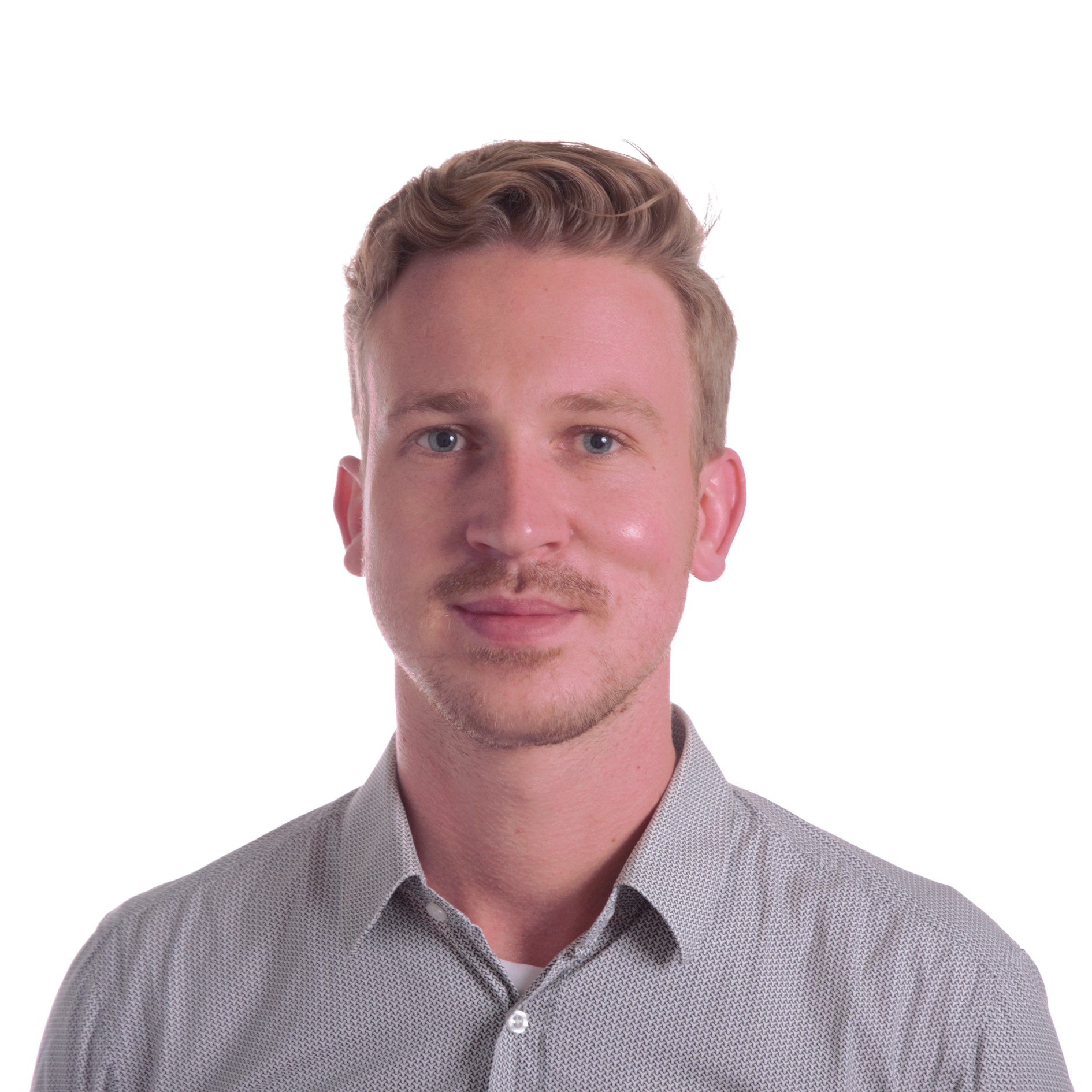
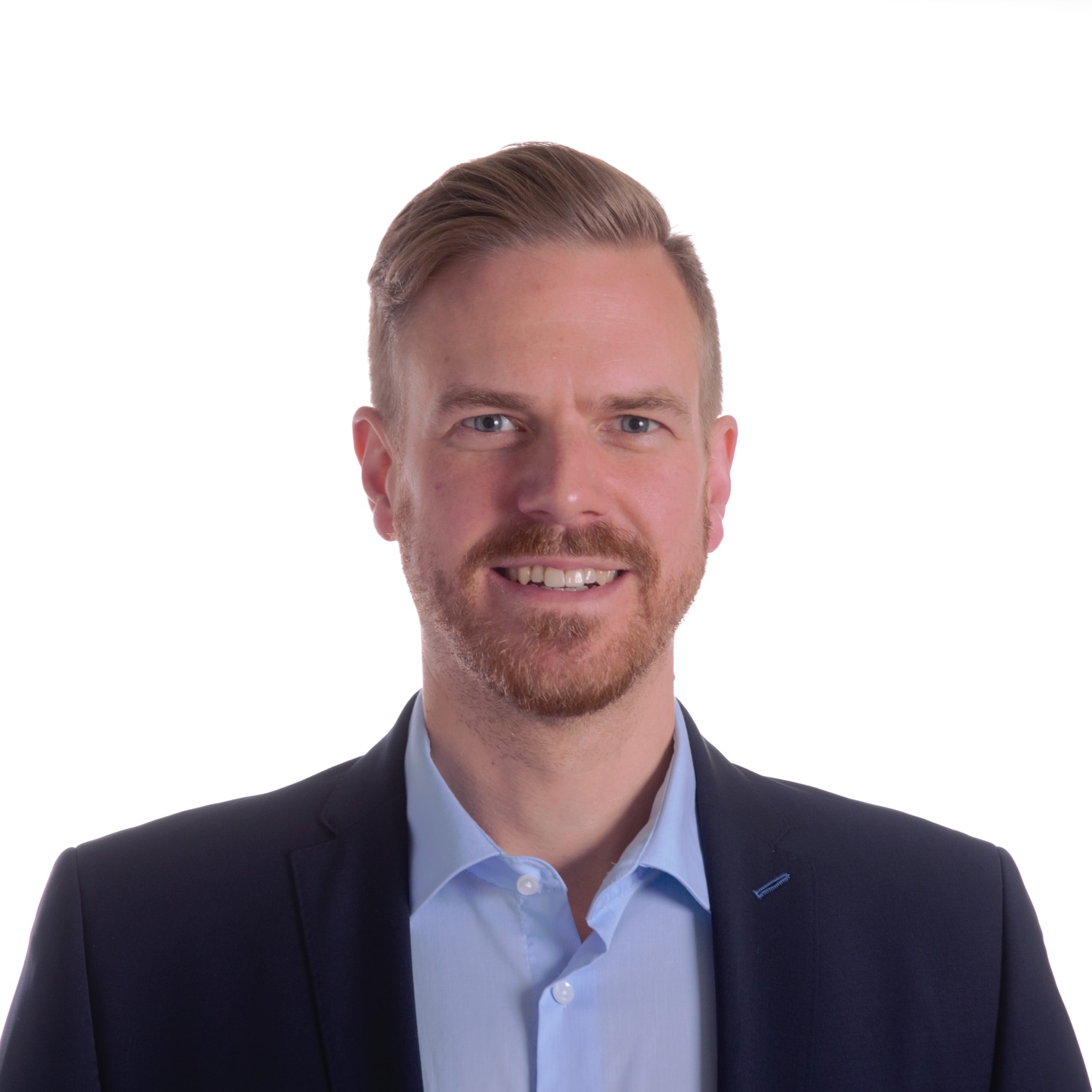
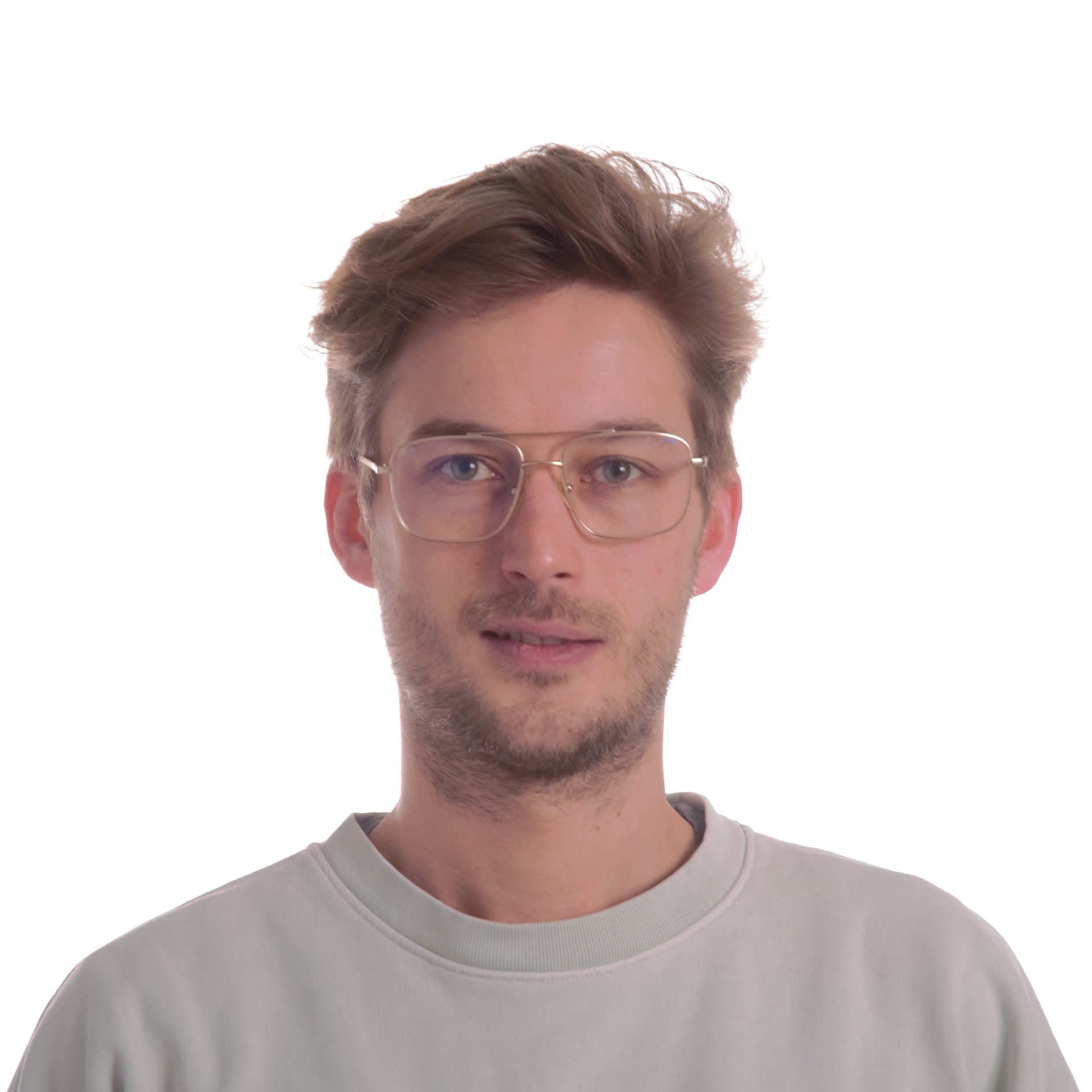
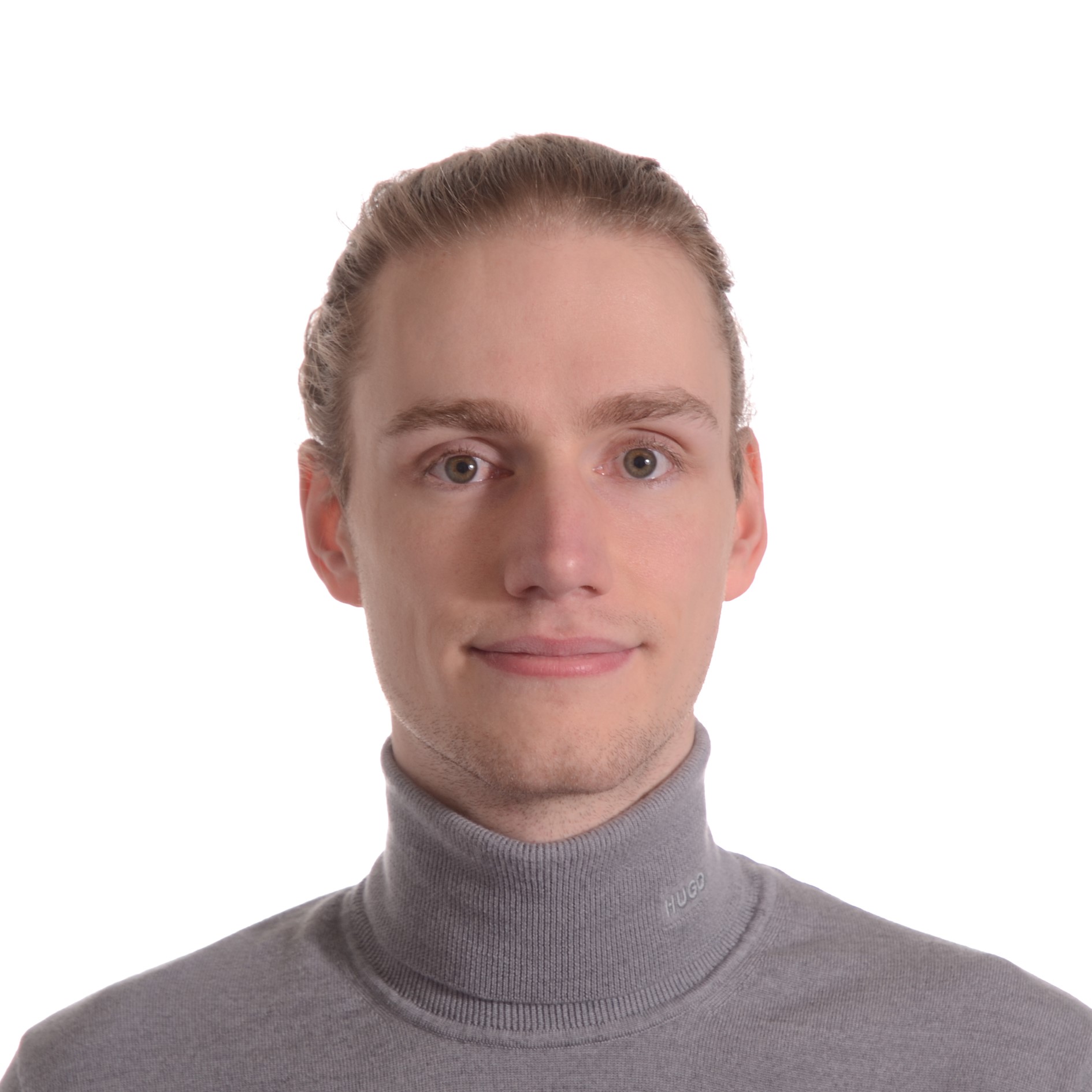
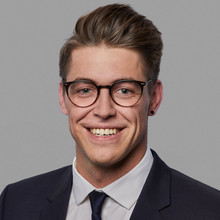
Michael Bredekamp, M.Sc., is a Research Associate at the Institute for Particle Technology (iPAT) within TU Braunschweig's Faculty of Mechanical Engineering since 2019. His work focuses on process and plant development for inline structuring of lithium-ion electrodes in the ProfiStruk research project. Education B.Sc. in Mechanical Engineering (2012-2016) M.Sc. in Automotive Engineering (2016-2019) His research interests span mechanical engineering, battery technology, and process development, with specific expertise in extrusion processes and nail penetration effects on lithium-ion batteries. He is based at the Center of Pharmaceutical Engineering (PVZ) in Braunschweig, Germany.
Jan Henrik Finke is a Lecturer and Head of the Division for Pharma and Bio Particle Technology at the Institute for Particle Technology (iPAT) within the Faculty of Mechanical Engineering at Braunschweig University of Technology. He also serves as a Senior Scientist at the Fraunhoig Institute for Surface Engineering and Thin Films since 2020, and previously held a part-time Substitute Professorship in Pharmaceutical Technology at Friedrich-Schiller-University Jena during the 2021/22 academic year. Dr. Finke completed his doctorate in 2014 with research focused on 'Manufacturing colloidal drug delivery systems in customized microsystems: Characterization of process efficiency and interactions.' He studied Pharmacy at the University of Münster from 2002-2006 and has since built an extensive career in pharmaceutical technology and particle engineering. His research interests span pharmaceutical technology, particle engineering, drug delivery systems, microsystems engineering, and 3D printing of pharmaceuticals. Dr. Finke's work focuses on developing innovative approaches for drug formulation, particularly for poorly water-soluble compounds, and advancing manufacturing processes for pharmaceutical products including probiotic formulations and personalized medicine. Analysis of his recent publications (2023-2025) reveals a strong focus on pharmaceutical manufacturing challenges, particularly tablet production with living microorganisms, advanced drug delivery systems, and the application of computational modeling to pharmaceutical processes. His work bridges fundamental particle technology with practical pharmaceutical applications, with increasing emphasis on personalized medicine approaches through 3D printing technologies. Dr. Finke has made significant contributions to understanding the survival of microorganisms during pharmaceutical processing, the development of novel drug delivery systems, and the optimization of manufacturing processes for complex pharmaceutical formulations. His research has practical implications for improving drug bioavailability and developing personalized medication approaches. As Head of the Pharma and Bio Particle Technology division, Dr. Finke leads research efforts focused on particle-based pharmaceutical technologies, including nanoparticle formulations, solid lipid nanoparticles, and advanced manufacturing techniques for drug delivery systems. His work connects engineering principles with pharmaceutical sciences to address challenges in modern drug development and manufacturing.
Dr. Daniel Gundlach is a Research Associate at the Institute for Particle Technology (iPAT) within TU Braunschweig's Faculty of Mechanical Engineering. His work focuses on the production and recycling of sulfidic solid-state battery components via extrusion processes. Current institution: Technische Universität Braunschweig Academic affiliation: Faculty of Mechanical Engineering Department: Institute for Particle Technology Research expertise: Extrusion of battery materials , Sustainable manufacturing , Energy storage technology Education timeline: 2017-2023 : Industrial Engineering (Mechanical Engineering focus), TU Braunschweig 2019-2020 : Study abroad program, Universitat Politècnica de València Active research projects: SilKompAs : Development of sulfidic solid electrolyte components Contact details: Phone: +49 531 391-65603 Location: PVZ - Franz-Liszt-Str. 35 A Room 056
Johannes Lang is a Researcher at the Institute for Particle Technology (iPAT) within the Faculty of Mechanical Engineering at Braunschweig University of Technology. He has been working as a Research Associate at iPAT since 2025, supporting the DFG-Project 'Aufklärung der Prozess-Struktur-Beziehungen von wirkstoffpartikelhaltigen Polymerkompositen in Schmelzextrusionsprozessen' (Elucidation of Process-Structure Relationships of Active Ingredient Particle-Containing Polymer Composites in Melt Extrusion Processes). Lang's educational background includes: Master's studies in Life Science Technologies (2022-2024) at OWL University of Applied Sciences and Arts, with thesis on 'Production of dosage forms using a 3D bioprinter' Bachelor's studies in Pharmaceutical Engineering (2018-2022) at OWL University of Applied Sciences and Arts, with thesis on 'Preliminary and accompanying work on flow visualization in clean room qualification for filling eye drops and nasal sprays' His research focuses on particle technology applications in pharmaceutical manufacturing, particularly examining the relationships between processing parameters and structural properties of polymer composites containing active pharmaceutical ingredients. This work has significant implications for developing more efficient drug delivery systems through advanced manufacturing techniques including melt extrusion and 3D bioprinting. Lang previously worked as a Research Associate at OWL University of Applied Sciences and Arts from 2022 to 2024 while completing his Master's studies.
Professor Fred Jourdan is a distinguished geochronologist and geochemist at Curtin University's School of Earth and Planetary Sciences in Australia. He serves as the director of the Western Australian Argon Isotope Facility (part of the John de Laeter Center) and Head of the Geology discipline. With over 200 published papers, his research has established him as a leading expert in 40Ar/39Ar geochronology and isotopic geochemistry. Dr. Jourdan's research primarily focuses on applying and developing the 40Ar/39Ar chronometer to establish temporal constraints on large igneous provinces, volcanic activity, and impact craters on Earth and throughout the solar system. His work spans diverse fields including archaeology, tectonics, volcanology, and planetary sciences. He has made significant methodological contributions to the 40Ar/39Ar dating technique, expanding its applications to unusual geological problems and extraterrestrial materials. His recent publications reveal a strong emphasis on mantle plumes, impact cratering events, and the tectonic evolution of various regions worldwide. His extensive publication record demonstrates expertise across multiple geological eras, from Precambrian tectonics to recent volcanic activity. The articles show particular strength in applying geochronological techniques to solve complex problems in planetary science, large igneous province evolution, and impact crater formation. His collaborative approach is evident through numerous international partnerships across diverse geological disciplines. As an educator, Professor Jourdan serves as unit coordinator for Fundamentals of Geology – 1 (FOG1), where he teaches Earth and Planetary Sciences to large student cohorts. He employs innovative teaching methods including flip and micro-flip pedagogies supported by emerging technologies such as Echo360 real-time online quizzes and Groupmap online brainstorming tools. His commitment to public outreach includes school visits, radio interviews, news articles, museum seminars, and popular magazine articles through CSIRO's Scientist in School initiative. Professor Jourdan also serves as Associate Editor for the journal Geochimica Cosmochimica Acta and as Radiation Safety supervisor for the Geology department. He actively organizes laboratory tours for primary school students and maintains a professional presence on Twitter (@Jourdan_Fred) to share his research and passion for science with broader audiences.
Fabian Esterl is a Researcher and Doctoral candidate at the Professorship for Manufacturing – Innovative Manufacturing within the Institute for Production Technology and Systems (IPTS) at Leuphana University of Lüneburg. His work focuses on controlling anisotropic mechanical behavior in metallic extrusion processes through novel extrusion die designs leveraging additive manufacturing. He holds a Master of Science in Management & Engineering (2021–2023) and a Bachelor of Engineering (2018–2021), both from Leuphana University. Research interests: Reducing anisotropy in extruded metals like aluminum and magnesium by directing material flow via additively manufactured dies. This involves studying microstructure development, texture analysis, and process optimization to achieve property-optimized profiles funded by the DFG (German Research Foundation). Key projects include OPTUM-MAGNA (magnesium nanocomposite formability) and FERNAPRO (sustainable manufacturing technology). He collaborates on equipment like the 10 MN Extrusion Press and contributes to interdisciplinary teams in materials mechanics and process simulation.
Dominik Pöltl is a Researcher at the Institute for Production Technology and Systems (IPTS) under the Professorship for Materials Mechanics at Leuphana University. He holds an M.Sc. and is based in Lüneburg, Germany, at Universitätsallee 1, C12.217. His work focuses on advanced manufacturing processes, materials science, and the optimization of production technologies. Key research interests include the qualification of magnesium-based nanocomposites, data-driven process robustness modeling, and the reduction of anisotropic material properties during extrusion. He also explores Functionally Graded Materials and innovative forming techniques like continuous casting of electric copper conductors. His projects involve collaborations under initiatives such as OPTUM-MAGNA and FERNAPRO, targeting sustainable and high-performance material manufacturing. Technical expertise spans equipment development, process measurement technology, and simulation of technical systems. He contributes to projects like TrICo (Transformation through Innovation and Cooperation) and the development of convex-concave form elements using active-medium support in incremental sheet forming. His work aligns with Leuphana’s focus on sustainable production technologies and interdisciplinary innovation. He collaborates with a multidisciplinary team including Brit-Maren Block, Ghada Bouattour, and others, and his contact details include +49.4131.677-1872.
Dr. Harikrishnasinh Rana is affiliated with the Institute for Production Technology and Systems (IPTS) at Leuphana University in Lüneburg. His work focuses on advanced manufacturing processes, including the development of magnesium-based nanocomposites, data-driven process optimization, and functional graded materials. He contributes to projects such as OPTUM-MAGNA and FERNAPRO, addressing challenges in material properties and forming technologies. Research interests include hot extrusion, anisotropic material behavior, additive manufacturing of extrusion dies, and the integration of simulation with production systems. His team collaborates on initiatives like TrICo (Transformation through Innovation and Cooperation) and explores topics such as electric copper conductor fabrication and fiber-metal laminate optimization. Key equipment utilized includes a 10 MN Extrusion Press and advanced measurement technologies for process control. Though no explicit awards are listed, his involvement in multidisciplinary projects underscores his contributions to sustainable and innovative manufacturing solutions. Collaboration extends across a diverse team at IPTS, including researchers like Brit-Maren Block, Ghada Bouattour, and others. His role centers on bridging theoretical models with practical applications in material forming and process robustness.
Lea Wollschlaeger is a Research Fellow at Leuphana University of Lüneburg, affiliated with the Institute for Production Technology and Systems (IPTS) and the Professorship for Modelling and Simulation of Technical Systems and Processes. Her research spans advanced manufacturing systems with emphasis on: Model-based property design in continuous casting, extrusion, and bending processes Development of magnesium-based nanocomposites for hot extrusion Data-driven optimization of deep-drawing tool robustness Functionally graded materials for electric copper conductors Reduction of anisotropic material properties via additive manufacturing She actively contributes to major projects including OPTUM-MAGNA, FERNAPRO, and the TrICo subproject on transformation through innovation, focusing on sustainable production technologies and in-situ hybridization techniques for thermoplastic-based composites.
Dr.-Ing. Norbert Hosters is a Research Associate and Chief Engineer at the Chair for Computational Analysis of Technical Systems (CATS), Faculty of Mechanical Engineering, RWTH Aachen University. He has been active since 2020 and serves as General Secretary of the German Association for Computational Mechanics (GACM). His work bridges advanced computational methods with engineering applications. His research focuses on numerical methods for fluid-structure interaction , computational fluid and structural dynamics , isogeometric analysis , and aerothermoelasticity . He also explores applied quantum methods and physics-informed neural networks for solving complex PDEs and optimizing industrial processes. His interdisciplinary work spans mechanical, biomedical, and computational engineering. The recent publications (2023–2025) demonstrate a strong trend toward integrating machine learning with traditional simulation techniques, particularly in partitioned FSI , multiphase flow , shape optimization , and biomedical simulations such as LVAD modeling. His work appears in high-impact journals like Scientific Reports , Computers & Fluids , and International Journal for Numerical Methods in Engineering , as well as major conferences including GACM and CMBE. He is actively involved in teaching courses on Numerical Methods for Fluid-Structure Interaction , Isogeometric Analysis , and Simulation Methods in Mechanical Engineering . He offers student projects and supervises research, though no named advisees are listed. He has no listed scientific awards or fellowships. His research is conducted within the CATS chair, a leading group in computational mechanics, contributing to both fundamental methods and industrial applications. He plays a key role in academic service through GACM leadership.
Jochen Altholz is a Researcher at the Department of Microwave Systems, Faculty of Electrical Engineering and Information Technology, Ruhr-Universität Bochum. He specializes in radar systems, material characterization, and microwave engineering. His work focuses on FMCW radar techniques, non-destructive testing, and applications in humanitarian demining and industrial monitoring. Research Interests: Microwave systems, radar imaging, material science, electromagnetic simulations, sensor fusion. Key Projects: KI-ROJAL, PINK, PluTO+, Terahertz-NRW. His research combines AI-driven radar simulations, millimeterwave sensing, and antenna design to address challenges in material analysis and communication systems. Recent work emphasizes ultra-wideband measurements and radar-based channel setups for 6G applications. Publications span radar techniques, GPR imaging, and sensor fusion, with contributions to IEEE conferences and journals. Collaborates with industry partners and international teams on humanitarian technology and industrial quality control systems.
Ghada Bouattour is a Junior Professor at the Institute for Production Technology and Systems (IPTS) at Leuphana University, specializing in Measurement and Sensor Technology in Production Engineering. She holds a PhD in Electrical Engineering from Technische Universität Chemnitz (2021) and advanced degrees in Embedded Systems and Electrical Engineering from the National Engineering School of Sfax, Tunisia. Junior Professor, Leuphana University (2023) Promotion, Electrical Engineering, TU Chemnitz (2021) Master of Embedded Systems, National Engineering School of Sfax (2015) Engineering Degree, Electrical Engineering, National Engineering School of Sfax (2014) Her research focuses on model-based property design in manufacturing processes, including magnesium nanocomposites for hot extrusion, data-driven optimization of deep-drawing tools, functionally graded materials for copper conductors, and additive manufacturing of extrusion dies. She explores process robustness , anisotropic material behavior, and hybridization techniques for thermoplastic fiber-metal laminates. Key projects include OPTUM-MAGNA , TrICo (Transformation through Innovation and Cooperation) , and FERNAPRO , addressing sustainability and innovation in manufacturing. Her work integrates sensor technology, process modeling, and intelligent systems control. Contact: C12.227b, Leuphana University, Universitätsallee 1, 21335 Lüneburg, Germany | +49.4131.677-1898
Camila Caroline de Castro is a Research Associate at the Professorship for Materials Mechanics at the Institute for Production Engineering and Systems (IPTS) of Leuphana University Lüneburg. Her work focuses on advanced manufacturing technologies, materials science, and digital education initiatives. Current projects include AI-driven process optimization, 5G-enabled industrial systems, and additive manufacturing in extrusion dies Research spans material property modeling, robotics in hybrid production, and digital skills development for Industry 4.0 Technical Expertise: Specializes in process simulation, sensor fusion, and thermoplastic fiber-metal composites Active in BMBF-funded programs for women in STEM and digital transformation
Paul Zeise is a Researcher at the Institute for Production Technology and Systems (IPTS) at Leuphana University of Lüneburg, Germany. He currently serves as a research associate and doctoral candidate in the field of Innovative Manufacturing under the Professorship for Manufacturing. His work focuses on advanced production technologies including process modeling, material property optimization, and additive manufacturing applications. Educated with dual Master's degrees in Management & Engineering (Leuphana University, 2021-2023) and Supply Chain Management (Rennes School of Business, 2022-2023) Previously worked at Helmholtz Centre Hereon (Institute for Material and Process Design) as a Master student (2023) His research spans multiple manufacturing domains: Development of magnesium-based nanocomposites for hot extrusion Data-driven models for deep-drawing tool optimization Additive manufacturing of extrusion dies to reduce material anisotropy Functionally graded copper conductor materials
Dr. Birgit Paul is a PostDoc researcher in the Department of Alloy Design and Processing at the Leibniz Institute for Solid State and Materials Research Dresden (IFW Dresden). Her work focuses on developing biodegradable metallic implants using advanced manufacturing techniques, with particular emphasis on laser powder bed fusion for stent fabrication and iron-manganese based alloys. Her primary research interests span biodegradable metals, biomaterials, tissue engineering, and additive manufacturing. She investigates critical aspects including inherent antibacterial properties of metal alloys, surface modification effects on cell adhesion, electrochemical degradation control, and cell-material interactions for vascular applications. Her work bridges materials science and biomedical engineering to address clinical challenges in implant technology. Analysis of her publication record reveals a strong trajectory in medical device innovation, with recent work (2022-2025) concentrating on laser-fabricated stents, remotely controlled degradation systems, and surface engineering for improved biocompatibility. Key trends include the transition from fundamental material characterization to clinically relevant applications, with increasing focus on in vitro biological validation and process optimization for medical devices. Dr. Paul maintains active collaborations within IFW Dresden's materials research ecosystem and with external partners including Technische Universität Dresden. Her department specializes in alloy design for functional applications, with her subgroup focusing on biomedical material development where she contributes expertise in additive manufacturing, degradation behavior, and biological interface characterization.