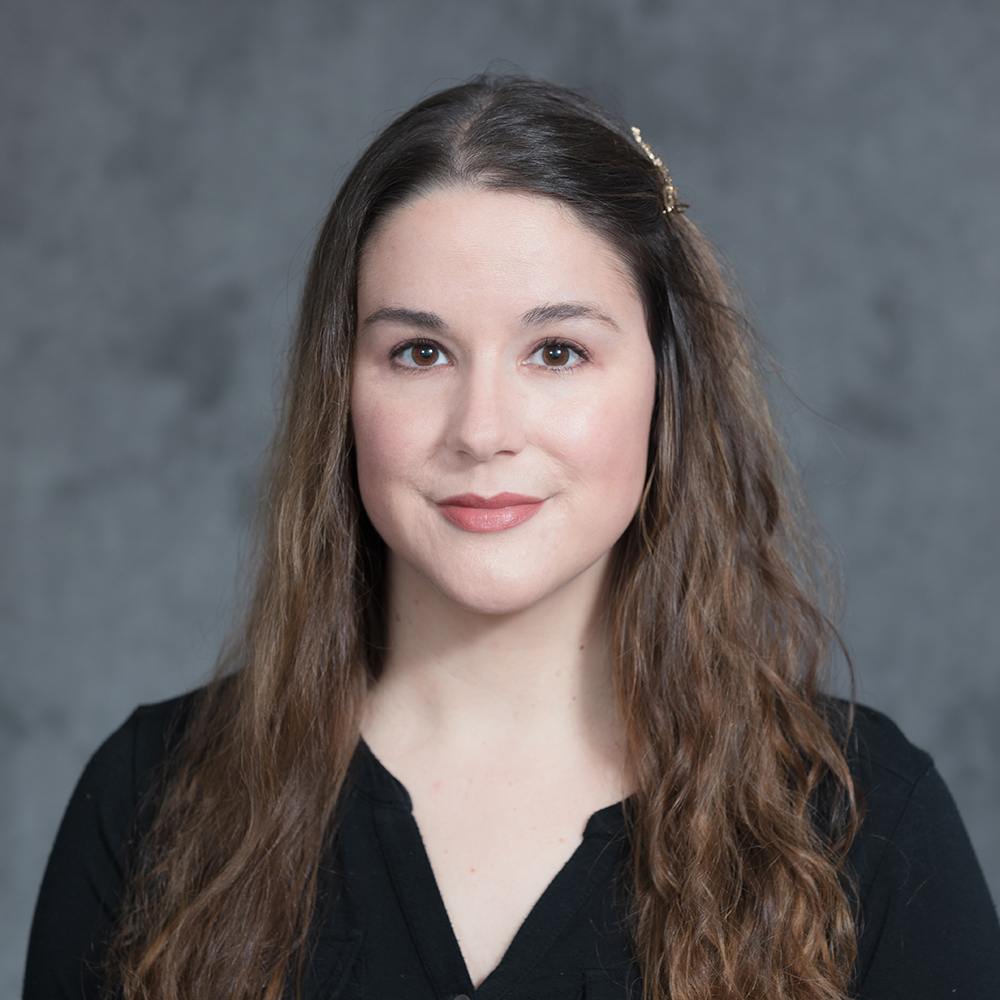
Dr. Kevin Reed is a Professor at Stony Brook University's School of Marine and Atmospheric Sciences (SoMAS), serving as Chief Climate Scientist at the NY Climate Exchange and Associate Provost for Climate and Sustainability Programming. He holds a Ph.D. from the University of Michigan (2012). His research focuses on extreme weather events, particularly tropical cyclones, and their response to climate change. He investigates climate models' capabilities to simulate these phenomena and develops methodologies for climate adaptation policies. Research interests include climate modeling, climate extremes, atmospheric dynamics, and science policy. Dr. Reed uses advanced climate models like the Community Atmosphere Model (CAM) to study hurricane behavior under different warming scenarios. His work bridges high-resolution simulations with reduced-complexity frameworks for global climate analysis. Recent publications highlight studies on tropical cyclone precipitation scaling, model intercomparison projects (e.g., DCMIP2016), and real-time climate change attribution for extreme events like Hurricane Ian. He collaborates on initiatives like the Climate Extremes Modeling (CEM) group at SBU, focusing on regional climate projections and actionable climate information.
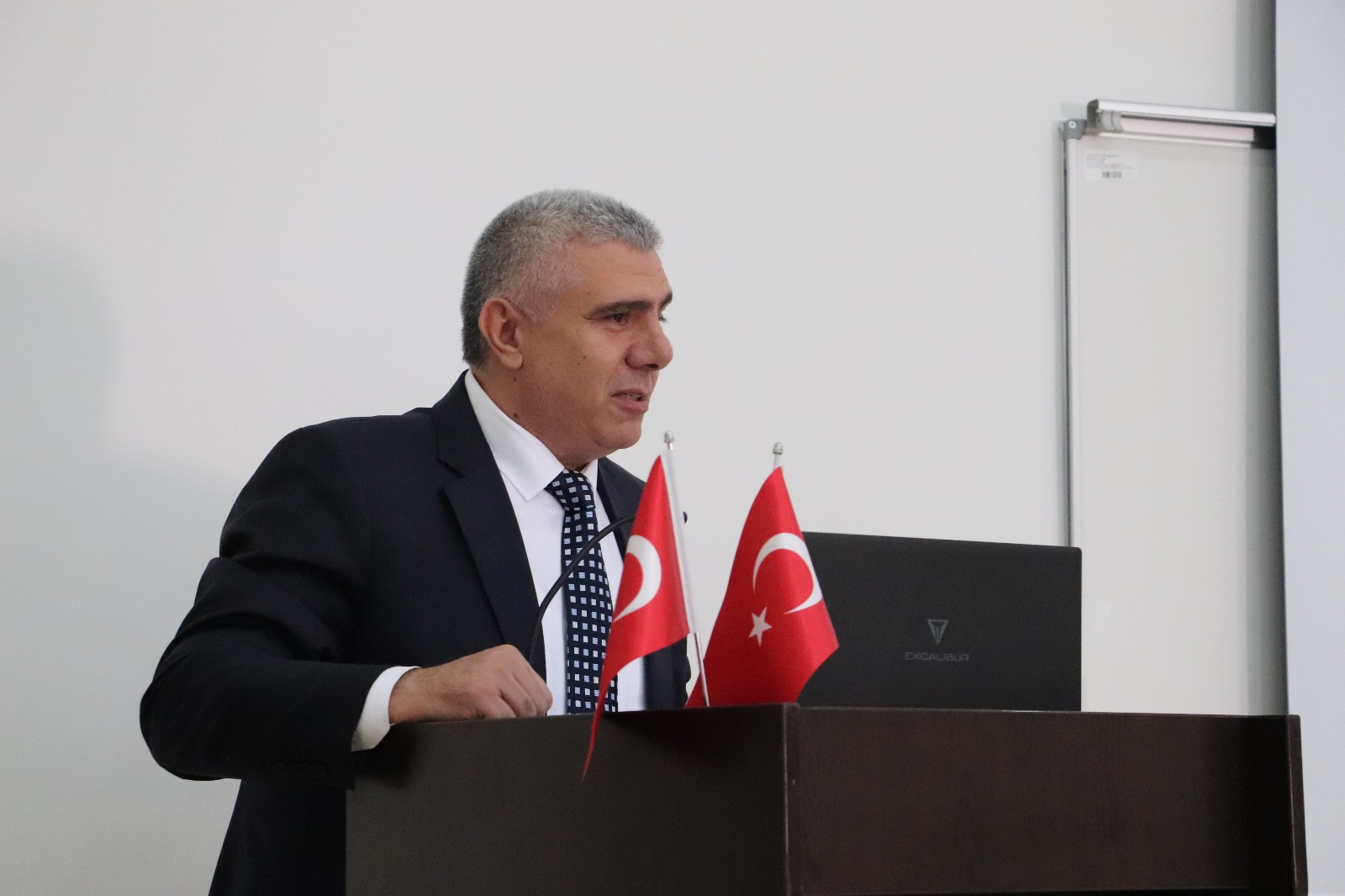
Yurdanur Unal is a Professor at the Department of Meteorological Engineering, Istanbul Technical University. Her research focuses on climate modeling, urban climate dynamics, and the impacts of climate change on extreme weather events. She leads multiple projects funded by TUBITAK and EU institutions, investigating topics such as urban heat island mitigation, precipitation patterns in Northwestern Türkiye, and future climate hazards under different emission scenarios. Professor Unal has authored over 23 peer-reviewed publications and serves as Principal Investigator (PI) on active grants addressing food security, forest species adaptation, and severe weather event analysis in the Marmara region. Her work integrates high-resolution regional climate models like COSMO-CLM and WRF to simulate climate extremes and urban meteorological phenomena. Projects: Climate Change-Related Hazards in Western Türkiye (TUBITAK, 2024–2026) Climate Change Impacts on Food Safety (EU, 2023–2025) Forest Species Distribution Projections (EU, 2023–2025) Key Research Themes: Urbanization effects on heat islands and rainfall Regional climate modeling and model sensitivity Humid heat extremes and population exposure Her studies combine observational data with advanced simulations to address pressing environmental challenges, including sustainable urban development and adaptation strategies for climate-sensitive sectors.
Amit Bhardwaj is a Post Doctoral Scholar at Florida State University, specializing in advanced climate and weather modeling. His research focuses on hurricane forecasting (SHIPS/SPIKE models), multi-model ensemble systems, Asian monsoon dynamics, dynamical downscaling, and numerical weather prediction improvements. He utilizes high-resolution regional climate models for studies in Peninsular Florida, Puerto Rico, and the US Virgin Islands. Key technical areas include air-sea coupling impacts on hydroclimate, seasonal rainfall teleconnections, and the application of superensemble techniques for forecast optimization. His work bridges operational meteorology with long-term climate projections, particularly addressing extreme weather events like heatwaves and monsoon variability. Recent studies emphasize Florida's hydroclimatic changes, agro-hydro-meteorological decision frameworks for the Ogallala aquifer, and ecological impacts through downscaled climate projections. Research methodologies include WRF-ARW modeling, RSM-NHM coupling, and TRMM latent heating retrieval analyses.
Jayasankar C B is a Research Fellow at the Center for Ocean-Atmospheric Prediction Studies (COAPS), Florida State University, specializing in regional climate modeling and monsoon dynamics. His research focuses on high-resolution climate projections, extreme weather events, and dynamical downscaling techniques to assess climate change impacts. Education: Ph.D. in Atmospheric Sciences (Regional Climate Modeling & Climate Change Projections), AcSIR/CSIR-4PI, Bangalore, India (2013–2019) M.Sc. in Meteorology, Cochin University of Science and Technology (2010–2012) B.Sc. in Physics, University of Calicut (2007–2010) Research Focus: Jayasankar investigates climate variability, monsoon systems, and extreme events using advanced regional coupled models (e.g., WRF-ARW, RSM-ROMS). His work emphasizes improving seasonal forecasts and climate projections for regions like India, Florida, and Central America, with applications in agriculture, hydrology, and disaster preparedness. Awards & Honors: Postdoc Five Minute Research Finalist, FSU (2022) INSPIRE Fellowship, DST India (2013) University First Rank in M.Sc. Meteorology, CUSAT (2012) International Travel Support, SERB India (2019)
Yangxing Zheng serves as an Associate Research Scientist (Courtesy) at the Center for Ocean-Atmospheric Prediction Studies (COAPS) within Florida State University. His research mission centers on unraveling physical climate system dynamics through observational data analysis and modeling, with specialized focus on oceanic influences in atmospheric phenomena and climate variability. Research Focus: Dr. Zheng investigates ocean-atmosphere-land surface interactions across multiple scales. His current work prioritizes Asian monsoon mechanisms and impacts, building on foundational research in Pacific climate variability and Indian Ocean dynamics. Recent expansion into environmental applications includes oil spill transport modeling and Gulf of Mexico ecosystem studies. Publication Trends: Analysis of his 2018-2023 output reveals dual concentration: monsoon-climate relationships (60% of work) and oil spill/ocean surface processes (40%). This evolution demonstrates adaptive scholarship bridging fundamental climate science with urgent environmental response needs, particularly relevant to coastal and monsoon-affected regions. Collaborative Framework: Working within COAPS' interdisciplinary environment, Dr. Zheng maintains a productive partnership with Dr. Mark Bourassa and contributes to Florida State University's leadership in climate prediction research through integrated modeling approaches.
Professor Sevinç Asilhan is affiliated with Istanbul Technical University in the Department of Meteorological Engineering . Her research focuses on meteorology, climatology, drought analysis, wind speed forecasting, and climate change modeling, with particular emphasis on the Euro-Mediterranean and Marmara regions. Her publications highlight expertise in tornado prediction, cyclone impacts, greenhouse gas effects, and machine learning applications for weather forecasting. Recent work includes developing early indicators for tornadic storms (2024) and analyzing drought-solar irradiation relationships. Collaborative efforts span Turkey, India, and international institutions, with key contributions to climate risk assessment and disaster management frameworks.
Dr.-Ing. Anna Krause is a researcher at the Chair of Data Science (Informatik X) within the Faculty of Mathematics and Computer Science at the University of Würzburg. She leads the Deep Learning for Dynamical Systems Group and has been actively involved in teaching at the university since 2019, including courses on Machine Learning for Time Series Analysis and Data Mining. Doctoral degree in Electrical Engineering (2019), University of Hannover Diploma in Electrical Engineering (2009), Technical University Dresden Her research focuses on Environmental Sensing and Time Series Analysis , particularly on enhancing physics-based models using machine learning techniques for meteorological applications and sparse sensor networks. She has made significant contributions to explainable AI, climate modeling, and fraud detection systems. Anna's recent publications demonstrate expertise in climate modeling (ConvMOS, ICLR 2024-2025), physics-informed neural networks (TaylorPDENet, ECMLPKDD 2023), and fraud detection (MIDAS workshops, ECMLPKDD 2020-2023). She actively contributes to conferences as organizer and PC member, including ECMLPKDD and ICLR workshops. Scientific Awards Best ML Innovation Award (2020) for Deep Learning in Climate Modeling Best Student Paper Award (2020) for Multi-Task Land Use Regression Best Paper Award (2020) for Financial Fraud Detection with INALU The DynaBench dataset introduced in 2023 provides benchmark tools for learning dynamical systems from low-resolution data. Her work combines theoretical advancements with practical implementations, including edge computing applications for beekeeping monitoring systems.
Quentin Nicolas is a Postdoctoral Fellow at the Department of Environmental Systems Sciences, ETH Zürich , working in Heini Wernli's group. He obtained his Ph.D. in Earth and Planetary Science from UC Berkeley and holds a Master's in Applied Mathematics from École Polytechnique, France. Research Focus : Climate dynamics, tropical atmospheric dynamics, geophysical fluid dynamics, and interdisciplinary applications in medical modeling. Key Collaborations : William Boos (UC Berkeley), Bruce Buffett (UC Berkeley), Geoffrey Vallis (WHOI/SOR Bon Ventre), Irene Vignon-Clementel (Inria Paris). His work on tropical orographic precipitation couples moist convection with mountain flow dynamics to explain rainfall distribution. He also studies seasonal precipitation extremes via plume buoyancy frameworks and superrotation physics with Geoffrey Vallis. Earlier work involved medical modeling for liver surgery and transplantation. Scientific Awards : Best Student Paper Award, Geophysical Journal International (2023) Outstanding Student Presentation Award (OSPA), AGU Fall Meeting (2021) His publications span climate dynamics, geophysical fluid dynamics, and clinical biomechanics , with recent studies on wind sensitivity in tropical rainfall and MAC wave excitation in Earth's core. Quentin maintains active code repositories on GitHub for climate modeling and precipitation analysis.
Professor Gregor Leckebusch is a leading academic in Meteorology and Climatology at the University of Birmingham. He holds the UK Met Office Joint Chair and serves as Director of the NERC DTP CENTA (2019-2022). His work bridges meteorological research with climate risk assessment, focusing on extreme weather impacts. University of Birmingham (2011-present) Freie University Berlin (Associate Professor, 2004-2010) University of Leipzig (Acting Chair, 2010-2011) His research centers on tropical cyclones, storm surges, and climate change impacts. He has sustained collaborations with reinsurance giants like SwissRe and CoreLogic-EQECAT, leveraging industry funding for projects on hazard connectivity and parametric insurance thresholds. Key projects include NERC Large Grant HURACAN and EPSRC IAA Energy Sector Resilience. Recent publications highlight expertise in CMIP6 model diagnostics, causality-guided decadal predictions, and statistical postprocessing of monsoon rainfall. His work aligns with UN Sustainable Development Goals for climate action and sustainable cities. As a PhD supervisor, he welcomes candidates interested in extreme weather modeling and climate risk. He co-edits the journal Natural Hazards and Earth System Sciences , emphasizing interdisciplinary approaches to weather extremes.
Andreina Belušić Vozila is a Senior Lecturer at the Faculty of Physics, University of Rijeka, Croatia. She holds a PhD in Physics (2018) and MSc/BSc in Geophysics from the Faculty of Science, University of Zagreb. Her work bridges atmospheric physics, regional climate modeling, and applied climatology. PhD in Physics (2014–2018), University of Zagreb MSc in Geophysics (2012–2014), University of Zagreb BSc in Geophysics (2009–2012), University of Zagreb Her research focuses on Adriatic climate systems, particularly wind dynamics and extreme weather. She investigates bora wind microscale properties, hail climatology, and thunderstorm intensity metrics using regional climate models. Applications include viticulture adaptation and air quality analysis. Recent publications analyze convection-permitting wind models (2024), Adriatic storm intensity (2021), and climate-agriculture interactions (2020). Collaborations span the SWALDRIC and VITCLIC projects, emphasizing interdisciplinary climate solutions. 2020: Nagrada za mladu meteorologinju, Hrvatsko meteorološko društvo 2019: L’Oreal-UNESCO stipendija za žene u znanosti 2018: Godišnja nagrada Društva sveučilišnih nastavnika, Zagreb 2015: Godišnja nagrada 'Roberto i Daniela Giannini' 2012: Dekanova nagrada za izvrsnost She has served as a meteorological observer at Crocontrol (2018–2021) and as a physics teacher at primary schools (2021). Her work combines theoretical climate research with practical applications in agriculture and extreme weather monitoring.
Stephanie Henderson serves as Assistant Professor in the Department of Atmospheric and Oceanic Sciences at the University of Wisconsin-Madison, where she leads research bridging weather forecasting and climate prediction through subseasonal-to-seasonal (S2S) variability studies. Her work addresses the critical predictability gap between synoptic weather systems and seasonal climate patterns, with direct implications for food security, public safety, and economic planning. Education: PhD in Atmospheric Science from Colorado State University Research Focus: Dr. Henderson specializes in tropical-extratropical interactions and global teleconnections , with particular expertise in the Madden-Julian Oscillation (MJO) and atmospheric blocking phenomena. Her methodology integrates observational analysis , numerical modeling , and statistical techniques to unravel how subseasonal processes (2-8 weeks) influence midlatitude weather extremes. Current projects examine MJO impacts on South American precipitation, Northeast Pacific blocking dynamics, and Arctic moisture intrusions. Publication Trends: Recent work (2022-2025) reveals intensifying focus on MJO teleconnection mechanisms across diverse regions, with growing emphasis on polar atmospheric rivers and climate change impacts on subseasonal predictability. Her research increasingly leverages satellite observations (e.g., PREFIRE mission) and addresses practical forecasting applications for extreme weather events. Research Environment: She directs the Subseasonal to Seasonal Variability group, utilizing resources including NOAA PSL SST monitoring, IRI ENSO forecasts, and CIMSS weather portals. The group maintains active collaborations with federal agencies to translate fundamental research into operational forecasting improvements for North American weather extremes.
Mehmet İshak Yüce is a Professor in the Department of Hydraulics within the Faculty of Engineering at Gaziantep University. His career spans over 30 years, starting as a Research Assistant in 1993 and achieving professorship in 2021. He holds a PhD in Civil Engineering from the University of Manchester (2005), an MSc in Water Engineering from Istanbul Technical University (1995), and a BSc in Civil Engineering from Middle East Technical University (1992). Research Focus: Dr. Yüce specializes in hydrology, fluid mechanics, and climate impacts on water systems. His work integrates computational modeling, statistical hydrology, and sustainable resource management. Key themes include: Drought prediction using copula models and machine learning Hydrokinetic turbine design for renewable energy Hydraulic transients and pollutant transport Climate-driven hydrological variability in Mediterranean basins Awards & Recognition: Gaziantep University 2015 Second Best Doctoral Thesis Award Academic Leadership: He has supervised 6 doctoral and 32 master's students, focusing on hydrology, energy systems, and hydraulic infrastructure. His grants include projects on hydrokinetic turbines (2012-2022) and drought analysis (2015-2019), funded by national agencies. Administrative Roles: Former Dean of Engineering (2021), Institute Director (2020-2023), and multiple terms as Department Deputy Head.
Edmundo Acevedo is a Full Professor of Agronomy at the University of Chile with continuous academic service since 1961. Appointed to full professorship in 1985, he has held significant leadership roles including Director of the Agricultural Experiment Station, contributing over six decades to Chilean agricultural science. His educational foundation includes: Agronomist degree, University of Chile (1964) MS, University of California, Davis (1967) PhD, University of California, Davis (1975) Professor Acevedo's research centers on plant-water relations in extreme environments, particularly drought adaptation mechanisms in Atacama Desert species like Prosopis tamarugo. His work bridges soil physics and crop physiology, examining how tillage systems affect water balance in Mediterranean agriculture. Recent studies integrate hydraulic architecture analysis with field performance metrics under groundwater depletion scenarios. His 41 publications reveal sustained scholarly output, with 2018-2021 works demonstrating continued focus on Chilean agricultural challenges. The research trajectory shows increasing sophistication in linking plant morpho-physiological traits with ecosystem-scale water dynamics, maintaining relevance to both theoretical plant science and practical farming applications. As an active researcher with recent publications, he maintains strong collaborative networks within the University of Chile's agricultural science community, evidenced by co-authorship patterns with colleagues in soil science and crop physiology disciplines.
Dr. Iqbal Hossain serves as a Lecturer at Swinburne University of Technology's School of Engineering in Melbourne, Australia, where he also acts as Course Director for the Graduate Certificate in Infrastructure Engineering Management. Additionally, he works as a Water Resources Consultant at KF Engineering Pty Ltd., Melbourne, bringing practical industry experience to his academic role. As a member of both The Institute of Engineers Australia and the Institute of Engineers Bangladesh, Dr. Hossain maintains strong professional connections across international engineering communities. Dr. Hossain's research spans water resources engineering with particular focus on climate change impacts, rainfall forecasting, water quality modeling, and sustainable water management. His work addresses critical challenges in urban stormwater management, including constructed wetland performance, heavy metal contamination assessment, and climate-resilient infrastructure design. He has developed innovative approaches for rainfall disaggregation, water footprint assessment, and arsenic removal techniques, demonstrating both theoretical rigor and practical application. His publication record shows a consistent trend toward integrating advanced modeling techniques with traditional hydrological approaches. Recent articles demonstrate increasing use of artificial neural networks alongside conventional models, reflecting a broader shift toward machine learning applications in water resources. His work consistently addresses climate change impacts across various water resource domains, from rainfall patterns to bushfire effects on water supply reliability. Dr. Hossain actively supervises HDR students across diverse topics including microplastics exposure, construction management with data science, building energy efficiency, and streamflow prediction. His supervision portfolio reflects his commitment to developing the next generation of water resources professionals who can address complex, interdisciplinary challenges. His research directly contributes to UN Sustainable Development Goals 13 (Climate Action) and 6 (Clean Water and Sanitation), demonstrating his commitment to addressing global water challenges through both academic research and practical consulting work. His dual academic-industry role provides valuable real-world context to his teaching and research activities.
Lai-yung Ruby Leung is a Battelle Fellow at Pacific Northwest National Laboratory (PNNL) working in Earth Systems Analysis & Modeling. She serves as Chief Scientist of the Energy Exascale Earth System Model (E3SM) supported by the U.S. Department of Energy, leading major efforts to develop state-of-the-art capabilities for modeling human-Earth system processes on high-performance computers. Dr. Leung's research broadly spans climate and hydrological cycle modeling with expertise in land-atmosphere interactions, orographic processes, monsoon climate, and climate extremes. Dr. Leung earned her educational credentials from prestigious institutions: Ph.D., Atmospheric Science, Texas A&M University M.S., Atmospheric Science, Texas A&M University B.S. (Honors), Physics & Statistics, Chinese University of Hong Kong Her research interests focus on regional and global climate modeling , land-atmosphere interactions , and the regional hydrologic cycle . She investigates orographic precipitation mechanisms, climate extremes, climate variability and change, and aerosol-cloud interactions. Her work integrates advanced modeling techniques with observational data to understand complex Earth system processes, with research featured in Science , Popular Science , Wall Street Journal , and National Public Radio . Dr. Leung has published over 500 peer-reviewed papers and serves as an editor for the American Meteorological Society's Journal of Hydrometeorology . Analysis of Dr. Leung's recent publications reveals her leadership in developing and applying the Energy Exascale Earth System Model (E3SM), with significant contributions to understanding mesoscale convective systems, soil moisture dynamics, urban hydrology, and climate extremes. Her work demonstrates increasing integration of machine learning techniques with traditional climate modeling approaches, particularly in model evaluation frameworks and high-resolution simulations. She maintains strong focus on practical applications of climate science for understanding water resources, extreme weather events, and climate change impacts. Dr. Leung's scientific recognition includes: Election to the National Academy of Engineering (NAE) Election to the Washington State Academy of Sciences (WSAS) Fellow of the American Geophysical Union (AGU) Fellow of the American Meteorological Society (AMS) Fellow of the American Association for the Advancement of Science (AAAS) AMS Hydrologic Sciences Medal (2022) U.S. Department of Energy Office of Science Distinguished Scientist Fellow (2021) Reuter's Hot List of top 1,000 most influential climate scientists (2021) AGU Jacob Bjerknes Lecture (2020) AGU Bert Bolin Global Environmental Change Award (2019) As Chief Scientist of E3SM, Dr. Leung leads major research initiatives funded by the Department of Energy and has organized key workshops sponsored by DOE, NSF, NOAA, and NASA. She has served on numerous advisory panels and National Academies committees that define future priorities in Digital Twin, AI/ML, climate modeling, hydroclimate, and water cycle research. Her professional service includes membership on the Board on Atmospheric Sciences and Climate of the National Academies, council membership with the American Meteorological Society, and editorial roles for prominent journals. Dr. Leung directs research within PNNL's Earth Systems Analysis & Modeling group, collaborating with national and international climate research teams. She leads efforts to advance the Energy Exascale Earth System Model (E3SM), which represents cutting-edge capabilities in modeling human-Earth system processes. Her work connects with multiple PNNL research areas including atmospheric science, global change, and coastal science, contributing to the laboratory's mission of addressing complex environmental challenges through scientific innovation.