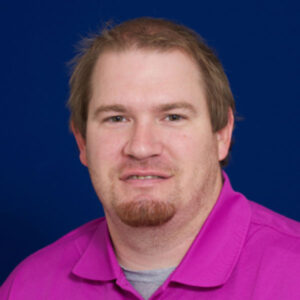
Dr. Joshua T. Weinhandl is an Associate Professor in the Department of Kinesiology at the University of Tennessee, part of the College of Education, Health, and Human Sciences. His research focuses on lower extremity injury biomechanics, movement coordination, and neuromuscular control deficits. He teaches courses such as KNS 332 Applied Anatomy and KNS 575 Matlab for Biomechanics. Education: PhD in Biomechanics, University of Wisconsin – Milwaukee MS in Biomechanics, Ball State University BS in Kinesiology, Grenville College Research Interests: Dr. Weinhandl investigates ACL injury mechanisms, knee osteoarthritis, chronic ankle instability, and musculoskeletal injury prevention using kinetic, kinematic, and electromyographic analyses. He emphasizes computational modeling and neuromuscular control to improve intervention strategies. Professional Activities: He serves as a reviewer for journals like Journal of Biomechanics and Medicine & Science in Sports & Exercise , and is a member of the American Society of Biomechanics and the American College of Sports Medicine. Labs: His work aligns with the Biomechanics/Sports Medicine Laboratory and other research groups within the department.
Andrew S. Whittaker is a SUNY Distinguished Professor in the Department of Civil, Structural and Environmental Engineering at the University at Buffalo, State University of New York . He serves as Director of the Institute of Bridge Engineering and Interim Director of the Stephen Still Institute for Sustainable Transportation and Logistics , both within the School of Engineering and Applied Sciences . A registered Civil and Structural Engineer in California, Whittaker specializes in structural and earthquake engineering, bridge engineering, blast and impact engineering, performance-based engineering, and nuclear structures. Research Interests: His work focuses on seismic isolation systems for nuclear reactors, fluid-structure interaction in advanced reactor vessels, gamma radiation effects on materials, and the dynamic behavior of graphite blocks in high-temperature gas reactors (HTGRs). He also explores the commodification of microreactors and soil-structure interaction for seismically isolated facilities. Scientific Awards: Distinguished Member, American Society of Civil Engineers (2025) Untermyer & Cisler Reactor Technology Medal (2023) Nathan M. Newmark Medal (2023) Fellow of multiple societies (ASCE, SEI, ACI) Awards and grants highlight his leadership in nuclear safety, seismic engineering, and reactor design.
Professor Alasdair McDonald holds the Chair in Renewable Energy Technology at the School of Engineering, University of Edinburgh . His work focuses on the integrated electrical-magnetic-mechanical modeling and design of large electrical machines for offshore renewable energy systems , particularly wind turbine powertrains . He previously served as a Lecturer, Senior Lecturer, and Reader in Wind Turbine Technology at the University of Strathclyde. Education: PhD in Structural Analysis of Low-Speed, High-Torque Generators (University of Edinburgh, 2008) MEng (Hons) in Integrated Electrical & Mechanical Engineering (University of Durham, 2004) Research Interests: Design of permanent magnet electrical machines for wind and marine energy Lightweight generator structures and advanced manufacturing methodologies Condition monitoring using SCADA and vibration data Cost of energy optimization for offshore renewables Projects: STREAM 1: Innovations in Forth/Tay Offshore Wind Clusters (EPSRC, 2025-2029) Wind2DC: Medium Voltage DC Power Take-Off Systems (EPSRC, 2023-2026) PV054: Modular Generators for Floating VAWTs (EPSRC & SeaTwirl AB, 2023) Media Contributions: Quoted in research media about floating hydrogen production systems (2025)
Patrik Hilber is a Professor at KTH Royal Institute of Technology, working in the Division of Electromagnetic Engineering and Fusion Science within the School of Electrical Engineering and Computer Science (EECS). He serves as Deputy Director of First and Second Cycle Education at EECS and heads the QED AM research group. He is also a board member of YH-electrical engineering. Research Interests: His research focuses on reliability engineering, asset management, maintenance optimization, and smart grid technologies in electric power systems. Key areas include transmission and distribution systems, dynamic line and transformer rating, wind power integration, multiobjective optimization, condition monitoring, and data quality in power systems. He applies advanced modeling and data-driven approaches to improve power system planning, operation, and resilience. The recent trends in his publications (2020–2025) highlight a strong emphasis on dynamic rating technologies (DLR and DTR), data quality and machine learning applications in outage analysis, reliability-centered planning for wind farms and distribution systems, and the integration of renewable energy and electric vehicles. His work bridges theoretical modeling with practical utility applications. Teaching and Academic Leadership: He is examiner and course responsible for several degree projects in electrical engineering, power systems, and energy innovation. He also teaches courses on reliability evaluation, asset management, and innovation in electric power engineering. Publications and Books: He has authored a book titled Reliability Analysis and Asset Management Applied to Power Distribution (2014) and a book chapter on cable segment replacement optimization. His scholarly output includes numerous peer-reviewed articles in leading journals such as IEEE Transactions on Power Systems , Reliability Engineering & System Safety , and Applied Energy . Education: He holds a Ph.D. (2008), a Licentiate degree (2005), and an M.Sc. (2000), all from KTH. He became a Docent (Associate Professor) in 2014.
Hua Ge is a Professor in the Department of Building, Civil and Environmental Engineering at Concordia University's Faculty of Engineering and Computer Science. She holds a Tier II Concordia University Research Chair in High Performance Building Envelope for Climate Resilient Buildings and leads extensive research in building science and climate adaptation. Her research focuses on wind-driven rain analysis , hygrothermal performance of building envelopes , advanced building facades , innovative wood-frame construction , and low-energy buildings . Current work examines climate change impacts on wind-driven rain loads, urban micro-climate effects, climate-resilient building envelopes, dynamic facades, and low-carbon healthy buildings. Her methodology combines large-scale laboratory testing, field monitoring, and computational modeling. Her 15 most recent publications demonstrate strong trends in nature-based climate resilience solutions , overheating risk mitigation in educational buildings , advanced hygrothermal modeling of wood-frame systems , and carbon sequestration strategies for buildings. The work spans multiple sub-disciplines including computational fluid dynamics, life cycle assessment, stochastic modeling, and field validation studies across Canadian climates. Tier II Concordia University Research Chair (CURC) in High Performance Building Envelope for Climate Resilient Buildings Professional Engineers of Ontario American Society of Heating, Refrigerating and Air-conditioning Engineers ASHRAE TC4.4 Building materials and building envelope performance (Subcommittee Chair) Professor Ge has supervised 42 graduate students (26 PhD, 16 MASc), including current advisees working on nature-based solutions, climate-resilient envelopes, and building integrated photovoltaics. Her research is supported by Concordia University Research Chair funding and collaborative projects with institutions like BCIT. She directs activities at Concordia's Building Envelope Test Facility and contributes to national standards through ASHRAE.
John Dalsgaard Sørensen is a Professor and Head of Research Group at the Department of the Built Environment, Aalborg University, within the Faculty of Engineering and Science. He leads the Risk, Resilience, Safety, and Sustainability of Systems Research Group and is affiliated with the Danish Centre for Risk and Safety Management. His research focuses on structural safety, wind turbine reliability, probabilistic design, and risk assessment of infrastructure systems. He has supervised 13 PhD students and contributed to over 600 publications. Key research areas include wind turbine structural integrity, fatigue analysis of offshore and onshore structures, probabilistic design standards (e.g., Eurocodes), and risk-based decision-making for infrastructure. He leads projects like Windscanner (remote sensing for wind measurements) and MANTIS (cyber-physical maintenance systems). Collaborations span academia and industry, addressing challenges in energy systems, civil infrastructure, and safety engineering. His work emphasizes practical applications of advanced modeling techniques, such as Bayesian networks and stochastic simulations, to enhance reliability and reduce operational costs. He is actively involved in standardization efforts for structural design and serves on boards like Energi- og MiljøData Fonden. Recent activities include presenting at international conferences and advising on media debates related to structural safety.
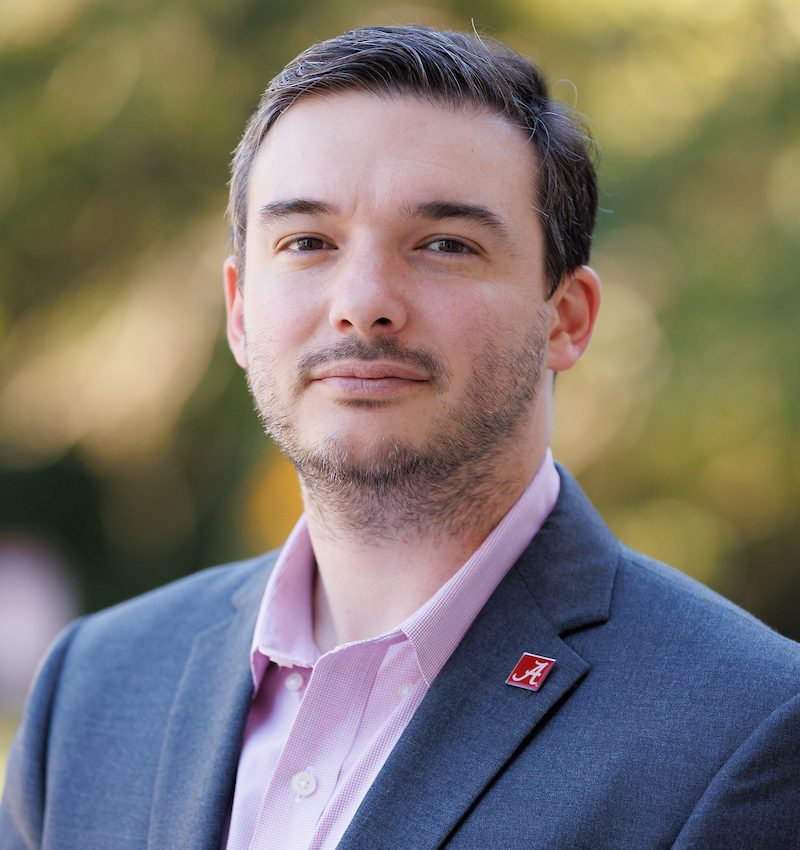
Dr. Patrick Shane Crawford serves as Assistant Professor in the Department of Civil, Construction and Environmental Engineering at the University of Alabama's College of Engineering. Affiliated with the Center for Sustainable Infrastructure and Alabama Water Institute, his research focuses on enhancing community resilience to tornadoes, floods, and hurricanes through interdisciplinary engineering approaches integrating social science and policy perspectives. His educational background includes: B.S. in Civil Engineering (2012, University of Alabama) M.S. in Civil Engineering (2014, University of Alabama) Ph.D. in Civil Engineering (2018, University of Alabama) Dr. Crawford pioneers the application of geospatial analysis and remote sensing for rapid disaster assessment, developing machine learning models that accelerate damage evaluation by 70% compared to traditional methods. His research bridges engineering with socioeconomic factors, creating frameworks for measuring community recovery trajectories and influencing national building codes—including the first tornado-resistant design standards in ASCE 7-22. Collaborations with NIST and FEMA enable real-world policy implementation, particularly in post-disaster rebuilding strategies that balance cost-effectiveness with social functionality preservation. Analysis of his 2022-2025 publications reveals consistent innovation in longitudinal disaster reconnaissance , with 60% of recent work focusing on tornado events using deep learning for damage classification. Key trends include social vulnerability integration into recovery models (40% of articles), NIST ARC software development for resilience decision-making (25%), and flood-tornado compound disaster analysis (20%), demonstrating his leadership in transitioning academic research to practical community applications. Active in federal partnerships, Dr. Crawford's 2025 feature Confident but Exposed: How Prepared Are U.S. Homeowners for Extreme Weather? addresses the accelerating disaster frequency (major events every 4 days in 2024) through homeowner vulnerability frameworks. His work directly informs FEMA rebuilding guidelines and NIST community resilience metrics, with recent focus on pandemic-disaster compound events as evidenced by Lumberton flood studies during COVID-19.
Dr. Huadong Mo is a Senior Lecturer at the School of Systems and Computing, University of New South Wales (UNSW) Canberra, Australia. He holds a B.E. degree in automation from the University of Science and Technology of China (2012) and a Ph.D. in systems engineering and engineering management from the City University of Hong Kong (2016). Prior to his current position, he was a research associate at ETH Zurich's Reliability and Risk Engineering Lab (2016-2019) and a Lecturer at UNSW Canberra (2019-2021). Dr. Mo's educational background includes a strong foundation in systems engineering with international experience across China, Switzerland, and Australia. His career trajectory demonstrates a progression from academic research to faculty positions with increasing responsibilities in teaching and research leadership. His research focuses on enhancing the resilience, performance, and security of complex systems using learning-based algorithms, primarily in power and energy systems, cyber-physical systems, and manufacturing systems. He applies data analytics to understand system evolution under uncertainties, with particular emphasis on prognostics and health management, sustainable transportation, robust operation of power systems under extreme events, and reinforcement learning-based asset management. His work bridges theoretical advances with practical applications in critical infrastructure. Analysis of Dr. Mo's recent publications reveals a strong focus on energy systems, particularly in the integration of machine learning with power grid management, battery storage systems, and resilience against cyber threats. His research shows a clear trajectory toward increasingly complex system integration, with growing emphasis on multi-vector energy communities, cross-domain prediction, and uncertainty-aware energy management. The interdisciplinary nature of his work spans electrical engineering, computer science, and operations research. 2024 IEEE SMC Early Career Award 2023 Visiting Research Fellowship (Jean d'Alembert Pour Fellowship) Gold Medal in 2024 China International College Student Innovation Competition (as supervisor) Arc PGC Supervisor Award (2021) IEEE SMC Outstanding Chapter Award (2021) Alumni Achievement Award from City University of Hong Kong (2019) Dr. Mo actively supervises numerous HDR students working on cutting-edge research topics including battery health monitoring, quantum control, reinforcement learning for power systems, and explainable AI for energy management. He leads multiple significant research grants totaling over 3 million AUD, including projects funded by ARC, Energy Innovation Fund, and international collaborations with institutions like ETH Zurich, Cambridge, and Tsinghua University. His research group maintains strong international connections, facilitating student exchanges and collaborative research. As Postgraduate Course Coordinator of Systems Engineering and Chair of IEEE SMC ACT Chapter, Dr. Mo plays a significant role in academic leadership and professional community building. His research team collaborates with industry partners on practical implementations of their theoretical work, particularly in the energy sector.
Prof. Rajiv Sinha is a Professor in the Department of Earth Sciences at Indian Institute of Technology Kanpur . With a PhD from the University of Cambridge (1992), his career spans over two decades at IITK, including roles as Head of Department since 2014. Education: PhD (University of Cambridge, 1992), M.Tech (University of Roorkee, 1987), B.Sc (Patna University, 1983) Key Affiliations: Member of International Association of Sedimentologists, SEPM, Quaternary Research Association, and Indian Professional Societies Research Focus: Specializing in river science , Prof. Sinha investigates fluvial geomorphology , sedimentology , and natural hazards like Kosi floods . His work integrates remote sensing and GIS for climate change and paleoclimate reconstruction , notably studying the Ganga river system and its anthropogenic impacts . Scientific Leadership: His publications (2013-2017) reveal: Anthropocene river systems (2016) Indus Civilization paleohydrology (2017) Kosi megafan dynamics (2015) Monsoon evolution (2010, 2014) Groundwater management (2016) Awards & Recognitions: Pandit Girish Ranjan Chair Professorship (2013) National Mineral Award (2002) Alexander von Humboldt Fellowship (2000) UGC Research Fellowship (1988) University Gold Medal (1987) Collaborative Network: Partners include University of Durham , Imperial College London , and Institute du Physique de Globe, Paris . Currently leading Ganga River Basin Management studies and river science initiatives at IITK.
Eralp Demir is a Post-Doctoral Researcher at the Department of Engineering Science, University of Oxford. His research focuses on materials mechanics, crystal plasticity, and finite element methods. He holds a PhD from RWTH Aachen University and has conducted research at institutions including Carnegie Mellon University, Max Planck Institute, and Cornell University. His current work involves developing the OXFORD-UMAT framework for fusion energy materials in collaboration with UKAEA. He specializes in in-house finite element code development and commercial software integration (e.g., Abaqus, MSC Marc). His expertise spans computational materials modeling, microstructural analysis, and experimental validation using techniques like 3D XRD. Education: PhD in Engineering Science, RWTH Aachen University Advanced Studies at Carnegie Mellon University (Mechanical Engineering), Cornell University (MAE), and others Research Interests: Crystal plasticity modeling, fusion energy materials, finite element method development, microstructural mechanics, and additive manufacturing. His work bridges computational simulations with experimental techniques to understand material behavior under extreme conditions. Labs/Teams: Collaborates with the Tarleton Research Group at Oxford and UKAEA on fusion energy projects. Active in developing open-source tools for material modeling.
Renate Egan is a Professor and Deputy Head of School (Engagement) at the School of Photovoltaics and Renewable Energy Engineering , University of New South Wales (UNSW). She leads UNSW's activities in the Australian Centre for Advanced Photovoltaics , a national research consortium involving multiple Australian institutions. Her research focuses on: Techno-economic analysis of photovoltaic technologies Energy data analytics for decentralized systems Electricity market restructuring Technology transfer and commercialization Recent work examines machine learning applications in energy demand forecasting, thermal storage optimization, and bushfire resilience. She collaborates extensively across academia, industry, and government sectors. Key affiliations include: Co-Founder of Solar Analytics (Australia's largest independent energy monitoring provider) Executive Committee member of the IEA PV Power Systems program
Joanna Austin is a Professor of Aerospace and serves as the Graduate Option Representative for Aeronautics and Space Engineering, as well as the Undergraduate Option Representative for Aerospace at the California Institute of Technology (Caltech). She leads the Caltech Hypersonics Group, which operates facilities like the T5 Reflected Shock Tunnel and the Hypervelocity Expansion Tube (HET). Her research focuses on reactive, compressible flows in applications such as hypervelocity flight, planetary entry, supersonic combustion, bubble dynamics, and explosive geological events. Key projects include studying shock-boundary layer interactions, Martian atmospheric entry aerothermodynamics, and high-speed fluid-structure interactions. She advises four Ph.D. students and collaborates with a team including staff members like Liza Bradulina and research assistants such as Noel Esparza-Duran. Her work bridges experimental fluid dynamics with geophysical phenomena, leveraging advanced diagnostics like Focused Laser Differential Interferometry (FLDI) and laser spectroscopy. The group’s facilities enable studies of high-enthalpy flows and hypersonic aerodynamics critical for aerospace and planetary exploration. Research highlights include investigations into CO₂ Martian entry conditions, boundary layer transition mechanisms, and fluid-structure coupling in high-speed flows. The Hypersonics Group’s experimental setups replicate extreme environments to advance predictive models for aerospace systems. Her contributions span both fundamental fluid mechanics and applied engineering challenges, with a focus on real-gas effects and shock dynamics. Collaborations with institutions like NASA and academic partners further her interdisciplinary impact.
Heikki Remes serves as Associate Professor in the Department of Energy and Mechanical Engineering at Aalto University's School of Engineering, where he investigates high-performance steel structures for marine environments with emphasis on lightweight ship designs using advanced materials and manufacturing techniques. His research integrates fundamental fatigue and fracture mechanics with practical structural challenges, spanning from crystal-level material behavior to continuum-scale modeling. Key focus areas include welded joint integrity, additive manufacturing defects, and computational analysis of marine structures under extreme conditions. Recent publications reveal strong trends in fatigue assessment methodologies for complex welded geometries, experimental validation of distortion effects, and AI-enhanced damage prediction systems, reflecting his commitment to bridging theoretical mechanics with shipbuilding applications. Scientific Awards: Aalto Education Impact Award (2018) for establishing Marine Technology study programs SNAME Honorable Mention for 2018 Vice Admiral E. L. Cochrane Award Teaching Award of Aalto School of Engineering (2012) for educational tools No specific student advising or grant information appears in available sources, though his active publication record indicates ongoing research leadership. He contributes significantly to the Marine and Arctic Technology research group, driving projects on structural integrity assessment and advanced manufacturing solutions for next-generation marine vessels.
Dr. Rameeza Moideen is a Researcher at the University of Edinburgh's School of Engineering, affiliated with the Energy Systems Research Institute. Her work focuses on offshore renewable energy infrastructure, coastal structural resilience, and fluid-structure interaction dynamics. Research Interests Her research spans vortex-induced vibrations in marine power cables, extreme wave impacts on coastal decks, and climate change adaptation for port infrastructure. She applies advanced numerical simulations to analyze hydrodynamic forces, structural stresses, and material degradation mechanisms. Key Research Trends Recent work emphasizes lazy wave dynamic cables under varying currents (2025), focused wave impacts on bridge decks (2023-2021), and marine growth effects on tubular structures (2021). These studies combine computational modeling with real-world climate scenarios to improve offshore energy systems and coastal infrastructure durability. Awards & Grants No specific awards or grants mentioned in available texts. Research is likely funded through institutional and collaborative projects within the Energy Systems Institute. Labs & Teams Active within the Energy Systems Research Institute at Edinburgh, collaborating on offshore renewable energy projects and coastal engineering initiatives.
Dr. Horia Hangan is a Professor of Mechanical Engineering and Canada Research Chair in Adaptive Aerodynamics at Ontario Tech University's Faculty of Engineering and Applied Science. He holds an adjunct professorship at Western University. His research focuses on Experimental Fluid Mechanics, particularly bluff body aerodynamics, turbulent coherent structures, and aerodynamic control, with applications to buildings, vehicles, and aerostructures. He pioneered the WindEEE Dome, a unique facility simulating complex 3D wind flows, enabling studies of tornado-like vortices and non-Gaussian wind phenomena. Education: PhD in Wind Engineering from Western University (1996), Diplomat Engineering Degree in Aeronautics from the Polytechnic University of Bucharest (1985). Research interests include downburst dynamics, wind–structure interaction, and renewable energy. Over 150 publications span experimental and numerical studies of tornado-like vortices, downburst flows, and wind turbine performance. Notable awards include the CSME Fellowship (2016), ENR News Maker of the Year (2015), and the ASME Lewis F. Moody Award (2010). His work bridges fundamental aerodynamics with practical engineering solutions for wind-related challenges.