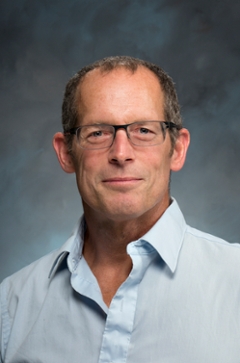
Professor Riikka Rinnan (University of Copenhagen) is a leading expert in ecosystem-atmosphere interactions, focusing on volatile organic compounds (VOCs) in Arctic environments. Her groundbreaking discovery of VOCs in permafrost has advanced climate prediction models, revealing complex interactions between climate warming, insect herbivory, microbial activity, and vegetation shifts. Current position: Professor, Department of Biology, University of Copenhagen Major research themes: Permafrost VOCs, Arctic climate feedbacks, plant-insect-microbial interactions International collaborations: China, Germany, Russia Her work combines field expeditions in extreme Arctic conditions with laboratory experiments and advanced VOC analysis. Climate warming experiments show VOC emissions could increase 40-fold with combined warming and insect attacks, while Arctic soils may act as unexpected VOC sinks. Key publications appear in Nature Communications , Nature Geoscience , and Global Change Biology . Riikka Rinnan has received prestigious awards including the EliteForsk Award, European Research Council Consolidator Grant, and Sapere Aude Research Leader. She leads international research teams, advises five PhD candidates, and supervises four postdocs (including two Marie Curie fellows). Her Siberian expedition plans demonstrate commitment to real-world scientific challenges.
Pradeep Lall is the MacFarlane Endowed Distinguished Professor and Alumni Professor in the Department of Mechanical Engineering at Auburn University’s Samuel Ginn College of Engineering. He serves as Director of the Auburn University Electronics Packaging Research Institute (EPRI) and holds a joint courtesy appointment in the Department of Electrical and Computer Engineering. A leader in flexible hybrid electronics and harsh environment systems, Dr. Lall has built a world-renowned research program focused on additive manufacturing, electronics reliability, and sustainable materials. Ph.D. in Mechanical Engineering, University of Maryland M.B.A. in Finance and Strategy, Northwestern University M.S. in Mechanical Engineering, University of Maryland B.E. in Mechanical Engineering, Delhi College of Engineering Dr. Lall’s research centers on Flexible Hybrid Electronics (FHE) , Harsh Environment Electronics , Semiconductor Packaging , and Prognostics Health Management . His work leverages additive manufacturing techniques such as Aerosol-Jet, InkJet, and screen printing to develop conformal, robust, and sustainable electronic systems. His innovations include the Flexible Biometric Band for monitoring workers in hazardous environments and additively printed antennas for aerospace applications. His recent focus includes eliminating PFAS from electronics and developing water-based inks for eco-friendly manufacturing. The 15 most recent publications reflect a strong trend toward sustainability , additive manufacturing , and real-world applications in defense, aerospace, automotive, and healthcare. His work bridges fundamental research with industrial realization, particularly through partnerships with NextFlex and federal agencies. Themes include reliability under shock and vibration, sensor development for extreme environments, and workforce training in advanced manufacturing. Dr. Lall has received numerous scientific honors, including: SMTA Founder’s Award (2024) SEMI FlexTech R&D Achievements Award (2023) ASME Avram Bar-Cohen Memorial Medal (2022) IEEE Biedenbach Outstanding Engineering Educator Award (2020) IEEE Sustained Technical Contributions Award (2018) NSF Alex Schwarzkopf Prize (2016) Fellow of ASME, IEEE, NextFlex, and Alabama Academy of Science Dr. Lall has secured over $2 million in annual research funding from SRC, NSF, and NextFlex, leading large-scale projects on sustainable electronics and workforce development. He mentors numerous graduate and undergraduate students and leads the NSF-CAVE3 Center. As founding faculty advisor of the SMTA student chapter, he promotes student engagement in electronics manufacturing. His lab, EPRI, features a full prototyping line for additive electronics and collaborates with industry and government to advance domestic manufacturing capabilities. EPRI, under Dr. Lall’s leadership, partners with the Auburn University Research and Technology Park, the Office of Economic Development, and multiple colleges to drive technology commercialization and workforce education in electronic packaging. The institute is at the forefront of the national effort to reestablish U.S. leadership in semiconductor packaging and advanced electronics manufacturing.
Daniel Brandenburg is an Assistant Professor of Physics at Ohio State University, affiliated with the Physics Research Building. His research focuses on studying nuclear matter under extreme conditions via relativistic heavy-ion collisions, particularly creating and analyzing the quark-gluon plasma (QGP). He is a key member of the STAR Experiment at RHIC and the EPIC Collaboration for the Electron Ion Collider (EIC). His work explores ultra-strong electromagnetic fields generated in collisions to probe QGP dynamics and search for physics beyond the Standard Model. Brandenburg holds a B.S. in Physics from the University of Florida (2013), followed by an M.S. (2015) and Ph.D. (2016) in Physics from Rice University. He has received notable awards including the Blavatnik Regional Award (2022), Elsevier Young Scientist Award (2019), and Goldhaber Fellowship (2020). His research interests span QGP imaging using high-energy photons, gluon tomography in nuclei, and precision measurements with the upcoming EIC. Recent work includes studies on charge-parity symmetry breaking in baryons, entanglement-based interferometry, and observation of antimatter hypernuclei. His group actively develops detector technologies for STAR and EPIC collaborations. Key achievements include publishing over 50 peer-reviewed articles since 2023, focusing on flow coefficients, strangeness production, and jet modifications in heavy-ion collisions. His 2025 work on QGP photon imaging and 2024 discoveries in ultra-peripheral collisions highlight his contributions to advancing frontier physics.
Colin Jackson is an Assistant Professor in the Department of Earth and Environmental Sciences at Tulane University's School of Science & Engineering. He leads the High Temperature and Pressure (HiTaP) Laboratory, researching chemical reactions governing planetary evolution under extreme conditions using experimental techniques. His work focuses on geochemical processes during planet formation and differentiation. Dr. Jackson holds a Ph.D. from Brown University (2014) and a B.S. from the University of California, Santa Cruz (2008). His primary research interests include: Solid Earth geochemistry and petrology High-pressure experimental techniques Planetary formation and evolution Magma ocean dynamics Volatile element distribution in terrestrial planets His recent publications demonstrate a focus on geochemical modeling of planetary formation processes, experimental studies of element partitioning under extreme conditions, and interpretation of lunar geological data. Research trends include magma ocean crystallization, core-mantle differentiation, volatile cycling, and noble gas systematics. The HiTaP Laboratory provides research opportunities for students interested in experimental planetary science. Dr. Jackson encourages student involvement in high-pressure synthesis experiments and geochemical analysis techniques.
Jason Trelewicz is a Professor at Stony Brook University’s Department of Chemical & Molecular Engineering and holds joint faculty status at Oak Ridge National Laboratory. His research focuses on interface-engineered materials for extreme environments, leveraging advanced processing, characterization tools, and multiscale modeling. He received his Ph.D. in Materials Science from MIT (2008) and previously served as Research Director at MesoScribe Technologies. His work emphasizes fusion materials, nanocrystalline alloys, additive manufacturing, and radiation effects. Awards include the DOE Early Career Award (2017), NSF CAREER Award (2016), and multiple best paper awards (2022). His lab, the Engineered Microstructures and Radiation Effects Laboratory, explores topics like ceramic composite moderators and plasma-facing materials. Education: Ph.D., Materials Science & Engineering, MIT (2008) Affiliations: Oak Ridge National Laboratory (Joint Faculty) Key research areas include thermal-mechanical evaluation of fusion reactor components, alloy design for additive manufacturing, and radiation tolerance of nanocrystalline materials. He has pioneered studies on helium bubble dynamics in tungsten and stability of doped nanocrystalline alloys. Awards: DOE Early Career Award, NSF CAREER Award, 2022 Best Paper Awards in Nuclear Materials and Asian Ceramics. Grants/Projects: Supported by DOE, NSF, and collaborative initiatives with Japan (FRONTIER). His group investigates corrosion behavior in 3D-printed steels and develops novel composite moderators for high-temperature reactors. Ongoing work includes multiscale modeling for fusion materials and in-situ TEM studies of irradiation effects.
Joanna Austin is a Professor of Aerospace and serves as the Graduate Option Representative for Aeronautics and Space Engineering, as well as the Undergraduate Option Representative for Aerospace at the California Institute of Technology (Caltech). She leads the Caltech Hypersonics Group, which operates facilities like the T5 Reflected Shock Tunnel and the Hypervelocity Expansion Tube (HET). Her research focuses on reactive, compressible flows in applications such as hypervelocity flight, planetary entry, supersonic combustion, bubble dynamics, and explosive geological events. Key projects include studying shock-boundary layer interactions, Martian atmospheric entry aerothermodynamics, and high-speed fluid-structure interactions. She advises four Ph.D. students and collaborates with a team including staff members like Liza Bradulina and research assistants such as Noel Esparza-Duran. Her work bridges experimental fluid dynamics with geophysical phenomena, leveraging advanced diagnostics like Focused Laser Differential Interferometry (FLDI) and laser spectroscopy. The group’s facilities enable studies of high-enthalpy flows and hypersonic aerodynamics critical for aerospace and planetary exploration. Research highlights include investigations into CO₂ Martian entry conditions, boundary layer transition mechanisms, and fluid-structure coupling in high-speed flows. The Hypersonics Group’s experimental setups replicate extreme environments to advance predictive models for aerospace systems. Her contributions span both fundamental fluid mechanics and applied engineering challenges, with a focus on real-gas effects and shock dynamics. Collaborations with institutions like NASA and academic partners further her interdisciplinary impact.
Dr. Grace Kim is an Associate Professor in the Department of Occupational Therapy at New York University's Steinhardt School of Culture, Education, and Human Development. She holds a PhD in Occupational Therapy from NYU (2016), an MA in Occupational Therapy from Columbia University, and a BA in Psychology from UC Davis. She is a clinician-researcher affiliated with the Rehabilitation Medicine department at New York Presbyterian/Weill Cornell Medical Center, specializing in upper extremity robotics, outcome measurement, and stroke rehabilitation. Education: Bachelor's in Psychology: University of California, Davis Master's in Occupational Therapy: Columbia University PhD in Occupational Therapy: New York University (2016) Research Focus: Intersection of technology and neurorehabilitation Client-centered care for stroke survivors Wearable/mobile technology applications Shared decision-making approaches Awards/Grants: Mitchell Leaska Dissertation Grant (2014) Steinhardt Faculty Challenge Grant (2017) NYU Provost Mega-Seed Grant (2018) American Occupational Therapy Foundation Grant (2021) Dr. Kim teaches courses in Evidence-Based Practice, Neurorehabilitation, and Ethics at NYU Steinhardt. She mentors students in Occupational Therapy, Rehabilitation Science, and the R25 Research Education in Cardiovascular Conditions program at NYU's Rory Meyers School of Nursing. Her work emphasizes affordable technology solutions to improve real-world outcomes for stroke patients, including remote self-training programs and home-based interventions.
Gilbert 'Rip' Collins is the Tracy Hyde Harris Professor of Mechanical Engineering and Physics at the University of Rochester, holding dual appointments in the Hajim School of Engineering & Applied Sciences and the Laboratory for Laser Energetics (LLE). He also serves as Associate Director of Science, Technology and Academics at LLE, Distinguished Scientist at LLE, and Director of the NSF-funded Center for Matter at Atomic Pressures (CMAP). His research focuses on extreme states of matter, including planetary interiors, high-energy-density plasmas, and thermonuclear fusion processes. Collins earned his PhD in 1989 from Ohio State University. His work leverages facilities like the Omega Laser at LLE to recreate astrophysical conditions, exploring topics such as phase separation in giant planets, quantum matter at atomic pressures, and laboratory astrophysics experiments. He collaborates globally to advance understanding of exoplanet structure, stellar evolution, and fusion energy control. Key affiliations: Laboratory for Laser Energetics, Center for Matter at Atomic Pressures (CMAP), Omega Laser Facility Research highlights: Hydrogen-rich superconductors, planetary core dynamics, radiation-dominated plasmas Leadership roles: HED Experiments Group Lead at LLE, co-director of international collaborations His team includes graduate students and scientists investigating topics ranging from collisionless shocks to exoplanet mass-radius relationships. Collins’ contributions bridge fundamental physics with applied energy research, supported by grants from the NSF Physics Frontier Center and other national agencies.
Qianxi (Emily) He is a Faculty Lecturer at McGill University, specializing in advanced materials processing and machining technologies. Her research focuses on optimizing cutting tool performance through innovative coating strategies and understanding wear mechanisms in extreme machining conditions. She has contributed to studies involving PVD coatings (e.g., AlCrN, AlTiN), tribology, and the machining of challenging materials like titanium alloys and super duplex stainless steel. Her work frequently addresses practical applications such as improving tool longevity, reducing machining-induced defects, and enhancing surface integrity. Key topics include thermal stability of coatings, stress corrosion cracking mitigation, and the impact of heat treatment on material properties. Dr. He’s publications highlight a strong emphasis on empirical validation through controlled experiments, often comparing different coating compositions or machining parameters. Her research is grounded in both theoretical material science principles and industrial manufacturing challenges. Notable contributions include studies on SiAlON ceramic inserts for high-speed milling, novel edge design approaches to delay tool wear, and the role of austempering in steel microstructure evolution.
Jerome Hastings is a Research Professor at the Photon Science Directorate , Stanford University, and a Principal Investigator at the Stanford PULSE Institute. He is affiliated with the SLAC National Accelerator Laboratory and holds the academic rank of Research Professor (A.R.). His research focuses on advanced X-ray scattering techniques, femtosecond laser interactions, and high-energy-density material physics. Currently on leave from June 15, 2025, to September 15, 2025, Hastings has taught courses such as Advanced Topics in X-ray Scattering (APPPHYS 322) and Principles of X-ray Scattering (APPPHYS 222, PHOTON 222). Teaching : 2025-26: Advanced Topics in X-ray Scattering (Spr), Principles of X-ray Scattering (Win), Directed Studies (Aut/Wi/Spr), Research (Aut/Wi/Spr) Prior courses (2024-25, 2023-24) include similar offerings. Research Interests : His work explores the intersection of photon science and material dynamics, utilizing free-electron lasers to probe ultrafast structural changes, phonon hardening, and electronic responses in materials under extreme conditions. Key areas include X-ray diffraction , time-resolved spectroscopy , and high-intensity X-ray interactions . Publications : Hastings has contributed to 47 publications, with recent studies (2024) on supercooled liquid hydrogen crystallization and phonon hardening in laser-excited gold. Earlier works (2019-2016) address X-ray split-delay systems, photodissociation dynamics, and anomalous Compton scattering. Scientific Contributions : Notable projects include the development of compact X-ray diagnostics and phase-contrast imaging instruments at LCLS, enabling nanoscale temporal and spatial resolution for high-energy-density experiments. Students : He has advised doctoral candidates Arijit Majumdar, Chance Ornelas-Skarin, Madison Singleton, and Catherine Weibel. Contact : Academic email jerome.hastings@stanford.edu
Koroush Shirvan is the Atlantic Richfield Career Development Professor in Energy Studies and a tenured faculty member in MIT's Department of Nuclear Science and Engineering within the School of Engineering. Joined in July 2017, he directs the Reactor Technology Course for Utility Executives and leads the Fission Materials in Extreme Environments Lab. His work bridges nuclear engineering with practical industrial applications for decarbonization. His research focuses on reactor design economics, materials testing under irradiation, nuclear safety, and boiling heat transfer. He accelerates innovations in nuclear fuels, small modular reactors, and space propulsion through multi-scale physics integration. Current projects include accident-tolerant fuels, high-temperature materials for microreactors, and AI-driven optimization of reactor systems. His approach combines experimental irradiation testing at MITR with advanced computational modeling. Recent publications reveal strong trends toward economic nuclear deployment via advanced fuel technologies and small modular reactors. AI/ML applications dominate optimization research, particularly for core reload and uncertainty quantification. Materials science under extreme conditions remains central, with growing emphasis on space nuclear applications and horizontal reactor configurations for cost reduction. His scientific recognition includes: Nuclear News 40 under 40 (2024) American Nuclear Society Landis Young Member Engineering Achievement Award (2023) American Nuclear Society Reactor Technology Award (2022) Teaching responsibilities span Sustainable Energy (22.811/081), Graduate Reactor Physics, and Nuclear Design courses. Research grants support experimental programs at MIT Reactor Lab and computational frameworks for reactor-to-repository analysis. He mentors students through senior design projects and graduate research in nuclear fuel cycles. He directs the Fission Materials in Extreme Environments Lab and co-leads MIT's Space Nuclear initiative with AeroAstro. The team conducts irradiation experiments using MITR's high-temperature hydrogen flow capabilities and advanced diagnostics for post-irradiation examination. Current thrusts include nuclear thermal rocket materials testing and fission surface power development for lunar/Mars missions.
Guiru Nash Liu is a Global Professor in the Department of Materials Science and Engineering at the University of Arizona. She holds a PhD from Illinois Institute of Technology and has prior industrial experience as a senior experimental metallurgist at Progress Rail (Caterpillar Company) and as an adjunct professor at Illinois Institute of Technology. BS: Tianjin University, P.R. China MS: University of Southern California PhD: Illinois Institute of Technology (Materials Science and Engineering) Her research focuses on materials science and metallurgy , with specialization in corrosion, fatigue analysis, microstructural characterization, and alloy development . She has contributed to understanding fatigue failure in metallic components, environmental effects on crack propagation, and corrosion behavior in extreme conditions. Guiru Nash Liu's publications highlight expertise in corrosion kinetics, sintering mechanisms, alloy performance, and fatigue mechanics , particularly for titanium, copper, and steel alloys used in locomotive engines and aerospace applications. Fellow of ASM International (2020) Allan Ray Putnam Service Award (ASM International, 2022) Caterpillar CEO Award (2022) She has authored over 150 internal publications and 14 peer-reviewed works, served as a reviewer for the Journal of Materials Science and Journal of Metallography, Microstructure and Analysis , and was a founding member of the ASM International Failure Analysis Society.
Phil Pavilionis is an Associate Professor of Kinesiology in the School of Public Health at the University of Nevada, Reno. With over 20 years of clinical experience as a Certified Athletic Trainer (ATC) and Certified Strength and Conditioning Specialist (CSCS), he bridges academic research with practical applications in sports medicine. His roles include teaching undergraduate/graduate courses, conducting research in the Neuromechanics Laboratory, and serving as an adjunct clinical athletic trainer for Nevada Sports Medicine. Education: Ph.D. in Neuroscience, University of Nevada, Reno (2024) M.S. in Exercise Science, California University of Pennsylvania (2007) B.S. in Health Science, University of Nevada, Reno (1995) Dr. Pavilionis specializes in head injury prevention and virtual reality applications for concussion evaluation. His research leverages clinical experience to develop standardized assessment protocols, focusing on vestibular-ocular motor screening (VOMS) using virtual reality to reduce administrator variability. Key investigations include oculomotor deficits following concussion, head impact biomechanics in football using instrumented mouthguards, and minimal detectable change metrics for neurocognitive tests like ImPACT. His work integrates neuroscience, kinesiology, and engineering to improve concussion diagnosis and management. Analysis of his 45 publications (2022-2025) reveals three dominant trends: (1) Virtual reality standardization of concussion assessments, particularly VOMS protocols; (2) Head impact monitoring using instrumented mouthguards to evaluate protective equipment like Guardian Caps; and (3) Machine learning applications for objective concussion detection through eye-tracking and biomechanical data. These studies consistently address the critical need for objective, standardized tools to overcome subjective symptom reporting in sports concussion management. Dr. Pavilionis actively collaborates with the Neuromechanics Laboratory and Nevada Sports Medicine, translating research into clinical practice. While no specific grants are documented in the provided materials, his extensive publication record (including 15 articles in 2023 alone) demonstrates sustained research productivity and interdisciplinary collaboration across neuroscience, engineering, and sports medicine disciplines.
Dr. Gines Martinez is a Director of Research at CNRS/IN2P3 and Director of SUBATECH laboratory at IMT Atlantique. His research focuses on experimental study of quark-gluon plasma using relativistic heavy ion collisions at ALICE (LHC) and PHENIX (RHIC) experiments. He teaches Experimental Physics of Strong/Weak Interactions at Université de Nantes and electromagnetism/quantum mechanics at IMT Atlantique. Research Interests: Quark-gluon plasma formation, particle production in hadronic collisions, deuteron formation mechanisms, and ultra-relativistic nuclear collisions. Recent Publications: Focus on femtoscopy, flow harmonics, and QCD phase diagram using LHC data. Research reveals insights into nucleosynthesis in hadronic collisions and QCD matter behavior under extreme conditions. Outreach: Featured in Ouest-France and El País, with seminars on physics education in prisons and schools.
Lorena REBECCHI is a Full Professor in the Department of Life Sciences at the University of Modena and Reggio Emilia. Her research focuses on tardigrade biology, particularly their survival mechanisms under extreme conditions such as desiccation, temperature extremes, and radiation. She explores phylogenetic relationships, symbiotic microbiota, and evolutionary adaptations of these organisms. REBECCHI's work integrates morphological, molecular, and physiological approaches, contributing to understanding anhydrobiosis, stress responses, and tardigrade ecology. Key research areas include tardigrade phylogeny (e.g., resolving their position within Panarthropoda), environmental adaptations (e.g., thermal tolerance and acid resistance), and astrobiology applications (e.g., space flight experiments). She has described multiple new species and revised taxonomic classifications within Tardigrada. REBECCHI collaborates internationally, evidenced by conferences like the 2024 IADCI meeting hosted at her institution. Publications emphasize comparative transcriptomics, symbiont evolution, and the structural basis of tardigrade feeding mechanisms. Her lab's work on Antarctic tardigrades highlights climate change impacts and genetic diversity. REBECCHI's research has practical applications in biotechnology (e.g., space food systems) and environmental monitoring.