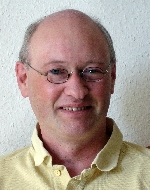
Dr. Mahelet G. Fikru is an associate professor in the Department of Economics at Missouri University of Science and Technology, where she has been a faculty member since 2011. She is affiliated with the Center for Intelligent Infrastructure and serves as an associate editor for Energy Reports. Her professional memberships include the Association of Environmental and Resource Economists (AERE) and the US Association for Energy Economics (USAEE). Dr. Fikru's educational background includes: Ph.D. in Economics from Southern Illinois University Carbondale B.A. in Economics from Addis Ababa University, Ethiopia Her research centers on energy transition, energy efficiency, technology adoption, mineral resources, ESG, mining, environmental policies, and merger incentives. She employs experimental surveys, econometric methods, and economic modeling to analyze policy impacts and consumer behavior, with particular focus on critical minerals for clean energy technologies, carbon capture economics, and energy market structures. Her work bridges environmental economics with practical policy design for sustainable development. Analysis of Dr. Fikru's recent publications reveals dominant themes in energy transition mineral sourcing, carbon management economics, and consumer behavior in low-emission electricity markets. Her research demonstrates methodological diversity through choice experiments, spatial econometrics, and optimization frameworks, consistently addressing policy-relevant questions about mineral supply chains, merger regulations under environmental constraints, and decarbonization pathways. The work shows increasing emphasis on empirical validation of theoretical economic models in real-world energy transitions. Dr. Fikru contributes to academic discourse through her editorial role at Energy Reports and active participation in professional societies. Her affiliation with the Center for Intelligent Infrastructure facilitates interdisciplinary collaboration on infrastructure-related research, while her office at Harris Hall serves as a hub for economics-focused energy and environmental policy analysis.