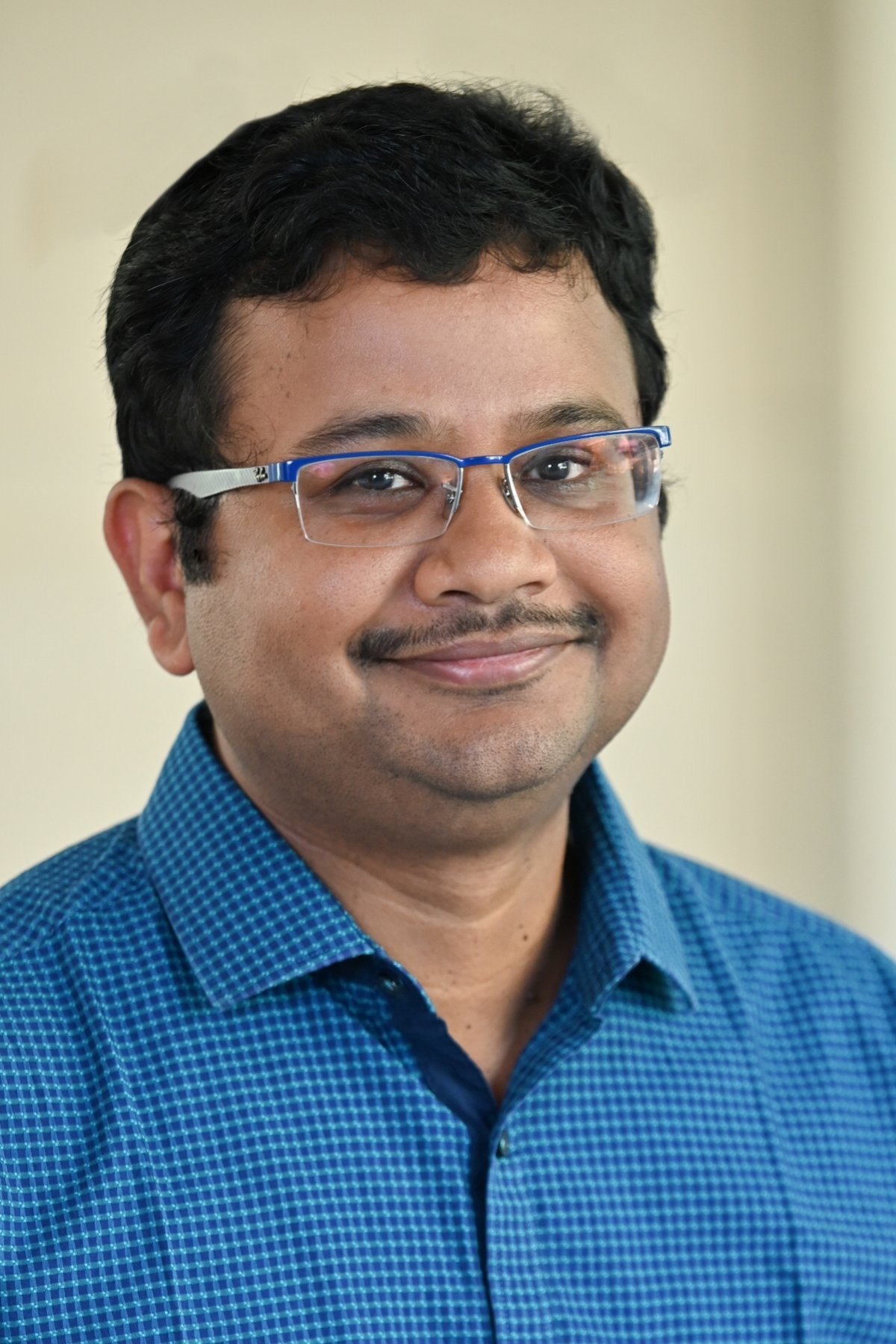
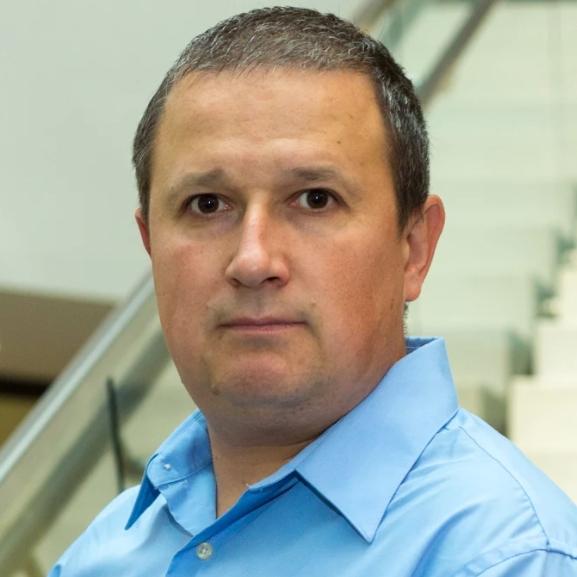
Ben Green is the Waynflete Professor of Pure Mathematics at the University of Oxford and a Fellow of Magdalen College. His work spans additive combinatorics, analytic number theory, harmonic analysis, ergodic theory, discrete geometry, and group theory, with a focus on interdisciplinary approaches. Research Interests: Additive combinatorics and its applications to primes Analytic number theory (prime distribution, L-functions) Harmonic analysis (Fourier methods, spectral theory) Ergodic theory and its combinatorial applications Discrete geometry (ordinary lines, convex structures) Group theory (approximate groups, expansion) Article Trends: His recent work emphasizes multiplicative functions, Ramsey-type problems in number theory, expansion in finite groups, and extremal set theory. Themes include prime gaps, arithmetic progressions, and interactions between analysis and algebra. Scientific Awards: Clay Research Award (2004) Ostrowski Prize (2005) Whitehead Prize (2005) Leverhulme Prize (2007) European Mathematical Society Prize (2008) Royal Society Fellow (2010) Sylvester Medal (2014) Senior Whitehead Prize (2019) Advising: Ben has supervised numerous D.Phil students across additive combinatorics, analytic number theory, and related fields. Past students hold postdoctoral and academic positions globally.
Béla Bollobás is a renowned mathematician affiliated with the University of Memphis as the Jabie Hardin Chair of Excellence in Combinatorics and the University of Cambridge as a Fellow of Trinity College and Honorary Professor at the Centre for Mathematical Sciences. His work spans combinatorics, probability theory, and graph theory, with significant contributions to percolation and random graphs. Dr. Rer. Nat. (Budapest, 1967) Ph.D. (Cambridge, 1972) Sc.D. (Cambridge, 1984) Bollobás pioneered extremal graph theory, random graphs, and probabilistic combinatorics. He introduced novel graph polynomials and advanced bootstrap percolation models, impacting both theoretical mathematics and statistical physics. His research includes inhomogeneous random graphs and cellular automata in random environments. His selected publications reveal a focus on percolation thresholds, graph invariants, and stochastic processes. Notably, he derived sharp thresholds for bootstrap percolation and defined critical probabilities for Voronoi percolation. Senior Whitehead Prize (2007) Fellow of the Royal Society (2011) Foreign Member, Hungarian Academy of Sciences (1990) Foreign Member, Polish Academy of Sciences (2013) Honorary Doctorate, Adam Mickiewicz University (2013) Szechenyi Prize (2017) Bollobás has supervised over 50 Ph.D. students and authored over 450 publications, including 10 books. He co-founded the journal Combinatorics, Probability and Computing and served on eight editorial boards. He organized numerous conferences, including Bill Tutte and Paul Erdős events.
Gábor Somlai is a mathematics researcher at Eötvös Loránd University's Faculty of Science, affiliated with the Department of Algebra and Number Theory since 2006. He is a core member of the HUN-REN-ELTE Geometric and Algebraic Combinatorics Research Group (previously MTA-ELTE until 2023) and participates in the Asymptotic Group Theory ERC project. His institutional roles include contributions to the Mathematics Doctoral School and the Institute of Mathematics. His research spans Algebra , Combinatorics , and Number Theory , with emphasis on spectral sets, tiling problems, group theory, and finite geometry. Recent work explores cyclotomic polynomials, the generalized trifference problem, and connections between tiling and spectral properties in finite abelian groups. His publications reveal a strong focus on combinatorial number theory and algebraic methods in discrete geometry. Somlai's publication trends show sustained contributions to theoretical foundations of tiling and spectral sets (testing Fuglede's conjecture in cyclic groups) Cayley graph properties and CI-group classifications polynomial methods in finite geometry and direction problems His work bridges pure algebra with combinatorial applications, often resolving long-standing conjectures in specialized domains. As part of the HUN-REN-ELTE research group, he collaborates on geometric and algebraic combinatorics projects, leveraging ERC funding for asymptotic group theory investigations. His research infrastructure includes access to the Alfréd Rényi Institute of Mathematics (http://www.renyi.hu) resources.
Sami H. Assaf is a Gabilan Distinguished Professor of Science and Engineering and Professor of Mathematics at the University of Southern California. He currently serves as Director of Graduate Studies for the Department of Mathematics and was named a Dean's Leadership Fellow for Physical Sciences and Mathematics in 2024. His academic career spans from CLE Moore Instructor at MIT (2008-2011) through Assistant Professor (2012-2019), Associate Professor (2019-2022), to his current position as Professor (2022-present). Dr. Assaf earned his Ph.D. in Mathematics from the University of California, Berkeley in 2007 under Mark Haiman, with his dissertation titled "Dual equivalence graphs, ribbon tableaux and Macdonald polynomials." He completed his undergraduate studies at the University of Notre Dame in 2001, graduating summa cum laude with Honors in Mathematics and Philosophy. His research primarily focuses on symmetric function theory and its rich interplay with algebraic combinatorics, representation theory, and algebraic geometry. Dr. Assaf's recent publications center on polynomial generalizations of symmetric functions, including Schubert polynomials, Demazure characters, and nonsymmetric Macdonald polynomials. His work has established important connections between combinatorial structures and representation-theoretic objects, particularly through the development of dual equivalence and weak dual equivalence frameworks. Dr. Assaf's research has been consistently supported by multiple National Science Foundation grants (most recently DMS-2246785) and Simons Foundation Collaboration Grants (most recently Award 953878). His publication record shows remarkable productivity with over 40 papers in top mathematics journals since 2005, including numerous collaborations with graduate students and postdoctoral scholars. Among his honors are the Gabilan Distinguished Professorship (2023), multiple USC Mentoring Awards (2017, 2024), the Herb Alexander Prize for outstanding dissertation (2007), and both the National Science Foundation and National Defense Science and Engineering Graduate Research Fellowships. As an educator and mentor, Dr. Assaf has successfully guided numerous Ph.D. students to completion, including Henry Ehrhard, Grant Bowles, and Peter Kagey. He also founded and directs the Venice Math Circle, an innovative early math education program that uses creative approaches like dinosaur sorting and building blocks to teach deep mathematical concepts to children from Pre-K through 8th grade, emphasizing discovery and analytical thinking over rote memorization.
Nathan (Nati) Linial is a Professor at the School of Computer Science and Engineering at the Hebrew University of Jerusalem, where he has been a faculty member since completing his postdoctoral period at UCLA. He earned his undergraduate degree in mathematics from the Technion and his PhD in graph theory from the Hebrew University. His research spans multiple areas of theoretical computer science and mathematics, with primary focus on combinatorics, theoretical computer science, and bioinformatics. Linial's work has made significant contributions to high-dimensional combinatorics, expander graphs, metric embeddings, and computational molecular biology. His research often bridges geometry, analysis, and combinatorial structures, demonstrating deep connections between seemingly disparate mathematical fields. Linial's recent publications reveal a strong trend toward high-dimensional combinatorial structures, including simplicial complexes, hypertrees, and high-dimensional permutations. His work frequently employs probabilistic methods, linear programming techniques, and geometric approaches to solve fundamental combinatorial problems. The breadth of his research is evident in both pure mathematical contributions and applications to computational biology. Fellow of the American Mathematical Society ISI Highly Cited Researcher Conant Prize (2008) for the influential survey paper "Expander graphs and their applications" Linial has served on the editorial boards of several prestigious journals including the Israel Journal of Mathematics (as Chief Editor 2013-2017), Random Structures and Algorithms, and Combinatorica. His academic leadership extends to organizing conferences and workshops in combinatorics and theoretical computer science. He has mentored numerous students whose work spans theoretical computer science, combinatorics, and computational biology. Linial is associated with research projects including ProtoNet (for protein sequence classification) and EVEREST (for evolutionary conserved protein domains), demonstrating his commitment to interdisciplinary research that bridges computer science with molecular biology.
Sepehr Hajebi is a Mathematics Instructor at Princeton University and a Postdoctoral Scholar at the University of Waterloo, where his position is funded by Sophie Spirkl. He completed his PhD in Combinatorics and Optimization at the University of Waterloo between 2020 and 2024 under the supervision of Sophie Spirkl. His research focuses on combinatorics and graph theory, particularly structural aspects such as induced subgraphs, graph minors, and algorithms. He also explores topology, number theory, and category theory. Education: PhD in Combinatorics and Optimization, University of Waterloo (2020–2024) Research Interests: His work delves into structural graph theory with applications to induced subgraphs, algorithmic problems, and graph minors. He investigates foundational questions in topology, number theory, and category theory, reflecting a commitment to interdisciplinary mathematical inquiry. Advising and Grants: His postdoctoral funding at Waterloo is provided by Sophie Spirkl, though no specific grants or advisees are detailed.
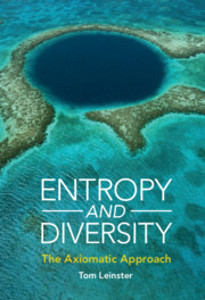
Tom Leinster is a mathematician at the University of Edinburgh, specializing in category theory, metric geometry, and their applications to areas such as algebra, topology, and mathematical biology. His research focuses on the concept of magnitude, a measure for metric spaces and enriched categories, as well as entropy and diversity. He has authored influential books including *Basic Category Theory* and *Entropy and Diversity: The Axiomatic Approach*. Leinster's work bridges foundational mathematics with interdisciplinary applications, emphasizing the interplay between abstract structures and concrete problems. His research interests span category theory, metric geometry, algebraic topology, and mathematical biology. Key contributions include foundational work on magnitude and its connections to geometric measure theory, entropy characterization, and categorical frameworks for diversity measurement. Leinster also engages in mathematical education and ethics, advocating for responsible research practices. Notable publications include recent advancements in magnitude homology of Euclidean sets, extremal magnitude in metric spaces, and entropy modulo primes. His work often highlights interdisciplinary applications, such as biodiversity quantification and information-theoretic foundations.
Günter Rote is a Professor in the Department of Computer Science at Freie Universität Berlin, specifically within the Theoretical Computer Science group (Arbeitsgruppe Theoretische Informatik). He holds a formal academic title of Professor Dr. and is affiliated with the Faculty of Mathematics and Computer Science. His research focuses on theoretical computer science, computational geometry, algorithms, and discrete mathematics. Key research interests include geometric algorithms, optimization problems (e.g., shortest paths, traveling salesman problems), and algorithm design for parallel computing systems. His work spans topics such as systolic arrays, convex hulls, and combinatorial optimization. Rote’s contributions include foundational studies on computational geometry problems, algorithmic complexity, and practical applications in energy equity and infrastructure design. Publications highlight contributions to solving extremal equations, polygon transformations, and the quadratic assignment problem. He has been active in academic leadership, mentoring students, and contributing to computational science communities. His email is rote@inf.fu-berlin.de, and his office is located at Takustraße 9 in Berlin.
Ruilin Shi serves as the William W. Elliott Assistant Research Professor in the Department of Mathematics at Duke University. Their office is located at 120 Science Drive, Durham, NC. Education: Ph.D. from Georgia Institute of Technology (2025) Dr. Shi specializes in combinatorial mathematics with particular focus on extremal graph theory and planar Turán problems . Their research investigates maximum edge counts in planar graphs avoiding specific substructures, particularly cycles of various lengths. This work bridges theoretical computer science and pure mathematics, contributing to fundamental understanding of graph limitations under planarity constraints. Recent publications demonstrate expertise in determining precise bounds for planar Turán numbers, with significant results for 7-cycles and general cycle graphs. Their work connects circuit graphs, near triangulations, and connectivity properties to solve longstanding conjectures in the field. No scientific awards are currently documented in the available information. For Fall 2025, Dr. Shi is teaching multiple sections of MATRICES AND VECTOR SPACES (MATH 218D and MATH 718D) across different time slots and locations including Physics 154, Physics 235, and LSRC A247. No laboratory or research team information is specified in the available documentation.
Venkatesan Guruswami is a Chancellor's Professor in the Department of EECS and a Senior Scientist at the Simons Institute for the Theory of Computing at UC Berkeley . He also holds a Professor position in the Department of Mathematics . His academic journey began with a B.Tech in Computer Science from the Indian Institute of Technology, Madras (1997) , followed by a Ph.D. in Computer Science from the Massachusetts Institute of Technology (2001) . After a Miller Research Fellowship at UC Berkeley (2001–02), he held faculty roles at the University of Washington and Carnegie Mellon University before returning to UC Berkeley in January 2022. Education : B.Tech, IIT Madras (1997) Ph.D., MIT (2001) Professional Affiliations : Chancellor's Professor, UC Berkeley (EECS) Senior Scientist & Interim Director, Simons Institute Professor, UC Berkeley (Mathematics) Guruswami's research spans multiple domains within Theoretical Computer Science , focusing on Error-Correcting Codes , Approximation Algorithms , Randomness in Computing , Probabilistically Checkable Proofs , and Computational Complexity . His groundbreaking work in List Decoding has enabled codes with minimal redundancy for correcting worst-case errors, while recent advancements include Polar Codes , Deletion-Correcting Codes , and Constraint Satisfaction Problems . He has also contributed to Quantum Coding Theory , Locally Recoverable Codes , and Approximation Hardness in various computational contexts. His publications reflect a deep engagement with interdisciplinary topics. Key trends include: Quantum Information Theory : Quantum LDPC codes, transversal gates, and quantum storage. Algebraic Coding : Reed-Solomon codes, AG codes, and polynomial-based constructions. Computational Complexity : Hardness of approximation, CSPs, and parameterized intractability. Data Transmission : Polar codes, deletion channels, and feedback mechanisms. Algorithmic Techniques : Spectral methods, semirandom models, and Lasserre hierarchy applications. Guruswami has received numerous accolades, including the Simons Investigator Award , Presburger Award , Packard Fellowship , Sloan Research Fellowship , ACM Doctoral Dissertation Award , and the IEEE Information Theory Society Paper Award . He is an ACM Fellow (2017) and IEEE Fellow (2019) , with recent honors like the Guggenheim Fellowship (2023) and AMS Fellow (2023) . As an advisor, he has mentored over 25 PhD and postdoctoral researchers , including Atri Rudra , Prasad Raghavendra , and Peter Manohar , whose work has won awards like the Edmund M. Clarke Doctoral Dissertation Award and CRA Outstanding Undergraduate Researcher Award . His research is supported by grants from the National Science Foundation , Packard Foundation , and Sloan Foundation . He also serves as Editor-in-Chief of the Journal of the ACM and holds leadership roles in IEEE and arXiv moderation. Guruswami is actively involved in Simons Institute programs and co-organized workshops on Coded Computation and Information Theory . His work bridges theoretical advancements with practical applications in Cloud Storage , Quantum Computing , and Group Testing , including pandemic-era contributions like AC-DC: Amplification Curve Diagnostics for SARS-CoV-2 .
Arnab Sen is an Associate Professor at the School of Mathematics, University of Minnesota. His research focuses on probability theory and discrete harmonic analysis, with emphasis on models from statistical physics such as spin glasses, random graphs, random matrices, and random polynomials. PhD in Statistics, UC Berkeley (2010), advised by Steven N. Evans and Elchanan Mossel Postdoctoral Fellow, Statistical Laboratory, University of Cambridge His research spans discrete probability , statistical physics , and random matrix theory , addressing topics like disorder chaos in spin glasses, eigenvalue distributions, and quantum percolation. He has taught graduate and undergraduate courses including Random Matrix Theory , Introduction to Stochastic Processes , and Multivariable Calculus . His recent publications analyze spin glass models, random matrices, and combinatorial systems.
Prof. Tobias Müller is a Professor at the Bernoulli Institute for Mathematics, Computer Science and Artificial Intelligence at the University of Groningen. His academic journey includes previous positions at Utrecht University, CWI (Centrum Wiskunde & Informatica), Tel Aviv University, and Eindhoven University of Technology, with a doctorate from the University of Oxford under Colin McDiarmid. His research focuses on combinatorics, probability theory, random graphs, percolation, discrete and stochastic geometry, and combinatorial game theory. He has contributed extensively to understanding complex networks, hyperbolic models, and geometric random structures. Research Interests: Random Graphs and Percolation Theory Discrete and Stochastic Geometry Hyperbolic Network Models Probabilistic Combinatorics Geometric Probability Graph Algorithms and Connectivity Notable Contributions: Analysis of Voronoi and Poisson-Voronoi percolation in hyperbolic planes. Studies on Mallows random permutations and their cycle structures. Research on component games and logical limit laws in graph theory. Investigations into the geometry and properties of random geometric graphs. Grants & Collaborations: Active in organizing workshops and conferences on random graphs and geometric networks, including the BIRS Workshop on Random Geometric Graphs and the STAR Workshops series. Labs/Teams: Member of the Bernoulli Institute’s research groups, focusing on stochastic studies, combinatorics, and algorithmic methods.
Max Alekseyev is an Associate Professor in the Mathematics Department and Computational Biology Institute. His research spans computational graph theory, enumerative combinatorics, computational/algorithmic biology, and comparative genomics. He focuses on interdisciplinary problems, blending mathematics with biological applications, particularly in genome assembly and analysis. His work includes advancements in genome scaffolding algorithms, combinatorial sequence analysis, and mathematical biology. Notable contributions involve genome assembly tools like CAMSA and studies on ancestral genome reconstruction. He also explores theoretical topics such as Bernoulli series generalizations and modular data classification. His research trends highlight a blend of pure mathematics (e.g., number theory, graph theory) and applied computational methods, addressing challenges in genomics and evolutionary biology. He secured an NSF Student Travel Grant in 2018 for computational molecular biology.
Daniel Horsley is an Associate Professor and ARC Future Fellow at the School of Mathematical Sciences, Monash University. His research focuses on combinatorial designs and edge decomposition of graphs, with notable contributions to extremal graph theory, Zarankiewicz problems, and graph decomposition theorems. Current Role: ARC Future Fellow, Associate Professor Affiliation: School of Mathematical Sciences, Monash University Active Projects: 'The Zarankiewicz problem through linear hypergraphs and designs' (2022–2025), 'Edge decomposition of dense graphs' (2017–2022), and more Research interests span combinatorial designs, graph decomposition, and extremal combinatorics. His work emphasizes theoretical advancements in design theory, with applications in discrete mathematics and optimization. Recent articles address semi-inducibility, Zarankiewicz numbers, and embedding partial designs, reflecting his expertise in structural and extremal combinatorics. Key awards include the ARC Future Fellowship. His research outputs include over 57 publications in journals like Journal of Graph Theory , SIAM Journal on Discrete Mathematics , and European Journal of Combinatorics . Grant projects include collaborations with ARC, University of Queensland, and University of Melbourne, focusing on Steiner systems, compressed sensing, and combinatorial structure analysis. Advising PhD students and mentoring researchers in discrete mathematics and combinatorial design theory.
Sebastian Pokutta is a Professor at Technische Universität Berlin, Vice President at the Zuse Institute Berlin (ZIB), and Chair of the Cluster of Excellence MATH+ and MODAL. His research lies at the intersection of Artificial Intelligence, Optimization, and Machine Learning, with applications in sustainability, quantum computing, and mathematical discovery. Research Interests: Development of novel optimization algorithms, particularly Frank-Wolfe and Conditional Gradient methods. Integration of machine learning with decision-making and combinatorial optimization. AI for Science (AI4Science), including applications in quantum mechanics and ecology. AI and creativity, human-AI co-creativity, and social science modeling using multi-agent LLMs. His recent publications (2025) demonstrate a strong focus on scalable optimization, interpretability, and algorithmic foundations. The work spans theoretical advances in convergence analysis, practical implementations in Julia (FrankWolfe.jl), and real-world deployments in biomass estimation and quantum certification. Scientific Awards: Gödel Prize (2023) STOC Test of Time Award (2022) Science Prize of the Association for Pediatric Orthopedics (2025) Google Research Awards (2021, 2020) NSF CAREER Award (2015) He advises a vibrant research group, with former students and postdocs securing faculty positions at institutions like Inria, Carlos III University, and James Madison University. His group has received funding from Google, DFG, and Math+, and he leads major collaborative efforts such as the Thematic Einstein Semester on Mathematical Optimization for Machine Learning. Labs and Teams: Interactive Optimization and Learning Lab at TU Berlin and ZIB. Leadership in MODAL and MATH+ research clusters, fostering interdisciplinary collaboration in mathematical optimization and AI.