Ángel F. Adames Corraliza is an Associate Professor in the Department of Atmospheric and Oceanic Sciences at the University of Wisconsin-Madison , where he holds the Ned P. Smith Distinguished Chair of Climatology . He leads the Large-scale Tropical Dynamics Group , focusing on physical processes driving tropical atmospheric circulations and their response to CO2 increases. Education: PhD from the University of Washington His research integrates observations, modeling, and theoretical frameworks to study phenomena like Madden–Julian Oscillation (MJO) , El Niño-Southern Oscillation (ENSO) , tropical convection , and inertio-gravity waves . Key themes include moist thermodynamics , moisture mode theory , and tropical-extratropical teleconnections . Article trends highlight interdisciplinary work on tropical wave dynamics , climate model validation (CMIP5/CMIP6) , and environmental impacts (e.g., methane emissions from oil platforms). His group collaborates globally and emphasizes public science communication. Scientific Awards: Ned P. Smith Distinguished Chair of Climatology His team includes undergraduates, graduate students, and postdoctoral researchers . Outreach efforts include the Spanish-language podcast "Tiempo, Clima y Tierra" and workshops on atmospheric science.
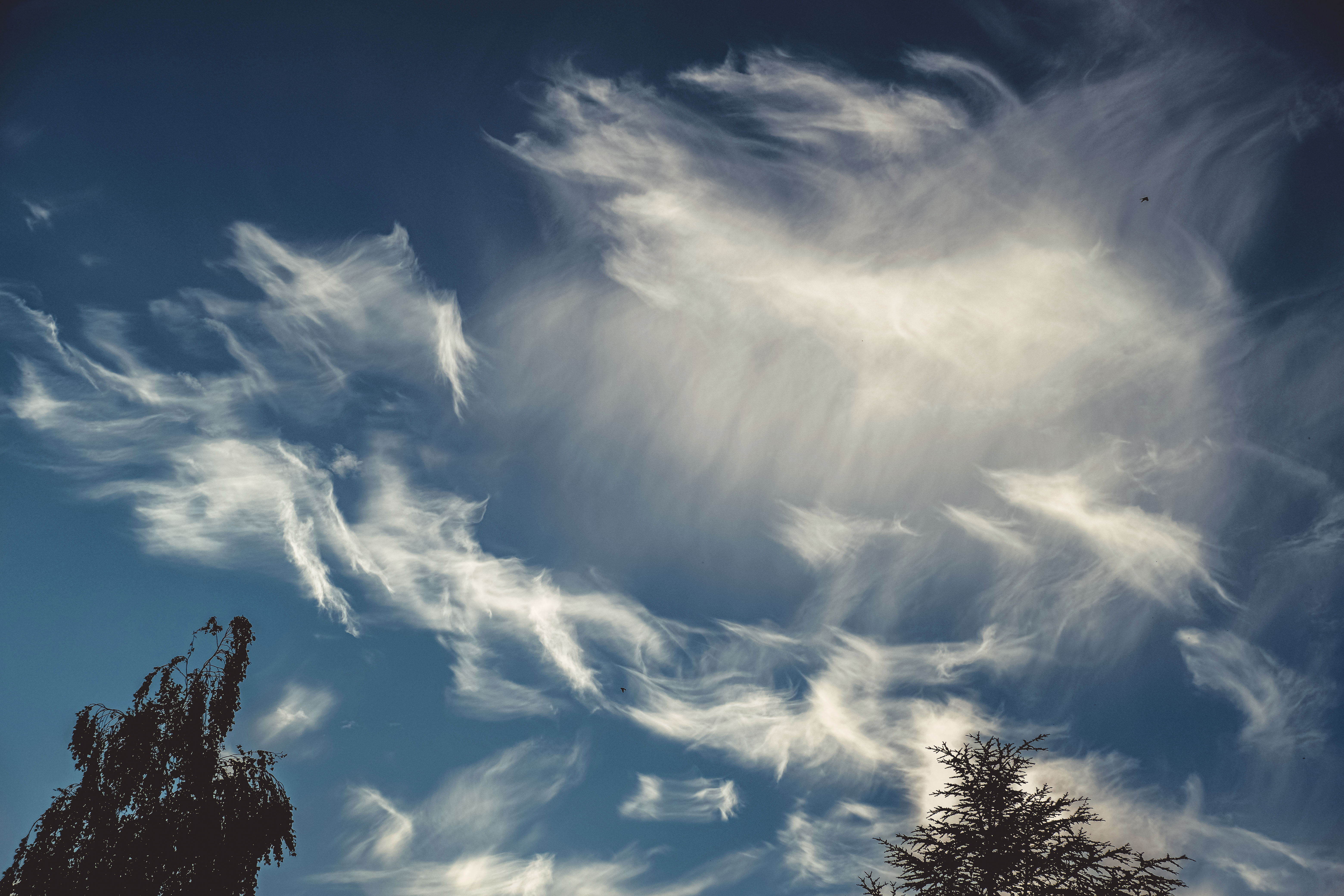
Dr. Philipp Reutter is an academic staff member and researcher at the Institute for Atmospheric Physics at Johannes Gutenberg University Mainz. He focuses on theoretical cloud physics, specifically cirrus clouds and ice supersaturation, and manages the university's weather station. His teaching includes courses on atmospheric thermodynamics and partial differential equation modeling. Research: Cirrus cloud dynamics, ice supersaturated regions (ISSRs), tropopause inversion layers, and climate system interactions. Teaching: Instructs Atmosphärische Thermodynamik and Modellierung mit partiellen Differentialgleichungen courses. Publications: 15+ peer-reviewed articles on cloud physics, atmospheric transport, and climate modeling (2009-2025).
Prem Kumar is a Professor in the Department of Physics at Swansea University, holding a Personal Chair position. He is affiliated with the Particle Physics and Cosmology Theory (PPCT) group. His research focuses on the intersection of Quantum Field Theory and String Theory/Gravity, including specialized areas like gauge/gravity duality and supersymmetric Yang-Mills theories. Kumar earned his undergraduate degree in Electrical Engineering from the Indian Institute of Technology Madras and a PhD in Theoretical Physics from Carnegie Mellon University. He held postdoctoral positions at the University of Washington and Cambridge University before joining Swansea under a 5-year PPARC Advanced Fellowship. He has been a faculty member since 2005 and Professor since 2012. His research employs analytical and computational methods to explore quantum phenomena in high-energy physics, thermal field theories, and random matrix applications in theoretical frameworks. Recent publications analyze atmospheric physics and climate extremes, with recurring themes in synoptic-scale precursors to extreme weather and climate model downscaling. Scientific awards include the prestigious PPARC Advanced Fellowship and Personal Chair recognition. Kumar actively advises postgraduate students and contributes to theoretical physics research groups exploring quantum-gravitational interactions.
Jonathan E. Martin is a Professor in the Department of Atmospheric and Oceanic Sciences at the University of Wisconsin–Madison since 1994. He received his Ph.D. in Atmospheric Sciences from the University of Washington in 1992. Research Focus: Mid-latitude cyclones, jet stream dynamics, and weather-climate interactions Key Methods: Multi-scale observational analysis, high-resolution mesoscale modeling, potential vorticity diagnostics Recent Projects: Jet stream waviness trends, subtropical-midlatitude cyclone transformation, snow cover-cyclone feedback His 2025-2024 publications examine extratropical cyclone precipitation distribution, Pacific basin rapid cyclogenesis, and Earth system model validation for cyclone occlusion. Earlier work (2023-2019) addresses: Jet superposition climatology Self-organizing map analysis of jet variability Cyclone-induced Southern Hemisphere waviness Nonlinear jet retraction mechanisms Tornado outbreak jet influences Historical cold pool contraction trends Awarded the 2021 Atmospheric Sciences Librarians International Choice Runner Up for his historical meteorology work, he also authored the textbook Mid-Latitude Atmospheric Dynamics: A First Course (2013). His research spans cyclogenesis, frontogenesis, and climate change impacts on jet streams, with applications in extreme weather forecasting and climate modeling validation.
Dr. Alexander J. Baker is a Senior Research Scientist at the National Centre for Atmospheric Science (NCAS) and the University of Reading's Department of Meteorology. His research focuses on high-resolution climate modeling, particularly examining tropical cyclones, North Atlantic climate variability, and paleoclimate reconstruction through stable water isotopes. Senior Research Scientist, NCAS High-Resolution Climate Modelling group member Project Manager, Huracan project Co-organizer, NCAS Climate Modelling Summer School Dr. Baker's research interests span: Tropical and post-tropical cyclones Global km-scale climate model evaluation Air-sea interactions in cyclones Atmospheric circulation patterns North Atlantic climate extremes Paleoclimatology using speleothems He supervises: Lewis Grant (PhD 2025-2028): High-resolution sub-seasonal tropical cyclone predictions Elliott Sainsbury (PhD 2019-2022): Post-tropical cyclones in European extreme weather His publication record (2014-2025) reveals: Leading research in tropical cyclone modeling Expertise in global storm-resolving climate models Major contributions to understanding Atlantic Multidecadal Variability Current focus on model resolution impacts on climate simulations Interdisciplinary work combining meteorology and paleoclimatology Industry collaboration through Insurance Special Interest Group Scientific contributions: Advancing High-Resolution Climate Modelling group's research Website administrator for HRCM research group Co-organizer of influential climate seminars
Edmund Chang is a Professor at Stony Brook University's School of Marine and Atmospheric Sciences , focusing on mid-latitude storms, climate dynamics, and tropical-extratropical interactions. His work bridges observational analysis, climate modeling, and mechanistic studies. Ph.D., Princeton University (1993) Research Interests span atmospheric dynamics, storm track variability, and societal impacts of extratropical cyclones. He investigates how global warming affects storm intensity and frequency, using tools ranging from climate models to real-time observations. His article trends show increasing focus on subseasonal forecasting, MJO modulation of storm tracks, and Southern Hemisphere cyclone intensification. Recent work addresses Arctic amplification effects and QBO interactions. Scientific Awards : Editor’s Award, American Meteorological Society Fellow, American Meteorological Society Advising includes numerous graduate students like Chingyuan Zheng and Albert Yau. Grants from NASA and NOAA support his climate change research. He contributes to IPCC assessments and leads international climate task forces.
Lewis M. Rothstein is a Professor at the University of Rhode Island's Graduate School of Oceanography. His career spans mechanical engineering, ocean engineering, and physical oceanography with research focusing on climate change, ocean dynamics, and numerical modeling. Ph.D. in Physical Oceanography (University of Hawaii, 1983) M.S. in Physical Oceanography (UH, 1979) M.S. in Ocean Engineering (University of Massachusetts, 1975) B.S. in Mechanical Engineering (University of Bridgeport, 1973) Rothstein's research explores climate change impacts on ocean circulation, submesoscale oceanic fronts, tropical cyclone-induced heat fluxes, and coupled biogeochemical modeling. He employs numerical simulations and satellite data to study coastal and open-ocean processes. His publications over the last decade (2003–2013) examine climate-ocean interactions, mode water dynamics, and coastal circulation patterns. These works bridge broad disciplines like physical oceanography, climate science, and ecological modeling. Rothstein teaches graduate courses in Geophysical Fluid Dynamics (OCG 610, 611) and co-teaches undergraduate oceanography for specialized students. As Science Director of the Metcalf Institute for 8 years, he emphasized science communication and journalist training. While no scientific awards are listed, his work has secured significant NSF funding, particularly for climate impact studies. He mentors graduate students with a focus on increasing female representation in oceanography.
Prof. Dr. Corinna Hoose leads the Cloud Physics research group at the Institute of Meteorology and Climate Research - Tropospheric Research (IMKTRO) within Karlsruhe Institute of Technology (KIT) . She has held this W3 Professorship since 2013 and previously led a Helmholtz Young Investigators Group (2010-2016). Her work focuses on aerosol-cloud interactions , mixed-phase cloud processes , and numerical modeling of atmospheric systems . Professor of Theoretical Meteorology at KIT (2013-present) Former Helmholtz Group Leader (2010-2016) University of Oslo & ETH Zurich Postdoc experience Co-Editor of Atmospheric Chemistry and Physics Research Interests center on ice nucleation mechanisms , cloud dynamics , and climate sensitivity studies . Her group develops parameterizations for heterogeneous ice nucleation and investigates precipitation formation across different cloud types. Notable methodological contributions include SEVIRI satellite data analysis and ICON model modifications for microphysical-dynamic coupling. Publication Trends show consistent leadership in mixed-phase cloud modeling (2013-2025), with particular emphasis on Arctic cloud systems , heterogeneous ice formation , and aerosol impacts on precipitation . Her work bridges laboratory ice nucleation studies (e.g., dust-ash parameterizations) and regional climate modeling at various spatial resolutions. Teaching includes core courses in Theoretical Meteorology , Numerical Methods , and Cloud Physics at KIT. She has mentored multiple early-career researchers as evidenced by co-authorships with advisees like A. Oertel and L. Ickes. Collaborations span institutions including ETH Zurich, University of Oslo, and EU projects like EUCAARI. Her research group interacts with observational teams through field campaigns like Swabian MOSES and utilizes both in situ and remote sensing data for model validation.
Jim Steenburgh is a Professor of Atmospheric Sciences at the University of Utah specializing in mountain weather and climate, orographic and lake-effect precipitation, weather analysis and forecasting, and numerical weather prediction. He joined the University of Utah faculty in 1995 and served as Department Chair from 2005-2011. An avid skier, he shares his expertise through his popular blog Wasatch Weather Weenies and his book Secrets of the Greatest Snow on Earth . B.S. in Meteorology from The Pennsylvania State University (1989) Ph.D. in Atmospheric Sciences from the University of Washington (1995) Dr. Steenburgh's research focuses on winter storms in complex terrain, particularly in mountainous regions. His work spans mountain meteorology, lake-effect and sea-effect snow systems, and the interaction between weather systems and topography. He has conducted significant research on the Wasatch Mountains, Great Salt Lake region, Japan Sea, and other mountainous areas worldwide. His expertise in winter weather forecasting has practical applications for avalanche safety, ski industry forecasting, and understanding climate change impacts on mountain snowpack. Analysis of Steenburgh's recent publications reveals a strong emphasis on lake-effect and sea-effect precipitation systems, particularly their interaction with terrain. His research combines observational studies with numerical modeling approaches to understand mesoscale weather phenomena. A significant portion of his work focuses on the Wasatch Mountains and Great Salt Lake region, while also expanding to international locations including Japan and the European Alps. His publications demonstrate an evolving research trajectory incorporating climate change impacts on mountain snow systems. Fellow, American Meteorological Society (2021) Fulbright Scholar, University of Innsbruck (2019) Distinguished Teaching Award, University of Utah (2024) Russel L. DeSouza Award, NSF Unidata Program (2024) Named Session Award, AMS Mountain Meteorology Committee (2018) Hosler Alumni Scholar Medal, Penn State University (2017) Outstanding Service Award, National Weather Service Western Region (2002) Outstanding Teaching Award, University of Utah (2001) Steenburgh has secured substantial research funding from NSF, NASA, and other agencies, with current projects extending through 2025. His grants focus on mountain meteorology, lake-effect snow prediction, and improving winter weather forecasting in complex terrain. He has mentored numerous graduate students through projects like the Storm Peak Laboratory graduate education program and has been involved in several major field campaigns including the Ontario Winter Lake-effect Systems (OWLeS) and the Mountain Terrain Atmospheric Modeling and Observations (MATERHORN) program. Dr. Steenburgh leads the Wasatch Weather Weenies blog, a collaborative effort with other meteorologists that provides real-time weather analysis and commentary, particularly focused on Utah's mountain weather. He has been instrumental in connecting academic research with practical weather forecasting applications, working closely with the National Weather Service and avalanche centers. His research group frequently collaborates with international partners, particularly in Japan where sea-effect snow systems share similarities with Utah's lake-effect snow events.
Yunji Zhang is an Assistant Professor at the Department of Meteorology and Atmospheric Science within The Pennsylvania State University . He also serves as the Assistant Director of the Penn State Center for Advanced Data Assimilation and Predictability Techniques (ADAPT) and is affiliated with the Alliance for Education, Science, Engineering and Design with Africa (AESEDA) . Research Focus: Dr. Zhang investigates the dynamics and predictability of convectively driven severe weather , including tropical cyclones, mesoscale convective systems, and severe thunderstorms. His work emphasizes ensemble-based data assimilation techniques using satellite and radar observations to enhance numerical weather prediction models. Current projects involve improving forecasts of hurricanes like Harvey and Midwest derecho events through advanced assimilation of all-sky microwave and infrared radiances. Publications Trends: His recent studies (2021-2025) highlight advancements in Ensemble data assimilation of dual-polarization radar and satellite data Predictability of extreme rainfall events in Zhengzhou and China Multi-sensor approaches for convection initiation forecasting Microphysical parameterization impacts on hurricane prediction Automated boundary layer depth estimation techniques Global-to-regional nested modeling for tropical cyclones Advising: Dr. Zhang mentors current graduate students Zhu Yao and Abhisek Das, while former advisees include Ph.D. recipient Keenan Eure and M.S. graduate Paul Mykolajtchuk . He actively invites students interested in M.S. or Ph.D. research to contact him via email. Labs & Centers: His work is supported by the Penn State Center for Advanced Data Assimilation and Predictability Techniques (ADAPT) and collaborations with the Alliance for Education, Science, Engineering and Design with Africa (AESEDA) .
Gan Zhang is an Assistant Professor in the Department of Climate, Meteorology & Atmospheric Sciences at the University of Illinois at Urbana-Champaign, affiliated with the School of Earth, Society & Environment. His research focuses on climate modeling, prediction, and applications, particularly addressing climate risks involving physical phenomena (e.g., cyclones) and socioeconomic factors (e.g., energy transition). He emphasizes integrating geophysical fluid dynamics with machine learning and real-world applications. Education: PhD (2018), M.S. (2012) in Atmospheric Sciences from University of Illinois at Urbana-Champaign; B.S. (2011) in Marine Meteorology from Ocean University of China. Research interests include climate variability, extratropical cyclones, tropical meteorology, and weather/climate risk. Recent work explores wind energy risks in midlatitudes, Rossby wave impacts on cyclones, and historical records of tropical cyclones using Chinese documents. His group fosters interdisciplinary approaches, encouraging exploration in data science, exo-climate, and economics. Notable achievements include an Editor’s Award from the American Meteorological Society (2025) and collaborations with institutions like Princeton University and NCAR. He advises graduate students Mingfei Ren, Yudi Mao, and Megha Rao. His work bridges climate science with societal impacts, such as hurricane labor market effects and energy systems. Key research tools include climate models, satellite data, and machine learning. Recent presentations include sessions at the American Meteorological Society annual meeting (2025) and workshops on extreme heat and cloud feedbacks.
Dr. Jeffrey Chagnon is a researcher in the Department of Meteorology at the University of Reading, focusing on atmospheric dynamics, potential vorticity, and numerical weather modeling. His work spans topics such as extratropical cyclones, convective systems, and gravity waves. University: University of Reading Department: Meteorology Academic Rank: Researcher His research emphasizes diabatic processes, wave propagation, and stratosphere-troposphere interactions. Key contributions include studies on symmetric instability, warm conveyor belts, and hydrostatic adjustment mechanisms. Recent publications (2017–2014) highlight his expertise in precipitation dynamics, Rossby wave modeling, and sea breeze regulation. Earlier works (2013–2005) explore cyclone structures, gravity wave generation, and energy partitioning in atmospheric systems. Collaborations with institutions like the American Meteorological Society and Royal Meteorological Society underscore his active role in advancing meteorological science through simulation and observational analysis.
Dr. Oscar Martinez-Alvarado is a Senior Research Scientist at the University of Reading's Department of Meteorology and part of the National Centre for Atmospheric Science (NCAS). His research focuses on mid-latitude atmospheric dynamics, extratropical cyclones, and data assimilation for numerical weather prediction. He leads and collaborates on projects like CANARI (2022–2027) and THINICE, investigating Arctic cyclones and sting-jet windstorms. He has supervised multiple PhD students and contributed to over 50 peer-reviewed publications. Education: DPhil in Atmospheric Physics from the University of Oxford (2007). Research spans Martian atmospheric dynamics, mesoscale processes, and climate change impacts on extreme weather. He is affiliated with the Mesoscale Group and Dynamical Processes Group at Reading. Research Themes: Key areas include sting-jet cyclones, diabatic processes in storms, and wind energy modeling. His work integrates observational data and numerical models to improve weather forecasting and climate risk assessment. Grants & Projects: Principal Investigator (PI) and Co-Investigator (Co-I) on projects funded by WCSSP Southeast Asia, NCAS, and NERC. Notable projects include Arctic Summertime Cyclones (completed), Weather Regimes (completed), and contributions to NAWDEX and DIAMET. Labs/Teams: Active member of Reading's Mesoscale Group and NCAS Atmospheric Physics directorate. Collaborates internationally on field campaigns like THINICE and FRANC.
Larry O'Neill is an Associate Professor and Director of the Oregon Climate Service at Oregon State University's College of Earth, Ocean, and Atmospheric Sciences (CEOAS). He is based in Burt Hall at the Corvallis campus and serves as a key figure in climate monitoring and research for the state of Oregon and the broader Pacific Northwest region. Dr. O'Neill received his Ph.D. in Oceanography from Oregon State University in 2007 and his B.S. in Atmospheric Sciences from the University of California at Davis in 2000. His educational background bridges the disciplines of oceanography and atmospheric sciences, providing him with a unique perspective on air-sea interactions. Dr. O'Neill's research focuses on air-sea interactions and their role in climate variability, with particular expertise in satellite meteorology and oceanography, atmospheric boundary layer dynamics, and ocean mixed layer processes. His work examines Pacific Northwest and North Pacific weather, ocean, and climate variability, with applications to water resource management and climate monitoring. He teaches courses in Satellite Oceanography/Ocean Remote Sensing and Fluid Earth, training the next generation of oceanographers and atmospheric scientists. His publication record demonstrates consistent contributions to understanding how oceanic features like the Gulf Stream and California Current System influence atmospheric processes. Recent work has increasingly focused on climate extremes in the Pacific Northwest, including drought, heat waves, and wildfires, with direct applications to state-level climate services. NASA's Ocean Vector Winds Science Team Jet Propulsion Laboratory's PO.DAAC Users Working Group NASA's Ocean Surface Topography Science Team Co-Chair of US CLIVAR Working Group on Air-Sea Interactions State of Oregon Water Supply Availability Committee Oregon Climate Extremes Committee Oregon Drought Monitor Advisory Committee Dr. O'Neill advises graduate students including Emily Hayden (Ph.D. candidate in Physics of Oceans and Atmospheres) and Rose Una (M.S. candidate in Physics of Oceans and Atmospheres). His research is supported by multiple federal agencies including NASA and NOAA, as evidenced by his participation in various working groups and his extensive publication record spanning two decades. As Director of the Oregon Climate Service, Dr. O'Neill leads efforts to monitor and analyze climate conditions across Oregon, providing critical information to state agencies, water managers, and the public. His work has been featured extensively in media coverage of climate extremes in the Pacific Northwest, particularly regarding drought conditions and wildfire risks.
Volkmar Wirth is a full Professor of Theoretical Meteorology and Atmospheric Physics at the Institute for Atmospheric Physics, Johannes Gutenberg-University Mainz. His research focuses on Rossby wave packets, forecast error dynamics, tropopause behavior, mountain meteorology, and tropical cyclone processes. Full Professor since 2000 Specialist in midlatitude waveguidability and extreme weather predictability Active in mountain meteorology (banner clouds) and hurricane dynamics Teaching includes graduate courses on atmospheric hydrodynamics, predictability, and potential vorticity applications. He supervises project assignments involving numerical modeling in FORTRAN-90 and leads meteorology practicals with time series analysis experiments. Recent publications analyze Rossby wave propagation in changing climates, temperature extremes, and waveguide limitations. His group collaborates extensively on "Waves to Weather" predictability research. Current affiliations: Johannes Gutenberg-University Mainz , Institute for Atmospheric Physics.