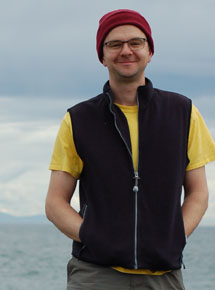
Avi Loeb , the Frank B. Baird Jr. Professor of Science at Harvard University, is a leading astrophysicist and former Chair of Harvard's Department of Astronomy (2011-2020). He directs the Institute for Theory and Computation (ITC) and the Galileo Project (2021-present), while holding the Sackler Senior Professorship at Tel Aviv University. His research spans cosmology, black holes, interstellar objects, and the search for extraterrestrial life. Education: PhD in Physics from Hebrew University of Jerusalem (1986) Former Positions: Member of the Institute for Advanced Study, Princeton (1988-1993) Loeb's research interests include: Gravitational wave detection and interstellar object analysis Simulation hypothesis and cosmic reality Technological signatures beyond the Standard Model His recent publications focus on 3I/ATLAS , gravitational SETI, and AI alignment in space exploration. Awards include being named among TIME's 25 Most Influential People in Space (2012), 14 Most Inspiring Israelis (2020), and ranking #3 in global astronomical impact (2024). He chairs the Breakthrough Starshot Initiative and advises the National Academies' Board on Physics and Astronomy.
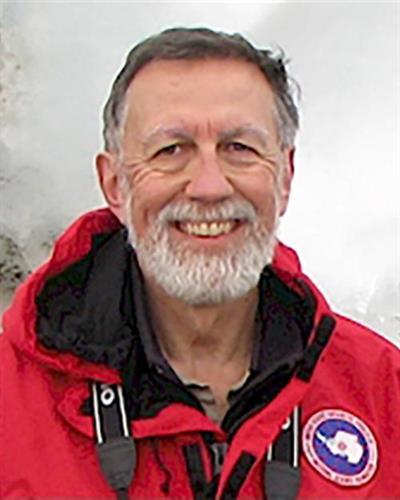
Frank Corsetti is a Professor of Earth Sciences at the University of Southern California (USC), leading the Corsetti Lab. His research focuses on the co-evolution of Earth and its biosphere, particularly during extreme events like the 'Snowball Earth' glaciation and mass extinctions. He holds a Ph.D. in Geological Sciences from UC Santa Barbara (1998) and a B.S. in Geology from UC Davis (1989). Research Interests: Corsetti studies geobiological processes such as stromatolite formation, microbial carbonate systems, and the environmental impacts of mass extinctions. His lab investigates biosignatures, diagenetic processes, and astrobiological applications. Current projects include the end-Triassic mass extinction and microbial interactions in extreme environments. Advising & Grants: He mentors a team of PhD students (including Reena Joubert, Alison Cribb, and others) and has secured funding from NASA for projects like stromatolite carbonate formation studies. His work bridges paleontology, geochemistry, and microbiology, contributing to understanding Earth’s long-term climate and life history. Labs/Teams: The Corsetti Lab at USC explores stromatolites, microbial mats, and ancient Earth systems. Collaborations involve institutions like JPL and international universities.
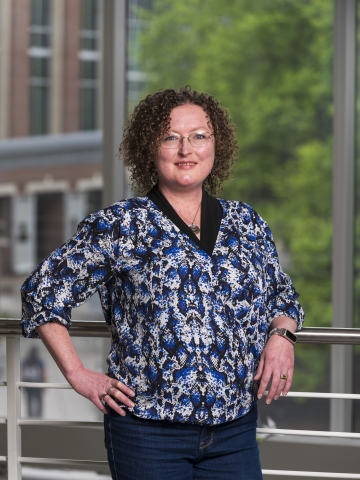
Amanda Stockton is an Associate Professor at the School of Chemistry and Biochemistry, Georgia Institute of Technology. Her research focuses on the development of analytical instruments for planetary exploration and the study of terrestrial analog environments to understand conditions suitable for life emergence. She leads the Stockton Lab, which specializes in microfluidics, biosignature detection, and astrobiological applications. Education: B.S. in Chemistry and Aerospace Engineering, Massachusetts Institute of Technology (2004) M.A. in Chemistry, Brown University (2006) Ph.D. in Chemistry, University of California Berkeley (2010) Stockton’s work bridges planetary science and analytical chemistry, targeting extraterrestrial life detection through technologies like the FELDSPAR and IMPOA projects. Her research explores sea spray aerosols, icy moon penetrators, and microfluidic systems for environmental and medical diagnostics. Research Highlights: Instrument development for Europa and Enceladus missions Microfluidic tools for origin-of-life experiments Terrestrial applications in environmental monitoring and point-of-care diagnostics Collaborative studies in Icelandic and Antarctic analog environments The Stockton Lab’s publications reveal expertise in biosignature preservation, Raman spectroscopy, and planetary habitability, with a focus on Mars and ocean worlds. Her team has pioneered low-cost microfluidic platforms like GLUE and modular CE-LIF systems.
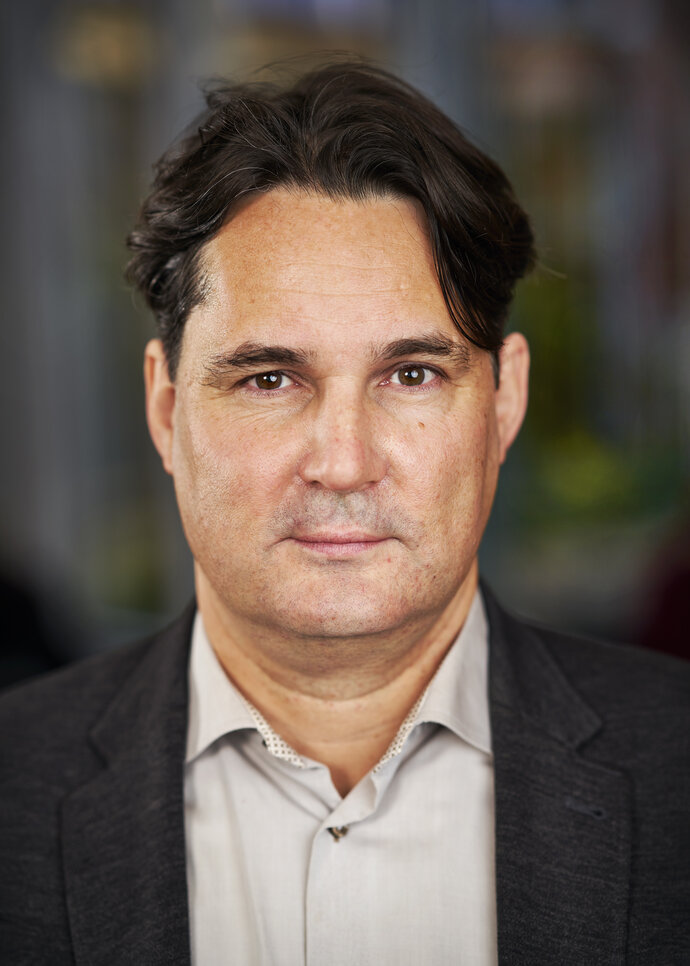
Niko Troje is a Professor at York University, affiliated with the Departments of Psychology, Biology, and Electrical Engineering & Computer Science. He holds cross-appointments and leadership roles, including Director of the BioMotion Lab. His research focuses on perceptual representations, biological motion, and vision science. Education: Ph.D. in Biology (1994) - Albert-Ludwigs Universität B.Sc. in Biology (1990), Physics & Mathematics (1987) - Albert-Ludwigs Universität Research Interests: Troje investigates how the brain processes biological motion, perception of human and animal movement, and applications in virtual reality. His work bridges neuroscience, psychology, and computer science. Key Contributions: Pioneered point-light displays for motion perception, explored gait analysis in mental health, and developed tools for motion capture and analysis (e.g., bmlTUX). Awards: Humboldt Research Prize (2014) NSERC Steacie Fellowship (2008-2009) Canada Research Chair (2003-2013) Grants & Labs: Led funded projects on movement perception, collaborated with institutions like the Max Planck Institute, and directs the BioMotion Lab at York University.
Dr. Keyron Hickman-Lewis is a Lecturer in Planetary Exploration at Birkbeck, University of London, with academic positions spanning institutions like the Natural History Museum and Imperial College London. He holds a M.EarthSci from the University of Oxford (2015) and a Ph.D. in Earth Sciences from CNRS Orléans and Università di Bologna (2019). His research focuses on the co-evolution of Earth and early life, planetary exploration (including Mars 2020 Perseverance rover missions), and technique development for analyzing ancient microbial biosignatures. Key interests include microbial mats, Archaean geology, and astrobiological field analogs like Lake Abhe (Djibouti) and Martian environments. Notable achievements include identifying Earth's oldest microbial traces (3.5 Ga) and studying Mars sample return strategies. He is a Fellow of the Geological Society (FGS) and serves on the European Astrobiology Network Association Council. Teaching includes modules on planetary science, geology, and remote sensing. Supervision focuses on astrobiology and planetary exploration topics. Key publications highlight breakthroughs in microbial mat preservation, Mars sample analysis, and Early Archaean stromatolite interpretation. Collaborations span international institutions including NASA, CNRS, and the University of Bologna.
Prof. Dr. Christian Mayer is a Professor in Physical Chemistry at the Faculty of Chemistry, University of Duisburg-Essen. He serves as Head of the working group focusing on origin of life research, nanocapsules, and NMR spectroscopy techniques. His research group is located at Universitätsstraße 5, D-45141 Essen, Germany, with contact information including phone number +49 201 183-2570. Prof. Mayer's research interests primarily focus on the origin of life in deep tectonic fault zones of the first continental fragments, where he collaborates with Prof. Dr. Ulrich Schreiber from the Faculty of Biology and Prof. Dr. Oliver Schmitz from Applied Analytical Chemistry. His work investigates how vesicle formation occurs in tectonic fault systems through cyclic phase transitions of carbon dioxide, creating ideal conditions for molecular evolution. He specializes in pulsed field gradient NMR (PFG-NMR), high-resolution NMR, and solid-state NMR techniques to characterize nanoscale systems including nanocapsules, vesicles, and microemulsions. His recent publication trends reveal a strong interdisciplinary focus spanning physical chemistry, prebiotic chemistry, and astrobiology. The articles demonstrate increasing integration of computational methods with experimental approaches, particularly in analyzing molecular structures and dynamics. His research has evolved from fundamental studies of nanocapsule systems to broader investigations of protocell formation mechanisms under early Earth conditions, with recent work extending to astrobiological contexts including potential life formation on Titan. Prof. Mayer has established significant collaborations across multiple disciplines, particularly with geologists and biologists, to investigate the physical chemical processes that could have led to the emergence of life. His work bridges fundamental physical chemistry with practical applications in nanomedicine, particularly in developing artificial oxygen carriers based on nanocapsule technology. His laboratory utilizes high-pressure facilities to simulate early Earth crust conditions, with a particular focus on supercritical CO 2 environments. The working group combines experimental approaches with theoretical modeling to understand vesicle formation processes and their implications for the origin of cellular life.
Martin Saunders is an Associate Professor and leader of the Physical Science Electron Microscopy Platform at the University of Western Australia's Centre for Microscopy, Characterisation & Analysis (CMCA). He holds leadership roles in national microscopy consortia, including Microscopy Australia and the National Imaging Facility. His academic career spans over 20 years, with roles as Deputy Director and Acting Director of CMCA, and President of the Australian Microscopy and Microanalysis Society (AMMS). Saunders earned a PhD in Physics from the University of Bath (UK) and postdoctoral experience at institutions including the University of Bristol and the US Naval Postgraduate School. His research focuses on advanced electron microscopy techniques, including TEM, STEM, EELS, and tomography, applied across physical, biological, and geo sciences. Education: PhD in Physics (University of Bath, 1994), BSc in Applied Physics (University of Bath, 1990). Research interests include structural and chemical analysis of nanomaterials, biominerals, and geological samples. He collaborates globally, contributing to high-impact journals like Nature and Advanced Materials . Saunders has secured over $25M in grants from ARC, NHMRC, and NCRIS, funding cutting-edge microscopy infrastructure. Awards: Inaugural AMMS Fellow (2025), Life Membership (AMMS), Fellow of the UK Institute of Physics (2012). Teaching: Coordinates materials characterization courses for biomedical engineering and nanotechnology programs. Provides training in electron microscopy for researchers and postgraduates. Labs/Infrastructure: Manages state-of-the-art facilities including FEI Titan G2 80-200 TEM/STEM and DualBeam FIB-SEM systems at CMCA.
Samuel Kounaves is a Professor of Chemistry at Tufts University and a Visiting Professor at Imperial College London's Department of Earth Science & Engineering. His research focuses on planetary chemical analysis and astrobiology, particularly the search for life on Mars and icy moons like Enceladus and Europa. He led the Wet Chemistry Lab (WCL) on NASA's Phoenix Mars Lander, discovering perchlorate in Martian soil, a finding revolutionizing understanding of Mars' habitability. His work also includes studying oxychlorine chemistry's effects on biomarkers and developing in-situ analytical instruments for extraterrestrial exploration. Education: DSc (PhD) in Chemistry, Université de Genève (1985) MS and BS in Chemistry, California State University, San Diego (1978, 1975) Research Interests: Planetary geochemistry, astrobiology, Mars habitability, oxychlorine chemistry, and development of analytical instruments for space missions. His team investigates how biomarkers degrade under Martian conditions and designs sensors for detecting life on icy ocean worlds. Recent Contributions: Key publications include studies on perchlorate's role in Mars' chemistry, microbial survival in extreme environments, and mission concepts for Enceladus exploration. He has received awards such as the Kavli Foundation Award and NASA Achievement Awards for his Phoenix mission leadership. Grants & Funding: Major NASA grants for oxychlorine research, sensor development (e.g., MICA), and studies on Mars' organic matter preservation. Awards: Fellowships from the Geological Society, Royal Society of Chemistry, and AAAS, alongside NASA recognitions.
Professor Andrew Newsam is a faculty member at Liverpool John Moores University's Astrophysics Research Institute (ARI), where he serves as Professor of Astronomy Education and Engagement since 2012. He has been instrumental in developing the National Schools' Observatory and astronomy distance learning courses, bridging observational astronomy with STEM education initiatives. Education: PhD in Astrophysics from University of Glasgow (1994), BSc in Physics with Computing from University of Warwick (1991) His research spans observational astronomy, high-energy astrophysics, and science education. Recent publications focus on nova remnants (RS Ophiuchi), gamma-ray bright novas (Nova Persei 2018, V392 Persei), microlensing surveys (Angstrom Project), and educational outreach. He has contributed to planetary eclipse studies and interstellar dynamics research. Key trends in his publications include: binary star systems (56% of works), transient phenomena (43%), and educational technology (35%). His citations show strong engagement with nova studies (22% of total citations) and microlensing research (19% of total citations). Scientific Awards: Teaching Fellowship Award for Individual Excellence (2009) Curriculum Innovation Award (2007) Queens Anniversary Prize for Higher and Further Education (2005) As chair of multiple education and outreach panels (2016-2025), he has shaped astronomy policy and public engagement strategies. He received STFC grants for STEM capacity building (2020) and BBSRC funding for citizen science projects (2019).
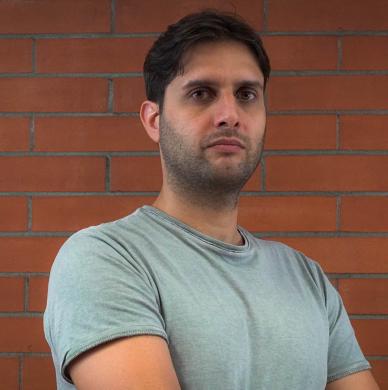
Donato Romano serves as Associate Professor at The BioRobotics Institute of Scuola Superiore Sant'Anna, Italy, where he coordinates the Bio-Robotic Ecosystems Lab and co-founded the spin-off company HUBILIFE srl. His interdisciplinary work bridges robotics, biology, and AI to develop biohybrid systems for biodiversity preservation, sustainable environmental management, and life support in extreme scenarios including space exploration. With over 90 publications and an H-index of 27 (Scopus, March 2025), he has established significant academic leadership through editorial roles across 12+ international journals. Romano's educational foundation includes advanced degrees with honors: an M.Sc. in Agriculture Science and Technologies (2014) and a PhD in BioRobotics (2018), both from Scuola Superiore Sant'Anna. His academic journey includes visiting scholar positions at Khalifa University and substantial industry-academia collaboration through HUBILIFE srl, which commercializes bioinspired devices for human daily life improvement. His research program focuses on bioinspired and biomimetic robotics with particular emphasis on animal-robot interaction, biohybrid systems, and natural intelligence. Key projects address critical global challenges: SENSORBEES develops biohybrid environmental surveillance for ecological monitoring; REGOLIFE investigates lunar soil-terrestrial organism interactions for space agriculture; and OCEAN ROBOCTO explores marine ecosystem solutions. This work demonstrates a strategic progression from fundamental behavioral studies toward applied ecological and extraterrestrial systems. Analysis of his recent publications reveals strong trends in AI-driven behavioral analysis, with deep learning increasingly applied to entomological studies and pest management. The research spans agricultural applications (precision monitoring traps, larval detection systems), ecological conservation (biodiversity surveillance), and extreme-environment adaptation (lunar regolith studies). A distinctive feature is the consistent integration of biohybrid approaches where living organisms and robotic systems create synergistic capabilities exceeding either component alone. Romano's scientific recognition includes election as Junior Fellow of the Italian Academy of Engineering and Technology (2025), the Lucani fuori dal Comune award (2024), and multiple best-thesis prizes. His editorial leadership spans high-impact journals including IEEE Transactions on Medical Robotics and Bionics and Pest Management Science, where he serves as Associate Editor. As principal investigator, Romano coordinates major international projects totaling over €15M in funding: HORIZON-EIC's SENSORBEES (2024-2029), ASI's REGOLIFE (2024-2027), National Geographic's OCEAN ROBOCTO (2024-2026), and PRIN's COSMIC (2023-2025). His teaching portfolio includes PhD courses in Biosystems for Biorobotics and M.Sc. instruction in Bionics Engineering at Scuola Superiore Sant'Anna and University of Pisa. The Bio-Robotic Ecosystems Lab under Romano's direction pioneers biohybrid technologies where living organisms and robotic systems create integrated solutions. Current initiatives include SENSORBEES' environmental monitoring swarms, REGOLIFE's moonworm colonization systems, and HUBILIFE's commercial vector-control devices. The lab maintains active collaborations with space agencies, agricultural institutes, and conservation organizations, positioning biohybrid systems as next-generation tools for planetary-scale challenges.
David Dunér is a Professor at the Department of History of Ideas and Sciences, within Lund University's College of Humanities and Theology. He serves as Manager of Research and Postgraduate Education, focusing on the history of science and philosophy in Sweden (17th-18th centuries), astrobiology's history and philosophy, and cognitive history. Educated in Sweden, he defended his thesis on Swedenborg's natural philosophy in 2004. His key publications include Tankemaskinen (2012), Human Lifeworlds (2016), and Cognitive History (2019). Research trends include: Transdisciplinary analysis of apocalyptic themes through the At the End of the World program. Integration of cognitive science into historical research methodologies. Epistemological studies of biosignature detection in astrobiology. Scientific awards: Royal Swedish Academy of Letters Prize (2006) Einar Hansen Legacy Award (2010) Royal Gustavus Adolphus Academy Prize (2023) Editorial roles encompass leading the Ugglan: Lund Studies in the History of Ideas and Sciences series and serving on multiple international journal boards. He participates in academic networks like the Royal Physiographic Society and the New Society of Letters at Lund.
Hilairy Hartnett is a Professor at Arizona State University (ASU) with joint appointments in the School of Earth and Space Exploration and the School of Molecular Sciences. She is affiliated with the Central Arizona-Phoenix Long Term Ecological Research (CAP LTER) and the Global Drylands Center, contributing to interdisciplinary initiatives like Earth Systems Science for the Anthropocene and the Global Futures Scientists and Scholars program. Her research focuses on biogeochemical processes, astrobiology, and urban ecology. Hartnett earned an A.B. in Chemistry from Vassar College (1990) and M.S./Ph.D. in Oceanography from the University of Washington. After postdoctoral work at Rutgers University studying river and estuarine systems, she joined ASU in 2003. Her expertise spans geochemical cycles, organic reactions under hydrothermal conditions, and planetary habitability assessments. Research Interests 1. Biogeochemistry : Investigates how geochemical, microbial, and human activities influence elemental cycles in modern and ancient environments. 2. Astrobiology : Explores organic geochemistry in hydrothermal systems and its implications for life detection on icy ocean worlds like Enceladus/Europa. 3. Urban Ecology : Analyzes ecological infrastructure in arid urban environments, such as central Arizona, focusing on stormwater systems and soil-water dynamics. 4. Interdisciplinary Science : Advocates for transdisciplinary approaches to address complex planetary and astrobiological challenges. Recent Trends in Publications Her work emphasizes experimental studies of organic reactions under hydrothermal conditions, leveraging mineral interactions to refine biosignature detection criteria for exoplanets. She also collaborates on global-scale initiatives like the TREC team to integrate elemental abundance data into planetary evolution models. Urban ecology research highlights innovative methods for water sustainability in hyperarid regions like the Atacama Desert. Advising & Grants While no formal advisees are listed, Hartnett leads collaborative research teams and participates in major programs (e.g., CAP LTER, Global Drylands Center). Grant details are not explicitly provided but inferred from her involvement in interdisciplinary projects and experimental facilities. Labs/Teams Affiliated with the Central Arizona-Phoenix LTER, Global Drylands Center, and the TREC team. These collaborations support her work on planetary habitability, astrochemical reactions, and urban biogeochemical processes.
Dr Christopher Cowie is an Associate Professor and Deputy Head of Department in the Department of Philosophy at the University of Durham. Previously, he was a graduate student and Junior Research Fellow (JRF) at the University of Cambridge, and held fellowships at Harvard University and Stanford University. His research focuses on metaethics, moral philosophy, epistemology, and the philosophy of science, often addressing topics like paradoxes, biosignatures, and extraterrestrial intelligence. PhD in Philosophy from Princeton University JRF at Cambridge University Fellowships at Harvard and Stanford Cowie's work critically examines moral error theory through arguments from paradoxes, debunking strategies, and nonnaturalist explanations. He also explores epistemic normativity, companions in guilt arguments, and methodological challenges in life detection. His publications include books and articles in leading journals such as Mind , The Journal of Philosophy , and Astrobiology . Recent research trends emphasize interdisciplinary collaborations, particularly between philosophy and astrobiology, as seen in his co-authored work on life detection criteria. Cowie supervises PhD students including Brad Berwin and Charles Coatsworth, and his teaching and supervision reflect his commitment to rigorous philosophical inquiry and mentorship.
Dr. D. Marshall Porterfield is a Professor of Agricultural & Biological Engineering at Purdue University, specializing in biosensors, bio-nanotechnology, and space biology. His research focuses on developing technologies for bioregenerative life support systems and nutrient delivery in microgravity environments. He served as NASA's Division Director for Space Life and Physical Sciences (2012-2016), pioneering initiatives like geneLAB and materialsLAB to advance space research utilization. His work bridges engineering and biology, with applications in space exploration and terrestrial challenges. Porterfield holds leadership roles in organizations like the American Society for Gravitational and Space Research and the Institute for Biological Engineering. He has authored over 100 peer-reviewed papers and holds patents in biosensor technology. Awards include the Halstead Investigator Award and election to the AIMBE College of Fellows. His research portfolio includes lab-on-a-chip devices, biomimetic sensors, and gravitational physiology studies, with recent emphasis on lunar agriculture and space radiation mitigation. His articles highlight advancements in space microbiology, extraterrestrial crop systems, and molecular responses to spaceflight. Key themes include optimizing oxygen delivery for hydroponics, detecting cancer biomarkers via microtest tech, and understanding aging in space environments. Porterfield collaborates across disciplines, leveraging Purdue's facilities like the Birck Nanotechnology Center and Discovery Park for interdisciplinary innovation.
John D. Kessler is a Professor and Department Chair in the Department of Earth and Environmental Sciences at the University of Rochester, part of the School of Arts & Sciences. He holds a PhD from the University of California, Irvine (2005), and has held academic positions at Texas A&M University and Princeton University. His research focuses on chemical oceanography, particularly methane and carbon dioxide dynamics in oceanic systems, with an emphasis on isotope biogeochemistry to understand climate change feedbacks. Kessler's work includes developing novel analytical techniques for measuring greenhouse gases and studying methane seepage, hydrates, and oxidation processes in diverse environments like the Gulf of Mexico, Arctic, and Great Lakes. Key research interests include methane-climate interactions, ocean acidification, and the role of microbial oxidation in regulating greenhouse gas emissions. He has led over 15 funded projects as Principal Investigator or Co-PI, including NSF grants on methane oxidation kinetics and seep emissions. Notable awards include the Alfred P. Sloan Research Fellowship (2012) and the Goergen Award for Teaching (2015). Kessler advises graduate and undergraduate students, focusing on interdisciplinary approaches combining chemistry, geology, and engineering. His fieldwork spans 25 expeditions, including 13 as Chief Scientist, with recent cruises in the Atlantic Margin, Gulf of Mexico, and Great Lakes. Kessler's lab has published extensively on methane dynamics, with over 50 peer-reviewed articles. He teaches courses like Chemical Oceanography and Stable Isotope Geochemistry, emphasizing climate change perspectives. His research has been highlighted in Science and Nature , including studies on the Deepwater Horizon spill’s microbial response and methane oxidation rates. Scientific awards include recognition for his contributions to understanding methane’s role in climate systems. Grants include major NSF funding for developing automated greenhouse gas measurement techniques and constraining coastal methane emissions. Kessler’s interdisciplinary approach bridges analytical chemistry with environmental modeling, addressing critical global challenges in climate science and ocean health.