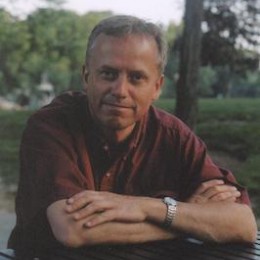
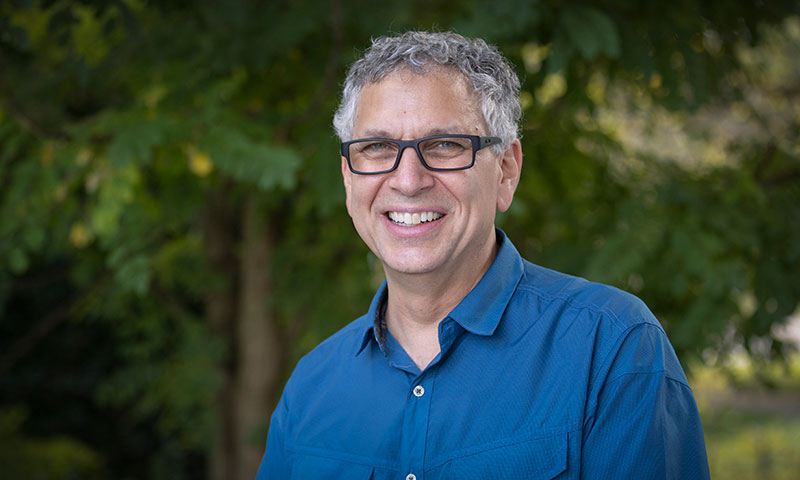
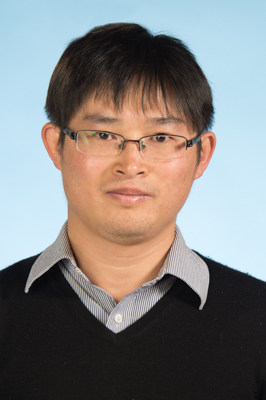
Avi Loeb , the Frank B. Baird Jr. Professor of Science at Harvard University, is a leading astrophysicist and former Chair of Harvard's Department of Astronomy (2011-2020). He directs the Institute for Theory and Computation (ITC) and the Galileo Project (2021-present), while holding the Sackler Senior Professorship at Tel Aviv University. His research spans cosmology, black holes, interstellar objects, and the search for extraterrestrial life. Education: PhD in Physics from Hebrew University of Jerusalem (1986) Former Positions: Member of the Institute for Advanced Study, Princeton (1988-1993) Loeb's research interests include: Gravitational wave detection and interstellar object analysis Simulation hypothesis and cosmic reality Technological signatures beyond the Standard Model His recent publications focus on 3I/ATLAS , gravitational SETI, and AI alignment in space exploration. Awards include being named among TIME's 25 Most Influential People in Space (2012), 14 Most Inspiring Israelis (2020), and ranking #3 in global astronomical impact (2024). He chairs the Breakthrough Starshot Initiative and advises the National Academies' Board on Physics and Astronomy.
Dawn Y. Sumner is a Professor in the Department of Earth and Planetary Sciences at the University of California, Davis. Her research focuses on geobiology, paleobiology, and planetary science, particularly reconstructing ancient environments on Earth and Mars. She is a key member of NASA’s Mars Science Laboratory team, contributing to the Curiosity rover’s exploration of Gale Crater on Mars. Sumner’s work integrates field studies, lab analyses, and interdisciplinary approaches to understand microbial life’s role in shaping Earth’s history and potential habitability on other planets. Education: Ph.D., Massachusetts Institute of Technology (1995). Research interests include microbialite formation, Antarctic lake ecosystems, and the evolution of oxygenic photosynthesis. She investigates modern microbial communities in ice-covered lakes (e.g., Lake Vanda) to understand ancient environments and their biosignatures. Her scientific awards include the California Academy of Sciences Academy Fellow (2020) and Geological Society of America Fellow (2014). Sumner emphasizes inclusive education and supports student success in STEM through feminist research practices. Labs/Teams: W.M. Keck Center for Active Visualization in the Earth Sciences (KeckCAVES), Antarctic Lake Research Group.
Frank Corsetti is a Professor of Earth Sciences at the University of Southern California (USC), leading the Corsetti Lab. His research focuses on the co-evolution of Earth and its biosphere, particularly during extreme events like the 'Snowball Earth' glaciation and mass extinctions. He holds a Ph.D. in Geological Sciences from UC Santa Barbara (1998) and a B.S. in Geology from UC Davis (1989). Research Interests: Corsetti studies geobiological processes such as stromatolite formation, microbial carbonate systems, and the environmental impacts of mass extinctions. His lab investigates biosignatures, diagenetic processes, and astrobiological applications. Current projects include the end-Triassic mass extinction and microbial interactions in extreme environments. Advising & Grants: He mentors a team of PhD students (including Reena Joubert, Alison Cribb, and others) and has secured funding from NASA for projects like stromatolite carbonate formation studies. His work bridges paleontology, geochemistry, and microbiology, contributing to understanding Earth’s long-term climate and life history. Labs/Teams: The Corsetti Lab at USC explores stromatolites, microbial mats, and ancient Earth systems. Collaborations involve institutions like JPL and international universities.
Professor Daniel Segrè is a faculty member at Boston University, holding the title of Professor of Biology, Bioinformatics, and Biomedical Engineering. His research focuses on systems biology, microbial ecology, and metabolic engineering, with an emphasis on understanding complex biological networks and their applications in bioenergy and biomedicine. Segrè leads the Segre Lab ( segrelab.bu.edu ), where theoretical and computational approaches are applied to study metabolism, microbial interactions, and synthetic biology. Segrè earned his PhD from the Weizmann Institute of Science, Israel. His work bridges fundamental science and applied engineering, addressing topics such as microbial community dynamics, metabolic pathway design, and environmental microbiome applications. Research Interests: Systems biology of metabolism, evolution of biochemical networks, microbial interactions, bioinformatics, and environmental microbiome engineering. His lab develops computational models (e.g., COMETS) to simulate microbial ecosystems and design synthetic microbial communities for climate change mitigation and bioenergy production. Teaching: Courses include BE 777 (Computational Genomics), BF 821 (Bioinformatics Seminar), and BF 571 (Dynamics and Evolution of Biological Networks). These courses reflect his expertise in integrating computational methods with biological systems analysis.
Kyle Bellucci Johanson serves as a Visiting Critic in Cornell University's College of Architecture, Art, and Planning, Department of Art. Holding an MFA from California Institute of the Arts and a BA in Art and Reconciliation Studies from Bethel University, he merges artistic practice with critical theory through performance architecture and collaborative media. Whitney Independent Study Program (2022–23) Founding fellow at land's edge free school (Los Angeles) Teaching experience at SAIC, UIC, CUNY, and Cooper Union His research investigates: Power structures through spatial interventions Critical theory applications in art practice Post-capitalist imaginaries Hauntology and historical materialism Transdisciplinary approaches to social critique Project trends reveal: Reinterpretation of Soviet design principles Investigation of worker identity in post-industrial contexts Temporal and spatial dislocation in artistic practice Monument critique through performative methods Quantum theory-inspired architectural concepts Reimagining of common spaces as political sites Scientific awards include: Creative Research Grant (2025) Whitney ISP participation (2022–23) Automata Studio Residency (2022) Artists Run Chicago Grant (2021) BOLT Residency (2020–21) Through projects like KLUB WRKR —a nomadic workers' club reimagined for the gig economy—and table (2018–2022), a Chicago-based experimental space for artistic practice, he interrogates institutional frameworks while fostering community through discursive meals and collaborative exhibitions.
Joshua Nall is the Director of the Whipple Museum of the History of Science at the University of Cambridge's Department of History and Philosophy of Science, a role he has held since 2022. Previously, he served as Curator of Modern Sciences at the same museum from 2013. His research focuses on the material culture and mass media of the physical sciences, particularly exploring how scientific instruments and media shaped modern astronomy and imperial science. He has curated major exhibitions like Astronomy and Empire (2017) and co-edited influential volumes such as Victorian Material Culture: Science and Medicine (2022). Nall's 2019 book News from Mars won the Philip J. Pauly Prize, analyzing how mass media influenced 19th-century astronomical debates about potential life on Mars. His work bridges museum curation, historical scholarship, and digital humanities, notably through projects like Tools of Knowledge , which used data analysis to study the British instrument trade. He is also a leading voice in forgery studies, examining counterfeit scientific artifacts. Key interests include the history of scientific instruments, British imperial astronomy, and the social dimensions of science communication. His collaborative work extends to exhibitions like Craftswomen: Uncovering Hidden Labour in the History of Science , which highlighted overlooked contributions of women in scientific craftsmanship.
Prof. Matt Pritchard is a Professor in Earth & Atmospheric Sciences at Cornell University, based at Snee Hall. His research focuses on volcanology, geodesy, and remote sensing, with a particular emphasis on using satellite data to monitor volcanic activity, deformation, and glacial interactions. He leads studies on global volcanic systems, including Indonesia's Semeru and Raung volcanoes, Chile's Cordón Caulle, and Bolivia's Uturuncu, applying techniques like InSAR, SAR, and thermal imaging. Key research interests include volcanic eruption dynamics, magma-hydrothermal systems, and the integration of multi-sensor datasets. He has contributed to developing tools like Hotspotter for automated volcanic thermal feature detection and has explored planetary volcanism (e.g., Venus). His work bridges geophysics, glaciology, and computational methods, addressing both Earth and extraterrestrial systems. Prof. Pritchard has received recognition such as the William Bowie Lecture (2022, 2023). His projects often involve international collaborations, including the CEOS Volcano Demonstrator initiative and the EarthDEM/ArcitcDEM projects. He also engages in geothermal energy research and seismic monitoring in Ithaca, NY.
Prof. Dr.-Ing. Elisabeth Clausen is a Professor and Director of the Chair and Institute for Advanced Mining Technologies at RWTH Aachen University. She holds key roles in the Specialist Group for Raw Materials and Disposal Technology, serves as a rectorate representative, and leads the Commission for EU Research Funding. Her research spans Underground mining automation Acoustic emission diagnostics Sustainable mining systems Space resource extraction Advanced sensor technologies Her recent publications focus on autonomous mining machinery, underground communication systems, and acoustic emission analysis across 15+ studies from 2013–2025, with particular emphasis on Ultra-wideband positioning Thermographic detection Crack monitoring in planetary gearboxes Explosive atmosphere safety Mineral processing diagnostics Digitalization trends Prof. Clausen contributes to mining education reform through initiatives like CDIO™ and has developed innovative learning spaces in underground mines. She coordinates international educational labs and integrates sustainability into mining engineering curricula, with publications on Adaptive ventilation systems Mining education frameworks Future-proof mineral extraction Entrepreneurial mindset in engineering
Niko Troje is a Professor at York University, affiliated with the Departments of Psychology, Biology, and Electrical Engineering & Computer Science. He holds cross-appointments and leadership roles, including Director of the BioMotion Lab. His research focuses on perceptual representations, biological motion, and vision science. Education: Ph.D. in Biology (1994) - Albert-Ludwigs Universität B.Sc. in Biology (1990), Physics & Mathematics (1987) - Albert-Ludwigs Universität Research Interests: Troje investigates how the brain processes biological motion, perception of human and animal movement, and applications in virtual reality. His work bridges neuroscience, psychology, and computer science. Key Contributions: Pioneered point-light displays for motion perception, explored gait analysis in mental health, and developed tools for motion capture and analysis (e.g., bmlTUX). Awards: Humboldt Research Prize (2014) NSERC Steacie Fellowship (2008-2009) Canada Research Chair (2003-2013) Grants & Labs: Led funded projects on movement perception, collaborated with institutions like the Max Planck Institute, and directs the BioMotion Lab at York University.
Ferran Garcia-Pichel is a Regents Professor and Center Director at Arizona State University’s School of Life Sciences, affiliated with the Biodesign Center for Fundamental & Applied Microbiomics, Center for Biodiversity Outcomes, Water Institute, and Global Drylands Center. He holds a PhD in Microbiology from the University of Oregon (1999) and has been a faculty member at ASU since 1999. His research focuses on microbial adaptations in arid environments, including biogeochemical cycling, soil crust formation, and sustainable land restoration. Key interests include cyanobacterial sunscreen compounds (scytonemin), carbonate dissolution mechanisms, and hydrogen production. Teaching responsibilities include advanced microbiology, microbial ecology, and geomicrobiology courses such as MBB 495 Undergraduate Research and BIO 493 Honors Thesis. Awards span from the 2021 Regents Professor distinction to the 2023 Sperry Award for restoration science. His lab explores interdisciplinary approaches to study microbial communities in desert soils, marine intertidals, and atmospheric dust, with applications in climate resilience and biomedicine. Research highlights include biocrust restoration strategies, microbial nitrogen fixation networks, and the role of GABA/Glu signaling in spatial organization. Collaborations address global challenges like fugitive dust mitigation and carbon sequestration. The lab is based at the Biodesign Building B on ASU’s Tempe campus.
Göran Ekström is the Newberry Professor of Earth and Environmental Sciences at Columbia University's Lamont-Doherty Earth Observatory. He holds joint affiliations with the School of Earth and Environmental Sciences and the Department of Earth and Environmental Sciences. Previously, he was a professor at Harvard University (1990–2006) before moving to Columbia. His research focuses on seismic wave analysis, earthquake mechanics, and environmental geophysics with notable contributions to understanding glacial earthquakes, volcanic processes, and nuclear explosion monitoring. Education: B.S. in Physics (Swarthmore College, 1981), Ph.D. in Geophysics (Harvard University, 1987). Postbaccalaureate studies at Moscow State University and postdoctoral work at Columbia University. He has served as chair of major organizations like the Incorporated Research Institutions for Seismology and EarthScope Steering Committee. Research interests span seismology, tectonophysics, and environmental geology. Notable achievements include discovering glacial earthquakes linked to Greenland ice dynamics and developing the Global Centroid Moment Tensor Project. His work integrates seismic data from global networks to study Earth’s interior structure and tectonic processes. Awards include the Beno Gutenberg Medal (2015) and election to the U.S. National Academy of Sciences (2019). He advises on geohazard monitoring and collaborates with international agencies for seismic treaty verification. Current projects include studies of mantle dynamics using surface-wave tomography and analysis of geophysical signals from extreme events like landslides and volcanic eruptions.
David Finkelstein is an Associate Professor in the Department of Geosciences at Hobart and William Smith Colleges, where he has been a faculty member since 2013. He earned his Ph.D. from the University of Illinois at Urbana-Champaign and holds advanced degrees from the University of Massachusetts, Amherst. His academic affiliations include prior roles as a Research Assistant Professor and Lab Manager at the University of Massachusetts and as an Assistant Professor at the University of Tennessee. Ph.D., University of Illinois at Urbana-Champaign M.S., University of Massachusetts, Amherst B.S., University of Massachusetts, Amherst Dr. Finkelstein's research centers on limnogeology and biogeochemistry , with a focus on the chemical evolution of lake systems, stable isotope geochemistry, and microbial life in extreme environments. His work integrates aqueous geochemistry, organic molecular analysis, and microbiological methods to reconstruct paleoenvironments and climate change across geological timescales, including the Holocene, Pleistocene, Cretaceous, and Triassic periods. He has extensively studied lake sediments, wildfires, and the environmental impacts of the 2010 Gulf of Mexico oil spill. His recent publications show a strong trend in using biogeochemical proxies and isotopic signatures to understand past climate variability, human-environment interactions, and extreme environmental conditions. His research often involves multidisciplinary collaborations and field-based studies in diverse regions such as Russia, Iran, and Central America. Dr. Finkelstein is actively involved in scientific communities, with affiliations including: International Association of Limnogeology American Geophysical Union Geological Society of America Geochemical Society SEPM (Society for Sedimentary Geology) He has advised numerous research projects and mentored students in geoscience, though specific names are not listed. His teaching includes courses such as Stable Isotope Geochemistry, Limnology, and Environmental Geochemistry, reflecting his expertise in both theoretical and applied aspects of earth sciences. Dr. Finkelstein has not received any explicitly listed scientific awards in the provided text, but his publication record in high-impact journals demonstrates significant scholarly contributions. He does not appear to lead a named laboratory or research center, but his work is deeply embedded in field and laboratory-based geochemical analysis.
Prof. Dr. Andreas Kappler is a Professor of Geomicrobiology at the University of Tübingen's Applied Geosciences department. He leads the Geomikrobiologie workgroup and holds an honorary professorship at Aarhus University. His research focuses on microbial interactions with iron, sulfur, and carbon cycles in environments ranging from permafrost thaw zones to ancient ocean analogs and extraterrestrial settings like Enceladus. Education: Ph.D. in Environmental Microbiology (2000, University of Konstanz) Diploma in Chemistry (1997, University of Konstanz) Postdoctoral work at Caltech (USA), EAWAG/ETH Zurich (Switzerland), and the Marine Biological Laboratory. Research Interests: His work explores microbial-driven mineral formation (e.g., pyrite, siderite), iron and sulfur biogeochemistry, permafrost thaw impacts on greenhouse gases, and ancient ocean geochemistry. He investigates how microbial processes shape Earth's element cycles and potential biosignatures for astrobiology. Key Contributions: Recent studies include iron-carbon interactions in thawing permafrost, nitrate-reducing Fe-oxidizing microbes, and microbial mineralization pathways under Enceladus-like conditions. His ERC-funded research examines Fe-oxidizing bacterial communities in modern/ancient systems. Awards & Recognition: Terry Beveridge Award (2012) ERC Starting Grant (2012) Fellow of the American Society of Microbiology Member of Akademie der Wissenschaften zu Göttingen Grants & Advising: Recipient of multiple grants including the prestigious ERC Starting Grant. Advises on microbial processes in extreme environments and collaborates internationally on astrobiology and climate change projects. Labs/Teams: Leads the Geomikrobiologie group at University of Tübingen, specializing in biogeochemical process analysis using state-of-the-art microscopy and geochemical techniques.
Dr. Maren Boese is a Senior Research Scientist at the Swiss Seismological Service (SED) and Seismology and Geodynamics (SEG) groups at ETH Zurich. Her expertise spans seismology, earthquake early warning systems, and planetary seismology. She leads projects like the CISN ShakeAlert system for California and contributed to NASA's InSight mission to Mars. She earned her Ph.D. from Karlsruhe Institute of Technology (2006) and a Master's from Kiel University (2002). Research Focus: Real-time seismic event detection, finite-fault rupture analysis, ground-motion simulation, and Marsquake seismology. Key contributions include developing the FinDer algorithm for the ShakeAlert system and advancing early warning methodologies in Central America and Switzerland. Awards: 2011: Outstanding Publication Award (Luxembourg National Research Fund) 2010: Ausgewählter Ort im Land der Ideen (BMBF Project EWS Transport) 2006: European IST Prize (Early Warning for Strong Earthquakes) Grants & Leadership: Led the CISN ShakeAlert team (2009–2014), managed the German CRC 461 project, and coordinated international collaborations like the InSight Marsquake Service. Labs/Teams: Swiss Seismological Service (ETH Zurich), NASA InSight Mission, and the CHEAP smartphone network project in Chile.
Associate Professor Fangbao Tian is a distinguished researcher and academic at UNSW Canberra's School of Engineering and Technology, where he also serves as Deputy Head of School for Research since July 2023. Previously, he held positions as Senior Lecturer (2017-2021) and Lecturer (2014-2017) at the same institution after completing postdoctoral research at Vanderbilt University. His academic journey began with a BSc (2006) and PhD (2011) in Theoretical and Applied Mechanics and Engineering Mechanics from the University of Science and Technology of China. Dr. Tian's research focuses on Computational Fluid Dynamics (CFD) tools for complex flows and fluid-structure interaction, with particular emphasis on bio-inspired applications. His work spans modeling laryngeal aerodynamics and vocal-fold vibration, fluid-structure interaction of plates in viscous fluid, fish swimming and insect flight, blood flow dynamics, and non-Newtonian flow phenomena. Recent work has expanded into Martian atmosphere aerodynamics, showing his research's growing interdisciplinary nature. His extensive publication record demonstrates consistent contributions across fluid dynamics, with recent trends showing increasing focus on compressible flows, bio-inspired flight systems, heat transfer applications, and computational methods like Lattice Boltzmann approaches. The research shows strong connections between fundamental fluid mechanics and practical applications in aerospace, biomedical engineering, and environmental systems. UNSW Canberra Goldstar Award 2022 IEEE Outstanding SMCS Chapter Award 2021 Outstanding Volunteer Award 2021 UNSW Canberra Silverstar Award 2018 UNSW Canberra Silverstar Award 2017 Journal of Fluids and Structures Highly Cited Research 2017 ARC DECRA 2016 Dr. Tian actively supervises PhD students across diverse topics including bushfire-enhanced wind loads, bio-inspired flight on Mars, flow control optimization, and fluid-structure interactions in compressible flows. He has secured over $5 million in external funding as Chief Investigator, including significant Australian Research Council projects examining Martian atmosphere aerodynamics, bio-inspired flapping wings, and cardiovascular flow modeling. His editorial roles include Associate Editor for Journal of Fluids and Structures and Scientific Reports, reflecting his standing in the fluid dynamics research community.