Dr. Dora Elia Musielak is a Research Professor in Mechanical and Aerospace Engineering at The University of Texas at Arlington. Her career spans over 20 years in aerospace research and academia, with expertise in high-speed propulsion, plasma rockets, and chaos theory. She holds a PhD from the University of Alabama Huntsville (1994) and is a NASA Fellow and AIAA Associate Fellow. Research interests include hypersonic scramjet engines, computational fluid dynamics, and heat transfer optimization. She has contributed to national projects like NASA Langley collaborations and led industry initiatives at ATK and Northrop Grumman. Awards include the NASA Graduate Research Fellowship and recognition from AIAA committees. Teaching focuses on propulsion systems, engineering analysis, and thermal sciences. She has organized international workshops and serves as Communications Chair for the AIAA High Speed Air Breathing Propulsion Technical Committee. Her leadership extends to STEM advocacy, including initiatives in Latin America and mentoring young engineers.
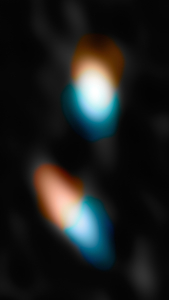
Eric L. N. Jensen is a Professor of Astronomy at Swarthmore College, where he also serves as Dean of Academic Success . He is affiliated with the Physics and Astronomy Department and the Environmental Studies Program , teaching courses such as Climate Change: Science and Responses and Introduction to Astronomy . Research Interests : Focus on extrasolar planets , particularly their formation in binary star systems Investigates disk misalignments in systems like HK Tau using ALMA and other observational tools Contributes to astrobiology through studies of habitability in dynamic stellar environments Article Trends : His recent publications (2022-2025) emphasize TESS mission discoveries, hot Jupiters , Neptune-desert planets , and disk dynamics in binary systems. Collaborative work spans ALMA surveys , radial velocity analysis , and circumstellar disk modeling . Labs and Teams : Uses the Peter van de Kamp Observatory for exoplanet follow-up observations Member of the TESS and KELT (Kilodegree Extremely Little Telescope) missions Collaborates with international teams on ALMA and CHEOPS projects Contact : Email ejensen1@swarthmore.edu for course materials, research collaborations, or planetary formation inquiries.
Samuel Turner is a Postdoctoral Research Associate at the Department of Applied Mathematics and Theoretical Physics (DAMTP) within the Faculty of Mathematics at the University of Cambridge. He previously completed his PhD in Astrophysics at the Institute of Astronomy, University of Cambridge (2019–2023). His research focuses on understanding accretion disc dynamics through stochastic modeling and high-energy astrophysical phenomena, including tidal disruption events and X-ray variability. Education: PhD in Astrophysics, Institute of Astronomy, University of Cambridge (2019–2023) Research Interests: Turner’s work centers on astrophysical accretion discs, utilizing stochastic methods to model their variability and structure. He investigates high-energy phenomena such as X-ray eruptions following tidal disruption events and explores the turbulent processes in accretion discs around compact objects. His studies also extend to white dwarf atmospheric pollution and the composition of accreted planetesimals. Publications: His recent works include groundbreaking studies on quasi-periodic X-ray eruptions linked to tidal disruption events and the development of 2D stochastic methodologies to simulate accretion disc fluctuations. These contributions highlight his expertise in combining theoretical models with observational data to advance understanding of astrophysical systems. Awards: No scientific awards listed. Advising and Grants: No advising roles or grants mentioned. Turner’s current position at DAMTP positions him within the Astrophysics research group, contributing to cutting-edge studies in high-energy astrophysics and accretion processes. Labs/Teams: Affiliated with the Astrophysics group at DAMTP, University of Cambridge.
John Papaloizou is a Professor of Mathematical Physics at the University of Cambridge’s Faculty of Mathematics, affiliated with the Department of Applied Mathematics and Theoretical Physics (DAMTP). His research focuses on astrophysical fluid dynamics, particularly the dynamics of astrophysical disks, planet formation, and the early evolution of planetary systems. He has held academic positions at the University of Cambridge since 2005 and previously at Queen Mary, University of London from 1988 to 2005. His work integrates advanced mathematical modeling with observational astrophysics, addressing fundamental questions about disk accretion processes, planetary migration mechanisms, and stellar magnetohydrodynamics. Key contributions include studies on protoplanetary disk instabilities, tidal interactions in exoplanetary systems, and the dynamics of supermassive black hole binaries embedded in accretion disks. Recent research trends in his publications emphasize the interplay between disk dynamics and planetary system evolution, including topics like vorticity generation in protoplanetary disks, energy dissipation mechanisms at disk boundaries, and orbital resonances in multi-planet systems. His collaborative projects often involve numerical simulations and analytical solutions to complex fluid dynamical problems. Papaloizou’s group hosts active PhD programs and welcomes international researchers, with recent highlights including studies on red giant star oscillations and solar interior dynamics. His work contributes to the DAMTP Astrophysics Group’s broader mission to bridge theoretical frameworks with observational astrophysics.
Andrew Cumming is an Associate Professor in the Department of Physics at McGill University and a member of the Trottier Space Institute. His research focuses on stellar astrophysics at extreme conditions, including neutron stars, white dwarfs, and exoplanets. He has held roles such as Associate Director of the McGill Space Institute (2015–2022) and has been affiliated with institutions like the CIFAR Cosmology and Gravity Program, the Centre de Recherche en Astrophysique du Québec (CRAQ), and the JINA Center for the Evolution of the Elements (JINA-CEE). Affiliations: McGill University, Trottier Space Institute, CRAQ, iREx, JINA-CEE Education: PhD in Physics, University of California, Berkeley (2000) Bachelor's degree, University of Cambridge Research Interests: Neutron star magnetic field evolution and interiors White dwarf crystallization and dynamos Exoplanet formation and structure Thermonuclear bursts and accretion processes Convection in dense stellar interiors Publications: Focus on topics like neutron star crust cooling, magnetar outbursts, and planetary dynamics. Recent work includes crystallization-driven dynamos in white dwarfs and convective entrainment in gas giants. Awards: Alfred P. Sloan Research Fellowship (2006) John David Jackson Award for Excellence in Teaching (2009) Teaching & Advising: Supervises graduate students in neutron star astrophysics and exoplanet research. Teaches courses like Astrophysical Fluids (PHYS 643) and Radiative Processes in Astrophysics (PHYS 642). Labs/Teams: Active in computational astrophysics and collaborates on projects like the SPIRou Legacy Survey and MESA stellar simulations.
Eugene Chiang is a Professor of EPS and Astronomy at the University of California, Berkeley. His research focuses on theoretical astrophysics, particularly planetary system formation and evolution across both extrasolar and Solar System contexts. Key areas include planetary dynamics, ring systems, protoplanetary disks, and Kuiper Belt studies. His current projects involve: Investigating extra-solar planetary dynamics through gravitational interactions and orbital evolution Analyzing planetary ring structures and their dynamical drivers Modeling protoplanetary disk thermodynamics across multiple wavelengths Leading a 3-year observational census of Kuiper Belt Objects using Kitt Peak and Cerro Tololo telescopes Dr. Chiang's recent publications (2022-2025) demonstrate ongoing work in: Planetary disk interactions and spiral arm formation Debris disk morphology and detection methods Thermal instabilities in planetesimal formation Stellar obliquity and resonance locking Atmospheric evolution modeling Kuiper Belt in-situ formation theories Contact: echiang@astro.berkeley.edu | Office: Hearst Field Annex B-20
David Charbonneau is the Fred Kavli Professor of Astrophysics at Harvard University with an appointment at the Harvard-Smithsonian Center for Astrophysics. Charbonneau's research focuses on detecting and characterizing extrasolar planets, particularly habitable worlds around nearby stars. His work develops novel ground and space-based instrumentation for studying exoplanet atmospheres and compositions. Publications demonstrate emphasis on terrestrial exoplanet detection and atmospheric characterization, with recent work identifying promising targets for transmission spectroscopy studies. As Admissions Director for Astronomy, he oversees graduate student recruitment and maintains the list of recommended research advisors for doctoral candidates.
Dr. Pia Cortes Zuleta is a Research Fellow in Astrophysics (Extrasolar Planetary Science) at the School of Physics and Astronomy, University of St Andrews. She specializes in exoplanet detection and characterization, particularly focusing on planets around M dwarf and K dwarf stars. Her work employs advanced observational techniques such as radial velocity measurements and photometric analysis using instruments like SOPHIE, SPIRou, and CHEOPS. Her research interests include: Stellar activity effects on exoplanet detection Characterization of planetary systems around binary stars High-precision mass and radius measurements of exoplanets Stellar parameterization for exoplanet host stars Recent work trends show a focus on: Super-Earth and sub-Neptune detection in nearby M dwarf systems Eccentric planetary orbits in K dwarf systems Circumbinary planet dynamics Stellar activity monitoring using optical and near-infrared spectroscopy No scientific awards or grants are explicitly mentioned in the provided texts. She contributes to collaborative projects such as the BEBOP and EBLM initiatives. Laboratory/Team Affiliation: Part of the School of Physics and Astronomy's Astrophysics research group, collaborating with international teams on projects involving exoplanet detection and stellar characterization.
Charles Cadieux is a Postdoctoral Researcher at the Trottier Institute for Research on Exoplanets (IREx) at the University of Montreal since March 2025. He completed his PhD in astrophysics at the same institute under René Doyon’s supervision between 2020 and 2025. His research focuses on developing data analysis tools for the James Webb Space Telescope (JWST), particularly using the NIRISS instrument to study exoplanet transmission spectra and atmospheric composition. Key projects include analyzing LHS 1140 b (a super-Earth in the habitable zone) and revealing potential nitrogen-rich atmospheres, contributing to evidence about water-rich 'ocean worlds' around M-type stars. He collaborates with the NIRPS consortium to measure exoplanet masses in the solar neighborhood. His work bridges transit and radial velocity methods, emphasizing planetary structure and atmospheric diversity. He has contributed to the SPIRou Legacy Survey, analyzing M dwarf stars and planetary systems. His findings highlight the prevalence of volatile-rich exoplanets and migration patterns. His publications span JWST analysis, SPIRou instrumentation, and exoplanet atmospheric characterization.
Patrick Dufour is a Professor at the University of Montreal specializing in white dwarf astrophysics. His research focuses on the study of white dwarf atmospheres, combining theoretical atmospheric models with observational data from spectroscopic and photometric studies. He investigates the presence of heavy elements in white dwarfs, which indicate accretion of planetary debris from tidally disrupted rocky bodies. His work provides insights into extrasolar planetary system composition and evolution. Dufour supervises graduate students like Érika Le Bourdais and has advised former student Maude Fortier-Archambault (MSc 2019). He collaborates on missions like CASTOR and uses advanced instrumentation such as JWST and HST. His research highlights unique opportunities to study exoplanetary material through polluted white dwarfs. Key areas of expertise include stellar spectroscopy, planetary debris analysis, and machine learning applications in astrophysics. Over 100 peer-reviewed articles document his contributions, emphasizing interdisciplinary approaches to understanding planetary system formation and evolution.
Katharina Lodders is a Research Professor in the Department of Earth, Environmental, and Planetary Sciences at Washington University in St. Louis, affiliated with the McDonnell Center for the Space Sciences. Her research focuses on solar system element abundances, gas/dust condensation chemistry in astronomical environments, and planetary formation processes. She conducts experimental and theoretical studies in planetary science and cosmochemistry, collaborating with Bruce Fegley in the Planetary Chemistry Laboratory. Education: Ph.D. from Johannes Gutenberg-Universität and Max-Planck-Institut für Chemie in Mainz, Germany. Research interests include elemental composition of the solar system, star dust formation in cool stellar atmospheres, chemical processes in accretion disks, meteorite parent body formation, and planetary accretion/differentiation. Her work also addresses chemical thermodynamics in stellar environments such as extrasolar planets and brown dwarfs. Labs/Teams: Planetary Chemistry Laboratory (collaboration with Bruce Fegley).
Dr. Simon O'Toole is Head of RDS (Data) at Macquarie University, affiliated with the Australian Astronomical Optics, Future Communications Research Centre, Astrophysics and Space Technologies Research Centre, and Data Horizons Research Centre. With over two decades of experience in astronomical research and data systems, he maintains an active research program with numerous publications and substantial grant funding. His educational background includes a PhD in Physics from the University of Sydney (1999-2002) with thesis research on "Time-series spectroscopy of pulsating hot subdwarfs." Prior to his current position, he served as an Astronomer/IT at the Australian Astronomical Observatory (2005-2018) and as an Astronomer at the University of Erlangen-Nuremberg (2002-2005). O'Toole's research spans multiple domains with primary focus on exoplanet detection through radial-velocity methods and astrometry. His work encompasses extrasolar gas giants, binary star systems, spectrograph development, and virtual observatories. Notably, he has recently expanded into interdisciplinary research with projects related to hearing loss support services, demonstrating unusual breadth across astronomy and healthcare applications. His recent publications (2024) reveal a strong trend toward astronomical data processing pipelines, exoplanet discovery through combined radial-velocity and astrometric techniques, and unexpected expansion into healthcare applications. His work bridges traditional astronomy with modern data science approaches, particularly evident in his LSST pipeline development and AAO Data Central projects. O'Toole currently leads multiple significant research projects including IDEAS 23: HearHealth (2024-2026), Vera Rubin Observatory/LSST Macquarie University contributions (2023-2026), ADC11: AAO Data Central (2023-2027), LE23 ANU Led: Explosive Astrophysics (2023-2024), and previous ADC8 project (2021-2023). These projects demonstrate substantial grant funding and collaborative research across multiple institutions. He is actively involved with the Australian Astronomical Optics group and contributes to major international astronomical initiatives including the Vera Rubin Observatory. His technical expertise in data systems positions him at the intersection of astronomical research and modern data science infrastructure, with growing influence in both traditional astronomy domains and unexpected interdisciplinary applications.
Gaspar Bakos is a Professor of Astrophysical Sciences at Princeton University, where he conducts pioneering research on extrasolar planets, instrumentation, and variable phenomena on the sky. As Principal Investigator of the HATNet and HATSouth projects, he has led teams that discovered over 125 transiting exoplanets across multiple international sites. His work has established him as a leading figure in exoplanet discovery and characterization. Dr. Bakos's primary research interests include: Transiting extrasolar planets and their characterization Instrumentation, particularly small telescope networks Time-domain astronomy and all-sky surveys Massive variability searches and bright variable stars Automated telescopes and observatories His recent publications reveal a strong focus on transiting exoplanet systems, including the discovery and characterization of hot Jupiters, multi-planet systems, and exomoons. His work often involves large international collaborations and utilizes data from both ground-based and space-based observatories. The HATSouth project, operating telescopes across three continents, represents a significant advancement in global astronomical survey capabilities, while his HATPI project aims to monitor the entire sky visible from Chile at high cadence and precision. Dr. Bakos has received numerous prestigious awards for his contributions to astronomy: Packard Fellowship for Science and Engineering (2012) Alfred P. Sloan Research Fellow (2012) Muhlmann Award of the Astronomical Society of the Pacific (2011) Newton Lacy Pierce Prize of the American Astronomical Society (2010) As an advisor, Dr. Bakos has mentored numerous graduate students, postdoctoral fellows, and undergraduate researchers. His projects have secured significant telescope time allocations from major observatories worldwide, including Keck, Subaru, and the ANU 2.3m telescope. He has also emerged as a prominent advocate for preserving the night sky, leading an international petition against light pollution from satellite constellations like SpaceX's Starlink, which has garnered widespread attention in both scientific and public spheres. Dr. Bakos directs the HATSouth project, which operates telescopes at three sites in the Southern hemisphere (Chile, Namibia, Australia), creating a continuous monitoring capability. His recent work on satellite light pollution has positioned him at the intersection of astronomy, environmental preservation, and public policy, demonstrating his commitment to addressing contemporary challenges facing observational astronomy.
Brad Hansen is a Professor of Physics and Astronomy at the University of California, Los Angeles (UCLA), affiliated with the Mani L. Bhaumik Institute for Theoretical Physics. He holds a Ph.D. from the California Institute of Technology (1996) and undergraduate and high school degrees from institutions in Durban, South Africa. His research focuses on theoretical astrophysics, particularly extrasolar planets, white dwarfs, neutron stars, and black holes. Hansen has advised numerous graduate students, including current students Grant Weldon and Neel Nagarajan, and has contributed to groundbreaking studies on planetary dynamics, stellar evolution, and exoplanet formation. His work explores topics such as in situ planet assembly, debris disk dynamics, and the survival of planets around evolved stars. Hansen has led or co-authored numerous high-impact publications, including studies on resonant chain disruption in protoplanetary systems and the dynamics of extrasolar moons. Education: Ph.D., 1996, California Institute of Technology Undergraduate: University of Natal, Durban High School: St. Henry's College, Durban Research Interests: Hansen's work spans theoretical astrophysics, with a focus on exoplanet dynamics, planetary formation, and stellar evolution. His projects include modeling in situ assembly of rocky planets, studying white dwarf pollution via asteroid scattering, and investigating neutron star-black hole interactions. Recent efforts explore the survival of technological civilizations under stellar evolution and the dynamics of hierarchical triple systems. Key Contributions: Developed models for exoplanetary satellite formation via pulldown capture. Explored secular dynamics of giant planet systems and their moons. Advanced understanding of white dwarf cooling and cosmochronology. Co-led studies on debris disks from extrasolar irregular satellites and migration in protoplanetary systems.
Anne-Sophie Libert is a Professor in the Department of Mathematics at the University of Namur since 2018. She has served as Director of the Namur Institute of Complex Systems (naXys) since 2017 and contributes to the Intensive Computing Technology Platform (PTCI) management committee since 2015. Her work bridges applied mathematics and astrophysics. Doctorate in Science (University of Namur, 2007) Master of Mathematical Sciences (FUNDP, 2004) Her research focuses on extrasolar system dynamics , combining celestial mechanics with machine learning to study planetary formation, resonance effects, and habitability. Key projects include CAML (2021-2026) for machine learning applications and 4Body (2024-2026) for planetary stability analysis. Her work also explores complex networks and symplectic integrators in dynamical systems. Scientific contributions are reflected in her 2017 Nature Astronomy paper on exoplanet metrics and 2013 Celestial Mechanics article extending Laplace-Lagrange theory. She has been recognized with the Agathon de Potter Prize (2015) and FNRS fellowships. Agathon de Potter Prize (2015) FNRS Post-doctoral Fellowship (2008) FNRS Research Fellowship (2004) As a PhD advisor, she supervised Sotiriadis' thesis on non-coplanar planetary systems (2017). She contributes to ESA's CHEOPS and PLATO missions and collaborates internationally on planetary dynamics.