Roger Close is a Royal Society University Research Fellow affiliated with the University of Oxford. His research focuses on paleobiology, biodiversity dynamics, and evolutionary patterns across geological time scales. Research Interests : Paleobiology, Biodiversity, Evolutionary Biology, Fossil Record Analysis, Sampling Bias in Extinction Studies His recent work explores spatiotemporal diversity patterns in marine animals and tetrapods, addressing sampling biases in fossil record interpretations. Publications span topics from Phanerozoic biodiversity gradients to post-mass extinction recovery mechanisms. Scientific Awards : Royal Society University Research Fellowship
Kevin Paul Johnson is a Principal Ornithologist at the Illinois Natural History Survey and an affiliate in the Department of Entomology at the University of Illinois Urbana-Champaign. His research focuses on the coevolutionary dynamics between birds and their ectoparasitic lice, integrating micro- and macroevolutionary processes. He holds a PhD in Ecology (1997) from the University of Minnesota and a BS in Biology (1991) from Bethel College. Recent work includes studies on louse phylogeny, avian biogeography, and genomic adaptations in host-parasite systems. Research Interests Host-parasite coevolution Phylogenetic analysis of lice Avian biogeography Genomic adaptations in parasites Metagenomic interactions Molecular systematics Recent Research Trends : His 2025 publications emphasize integrative approaches combining phylogenetics, genomics, and biogeography across diverse systems—from Cretaceous bird-lice interactions to modern Columbidae-parasite dynamics. Key themes include adaptive radiation, host grooming behavior, and microbial symbiont diversity. Collaborations : Active in international collaborations, with recent work involving institutions in the U.S., China, and Spain. His datasets are publicly archived at the University of Illinois Urbana-Champaign.
Thomas Plummer is a Professor at Queens College, City University of New York (CUNY), specializing in hominid paleontology and Oldowan archaeology. His research focuses on reconstructing the behavior and ecology of extinct hominids, with a particular emphasis on the Oldowan stone tool industry. He is affiliated with the CUNY Advanced Research Collaborative and leads fieldwork on the Homa Peninsula in Kenya, investigating late Pliocene and Pleistocene sites like Kanjera South. Plummer earned his Ph.D. in 1991 from Yale University. His work integrates paleoecology with archaeological analysis to understand adaptive shifts in hominids, such as the emergence of bipedalism and stone tool use. Key projects include excavations at Kanjera South, yielding significant Oldowan artifacts and faunal remains. His research interests span hominid behavior, early stone tool technology, vertebrate paleontology, and human osteology. He teaches courses on human evolution, biological anthropology, and faunal analysis. Plummer has received the CUNY Advanced Research Collaborative award, recognizing his contributions to interdisciplinary research. Publications highlight his expertise in Oldowan technology, paleoenvironmental reconstruction, and the analysis of bone modification patterns. Collaborative efforts with institutions like the Smithsonian and international researchers underscore his global impact in paleoanthropology.
Fernando Villanea is an Assistant Professor at the University of Colorado, specializing in population genetics with a focus on human pre-history. His research investigates Neanderthal-human admixture and the adaptive roles of archaic genetic variants in modern populations, particularly in the Americas. He holds a Ph.D. from Washington State University (2016). Dr. Villanea’s work combines ancient and modern DNA analysis with computational models to explore demographic histories and evolutionary processes. His lab studies archaic introgression impacts on human adaptation, including how Neanderthal and Denisovan genes influenced traits in American populations. He emphasizes ethical research practices, particularly collaboration with Indigenous communities in genomic studies. Key research areas include: (1) genomic methods for tracing archaic admixture, (2) genetic diversity in pre-Hispanic populations, and (3) evolutionary forces shaping human and non-human species (e.g., sweat bees). His 2024 study on MUC19 gene evolution highlights recurrent introgression events, while 2023 work addresses pharmacogenetic implications of archaic variants. Labs/Teams: Fernando Villanea’s Lab at the University of Colorado Grants/Advising: Advises graduate and undergraduate students in Boulder, CO, focusing on population genomics and evolutionary methods.
Rachel Reid is a Research Assistant Professor in the Department of Geosciences at Virginia Polytechnic Institute and State University (Virginia Tech), located in the College of Science. Her work focuses on integrating isotope geochemistry, paleoecology, and archaeological science to understand environmental and ecological changes across deep time and human history. She specializes in using stable isotopes (carbon, nitrogen, oxygen) from biological materials (e.g., bone, teeth, guano, plant remains) and geological samples (e.g., black shales, carbonate clasts) to reconstruct past climates, dietary patterns, and environmental dynamics. Her research spans multiple disciplines including archaeology, paleontology, and biogeochemistry. Notable areas of focus include: Isotopic analysis of ancient agricultural practices and domestication patterns Environmental reconstruction using bat guano and coprolite records Provenance studies of glacial deposits to understand Neoproterozoic glaciation events Biogeochemical drivers of early eukaryotic evolution and mass extinctions Recent work highlights innovative applications of faecal isotope analysis for both archaeological and modern ecological studies, as well as interdisciplinary approaches to understanding plant evolution and paleoclimates. Her work frequently integrates field data with laboratory-based geochemical analyses and computational modeling. Publications demonstrate a strong focus on: Prehistoric human-environment interactions in East Asia Neoproterozoic ocean chemistry and glacial cycles Trophic level analysis using modern and ancient predator species Root-soil interactions in carbon sequestration Rachel's research bridges earth sciences and life sciences, addressing fundamental questions about Earth's environmental history and human adaptation. She currently holds a primary appointment in the Department of Geosciences at Virginia Tech and collaborates with institutions globally on paleoenvironmental reconstruction projects.
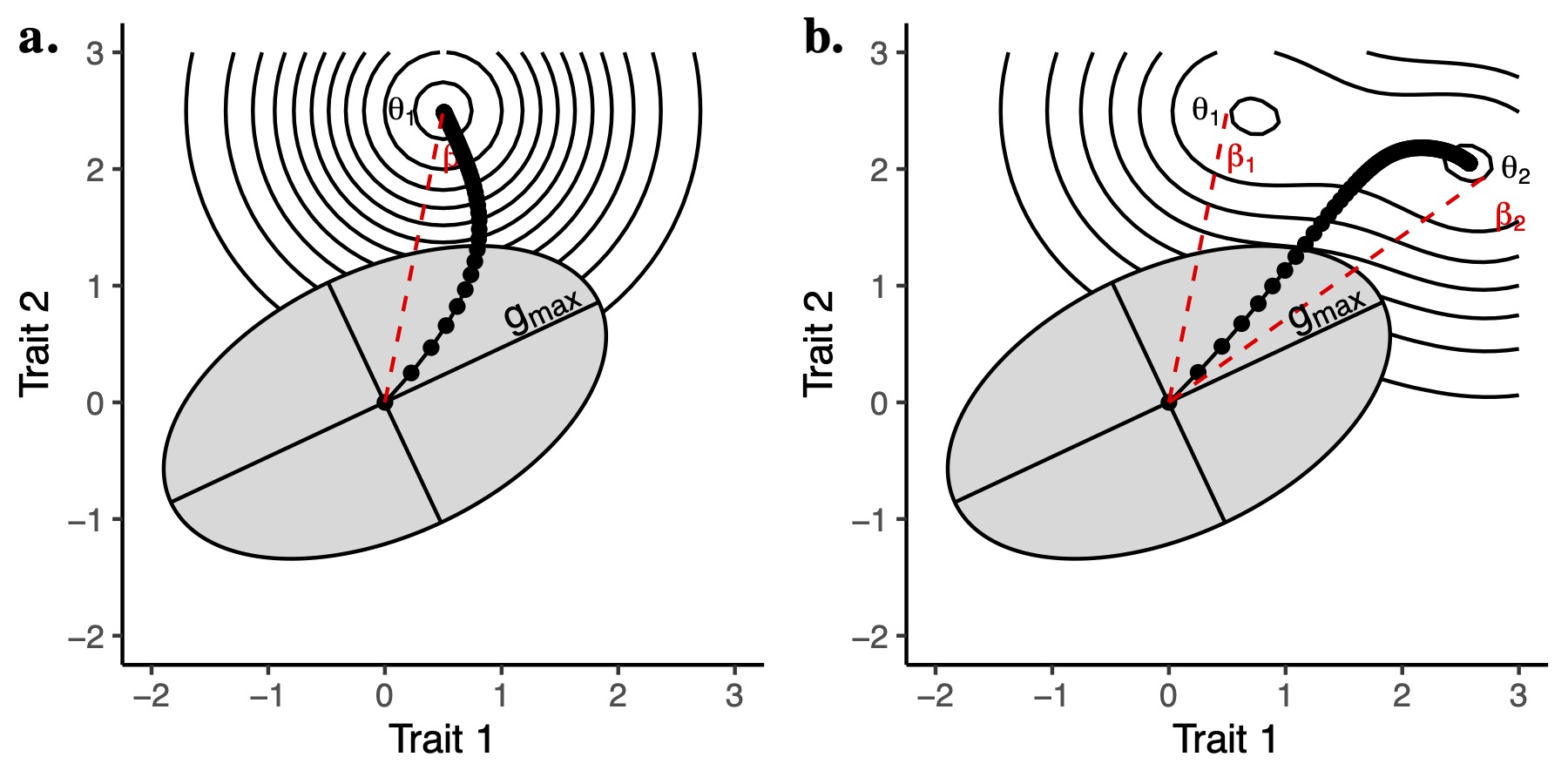
Fabio Machado is an Assistant Professor in the Department of Integrative Biology at Oklahoma State University , where he leads the Evolutionary Morphology and Morphometrics Lab (EMORPH2) . His research focuses on integrating anatomy, function, genetics, and development to study large-scale patterns of diversification in mammals and other vertebrates. Key Research Areas: Evolutionary morphology, geometric morphometrics, quantitative genetics, phylogenetic comparative methods, species taxonomy. Teaching: Courses include Mammalogy , Practicum in Natural History Collections , and Research in Zoological Collections , emphasizing specimen handling, evolutionary theory, and data quality. Lab & Collections: He curates the Collection of Vertebrates (COV) at OSU, which houses diverse specimens for evolutionary studies. His lab develops tools like PCMKappa for phylogenetic modeling and EvolQG for quantitative genetics analysis. Publications: Recent work includes studies on Himalayan wolf differentiation, auditory adaptations in rodents, body-shape evolution in dragonfish, and taxonomic revisions of maned sloths and Amazonian river dolphins. His research highlights the interplay of directional selection, genetic constraints, and developmental rules in shaping morphological diversity. Current Students: Mentors Simran Baruwal , a PhD student in the EMORPH2 Lab.
David C Houston is an Honorary Senior Research Fellow at the University of Glasgow's School of Biodiversity, One Health & Veterinary Medicine. His research focuses on avian biology, conservation biology, and ecological energetics, with a particular emphasis on scavenger behavior, thermoregulation, and reproductive strategies in birds. He has contributed to endangered species conservation efforts, including work with the Kakapo Recovery Team in New Zealand. Houston has also served on advisory boards for organizations like Scottish Natural Heritage and Fauna & Flora International. His research interests span avian physiology, ecological adaptations, and the impacts of environmental factors on wildlife. Notable studies include investigations into vulture plumage adaptations, nutritional strategies in endangered species, and the energetic models of scavenging behavior. Houston has collaborated internationally, presenting at conferences on vulture conservation and contributing to government workshops addressing ecological crises like vulture population declines in India. His work integrates field studies, experimental research, and theoretical models to address questions in conservation biology, evolutionary ecology, and animal behavior. Over 27 peer-reviewed publications reflect his expertise in avian biology, with recent contributions analyzing thermoregulatory adaptations, dietary constraints in gulls, and the ecological roles of scavengers.
Appy Sluijs is a Professor of Paleoceanography at Utrecht University's Department of Earth Sciences, Faculty of Geosciences. He leads the Marine Palynology and Paleoceanography research group, focusing on reconstructing past climate and ecological changes during high CO₂ periods. His work integrates micropaleontological and geochemical methods to study greenhouse Earth systems. He holds an ERC Consolidator Grant (2017) and previously received an ERC Starting Grant (2010) and the Heineken Young Scientists Award (2010). Sluijs has advised numerous PhD students and collaborates internationally via programs like the International Ocean Discovery Program (IODP). His research examines sediment cores from ocean floors to understand climate chain reactions, such as those linked to the Paleocene-Eocene Thermal Maximum. Education: PhD (cum laude, 2006) in Palaeoecology, Utrecht University MSc in Biology, Utrecht University and UC Santa Cruz (2003) Key Research Interests: Paleoceanography, climate change, ocean acidification, dinoflagellate biogeology, and reconstructing past CO₂ impacts. His recent work develops dinocyst proxies to study marine carbon cycling. He studies core samples from IODP expeditions to explore past climate tipping points. Awards & Grants: ERC Consolidator Grant (2017) ERC Starting Grant (2010) Heineken Young Scientists Award (2010) Vening-Meinesz Award (2010) Advising & Labs: Supervises PhD candidates like Carolien van der Weijst and Margot Cramwinckel. His lab focuses on interdisciplinary marine science collaborations with the Royal Netherlands Institute for Sea Research (NIOZ). He also engages in educational outreach through projects like Tippingpoint Ahead for high-schoolers.
Stephen A. Smith is a Professor and Director of the Program in Biology at the University of Michigan's Department of Ecology and Evolutionary Biology. He leads research in phylogenetics, computational evolutionary biology, and biogeography, focusing on plant evolution and methodological advancements. His lab develops tools like PyPHLAWD and phyx for phylogenetic analysis and has contributed to understanding plant diversification, genome duplications, and global biogeography. Education : Ph.D. in Evolutionary Biology (Yale University, 2008), M.S. in Evolutionary Biology (Yale, 2005), B.A. in Liberal Arts (Sarah Lawrence College, 2003). Teaching : Courses on Evolution and Phylogenetic Methods and Theory. Research Interests : Plant evolution, phylogenomics, computational methods, and biogeography. His lab explores topics such as Caryophyllales diversification, whole-genome duplications, and the impact of climate on speciation. Notable projects include the Ericales phylogenomics initiative with the University of Florida and the development of AI-driven specimen analysis tools like LeafMachine2. Awards : 2024 AAAS Fellow for contributions to phylogenetics and plant evolutionary studies. Advising & Grants : Supervises graduate students and postdocs, including work on transcriptomics and biodiversity conservation. Collaborates on NSF-funded projects exploring plant chemistry, paleopolyploidy, and evolutionary transitions. Labs & Resources : Director of the Smith Lab at U-M, contributing to the Biological Sciences Building. Engages with the Program in Biology and Department of Computational Medicine and Bioinformatics.
Prof. Jochen Krauss is a Professor for Animal Ecology at the University of Würzburg, Germany, affiliated with the Department of Animal Ecology and Tropical Biology at the Biocenter. His research focuses on community and population ecology, conservation biology, and landscape ecology, with specific interests in biotic interactions, endophytic fungi, and habitat fragmentation. He leads projects on ecological compensation areas, global change impacts, and pollinator conservation. Krauss has held academic roles since 2010, including interim professorships and research leadership in collaborative projects like SCALES and SAFEGUARD. He serves on editorial boards for journals such as Landscape Ecology and Basic and Applied Ecology . Education: PhD in Agroecology (University of Göttingen, 2003), Habilitation in Ecology (University of Bayreuth, 2010). Key Projects: DFG-funded studies on endophyte toxicity, EU-funded SAFEGUARD pollinator project, and 'Rettet Rosi' conservation initiative. Research Themes: Effects of climate change, land-use intensity, and ecological interactions on biodiversity. His work spans from local habitat management to large-scale landscape dynamics, emphasizing practical conservation strategies. Krauss collaborates internationally on topics like trophic cascades and ecological resilience, contributing to over 100 peer-reviewed articles.
Professor Michael Chadwick is a faculty member in the Department of Geography at King’s College London, part of the School of Global Affairs within the Faculty of Social Science & Public Policy. He holds the academic rank of Professor of Ecology and Environmental Science. His primary research interests focus on aquatic ecology, ecosystem function, and biodiversity, with a particular emphasis on macroinvertebrates and fish in response to environmental changes. Chadwick’s work integrates applied and theoretical approaches to address challenges in freshwater and marine systems, including urban rivers, invasive species, and climate impacts. Education: BSc in Environmental Science, Cook College, Rutgers University MS in Zoology, Auburn University PhD in Ecology and Environmental Science, University of Maine Postdoctoral Research at the University of Alabama and University of Plymouth Research Interests: Chadwick’s research spans aquatic ecosystems, including rivers, estuaries, and urban waterways. He investigates how biotic and abiotic factors—such as nutrient dynamics, habitat restoration, and human activities—affect ecosystem structure and function. Current projects include studies on London’s urban rivers, biodiversity conservation, and the reintroduction of extinct species like the burbot. His work also employs remote sensing and low-cost sensor technologies to monitor environmental changes, particularly in East African lakes and Chinese river systems. Grants & Projects: CONNECT: Connecting Multiple Stressors to Freshwater Ecosystem Dynamics (2015–2019) Land gradation and tropical peatland fires (2016–2018) Citizen Science Flood and Drought Sensor Networks (2015) Lab & Collaborations: Chadwick collaborates with interdisciplinary teams through King’s Water Centre and the Earth Observation and Environmental Sensing Hub. His research often intersects with global environmental challenges, contributing to UN Sustainable Development Goals related to clean water, climate action, and biodiversity.
Márton Rabi is a researcher and lecturer in the Department of Geosciences at the University of Tübingen, Germany, within the Faculty of Science. He is actively engaged in paleontological research and teaching, focusing on fossil reptiles and mammals from key Eocene fossil sites such as Geiseltal, Messel, and the Green River Formation. His work integrates systematics, divergence dating, and paleoecology to explore macroevolutionary patterns and their implications for conservation biology. Education: PhD in Geosciences (Palaeontology), University of Tübingen, Germany (2014) Diploma (M.S.) in Geology, Eötvös Loránd University, Budapest, Hungary (2009) His research interests center on the evolutionary history, systematics, and biogeography of fossil reptiles—especially turtles and crocodylians—and mammals. He investigates how physical and biological factors drive macroevolution, using exceptionally preserved fossils to reconstruct phylogenies and paleoenvironments. His work often bridges paleontology with modern conservation efforts through the lens of 'conservation paleobiology.' The trends in his recent publications reveal a strong focus on the phylogeny and biogeographic history of Crocodylia and Testudines, with recurring themes in fossil Lagerstätten, divergence dating, and morphological evolution. He frequently employs total-evidence approaches and integrates fossil data with molecular datasets to refine evolutionary timelines. His work spans Europe, Asia, and North America, reflecting a broad geographic and taxonomic scope. Scientific Awards and Fellowships: Marie Curie-Train2Move Research Fellowship VW Stiftung Postdoctoral Research Fellowship Humboldt Foundation postdoctoral project (as host and co-leader) Márton Rabi has supervised numerous MSc and PhD students and currently co-supervises several doctoral projects funded by the DFG and international institutions. He has secured significant research grants, including a DFG-funded project on early Crocodylia and collaborative work with the University of Turin. He is also involved in designing and hosting postdoctoral fellowships, demonstrating leadership in academic mentoring and research collaboration. He is affiliated with the Biogeology Workgroup at the University of Tübingen and maintains a guest researcher role at the Central Natural Science Collections, Martin-Luther University, Halle (Saale), Germany, where he continues collaborative research on Cenozoic reptiles.
Professor Emily Rayfield is a Professor of Palaeobiology at the University of Bristol's School of Earth Sciences. Her research focuses on biomechanics, functional morphology, and evolutionary processes in vertebrate and invertebrate fossils. She uses advanced techniques like finite element analysis and computed tomography to study anatomical adaptations in extinct species. Rayfield holds a B.A. from the University of Oxford (Oxon) and a Ph.D. from the University of Cambridge (Cantab.). Her work bridges paleontology with engineering and computational methods, addressing questions about how form and function evolve across major transitions, such as the fish-to-tetrapod transition. She collaborates with experts in biomechanics, geology, and computer science to reconstruct ancient ecosystems and organismal behaviors. Key projects include analyzing jaw mechanics in dinosaurs, pterosaurs, and early mammals, as well as investigating the ecological drivers of morphological diversification. Rayfield’s contributions extend to methodological advancements, including the validation of finite element models and the application of artificial intelligence in fossil analysis. She is affiliated with the Life Sciences Building in Bristol and maintains active research partnerships with institutions globally. Her research has implications for understanding evolutionary innovation, biomechanical constraints, and the interplay between form and ecology in deep time.
Professor Mike Benton is a leading expert in vertebrate paleontology at the University of Bristol's School of Earth Sciences. His research focuses on dinosaur evolution, mass extinctions, and the interplay between environmental change and biological innovation. He holds academic titles including OBE, FRS, and FRSE. His work spans large-scale evolutionary patterns, fossil record analysis, and the recovery of life post-mass extinctions. Education: B.Sc. from Aberystwyth University and Ph.D. from Newcastle University. His lab, the Benton Lab, specializes in macroevolutionary studies using computational tools, with a focus on dinosaurs, reptiles, and birds. Current projects include exploring the impact of mass extinctions and the evolution of feathers and color in archosaurs. Research Interests: Vertebrate diversity and disparity through geological time Feather and color evolution in theropods Resilience of ecosystems post-Permian-Triassic extinction Scientific Awards: OBE (2012), Fellow of the Royal Society (2013), Fellow of the Royal Society of Edinburgh (2020). Grants and Advising: Supervised over 70 PhD students, leading numerous ERC and NERC-funded projects. Key grants include a €2.5M ERC Advanced Fellowship on tetrapod evolution and an £800k NERC award on Permian-Triassic recovery. Labs/Teams: Director of the Benton Lab, collaborating with global institutions on projects like the Bristol Dinosaur Project and the Strawberry Bank microvertebrate studies.
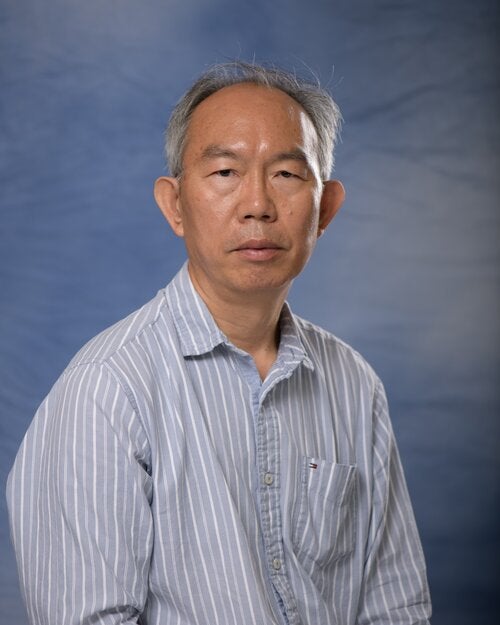
Renming Song is a Professor of Mathematics at the University of Illinois at Urbana-Champaign, with additional affiliations in the Department of Statistics. He holds a Ph.D. from the University of Florida (1993) and has been at UIUC since 1997. His research focuses on stochastic analysis, Markov processes, potential theory, and financial mathematics. Education: B.S. (1983), M.S. (1986) from Hebei University; Ph.D. (1993) from University of Florida. Affiliations: Professor in Mathematics and Statistics, UIUC; former visiting positions at Northwestern University and University of Michigan. Teaching: Currently teaches Math 461 (Probability Theory) and Math 432 (Set Theory and Metric Spaces). Past courses include Math 241 and Math 561. Research Interests: Song specializes in probability theory, with emphasis on Markov processes, branching processes, and their applications. Recent work includes studies on fractional Laplacians, supercritical killings, and asymptotic behaviors in branching systems. His research bridges stochastic analysis and potential theory, with contributions to non-symmetric jump processes and Dirichlet forms. Publications: Over 150 articles, including works in Communications in Mathematical Physics , Electronic Journal of Probability , and Journal of Functional Analysis . Recent topics include heat kernel estimates, tail probabilities, and asymptotic expansions in stochastic systems. Service: Member of NSERC’s Mathematics and Statistics Evaluation Group (2016–2019). Editorial roles at journals like Illinois Journal of Mathematics . Advisor to 11 Ph.D. students, including Hyunchul Park and Andrew Vlasic. Labs/Teams: Engaged in collaborative research on branching processes, stochastic dynamics, and financial mathematics through UIUC’s Mathematics Department and interdisciplinary initiatives.