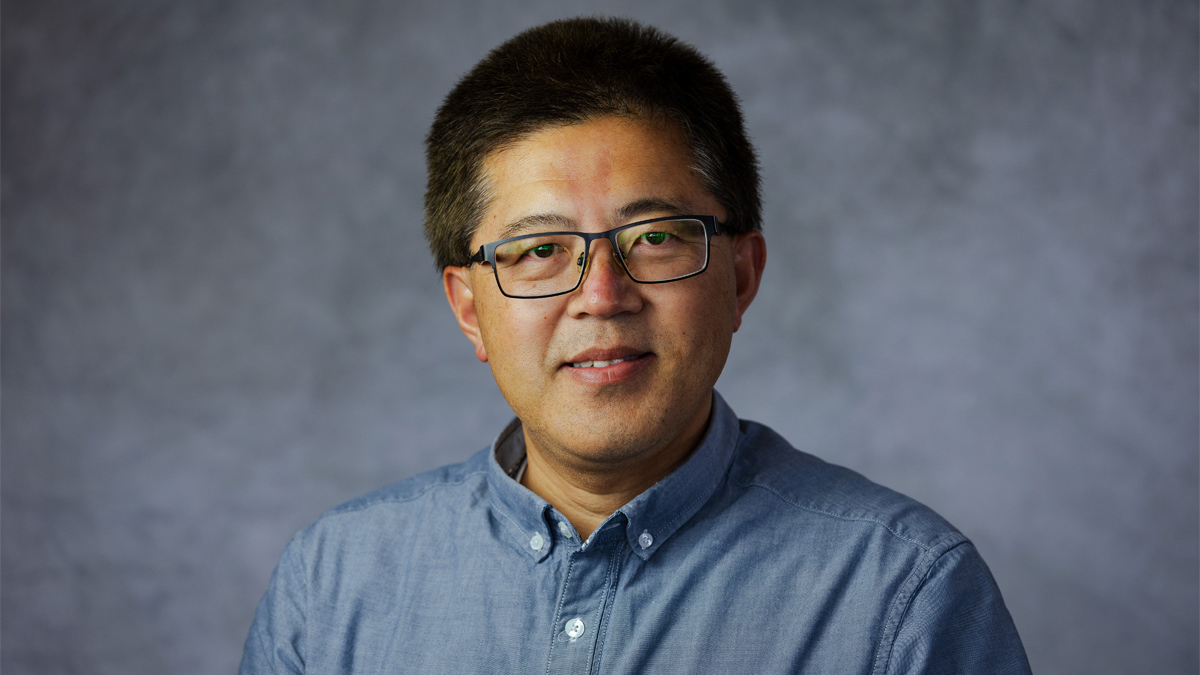
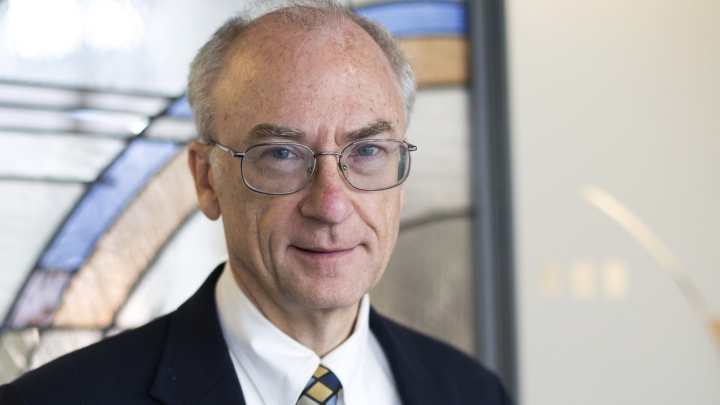
Dr. Zuowei Wang is an Associate Professor in the Department of Mathematics and Statistics at the University of Reading. He serves as Departmental Director of Postgraduate Research Studies and Director of Internationalisation, with responsibilities including program direction for NUIST. Research Interests: His work focuses on multiscale computer simulation and theoretical modeling of polymers and soft matter systems. Key areas include: dynamics of entangled polymers; supramolecular networks; charged block copolymers; surfactant micelles; polymer-drug composites; dipolar colloidal suspensions; and development of computational algorithms including molecular dynamics and Monte Carlo methods. Research Publications: His recent publications demonstrate broad interdisciplinary approaches spanning computational physics, materials science, and statistical mechanics. Article themes include: innovative simulation methods for complex fluids; nanoscale particle dynamics; polymer rheology; and applications in soft materials design. Computational techniques feature prominently across his work. Scientific Awards: No awards listed Advising and Grants: No specific student advising information provided. Current teaching includes MA3MP Mathematical Physics and MA2MMS Mathematical Modelling and Professional Skills. Labs and Teams: Affiliated with the Complex Fluids and Theoretical Polymer Physics research group.
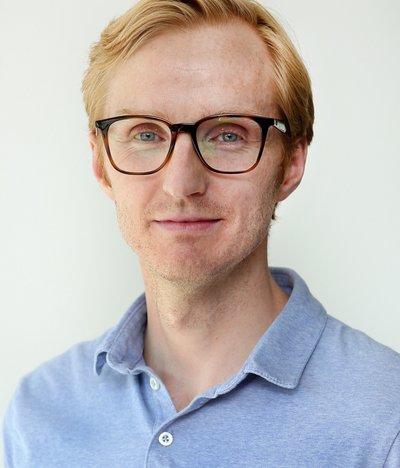
Nick Jaensson is an Assistant Professor in the Processing and Performance of Materials group within the Department of Mechanical Engineering at Eindhoven University of Technology (TU/e). He leads Group Jaensson and is affiliated with the Institute for Complex Molecular Systems (ICMS). His work bridges computational methods with experimental validation to advance understanding of soft materials and complex fluids. Jaensson earned his Master's degree in Biomedical Engineering from TU/e in 2012, followed by a PhD in Mechanical Engineering in 2016 with a thesis titled "Modeling interfaces and particles in viscoelastic fluids." After a year at DSM Materials Science Center, he conducted postdoctoral research at ETH Zürich before returning to TU/e as an Assistant Professor in mid-2020. His research focuses on the development and application of numerical methods for soft materials including suspensions, emulsions, and polymeric liquids. Key interests include interfacial rheology, non-Newtonian fluid mechanics, uncertainty quantification, and physics-informed machine learning. His work combines advanced computational modeling with experimental collaboration to gain fundamental insights into flow and transport processes within these materials, with applications ranging from microfluidics to large-scale industrial processing. Analysis of his recent publications reveals a strong emphasis on fiber orientation kinetics in polymer composites, viscoelastic flow modeling, and the integration of machine learning with physics-based models. His work spans both fundamental fluid dynamics and practical industrial applications, with particular attention to experimental validation of computational models. Jaensson contributes to several research projects including the Dutch Polymer Institute (DPI) Project No. 840 (ANGLE) and the DAMOCLES research project funded by the Eindhoven Artificial Intelligence Systems Institute. His work demonstrates strong industry-academia collaboration, particularly with companies involved in polymer processing and material science. As an educator, Jaensson teaches courses including Interfacial Transport Phenomena in Engineering Flows, Structure and Flow, Advanced Computational Continuum Mechanics, and Principles of Design and Programming. He leads research in the Processing and Performance group, focusing on computational methods for soft materials, with particular strength in connecting microstructural properties to macroscopic material behavior.
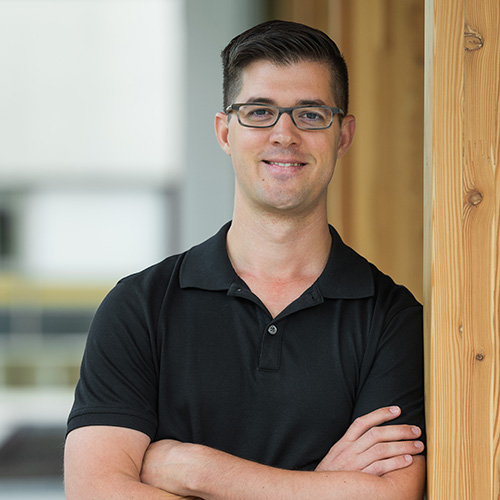
John Frostad is an Associate Professor at the University of British Columbia (UBC) in the Department of Chemical and Biological Engineering under the Faculty of Applied Science. His research focuses on interfacial phenomena, soft matter physics, and novel instrumentation for multiphase fluid systems, including emulsions, foams, and sprays. PhD, University of California, Santa Barbara BS, University of Washington Postdoctoral Fellow, Stanford University Dr. Frostad’s research integrates experimental measurements, analytical theory, instrument design, and hardware automation to address fundamental and applied questions in food science and chemical engineering. His group develops tools like the interfacial dilational rheometer and cantilevered-capillary force apparatus to study fluid dynamics and mechanical properties. His recent publications (2021–2025) span topics such as starch gelatinization, foam stabilization mechanisms, surfactant effects in oil remediation, and neurosphere mechanics. These works emphasize interdisciplinary applications of chemical engineering principles to food systems, biomedical research, and environmental challenges. The Frostad Research Group actively engages in collaborations and interdisciplinary projects, with members like Yun-Han Huang and Lanxin Mo contributing to advancements in interfacial rheology and starch gelatinization. The group’s work is affiliated with UBC’s BioProducts Institute and supports graduate training in Chemical and Biological Engineering.
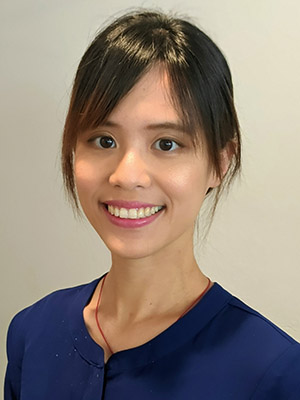
Kaiwen Hsiao is an Assistant Professor in the Department of Materials Science and Engineering at Texas A&M University's College of Engineering, where he leads research at the intersection of advanced manufacturing and polymer physics. His work focuses on developing high-resolution additive manufacturing techniques and understanding fundamental polymer dynamics for biomedical applications. Dr. Hsiao's research program centers on Additive Manufacturing (particularly CLIP-based 3D printing achieving single-digit micrometer resolution), Polymer Physics (ring/linear polymer dynamics in semidilute solutions), Single Molecule Spectroscopy , and Complex Fluid Dynamics . His innovations enable novel applications in transdermal drug delivery systems and microscale sensor design, bridging fundamental science with engineering solutions. Analysis of his publication trajectory reveals two dominant research threads: cutting-edge advancements in high-resolution 3D printing (accounting for 60% of recent work) and foundational studies of polymer dynamics (40%). The manufacturing research emphasizes precision engineering for biomedical devices, while the polymer studies provide critical insights into molecular behavior under flow conditions. His significant recognition includes: 2022 Stanford Wu-Tsai Human Performance Fellow 2022 Stanford Bio-X Travel Award 2022 ACS PMSE Future Faculty Award 2021 Stanford MIPS poster presentation First Prize 2017 ChBE Graduate Symposium Presentation Second Prize 2016 GLCACS Outstanding Student Research Award 2016 AIChE Excellence in Graduate Polymer Research 2015 Dow Company Graduate Fellowship 2014 Mavis Future Faculty Award While specific grant details and student mentorship records aren't publicly documented, Dr. Hsiao's collaborative publications with Stanford researchers and industry partners (notably Joseph M. DeSimone) indicate strong external funding support and an active research group. His work with microfluidic systems and polymer characterization platforms suggests specialized laboratory facilities for advanced materials synthesis and testing.
Ronald Larson is the George Granger Brown Professor of Chemical Engineering and A H White Distinguished University Professor at the University of Michigan , holding joint appointments in the College of Engineering 's Departments of Chemical Engineering , Mechanical Engineering , and the Macromolecular Science & Engineering program. His research focuses on complex fluids, rheology, and polymer physics. Ph.D., Chemical Engineering, University of Minnesota, 1980 M.S., Chemical Engineering, University of Minnesota, 1977 B.S., Chemical Engineering, University of Minnesota, 1975 Ronald Larson's research spans complex fluids and polymer physics with emphasis on viscoelasticity , self-assembly , and processing dynamics . Recent work explores polymer crystallization , polyelectrolyte coacervates , and micellar solutions through multiscale modeling and simulations. His publications reveal expertise in rheology and polymer processing , with studies on extensional flow , shear banding , crystal nucleation , and coarse-graining techniques. Themes include self-healing polymers , entanglement networks , and polymer-colloid interactions . Bingham Medal, Society of Rheology (2002) Alpha Chi Sigma Award, AIChE (2000) Publication Award, Journal of Rheology (1999) Excellence Award, U-M Chemical Engineering (1998) Prudential Distinguished Visiting Fellow, Cambridge University (1996) Fellow, American Physical Society (1994)
Joao Maia, PhD, is a Professor in the Department of Macromolecular Science and Engineering at Case School of Engineering, Case Western Reserve University. His research focuses on polymer rheology, extensional rheometry, and advanced processing techniques like layer multiplication coextrusion. He holds a PhD in Polymer Science and Engineering from the University of Minho (2007), a Bachelor of Science in Physics Engineering from the Technical University of Lisbon (1992), and a Bachelor of Science in Rheology/Applied Mathematics from the University of Wales (1996). Research Interests: Multi-scale polymer-based materials Computational and experimental polymer rheology Nano-layered materials processing On-line monitoring in extrusion Multiscale modeling of complex fluids Recent work highlights include applying machine learning to predict material behavior in suspensions and developing advanced extrusion technologies for layered polymer systems. His publications span topics like graphene oxide nanocomposites, drug delivery nanocarriers, and computational modeling of polymer dynamics. Grants and advising details are not explicitly listed, but his extensive publication record reflects active collaboration with industry and academic partners. He contributes to innovations in additive manufacturing and biomedical polymer applications.
Linda Cummings is a Professor in the Department of Mathematical Sciences at New Jersey Institute of Technology (NJIT), part of the College of Science and Liberal Arts. Her research focuses on fluid dynamics, liquid crystal engineering, and membrane filtration, with significant contributions to understanding phase separation, nanoscale material behavior, and fouling mechanisms in filtration systems. She leads projects funded by the National Science Foundation, including GOALI initiatives on membrane network models and dielectrowetting in liquid crystals. Dr. Cummings has expertise in mathematical modeling of complex fluid systems, with applications in environmental engineering and industrial processes. Her work bridges theoretical analysis and computational simulations, addressing challenges in thin film instabilities, nanoparticle self-assembly, and thermal effects in nanoscale systems. Recent research highlights include studies on phase separation under external forcing, fractal dimensions in non-Newtonian flows, and thermal crowding effects on nanoscale pattern formation. She has received the American Physical Society Fellow distinction and NJIT’s Nexus of Excellence Award for academic excellence.
Stefan Idziak is an Associate Professor and Associate Dean of Science at the University of Waterloo, overseeing Computing and Co-operative Education programs. His research focuses on complex fluids using X-ray diffraction techniques, particularly confinement effects in biomembranes, colloids, and polymer systems. He leads research projects involving the X-Ray Surface Forces Apparatus (XSFA), studying lubrication mechanics, flow dynamics, and novel membrane systems. Education: PhD Physics (University of Pennsylvania, 1992), BSc Physics (McGill University, 1986). Active in education as Undergraduate Advisor and instructor for courses like PHYS 112 and SCI 206. Research emphasizes synchrotron-based analysis of confined fluid systems, with applications in catalysis, thin films, and biomedical materials. His work bridges fundamental physics with industrial applications like food product development through patented innovations. Awards: Premier's Research Excellence Award (2000) Service: Chair, Canadian Association of Physicists Division of Condensed Matter (2007); Judge-in-chief, Science Fair (2010-present) Affiliations: Centre for Bioengineering and Biotechnology Teaching philosophy highlighted by the Centre for Teaching Excellence, emphasizing engagement in large undergraduate classes. Holds multiple patents related to lamellar gels and spreadable food products.
Ibrahim Çemen is a Professor in the Department of Geological Sciences at The University of Alabama, specializing in Energy Geophysics, Tectonics, and Structural Geology. His research focuses on petroleum exploration in sedimentary basins and tectonic evolution of extensional, contractional, and strike-slip terranes. PhD in Geology from Pennsylvania State University (1983) MS in Geology from Ohio University (1977) BS in Geological Engineering from Istanbul University (1974) His research spans four key areas: oil/gas exploration in foreland basins, structural geology of fractures, extensional tectonics in Turkey/USA, and active tectonics earthquake potential. Over 50 publications include studies on the Arkoma Basin, Menderes Massif, and Aegean geodynamics. Recent publications emphasize contractional tectonics in Oklahoma, fracture quantification in Woodford Shale, extensional dynamics in Anatolia, and seismic risk assessment in strike-slip zones. Four edited volumes include the Neotectonics and Earthquake Potential of the Eastern Mediterranean Region (2017) and field guides on Ouachita Mountains petroleum systems.
Associate Professor Patrick Spicer is a faculty member in the School of Chemical Engineering at the University of New South Wales (UNSW). He leads the Complex Fluids research group, which collaborates with industry and academic partners to design smart fluids with unique response and flow behavior directly linked to product and material performance. His laboratory at UNSW integrates advanced microscopy, microfluidic, and rheology capabilities to understand fluid coatings, films, and other complex products. Before joining UNSW, Professor Spicer spent 15 years at Procter & Gamble where he ran a central engineering research department, developing new product and process technologies for all of P&G's billion-dollar brands. He is co-inventor of P&G's $30 million cubosome patent portfolio, which Children's Hospital Cincinnati adapted to develop the first product preventing life-threatening infections in premature infants, and inventor of P&G's responsive droplet technology. Professor Spicer's research spans multiple interconnected domains including formulated product development and scale-up of microstructured fluids, rheology measurement and design, 3D printing with novel materials, engineered nanocellulose systems, emulsion shape control, and cubosome/hexosome nanoparticle technology. His work focuses on connecting microstructure to fluid behavior across applications from consumer products to biomedical solutions. His recent publications demonstrate significant advances in bacterial cellulose systems, responsive nanocapsules, pollen behavior in thunderstorm conditions, and advanced imaging of complex fluid microstructures. His research group has secured substantial funding through multiple ARC Linkage and Discovery Projects, including LP200201026 on Plant Plasters for efficient spray micro-coatings on plants, LE200100221 establishing Australian Rheo-Scattering Facilities, and DP190102614 on engineering better sprays for leaf coating. Industry collaborations include significant projects with Procter & Gamble on high-throughput extensional rheology and v2Food on plant-based meat microstructure modeling. Professor Spicer teaches advanced courses including CEIC4007 and CEIC4008 (Product Design Project Thesis A and B) and CEIC6711 (Complex fluid microstructure and rheology), mentoring students through thesis projects that bridge fundamental research with industrial applications. His Complex Fluids group maintains strong industry connections while advancing the fundamental understanding of microstructured fluids.
Yuecheng Peter Zhou is an Assistant Professor in the Department of Materials Science and Engineering at the University of Illinois Urbana-Champaign (UIUC), with affiliate appointments in Bioengineering, the Materials Research Laboratory, and the Beckman Institute. He earned his B.S. (2014) and Ph.D. (2019) in Materials Science and Engineering from UIUC, followed by a postdoc at Stanford University's Chemistry Department and Wu Tsai Neurosciences Institute. His research focuses on developing ultrasensitive optical tools to study bioelectric and biochemical processes in brain and heart tissues. Key projects include label-free optical detection of action potentials, engineering cell-material interfaces in bioelectronics, and designing soft materials for biomedical applications. He teaches MSE 457 (Polymer Chemistry) and actively recruits graduate students, postdocs, and undergraduates with expertise in optics, biomaterials, and neuroscience. Dr. Zhou's interdisciplinary lab integrates materials science, chemistry, physics, and neuroscience. Notable publications include work on electrochromic polymers for bioelectric signal detection and polymer dynamics in complex flows. His group aims to advance non-invasive electrophysiological monitoring and therapeutic strategies for neurodegenerative and cardiac diseases.
Prabhakar Ranganathan is a Senior Lecturer in the Department of Mechanical & Aerospace Engineering at Monash University, where he has been serving since 2007. He leads the Complex Fluid Systems research group and teaches core courses such as Fluid Mechanics II and Research Practices. His academic appointments include a Lecturer position (2007–2013) and promotion to Senior Lecturer (2013–present), along with a visiting faculty role at IIT Bombay in 2015. His educational background includes a PhD in Chemical Engineering from Monash University (2005), an MS (1998), and a B.Tech. (1993) from the Indian Institute of Technology, Madras. He was a Postdoctoral Research Fellow at the Australian National University (2005–2007). His research focuses on modeling and simulation of complex fluid systems, particularly active matter such as self-propelled particles, flagellar propulsion, and passive systems like polymer solutions. He integrates computational fluid dynamics, biomechanics, and microfluidics to understand emergent macroscale behaviors from microscale interactions. His work has applications in reproductive biology, particularly sperm motility and diagnostics. His recent publications (2022–2024) reveal a strong trend in biophysical fluid dynamics, with emphasis on sperm flagellar energetics under viscous and flow conditions, acoustofluidic diagnostic tools for bovine infertility, and capillary breakup rheometry of complex fluids. These works span journals like Small Methods , Cell Reports Physical Science , Langmuir , and Physics of Fluids , reflecting interdisciplinary research at the intersection of engineering, biology, and physics. He actively supervises PhD students and is involved in developing experimental designs to validate theoretical models. His teaching spans fluid mechanics, computational methods, and research practices. The Complex Fluid Systems group develops particle-based mesoscale simulations and analytical tools for innovative applications in biological and industrial contexts. Collaborations include researchers in Australia and India, with work referenced in patents and covered by news outlets.
Shravan Veerapaneni is a Professor in the Department of Mathematics at the University of Michigan, within the College of Literature, Science, and the Arts. His research focuses on developing large-scale computational tools for solving differential and integral equations on complex moving geometries that arise in engineering and biophysics. His work spans multiple interdisciplinary areas connecting mathematics, computational science, and applied physics. Education: B.S. from Indian Institute of Technology (2003), Ph.D. from University of Pennsylvania (2008) Previous Position: Research Scientist at Courant Institute of Mathematical Sciences (NYU), 2008-2011 Teaching: Courses include Math 671, Math 371 (Numerical Methods for Engineers), and Math 156 (Applied Honors Calculus II) Professor Veerapaneni's research interests encompass scientific computing, fast algorithms, potential theory, complex fluids, microfluidics, soft-matter, and biomechanics. His core application areas include biomembrane mechanics, blood flow modeling, cilia-driven flows, and microfluidic-chip design. More recently, he has expanded his research to include scalable solvers and machine learning techniques for autonomous vehicle mobility in off-road settings. His work demonstrates a strong emphasis on developing high-order accurate numerical methods with practical applications in biomedical engineering and fluid dynamics. His publications reveal a consistent focus on boundary integral methods, Stokes flow simulations, and optimization problems in complex geometries. The research shows progression from fundamental mathematical methods to increasingly complex applications in biophysics and engineering. His work on vesicle dynamics, microswimmers, and particulate suspensions demonstrates expertise in computational fluid dynamics at microscales. NSF CAREER Award (2015) for project 'Fast Algorithms for Particulate Flows' Professor Veerapaneni has developed computational frameworks for simulating complex fluid-structure interactions, with applications ranging from biological systems (vesicles, cilia) to engineering problems (microfluidic chips, autonomous vehicles). His group has produced significant software contributions including visualization tools for fluid dynamics simulations, as evidenced by the animations of vesicle flows on his website. His collaborative work spans mathematics, engineering, and computer science departments, reflecting the interdisciplinary nature of his research.
Hadi Mohammadigoushki is an Associate Professor in the Department of Chemical and Biomedical Engineering at the FAMU-FSU College of Engineering. He also serves as NMR Staff at the National High Magnetic Field Laboratory as an affiliate. His research group, founded in August 2016, focuses on the intersection of Chemical Engineering, Mechanical Engineering, Material Science and Physics. Dr. Mohammadigoushki received his BS-MS from Amirkabir University of Technology in 2009, followed by a Ph.D. in Chemical Engineering from the University of British Columbia, Canada in 2014. He completed his postdoctoral training at UC Berkeley in 2016 before joining the FAMU-FSU College of Engineering faculty. His research primarily centers on soft matter physics and complex fluid dynamics , with specific expertise in rheology, flow-induced instabilities, locomotion in complex environments, NMR spectroscopy, and interfacial science. His laboratory combines experimental and theoretical approaches including Rheometry, Digital Particle Image Velocimetry, Particle Tracking Velocimetry, Fluorescence Microscopy, NMR diffusometry, and MR Velocimetry to investigate the connection between molecular and macroscale properties of soft materials. His work has significant applications in energy, oil & gas, and biotechnology sectors. Analysis of Dr. Mohammadigoushki's recent publications reveals a strong focus on understanding the behavior of complex fluids, particularly wormlike micellar solutions and yield stress fluids. His research spans fundamental investigations of shear banding phenomena, locomotion dynamics in non-Newtonian fluids, and advanced characterization techniques using NMR spectroscopy. There's a clear progression toward increasingly complex systems and applications, including biological interfaces and magnetic field effects on fluid behavior. 2021: Nominated for Outstanding Teaching Award, Florida State University 2020: CAREER award, National Science Foundation 2017: Young Faculty Award, Florida State University 2013: John Grace Graduate Award, University of British Columbia, Canada Dr. Mohammadigoushki has mentored numerous students at various levels, including current PhD candidates, undergraduate researchers, and past students who have gone on to successful careers in academia and industry. His research group actively participates in outreach programs to encourage female and underrepresented students to pursue STEM fields, including the Florida Young Scholar Program, Family STEM nights, and laboratory visits for middle and high school students. The Mohammadigoushki Research Group operates state-of-the-art facilities for studying soft matter and complex fluids, with particular emphasis on rheological characterization and flow visualization techniques. The group maintains strong collaborations with the National High Magnetic Field Laboratory and other research institutions, enabling cutting-edge investigations at the interface of multiple scientific disciplines.
Prof. Jonathan J. Wylie serves as a Professor at City University of Hong Kong, holding a PhD from King's College, University of Cambridge, UK. His academic trajectory includes a Junior Research Fellowship at King's College, followed by research appointments at Cornell University, Woods Hole Oceanographic Institution, and the University of Toronto prior to his current position. His research expertise spans fluid mechanics , granular materials , suspension mechanics , and mathematical modeling of geophysical systems , with seminal contributions to viscous thread dynamics and coupled partial differential equations. His interdisciplinary work bridges industrial applications with fundamental physics. Analysis of his recent publications reveals dominant research threads in granular flow intermittency , thermal effects in viscous filaments , and mathematical neuroscience . His methodology consistently combines asymptotic analysis with computational modeling to address complex multiphysics problems, demonstrating strong cross-disciplinary collaboration between physics, engineering, and life sciences. His distinguished scientific recognition includes: Junior Research Fellowship from King's College, Cambridge Wylie has secured major research funding from the National Science Foundation (USA), Australian Research Council, and Hong Kong's Research Grant Council. As associate editor of the IMA Journal of Applied Mathematics , he actively shapes scholarly discourse. His extensive publication record in high-impact journals like Journal of Fluid Mechanics and Physical Review E demonstrates sustained research productivity without explicit mention of advisees in available materials. While specific laboratory facilities aren't documented, his international collaborations with institutions across North America, Europe, and Asia indicate participation in global research networks addressing industrially relevant fluid dynamics challenges.