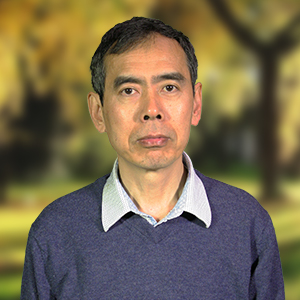
Boy van Basten is a Lecturer in Pharmaceutical Product Care and Quality at the Faculty of Science and Engineering , University of Groningen. His work focuses on extemporaneous compounding, dosage form design, and medication stability protocols. Specializes in pharmacy preparations and product care Active in community and hospital pharmacy practices Part of the Pharmacy – Lecturers Team 2 Research interests center on pharmaceutical formulation, with emphasis on compounding standards and dosage form optimization. His recent publications analyze trends in Dutch pharmacy practices and solid dosage design. Key research themes include Extemporaneous Compounding , Dosage Form Development , and miRNA interactions in respiratory medicine . Publications span from 2014 to 2025, reflecting long-term engagement in pharmaceutical sciences. Contact: b.van.basten@rug.nl | ORCID: 0000-0002-9500-4615
Dr. Stephen Kerr serves as the Associate Provost for Academic and International Affairs at Massachusetts College of Pharmacy and Health Sciences (MCPHS), with primary affiliation in the School of Pharmacy. His academic career spans over two decades, with significant contributions to medicinal chemistry, pharmacology, and toxicology research. Dr. Kerr earned his PhD in Medicinal Chemistry from the University at Buffalo (SUNY), complemented by undergraduate degrees in Pharmaceutical Technology and Chemistry from Bombay University institutions. His post-doctoral training was completed at Yale University School of Medicine. PhD in Medicinal Chemistry, University at Buffalo (SUNY) BS (Pharmaceutical Technology), Department of Chemical Technology, Bombay University BS (Chemistry), St. Xavier's College, Bombay University Post-doctoral Fellow, Yale University School of Medicine Dr. Kerr's research focuses on mechanistic enzymology of viral DNA polymerases , anti-viral and anti-cancer drug design , cellular toxicology of phenolic anti-oxidants , and drug metabolism studies . His work bridges basic science with pharmaceutical applications, particularly in cancer therapeutics and antiviral drug development. His publication record spans from 1992 to 2018, with research evolving from fundamental enzymology of HIV reverse transcriptase to more recent work on flavonoid cytoprotection, prodrug development, and occupational toxicology related to vitiligo. His scholarly output demonstrates consistent contributions to drug discovery, enzyme inhibition mechanisms, and toxicological research. Dr. Kerr has received numerous professional honors including the Distinguished Trustees Award for Teaching Excellence (2012), Pharmaceutical Sciences Teacher of the Year Award (2011), and multiple Scholarly Publication Awards. 2014 Faculty Scholarship Showcase Award (Integration) 2014 Phi Kappa Phi – Charter Member 2012 Distinguished Trustees Award for Teaching Excellence 2011 Pharmaceutical Sciences Teacher of the Year Award 2010 Scholarly Publication Award (Basic Sciences) He maintains active professional affiliations with major scientific organizations including the American Society for Pharmacology and Experimental Therapeutics (ASPET), Society of Toxicology (SOT), American Association of Colleges of Pharmacy, and American Association of Pharmaceutical Scientists (AAPS). Dr. Kerr also serves in leadership roles within honor societies including Sigma Xi (Scientific Research Society) where he serves as Vice President of the Delta Chapter.
Victoria Hutter is a Professor of In Vitro Toxicology at the University of Hertfordshire, affiliated with the Pharmaceutics Department within the School of Life and Medical Sciences. She holds academic and professional memberships including the General Pharmaceutical Council (GPhC), Royal Pharmaceutical Society (RPS), and International Society for Aerosols in Medicine (ISAM). Her research focuses on in vitro modeling of respiratory, skin, and gastrointestinal drug delivery systems, with particular emphasis on drug transporters and epithelial permeability. Education: MPharm and PhD from the University of Nottingham. Prior industry experience includes formulation science and clinical pharmacy roles. She has led/co-led 17 research projects since 2012, including EU-funded initiatives on in vitro test methods and inhalation safety. Research interests span drug-permeability mechanisms, ABC/SLC transporters, and toxicity testing of nanoparticles. Teaching expertise includes Pharmaceutics and Pharmacy Practice. Collaborations involve developing novel co-culture models for ocular and lung toxicity assessment, and standardizing in vitro assays like TEER measurements. Her recent work emphasizes high-content image analysis for macrophage responses, regulatory applications of microphysiological systems (MPS), and optimizing drug delivery systems using biomaterials like thermoreversible gels and eggshell membrane scaffolds.
Ankit Rochani is a Visiting Assistant Professor at St. John Fisher University's Department of Pharmacy/Pharmaceutical Sciences. He holds a Ph.D. from Toyo University, Japan, with postdoctoral fellowships at Toyo University and Thomas Jefferson University in Philadelphia. His research focuses on developing semisolid and nanoformulations using sustainable green biomaterials, particularly in cancer therapy and maternal-fetal pharmacology. He specializes in HPLC and LC-MS/MS method development for drug stability analysis and has contributed to studies on aspirin pharmacokinetics in pregnancy and targeted drug delivery via ultrasound-sensitive oxygen microbubbles. His work supports clinical pharmacies and compounding facilities through stability data generation. Dr. Rochani has received significant awards, including the Japanese Government Scholarship (MEXT) and grants from St. John Fisher University (SIG, FIDG, FRAP). His publications span 2010 to 2025, addressing drug formulation, nanomedicine, and clinical trials. He collaborates with prominent researchers like Gagan Kaushal and Walter Kraft on projects ranging from cancer nanotherapy to obstetric drug safety. Additionally, he integrates innovative lab-based compounding courses into online PharmD programs, emphasizing practical skills for future pharmacists. His research interests also include theranostics in nanomedicine and biomaterials for tissue engineering. He has presented at conferences such as AAPS-Northeast Regional Discussion Group, where he received a Short Topic Presentation Award, and contributed to book chapters on nanomedicine and cancer therapy. His interdisciplinary work bridges pharmacy, materials science, and clinical practice, aiming to enhance personalized drug delivery and patient outcomes.
Dr. James Barlow is a Senior Lecturer in the Department of Chemistry at RCSI (Royal College of Surgeons in Ireland). He holds a B.Sc.(Pharm.) from Trinity College Dublin (1998) and a Ph.D. in Medicinal Chemistry (2002). His research focuses on natural products with anti-infective and anti-cancer properties, synthetic chemistry, and pharmaceutical education. He collaborates internationally with institutions in Brazil, Portugal, Bangladesh, and France. Dr. Barlow has been Director of Assessment for the NPIP/Masters in Pharmacy program since 2009, shaping licensure examinations. His teaching includes phytochemistry, pharmacognosy, and modules on gender and health. He has secured grants for projects like designing anti-cancer agents and evaluating nanoparticle formulations. His work spans over 50 publications, addressing topics from drug synthesis to telehealth medication safety. Professional activities include membership in pharmacy regulatory bodies and roles in curriculum development. His recent research highlights include studies on extemporaneous formulations, vitamin K2 clinical effects, and pandemic-era healthcare adaptations.
Nishil Desai is an Associate Teaching Professor in the Department of Pharmaceutical Sciences at Bouvé College of Health Sciences, Northeastern University. His academic career focuses on advancing drug delivery methodologies and pharmaceutical formulation science. PhD in Pharmaceutical Sciences, Mercer University, Atlanta, GA Bachelor of Chemical Engineering, Manipal University, India Dr. Desai specializes in developing novel formulations for small molecules and macromolecules, with a particular emphasis on kinetic models to predict delivery efficacy. His work also extends to cosmeceutical product design and the study of stability/beyond use dates for extemporaneous compounded medications prepared by pharmacists. He teaches core courses in pharmaceutics, pharmacokinetics, and pharmaceutical sciences, including Pharmaceutics 1 (PHSC 3411), Pharmaceutics 2 (PHSC 3412), Pharmaceutics Laboratory (PHSC 3419), Pharmacokinetics and Biopharmaceutics (PHSC3430), Principles of Pharmacology and Medicinal Chemistry I (PHSC 4501), and Foundations of Pharmaceutical Sciences (PHSC 5130).
Dr. Jihong Han is a Lecturer in Pharmaceutics at the School of Allied Health Professions and Pharmacy, Keele University. Previously, she worked at the Nottingham School of Pharmacy and London School of Pharmacy. Her research focuses on particulate drug delivery systems, particularly the formulation and evaluation of nanosuspensions and emulsions. Specific interests include surface modification of particles using polymers and optimizing drug delivery processes to enhance bioavailability and stability. She currently serves as Examinations Officer and contributes to the Keele Centre for Medicines Optimisation (KCMO). Her work spans over three decades, with publications on topics such as paclitaxel emulsion design, tacrolimus pediatric suspensions, and nanotechnology-based drug delivery. Dr. Han's research emphasizes translational applications in oncology, antifungal therapy, and pediatric drug formulations. Her publications consistently address challenges in pharmaceutical formulation, including particle size control, chemical stability, and in vivo targeting. Collaborative projects with teams in China and the UK highlight her global impact in drug delivery science. While no formal awards are listed, her extensive publication record reflects sustained contributions to the field. Teaching and administrative roles complement her research, ensuring alignment with academic and professional training in pharmacy practice.
Liam McAuley is a Reader in Pharmaceutics and Head of the Centre for Research into Topical Drug Delivery and Toxicology at the University of Hertfordshire. He is affiliated with the Department of Clinical, Pharmaceutical and Biological Science within the School of Life and Medical Sciences. Previously, he held roles including Head of Pharmaceutics and has been at the university since 2008 after completing postdoctoral research at UCL School of Pharmacy and industrial experience with Wyeth Consumer Healthcare. Education: Earned undergraduate and PhD degrees in Pharmaceutics from Queen’s University Belfast, followed by an EPSRC-funded postdoctoral position at UCL School of Pharmacy. Research Interests: Focuses on optimizing formulations for drug delivery, particularly topical applications targeting skin and mucous membranes. Key areas include polymeric film-forming systems, heated systems for follicular absorption (e.g., acne treatment), and evaluating how clinical practices like emollient use impact topical corticosteroid efficacy. Additional work explores environmental stressors on skin barriers in athletes. Grants & Collaborations: Funded by UK Research Councils and industry partners. Projects include biomimicry-based wound debridement, bacteriophage use in surgical infections, and the impact of lifestyle on skin barrier health. Acts as a consultant to pharmaceutical companies and expert witness in litigation. Labs/Teams: Directs the Centre for Research in Topical Drug Delivery and Toxicology, fostering interdisciplinary research in formulation science and translational medicine.
Dr. Ronald Lee is a Senior Lecturer at the Malaysia School of Pharmacy, Monash University Malaysia. His research focuses on mass spectrometry applications, biochemical mechanisms of drug action, and solutions for food security and human health challenges. He completed a PhD in metallodrug research at École polytechnique fédérale de Lausanne and held a postdoctoral position at Singapore's National Cancer Center. His current projects address viral pathogens in aquaculture, natural product formulations, and drug delivery systems. Education : Bachelor of Science (Pharmacy), National University of Singapore (2010) PhD in Metallodrug Research, École polytechnique fédérale de Lausanne (2017) Research Interests : Mass Spectrometry (Nano-SIMS, top-down MS) Protein-drug interactions and disease mechanisms Natural product formulations (e.g., propolis, ionic liquids) Aquaculture disease management (nodavirus) Key Projects : Improving Stability of Compounded Medications (2025-2026) Psoriatic Complexity and 3D Skin Microenvironment (2024-2027) Engkabang Cosmeceutical Development (2023-2026) Awards : Best Poster Award, Borneo Education Research Conference (2021) PVC’s Commendation for Excellence in Education (2021) ESSFS VPE Commendations (2022-2023) Teaching : Leads courses PHR1022, PHR2021, and PHR2042, focusing on pharmacology and clinical care. Recognized for innovative approaches in pharmacy education during the pandemic, including remote lab practices and flipped classroom models.
Emilio Squillante, III, is an Associate Professor in the Department of Pharmaceutical Sciences at St. John's University's College of Pharmacy and Health Sciences. His work focuses on bridging applied sciences with pharmaceutical research, emphasizing critical thinking and quality assurance in drug development. Research Interests: Biopharmaceutics, supercritical fluids, microdialysis, targeted drug delivery, and cell culture methodologies. Courses Taught: Industrial Pharm Journal Club (IPP 233), Pharmaceutics II for Pharm D (PHS 3603), and Extemporaneous Compounding (PHS 4601). His recent publications highlight advancements in nanoparticle engineering, supercritical fluid processing, and brain-targeted therapies. Key subfields include localized chemotherapy delivery, overcoming drug resistance, and enhancing solubility for neurological applications. Contact: St. Albert Hall, Queens Room 105 | 718-990-5020
Olga Kiseļova is an Assistant Professor at the Department of Applied Pharmacy and Department of Pharmacology at Rīga Stradiņš University. Her research focuses on extemporaneous preparations, pharmacy practice, and the history of pharmacy education. She holds dual roles in two departments, contributing to both basic and clinical aspects of pharmaceutical sciences. PhD in Pharmacy (2022): Dissertation titled 'Availability of Extemporaneous Preparations in Pharmacies in Latvia.' Key projects include 'Support for involving doctoral students in scientific research' (2021-2023) and 'Improvement of management processes at Rīga Stradiņš University' (2018-2023). Her research interests emphasize the analysis of extemporaneous prescriptions, comparative studies of dosage forms, and regulatory frameworks. She has published extensively on topics such as nasal preparations, dermatological compounding, and safety aspects of extemporaneous prescriptions. Dr. Kiseļova is actively involved in peer-review activities for journals like International Journal of Pharmaceutical Compounding and Medicina (Lithuania) . She has presented at conferences including the World Latvian Scientists Congress.
Therese Kairuz is a researcher affiliated with James Cook University , contributing extensively to pharmacy practice, clinical pharmacy, and public health research. Her work focuses on medication safety , health literacy , diabetes management , and mental health with cross-national comparative studies in Australia, Malaysia, and South Africa. Research Interests Kairuz's research spans pharmacy education , geriatric care , and public health initiatives , particularly in community pharmacy settings . She has investigated opioid pharmacotherapy , antimicrobial resistance , and access to medicines for marginalized populations, including resettled refugees . Her studies often employ systematic reviews , longitudinal data , and qualitative methods to assess healthcare outcomes and policy implications. Publication Trends Kairuz's publications (2007–2019) reflect a focus on diabetes , mental health , medication adherence , and pharmacy education . Collaborative work with institutions in Melbourne , Prato , and Gaborone highlights her international research scope. Key topics include prescription practices , off-label drug use , and pharmaceutical compounding . Contributions to Pharmacy Education Kairuz has developed assessment rubrics for pharmacy students, explored clinical placement impacts on preparedness, and emphasized cultural sensitivity in healthcare delivery. Her work on teach-back methods and health literacy interventions (e.g., the HeLP project ) underscores her commitment to improving patient-pharmacist communication.
Baiba Mauriņa is a Vice-Dean and Acting Assistant Professor at the Department of Applied Pharmacy, Faculty of Pharmacy, Riga Stradins University. She actively contributes to pharmaceutical research, focusing on dosage forms, excipients, and phytochemical analysis. Riga Stradins University - Department of Applied Pharmacy Her research spans anthocyanin-rich plant extracts , antioxidant activity in wild flora , and standardization of extemporaneous formulations . Recent work explores surrogate modeling for dissolution testing and excipient optimization in tablet technology. Recent publications highlight collaborations with researchers like A. Brangule and O. Kiselova, emphasizing Latvian pharmacological practices and cross-national formulation comparisons . Expert, Latvian Council of Science (2017-2023) She supervises student projects on novel formulations and serves on the scientific committee for RSU Research Week. Her work aligns with SDG 3 (Good Health and Well-being) through pharmaceutical quality assurance research.
Dr Dan Fei is a Senior Lecturer in Pharmaceutics at the Leicester School of Pharmacy, Faculty of Health and Life Sciences, De Montfort University. Her research is centered on the development of advanced drug delivery systems using nanotechnology and biodegradable polymers, with a focus on polymeric thin films, thermal analysis for material characterization, and stability assessment of freeze-dried pharmaceuticals. Her research interests include: Development of drug delivery systems using nanotechnology and biodegradable polymers Biodegradable polymeric thin films for drug delivery Thermal analysis for pharmaceutical materials characterisation Stability characterisation of freeze dried pharmaceutical materials The body of her published work reflects a strong trend in nanomedicine and advanced materials for biomedical applications. Her research spans molecularly imprinted polymers for sensing, nanobiosensors for intracellular monitoring, enzyme immobilization on nanostructured supports, and degradation analysis of biodegradable polymers like PLGA. Collectively, these works demonstrate a consistent focus on the interface between pharmaceutical science, materials engineering, and diagnostic innovation. Dr Fei has contributed to professional esteem through peer-refereeing for the MRC Molecular and Cellular Medicine Board (February 2011). While no formal awards are listed, her involvement in research evaluation indicates recognition in her field. She teaches core pharmacy modules including Pharmaceutics, Formulations, Extemporaneous Dispensing Techniques, and Pharmaceutical Calculations across MPharm, BSc Pharmaceutical and Cosmetics Science, and MSc Quality by Design programs. There is no mention of specific grants or student supervision in the provided text. Dr Fei is affiliated with the Pharmaceutical Technologies Research Group at DMU, which supports collaborative work in novel drug delivery and formulation science.
Erik Frijlink is a Professor of Pharmaceutical Technology and Biopharmacy at the University of Groningen, a position he has held since 1998. Prior to his academic career, he served as head of the Pharmaceutical Development department at Solvay Pharmaceuticals. His research focuses on advanced drug delivery technologies, particularly inhalation therapy and powder formulations, with significant impact on patient care through innovations like the Novolizer powder inhalator. Professor Frijlink's research interests span multiple areas of pharmaceutical technology with a particular emphasis on pulmonary drug delivery systems. His work has led to the development of the Novolizer inhaler, which is currently used by at least 600,000 patients worldwide (approaching one million), demonstrating the real-world impact of his research. He leads an international consortium of twelve partners working on a universal flu vaccine, supported by a €6 million European Union grant. His research group is internationally prominent in the field of advanced drug administration technologies, with particular focus on dry powder inhalation, vaccine delivery, and targeted drug release systems for conditions like inflammatory bowel disease. Frijlink's extensive publication record shows a consistent focus on pharmaceutical formulation challenges, particularly in the areas of inhalation therapy, vaccine delivery, and targeted drug release. His recent work (2023-2025) demonstrates continued innovation in dry powder formulations, microneedle technology, and novel drug delivery approaches for conditions ranging from tuberculosis to Parkinson's disease. The interdisciplinary nature of his research bridges pharmaceutical sciences, respiratory medicine, and biomedical engineering. Professor Frijlink has received significant recognition for his work, including nomination for the Huibregtsen Prize in 2016, the Dr. Saal van Zwanenberg Honorary Prize, and the Utrecht University Award for Excellence in Pharmaceutical Research in 2015. The Huibregtsen Prize jury noted that "Frijlink's work is a textbook example of ground-breaking research that is also of great importance to society. He combines academic excellence with social relevance, while also being the inventor one of only a handful of discoveries by a Dutch university leading to a remarkable flow of patent-generated income." As principal investigator of major research grants, including the €6 million EU-funded universal flu vaccine project, Frijlink has demonstrated strong leadership in securing competitive research funding. His work has resulted in multiple patents and commercial applications, most notably the Novolizer inhaler technology. He collaborates extensively with researchers across disciplines and institutions, as evidenced by his co-authorship on papers spanning pharmaceutical sciences, respiratory medicine, and vaccine development. Professor Frijlink leads a research group at the University of Groningen focused on pharmaceutical technology and biopharmacy. His team works on several major projects including the universal flu vaccine consortium, development of novel inhalation therapies, and targeted drug delivery systems for inflammatory bowel disease. The group maintains strong connections with pharmaceutical industry partners and clinical researchers to ensure their work addresses real-world therapeutic challenges.