Dr. Golam Rabbani is a Contract Lecturer in the School of Creative Industries at Toronto Metropolitan University. He holds a Ph.D. in Cultural Studies from Queen’s University and has taught at institutions like Queen’s University, Carleton University, and various universities in Bangladesh. His research focuses on Baul spirituality, cultural industries, and postcolonial studies, with a particular emphasis on Bangladesh’s folk traditions and immigrant identities in Canada. He has received prestigious awards including the SSHRC Doctoral Fellowship and Erasmus Mundus Scholarship. Education: Ph.D. in Cultural Studies, Queen’s University (2021) MA in Literature and Linguistics (Distinction), University of Antwerp (2015) BA (Hons) and MA in English Literature, Jahangirnagar University (Bangladesh) Research Interests: Creative Industries, Cultural Studies, Ethnomusicology, Postcolonial Theory, South Asian Popular Culture, Baul Spirituality. His work explores intersections between spirituality, music, and contemporary consumer culture in Bangladesh, while also examining immigrant experiences in Canada through creative research initiatives. Grants and Awards: SSHRC Doctoral Fellowship Award Erasmus Mundus Scholarship Queen’s Graduate Award PKSF Best Volunteer Award (2010) Dr. Rabbani’s academic contributions span interdisciplinary courses on creative processes, media representation, and cultural theory. He collaborates with creative industries in Bangladesh and Canada, blending scholarly research with community-based projects addressing EDII (Equity, Diversity, Inclusion, and Indigeneity) in workplaces and cultural spaces.
Kobena Mercer is a Professor in the Departments of the History of Art and African American Studies at Yale University. He specializes in the visual arts of the Black diaspora, examining African American, Caribbean, and Black British artists within transnational contexts. His research intersects race, sexuality, and identity in modern and contemporary art. Affiliations: Yale University (current), New York University and UC Santa Cruz (previous) LGBT Studies Committee member at Yale Research focuses on cross-cultural aesthetics, diasporic art practices, and decolonizing art historiography. Key works include Welcome to the Jungle (1994), Cosmopolitan Modernisms (2005), and edited volumes in the Annotating Art’s Histories series. Recent publications explore contemporary Black diaspora art through essay collections and contributions to The Image of the Black in Western Art . His writing bridges art criticism, cultural theory, and postcolonial studies. Awards: 2006 Clark Prize for Excellence in Arts Writing Current projects include an essay collection on diaspora art and a chapter on 20th-century Black representation in Western art. His work emphasizes global perspectives and intersectional analyses in art history.
Ricardo Piñero Moral is a Professor at the University of Navarra, affiliated with the Faculty of Economics and Business Sciences and the Faculty of Philosophy and Letters. He holds positions in the Economics and Philosophy departments, and is part of the research group 'Estética y Arte Contemporáneo'. He earned his Doctorate from the University of Salamanca in 1994 with a thesis on Plotinus' aesthetics and contemplation, supervised by Dr. Mariano Álvarez Gómez. His research focuses on aesthetics, art theory, medieval studies, and the intersection of art with theology, mysticism, and philosophy. Key interests include medieval bestiaries, Spanish Golden Age art theory, contemporary art metaphysics, and the symbolic roles of animals in religious and cultural contexts. Recent publications explore themes like the transformational power of art, the aesthetics of evil in medieval contexts, and the philosophical underpinnings of artistic creation. His work bridges historical analysis with contemporary debates, emphasizing the role of beauty in ethical and existential frameworks. He has not been explicitly noted for scientific awards, though his prolific academic output and scholarly contributions are widely recognized. His advising and grant activities remain unspecified in available texts, though his involvement in interdisciplinary research groups suggests collaborative projects. He is associated with the 'Estética y Arte Contemporáneo' research group, focusing on contemporary aesthetic challenges and cultural dialogue.
Dr Emily Brayshaw is an Honorary Research Fellow and Casual Academic at the University of Technology Sydney's Faculty of Design, Architecture and Building. She combines scholarly work in critical costume studies with theatrical costume design and viola performance . Holding a 2016 PhD in Design from UTS and a BA (Hons) from the University of New South Wales, her research spans fashion history, performance costume, and material culture. Current Appointments: Honorary Research Fellow (2019-2026), Casual Academic in Design/Fashion History Research Themes: WWI dress, kitsch aesthetics, sustainability in costume, shoe studies, and body-garment dynamics Her interdisciplinary work connects fashion theory with theatre practice, examining costume's psychological and ethical dimensions. Publications since 2014 explore topics ranging from vaudeville's racialized costumes to contemporary footwear trends . She actively contributes to public discourse through The Conversation and maintains memberships in the Footwear Research Network and Association of Dress Historians . Recent scholarship reveals trends in 20th-century costume methodology , WWI fashion dynamics , and shoe symbolism across media. Articles like 'Dressing for the Viola' (2023) and 'From Caftan King to Peacock Pasha' (2024) demonstrate her focus on gendered performance wear and orientalist fashion . Her 2021 Journal of Aesthetics & Culture translation of Schlemmer's kitsch manuscript bridges historical avant-garde theory with modern practice. As a public intellectual, Emily has completed over 100 media interviews since 2020, covering topics like Crocs' cultural resurgence and vaudeville's legacy . Her teaching encompasses fashion theory, critical thinking, and costume history, while she simultaneously serves as principal viola for the Woollahra Philharmonic Orchestra.
Martina King is a Full Professor of Medical Humanities at the Faculty of Science and Medicine, University of Fribourg. She holds a dual habilitation in Germanistics and Medical History and is co-opted into the Departments of German Studies and Contemporary History. Her interdisciplinary research bridges literature, medicine, and cultural studies. Research Interests: Her work focuses on the narrative structures of medical texts, the cultural history of microbes, medical spaces in literature, and the intersections of contagion, vaccination, and literary representation. She explores how medical knowledge is narrated and how literature reflects and shapes medical thought. Her recent publications and ongoing SNF-funded projects analyze the discharge letter as a narrative genre and the portrayal of medical interiors in 20th-century literature. She is co-editing a major handbook on Literature and Medicine (2026). Her publications reveal a deep engagement with narrative epistemology, medical ethics, and the cultural meaning of illness. Scientific Awards: No awards explicitly mentioned. Advising and Grants: She leads two major SNF projects: one on the cultural history of the discharge letter (CHF 1.8 million, 2025–2029), and another on medical spaces in narrative literature (CHF 460,000, 2023–2027). She supervises doctoral students and collaborates with institutions in Lausanne, Bern, and Innsbruck. She has held research positions in Glasgow, Innsbruck, and Bern, and has been a lecturer and postdoctoral researcher funded by the DFG and SNF. Labs and Teams: She leads a research team on medical narratives at the University of Fribourg, collaborating with literary scholars, historians of medicine, and medical professionals. The team conducts textual analysis, archival research, and empirical interviews with clinicians on medical writing practices.
Angela Miller is a Professor of Art History and Archaeology at Washington University in St. Louis. Her research focuses on American arts and visual culture from the 19th-20th centuries, particularly arts/nation-building, landscape painting, modernism, and queer modernities. She holds a PhD from Yale University and has held prestigious fellowships including the NEH Fellowship (2019-2020) and Metropolitan Museum J. Clawson Mills Fellowship (2018). Her teaching includes courses like 'American Modernisms and Visual Modernities' and 'Cold War Cultures.' She has authored major works such as Empire of the Eye: Landscape Representation and American Cultural Politics (1993) and Arthur Osver: Urban Landscape, Abstraction, and the Mystique of Place (2018). Recent research explores transatlantic art dynamics and postwar modernism. She advises graduate students on topics ranging from Philip Guston's leftist art to Yasumasa Morimura's queer critiques of art history. Miller actively participates in international conferences and curatorial projects, advocating for interdisciplinary approaches to art history.
Jordan A. Y. Smith is an academic specializing in contemporary Japanese literature, comparative literature, and translation studies. He served as Associate Professor of Intercultural Studies at Josai International University, teaching in MA programs on Translation Studies and International Administration. He has also held visiting positions at UC Riverside, Pepperdine, Waseda University, and Sophia University. His research bridges literary analysis with cultural and translation studies, focusing on transnational ideologies and transpacific literary exchanges. Holding a Ph.D. in Comparative Literature from UCLA, Smith’s work spans poetry creation (in English and Japanese), literary translation of leading Japanese poets, and editorial roles including Editor-in-Chief (emeritus) of the Tokyo Poetry Journal. He is also an art curator for exhibitions at DIESEL Art Gallery (Shibuya), N&A Gallery (Tokyo), and Arts Maebashi. His creative output includes poetry volumes like Syzygy and Sea of Trees , showcasing experimental forms and thematic depth. Smith’s recent articles (2015–2018) explore topics such as transnational literary systems, gender dynamics in Japanese women’s poetry, and postcolonial narratives. His work exemplifies interdisciplinary approaches, merging literary criticism with cultural studies and visual arts. Though no formal awards are listed, his prolific publication record and curatorial activities highlight sustained academic and creative engagement. He has advised students across multiple institutions but none are explicitly listed here. Grants and funding details are not provided in the available text. Beyond academia, Smith has produced media content for BBC World Service, BBC Radio 4, and Naro TV, further demonstrating his multimedia and cross-cultural expertise.
Dr. Mina Kim is an Assistant Professor of Art History at The University of Alabama, specializing in Korean art and global East Asian visual culture. Her research bridges historical and contemporary practices, examining identity, media, and transnational communication. She holds a PhD from The Ohio State University (2016) and has published widely on Korean avant-garde art, Pan Tianshou’s modernist contributions, and Buddhist themes in contemporary works. Her recent book Contemporary Korean Art: New Directions since the 1960s (2024) redefines post-war Korean artistic trajectories. Ongoing projects include a transnational study of Korean American art and a monograph on artist Jung Yeondoo. She has presented at leading institutions like the College Art Association (CAA), The Art Institute of Chicago, and Seoul National University. Kim’s honors include the 2024 New Face 31 Korean Power award and multiple grants supporting her research. She teaches in the Department of Art History and actively collaborates on interdisciplinary projects, such as using art to explain fluid mechanics for K-12 education.
Emmanuel SIETY is a Professor of film and audiovisual studies at Sorbonne Nouvelle University - Paris 3, where he also serves as Director of the Institute for Research on Cinema and Audiovisual (IRCAV - EA 185). His research focuses on themes such as The Matter of Images, Game and Cinema, The Split Screen, and Acts, Gestures, and Postures in Cinema, particularly in the works of Jean-Luc Godard. He teaches courses in Film Analysis, General Aesthetics, and Godard’s filmic techniques. His research explores intersections between film theory, aesthetics, and cultural practices, with notable contributions to understanding fear in cinema, early film techniques, and the analysis of cinematic gestures. SIETY has published extensively, including monographs like Fictions d'images (2009) and La Peur au cinéma (2006), alongside chapters in edited volumes addressing topics ranging from Kurosawa’s use of memory to James Cameron’s mirror techniques. He has delivered lectures at institutions like the Cinémathèque française, discussing works such as Kubrick’s The Shining and Fritz Lang’s cinematic treatments of death. His academic leadership in IRCAV underscores his commitment to advancing cinema studies through research and scholarly collaboration.
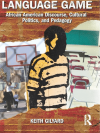
Keith Gilyard is the Edwin Erle Sparks Professor of English and African American Studies at Pennsylvania State University. His research focuses on African American literature, rhetoric, and pedagogy, with a particular emphasis on cultural politics and educational equity. He holds a BS from City University New York, an MFA from Columbia University, and an EdD from New York University. His work bridges literary analysis, sociolinguistics, and educational theory, addressing topics such as African American discourse patterns, the role of language in cultural identity, and the intersection of rhetoric with social justice movements. Key themes include critical pedagogy, translingualism, and the rhetorical strategies used in Black activism. Gilyard has been recognized for his contributions, including the 2013 CCCC Exemplar Award and his leadership as NCTE President. His publications often examine historical figures like Langston Hughes and Haki R. Madhubuti, alongside contemporary issues such as high-stakes testing and globalization's impact on education. He has advised numerous graduate students (though specific names are not listed here) and contributed to curricular reforms emphasizing anti-isolationist educational practices. His writings frequently critique linguistic prejudice and advocate for inclusive language policies in schools and communities.
Gail Levin is a Distinguished Professor in the Department of Fine & Performing Arts at Baruch College (CUNY), affiliated with the Weissman School of Arts and Sciences. She holds a Ph.D. in Art History from Rutgers University, an M.A. in Fine Arts from Tufts University, and a B.A. in Art/Art History from Simmons College. Her research focuses on American art, particularly 20th-century figures like Edward Hopper, Lee Krasner, and Judy Chicago. She explores themes such as feminist art, biographical studies, and the intersection of art with cultural and social movements. Her work often addresses gender dynamics, Jewish identity, and the role of women in the art world. Levin has published extensively, including biographies of Hopper and Krasner, and has curated exhibitions worldwide. Her articles span topics from Hopper’s influence on cinema to contemporary feminist art practices. She regularly speaks at conferences and institutions, emphasizing the historical and cultural significance of American artists. Teaching includes courses like Art of the United States , The Art Market , and Independent Study , reflecting her commitment to both academic rigor and mentorship through dissertation supervision.
Katherine Nahum is a retired Adjunct Associate Professor of Art History at Boston College, affiliated with the Morrissey College of Arts and Sciences. She holds a Ph.D. from Boston University. Her research focuses on 19th-century painting and sculpture, 20th-century architecture, psychoanalytic approaches to art, and Irish art from the 17th to 20th centuries. Her work includes co-curating exhibitions at the McMullen Museum, such as Eire/Land (2003), Edvard Munch: Psyche, Symbol and Expression (2001), and Original Visions: Shifting the Paradigm: Women's Art, 1970–1996 (1997). She has contributed to scholarly publications analyzing artists like Manet, Ensor, and Munch, exploring themes of cultural context, psychological theory, and historical art movements.
Antonio SOMAINI is a Full Professor of Film, Media, and Visual Culture Theory at Sorbonne Nouvelle University, and a Senior Member of the Institut Universitaire de France (IUF) since 2022. He holds a position in the Cinema and Audiovisual (CAV) department under the Arts & Media faculty. His research explores 20th-century media theories (e.g., Eisenstein, Benjamin, Vertov) and contemporary visual culture, particularly AI's impact on images. SOMAINI has curated major exhibitions, including one on AI and contemporary art at the Jeu de Paume (2025) and the 'Time Machine: Cinematic Temporalities' (2020). He has been a visiting professor at Yale (2022) and Harvard (2024). His work bridges historical media studies with digital aesthetics, emphasizing intermedial practices and media archaeology. Research interests include media theory, film history, philosophy of technology, and AI in visual culture. Key contributions include editing Dziga Vertov’s writings and co-authoring *Culture visuelle* (2022). Awards include IUF Senior Membership, reflecting his academic leadership. Recent articles focus on Walter Benjamin’s media philosophy, AI’s role in visual culture, and high/low resolution debates. SOMAINI’s exhibitions and curatorial work highlight intersections between art, technology, and cultural memory. His interdisciplinary approach spans cinema studies, art history, and digital humanities, shaping contemporary discourse on visual culture’s evolving landscapes.
Marco Uvietta is an Associate Professor of Musicology and History of Music at the Department of Literature and Philosophy, University of Trento. He holds a Laurea in Music Disciplines from the DAMS of Bologna (1991) and a PhD in History and Analysis of Musical Cultures from Sapienza University of Rome (1999). His academic career includes roles as a Researcher (2005–2016) and Associate Professor (2016–present) at the University of Trento. He teaches courses on Music History and Ethnomusicology and contributes to the PhD program in European Cultures. His research focuses on two main areas: 1) Musical Philology, particularly in 19th-century Italian opera (e.g., critical editions of Verdi’s Requiem and Bellini’s La straniera), and 2) Analysis of 20th-century musical language, with significant contributions on Luciano Berio’s style and compositional processes. He has authored numerous scholarly works, including books and articles on composers like Berio, Debussy, Stravinsky, and Martucci. Uvietta is actively involved in editorial projects, such as directing critical editions for Ricordi and contributing to the Rossini Critical Edition. He holds leadership roles in academic committees, including the editorial board of Il Saggiatore Musicale . His compositional works, influenced by his analytical research, have been performed by prestigious ensembles worldwide, including the Arditti Quartet and Monteverdi Cello Octet. Notable awards include recognition in composition competitions (e.g., Guido d’Arezzo International Competition), and his works span orchestral, choral, and chamber music. Uvietta’s interdisciplinary approach bridges historical musicology with contemporary compositional practice, reflecting his dual expertise as a scholar and composer.
Takashi Gojobori (born October 24, 1951) is a Japanese molecular biologist who serves as Vice-Director of the National Institute of Genetics (NIG) and Professor at the Center for Information Biology and DNA Data Bank of Japan (DDBJ) in Mishima, Japan. He also holds multiple visiting positions including Special Research Consultant at the National Institute of Advanced Industrial Science and Technology (AIST), Visiting Professor at Keio University, Tokyo University, and Tokyo Institute of Technology, and Visiting Research Director at RIKEN. His educational background includes a Ph.D. from Kyushu University (1979), followed by research positions at the University of Texas at Houston (1979-1983), Washington University in St. Louis (1985, 1986), and the Imperial Cancer Research Fund in London (1989). Professor Gojobori's research spans multiple areas of molecular and evolutionary biology. His work focuses on comparative genomics, molecular evolution, viral evolution, and bioinformatics. He has made significant contributions to understanding the rates of synonymous and non-synonymous substitutions, positive selection, horizontal gene transfer, and genome evolution. More recently, he has been investigating the evolution of the brain and central nervous system. His extensive publication record includes 389 peer-reviewed articles as of May 2012, reflecting his broad impact across multiple fields of biological research. His work shows a consistent focus on evolutionary mechanisms at the molecular level, with applications ranging from viral evolution to comparative genomics across diverse organisms including humans, plants, and model organisms like Hydra. Scientific Awards 2009: The Medal with Purple Ribbon from the government of Japan 2007: Academician Member of the Pontifical Academy of Sciences, Vatican 2006: Foreign Honorary Member of the American Academy of Arts and Sciences, USA 2005: Fellow of the American Association for the Advancement of Science (AAAS), USA 2005: Society Prize (Kihara Medal), The Genetic Society of Japan 2004: Society Prize (Motoo Kimura Medal), The Society of Evolutionary Studies, Japan 2004: The Gaetano Salvatore Gold Medal, Statione Zoologica, Anton Dohrn, Italy 1997: Science Award from Japan Science and Technology Corporation (JST), Japan 1995: Science Award from Hitoshi Kihara Memorial Foundation, Japan 1987: Promotion Award from Japanese Society of Genetics, Japan Professor Gojobori has served in numerous editorial capacities, including as Founding Editor of Genome Biology and Evolution, Executive Editor of GENE, and Associate Editor for several major journals. He has also held significant administrative roles including Program Director of the Council for Science and Technology Policy (CSTP) of the Japanese government and Science Officer of MEXT. His contributions to international genomic databases including DDBJ/GenBank/EMBL and the H-Invitational human gene database have been instrumental in advancing global genomics research. As Director of the Center for Information Biology and DNA Data Bank of Japan from 1994-2009, Professor Gojobori led important initiatives in biological data management and analysis. His work continues to influence the field through his leadership roles in international scientific organizations including the International Genetics Federation and CODATA/ICSU.