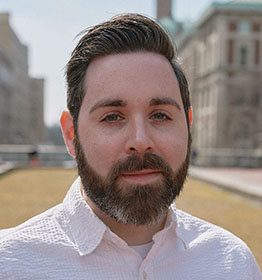
Prof. Chiara Dall'Asta is a Full Professor of Food Chemistry at the University of Parma's Department of Food Science. Since 2023, she serves as the Rector's Delegate for Doctoral Programs and has coordinated the PhD Course in Food Science since 2019. She acts as the Chancellor’s liaison to the European Food Safety Authority (EFSA) and contributes to EFSA Working Groups, authoring multiple scientific opinions on mycotoxin risk assessment. Her research spans natural bioactive compounds, mycotoxins, metabolomics, and computational toxicology, with recent expansion into food fraud detection using non-targeted mass spectrometry. Key methodologies include HR-MS metabolomics, ion mobility MS, and computational models to study xenobiotic interactions. She has published over 200 peer-reviewed papers and edited the book Masked Mycotoxins . Recent publications (2022-2025) highlight trends in mycotoxin analysis, food safety risk assessment, plant-based product safety, and computational toxicology. Work frequently integrates advanced analytical technologies (e.g., GC-IMS, LC-HRMS) with chemometrics for food authenticity and contamination studies. Teaching responsibilities include courses in Food Characterization, Risk Assessment of Chemical Compounds, and Xenobiotics in Food across undergraduate and graduate programs in Gastronomic Science, Food Safety, and Pharmaceutical Chemistry.
Nadia Heninger is a Professor in the Computer Science and Engineering department at the University of California, San Diego. Previously, she was an assistant professor at the University of Pennsylvania from 2013 to 2018. Her research focuses on mathematical and empirical cryptanalysis of public-key cryptographic systems, with significant contributions to identifying vulnerabilities in widely deployed cryptographic implementations. Her primary research interests include cryptography, cryptanalysis, and security, with particular emphasis on mathematical cryptanalysis aimed at real-world applications. Her work frequently employs lattice techniques, computational number theory, coding theory, and network measurement to uncover weaknesses in cryptographic systems. She has made notable contributions to understanding the security of RSA, Diffie-Hellman, and ECDSA implementations in practice. Heninger's research output shows a consistent focus on practical cryptanalysis, with recent work including the Blast-RADIUS vulnerability discovery, SSH key compromise via lattice techniques, and analyses of cryptographic implementations in blockchain systems like Bitcoin. Her publications span top security and cryptography venues including Crypto, Eurocrypt, Usenix Security, and CCS, often receiving best paper awards. Among her scientific achievements are an NSF CAREER award and multiple best paper awards from premier conferences including Crypto, PKC, CCS, and Usenix Security, as well as test of time awards from Crypto and Usenix Security. These accolades reflect the significant impact of her work on the field of cryptography and security. She advises several PhD students including Miro Haller, Laura Shea, Adam Suhl, and George Sullivan, and has a substantial list of notable alumni who have gone on to successful careers in academia and industry. Her research has been supported by various grants, including an Amazon Research Award for work on 'Bringing Modern Security Guarantees to End-to-End Encrypted Cloud Storage.'
James Cragun is a lecturer and researcher in Political Science at Stony Brook University, specializing in political psychology, quantitative methods, and the intersection of religious faith with political behavior. He earned his Ph.D. in 2020, with a dissertation on individual differences in selective exposure to political information. His research combines computational models and empirical analysis to explore how cognitive biases and religious conviction shape information-seeking behaviors and decision-making. Education: B.S. in Psychology (University of Oregon, 2013), M.A. (Stony Brook, 2015), Ph.D. in Political Science (Stony Brook, 2020). Teaching: Instructed courses like POL 201: Statistical Methods in Political Science and POL 348: Political Beliefs and Judgment , emphasizing critical thinking, causal inference, and statistical literacy. Designed interactive teaching tools for quantitative concepts. Research: Investigates how rigid religious faith amplifies selective exposure to attitude-congruent political information, using experiments and agent-based models to study cooperative behavior and methodological innovations like interactive control variables. Scientific Awards 2018 Departmental Teaching Award, Stony Brook University. His work bridges political psychology, behavioral economics, and computational modeling, with a focus on understanding irrationality in political judgment and the role of religious cognition in information processing. Current projects include modeling vaccine anticipation effects on compliance.
Dusan Licina is an Associate Professor at the École polytechnique fédérale de Lausanne (EPFL) and director of the Human-Oriented Built Environment Laboratory (HOBEL) within the Smart Living Lab initiative. His research bridges building science, environmental engineering, and human health. Education: BSc/MSc in Mechanical Engineering (University of Belgrade), joint PhD (National University of Singapore & Technical University of Denmark), postdoc (University of California Berkeley) Key research areas: Indoor air quality, human exposure science, building ventilation, IoT sensing, energy-efficient housing His 15 most cited works focus on particle dynamics, ozone chemistry, and occupant-driven building systems. Notable trends include human-clothing interactions in pollution transport, nanocluster aerosol formation, and real-time CO2 monitoring behavior. Awarded Yaglou award (ISIAQ) for sustainable healthy buildings research Ralph G. Nevin’s award (ASHRAE) for human exposure studies and serving on the Indoor Air editorial board. Current PhD students Dong Hui, Liu Tianqi, Loizou Maria, Medina Taylor Oran explore: Occupant behavior in energy systems Smart sensor networks Radon measurement technologies Work-from-home environmental quality His laboratory develops Human-Centric Sensing Platforms and Occupant-Centric Building Design methodologies through experimental chambers and computational models.
Professor Rainer Sauerborn serves as Director of the Department of Tropical Hygiene and Public Health at Heidelberg University Hospital, a position he has held since 1997. With a background in pediatrics and public health, his work focuses on health systems in developing countries, particularly Burkina Faso, where he began his field work in 1979. He is an active member of the Network Aging Research since 2007, bringing a global perspective to aging research. Dr. Sauerborn completed his pediatric training at the Universities of Bonn, Heidelberg, and London, followed by further studies at the Harvard School of Public Health. His academic journey began with hands-on experience as a District Medical Officer in Nouna, Burkina Faso, where he served for three years in 1979 as a conscientious objector. This early experience shaped his lifelong commitment to global health issues in resource-limited settings. Professor Sauerborn's research spans multiple critical areas at the intersection of global health and environmental challenges. He investigates health systems in developing countries, with particular focus on aging processes in populations traditionally considered young. His work increasingly addresses climate change impacts on health, examining how environmental changes affect disease patterns, food security, and healthcare systems in vulnerable regions. He has pioneered research connecting climate variability with health outcomes in Burkina Faso and other developing nations, emphasizing the need for global cooperation on health threats that transcend borders. His recent publications reveal a strong focus on climate-health interlinkages, particularly examining heat exposure impacts on farmers, migration dynamics related to climate-driven crop failures, and healthcare system responses to climate challenges. The research demonstrates consistent attention to Burkina Faso as a key field site while expanding to other regions including Bangladesh, Brazil, and Germany. A unifying theme across these studies is the examination of vulnerable populations and health system adaptation to environmental changes. Though specific awards aren't detailed in the available information, Professor Sauerborn's leadership in global health research, particularly his long-term commitment to Burkina Faso and his role in bridging pediatric and aging research perspectives, represents significant contributions to the field. His work has influenced understanding of health systems in resource-limited settings and the global dimensions of health challenges. While specific advising information isn't provided, Professor Sauerborn's leadership position suggests he mentors junior researchers and students. His involvement in projects like the EU-funded "health system challenges of the AIDS epidemic" indicates experience with substantial research grants. His work with the Network Aging Research and his efforts to establish a junior research group focused on aging in developing countries demonstrate his commitment to building research capacity. Professor Sauerborn leads research activities centered at Heidelberg University Hospital's Department of Tropical Hygiene and Public Health, with extensive field operations in Burkina Faso, particularly in the Nouna region. His team collaborates with local health authorities and researchers to study health systems, climate change impacts, and aging processes in resource-limited settings. The department serves as a hub for international research collaborations addressing global health challenges through a multidisciplinary approach.
Joseph Koopmeiners is a Mayo Professor and Division Head of the Division of Biostatistics & Health Data Science at the University of Minnesota School of Public Health. He serves as a Member of the Masonic Cancer Center and Scientific Co-director of the RapidEVAL Program within the Center for Learning Health Systems Sciences. Education: PhD in Biostatistics, University of Washington (2009) MS in Biostatistics, University of Minnesota (2004) BA in Mathematics, St. John's University Koopmeiners develops advanced statistical methods to improve cancer prevention, detection, and treatment through biomarker validation and Bayesian adaptive methods for clinical trials. His research bridges biostatistics with practical applications in oncology, tobacco control, and public health policy. He focuses on innovative trial designs including basket trials, group-sequential methods, and virtual twin approaches that enhance clinical research efficiency. His recent publications demonstrate a strong trend toward adaptive clinical trial methodology, with significant contributions to Bayesian statistics, biomarker validation, and cancer research. Koopmeiners' work spans from fundamental statistical methodology to direct applications in cancer treatment, sepsis management, and tobacco regulation. Awards: Delta Omega, Honorary Society in Public Health Koopmeiners maintains active professional engagement through multiple research collaborations and leadership roles. As Division Head, he oversees biostatistical research and educational programs while directing the RapidEVAL Program focused on learning health systems. His methodological expertise supports numerous clinical trials and public health initiatives across cancer research and other medical domains. His work connects statistical innovation with real-world health applications through the Masonic Cancer Center and Center for Learning Health Systems Sciences, where he contributes to translational research infrastructure.
Dr. Summer Han serves as Associate Professor of Medicine, Neurosurgery, and Epidemiology at Stanford University School of Medicine. She leads research through the Quantitative Sciences Unit (QSU) in the Biomedical Informatics Research Division of the Department of Medicine and maintains joint appointments in the Department of Neurosurgery. Her work bridges statistical methodology development with clinical applications in cancer screening and neuroscience. Her research program focuses on statistical genetics, molecular epidemiology, and risk prediction modeling for complex diseases. Key areas include developing novel methods for analyzing high-dimensional genomic data, creating dynamic risk prediction models under competing risks, and establishing evidence-based cancer screening strategies. Her team integrates genetic, environmental, and clinical factors to improve early detection of lung cancer and second primary malignancies, with particular attention to reducing racial disparities in screening outcomes. Dr. Han's scientific contributions have been recognized through prestigious awards including the NCI R37 MERIT Award for Early-Stage Investigators and the Department of Medicine Teaching Award in Biomedical Informatics Research. Her team has developed impactful tools such as the SPLC-RAT for second primary lung cancer risk assessment and RAMBO for brain metastasis prediction in lung cancer patients. She actively mentors PhD students and postdoctoral fellows, with several former trainees securing faculty positions at institutions including Cornell University and IIT Roorkee. Current research initiatives include the Oncoshare-Lung database integrating EHRs from Stanford Health Care and 23+ Sutter Health sites across Northern California, and the Cancer Data Science Shared Resources Core which she co-directs at the Stanford Cancer Institute. NCI R37 MERIT Award (Early-Stage Investigator) 2022 Department of Medicine Teaching Award in Biomedical Informatics 2024 SCI Equity Impact Research Grant 2024 Neurosurgery Research Seed Grant Award Multiple NCI R01 grants (CA226081, CA282793) Her laboratory collaborates extensively across Stanford Medicine, working with thoracic oncologists, neurosurgeons, and epidemiologists to translate statistical innovations into clinical practice. Current projects address socioeconomic factors in cancer risk stratification, real-time physical activity monitoring in spine surgery recovery, and machine learning approaches for genomic data analysis.
Joseph G. Allen is an Associate Professor at Harvard T.H. Chan School of Public Health, where he directs the Harvard Healthy Buildings Program and serves as Deputy Director of the Harvard Education and Research Center for Occupational Safety & Health . He holds leadership roles in major public health initiatives including as Commissioner for The Lancet COVID-19 Commission and Scientific Advisor to the White House (2022-2024). His work bridges environmental health, building science, and public policy to advance human health in indoor environments. Education: D.Sc. in Exposure Assessment, Environmental Epidemiology & Biostatistics – Boston University MPH in Environmental Health – Boston University BS in Biology – Boston College Certified Industrial Hygienist (CIH) Research Focus: Dr. Allen's work centers on indoor environmental quality and its impact on human health. His research examines: 1) Airborne pathogen transmission mitigation strategies, 2) Chemical exposure pathways in built environments, 3) Climate-resilient building design, and 4) Global health equity in environmental interventions. His studies employ field measurements, computational modeling, and epidemiological approaches to develop evidence-based building standards. Publications: His recent 15 publications demonstrate consistent focus on air quality interventions, chemical exposure assessment, and health-focused building design. Key themes include pandemic-responsive ventilation standards, PFAS contamination mitigation, global health equity in environmental interventions, and technological innovations in exposure monitoring. His work appears in both scientific journals and policy-oriented outlets like Harvard Business Review. Awards & Leadership: Scientific Advisor to White House & Massachusetts Governor Chair of Lancet COVID-19 Task Force for Safe Work/Schools/Travel Co-Chair of Harvard Sustainability Committee's 2050 Subcommittee Program Direction: As Director of the Harvard Healthy Buildings Program, Dr. Allen leads interdisciplinary research translating building science into public health practice. The program collaborates with governments and industries worldwide to implement health-focused building standards and exposure reduction strategies.
Professor Pilar Fernandez-Ibanez is a distinguished Professor in Environmental Engineering at Ulster University's School of Engineering. She previously served as Head of Group at Plataforma Solar de Almería of CIEMAT in Spain before joining Ulster University. Her academic career spans multiple institutions across Spain and the UK, with a strong focus on solving global water challenges. She holds a PhD in Applied Physics (2004) and a Bachelor's degree in Theoretical Physics (1994), both from the University of Granada. Her professional journey includes significant roles at CIEMAT as Research Assistant, Research Fellow, Senior Researcher, and ultimately Head of Group. Professor Fernandez-Ibanez's research primarily focuses on low-cost technologies for water purification, photochemical and advanced oxidation processes for removing microbiological pathogens and hazardous chemical contaminants, and decentralized technologies for drinking water in developing communities. Her work directly contributes to UN Sustainable Development Goals related to clean water and sanitation. Her extensive publication record includes 182 peer-reviewed articles with an h-index of 60 and over 12,000 citations. Her research output demonstrates consistent growth and impact, with recent publications focusing on household-based water disinfection systems, UVC-LED radiation efficacy, and nanomechanical biosensing technologies. Member of the Royal Irish Academy (2024) Fellow of the Institute of Physics-UK and Ireland Fellow of the Higher Education Academy-UK Distinguished Research Awards 2021 University Champion Top 2% of scientists most-cited worldwide (2019) Finalist in the WISE awards 2019 on gender balance in STEM Professor Fernandez-Ibanez has secured substantial research funding, including serving as Principal Investigator on two H2020 projects (REWATERGY and PANIWATER) and a Royal Society International Collaboration Award. She is currently involved in multiple active projects including the AHRC-funded Green Transition Ecosystem and SAFEWATER initiatives. She also serves as Regional Editor for Europe of the Journal of Photochemistry & Photobiology and associate editor for the Journal of Environmental Chemical Engineering. She actively participates in international collaborations, serving as Ireland's representative to the International Union of Pure and Applied Physics (IUPAP) committee on physics for development. Her research group at Ulster University focuses on developing practical water treatment solutions with real-world impact, particularly for underserved communities.
Ayla Humphrey is an Assistant Professor and Consultant Clinical Psychologist at the University of Cambridge Department of Psychiatry . Her research focuses on early identification of mental health needs in children, cognitive therapy for trauma-exposed youth, and developmental disorders like autism and Tuberous Sclerosis . She serves as Course Director for the MPhil Foundations of Clinical Psychology and co-founded the NHS Cambridge Centre for Paediatric Neuropsychological Rehabilitation . Her research spans Child and Adolescent Mental Health Services (CAMHS) integration with social care, trauma-focused cognitive therapy , and developmental disorder screening . Key collaborations include the NIHR-funded COACHES study and the PYCES (Parents and Young Children under Extreme Stress) project. Scientific awards include the 2017 British Psychological Society Award for Outstanding Contribution to Applied Practice . She actively supervises PhD students and contributes to school-based mental health identification frameworks . Her work emphasizes evidence-based service transformation and cross-sector collaboration.
Dr. Cristiane Duarte is a Professor in the Division of Child and Adolescent Psychiatry at Columbia University - New York State Psychiatric Institute. She holds the prestigious title of Ruane Professor for the Implementation of Science for Child and Adolescent Mental Health. Dr. Duarte also serves as Co-Director of the NewYork-Presbyterian Youth Anxiety Center in Washington Heights. Dr. Duarte's educational background includes a PhD and MPH, though specific institutions aren't mentioned in the available text. Her academic journey has led her to become a prominent figure in child and adolescent mental health research. Her research focuses on innovative population-based studies examining the development of mental disorders in children, adolescents, and young adults. Through state-of-the-art sampling, recruitment, and culturally appropriate assessment methodologies, she generates knowledge relevant to diverse, often underserved and understudied populations. She is particularly known as the leader of the Boricua Youth Study, the only multi-national source of information about how mental disorders develop from childhood to young adulthood in Puerto Ricans. Dr. Duarte's publication record shows a strong trajectory of research from early work on child mental health in Latin America and post-9/11 trauma effects to more recent large-scale studies on prenatal influences, child development, and health disparities. Her work spans multiple disciplines including psychiatry, epidemiology, public health, and developmental psychology. Her research has received significant support from the Brain and Behavior Research Foundation, the Robert Wood Johnson Foundation, and multiple institutes of the National Institutes of Health including NIDA, NIMH, NIAAA, and NICHD. Dr. Duarte is a key member of international collaborations in global mental health, particularly focused on improving child mental health services and implementing interventions in low-resource settings. Her work bridges cross-cultural measurement of psychiatric disorders with addressing mental health disparities across diverse populations.
Benaissa Chidmi , an Associate Professor in the Department of Agricultural and Applied Economics at Texas Tech University , specializes in industrial organization, food marketing, agribusiness, and consumer demand analysis. He teaches Applied Econometrics and Demand and Price Analysis . Education Ph.D. in Agricultural and Resource Economics, University of Connecticut (2006) M.S. in Applied Financial Mathematics, University of Connecticut (2006) M.S. in Agricultural and Resource Economics, University of Connecticut (2002) M.S. in Food Engineering, Institut Agronomique et Vétérinaire Hassan II, Morocco (1996) Research Trends Chidmi's research spans diverse applications of econometric modeling, including consumer food demand systems , energy economics , agricultural productivity , and industrial organization . His recent work (2025) examines Saudi Arabia's coffee import demand , machine learning in US residential energy usage , and animal protein consumption patterns . Earlier studies (2024-2019) focus on technical efficiency in cereal production, asymmetric price transmission in energy markets, and nutrient demand analysis in Sri Lanka. Key Methodologies Almost Ideal Demand System (AIDS) modeling Quantile regression analysis Random coefficients and logit demand models Machine learning applications in economics Censored regression techniques Technical efficiency measurement
Sylvia H. Ley, PhD, RD, serves as a tenure-track Assistant Professor in the Department of Epidemiology at Tulane University's Celia Scott Weatherhead School of Public Health and Tropical Medicine. She teaches Epidemiologic Methods I and III while mentoring PhD and MS students in chronic disease research. Her educational background includes: Postdoctoral training at Harvard T.H. Chan School of Public Health focusing on large-scale cohort studies Doctoral studies in maternal and infant nutrition and clinical epidemiology at University of Toronto Registered Dietitian certification from Sunnybrook Health Sciences Centre Dr. Ley's research centers on life-course strategies for chronic disease prevention , with emphasis on nutrition , diabetes progression , and cardiovascular risk in women. Her work investigates how reproductive factors (menarche timing, lactation, gestational diabetes), sleep patterns , and dietary behaviors influence long-term metabolic outcomes across the lifespan. She employs advanced epidemiological methods in major cohort studies including NHANES and the Bogalusa Heart Study. Analysis of her recent publications reveals consistent focus on sex-specific disease pathways and developmental origins of health , particularly examining how early-life exposures manifest as cardiometabolic disorders decades later. Her work bridges clinical epidemiology with nutritional science to identify modifiable risk factors. Dr. Ley actively mentors graduate students including Santos MP, Mullen AJ, and Siebach MK. Her research receives continuous funding from major agencies including NIH, NSF, and CIHR, supporting her 80+ peer-reviewed publications that have accumulated over 14,000 citations. She serves in leadership roles as Past-Chair of Nutritional Epidemiology for the American Society for Nutrition, Associate Editor for the American Journal of Clinical Nutrition, and co-Chair of the Women's Interprofessional Network for the American Diabetes Association.
Dr. Jaclyn Cañas-Carrell serves as Professor and Department Chairperson in the Department of Environmental Toxicology at Texas Tech University, holding the chair position since fall 2021. She earned her Ph.D. in Environmental Toxicology from Texas Tech University in 2005 and maintains active research and administrative leadership. Her educational background includes: Ph.D. in Environmental Toxicology, Texas Tech University, 2005 Dr. Cañas-Carrell's research centers on microplastics and nanoplastics fate and toxicity across terrestrial and aquatic ecosystems, utilizing advanced analytical techniques to quantify environmental exposure pathways for humans and organisms. Her work bridges environmental science, toxicology, and public health, addressing critical plastic pollution impacts through empirical laboratory and field studies. Her scientific recognition includes: 2013 Chancellor's Council Distinguished Research Award Integrated Scholar designation by TTU Provost's Office Faculty Fellow for STEM Education in TTU's TLPDC She directed the NIH-funded Plains Bridges to the Baccalaureate Program (2008-2025), creating undergraduate research pathways for community college students in biomedical/behavioral sciences. As Department Chair and STEM CORE member, she mentors students through institutional initiatives while advancing departmental strategic goals. Dr. Cañas-Carrell leads the Department of Environmental Toxicology and actively contributes to Texas Tech's STEM CORE initiative, which develops K-12 through graduate STEM education programs including lab methods repositories, community outreach, and faculty development networks.
Jonathan L. Auerbach is an Assistant Professor in the Department of Statistics at George Mason University . His work bridges statistics and public policy , focusing on causal inference , longitudinal data analysis , and official statistics . He has contributed to understanding urban myths (e.g., New York City rat populations, building height trends), election fraud , and policy evaluation for initiatives like Vision Zero. Education : PhD in Statistics (Columbia University, 2020), BA in Economics (Cornell University, 2010) Research Interests include data science , causal inference , survey methodology , and urban analytics . His recent work addresses climate change impacts on cherry blossom seasons, federal data security , and street vendor demographics in New York City. Scientific Awards include the 2024-2025 President of Washington Statistical Society , 2020-2021 American Statistical Association Science Policy Fellow , and 2019 Howard Levene Outstanding Teaching Award . He has served as an instructor for courses like Capstone in Statistics and Causal Inference , emphasizing technical communication and data ethics .